Category : Meetings(469)
-
Continuity (StART Meeting 12/19/18)
Often the most important, but under-appreciated form of knowledge for any government is known as “institutional knowledge”. It is the knowledge that carries forward seamlessly from one government to the next. It is typically carried in the heads of a few key long-time employees. If it is not intentionally valued it is usually lost and -
 2018-12-19
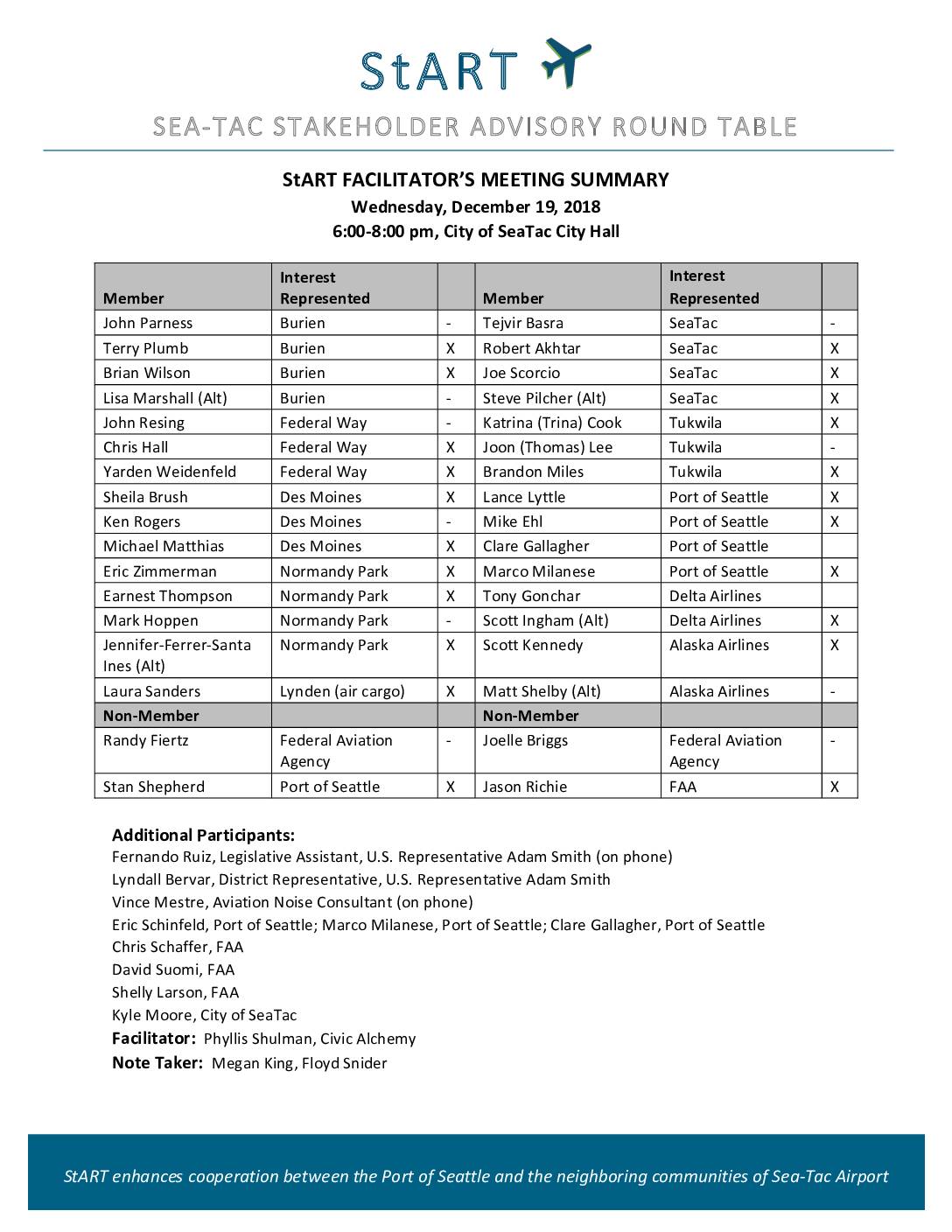
StART facilitator’s meeting summary, December 19, 2018
This document summarizes the December 19, 2018 meeting of the Sea-Tac Stakeholder Advisory Round Table (StART), a group that fosters cooperation between the Port of Seattle and neighboring communities affected by Sea-Tac Airport. Key topics included a briefing on federal legislation proposed by U.S. Representative Adam Smith, such as the Protecting Airport Communities from Particle Emissions Act (PEA) and the Aviation Impacted Communities Act, both aimed at addressing aircraft noise and air quality impacts on surrounding neighborhoods. The meeting also covered plans for a new Federal Policy Working Group and outlined the 2019 StART meeting schedule. -
 2018-12-19
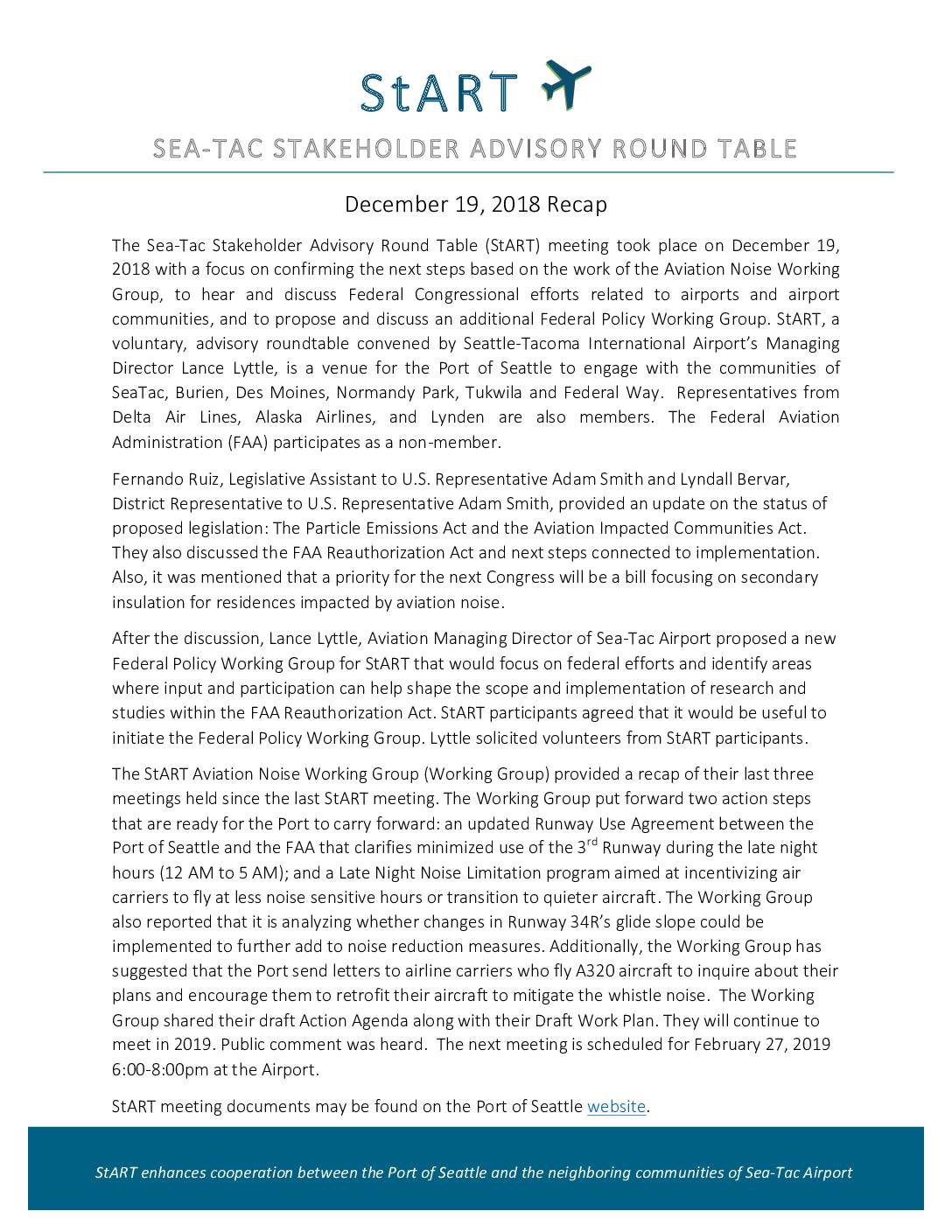
StART Sea-Tac Stakeholder Advisory Round Table: December 19, 2018 recap
The December 19, 2018 StART meeting brought together Port of Seattle officials, neighboring community representatives, and airline members to discuss noise reduction measures at Sea-Tac Airport. Key outcomes included two proposed actions — an updated Runway Use Agreement to limit late-night use of the 3rd Runway and a Late Night Noise Limitation program to encourage quieter aircraft operations — as well as the formation of a new Federal Policy Working Group. Representatives from U.S. Representative Adam Smith's office also briefed attendees on pending federal legislation, including the Particle Emissions Act and the Aviation Impacted Communities Act. -
 2018-12-10
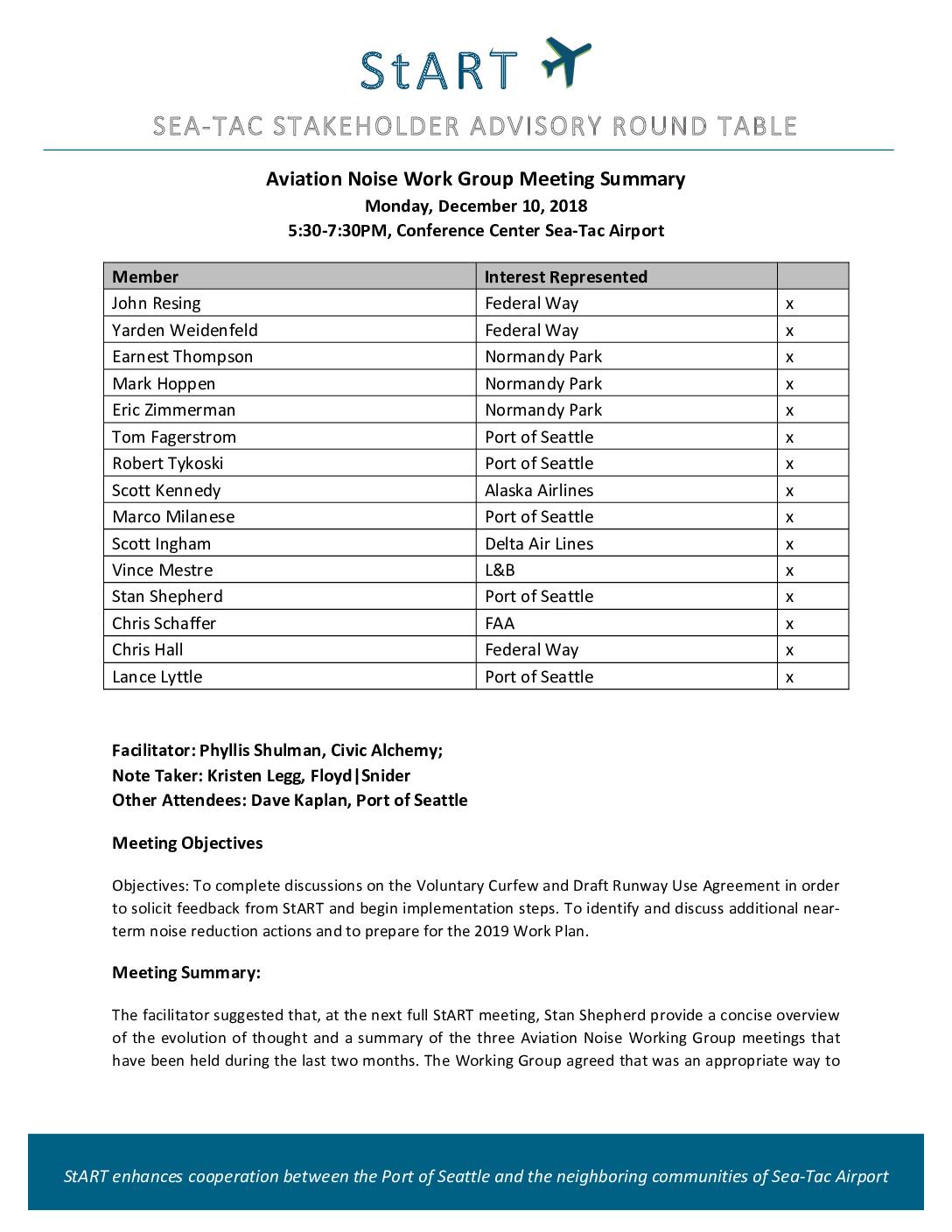
StART aviation noise work group meeting summary, December 10, 2018
The StART Aviation Noise Working Group met on December 10, 2018, to discuss a proposed 'Fly Quiet Late Night Noise Limitation Program' aimed at reducing aircraft noise between midnight and 5:00 AM at Sea-Tac Airport. The program would add a fourth scoring category to the existing Fly Quiet Program, penalizing airlines that operate noisier aircraft during late-night hours and incentivizing a shift to quieter fleets. The group also confirmed that discussions on reducing ground noise would begin at their January 2019 meeting. -
2018-12-06
Des Moines City Council Study Session – December 6, 2018
Mayor: City Council work study session to order. And will Deputy Mayor Pennington please lead us in the Deputy Mayor Vic Pennington: flag of the United States of America and to the republic for it stands one nation under God indivisible with liberty and justice for all. Mayor: Thank you. This doesn’t seem like -
 2018-11-26
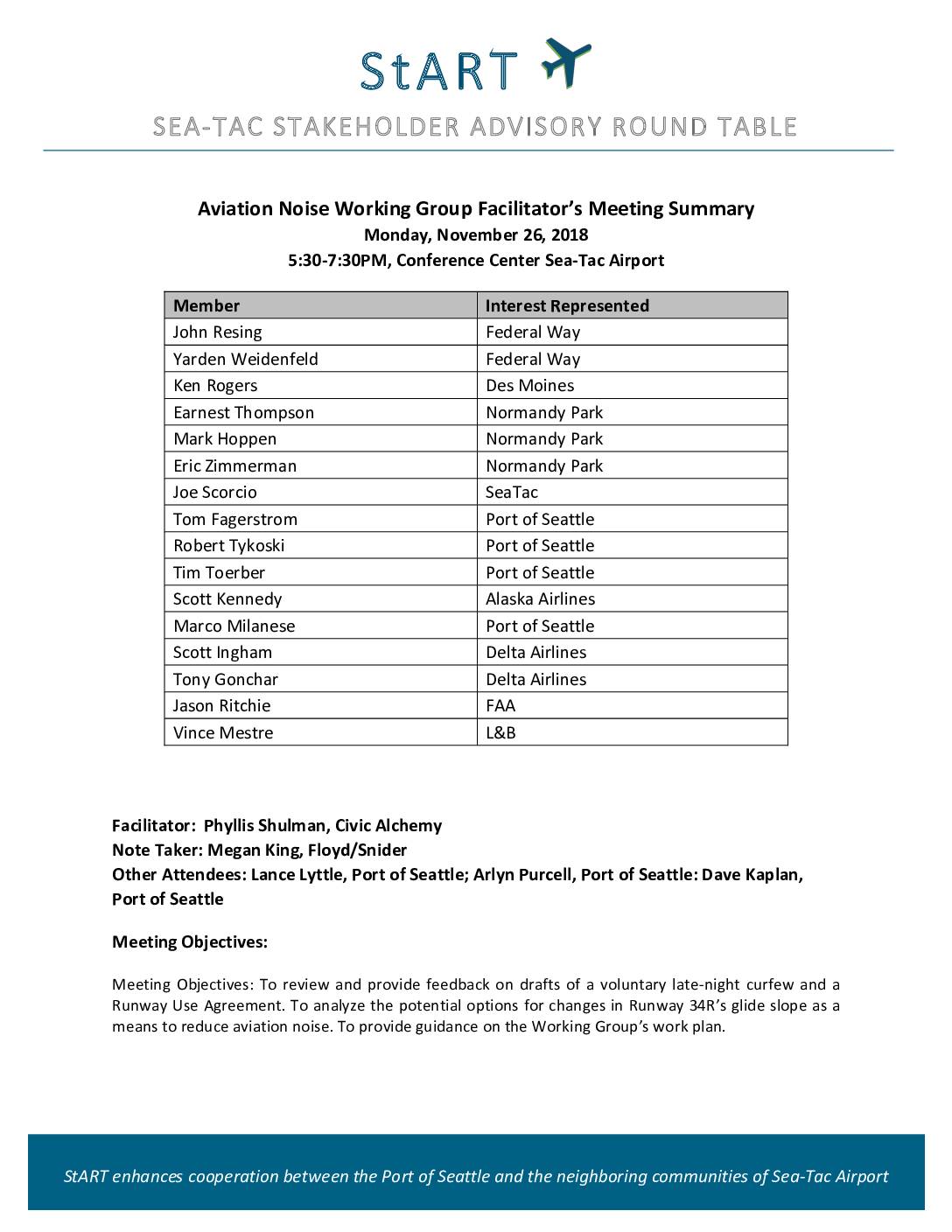
StART Aviation Noise Working Group facilitator’s meeting summary, November 26, 2018
A November 2018 meeting of the Sea-Tac Airport Stakeholder Advisory Round Table's Aviation Noise Working Group reviewed three strategies to reduce aircraft noise: a voluntary late-night curfew, an updated runway use agreement, and potential glide slope changes to Runway 34R. The group discussed modifications to the existing Fly Quiet Program, including publicly rating airlines on their noise performance and meeting with carriers to encourage quieter aircraft and fewer late-night flights. Next steps included analyzing late-night noise data, developing outreach materials, and exploring whether Port levy funds could be used to strengthen compliance incentives. -
 2018-10-29
Aviation Noise Working Group facilitator’s meeting summary, October 29, 2018
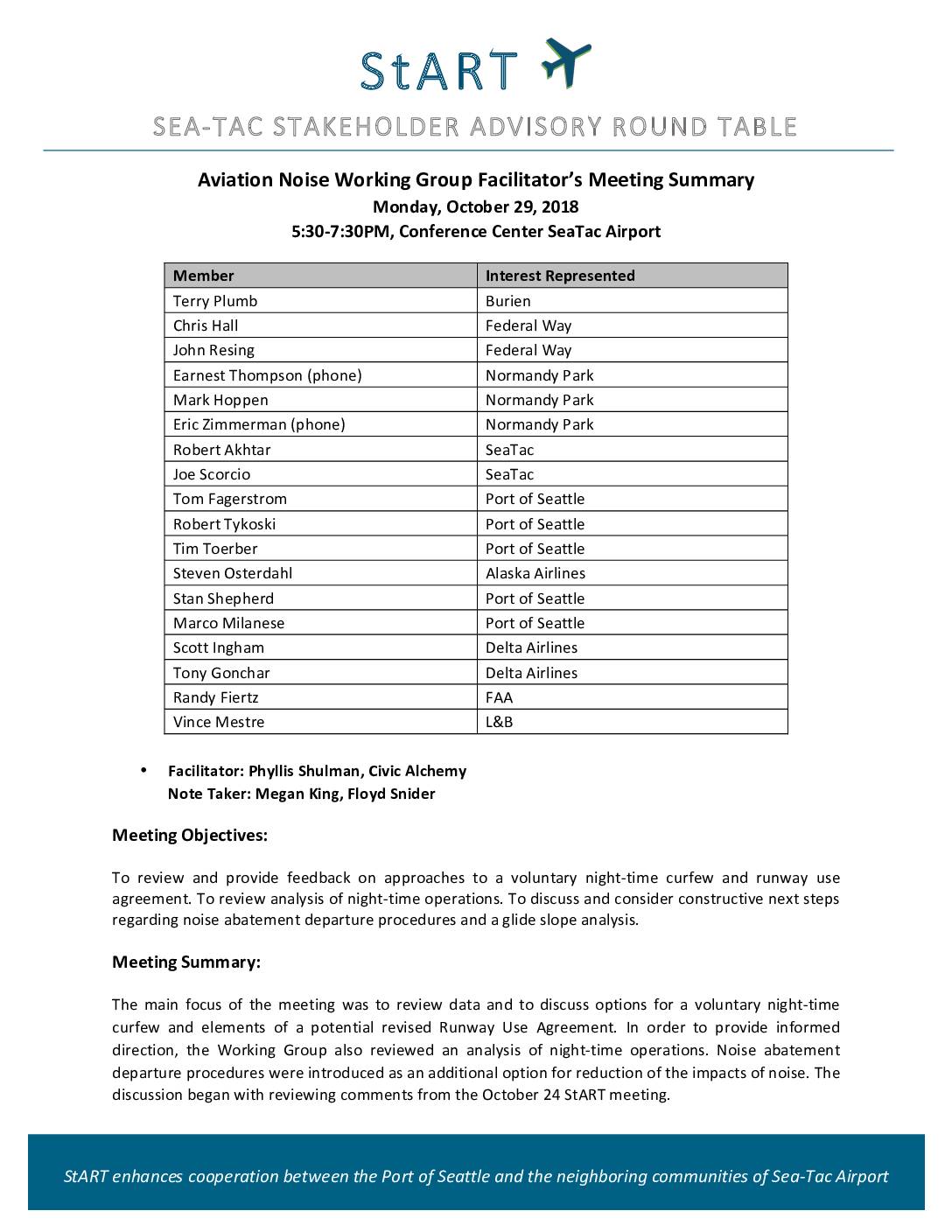
The Sea-Tac Stakeholder Advisory Round Table (StART) Aviation Noise Working Group met on October 29, 2018 to discuss options for reducing airport noise impacts on surrounding communities. Key topics included a proposed voluntary night-time flight curfew, potential revisions to the Runway Use Agreement between the Port of Seattle and the FAA, and an analysis of Noise Abatement Departure Procedures (NADPs). The group also previewed an emerging glideslope analysis that could further reduce noise for nearby residents. -
 2018-10-24
StART October 24, 2018 Meeting Recap
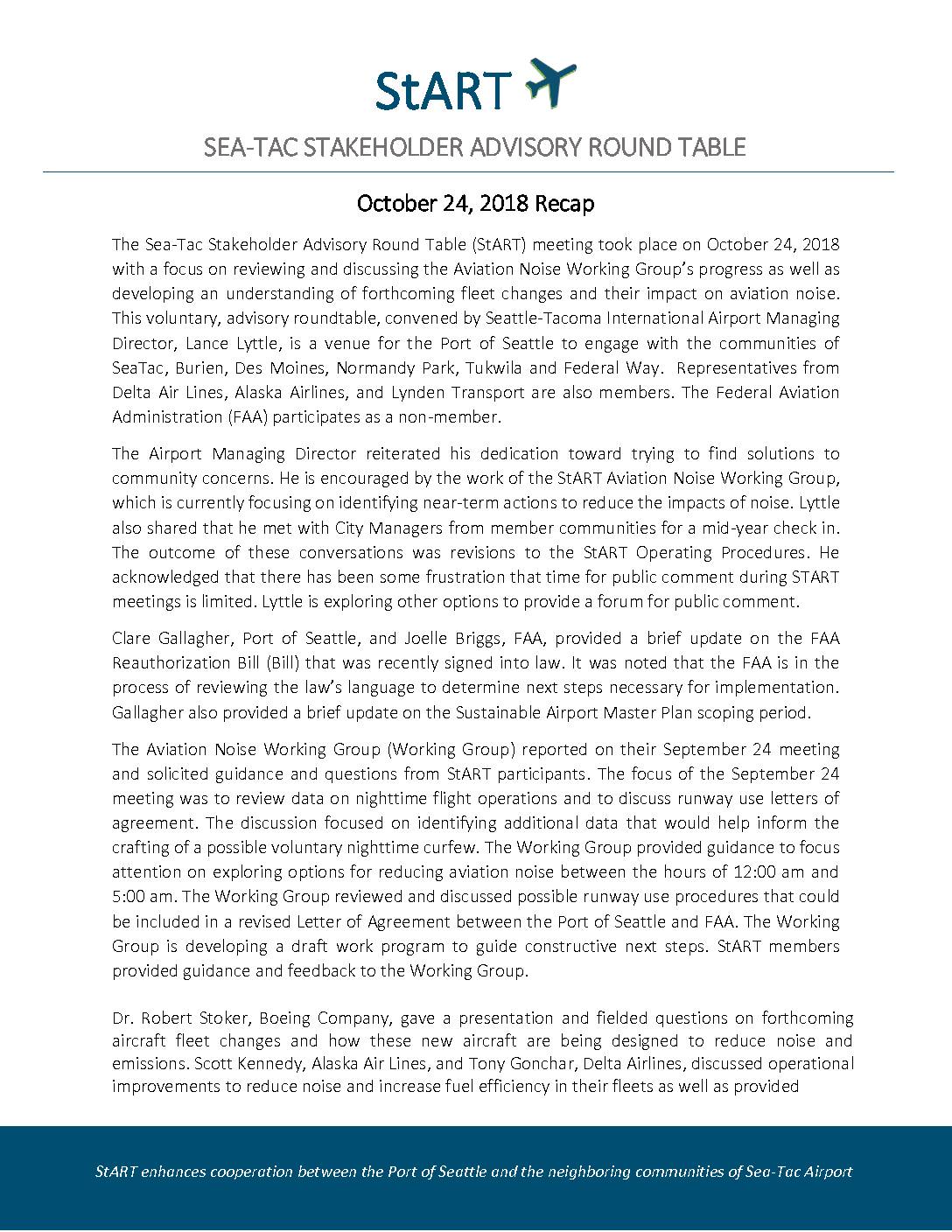
The October 24, 2018 StART meeting brought together the Port of Seattle, neighboring communities, airlines, and the FAA to discuss progress on reducing aviation noise around Sea-Tac Airport. Key topics included a possible voluntary nighttime flight curfew between midnight and 5 a.m., updates to the FAA Reauthorization Bill, and presentations from Boeing, Alaska Airlines, and Delta Airlines on new quieter aircraft and fuel-efficient fleet upgrades. The next public meeting was scheduled for December 19, 2018 at SeaTac City Hall. -
 2018-10-05
White paper: 2018 FAA Reauthorization noise provisions
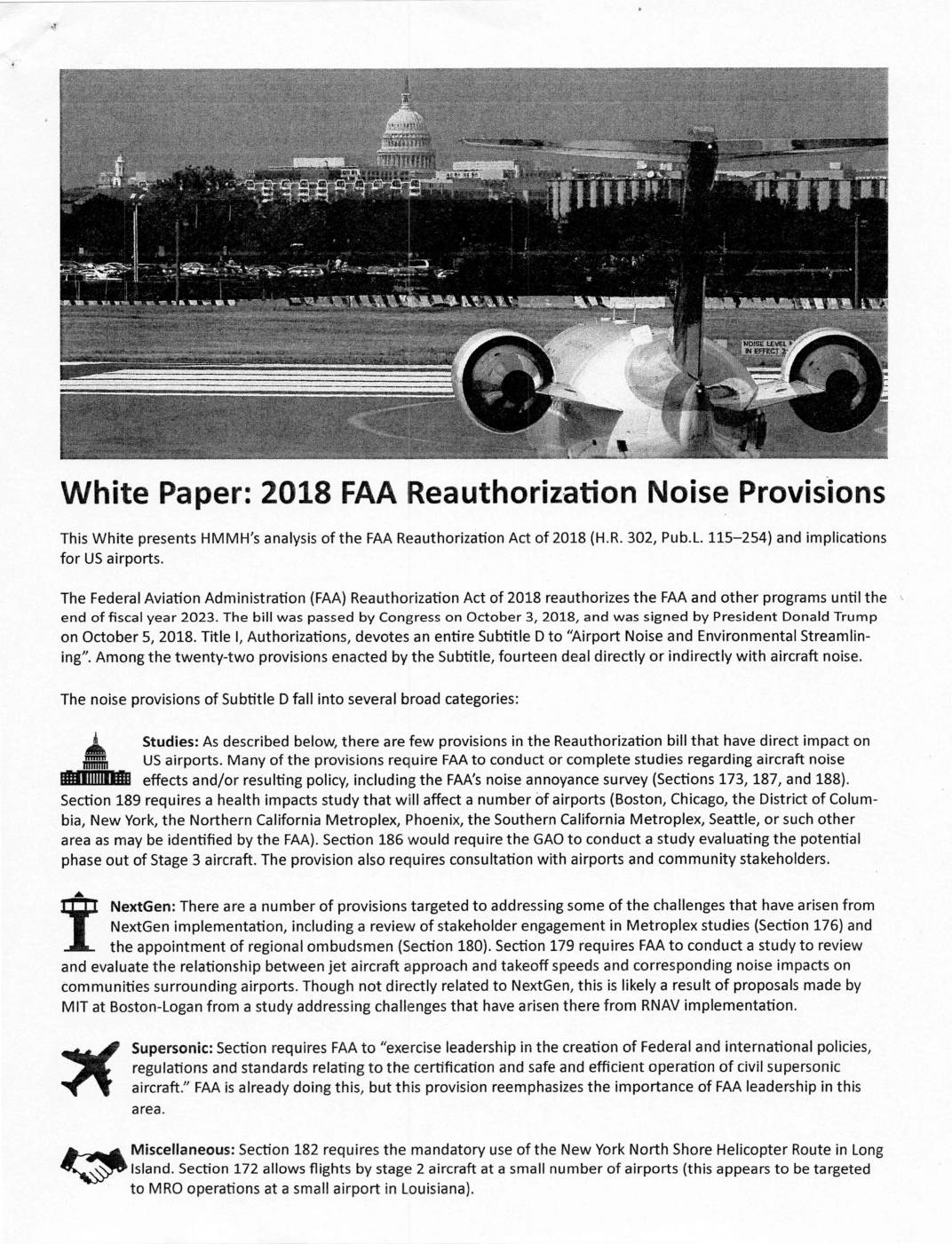
This white paper analyzes the noise-related provisions of the FAA Reauthorization Act of 2018 (H.R. 302), which reauthorized the FAA through fiscal year 2023 and included 14 provisions directly or indirectly addressing aircraft noise. Key measures require the FAA to study alternative noise metrics to replace the Day-Night Average Sound Level (DNL) standard, update Noise Exposure Maps when operations change significantly, and consider dispersal headings for new flight procedures to reduce community noise impacts. Seattle is among the cities specifically identified for a health impacts study related to aviation noise, making these provisions particularly relevant to Sea-Tac Airport stakeholders. -
 2018-09-10
Public meeting: Environmental review scoping the Port Of Seattle’s “Sustainable Airport Master Plan”
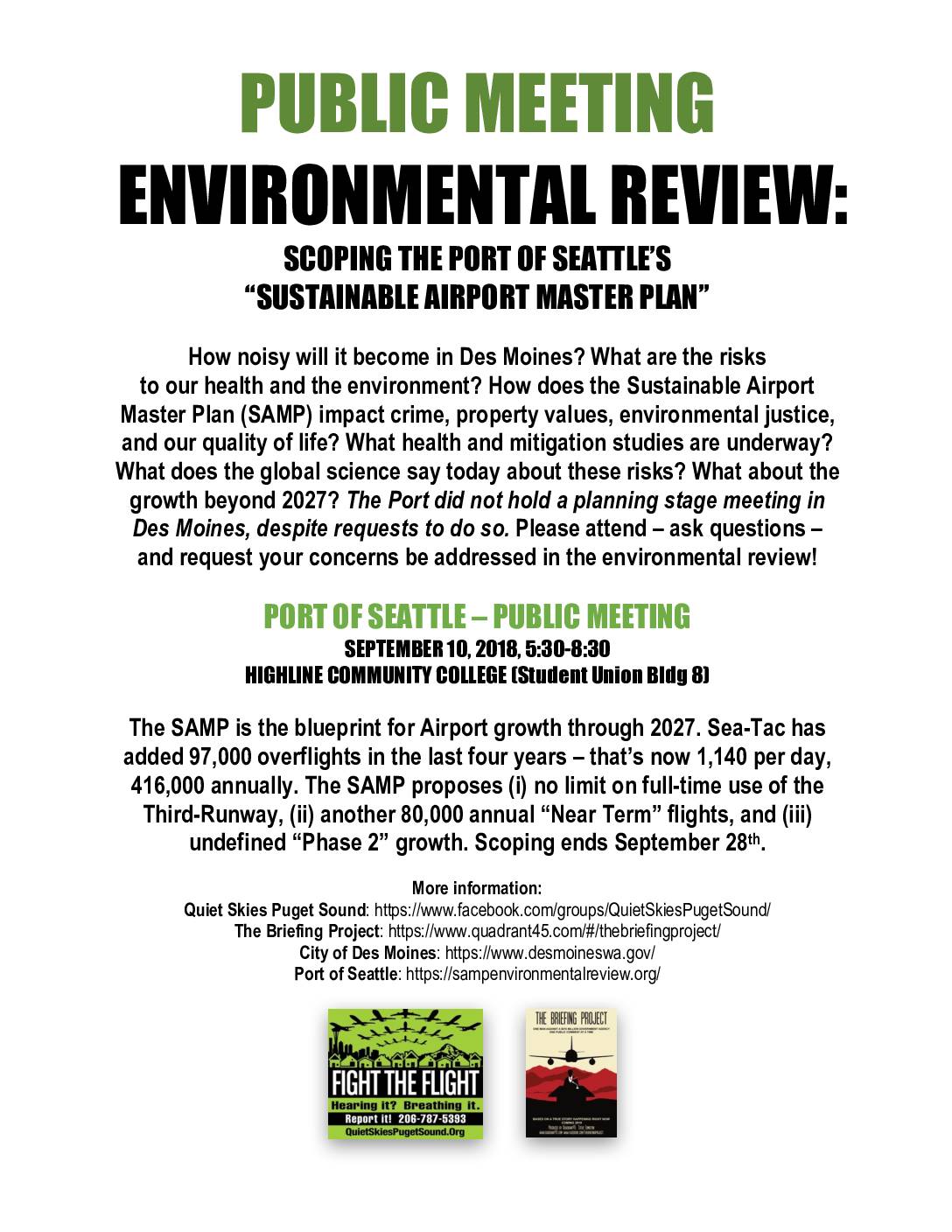
A public meeting was held on September 10, 2018, at Highline Community College to allow Des Moines residents to weigh in on the Port of Seattle's Sustainable Airport Master Plan (SAMP), which outlines Sea-Tac Airport's growth strategy through 2027. The plan proposes removing limits on Third Runway use and adding 80,000 more annual flights on top of the existing 416,000, raising community concerns about noise, health risks, property values, and environmental justice. Residents were urged to attend and submit comments before the scoping period closed on September 28, 2018.