TagEnergy(11)
-
 2026-05-22
Appendix I: Natural Resources & Energy Supply — Bonneville Power Administration 2024–2028 Strategic Plan
The Bonneville Power Administration's 2024–2028 Strategic Plan outlines the agency's goals for delivering reliable, affordable electricity and high-voltage transmission across the Pacific Northwest. The plan focuses on workforce investment, updating power products and rate structures, expanding transmission infrastructure, and addressing growing risks such as drought conditions, extreme heat, and cybersecurity threats. Note: This document concerns regional energy supply policy and is not directly related to Sea-Tac Airport noise policy. -
 2025-09-29
Appendix I: Natural Resources & Energy Supply — Bonneville Power Administration Strategic Plan Progress Update 2018–2023
The Bonneville Power Administration's 2018–2023 Strategic Plan Progress Update outlines the agency's efforts to improve its financial health, modernize its power grid assets, and better serve customers across the Pacific Northwest. The plan identifies five strategic goals, including strengthening financial performance, providing competitive power products, and valuing its workforce. This update, issued nearly three years after the original 2018 plan, documents accomplishments and highlights areas needing further attention. -
 2024-10-21
Appendix I: Natural Resources & Energy Supply — Bonneville Power Administration Strategic Plan Progress Update 2018–2023
The Bonneville Power Administration's 2018–2023 Strategic Plan Progress Update outlines the agency's efforts to strengthen financial health, modernize infrastructure, and better serve power and transmission customers across the Pacific Northwest. Nearly three years into implementation, BPA reaffirmed its original four strategic goals and added a fifth focused on workplace culture and valuing its workforce. The plan reflects BPA's broader mission to remain commercially competitive while fulfilling its public responsibilities to the region. -
 2022-08-21
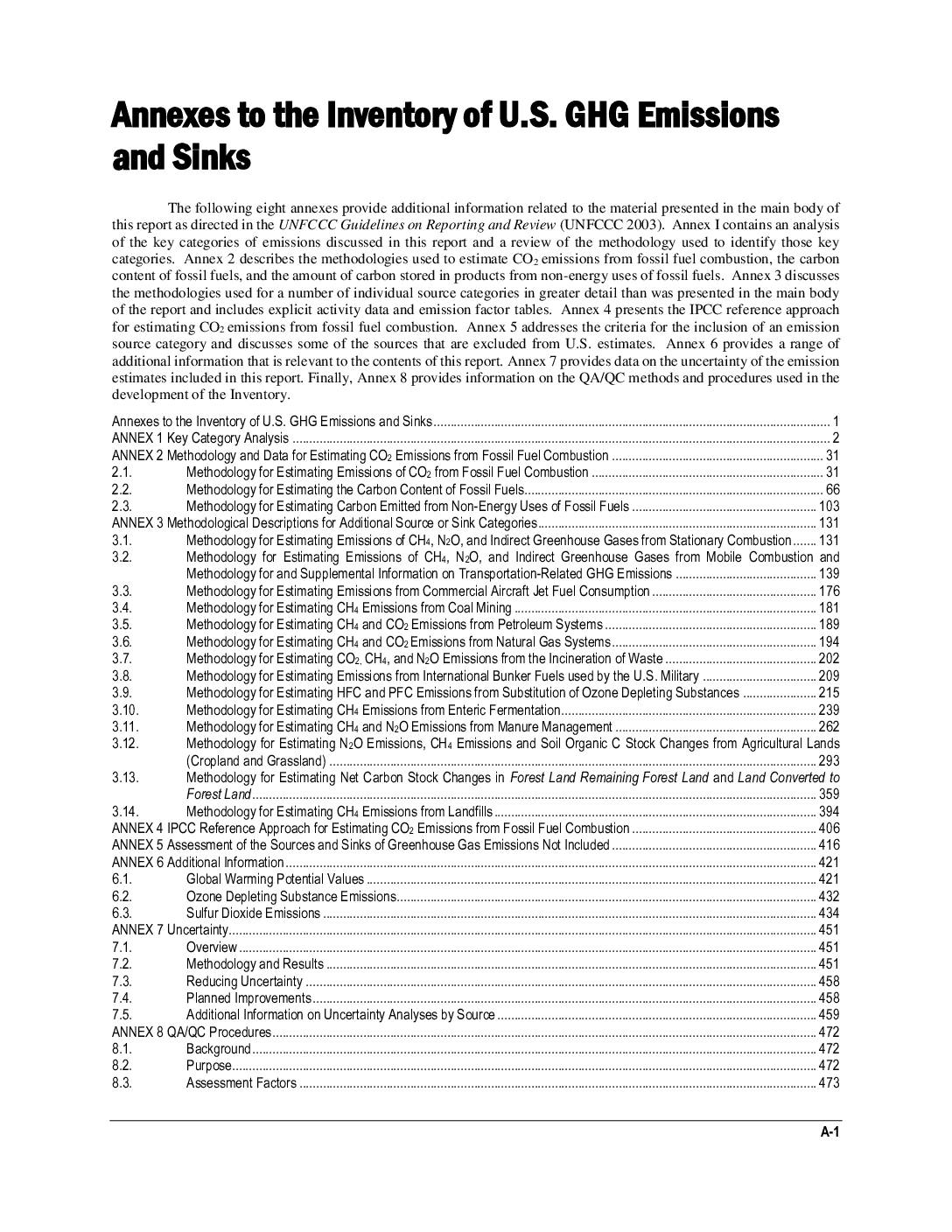
Annexes to the inventory of U.S. GHG emissions and sinks
This document is a technical annex to the U.S. Greenhouse Gas Emissions and Sinks Inventory, outlining the methodologies used to measure and categorize national greenhouse gas emissions from 1990 to 2015. It identifies 'key categories' — the emission sources with the greatest impact on total national greenhouse gas levels, trends, and uncertainty — using standardized IPCC guidelines. The largest emission sources identified include road transportation, coal-fired electricity generation, and natural gas combustion across industrial, residential, and commercial sectors. -
 2021-05-18
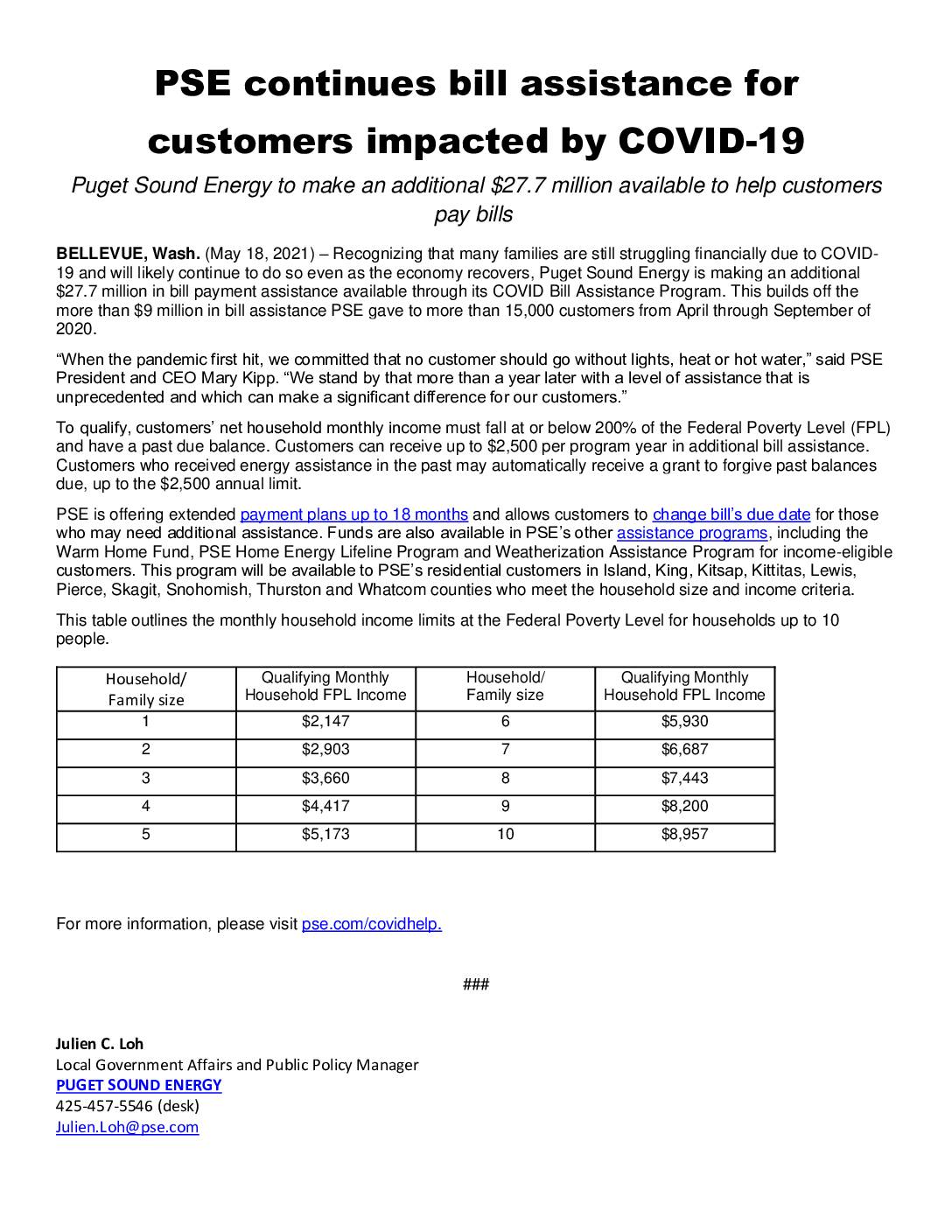
PSE continues bill assistance for customers impacted by COVID-19
Puget Sound Energy (PSE) announced in May 2021 that it would make an additional $27.7 million available through its COVID Bill Assistance Program to help residential customers struggling to pay energy bills due to the pandemic. Customers whose net monthly household income falls at or below 200% of the Federal Poverty Level and have a past due balance may qualify for up to $2,500 per year in assistance. PSE also offered extended payment plans of up to 18 months and additional support through programs such as the Warm Home Fund and Weatherization Assistance Program. -
 2020-12-01
Washington 2021 State Energy Strategy: Transitioning to an equitable clean energy future
The Washington 2021 State Energy Strategy, published by the Washington State Department of Commerce in December 2020, outlines a blueprint for transitioning the state to clean energy by 2050, with the goal of nearly eliminating fossil fuel use while sustaining economic growth. The strategy emphasizes affordable and reliable energy, meeting science-based greenhouse gas emission limits, and ensuring that Tribes, rural communities, and low-income households are included as partners in the transition. Note: this document addresses statewide energy and climate policy and does not contain content related to Sea-Tac Airport noise policy. -
 2020-02-25
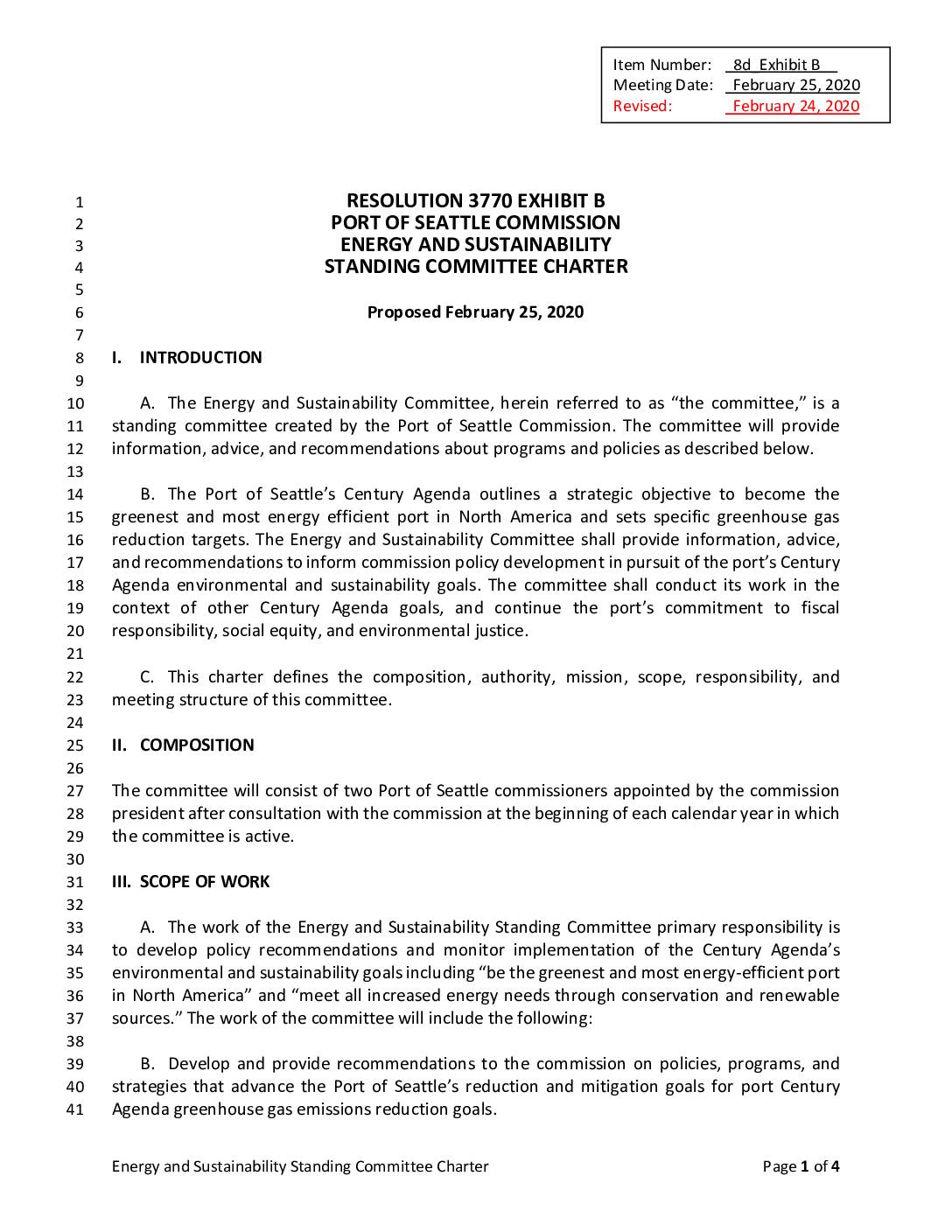
Port Of Seattle Commission Energy and Sustainability Standing Committee charter
The Port of Seattle Commission established the Energy and Sustainability Standing Committee to develop policy recommendations and monitor progress toward the port's environmental goals, including becoming the greenest and most energy-efficient port in North America and reducing carbon emissions 50% by 2030. The committee, composed of two appointed commissioners, oversees areas such as sustainable aviation fuels, shore power for cruise ships, and clean energy planning. While it can gather information and advise the full Commission, it does not have independent legal authority to act on the Commission's behalf. -
Lawmakers want tougher carbon-reduction goals, even as WA falls short of current targets
Citing the latest scientific research, Gov. Jay Inslee is urging legislators to adopt a more aggressive course for curbing emissions. by Shauna Sowersby / January 17, 2020 Piles of wood chips sit near the RockTenn paper mill in Tacoma, June 1, 2016. State measures to limit greenhouse gas emissions from large polluters, including the mill, aren’t -
U.S. Energy Information Administration
The U.S. Energy Information Administration (EIA) collects, analyzes, and disseminates independent and impartial energy information to promote sound policymaking, efficient markets, and public understanding of energy and its interaction with the economy and the environment. Our Work EIA provides a wide range of information and data products covering energy production, stocks, demand, imports, exports, and -
 2017-10-24
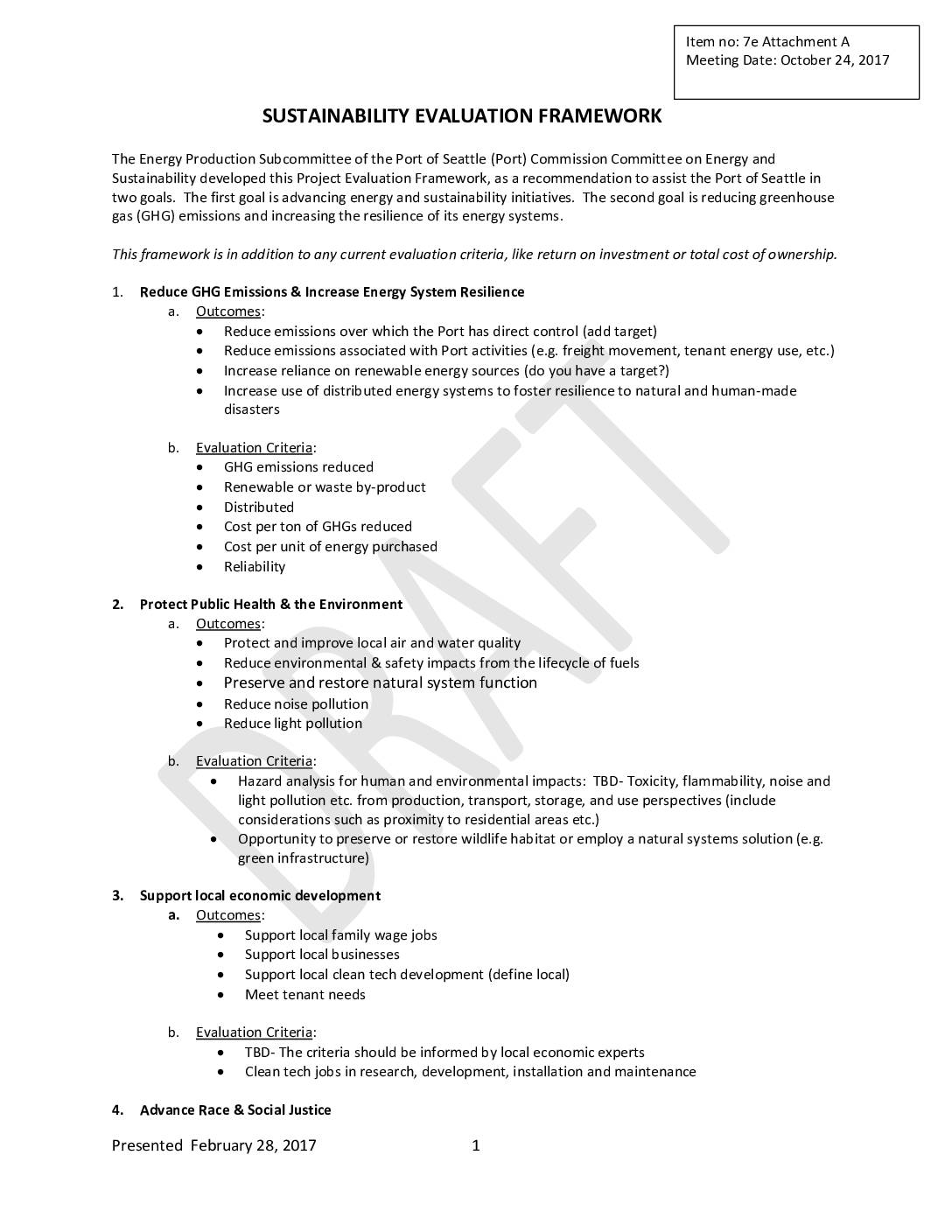
Sustainability evaluation framework
The Port of Seattle's Sustainability Evaluation Framework outlines six key goals for guiding energy and sustainability decisions: reducing greenhouse gas emissions, protecting public health and the environment, supporting local economic development, advancing race and social justice, leveraging partnerships, and encouraging innovation. Developed by the Energy Production Subcommittee, the framework provides outcomes and evaluation criteria for each goal, supplementing existing financial measures like return on investment. The subcommittee recommends the Port incorporate these considerations into its decision-making when evaluating energy sources and projects.