TagRCW53(5)
-
2026-01-21
SB5652 introduced in Senate Environment, Energy, and Technology Committee
Expansive airport bill gets warm first hearing Documents/Schedule Our Take Senator Tina Orwall introduced her bill with an emotional anecdote as to the harms of childhood asthma–and the health benefits of proper air filters. This was a good idea considering the bill’s complexity. We applaud the legislative aide responsible for summarizing its contents. The bill -
 2025-06-01
The Gift of Public Funds Bogeyman
★ 32This 2025 Washington Law Review article argues that Washington State's 'gift of public funds' doctrine—which prohibits governments from giving away public assets—is widely misunderstood and far less restrictive than most officials believe. The authors, both attorneys in Washington's Solicitor General's Office, explain that modern court interpretations allow governments broad flexibility to fund programs serving legitimate public purposes, and note that no appellate court has struck down any government program under this doctrine in the past 45 years. The article urges public officials and lawyers to stop letting unfounded fears about this doctrine block innovative policy solutions to problems like homelessness, childcare, and climate change. -
 2024-07-12
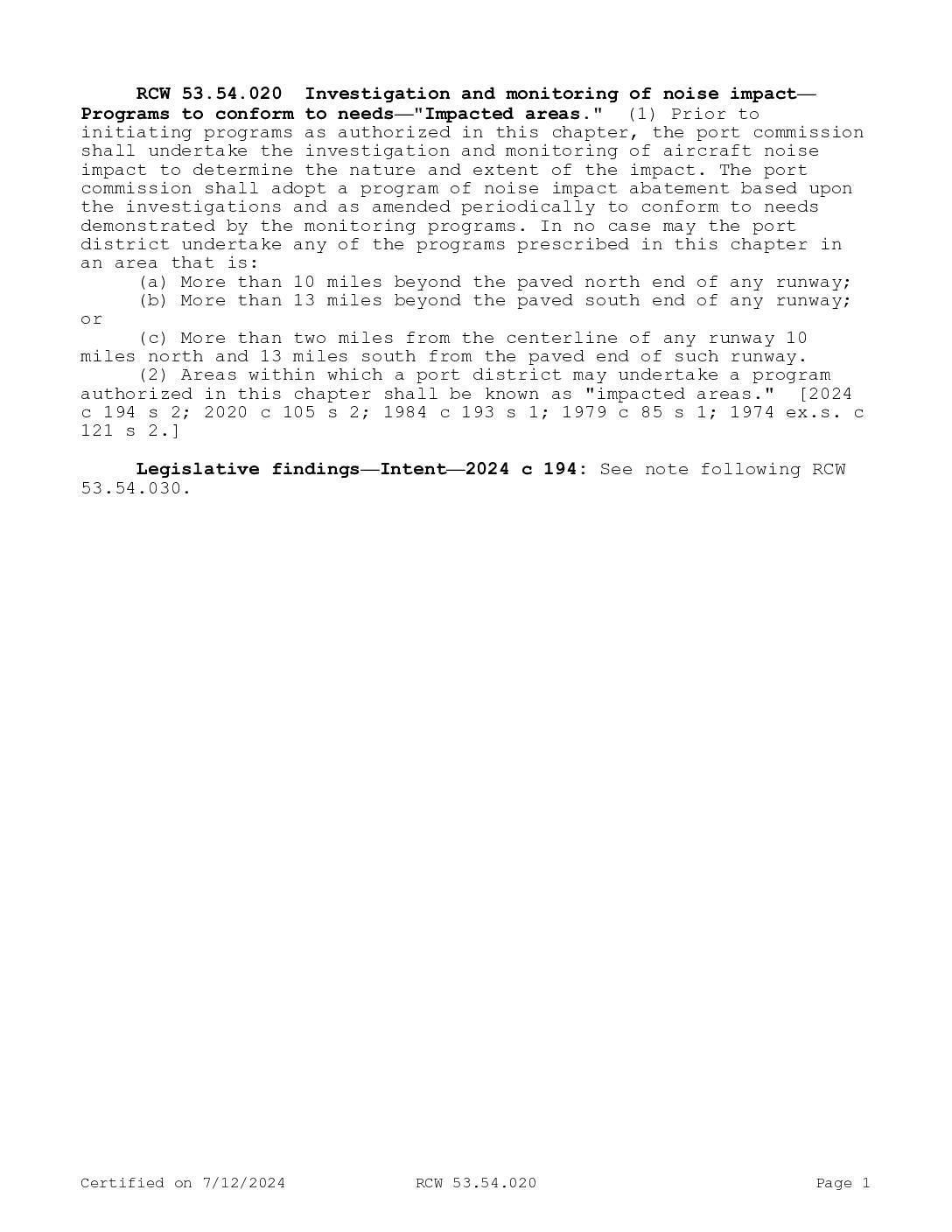
RCW 53.54.020 Investigation and monitoring of noise impact—Programs to conform to needs—”Impacted areas.”
Washington state law defining requirements for port commissions to investigate and monitor aircraft noise impact before initiating abatement programs. Establishes geographic boundaries for “impacted areas” where port districts may undertake noise programs, with specific distance limitations from runway ends and centerlines. -
 2023-01-13
Match requirements prevent rural and low-capacity communities from accessing climate resilience funding
More than 60% of federal resilience funding in the Bipartisan Infrastructure Law requires a local match, with an additional 13% requiring a match under certain conditions. Requirements for matching funds have been included in federal funding programs to promote economic efficiency and ensure communities have “skin in the game.” In practice, however, they can impose insurmountable burdens on communities, -
 2020-06-11
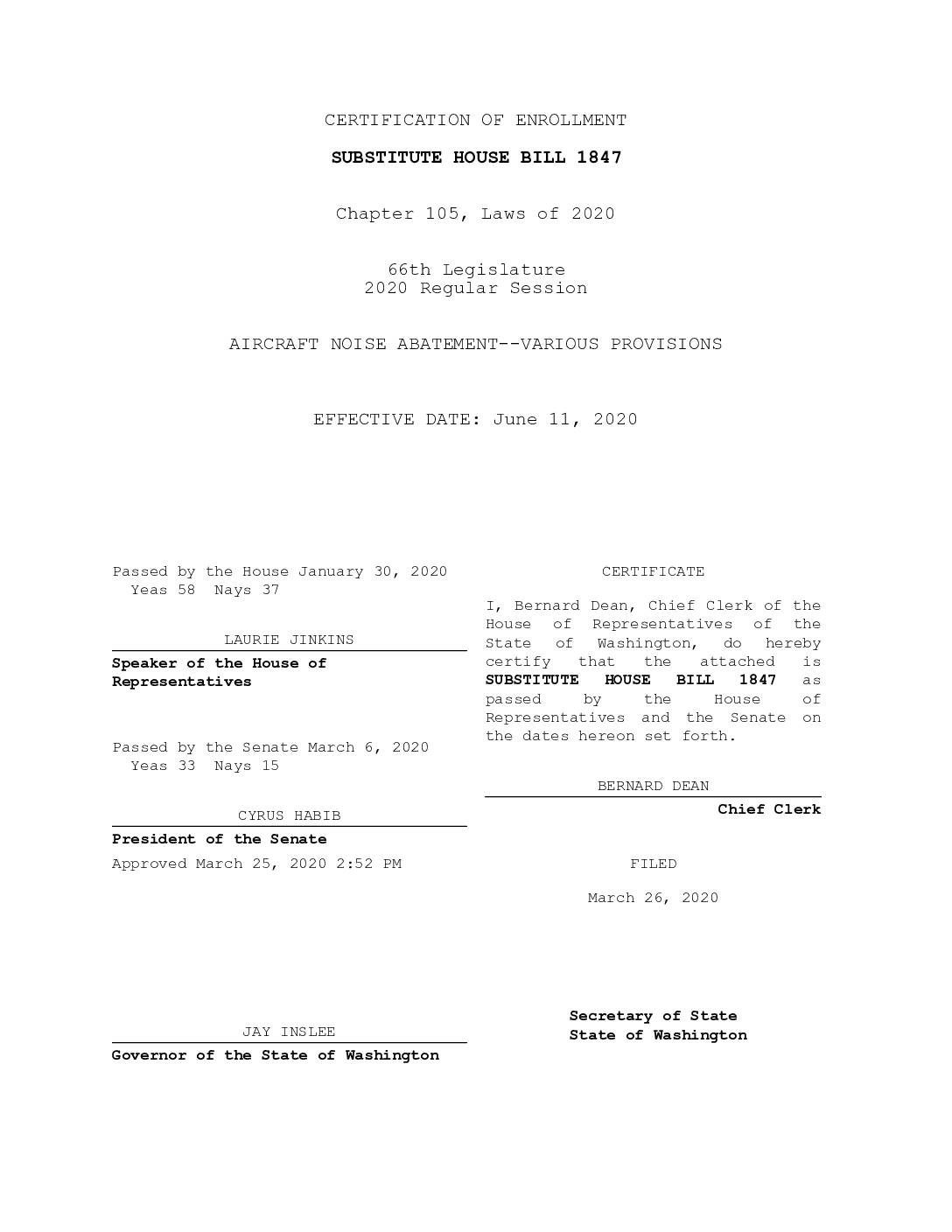
SHB1847 – Aircraft Noise Abatement Various Provisions
Washington State's Substitute House Bill 1847, signed into law on March 25, 2020, expands the aircraft noise abatement programs available to port districts by lowering the threshold for eligibility from airports serving more than 900 scheduled jet flights per day (previously 20). The law also enlarges the geographic 'impacted areas' around runways where noise relief programs—such as soundproofing, property acquisition, and transaction assistance—can be offered, extending coverage from six to ten miles north and up to thirteen miles south of runway ends, and from one to two miles from runway centerlines.