TagThird Runway(1084)
-
 2026-09-18
Flight Plan: Real Solutions to Washington’s Air Transportation Needs
Legislative guide prepared by the Airport Communities Coalition (ACC) — comprising City of Burien, City of Des Moines, City of Normandy Park, City of Tukwila, and Highline School District — for the Washington State Legislature, arguing against additional runway construction at Sea-Tac Airport and advocating for a supplemental airport to address Puget Sound regional air -
2026-09-18
Flight Plan: Real Solutions to Washington’s Air Transportation Needs
Legislative guide prepared by the Airport Communities Coalition (ACC) — comprising City of Burien, City of Des Moines, City of Normandy Park, City of Tukwila, and Highline School District — for the Washington State Legislature, arguing against additional runway construction at Sea-Tac Airport and advocating for a supplemental airport to address Puget Sound regional air -
 2026-09-18
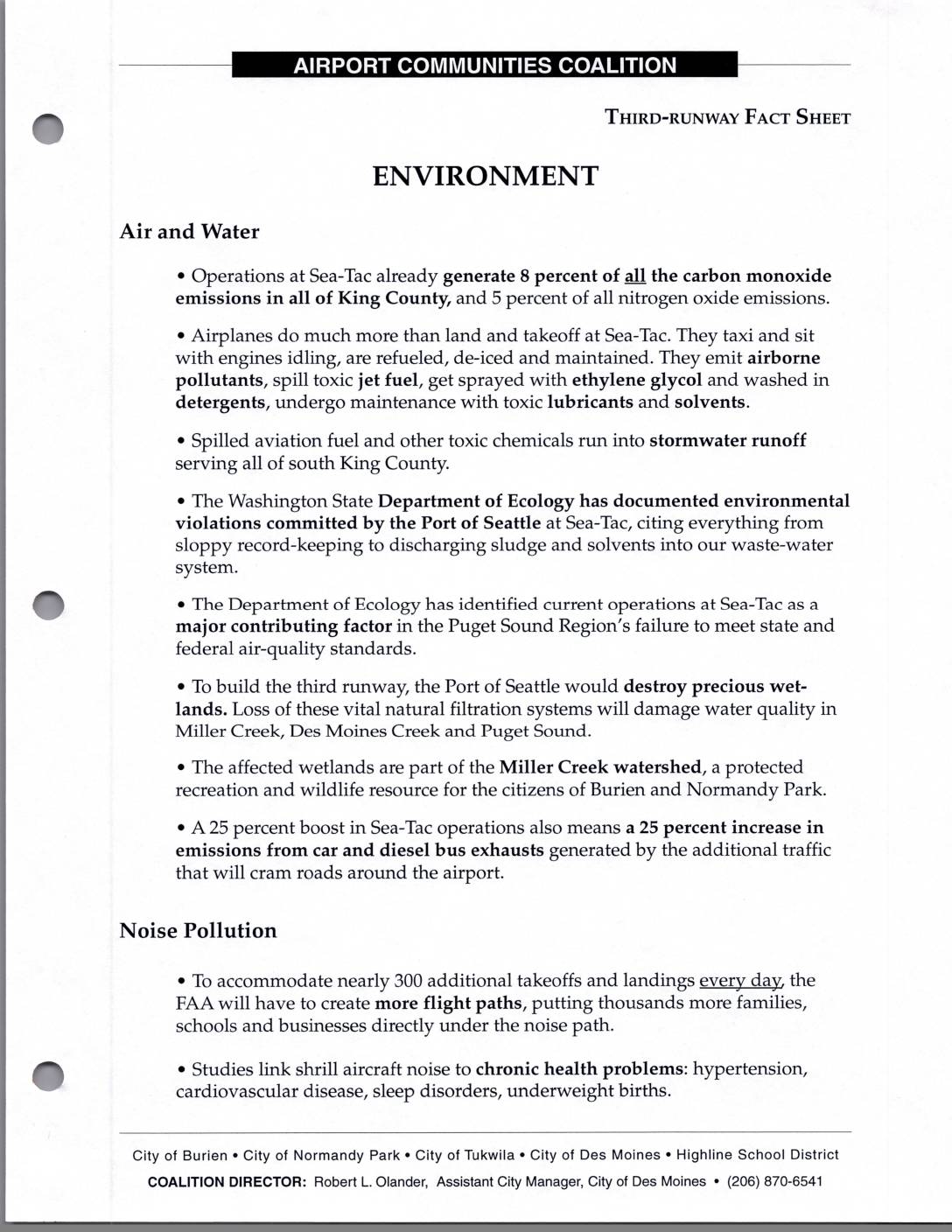
ACC Third-Runway Fact Sheet: Environment, Costs, Schools, and Construction
Airport Communities Coalition (ACC) fact sheet opposing the Sea-Tac Airport third runway, covering environmental, cost, school, and construction impacts. Environmental section documents Sea-Tac generating 8% of King County carbon monoxide and 5% of nitrogen oxide emissions, Washington State Department of Ecology violations by Port Of Seattle including sludge and solvent discharge, destruction of Miller Creek -
2026-09-18
ACC Third-Runway Fact Sheet: Environment, Costs, Schools, and Construction
Airport Communities Coalition (ACC) fact sheet opposing the Sea-Tac Airport third runway, covering environmental, cost, school, and construction impacts. Environmental section documents Sea-Tac generating 8% of King County carbon monoxide and 5% of nitrogen oxide emissions, Washington State Department of Ecology violations by Port Of Seattle including sludge and solvent discharge, destruction of Miller Creek -
 2026-09-18
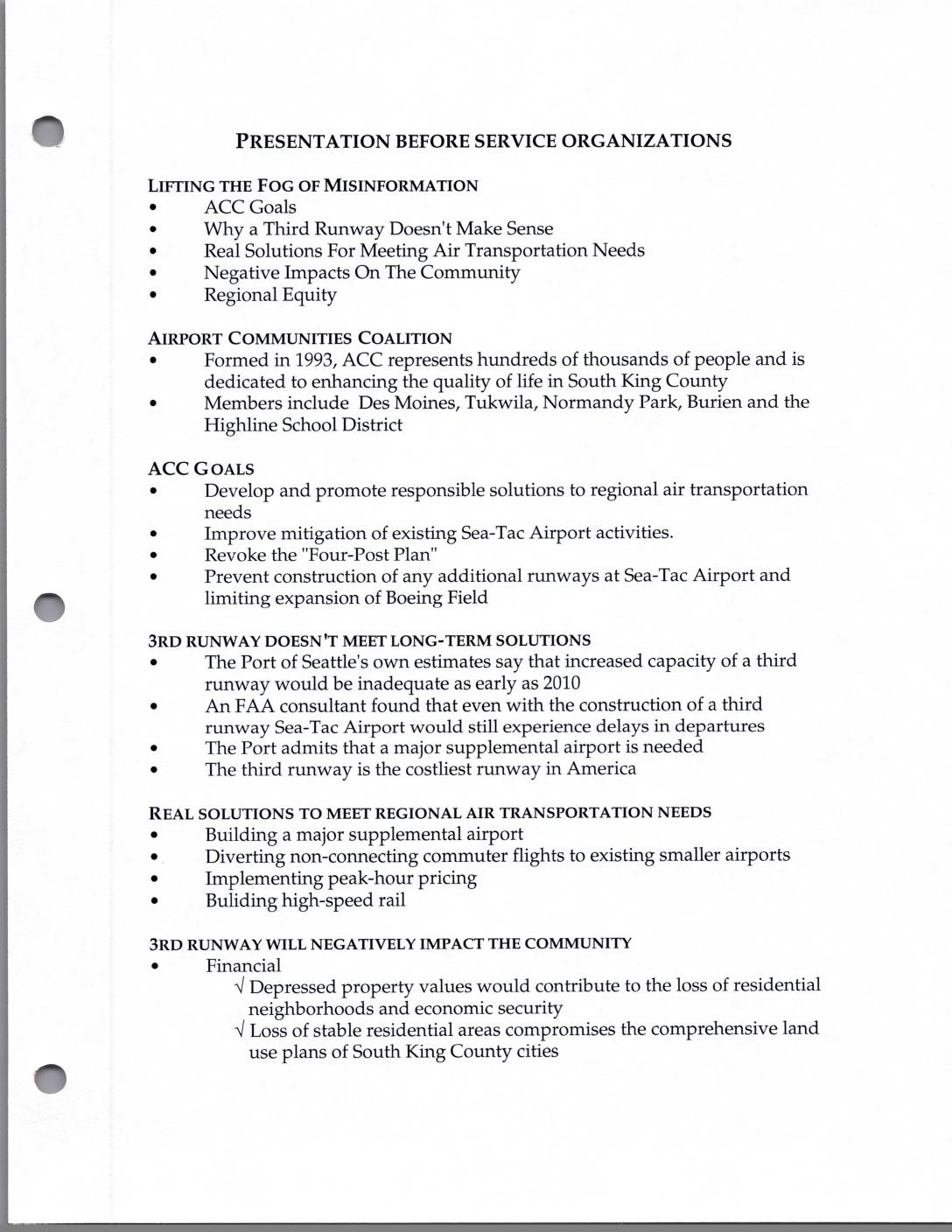
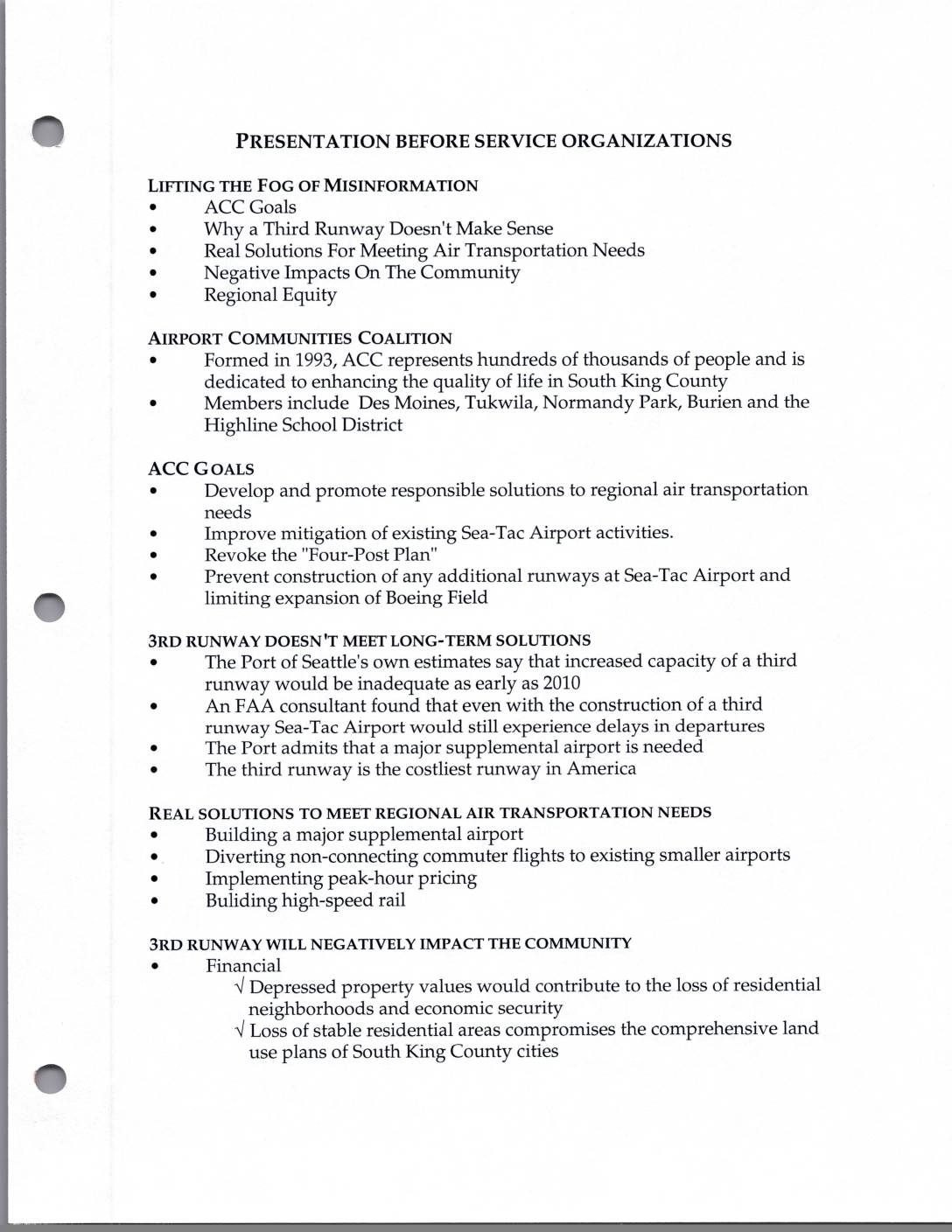
ACC Presentation Before Service Organizations: Lifting the Fog of Misinformation
Airport Communities Coalition (ACC) presentation to service organizations opposing the Third Runway at Sea-Tac Airport, covering ACC goals including revoking the Four-Post Plan and preventing additional runways. Argues the Third Runway is inadequate even by Port of Seattle’s own estimates (capacity shortfall by 2010), is the costliest runway in America, and would not resolve departure -
 2026-09-18
ACC Presentation Before Service Organizations: Lifting the Fog of Misinformation
Airport Communities Coalition (ACC) presentation to service organizations opposing the Third Runway at Sea-Tac Airport, covering ACC goals including revoking the Four-Post Plan and preventing additional runways. Argues the Third Runway is inadequate even by Port of Seattle’s own estimates (capacity shortfall by 2010), is the costliest runway in America, and would not resolve departure -
 2026-09-18
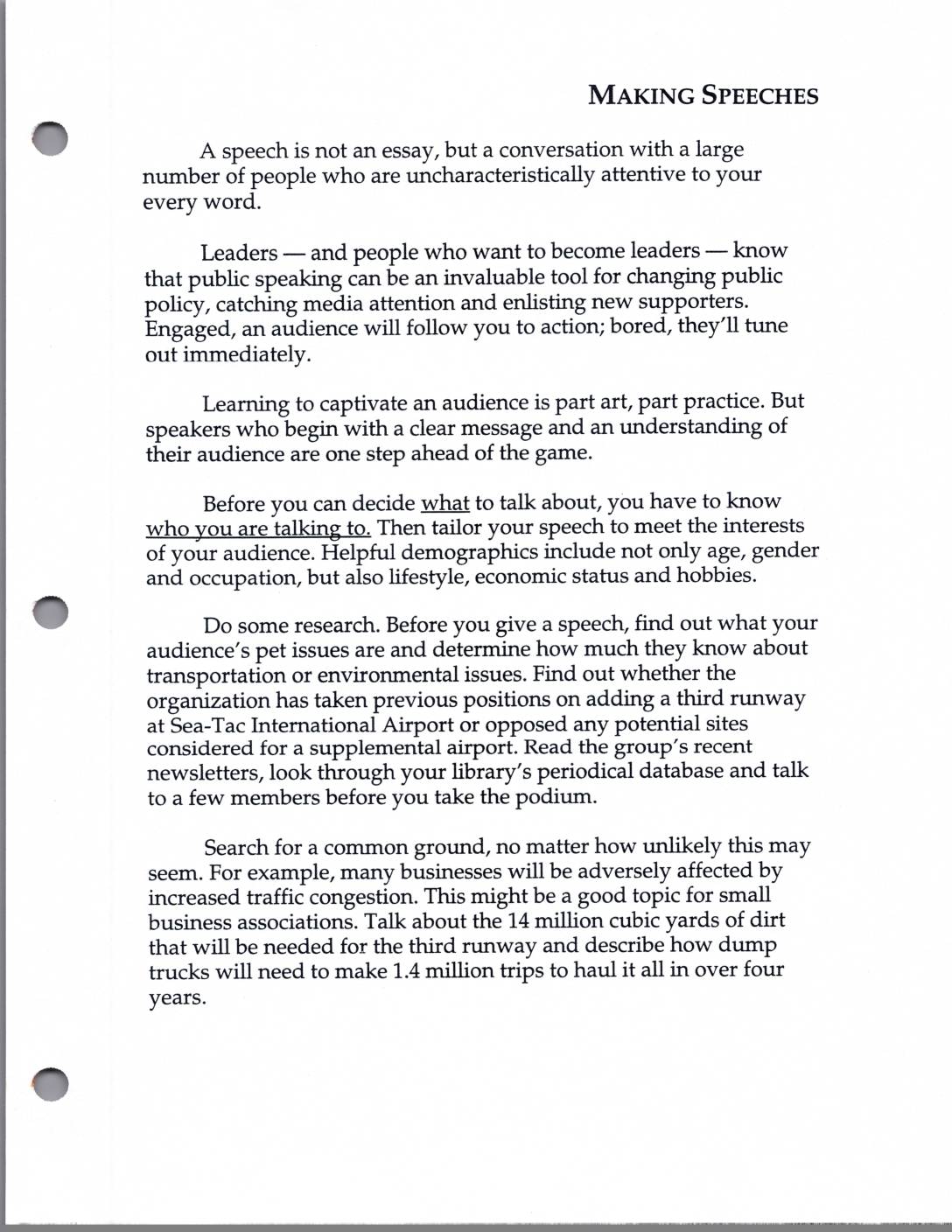
Making Speeches
ACC (Airport Communities Coalition) guide on public speaking strategy for advocates opposing the Sea-Tac Airport third runway. Covers audience research (demographics, pet issues, prior positions on Sea-Tac third runway and supplemental airport), finding common ground (e.g., traffic congestion impacts on small businesses, 14 million cubic yards of fill dirt requiring 1.4 million dump truck trips), -
2026-09-18
Making Speeches
ACC (Airport Communities Coalition) guide on public speaking strategy for advocates opposing the Sea-Tac Airport third runway. Covers audience research (demographics, pet issues, prior positions on Sea-Tac third runway and supplemental airport), finding common ground (e.g., traffic congestion impacts on small businesses, 14 million cubic yards of fill dirt requiring 1.4 million dump truck trips), -
 2026-09-18
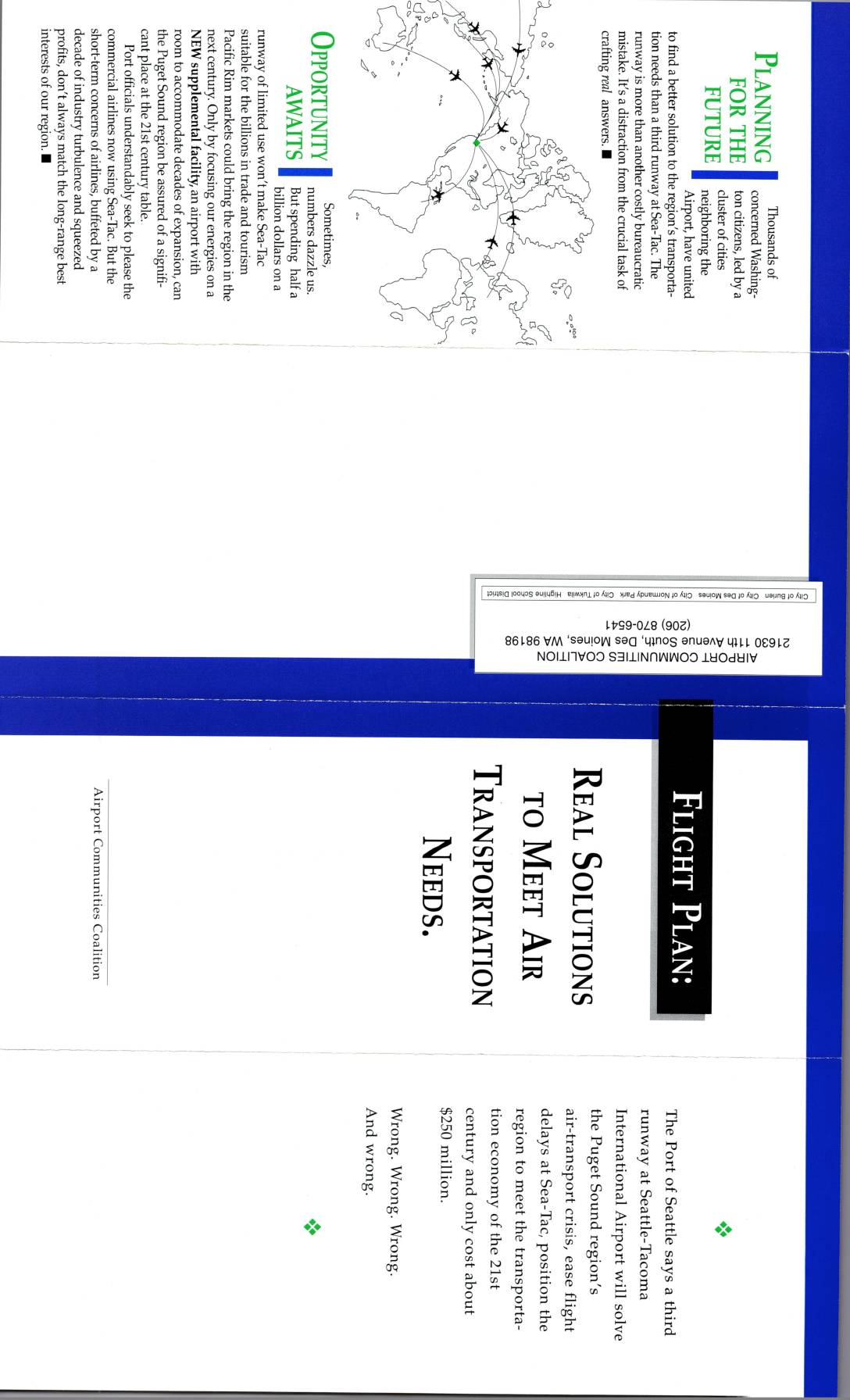
Flight Plan: Real Solutions to Meet Air Transportation Needs
Airport Communities Coalition (ACC) advocacy brochure opposing the Port of Seattle’s proposed third runway at Sea-Tac Airport. Argues that a third runway won’t stop flight delays caused by bad weather, is too physically constrained at Sea-Tac (citing Sea-Tac as one of the 100 largest U.S. airports operating on the smallest land area), and would be -
2026-09-18
Flight Plan: Real Solutions to Meet Air Transportation Needs
Airport Communities Coalition (ACC) advocacy brochure opposing the Port of Seattle’s proposed third runway at Sea-Tac Airport. Argues that a third runway won’t stop flight delays caused by bad weather, is too physically constrained at Sea-Tac (citing Sea-Tac as one of the 100 largest U.S. airports operating on the smallest land area), and would be