TagOpen House(8)
-
 2026-07-14
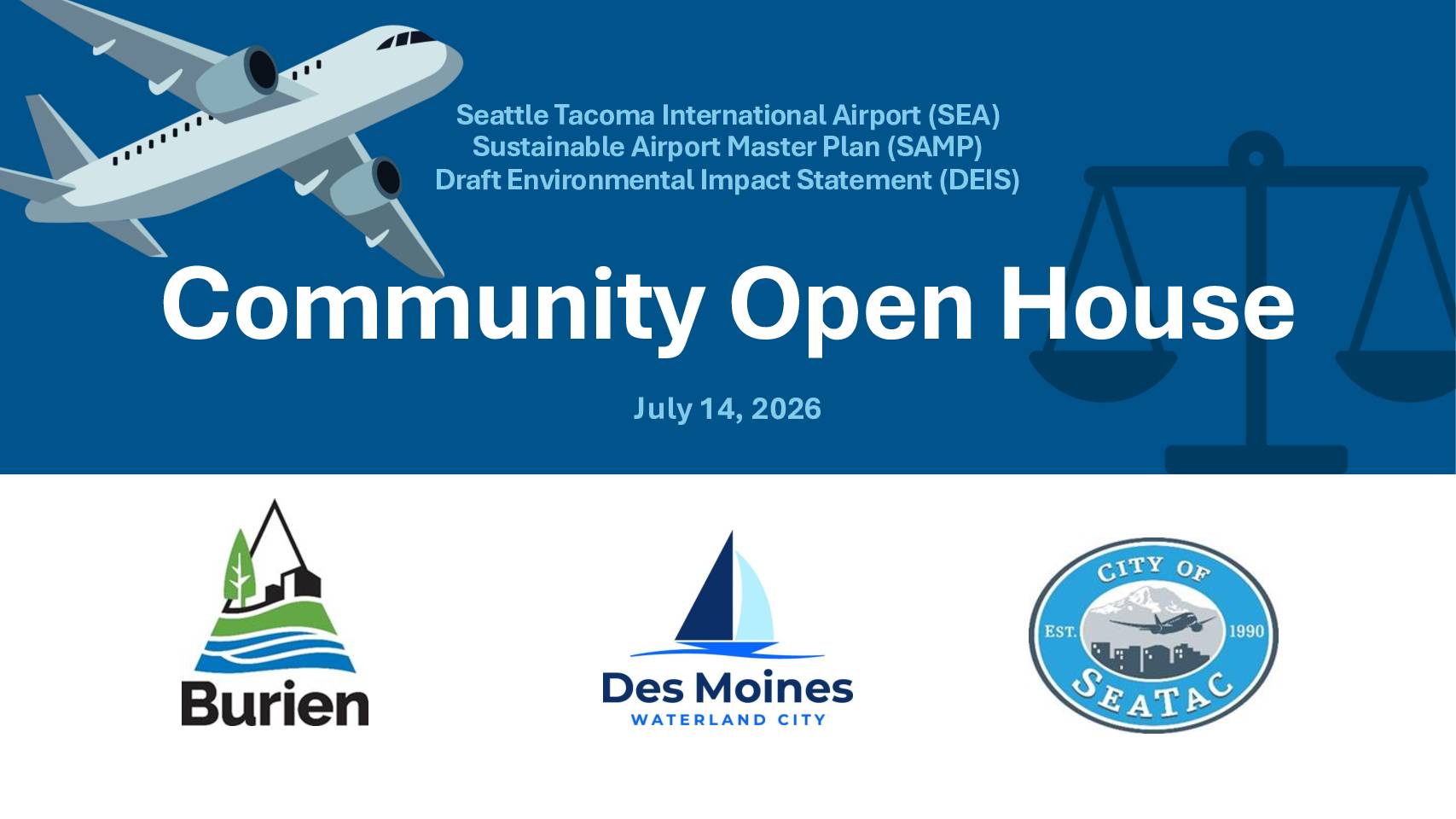
Seattle Tacoma International Airport (SEA) Sustainable Airport Master Plan (SAMP) Draft Environmental Impact Statement (DEIS) community open house
The City of Burien, Des Moines, and SeaTac co-hosted a Community Open House on July 14, 2026, to present the Draft Environmental Impact Statement (DEIS) for Seattle-Tacoma International Airport's Sustainable Airport Master Plan (SAMP). The meeting covered proposed airfield, terminal, cargo, and landside expansion projects, along with their potential environmental impacts on surrounding communities. Residents were invited to learn about next steps and submit public comments on the plan. -
 2022-09-13
Commercial Aviation Coordinating Commission: Online Open House and Virtual Public Meeting Report
The Commercial Aviation Coordinating Commission (CACC) held an online public engagement process in August–September 2022 to gather Washington state residents' input on potential new airport sites. Nearly 20,000 users participated, and majorities opposed all ten proposed 'greenfield' locations, citing concerns about environmental impacts, noise, farmland loss, and traffic. The most common feedback at virtual public meetings was opposition to the East King County site, with many participants also raising concerns about proximity to Sea-Tac Airport. -
SAMP-2015-0519-BP12-PortofSeattle Page 13
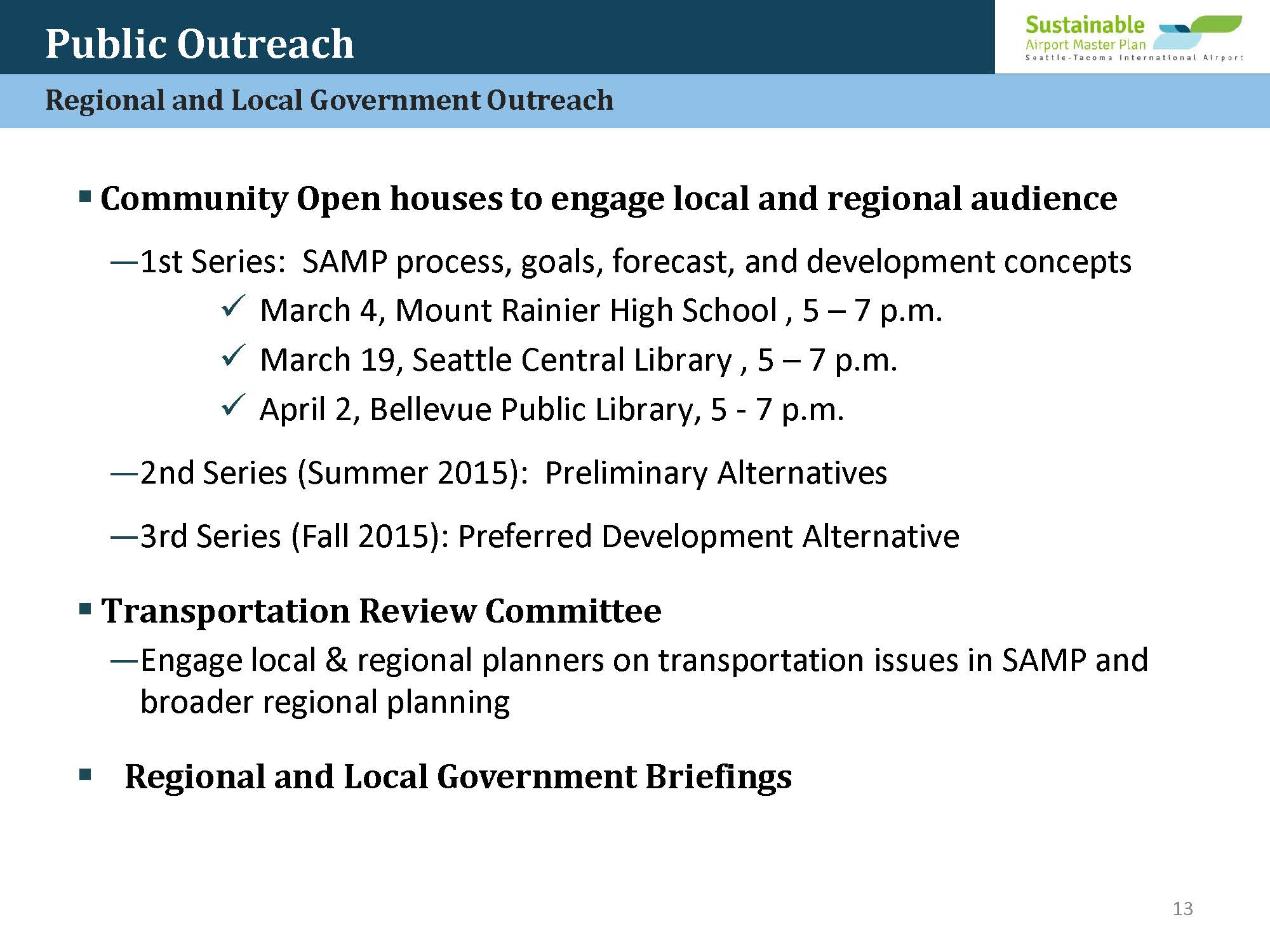
Slide 13 from the Seattle-Tacoma International Airport Sustainable Airport Master Plan (SAMP) presentation detailing public outreach activities, including three series of Community Open Houses (1st series dates: March 4 at Mount Rainier High School, March 19 at Seattle Central Library, and April 2 at Bellevue Public Library, all 5–7 p.m.), a Transportation Review Committee, and Regional and Local Government Briefings. The 2nd and 3rd open house series were planned for Summer and Fall 2015 respectively. -
 2022-01-31
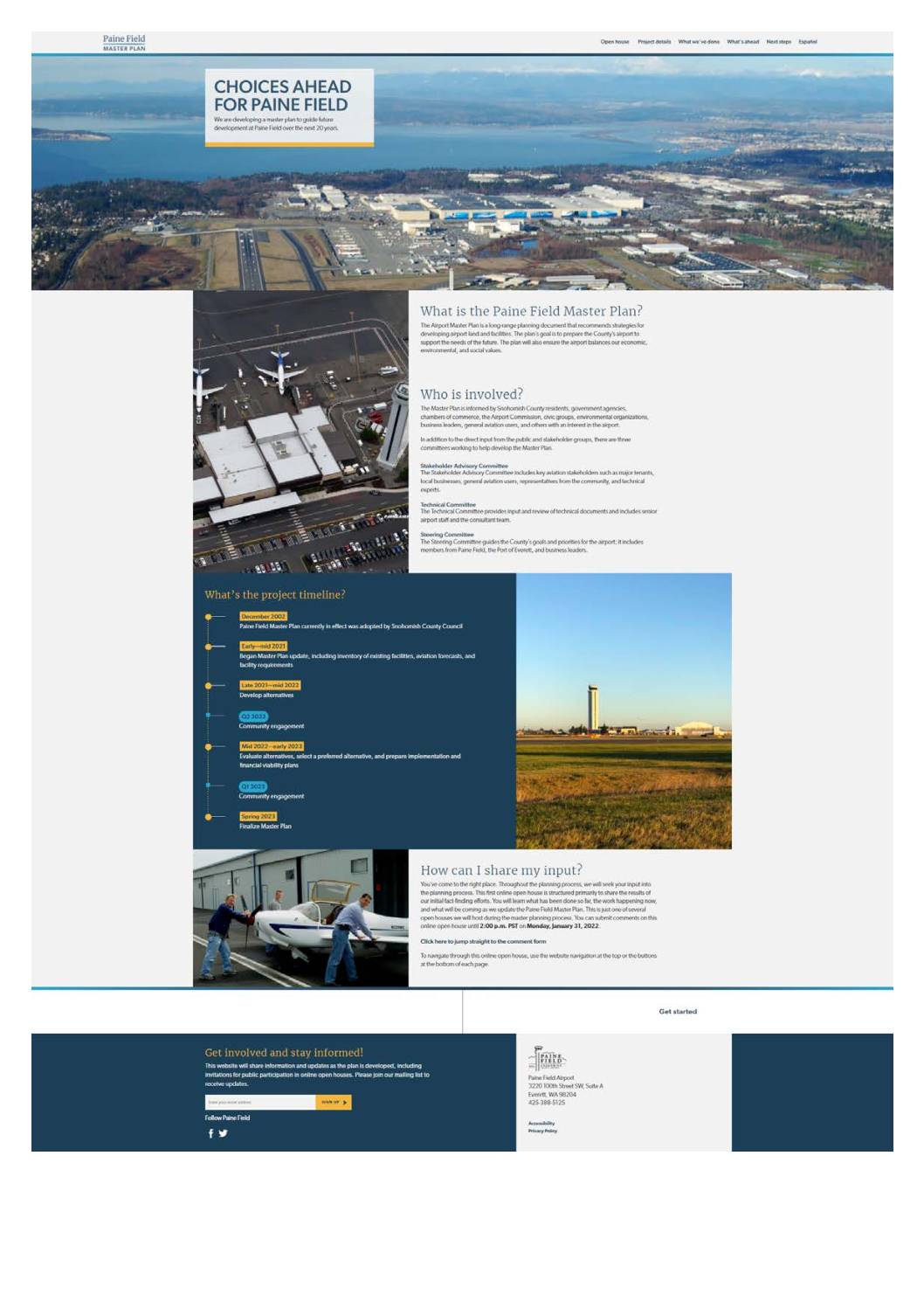
Choices Ahead for Paine Field: Master Plan Open House
Snohomish County is developing a 20-year Master Plan for Paine Field Airport near Everett, WA, driven by growing aviation demand and Sea-Tac International Airport approaching its capacity limits. The plan examines existing facilities, passenger and cargo forecasts, and development alternatives, with passenger volume projected to exceed 4 million annually by 2040. Public input is being gathered through online open houses and community engagement sessions throughout the planning process. -
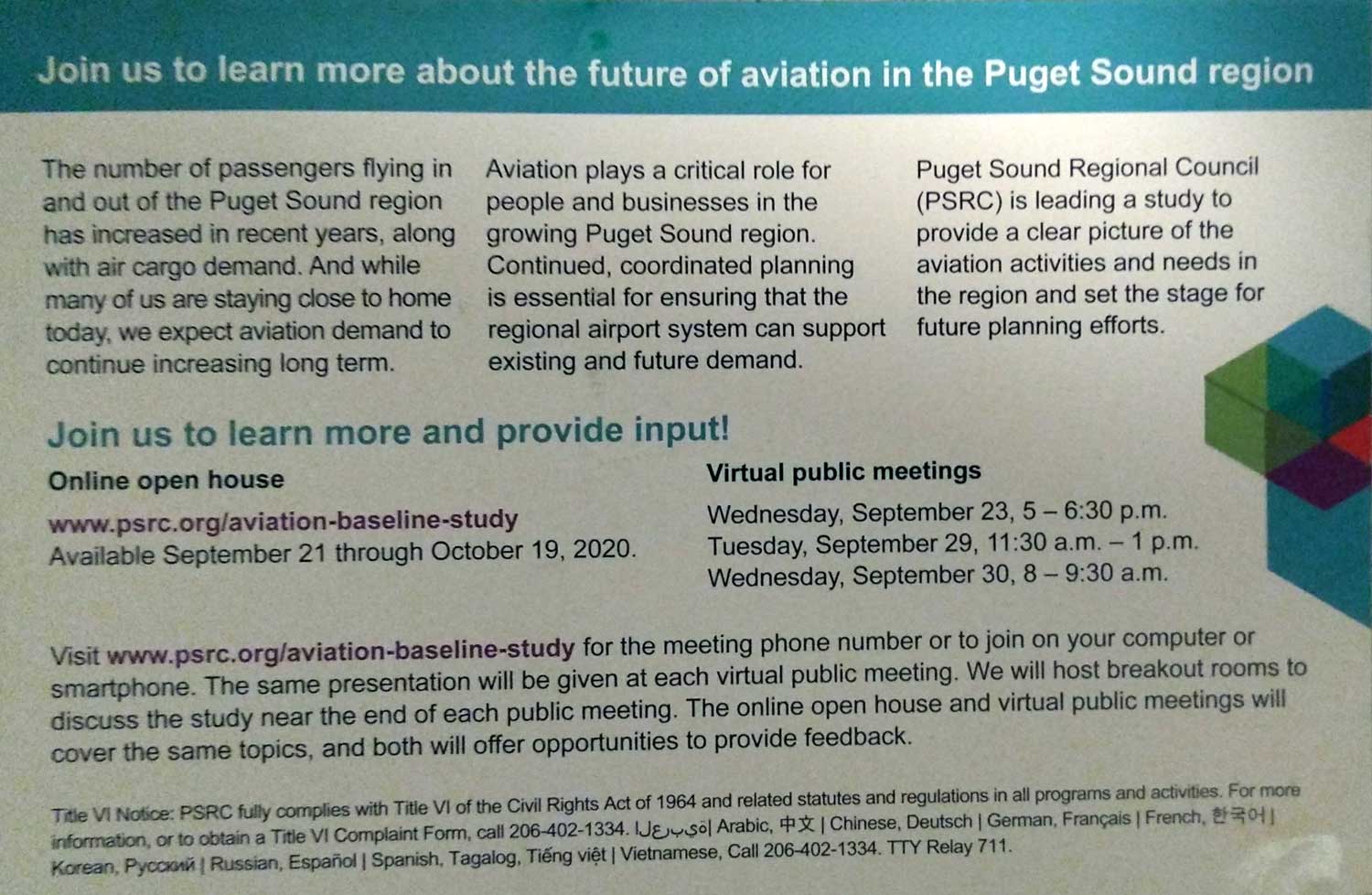
PSRC Baseline Study Virtual Public Meeting Postcard (09-23-2020)
A public outreach flyer from the Puget Sound Regional Council (PSRC) inviting community members to learn about the future of aviation in the Puget Sound region. The flyer advertises an online open house at www.psrc.org/aviation-baseline-study (available September 21–October 19, 2020) and three virtual public meetings scheduled for September 23, 29, and 30, 2020. -
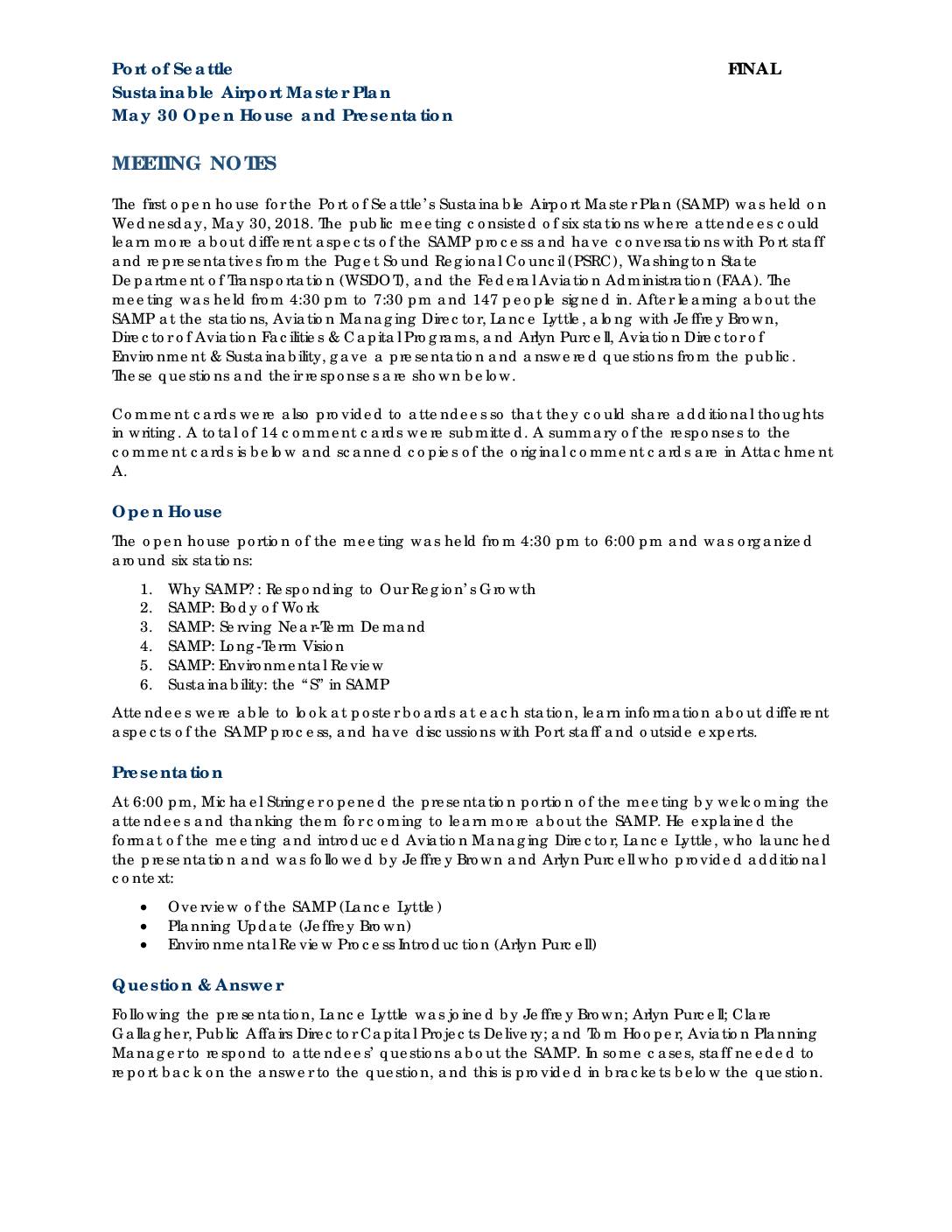 2018-05-30
Sustainable Airport Master Plan May 30 open house and presentation meeting notes
On May 30, 2018, the Port of Seattle held its first public open house for the Sustainable Airport Master Plan (SAMP), drawing 147 attendees who discussed Sea-Tac Airport's projected growth to 56 million annual passengers and 480,000 aircraft operations by 2027. Community members raised concerns about noise, pollution, and the disproportionate impact on nearby low-income and minority communities, while Port officials explained limitations on controlling flight schedules and discussed noise mitigation efforts. The meeting notes document questions and answers covering topics such as cargo forecasts, flight pattern changes, the airport's physical footprint, and the possibility of distributing air traffic among other regional airports. -
-
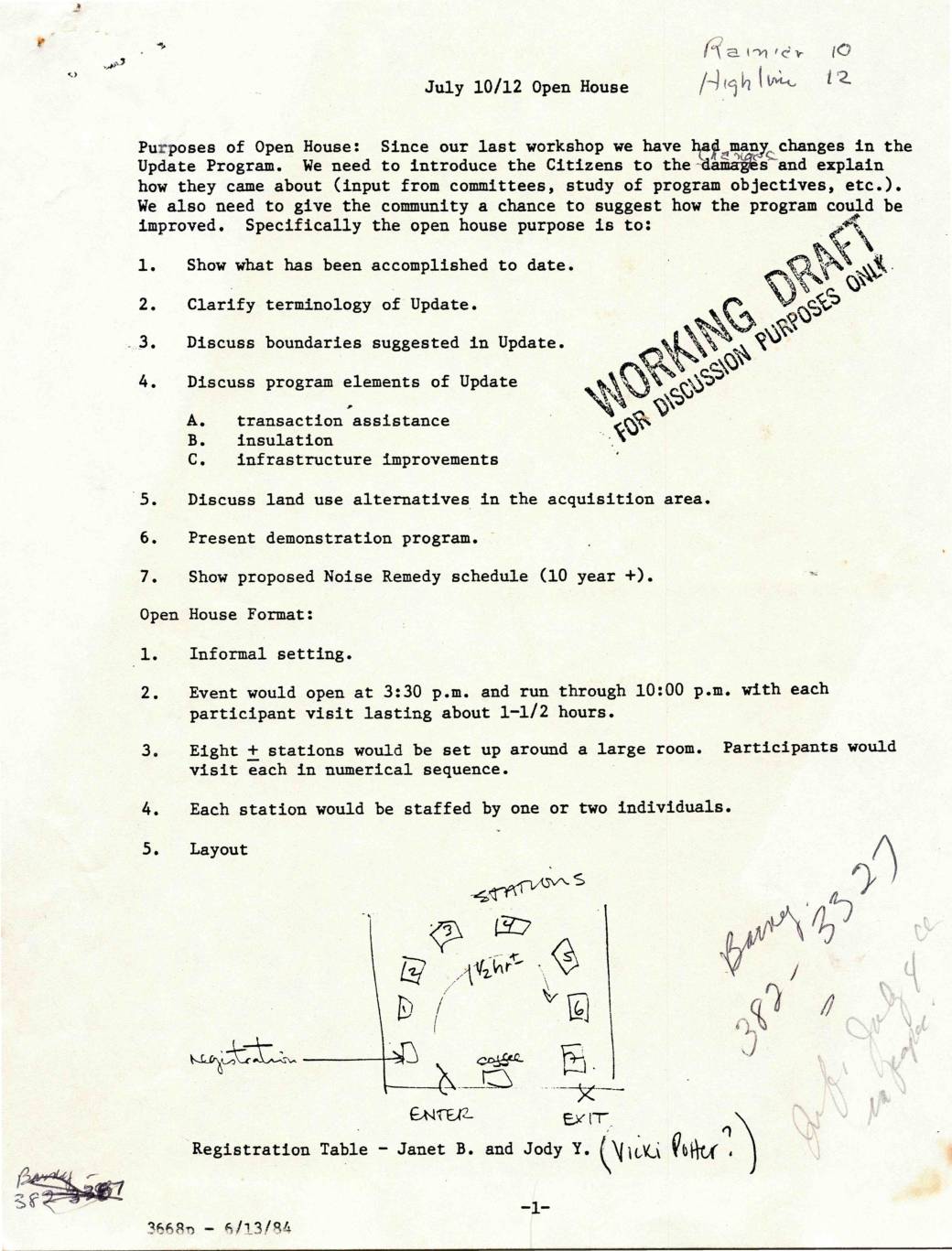 1984-06-13
July 10/12 open house planning document
This 1984 working draft outlines the planning and format for two public open house events held on July 10 and 12 at Rainier High School and Highline High School, designed to inform the community about updates to the Sea-Tac Airport Noise Remedy Program. The events featured eight informational stations covering topics such as insulation, transaction assistance, infrastructure improvements, land use alternatives, and a proposed 10-year Noise Remedy schedule, with each visitor spending approximately 1.5 hours rotating through the stations. The document also details staffing assignments, budget estimates, necessary equipment, publicity plans, and an attendance expectation of roughly 300 people per event.