TagFAA Density Guidelines(9)
-
Part 150 for Dummies
Read this, including the recent update, and then attend the upcoming Port of Seattle Part 150 workshops. -
 2023-08-22
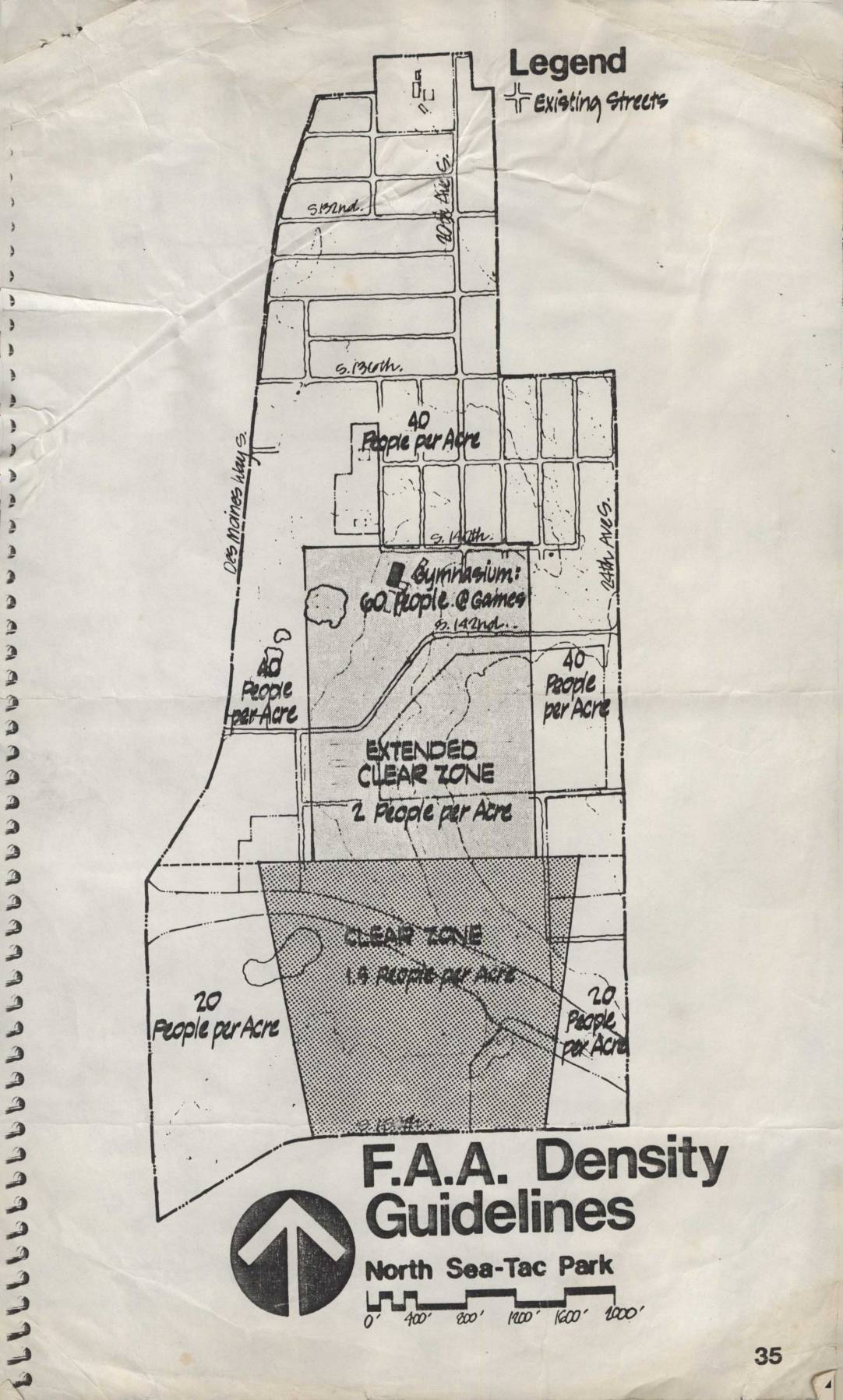
F.A.A. density guidelines: North Sea-Tac Park
This document presents FAA density guidelines for the North Sea-Tac Park area near Seattle-Tacoma International Airport, showing recommended population limits per acre across different zones. Areas closest to the runway are designated as a 'Clear Zone' allowing only 1.5 people per acre, while an 'Extended Clear Zone' permits 2 people per acre, and surrounding residential areas are limited to 20–40 people per acre. A gymnasium on the map is noted as accommodating 60 people during games, illustrating how the guidelines account for concentrated gatherings near airport flight paths. -
 2022-08-27
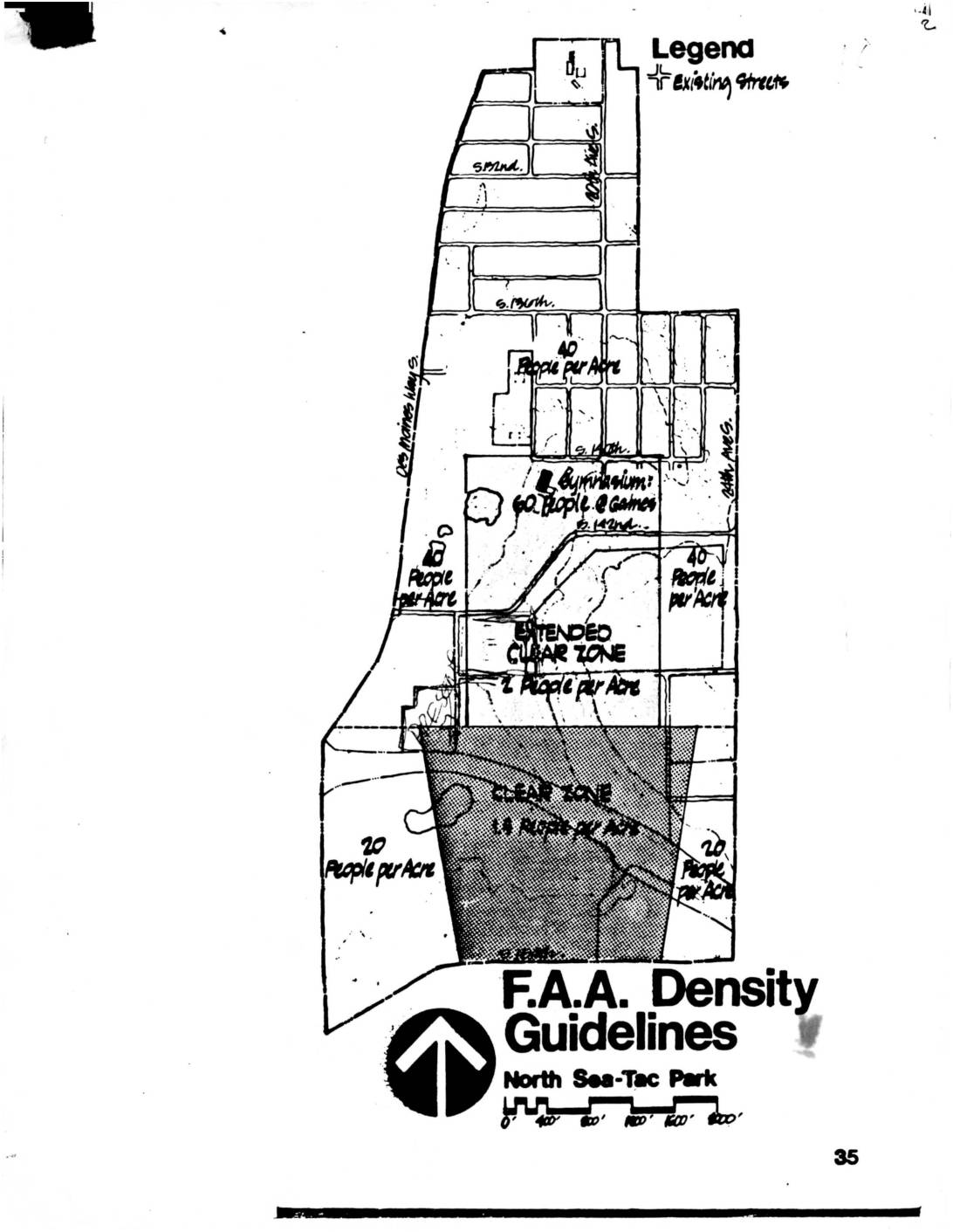
F.A.A. density guidelines: North Sea-Tac Park
This map illustrates the F.A.A. density guidelines for the North Sea-Tac Park area, showing recommended population limits per acre across different airport safety zones. The Clear Zone nearest the runway allows the fewest people (approximately 1.5 per acre), while the Extended Clear Zone permits around 2 people per acre, and surrounding residential areas are guided toward densities of 20 to 40 people per acre. A gymnasium is specifically noted at 60 people during games, reflecting how land use intensity is regulated based on proximity to airport flight paths. -
 2022-07-23
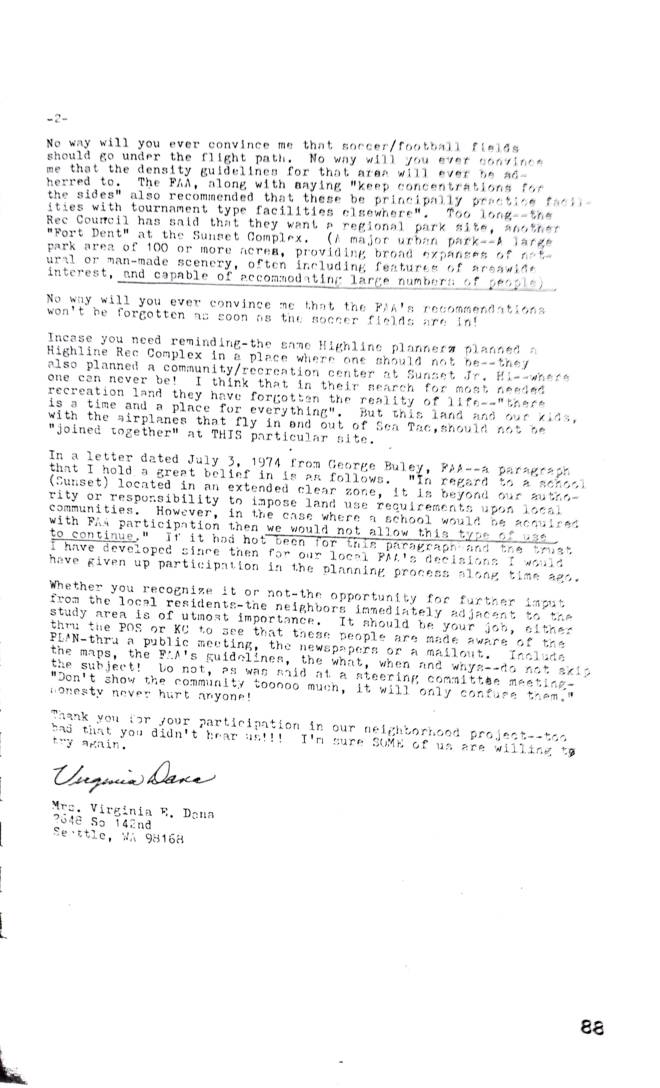
Letter from Virginia Dana Opposing Highline Communities Plan Soccer Fields Under Flight Path
In this letter, resident Mrs. Virginia E. Dana strongly opposes plans to place soccer and football fields under the flight path near Sea-Tac Airport, arguing that the FAA's own density guidelines and safety recommendations are being ignored. She references a 1974 FAA letter stating that certain land uses would not be permitted in extended clear zones with FAA participation, and criticizes Highline planners for repeatedly siting recreational facilities in inappropriate locations near the airport. Dana urges officials to hold public meetings and transparently inform neighboring residents about the planning process, including FAA guidelines and maps. -
 1983-02-01
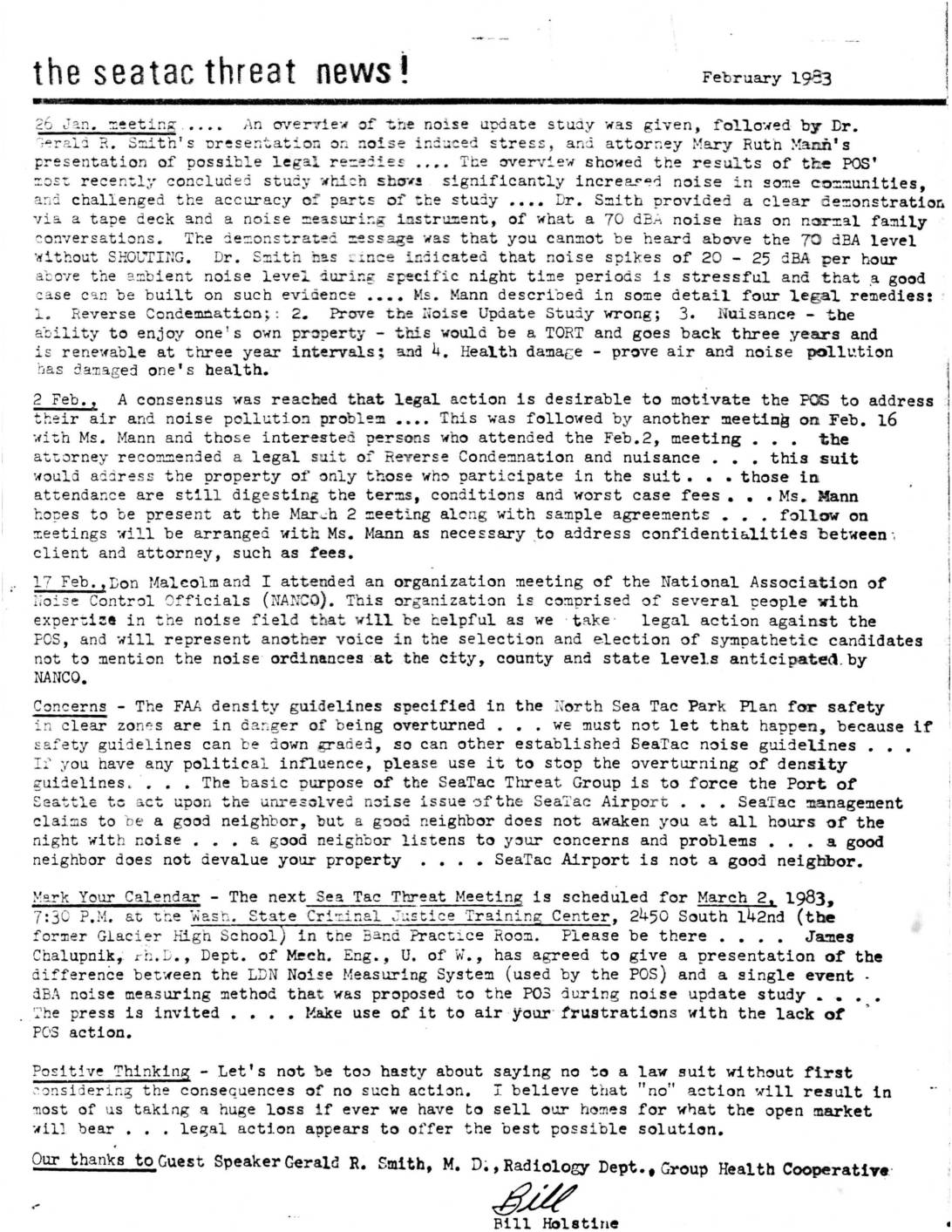
The Sea-Tac Threat News: February 1983
A February 1983 newsletter from the SeaTac Threat Group details community efforts to fight noise and air pollution from Seattle-Tacoma International Airport, including presentations on noise health impacts and four potential legal remedies such as reverse condemnation and nuisance suits. The group reached a consensus that legal action was the best way to pressure the Port of Seattle (POS) to address the airport's noise pollution, and members were encouraged to attend upcoming meetings with attorney Mary Ruth Mann to discuss terms and fees. The newsletter also highlights concerns about FAA safety density guidelines being overturned and urges residents with political influence to take action. -
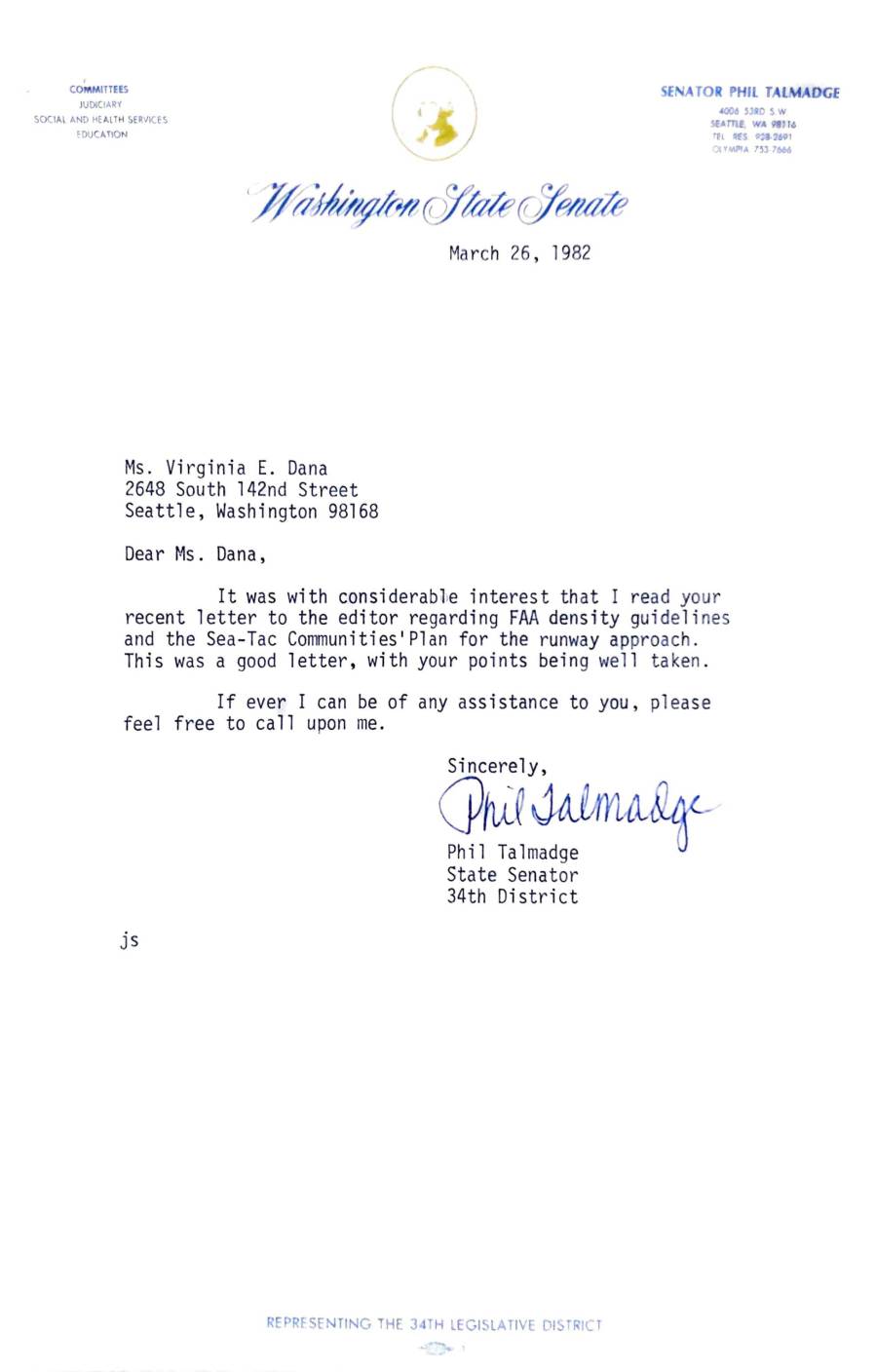 1982-03-26
Letter from Senator Phil Talmadge regarding FAA density guidelines and Sea-Tac Communities Plan
In a 1982 letter to the editor titled 'Clear Zone Rules Have a Purpose,' Seattle resident Virginia E. Dana defended FAA density guidelines restricting how many people could gather on land north of Sea-Tac Airport, arguing the area was acquired to serve as a safety zone for aircraft, not a public park without limitations. She noted that the Port of Seattle purchased the land partly with federal funds to address severe noise impacts on residents, and that the FAA's people-per-acre restrictions had already been approved by community organizations, Port commissioners, and King County Council. State Senator Phil Talmadge responded with a letter commending Dana's well-reasoned position on the FAA guidelines and the Sea-Tac Communities Plan for the runway approach area. -
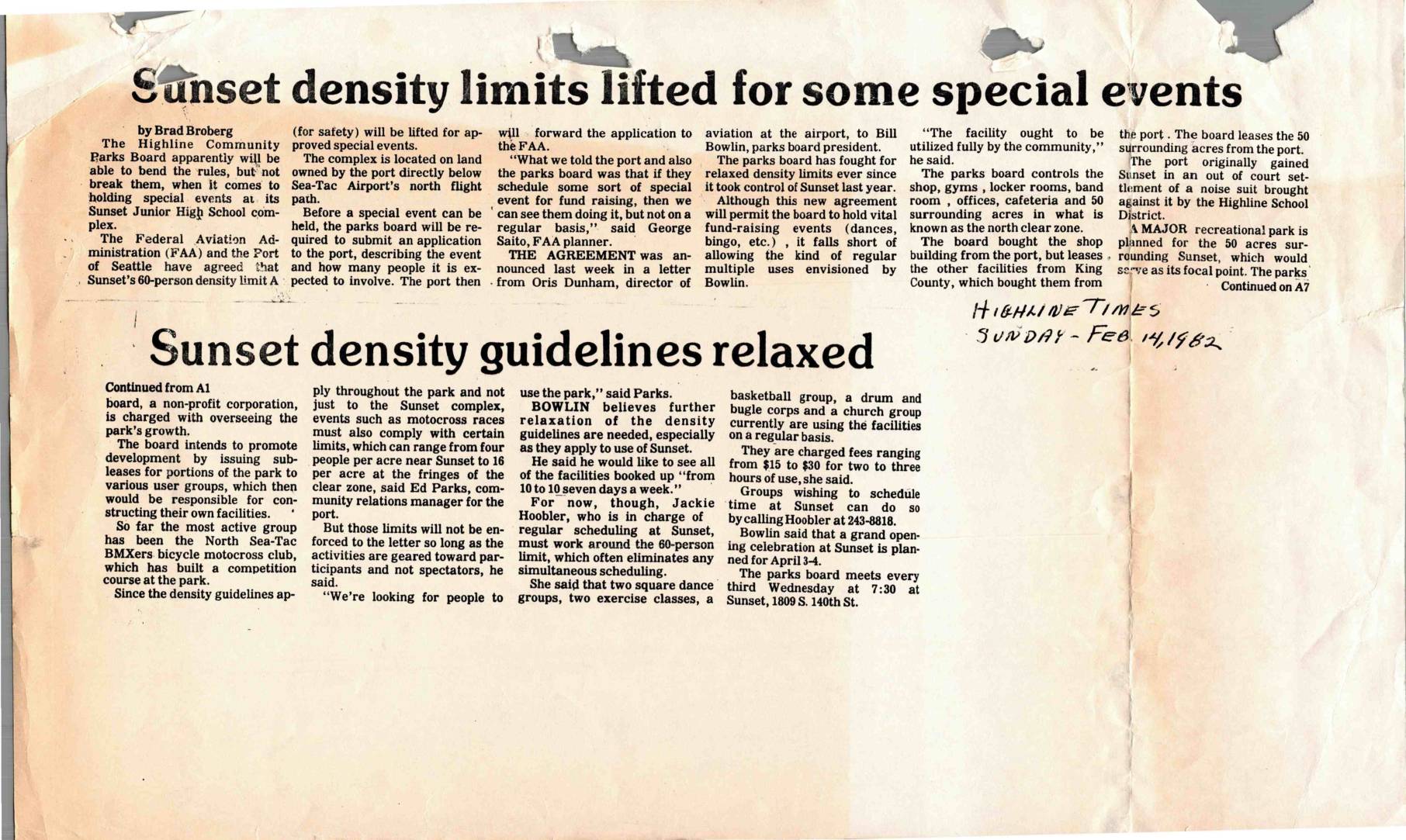 1982-02-14
Sunset density limits lifted for some special events
A February 14, 1982 article from the Highline Times reports that the FAA and Port of Seattle agreed to temporarily lift the 60-person density limit at the Sunset Junior High School complex for approved special events, such as fundraising dances and bingo nights. The complex sits on port-owned land directly beneath Sea-Tac Airport's north flight path, where density restrictions exist for public safety reasons. While the agreement allows the Highline Community Parks Board to hold occasional large events, it falls short of permitting the regular, full-capacity scheduling the board had sought for the facility. -
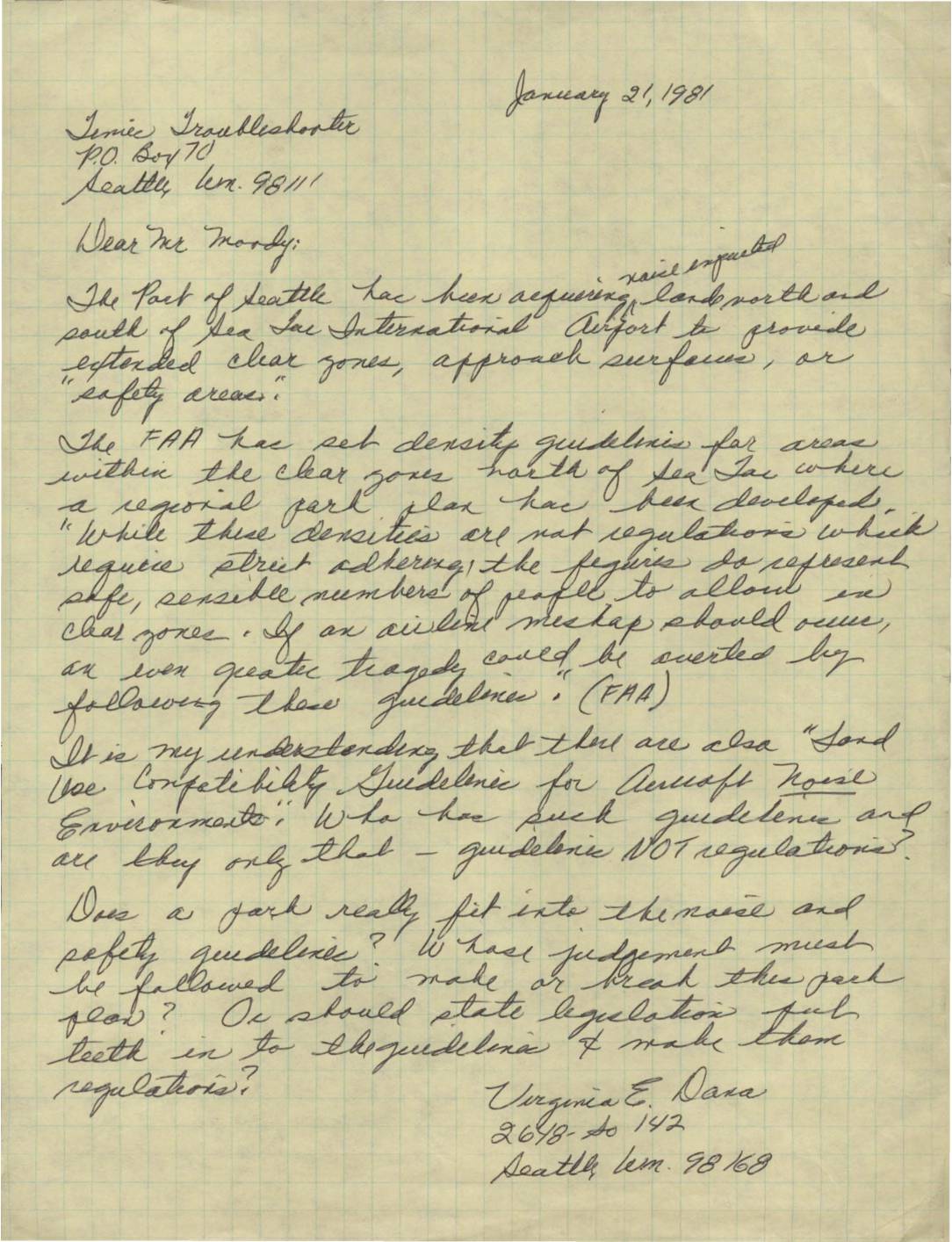 1981-01-31
Letter to Times Troubleshooter regarding FAA guidelines
In this January 21, 1981 letter to Janice Troubleshooter of Seattle, resident Virginia E. Dana raises concerns about the Port of Seattle's land acquisition near Sea-Tac International Airport for clear zones and safety areas. She questions whether FAA density guidelines and land use compatibility guidelines for aircraft noise environments are enforceable regulations or merely voluntary guidelines, and whether a proposed regional park plan is appropriate for these safety-sensitive zones. Dana calls for state legislation to give these guidelines regulatory teeth. -
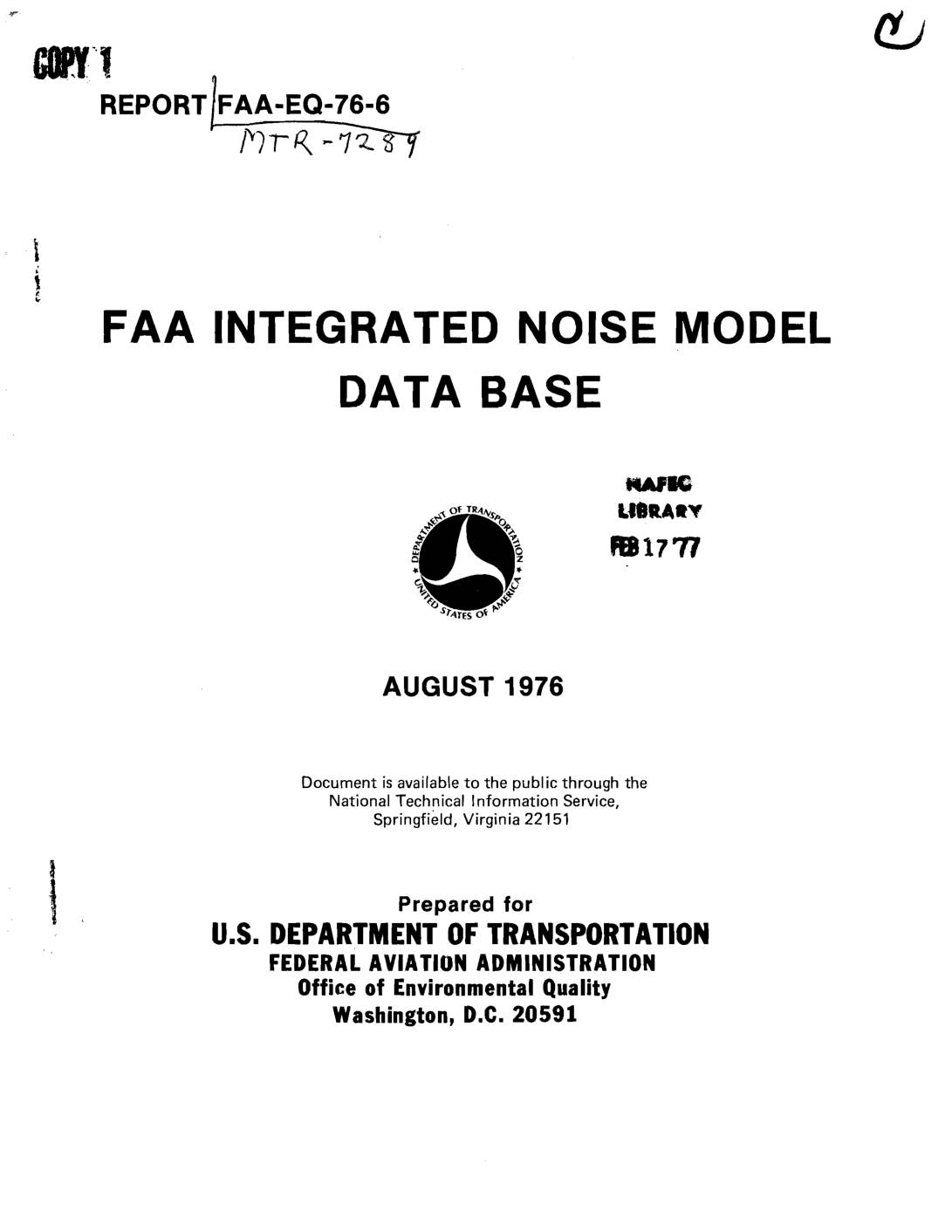 1976-08-01
FAA integrated noise model data base
This 1976 Federal Aviation Administration report documents the data library underlying the FAA Integrated Noise Model (INMPROG), a computer program used to calculate various noise exposure indices around airports. The library contains both acoustic measurements and operational flight procedure data for standard aircraft types. The report serves as a reference for analysts seeking to reproduce noise studies or customize the model with their own flight procedures.