TagFill Dirt(72)
-
The Great Wall Of Sea-Tac
In 1996, the Puget Sound Regional Council (PSRC) gave final approval to the Port of Seattle’s proposal to build a Third Runway. The airport was originally sited on a small plateau about 430 feet above sea level, which ended immediately at the west side of what is now Taxiway Tango. The basic struggle in airport -
 2015-02-13
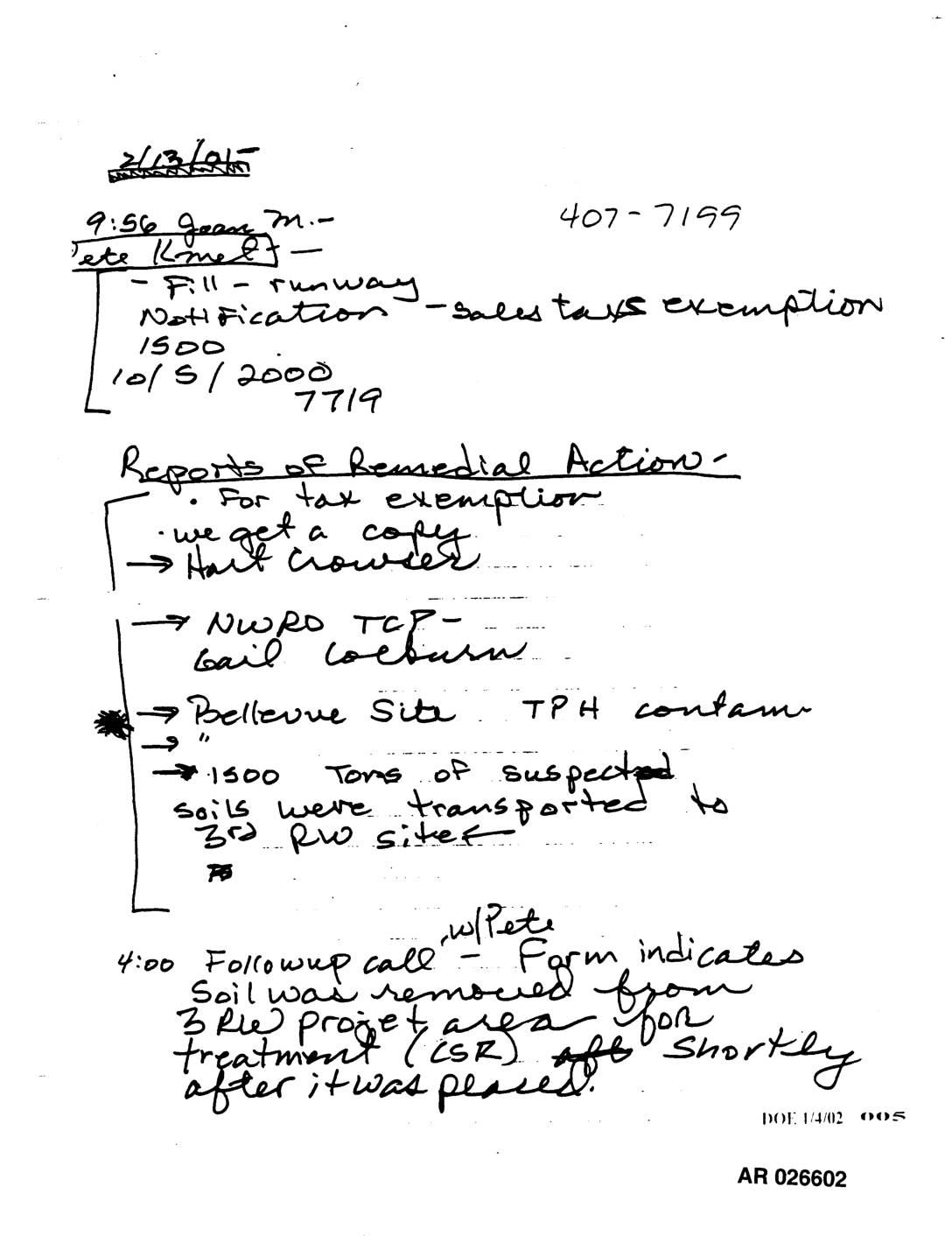
EXH AR026602: Handwritten Notes — Third Runway Fill Dirt, Sales Tax Exemption, TPH Contamination, Soil Removal
Handwritten notes dated 2/13 document a phone call at 9:56 AM regarding fill and runway notification related to a sales tax exemption, referencing figures of 1,500 and 10/5/2000. The notes also address Reports of Remedial Action concerning tax exemption copies, a Bellevue Site with TPH contamination, and 1,500 tons of suspected contaminated soils transported to three RW sites. A 4:00 PM follow-up call with Pete confirmed that soil was removed from three RW project areas for treatment (ISR) shortly after it was placed. -
Runway embankment completed
Port of Seattle Commission president Pat Davis waves a construction flag to signal the dumping of the last load of fill dirt for the third runway at Seattle International Airport. Television cameras record the moment. Photo by Amber Trillo Tue, 11/07/2006 Port of Seattle staff celebrated on Oct. 30 the completion of the embankment for -
 2005-03-01
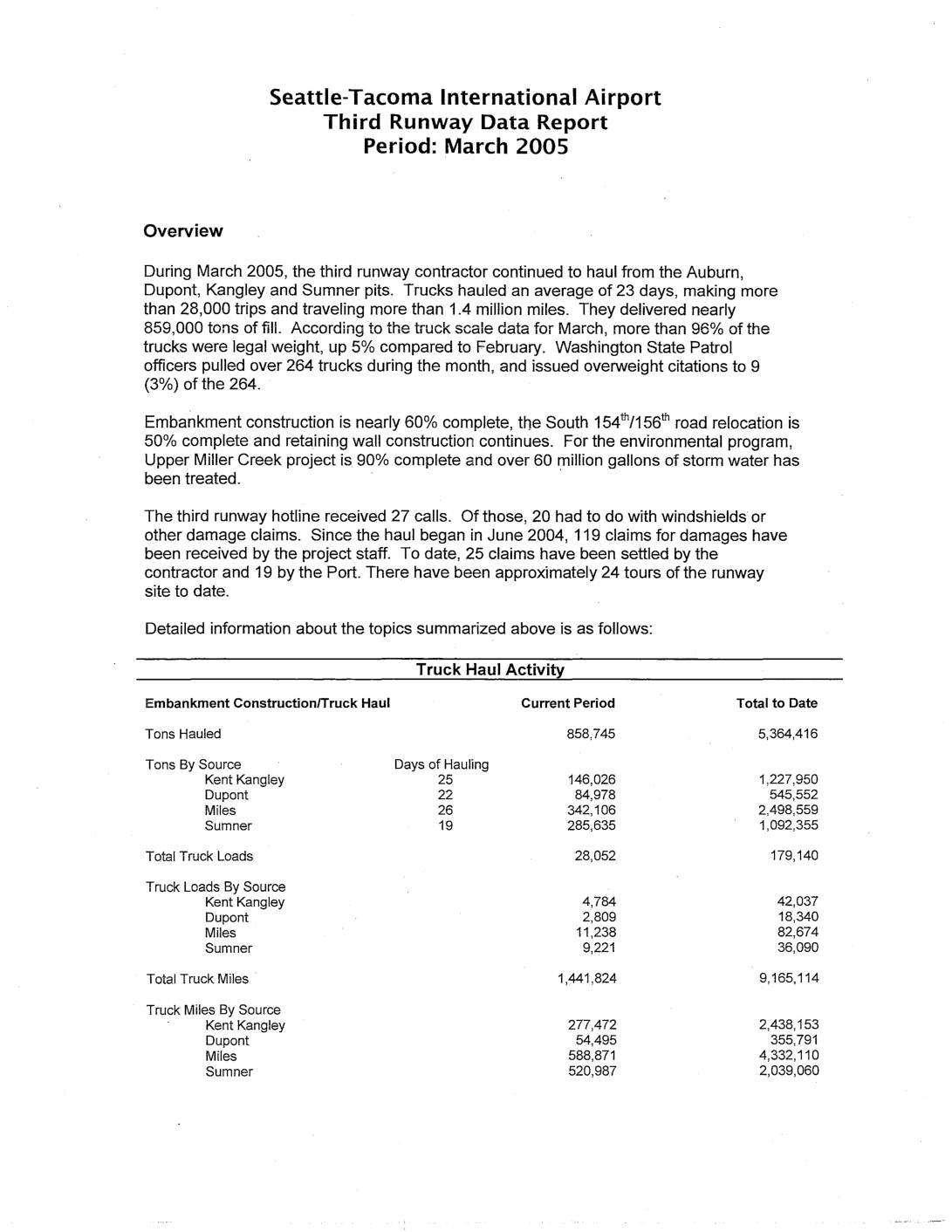
Third Runway Construction Traffic: Fill Dirt Complaints and Data Report, March 2005
During March 2005, construction of Seattle-Tacoma International Airport's third runway was approximately 60% complete, with trucks making over 28,000 trips and hauling nearly 859,000 tons of fill material from multiple pits in the region. Community concerns arose in late 2004 about construction truck traffic on SR 518 and SR 509, including complaints of speed-limit violations, uncovered loads, spilled materials, and possible overweight vehicles, prompting a state legislator to contact the Washington State Patrol about enforcement. The project also generated 119 damage claims from the public since hauling began in June 2004, with 44 claims settled between the contractor and the Port. -
 2004-04-08
Declaration of John Rothnie, P.E. in opposition to Airport Communities Coalition’s motion for injunctive relief
In 2004, John Rothnie, the Port of Seattle's Airfield Program Manager, filed a declaration opposing a request to block construction of a third runway at Seattle-Tacoma International Airport (Sea-Tac). The declaration outlines the Port's years of planning efforts, including obtaining required environmental certifications and developing a detailed Work Plan to ensure fill materials used in the runway embankment met strict water-quality standards. The Port had been moving forward with the expectation of beginning construction in 2004, following approval from the Washington Department of Ecology and the Pollution Control Hearings Board. -
 2002-12-05
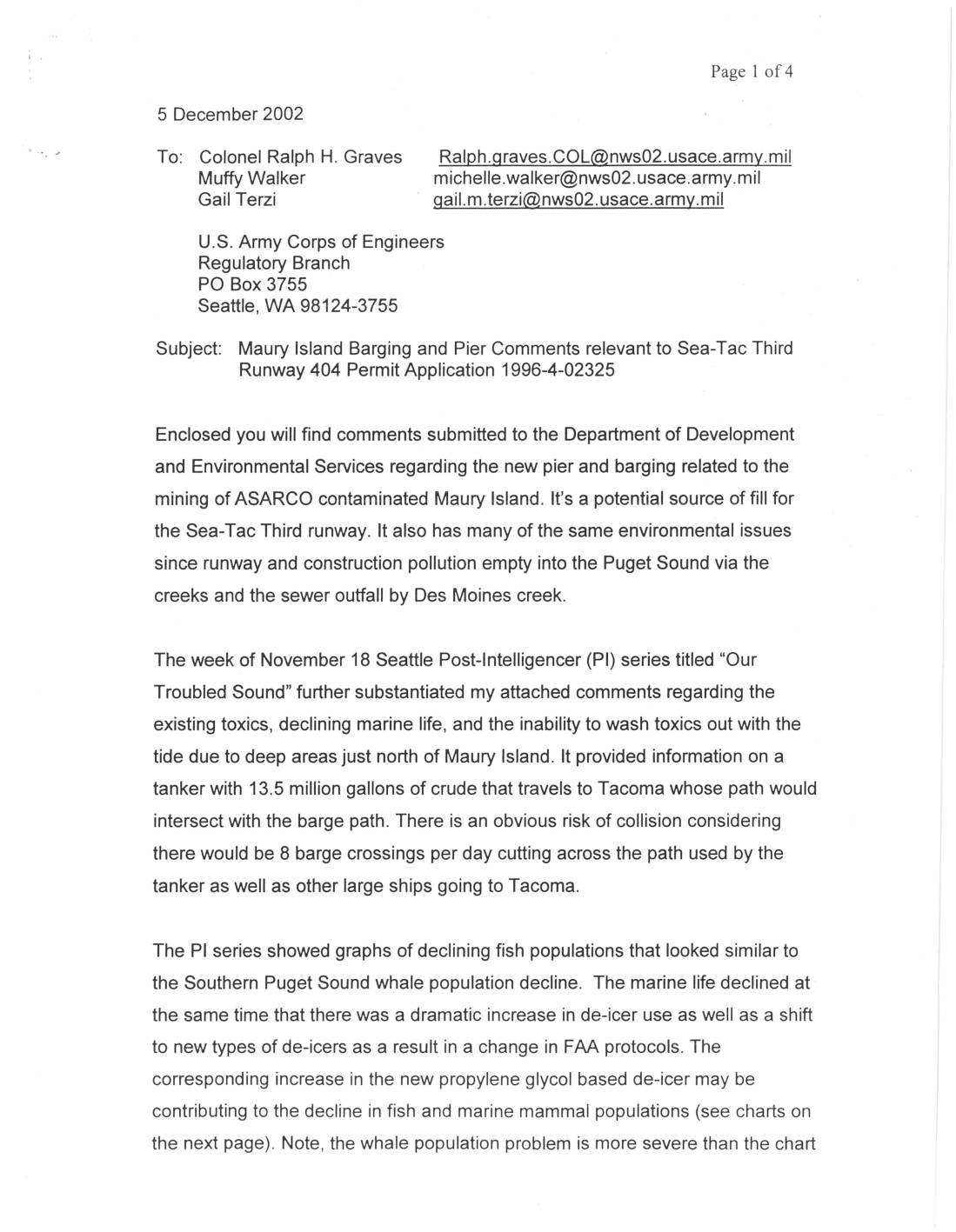
Maury Island Barging and Pier Comments Relevant to Sea-Tac Third Runway 404 Permit Application 1996-4-02325
A December 2002 letter to the U.S. Army Corps of Engineers raises environmental and public health concerns about the Sea-Tac Airport Third Runway project, arguing that construction pollution, ASARCO-contaminated fill material, and increased de-icing fluid use may be harming Puget Sound marine life, including orca populations. The author also warns of collision risks between barges transporting runway fill material and large tankers crossing the same waters. The letter calls for denial of the third runway permit, citing the absence of any cumulative air pollution or health hazard analysis and questioning the project's necessity given declining air and marine cargo traffic. -
 2002-10-22
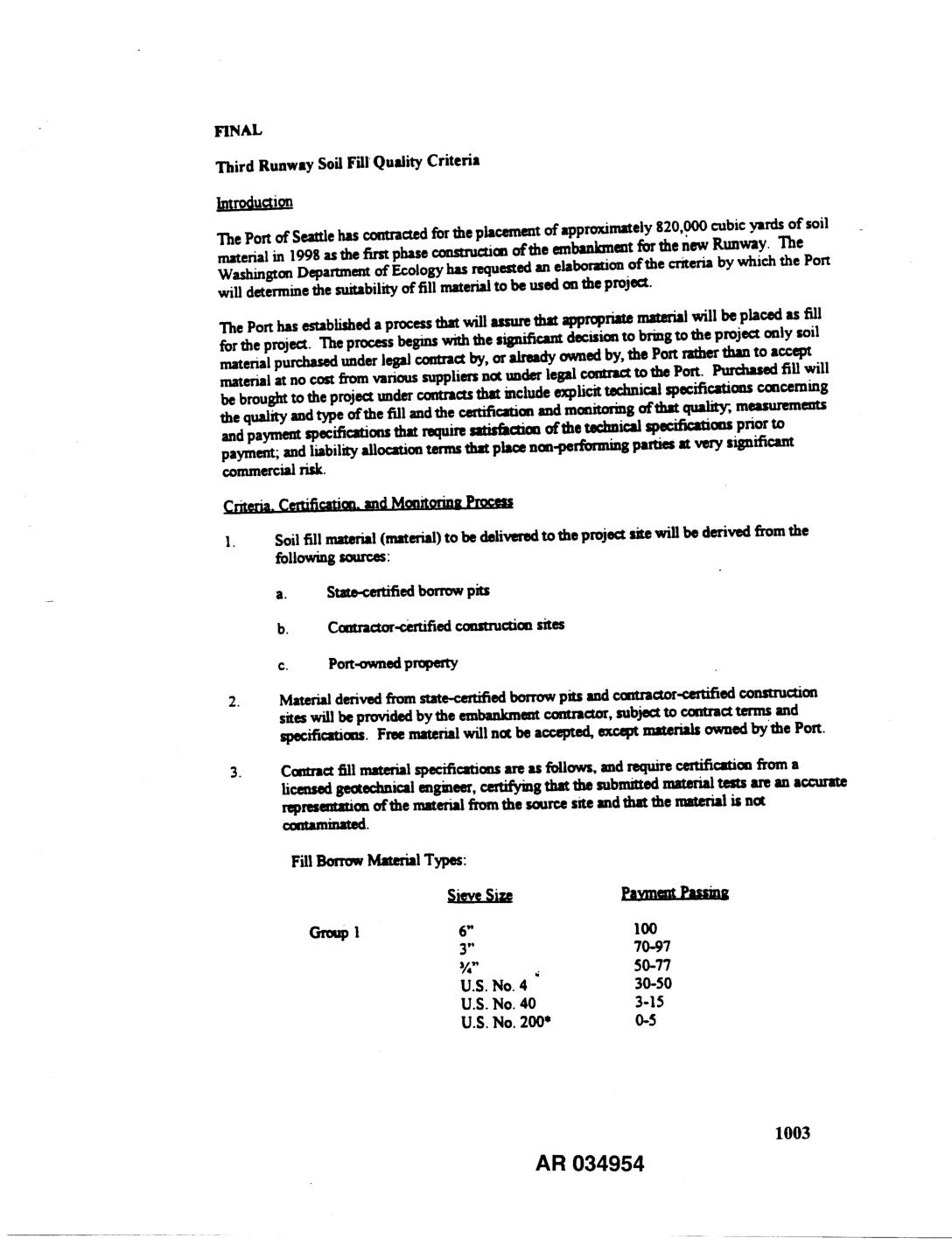
EXH AR034954: Third Runway Soil Fill Quality Criteria
Port Of Seattle document establishing soil fill quality criteria for Third Runway embankment construction in 1998, covering approximately 820,000 cubic yards of fill material. Specifies Fill Borrow Material Types (Group 1, Group 2, Group 3) with sieve size gradation requirements (6″, 3″, ¾”, U.S. No. 4, U.S. No. 40, U.S. No. 200), MTCA Method A -
 2002-10-20
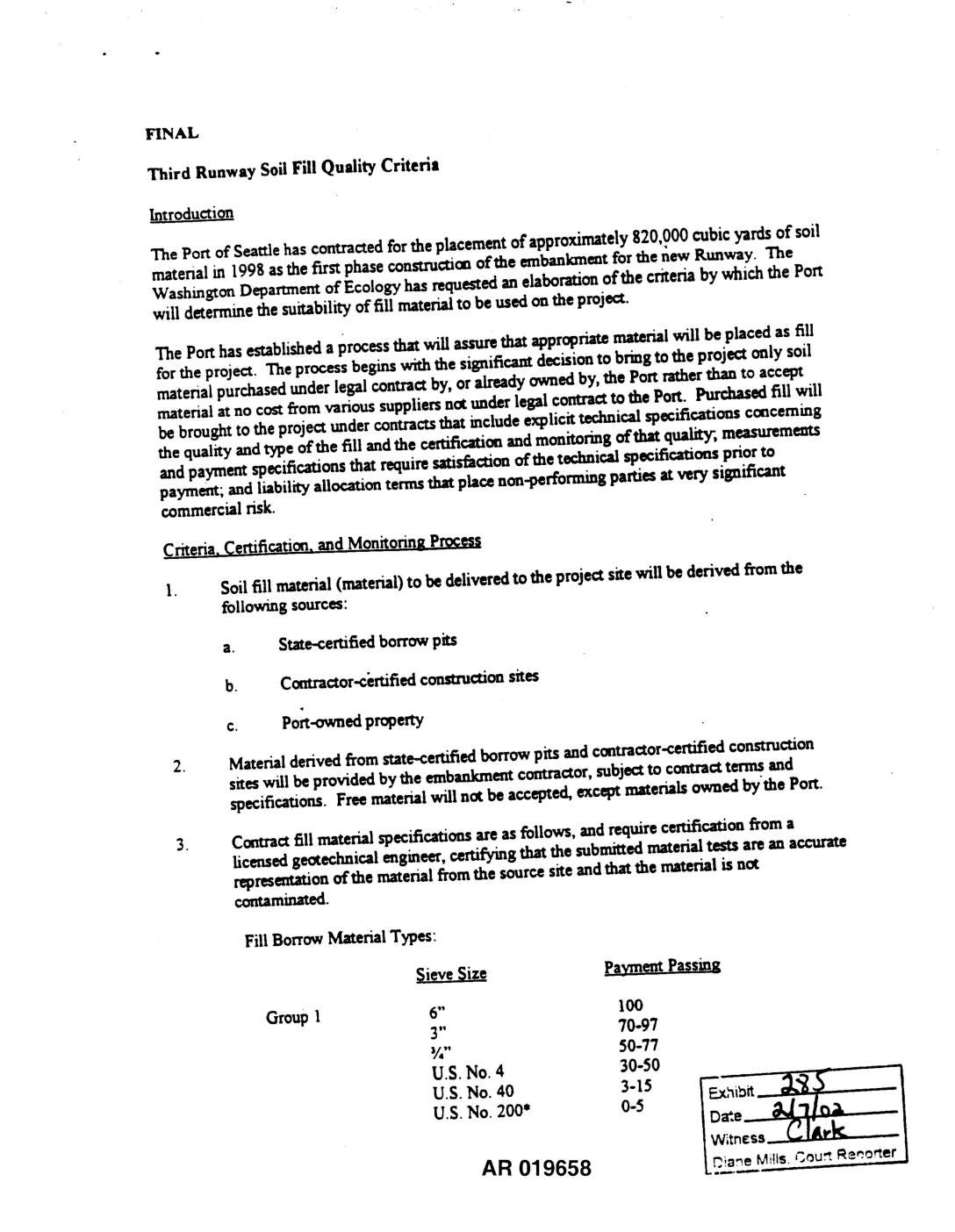
EXH AR019658: Third Runway Soil Fill Quality Criteria
This document outlines the Port of Seattle's soil fill quality criteria for the first phase of construction of a new runway embankment, involving approximately 820,000 cubic yards of material placed in 1998. It details the approved sources for fill material, technical specifications for soil gradation and contamination standards, and the certification and monitoring processes required of contractors. Independent soil technicians and Port consultants were tasked with overseeing material delivery, placement, and compliance testing throughout the project. -
 2002-08-22
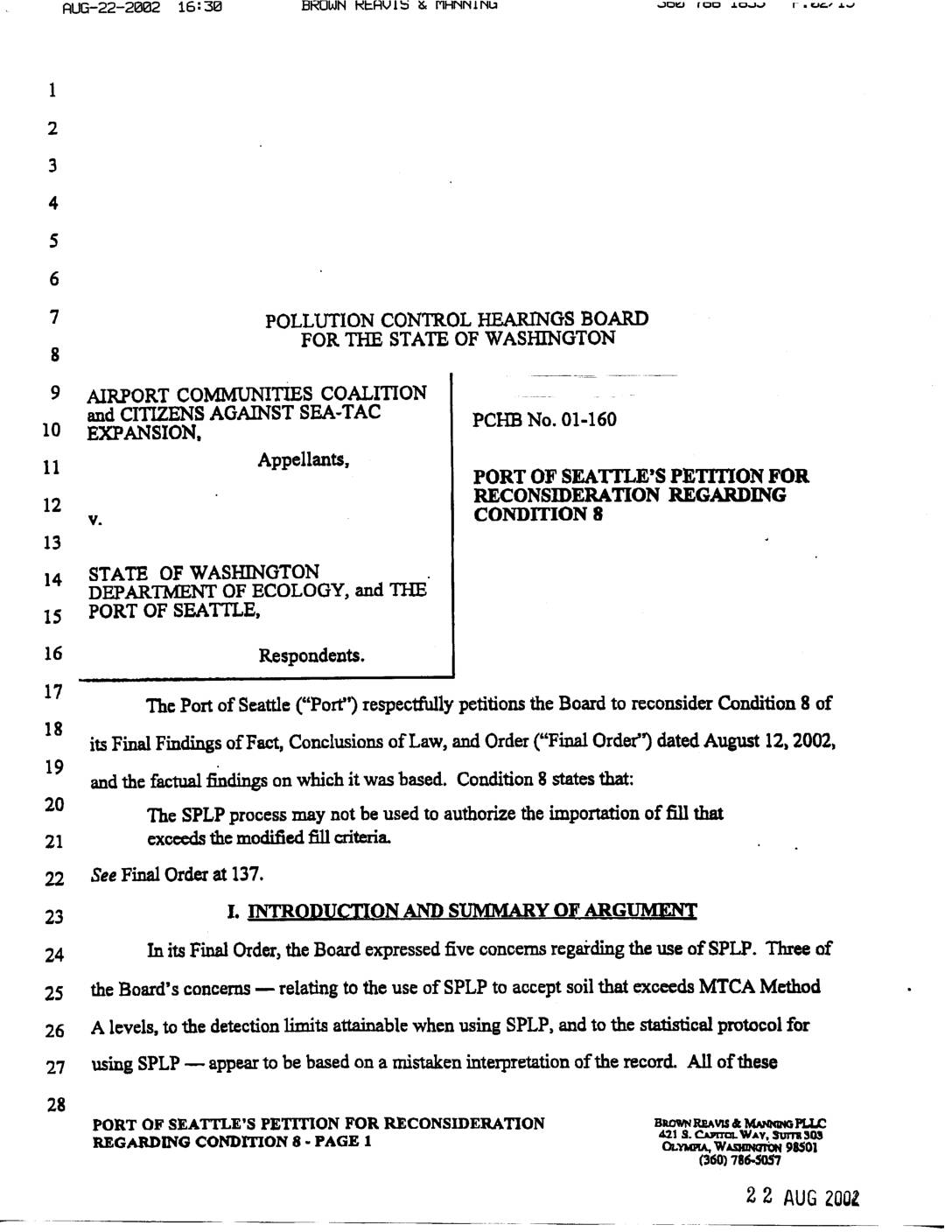
Port Of Seattle’s petition for reconsideration regarding Condition 8
The Port of Seattle filed a petition in August 2002 asking the Pollution Control Hearings Board to reconsider Condition 8 of its Final Order, which prohibited the use of a soil-testing method called SPLP (Synthetic Precipitation Leaching Procedure) to approve fill material for the Third Runway expansion project at Sea-Tac Airport. The Port argued that banning SPLP made it nearly impossible to find acceptable fill soil, since up to 78% of naturally occurring, uncontaminated soils would fail the Board's strict numeric criteria when tested across multiple constituents. The Port maintained that proper use of SPLP poses no environmental threat to water quality and requested the Board allow its use under specific conditions so the runway project could proceed. -
 2002-02-19
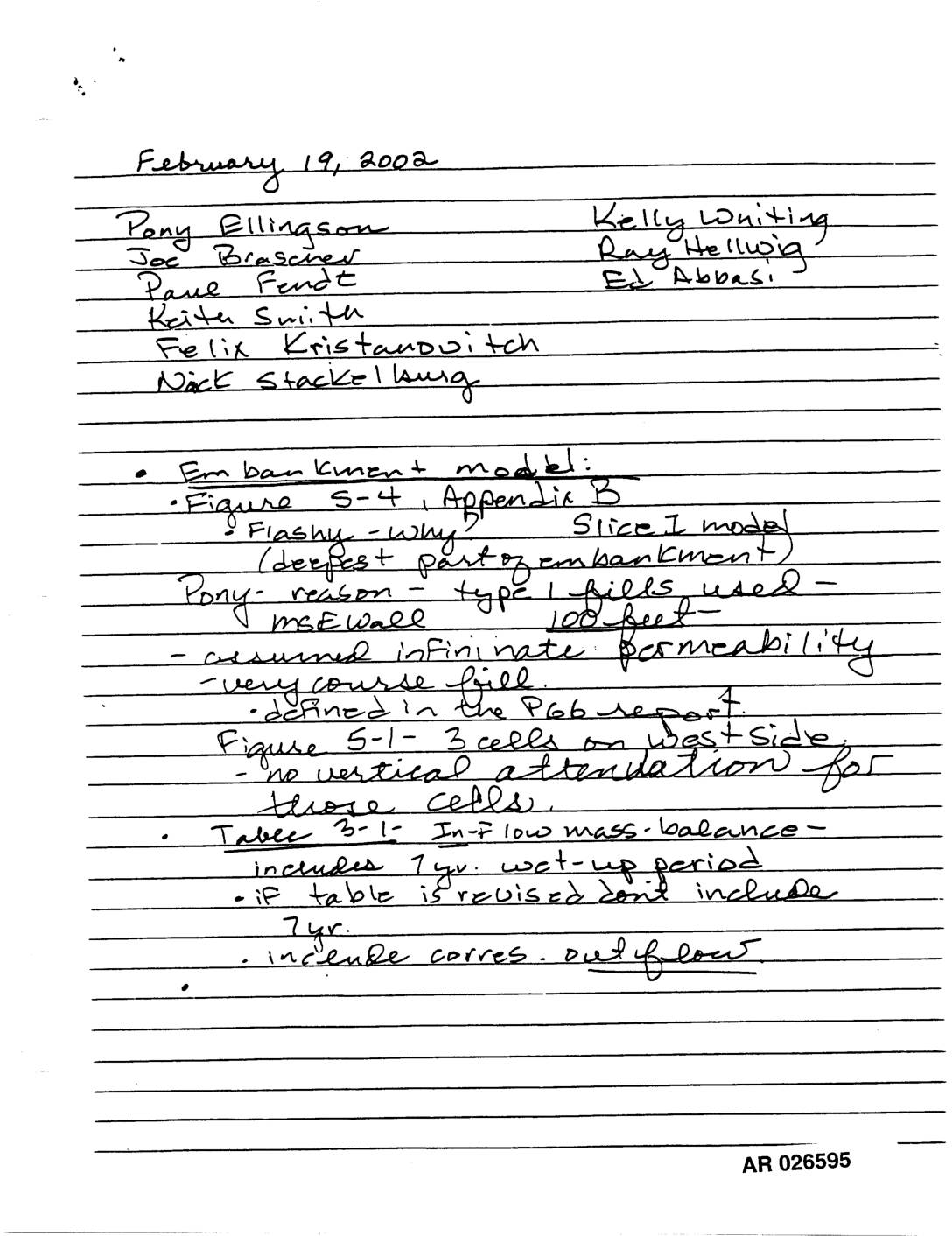
Exhibit 730: Handwritten Meeting Notes — Embankment Model, Fill Modeling, Miller Creek, Walker Creek, and Des Moines County Monitoring
Handwritten meeting notes dated February 19, 2002, AR 026595–026597, attended by Pony Ellingson, Joe Brascher, Paul Fendt, Keith Smith, Felix Kristandovitch, Nick Stackellburg, Kelly Whiting, Ray Helwig, and Ed Abbasi. Topics include embankment model (Figure 5-4, Appendix B, Slice I model, MSE wall, infinite permeability assumption, coarse fill), fill modeling footprint area with surface groundwater