TagSea-Tac Airport(1855)
-
 2032-01-01
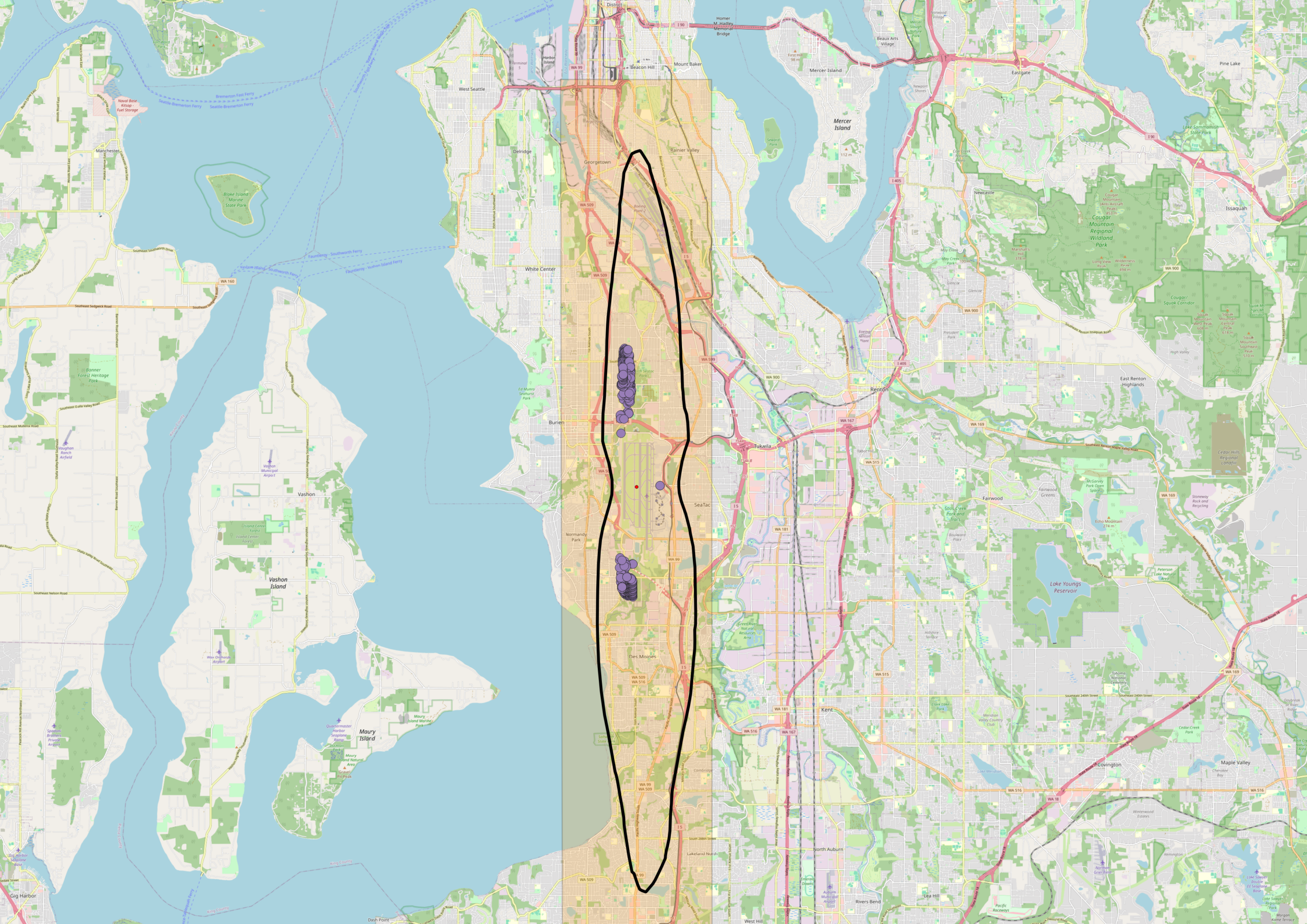
DNL 65 Noise Contour Map — Sea-Tac Airport Area with Noise Complaint Markers
An OpenStreetMap-based map centered on the Seattle–Tacoma (Sea-Tac) Airport area showing a highlighted corridor (shaded in orange/yellow) and a black oval outline delineating what appears to be a flight path or noise impact study zone. Clustered purple markers, likely representing noise complaint locations or monitoring stations, are visible near Burien and a southern cluster near Des Moines/Federal Way, with Sea-Tac Airport identifiable near the center of the map. -
 2026-09-23
Port Jobs: Expanding Opportunities. Building Success.
Port Jobs presentation delivered at the Highline Forum on September 23, 2026, covering job seeker services and employer services at Sea-Tac Airport. Job seeker services include job search assistance, Basic Food Employment & Training Support, hotlist of job openings with 100+ employers, hiring events with airport employers, career navigation, resume assistance, airport badge preparation classes -
 2026-09-22
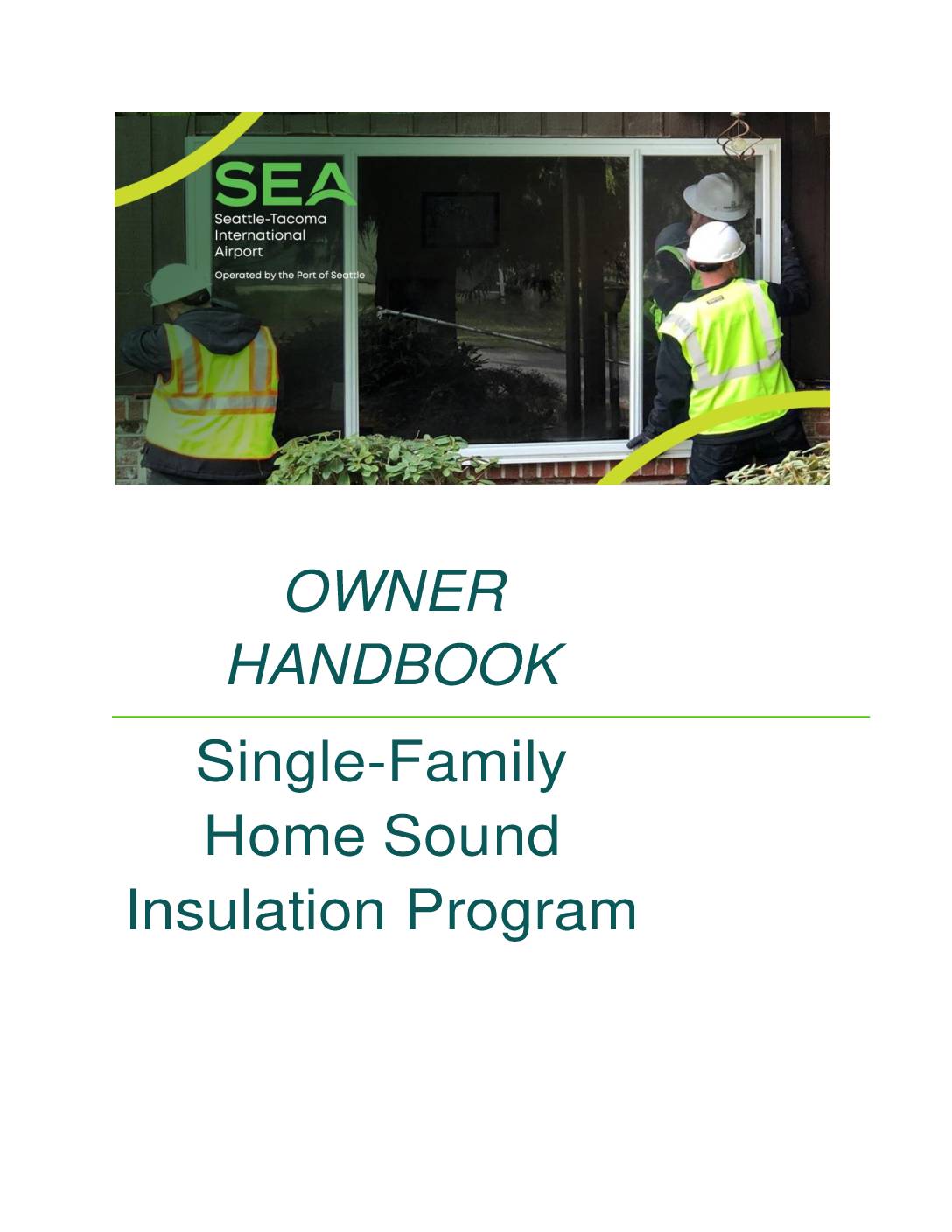
Port Package single family homeowner sound insulation handbook and documents final 2021
Port of Seattle Single-Family Home Sound Insulation Program (SFHSIP) Owner Handbook providing guidance to homeowners on aircraft noise reduction improvements at Sea-Tac Airport. Covers program eligibility requirements including Noise Remedy Boundary and Average Interior Noise Level thresholds, FAA design criteria (DNL 45 dB, minimum 5 dB NLR), required legal documents (Owner Participation Agreement, Avigation Easement -
 2026-09-18
Flight Plan: Real Solutions to Washington’s Air Transportation Needs
Legislative guide prepared by the Airport Communities Coalition (ACC) — comprising City of Burien, City of Des Moines, City of Normandy Park, City of Tukwila, and Highline School District — for the Washington State Legislature, arguing against additional runway construction at Sea-Tac Airport and advocating for a supplemental airport to address Puget Sound regional air -
2026-09-18
Flight Plan: Real Solutions to Washington’s Air Transportation Needs
Legislative guide prepared by the Airport Communities Coalition (ACC) — comprising City of Burien, City of Des Moines, City of Normandy Park, City of Tukwila, and Highline School District — for the Washington State Legislature, arguing against additional runway construction at Sea-Tac Airport and advocating for a supplemental airport to address Puget Sound regional air -
 2026-09-18
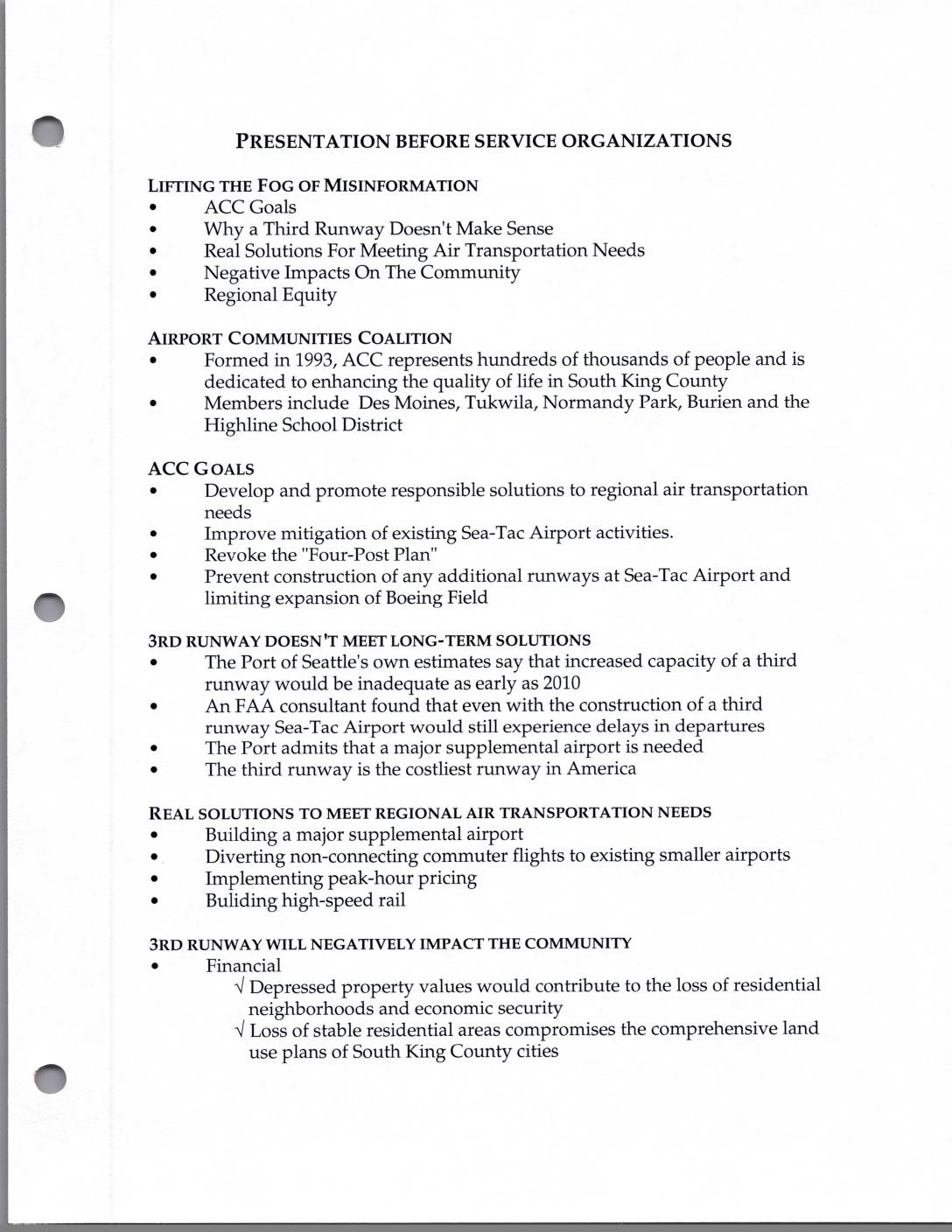
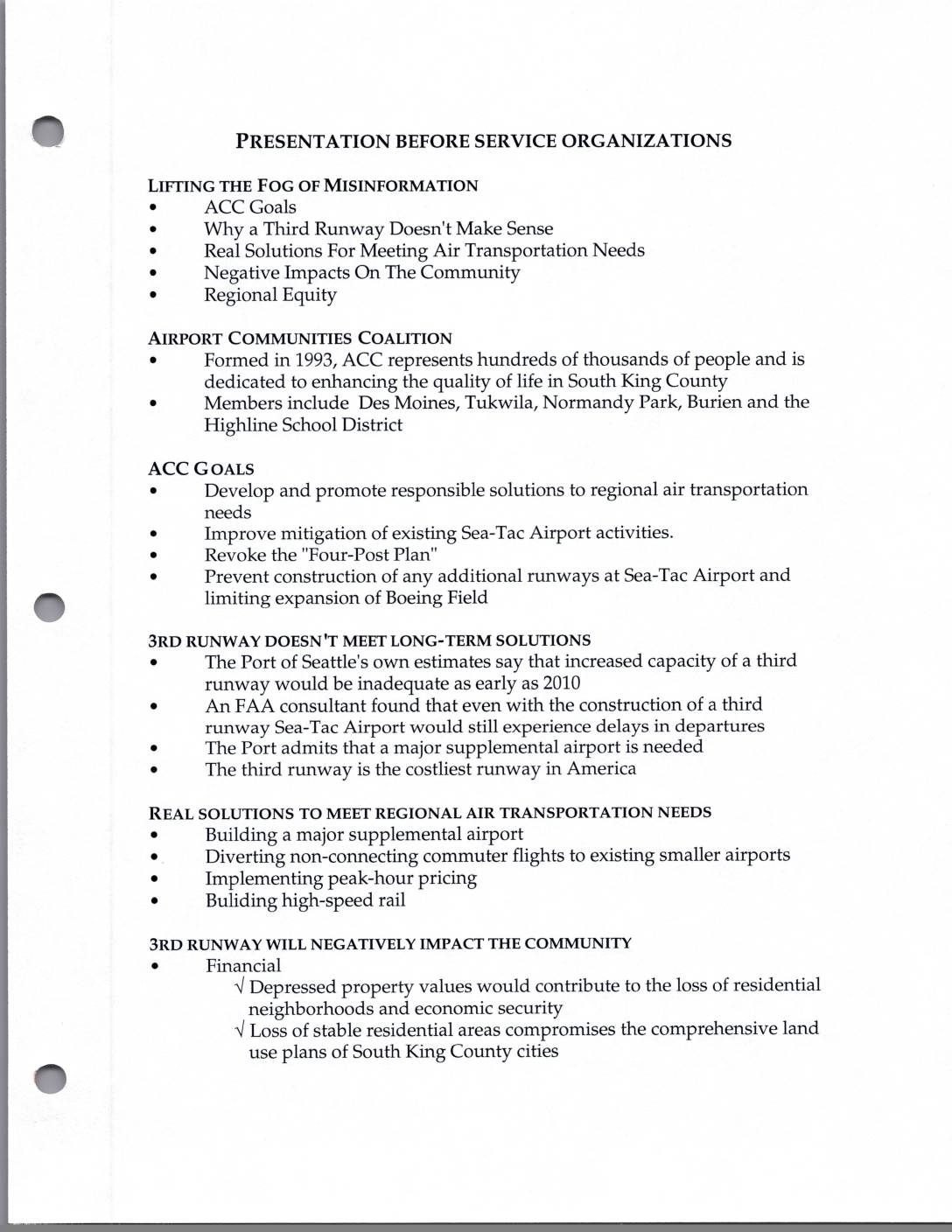
ACC Presentation Before Service Organizations: Lifting the Fog of Misinformation
Airport Communities Coalition (ACC) presentation to service organizations opposing the Third Runway at Sea-Tac Airport, covering ACC goals including revoking the Four-Post Plan and preventing additional runways. Argues the Third Runway is inadequate even by Port of Seattle’s own estimates (capacity shortfall by 2010), is the costliest runway in America, and would not resolve departure -
 2026-09-18
ACC Presentation Before Service Organizations: Lifting the Fog of Misinformation
Airport Communities Coalition (ACC) presentation to service organizations opposing the Third Runway at Sea-Tac Airport, covering ACC goals including revoking the Four-Post Plan and preventing additional runways. Argues the Third Runway is inadequate even by Port of Seattle’s own estimates (capacity shortfall by 2010), is the costliest runway in America, and would not resolve departure -
 2026-09-18
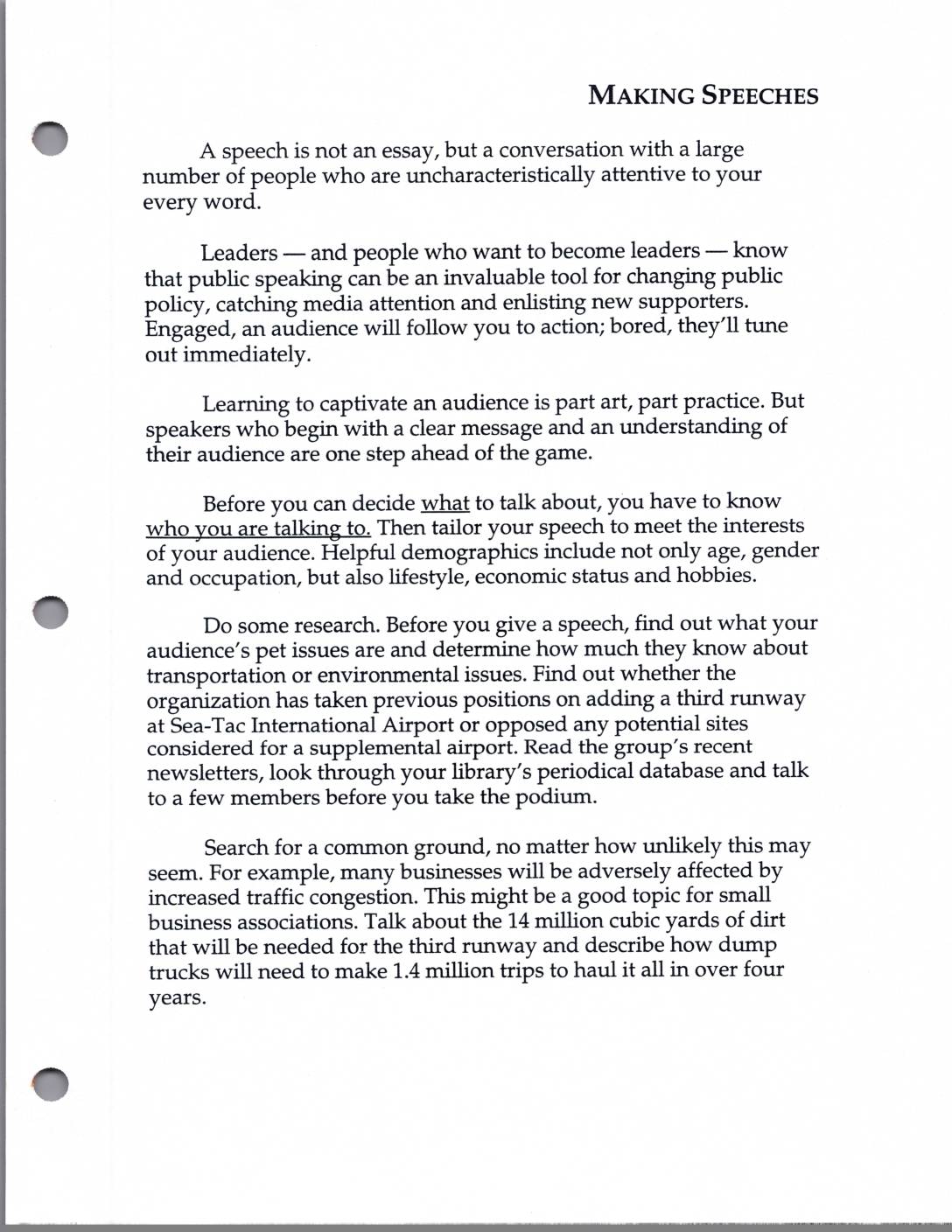
Making Speeches
ACC (Airport Communities Coalition) guide on public speaking strategy for advocates opposing the Sea-Tac Airport third runway. Covers audience research (demographics, pet issues, prior positions on Sea-Tac third runway and supplemental airport), finding common ground (e.g., traffic congestion impacts on small businesses, 14 million cubic yards of fill dirt requiring 1.4 million dump truck trips), -
2026-09-18
Making Speeches
ACC (Airport Communities Coalition) guide on public speaking strategy for advocates opposing the Sea-Tac Airport third runway. Covers audience research (demographics, pet issues, prior positions on Sea-Tac third runway and supplemental airport), finding common ground (e.g., traffic congestion impacts on small businesses, 14 million cubic yards of fill dirt requiring 1.4 million dump truck trips), -
 2026-09-18
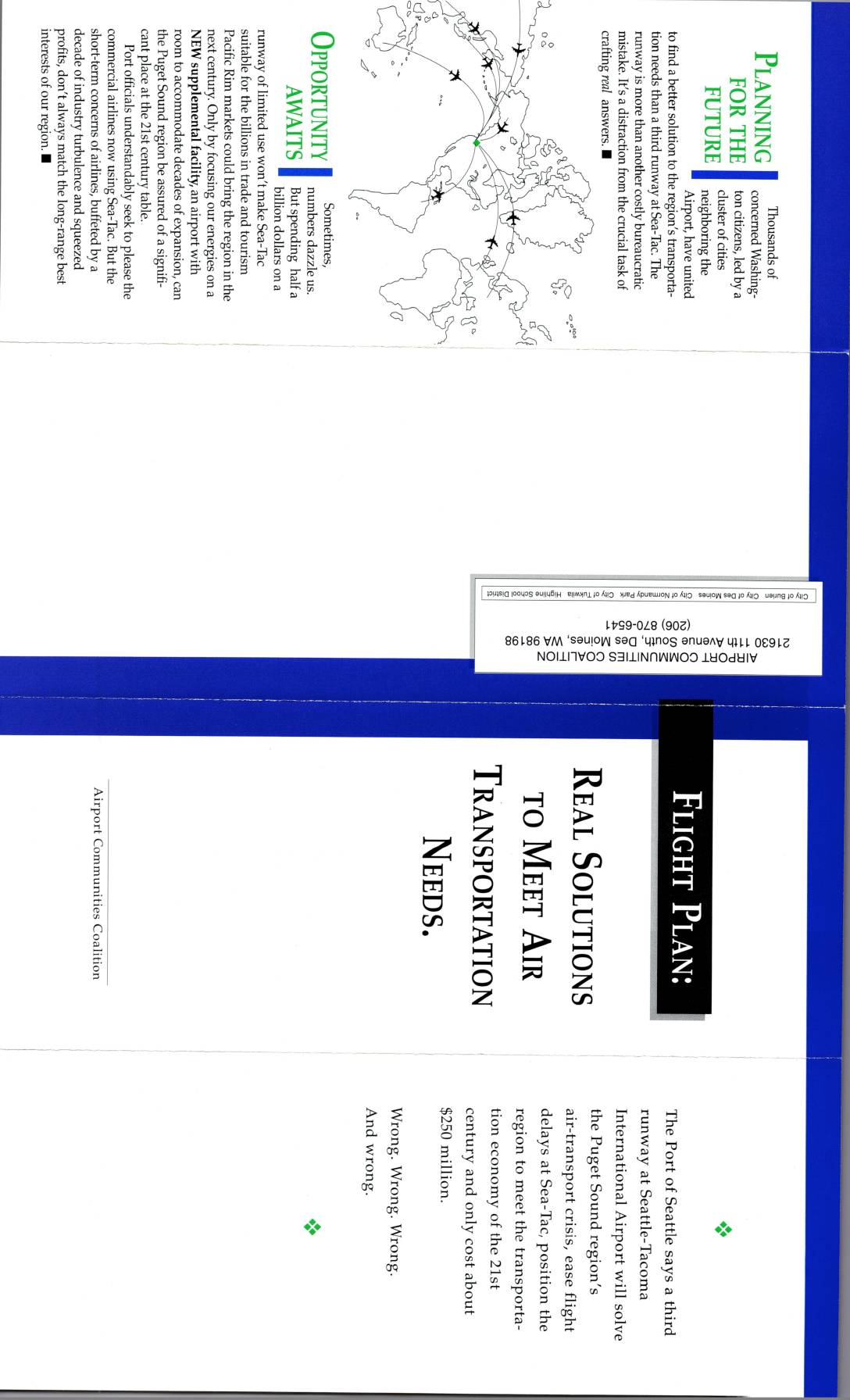
Flight Plan: Real Solutions to Meet Air Transportation Needs
Airport Communities Coalition (ACC) advocacy brochure opposing the Port of Seattle’s proposed third runway at Sea-Tac Airport. Argues that a third runway won’t stop flight delays caused by bad weather, is too physically constrained at Sea-Tac (citing Sea-Tac as one of the 100 largest U.S. airports operating on the smallest land area), and would be