TagSalmon(32)
-
 2024-09-24
Appendix D: Biological Resources — Biological Evaluation and Section 7 Consultation Request, SEA SAMP Near-Term Projects
The FAA submitted a Biological Evaluation to support an informal consultation under the Endangered Species Act for near-term construction projects at Seattle-Tacoma International Airport, all expected to be completed by 2032. The projects aim to expand passenger and cargo capacity, upgrade taxiway layouts, and increase fuel storage including sustainable aviation fuel. The evaluation assessed potential impacts on 14 species, determining that several—including Chinook salmon, bull trout, and killer whales—may be affected but not likely adversely, while the remaining species, such as the marbled murrelet and North American wolverine, would face no effect. -
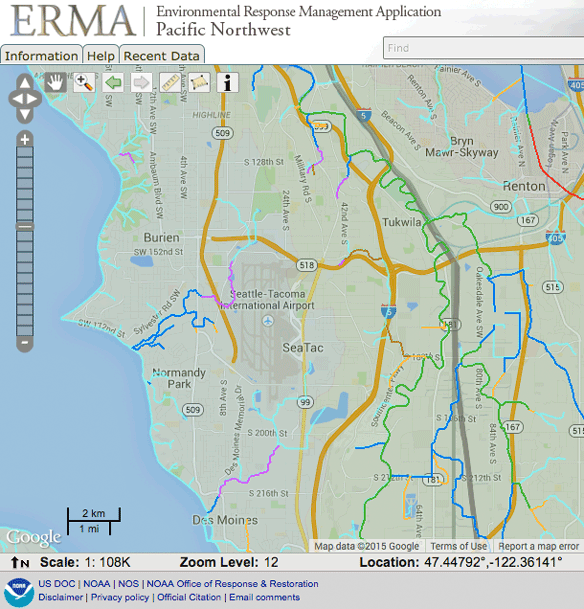
ERMA Sea-Tac Salmon Streams
A screenshot from NOAA's Environmental Response Management Application (ERMA) Pacific Northwest interface, showing a Google-based map centered on the Seattle-Tacoma International Airport (SeaTac) area at zoom level 12, scale 1:108K, at coordinates 47.44792°N, 122.36141°W. Surrounding communities visible include Burien, Tukwila, Renton, Normandy Park, and Des Moines, with overlaid environmental or response-related boundary layers in multiple colors. -
-
 2022-09-12
Locke’s legacy: Water crisis
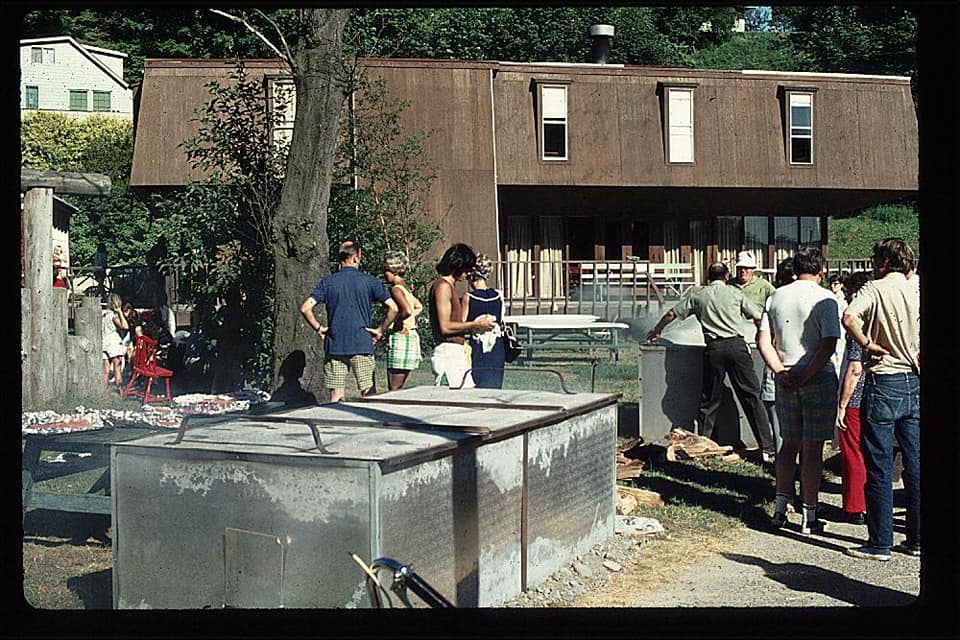
A Sierra Club special report critiques Washington Governor Gary Locke's environmental record, with particular focus on the SeaTac Third Runway project, where Ecology Director Tom Fitzsimmons allegedly removed staff who sought to enforce environmental laws and signed the 'Toxic Fill Bill' allowing contaminated materials to be used in runway construction. The report details how the Port of Seattle's $1 billion-plus runway expansion required building one of the world's largest retaining walls over fish-bearing streams and wetlands in an earthquake-prone area. The Pollution Control Hearings Board ultimately found state permits insufficient and imposed 16 additional environmental conditions on the project. -
 2020-10-01
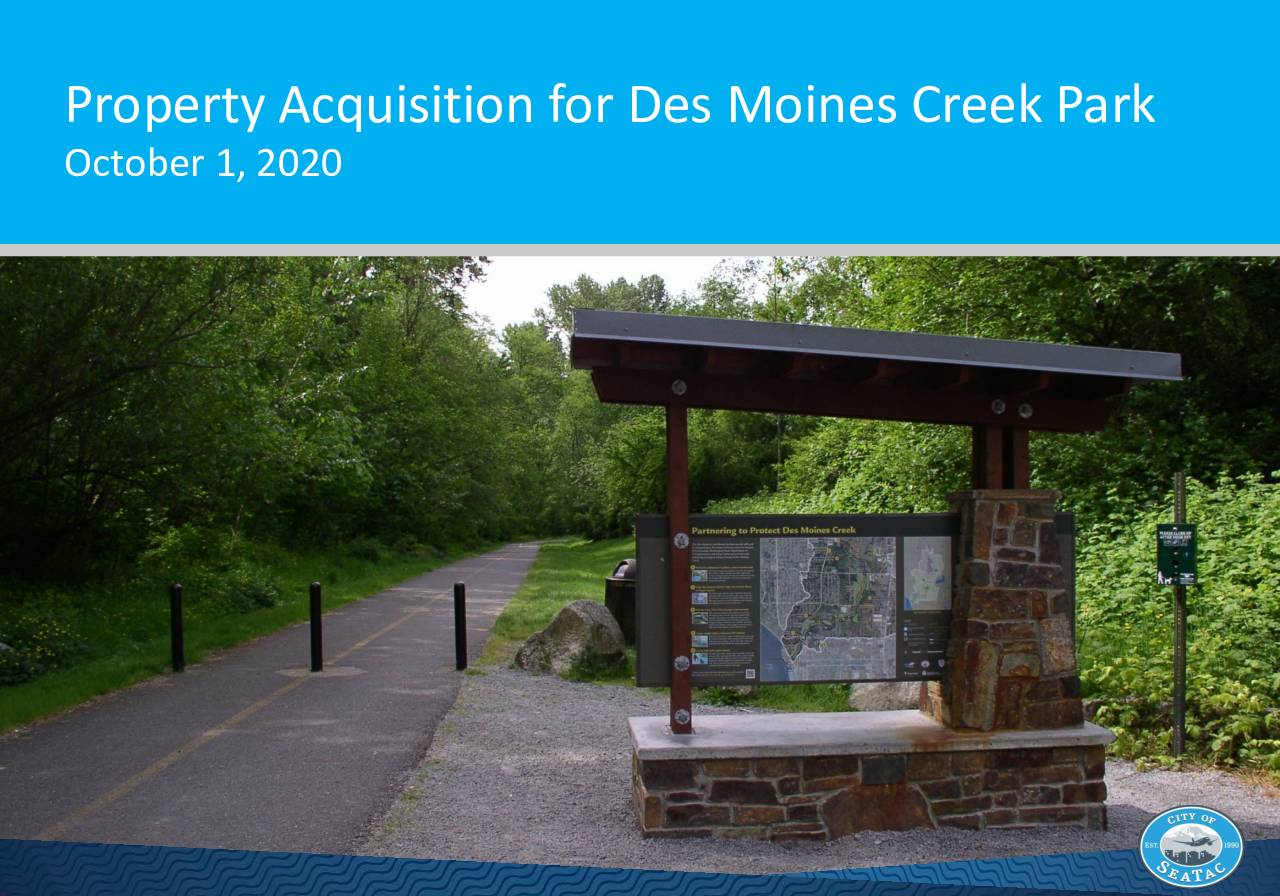
Property Acquisition for Des Moines Creek Park
The City of SeaTac has been working since 2018 to acquire approximately 8 acres of surplus forested land from the Washington State Department of Transportation (WSDOT) adjacent to Des Moines Creek Park. The acquisition aims to expand open space, improve trail access, and preserve a conservation area along one of the city's salmon-bearing streams. As of October 2020, the city had secured $2.29 million in grant funding for the purchase, with an additional $1 million under consideration in the 2021-2022 budget process. -
 2018-04-10
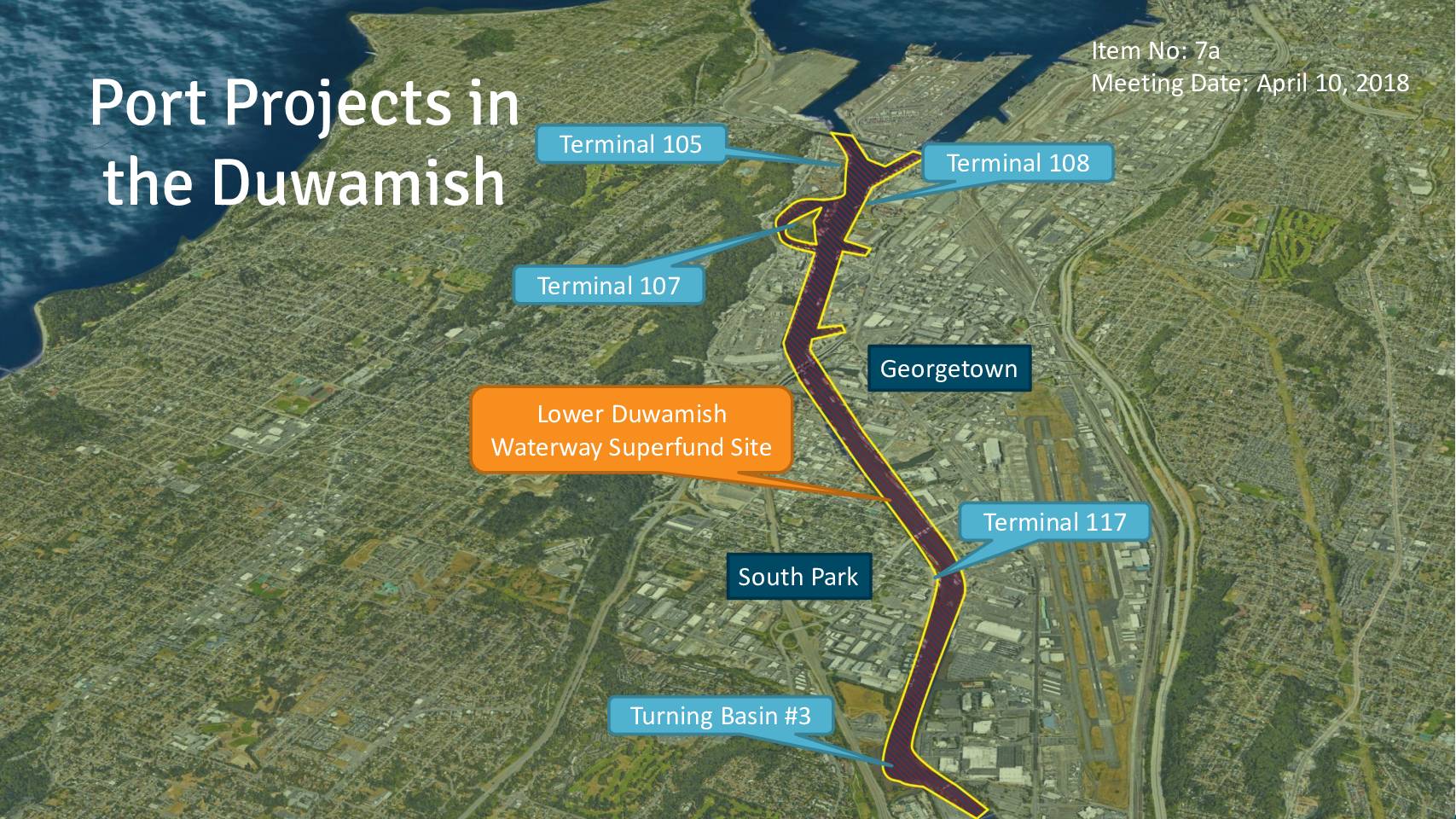
Port projects in the Duwamish
This April 2018 Port of Seattle presentation outlines port and habitat recovery projects along the Lower Duwamish Waterway in Seattle, covering terminals 105, 107, 108, and 117, as well as Turning Basin #3 and the Lower Duwamish Waterway Superfund Site. The document highlights environmental restoration efforts, including shoreline and aquatic habitat improvements near Georgetown and South Park neighborhoods. Terminal 108 is featured as an example of habitat recovery work, showing before-and-after conditions of riparian restoration along the waterway. -
2016-06-27
Sea-Tac Airport is first in the U.S. to achieve Salmon-Safe Certification
In a year where the Seattle-Tacoma International Airport is projected to have a record number of passengers, the Port of Seattle is taking care of the environment too, becoming the first U.S. airport to achieve Salmon-Safe certification, earned for its environmental practices that protect Puget Sound water quality and salmon habitat. The designation means that -
 2004-03-11
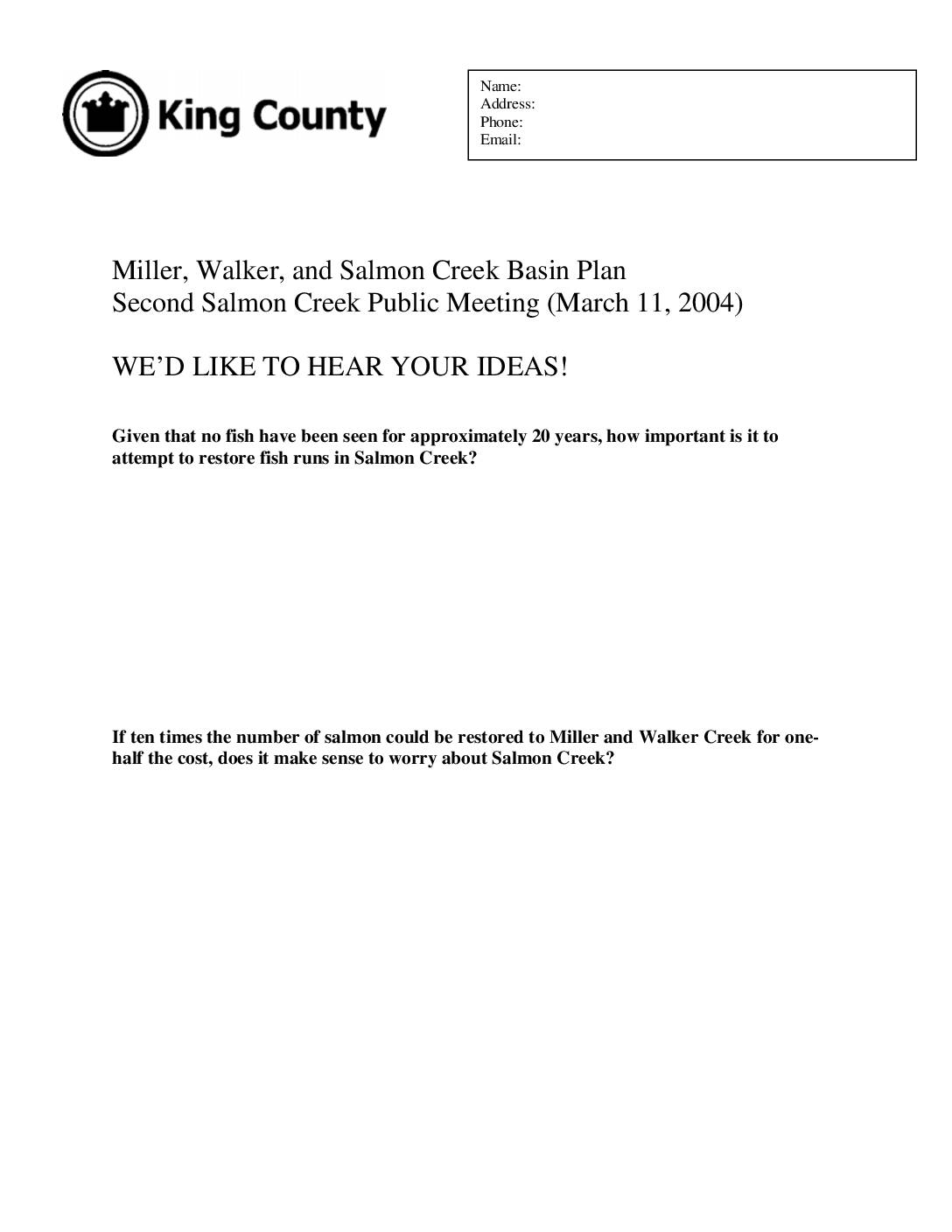
Miller, Walker, and Salmon Creek Basin Plan second public meeting comment request form
This is a public comment form from a March 11, 2004 King County meeting about the Miller, Walker, and Salmon Creek Basin Plan, asking residents for input on salmon restoration efforts and environmental priorities. The form poses questions about whether it is worthwhile to restore fish runs in Salmon Creek given no fish have been seen for roughly 20 years, and how to prioritize restoration of Lake Hicks and related projects. It also asks residents how much they would be willing to contribute through increased taxes and fees to fund these efforts. -
 2002-10-23
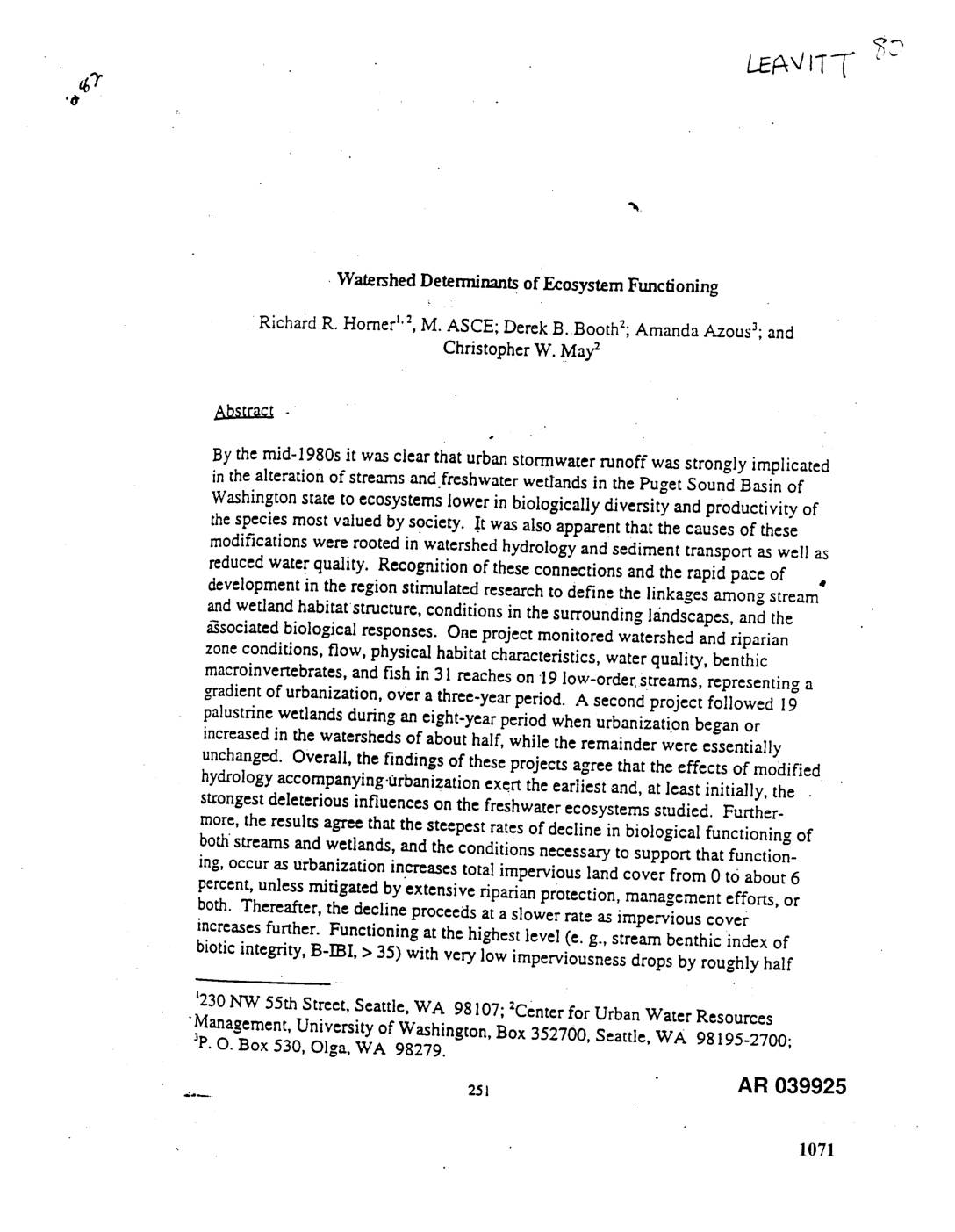
EXH AR039925: Watershed Determinants of Ecosystem Functioning
Academic paper by Richard R. Horner, Derek B. Booth, Amanda Azous, and Christopher W. May (University of Washington Center for Urban Water Resources Management) on watershed determinants of ecosystem functioning in the Puget Sound Basin. Studies 31 stream reaches on 19 low-order streams and 19 palustrine wetlands over multi-year periods, examining effects of urbanization and -
 2002-10-22
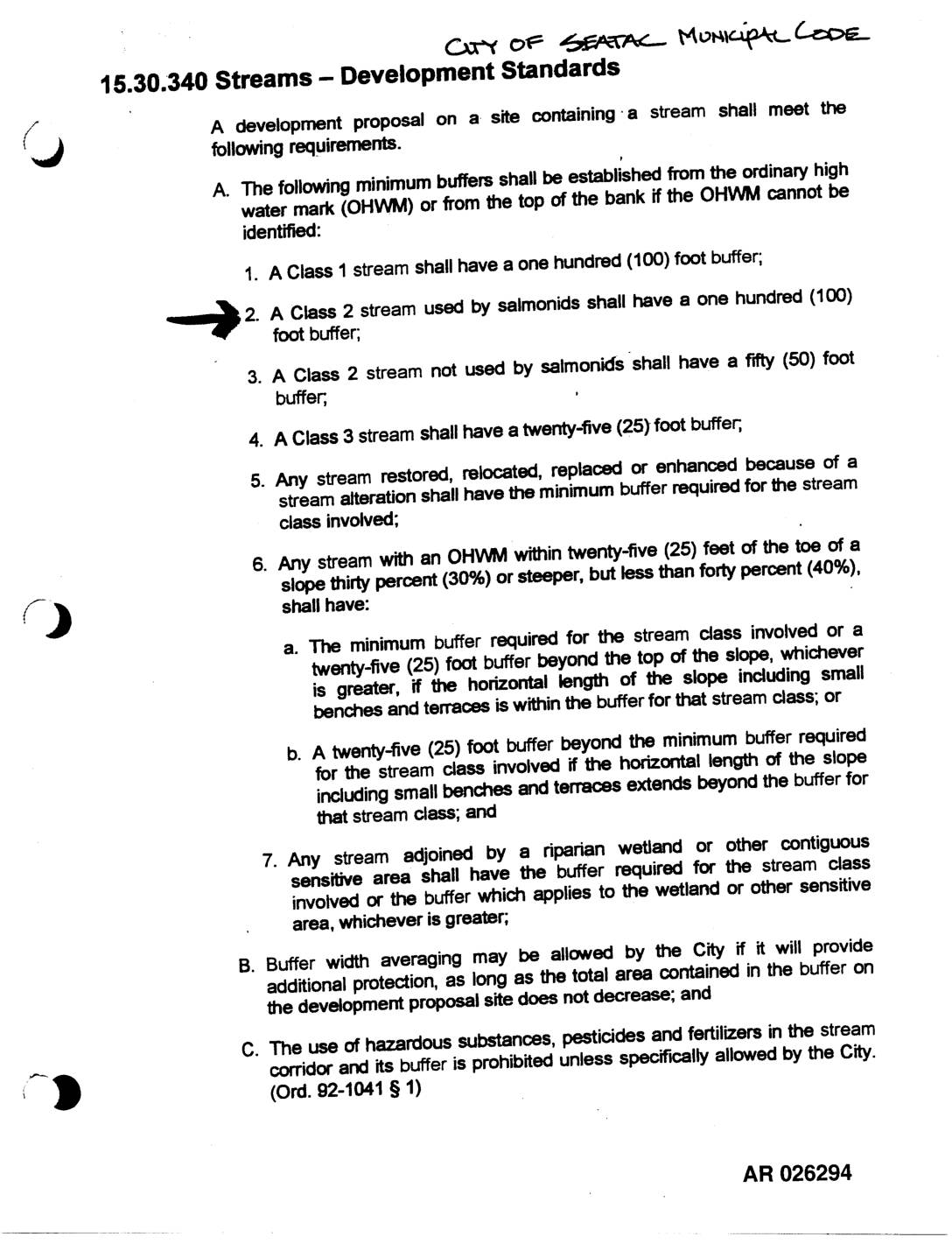
Exhibit 701: Streams — Development Standards (Sea-Tac Municipal Code 15.30.340 and King County Code 21A.24.360)
City of SeaTac Municipal Code section 15.30.340 and King County Code section 21A.24.360 establishing stream development standards and minimum buffer requirements from the ordinary high water mark (OHWM). Specifies buffers for Class 1 streams (100 feet), Class 2 streams used by salmonids (100 feet), Class 2 streams not used by salmonids (50 feet), and Class