TagNoise Monitors(39)
-
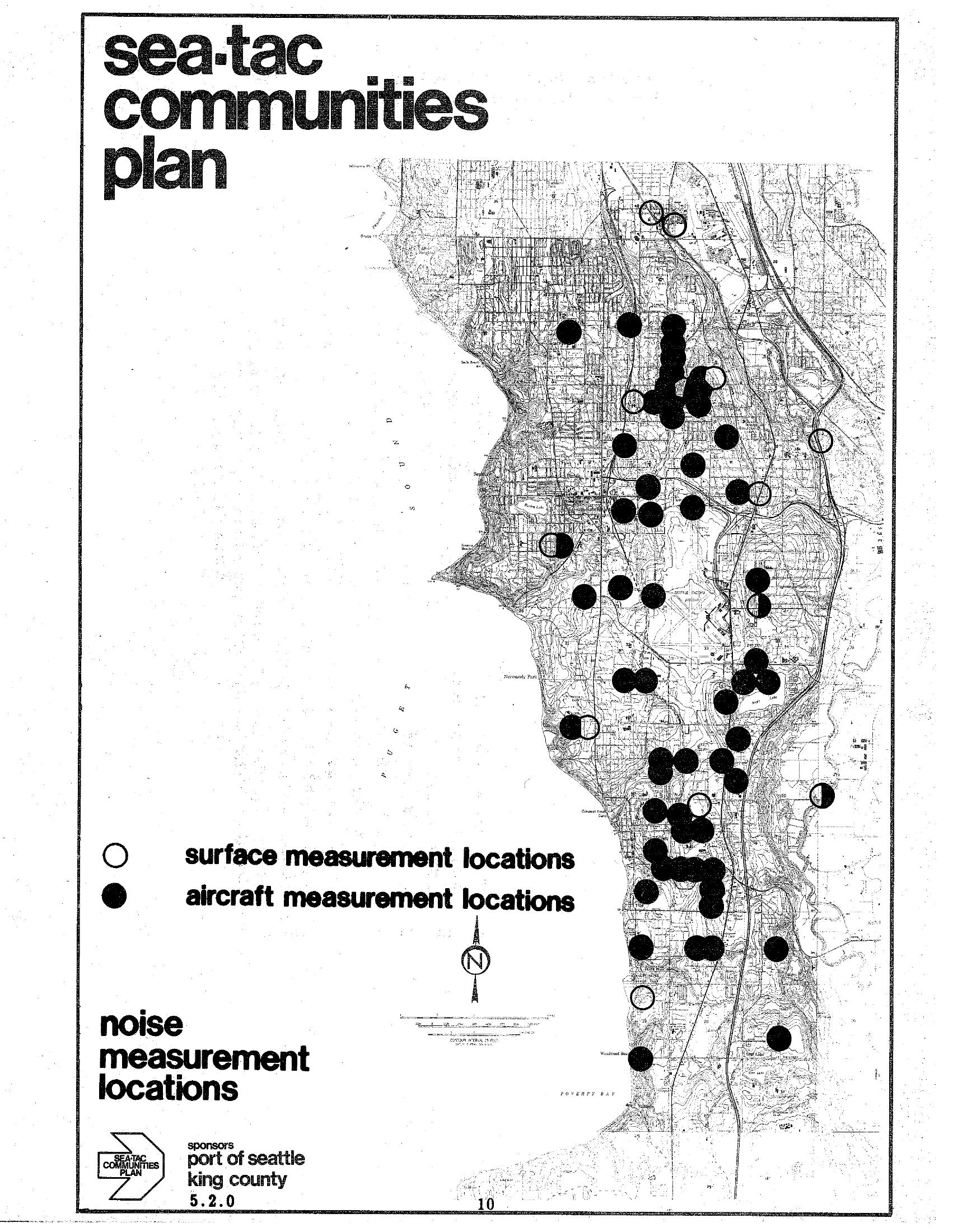
STCP Noise Measurement Locations Map
A map from the Sea-Tac Communities Plan (document number 5.2.0), sponsored by the Port of Seattle and King County, showing noise measurement locations in the Sea-Tac airport region. Open circles indicate surface measurement locations and filled circles indicate aircraft measurement locations distributed across the mapped area. -
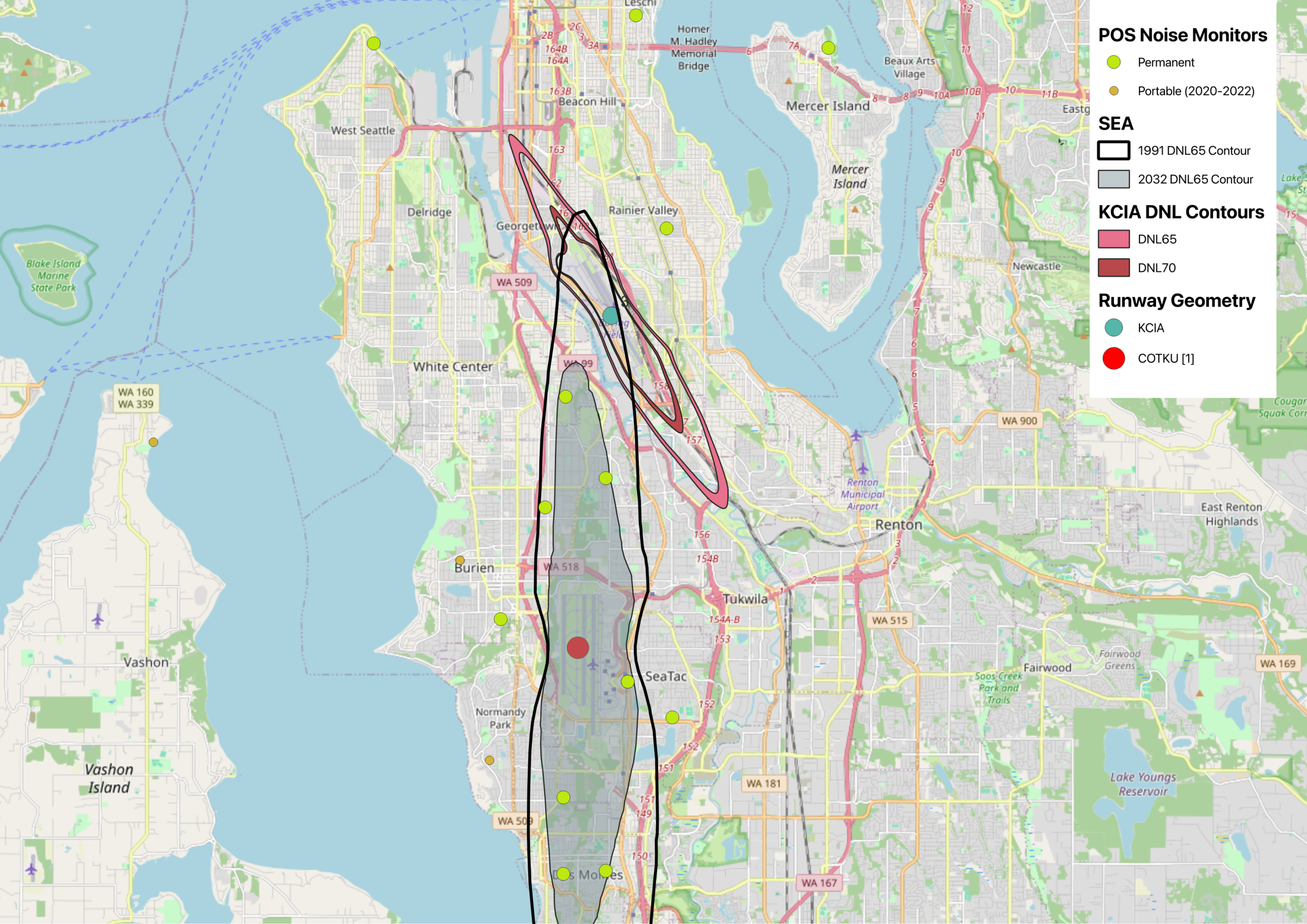
Map of Sea-Tac and KCIA DNL contours with Port of Seattle Noise Monitors
This map displays noise exposure contours for Seattle-Tacoma International Airport (SEA) comparing the 1991 and 2032 DNL65 projections, alongside KCIA DNL65 and DNL70 contours near Georgetown/South Seattle. It also shows POS (Port of Seattle) permanent and portable noise monitor locations (2020–2022) across the South Seattle, Burien, SeaTac, Tukwila, and Renton areas, with runway geometry markers for KCIA and COTKU [1]. -
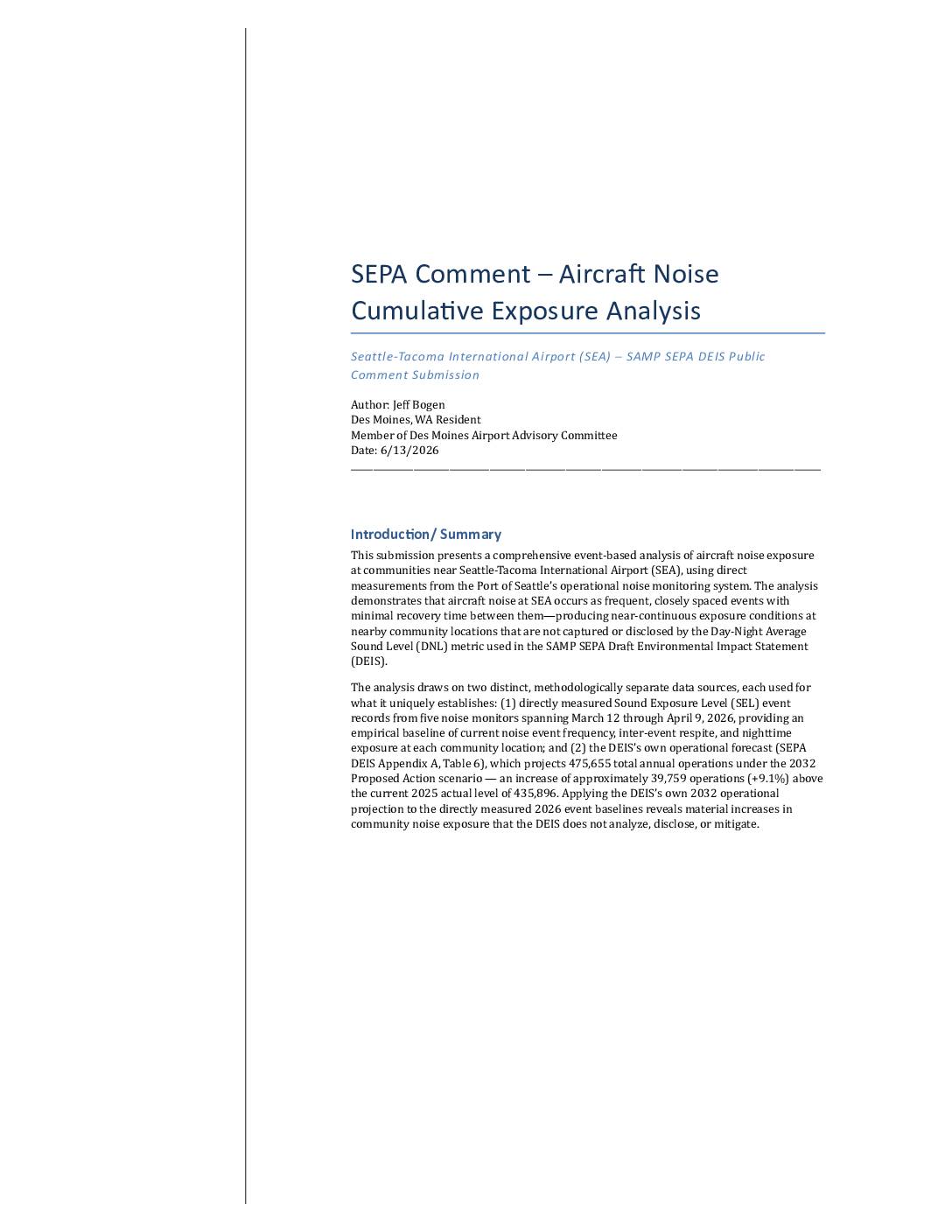 2026-06-13
SEPA Comment: Aircraft Noise Cumulative Exposure Analysis – Sea-Tac Airport SAMP SEPA DEIS
A Des Moines, WA resident and airport advisory committee member submitted this public comment to challenge the noise analysis in the Sea-Tac Airport (SEA) expansion environmental review, arguing that the standard Day-Night Average Sound Level (DNL) metric fails to capture how frequently aircraft noise actually occurs in nearby neighborhoods. Using direct measurements from five Port of Seattle noise monitors, the analysis found that some community locations currently experience roughly 529 aircraft noise events per day with a median quiet gap of only 1.5 minutes between them—conditions the commenter projects will worsen by 2032. The submission calls on the Port of Seattle to supplement its environmental review with event-based noise metrics that reflect real community exposure, including nighttime event counts and inter-event recovery time, as required under Washington State's environmental review law (SEPA). -
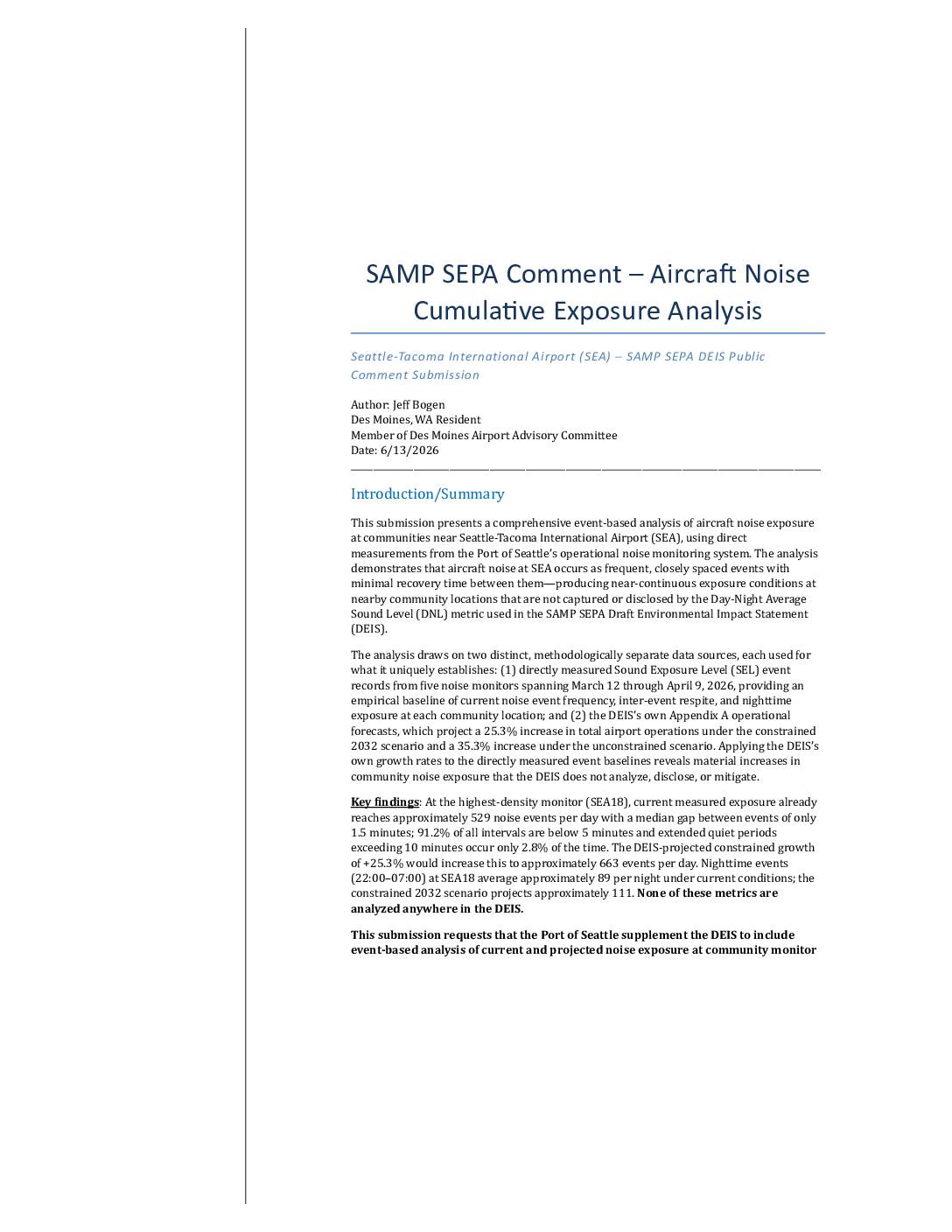 2026-06-13
SAMP SEPA Comment – Aircraft Noise Cumulative Exposure Analysis
A Des Moines, WA resident and airport advisory committee member submitted this public comment challenging the noise analysis in the Sea-Tac Airport (SEA) expansion environmental review, arguing that the standard Day-Night Average Sound Level (DNL) metric used by the Port of Seattle fails to capture the true burden of aircraft noise on nearby communities. Using direct measurements from Port noise monitors, the analysis found that some locations currently experience around 529 noise events per day with a median gap of only 1.5 minutes between events, conditions projected to worsen significantly under the airport's own growth forecasts. The comment calls on the Port to supplement its environmental review with event-based noise metrics—such as event frequency, quiet-period gaps, and nighttime disturbances—that research links more directly to health impacts like sleep disruption and cardiovascular disease. -
 2026-04-21
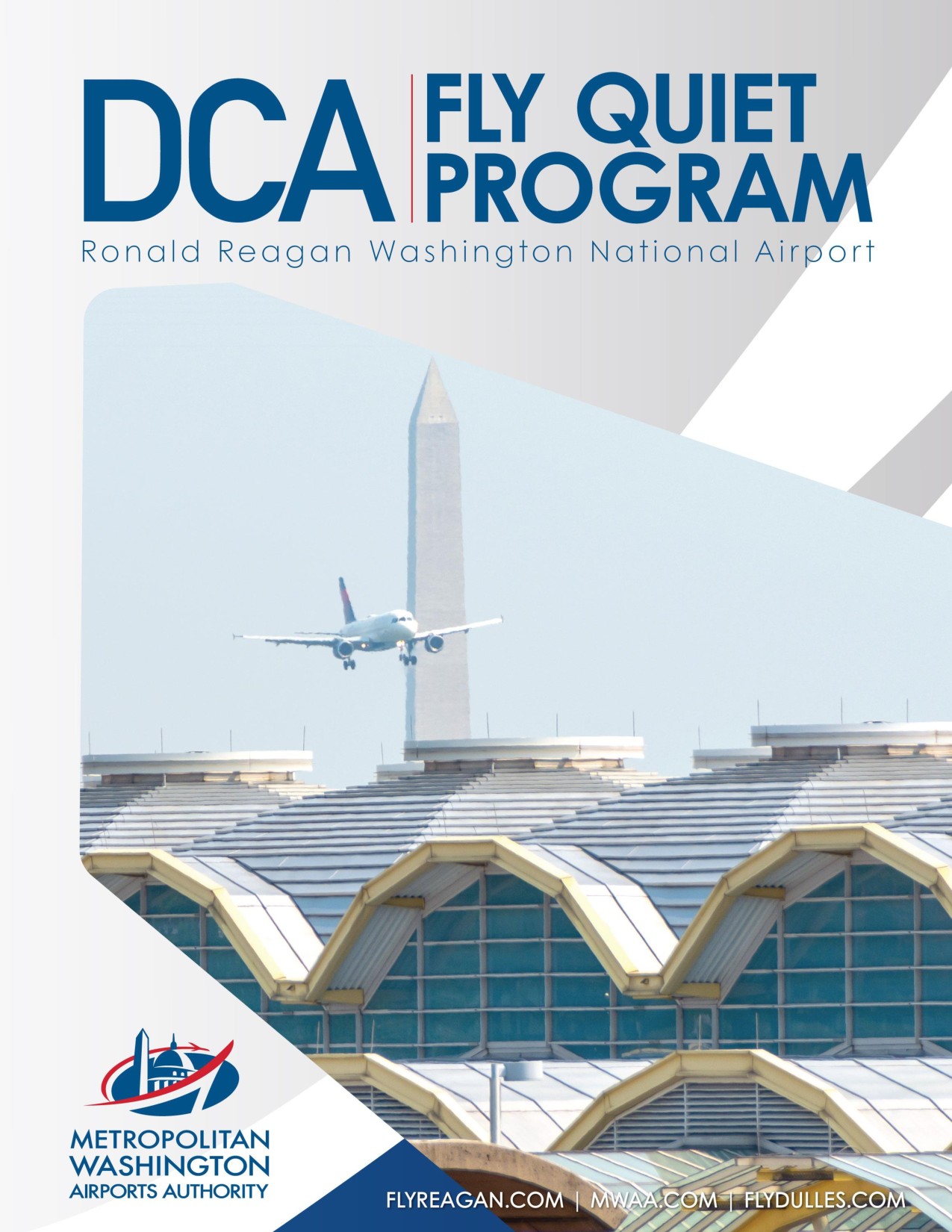
DCA Fly Quiet Program: Ronald Reagan Washington National Airport
This document outlines the Fly Quiet Program at Ronald Reagan Washington National Airport (DCA) in Washington, D.C., describing the airport's efforts to reduce aircraft noise impacts on surrounding communities. Key measures include FAA-approved flight procedures, a nighttime noise rule with financial penalties for violations between 10 p.m. and 7 a.m., limits on engine run-ups, and requests to airlines to use quieter aircraft. The program also operates a public noise complaint system, flight-tracking tools, and a noise monitoring network to keep residents informed and engaged. -
 2025-05-13
Port Of Seattle Commission regular meeting agenda, May 13, 2025
The Port of Seattle Commission held a regular meeting on May 13, 2025, covering a range of operational and administrative items, including a consent agenda item (8h) authorizing a contract extension with Passur for its Noise Monitoring and Flight Tracking System for up to ten years at a cost not to exceed $4,000,000. The meeting was held both in person at Port of Seattle Headquarters and virtually via Microsoft Teams, with public comment accepted by email, phone, or in person. Additional agenda items addressed airport infrastructure, ADA compliance, airfield equipment, and labor agreements. -
 2025-02-10
Noise Working Group Program Updates: February 10, 2025
The Seattle-Tacoma International Airport Noise Working Group met on February 10, 2025, to review ongoing noise management initiatives, including quarterly updates to the Late Night Noise Limitation Program, which voluntarily monitors takeoff and landing noise levels between 12:00 a.m. and 5:00 a.m. The program tracks noise exceedances against established decibel thresholds at four runway monitor locations and contacts airlines when those thresholds are exceeded. The meeting also covered late-night runway usage trends for 2025, aircraft go-around activity for December and January, and a summary of public noise complaints received in December. -
 2022-09-15
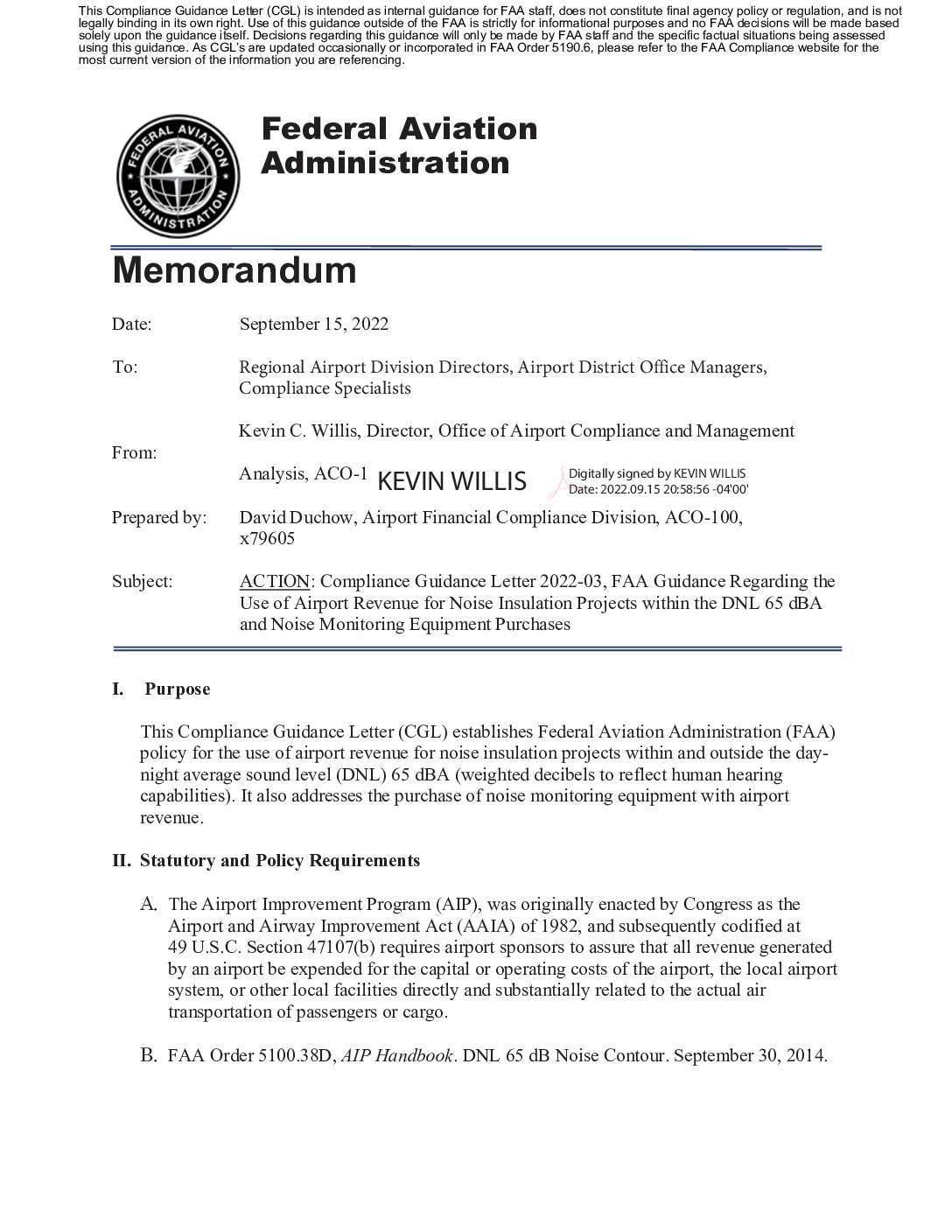
Compliance Guidance Letter 2022-03, FAA guidance regarding the use of airport revenue for noise insulation projects within the DNL 65 dBA and noise monitoring equipment purchases
This 2022 FAA guidance letter explains how airports can legally spend airport revenue on noise insulation projects, such as new windows, doors, and air conditioning, for homes and schools located within the DNL 65 dBA noise contour — the federal threshold for significant aircraft noise impact. Spending airport revenue on noise insulation for properties outside that noise boundary is generally prohibited as revenue diversion, unless a lower local noise standard has been officially adopted or 'block rounding' has been approved. The letter also clarifies that airports may purchase mobile or permanent noise monitoring equipment using airport revenue, provided certain conditions are met, but monitors cannot be used to enforce noise abatement flight procedures. -
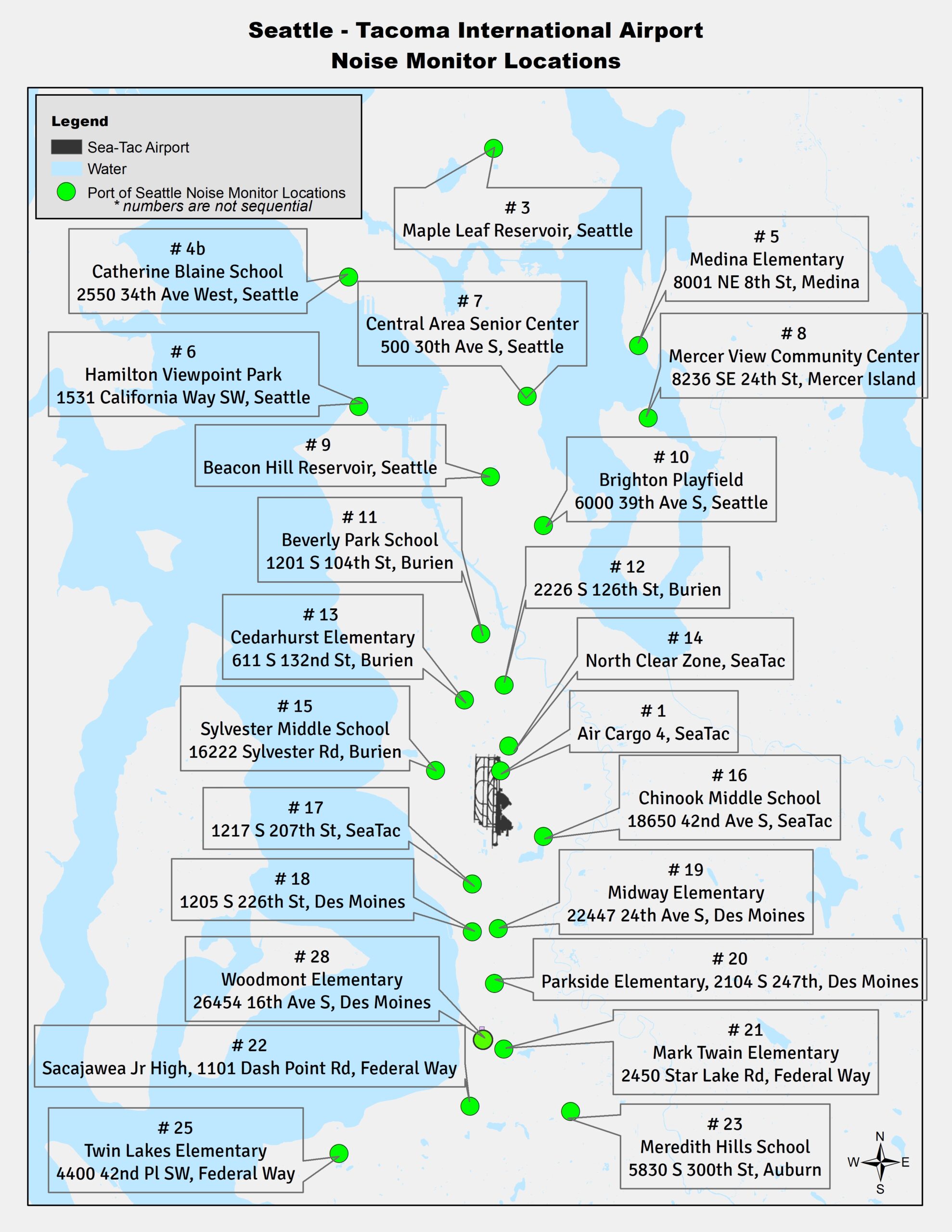
Permanent Noise Monitor Locations as of 2020
A map published by the Port of Seattle showing the locations of 25 noise monitoring stations surrounding Seattle-Tacoma International Airport (Sea-Tac). Monitoring sites span multiple communities including Seattle, Burien, SeaTac, Des Moines, Federal Way, Medina, Mercer Island, and Auburn, with each location identified by a number and street address. -
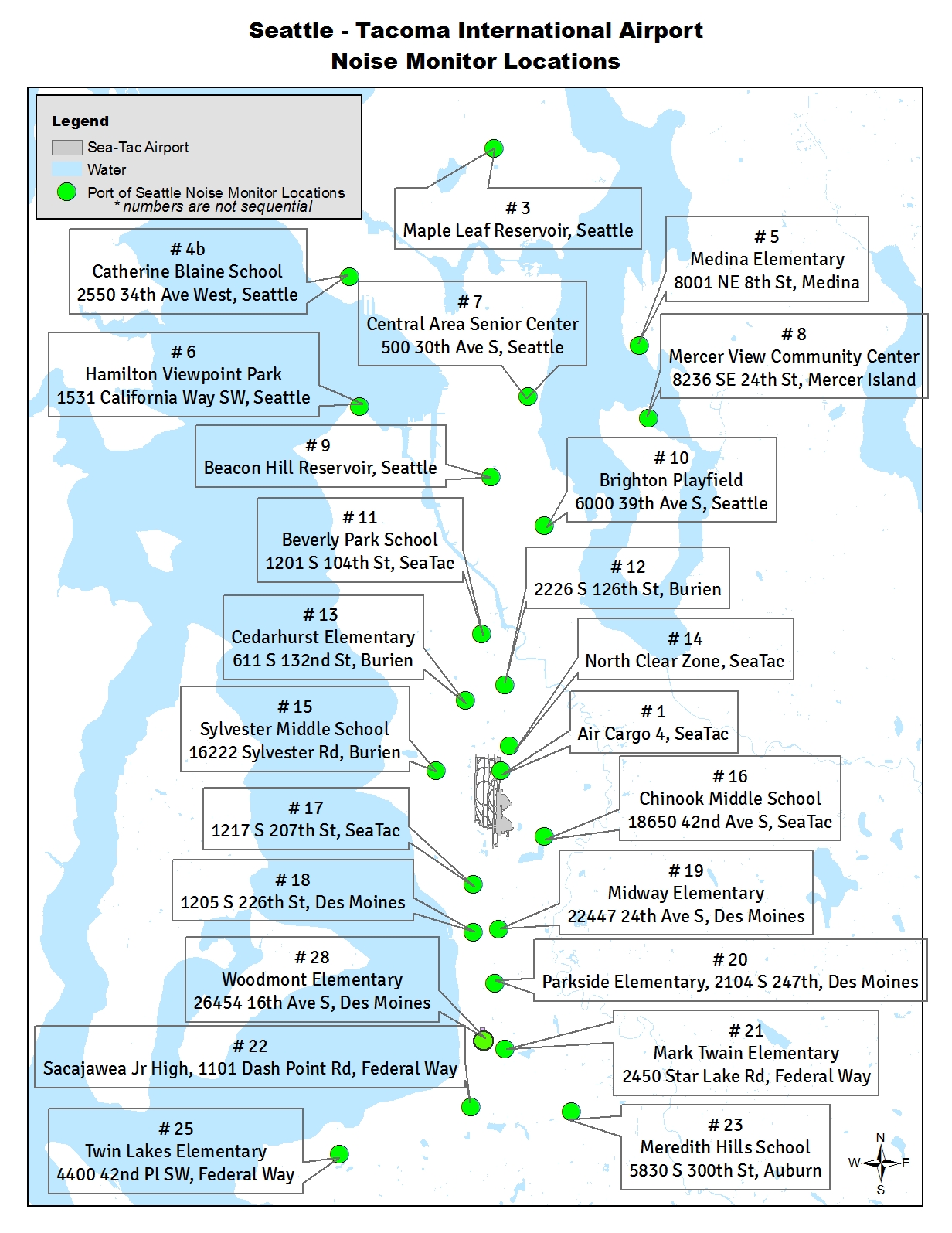
NMT locations as of 2018
A map published by the Port of Seattle showing the locations of 25 numbered noise monitoring stations surrounding Seattle-Tacoma International Airport (Sea-Tac). Monitoring sites span communities including Seattle, Burien, SeaTac, Des Moines, Mercer Island, Medina, Federal Way, and Auburn, with specific addresses provided for each location.