TagStudies(12)
-
 2025-10-01
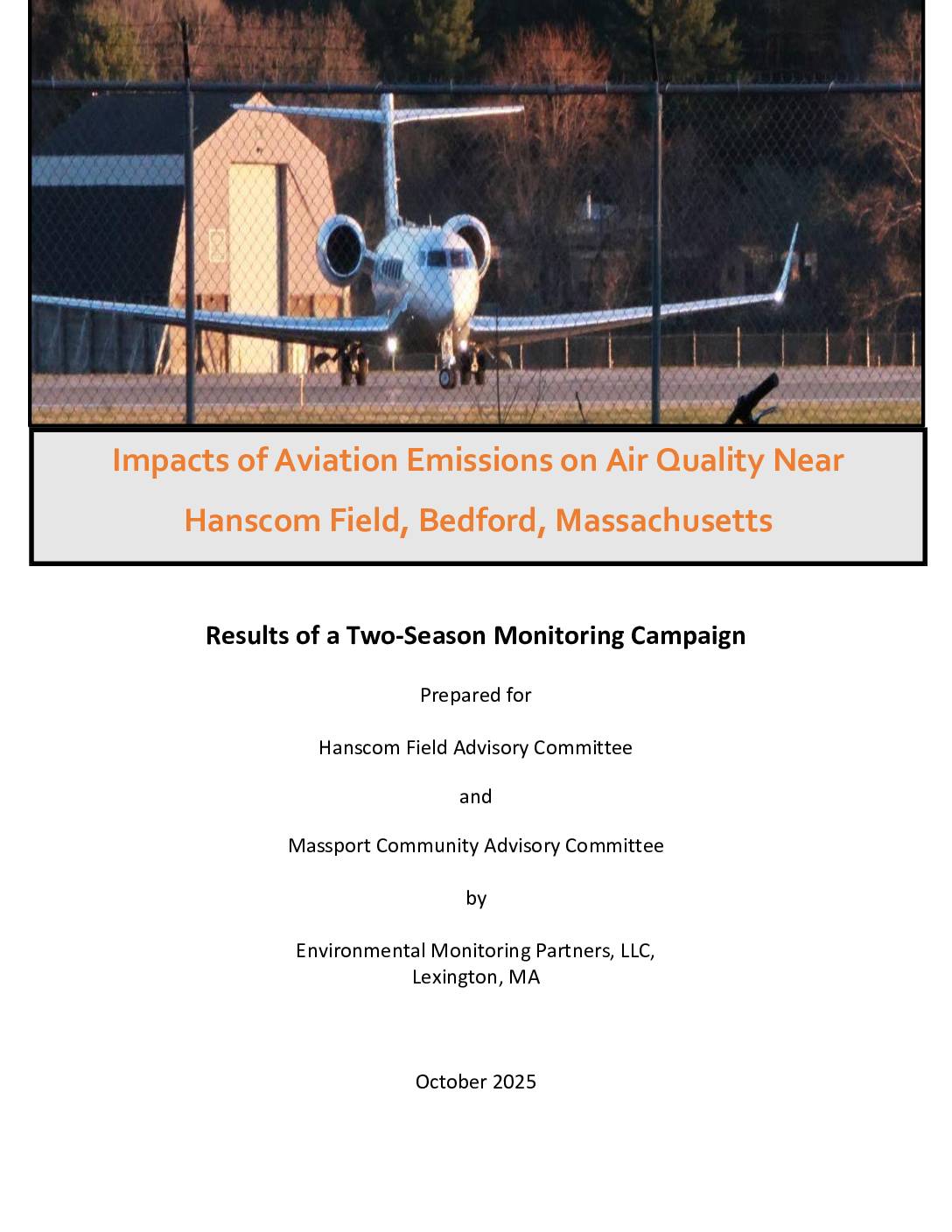
Impacts of Aviation Emissions on Air Quality Near Hanscom Field, Bedford, Massachusetts – Results of a Two-Season Monitoring Campaign
A comprehensive study measuring ultrafine particles, lead, and other air pollutants from aviation emissions at Hanscom Field across four surrounding Massachusetts towns. The study found that UFP concentrations were up to two-fold higher at downwind sites and often exceeded WHO guidelines, with the highest impacts in Bedford and Lexington. -
 2025-10-01
NBER: How airplane noise impacts home values, October 2025
NBER Working Paper No. 34431 by Florian Allroggen, R. John Hansman, Christopher R. Knittel, Jing Li, Xibo Wan, and Juju Wang (MIT, Tufts, University of Connecticut), October 2025. Estimates causal effect of aviation noise on U.S. housing prices using quasi-experimental variation from FAA performance-based navigation (PBN) procedures and runway reconfigurations at three major U.S. airports. -
 2025-09-01
Appendix K: Children’s Environmental Health and Safety Risks, Socioeconomics, and Environmental Justice (NEPA Final EA and SEPA)
Appendix K of this environmental review examines socioeconomic conditions, environmental justice, and children's health and safety risks in the area surrounding the proposed project. It finds that 23.3% of the population in the study area is under 18—higher than both King County and statewide averages—and identifies two schools within the project boundary that could expose children to environmental health risks. The appendix also includes an economic impact analysis for the Northwest Seaport Alliance and a separate environmental justice memorandum prepared under Washington State's environmental review process. -
 2025-07-02
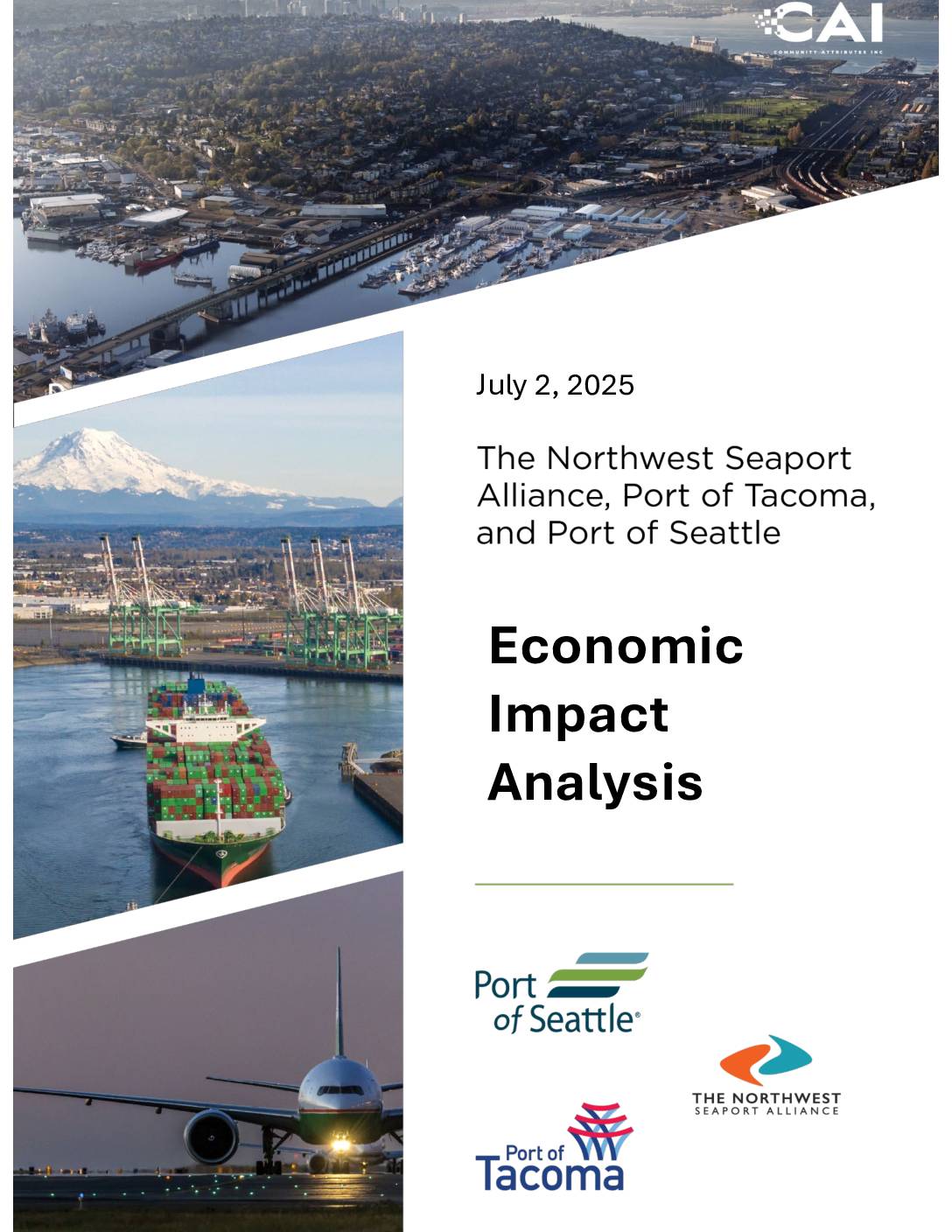
CAI Economic Impact Analysis: The Northwest Seaport Alliance, Port of Tacoma, and Port Of Seattle
A July 2025 economic impact analysis by Community Attributes Inc. examines the economic contributions of the Northwest Seaport Alliance, Port of Tacoma, and Port of Seattle to Washington State. In 2023, NWSA operations alone supported an estimated 52,100 jobs, $4.4 billion in total compensation, and nearly $14 billion in total business output across Washington. The report also highlights more than $130 million in state fiscal impacts generated by NWSA activities that year. -
 2020-05-29
Section 13: Socio-Economics — Study of the Current and Ongoing Effects of the Operation of the Seattle-Tacoma International Airport
This 2020 report examines the socio-economic conditions in six south King County cities near Seattle-Tacoma International Airport, including Burien, Des Moines, Federal Way, Normandy Park, SeaTac, and Tukwila. It analyzes demographic trends such as population growth, age distribution, and ethnic profiles from 1997 to 2018, finding that most study area cities grew more slowly than King County overall, with Burien being a notable exception largely due to a 2010 annexation. The report is part of a broader study assessing how airport operations affect surrounding communities across indicators including income, housing, education, employment, and municipal tax revenues. -
 2020-05-29
Study of the Current and Ongoing Effects of the Operation of the Seattle-Tacoma International Airport: Appendix A, Section 10 – Light
This section of a 2020 study examines how the operation of Seattle-Tacoma International Airport affects nighttime light conditions in surrounding communities, using satellite imagery data collected between 1998 and 2018. Researchers analyzed 'skyglow' — light pollution caused by electric fixtures and light reflected off surfaces like roads and parking lots — across the broader Central Puget Sound region. The study notes that nighttime light emission readings can vary by 15–20% due to factors such as weather, seasonal vegetation, and imaging conditions, and it identifies specific light fixture types that contribute most to sky glow. -
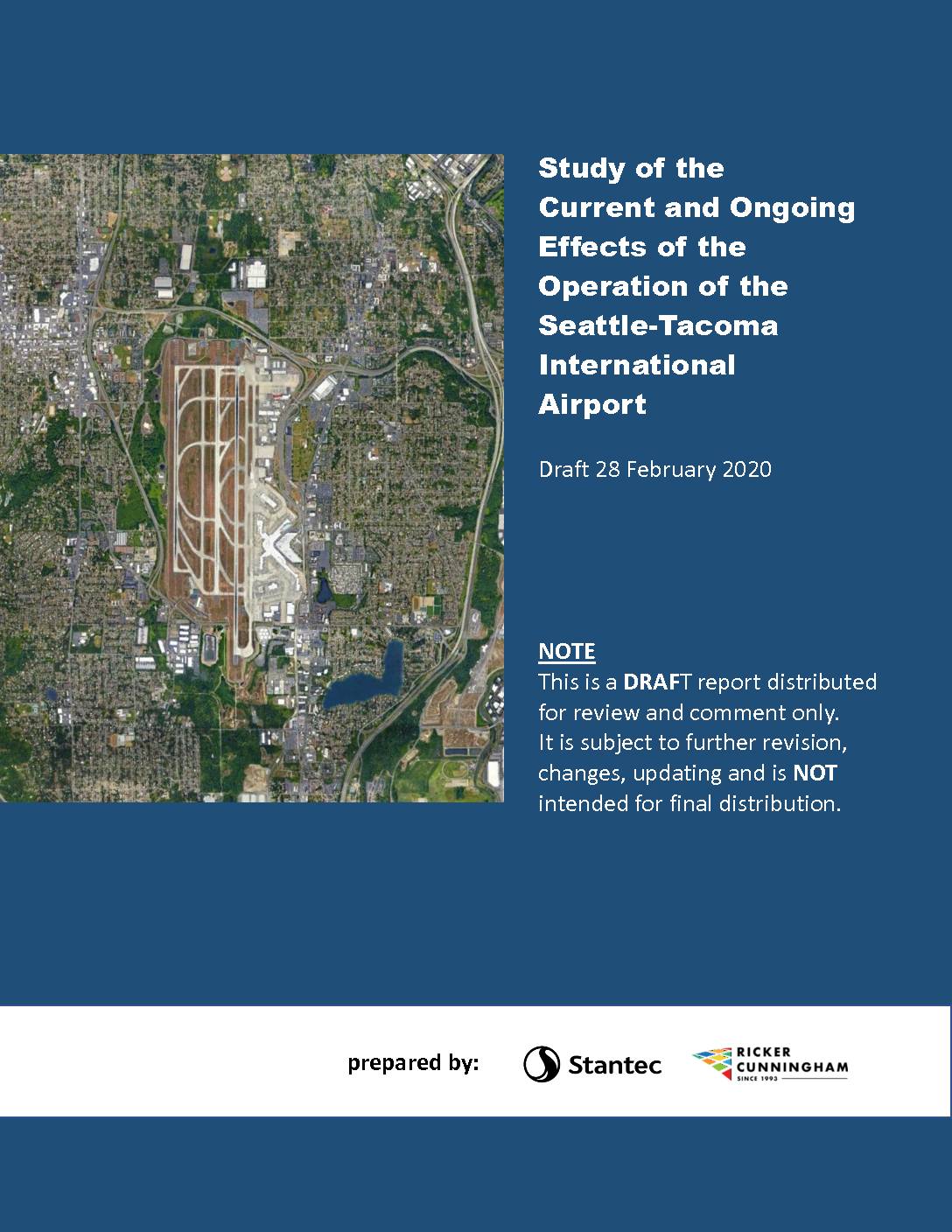 2020-02-28
Study of the current and ongoing effects of the operation of the Seattle-Tacoma International Airport
★ 32This draft report, prepared by Stantec and Ricker Cunningham for the Washington State Department of Commerce under ESSB 6032, examines the current and ongoing effects of operating Seattle-Tacoma International Airport (Sea-Tac). It covers the airport's broader impacts on surrounding communities, likely including noise, land use, and environmental concerns. The report was released in draft form on February 28, 2020, for review and comment only, and was not intended for final distribution at that time. -
 2019-02-15
RFP pre-proposal conference: A study of the current and on-going effects of the operation of the Seattle-Tacoma International Airport
On February 15, 2019, the Washington State Department of Commerce held a pre-proposal conference for a study examining the current and ongoing effects of Seattle-Tacoma International Airport's operations on surrounding communities, as directed by Engrossed Substitute Senate Bill 6032. The conference outlined the project's objectives, scope of work, timeline, and proposal requirements for prospective contractors. The study was part of a broader state effort to understand how airport operations impact local neighborhoods, housing, and community well-being. -
 2007-02-01
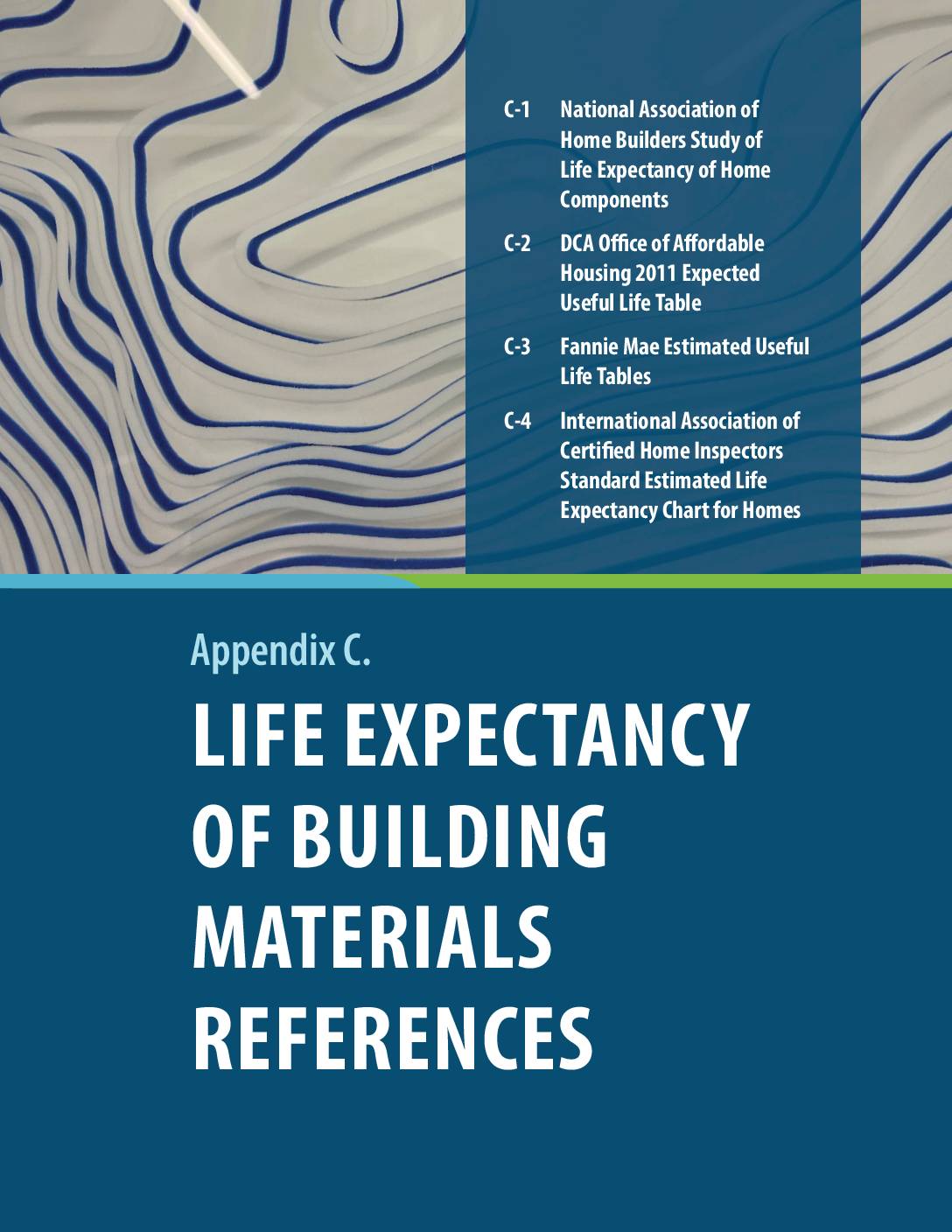
Study of Life Expectancy of Home Components
This appendix compiles four reference guides on the life expectancy of common home building materials and components, including studies from the National Association of Home Builders, Fannie Mae, and the International Association of Certified Home Inspectors. The materials cover expected useful lifespans ranging from 5 to 100 years for items such as roofing, flooring, and mechanical systems. These references are intended to support housing assessments and affordable housing planning decisions. -
 2000-06-01
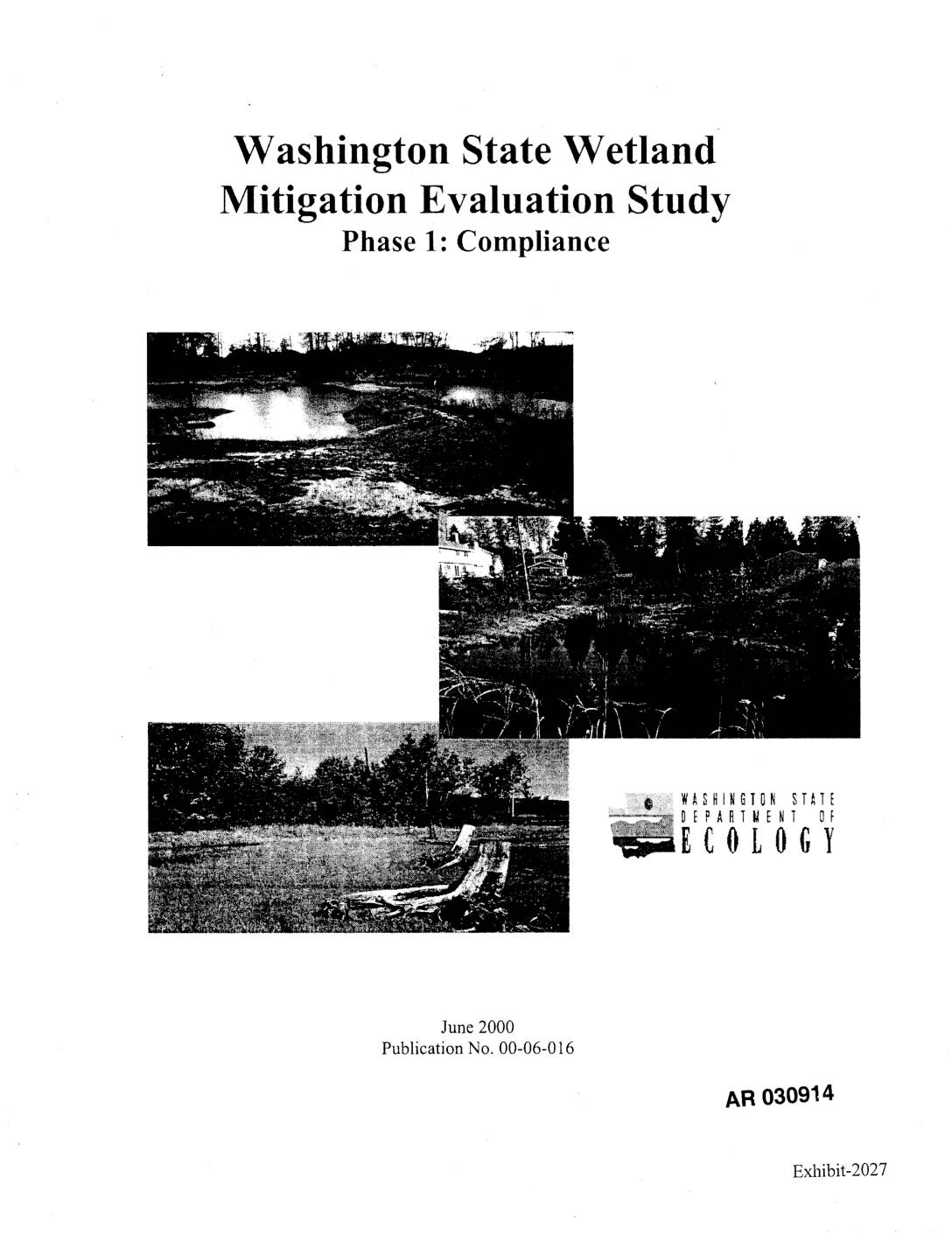
EXH AR030914: Washington State Wetland Mitigation Evaluation Study, Phase 1: Compliance
Washington State Department of Ecology (Ecology) Publication No. 00-06-016, authored by Patricia A. Johnson, Dana L. Mock, Emily J. Teachout, and Andy McMillan. Phase 1 compliance study of wetland mitigation in Washington State, published June 2000 by the Shorelands & Environmental Assistance Program, Lacey, WA. Exhibit-2027, AR 030914.