TagNoise Complaints(15)
-
 2026-04-21
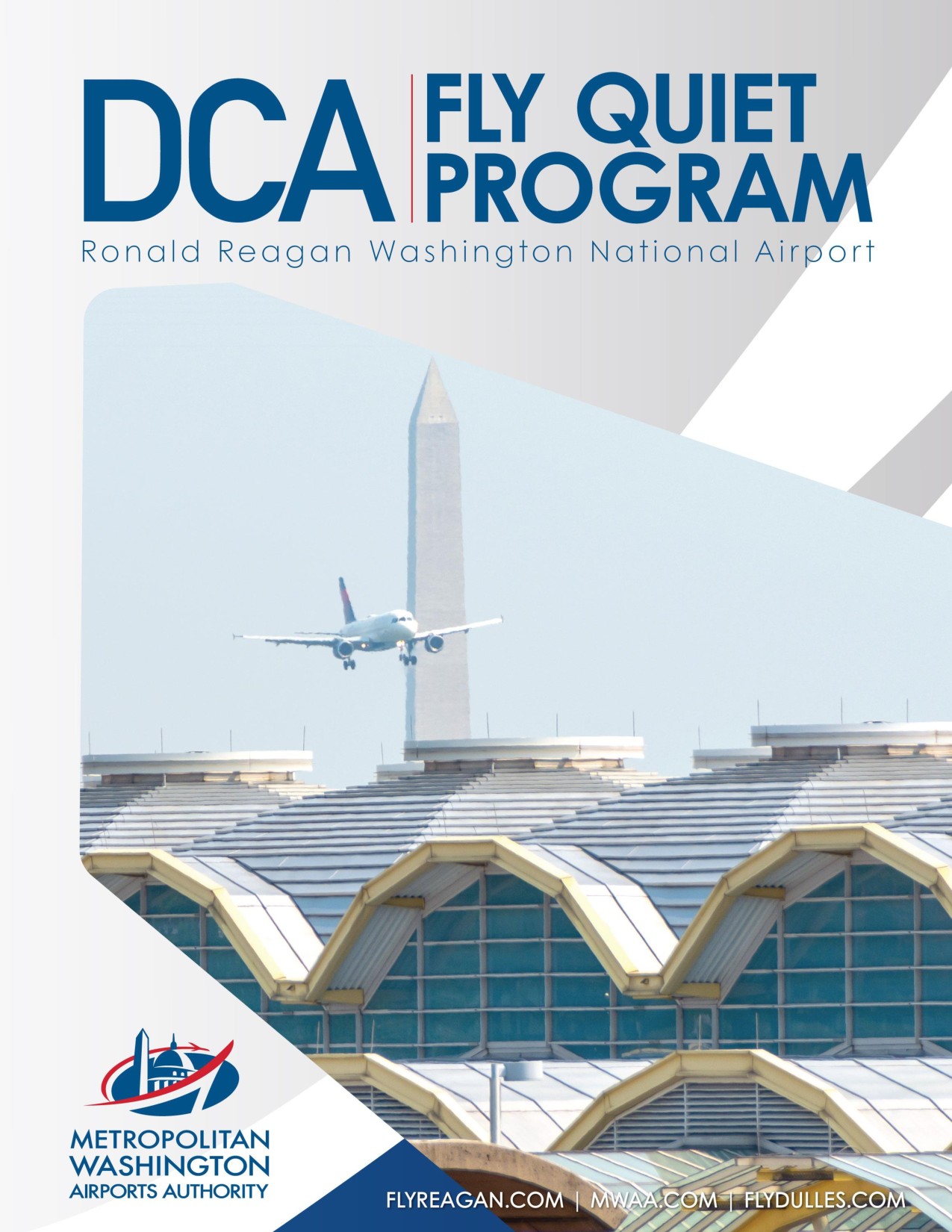
DCA Fly Quiet Program: Ronald Reagan Washington National Airport
This document outlines the Fly Quiet Program at Ronald Reagan Washington National Airport (DCA) in Washington, D.C., describing the airport's efforts to reduce aircraft noise impacts on surrounding communities. Key measures include FAA-approved flight procedures, a nighttime noise rule with financial penalties for violations between 10 p.m. and 7 a.m., limits on engine run-ups, and requests to airlines to use quieter aircraft. The program also operates a public noise complaint system, flight-tracking tools, and a noise monitoring network to keep residents informed and engaged. -
 2025-06-01
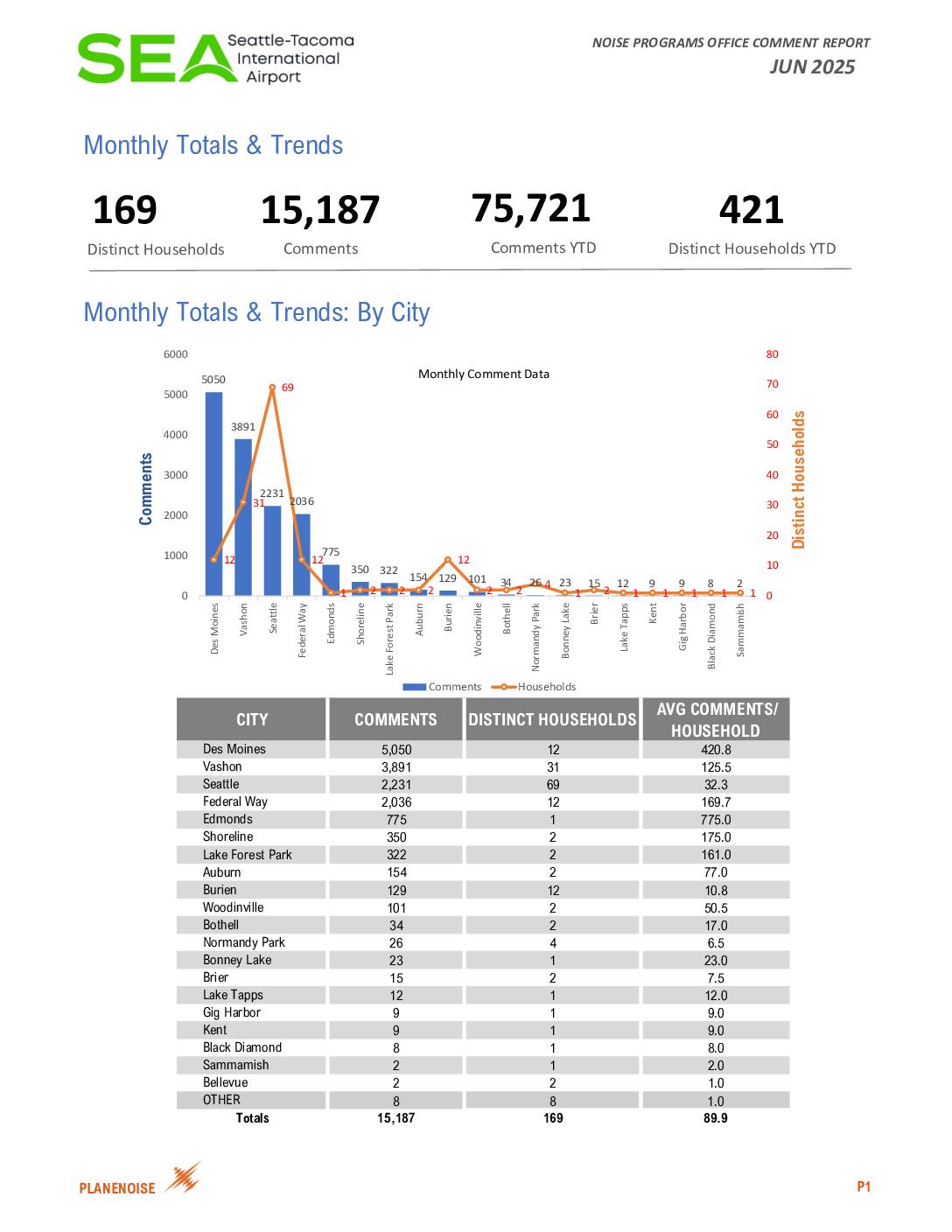
Noise Programs Office Comment Report: June 2025
The Seattle-Tacoma International Airport Noise Programs Office received 15,187 noise-related comments from 169 distinct households in June 2025, bringing the year-to-date total to 75,721 comments. The highest comment volumes came from Des Moines, Vashon, and Seattle, with the vast majority of complaints categorized as noise annoyance and submitted via a third-party web application. The report breaks down comments by city, zip code, complaint type, and filing method, offering a detailed snapshot of community noise concerns around Sea-Tac Airport. -
 2024-05-11
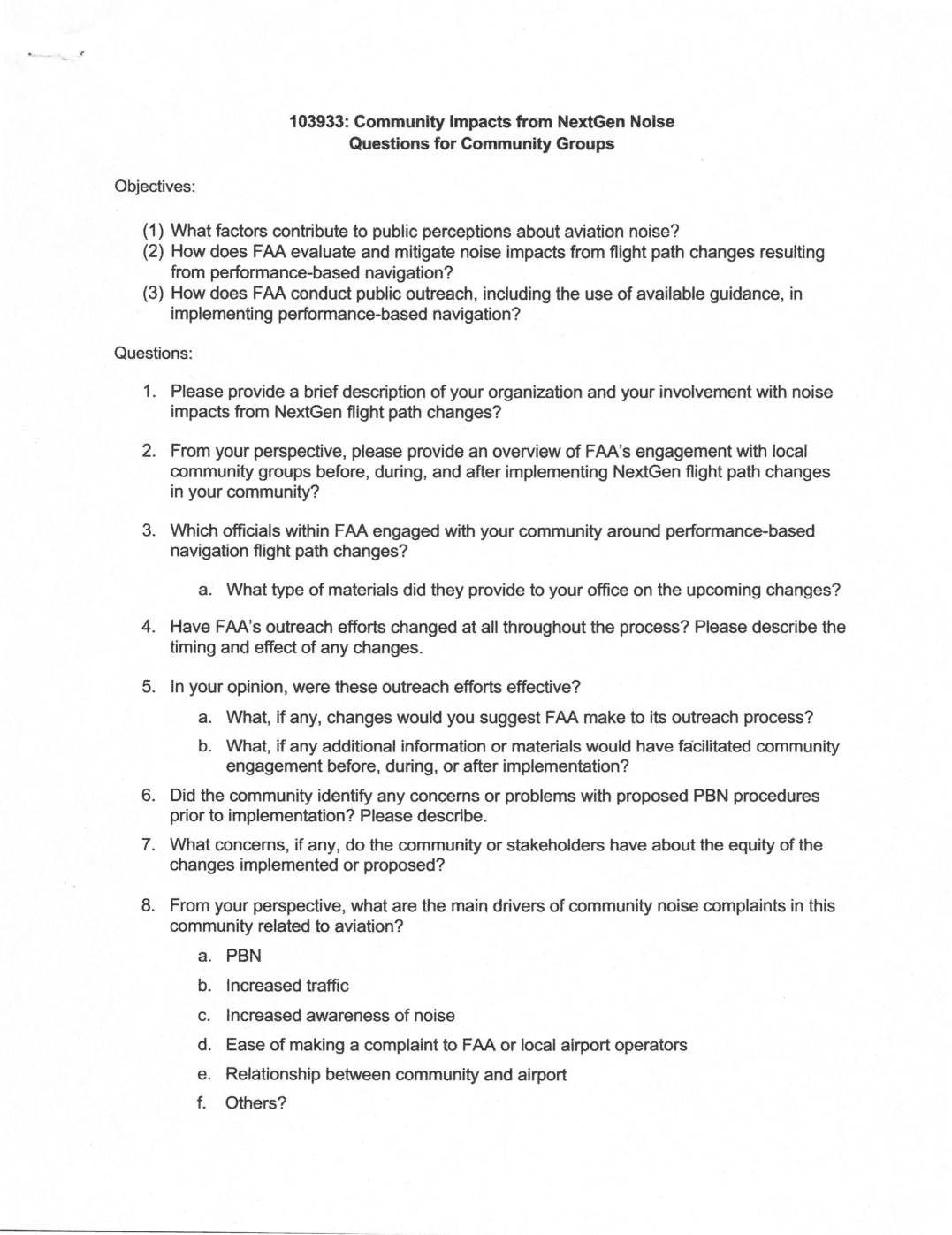
Community impacts from NextGen noise: Questions for community groups
This document contains a structured set of interview questions developed for a GAO study (project 103933) examining how NextGen flight path changes have affected local communities through increased aviation noise. The questions are directed at community groups and cover topics including FAA outreach efforts before and after implementation, equity concerns, the drivers of noise complaints, and whether any flight path modifications were sought or made following implementation. It aims to assess how effectively the FAA communicated with and involved communities in performance-based navigation (PBN) decisions. -
 2023-06-27
Noise policy review
The FAA's Noise Policy Review examines the growing problem of aircraft noise around airports, comparing historical and current annoyance levels among nearby residents. A Neighborhood Environmental Survey found a substantial increase in the percentage of people highly annoyed by aircraft noise, with annoyance rising consistently across all levels of noise exposure — well above what older models like the Schultz Curve had predicted. -
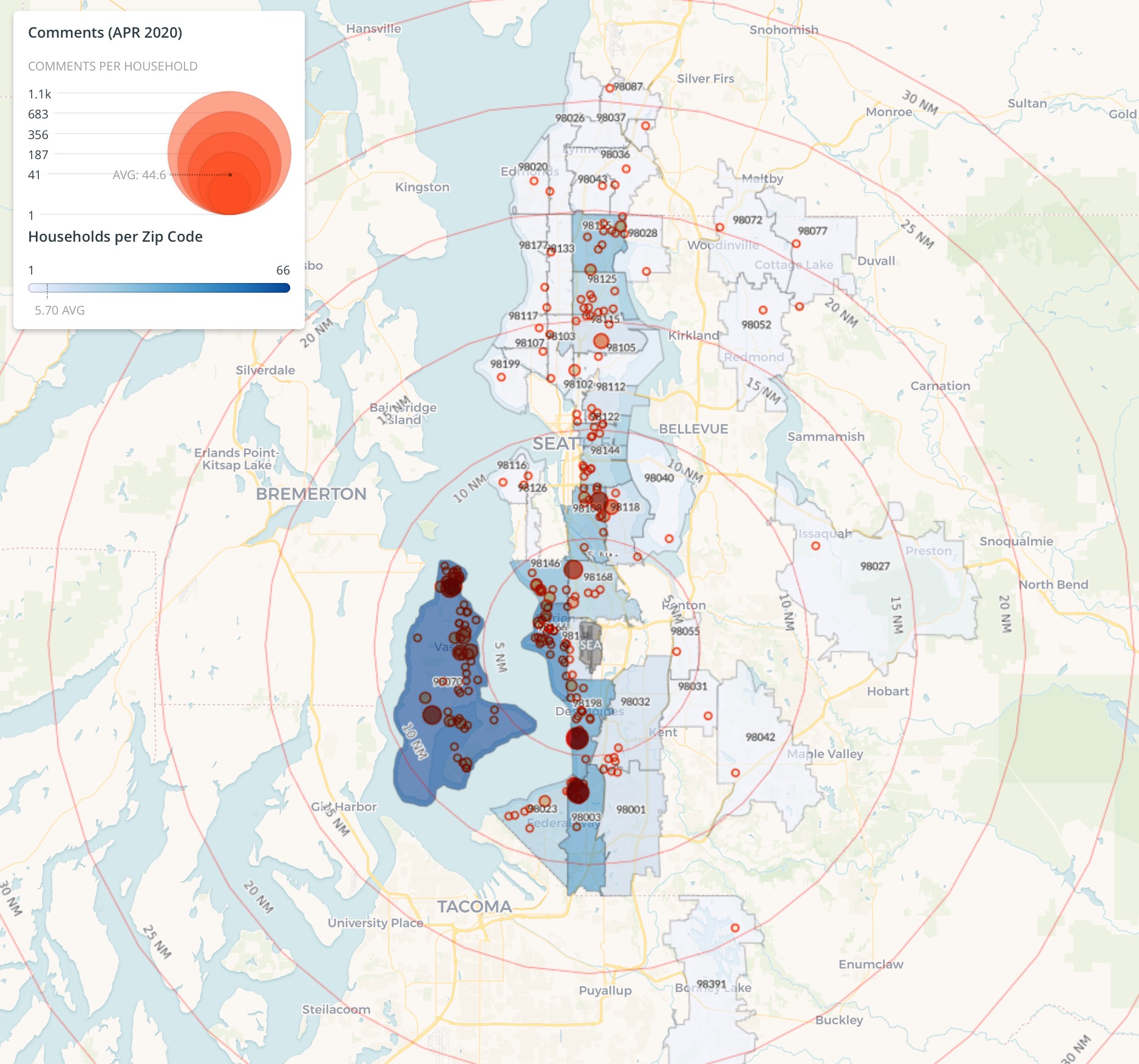
KSEA Noise Complaints by Zip Code April 2020
A geographic visualization mapping public comments received in April 2020 regarding Sea-Tac Airport noise, displayed as proportional circles (comments per household) overlaid on ZIP code boundaries across the Seattle-Tacoma metropolitan area. Concentric red rings indicate nautical-mile distances from Sea-Tac Airport, and a blue choropleth layer shows households per ZIP code, with an average of 5.70 households and comment rates averaging 44.6 per household. -
 2021-01-01
Aircraft noise and overflight dispersion: Opportunities and challenges
A 2021 Aviation Noise and Emissions Symposium presentation by Charlotte Douglas International Airport Noise Abatement Specialist Dan Gardon explores the shifting landscape of aircraft noise complaints, noting that community annoyance is increasingly driven by the frequency of overhead flights rather than individual loud noise events. The presentation examines the opportunities and challenges airports face in dispersing flight paths to manage overflight noise. While focused on Charlotte Douglas, the insights are broadly relevant to airport noise management policy across the industry. -
 2019-08-01
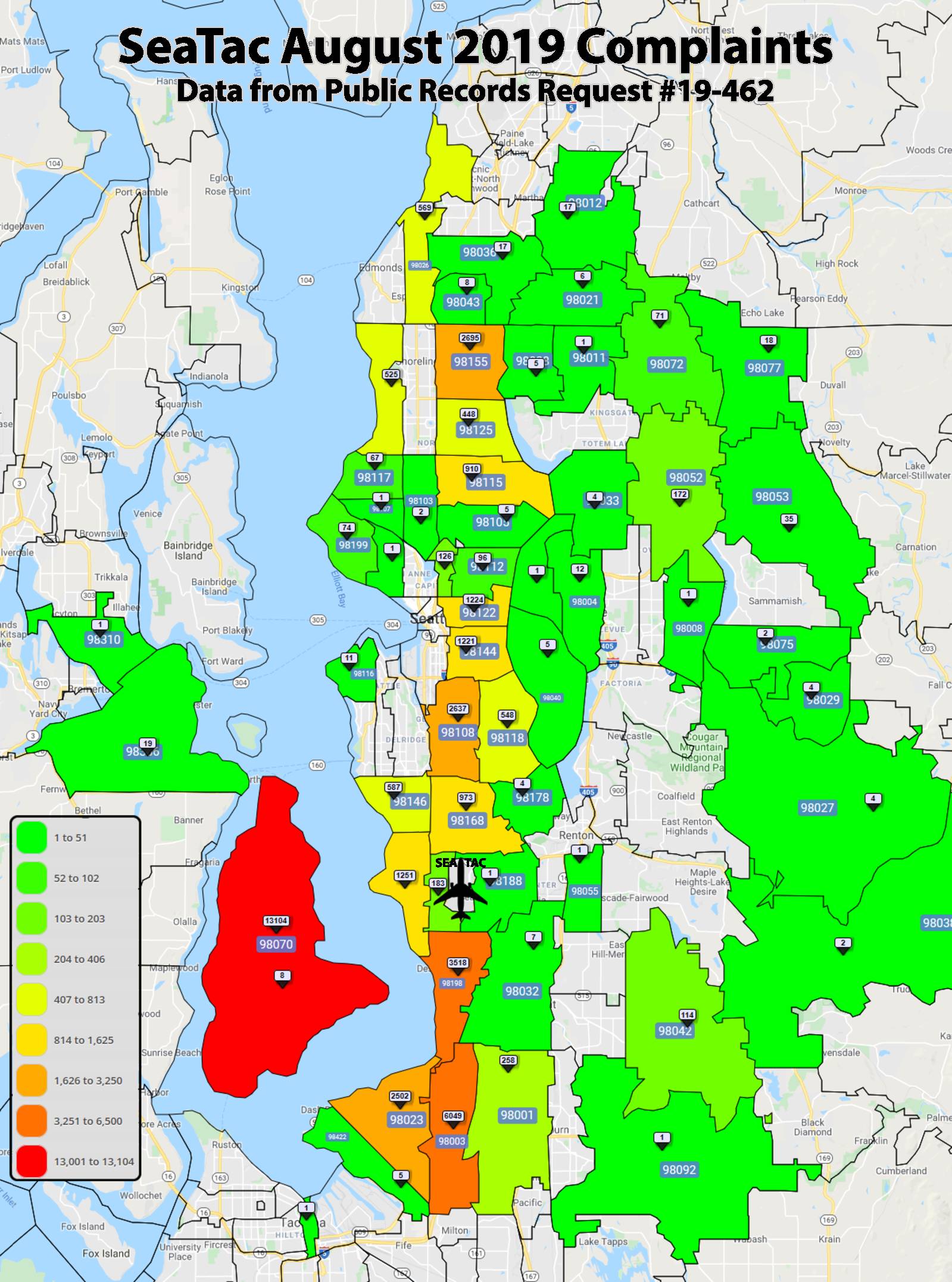
Sea-Tac August 2019 Noise Complaints (Vashon Island Fair Skies)
A color-coded map showing complaint data by ZIP code in the SeaTac area for August 2019. The map displays different complaint volume ranges from 1-51 complaints (green) to over 13,000 complaints (red), with ZIP code 98070 showing the highest complaint levels in red. -
 2018-01-01
City of Phoenix Aviation Department 2018 Annual Noise Report
The City of Phoenix Aviation Department's 2018 Annual Noise Report covers noise exposure trends across Phoenix Sky Harbor International (PHX), Phoenix Deer Valley (DVT), and Phoenix Goodyear (GYR) airports for calendar year 2018. The report recorded 434,252 total operations at PHX, 53,280 noise complaints, and a 99.65% compliance rate with noise abatement procedures. Key highlights include FAA community workshops, implementation of updated flight departure routes, renewal of the Noise and Operations Management System contract, and passage of the FAA Reauthorization bill containing nearly 20 noise-related provisions. -
 2018-01-01
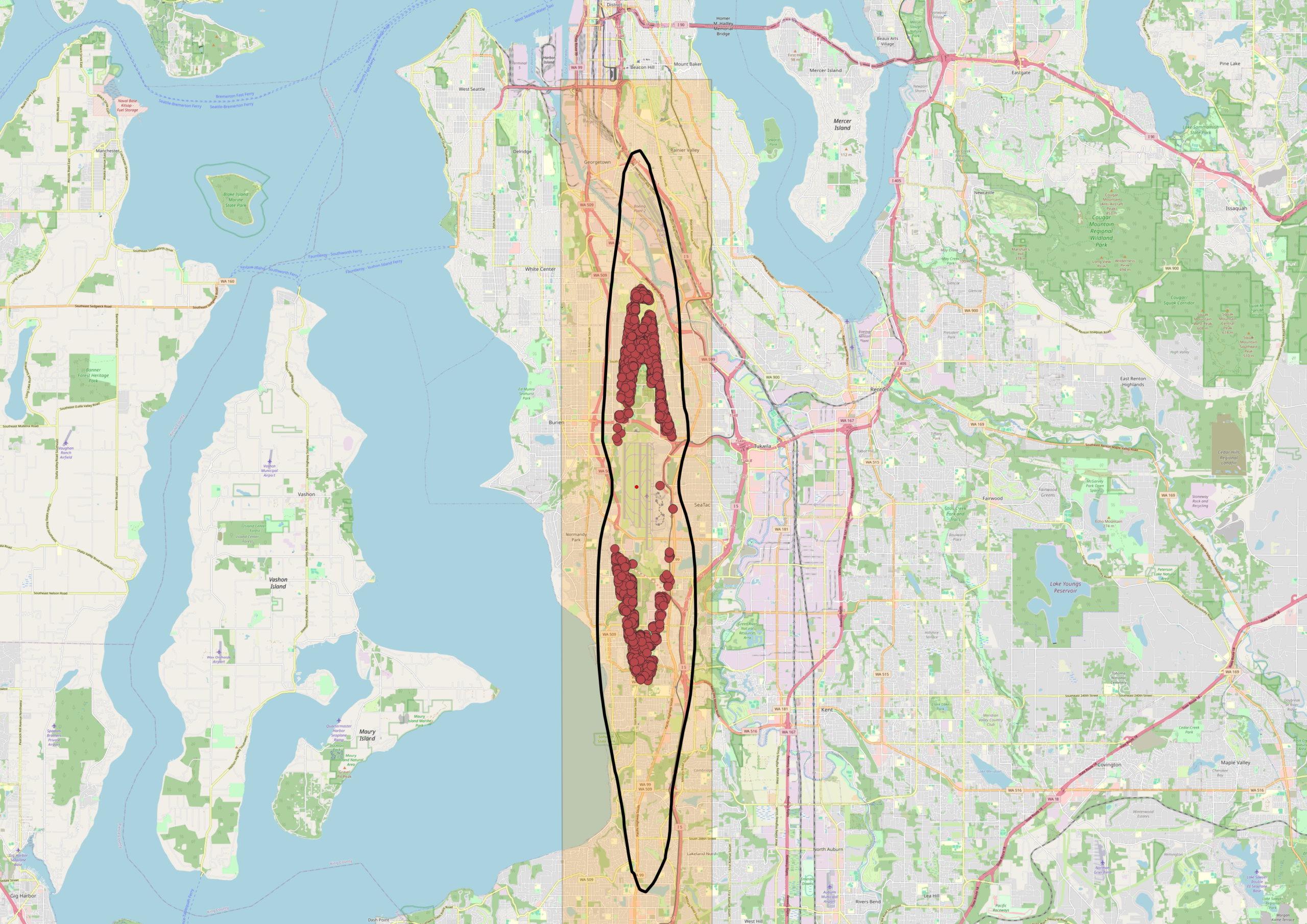
Sea-Tac Airport DNL 65 Noise Contour Map with 2018 Noise Complaints — Burien, White Center, and Tukwila
An OpenStreetMap-based map of the Seattle–Tacoma area showing Sea-Tac Airport's flight corridor, marked with a highlighted orange corridor zone and a black oval outline indicating the primary noise impact area. Red dot clusters represent noise complaints or flight track incidents concentrated over the Burien, White Center, and Tukwila neighborhoods south of Seattle, with a secondary cluster further south near Federal Way. -
 2010-02-17
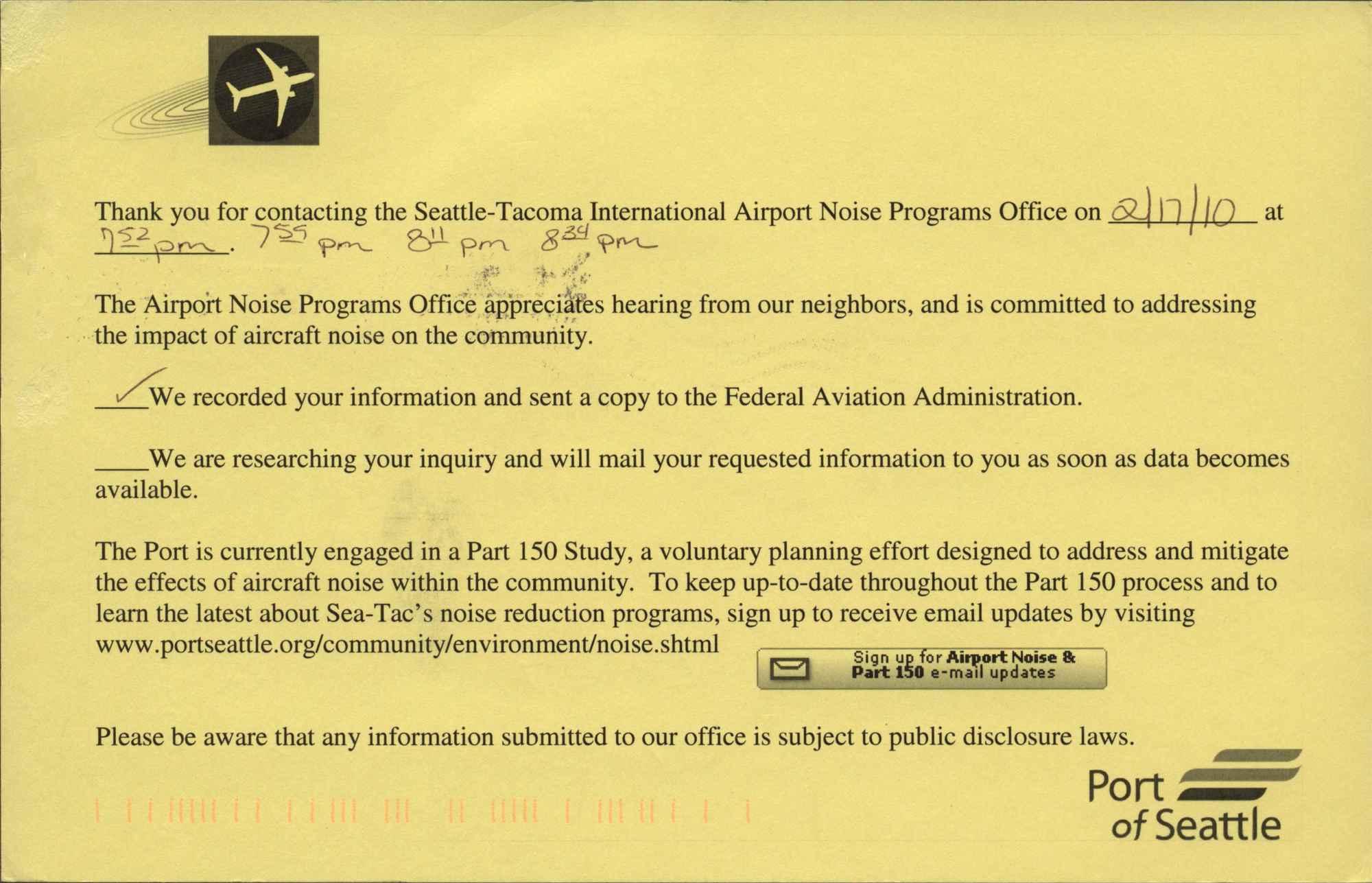
Airport Noise Office Thank You For Contacting Us Postcard
A Port of Seattle acknowledgment postcard sent in response to a noise complaint filed with the Seattle-Tacoma International Airport Noise Programs Office on 2/17/10, logging four aircraft noise events at 7:52 PM, 7:55 PM, 8:11 PM, and 8:34 PM. The card confirms that the caller's information was recorded and forwarded to the Federal Aviation Administration, and references the ongoing Part 150 Study for community noise mitigation.