TagNSTP(84)
-
 2026-01-06
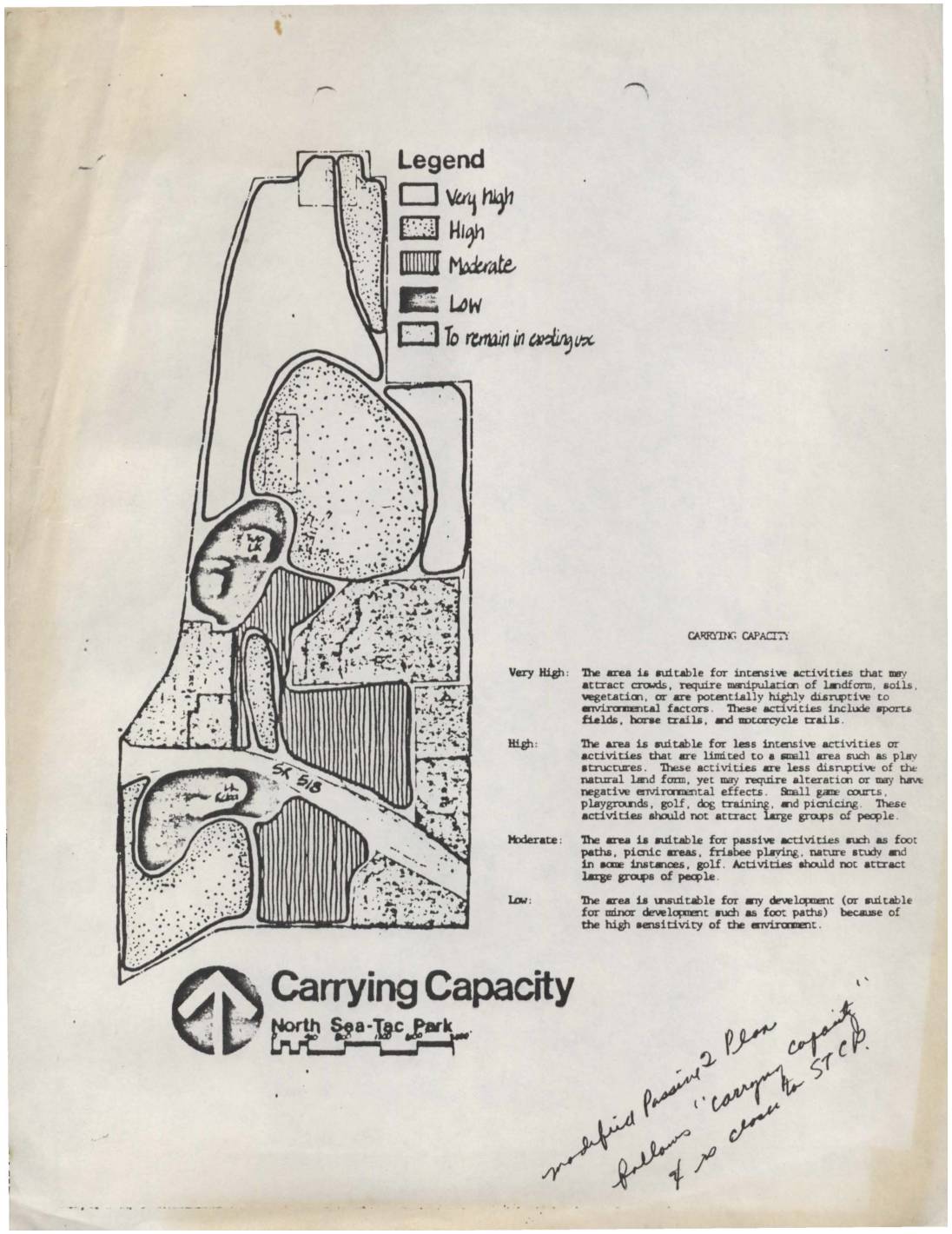
Carrying capacity map, North Sea-Tac Park
This document presents a Carrying Capacity map for North Sea-Tac Park, classifying land areas into four categories—Very High, High, Moderate, and Low—based on their suitability for various recreational activities. Very High areas can support intensive uses like sports fields and horse trails, while Low areas are too environmentally sensitive for most development. The map appears to be part of a passive recreational planning study examining how different zones of the park can be used without causing significant environmental harm. -
2025-05-14
SeaTac City Manager announces offer letter for North SeaTac Park
We have questions At their May 13 Regular Meeting, the SeaTac City Council heard a very interesting comment from City Manager Jonathan Young, not included on their agenda: Next, I just want to reflect and extend my gratitude to city staff who put on a fabulous State of the City address last week—our first inaugural -
 2025-05-13
Letter of intent: City of SeaTac offer to acquire North SeaTac Park from Port Of Seattle
In May 2025, the City of SeaTac formally offered to purchase approximately 214 acres of North SeaTac Park and Pat Ryan Field from the Port of Seattle, proposing $20 million in park improvements and the creation of a nonprofit foundation to manage the funds. The letter argues the park is surplus to the Port's aviation needs yet essential to community health, serving roughly 650,000 visitors annually as a buffer against airport noise and air pollution. The offer, submitted by City Manager Jonathan Young, is intended to fulfill Port Order No. 2024-12, which directed the Port to develop options for permanently preserving the land as public parkland. -
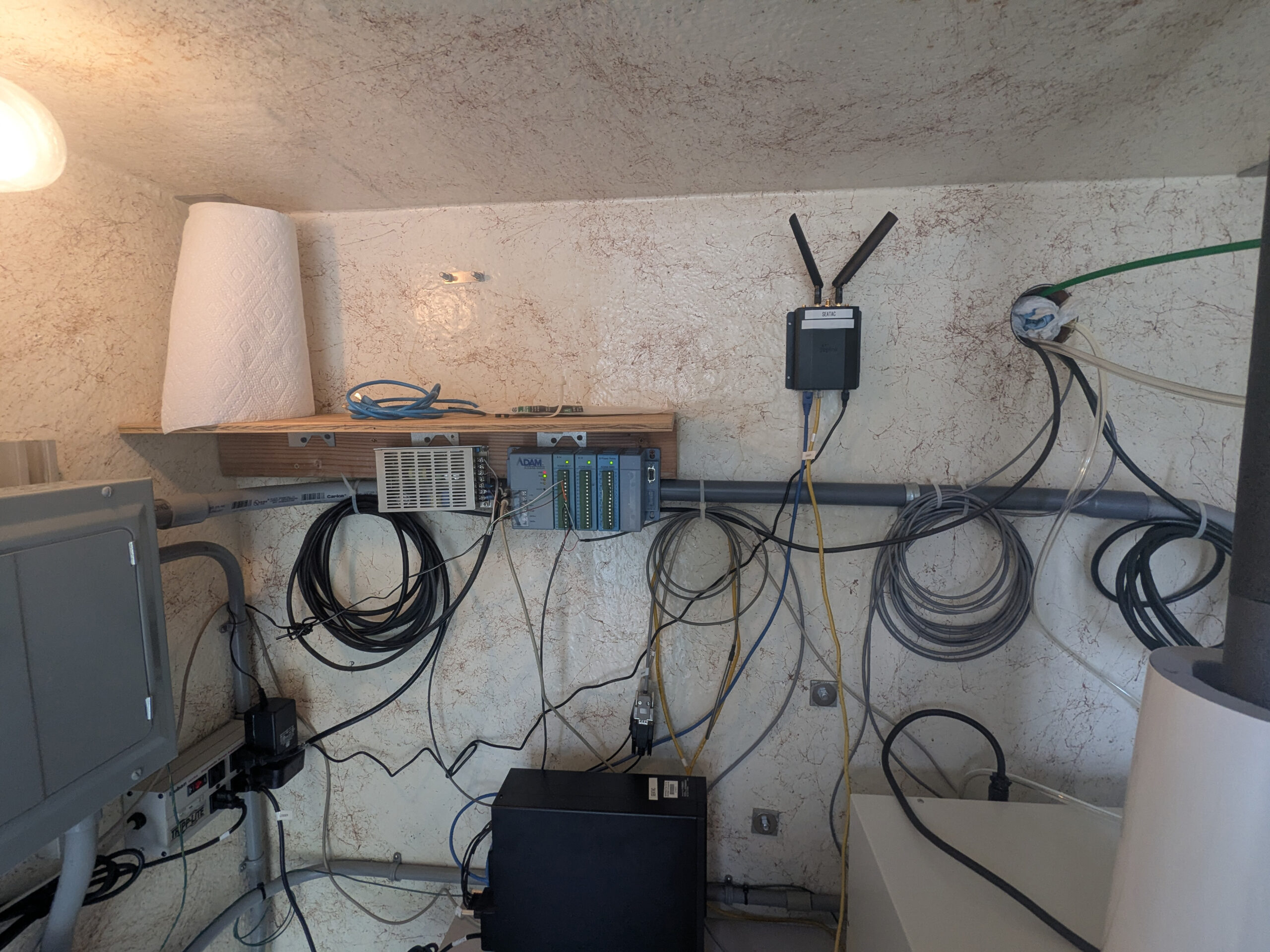
Data acquisition and wireless communication equipment installation
A wall-mounted equipment setup featuring an Advantech ADAM data acquisition module, a wireless router/gateway device with dual antennas (labeled 'IONIC' or similar), and various coiled cables including Ethernet and sensor wiring. A shelf holds additional networking hardware and a roll of paper towel, with a solar or power inverter unit visible at lower left. -

PSCAA Air Quality Monitor SeaTac
A white instrumentation enclosure/shelter is mounted on a gravel pad outdoors, equipped with two mushroom-cap inlet sampling tubes on top (consistent with particulate matter or air quality monitors), a radiation shield/temperature sensor assembly, a black exhaust elbow, and associated cabling. The setting appears industrial, with graffiti-marked walls and a corrugated metal building visible in the background. -
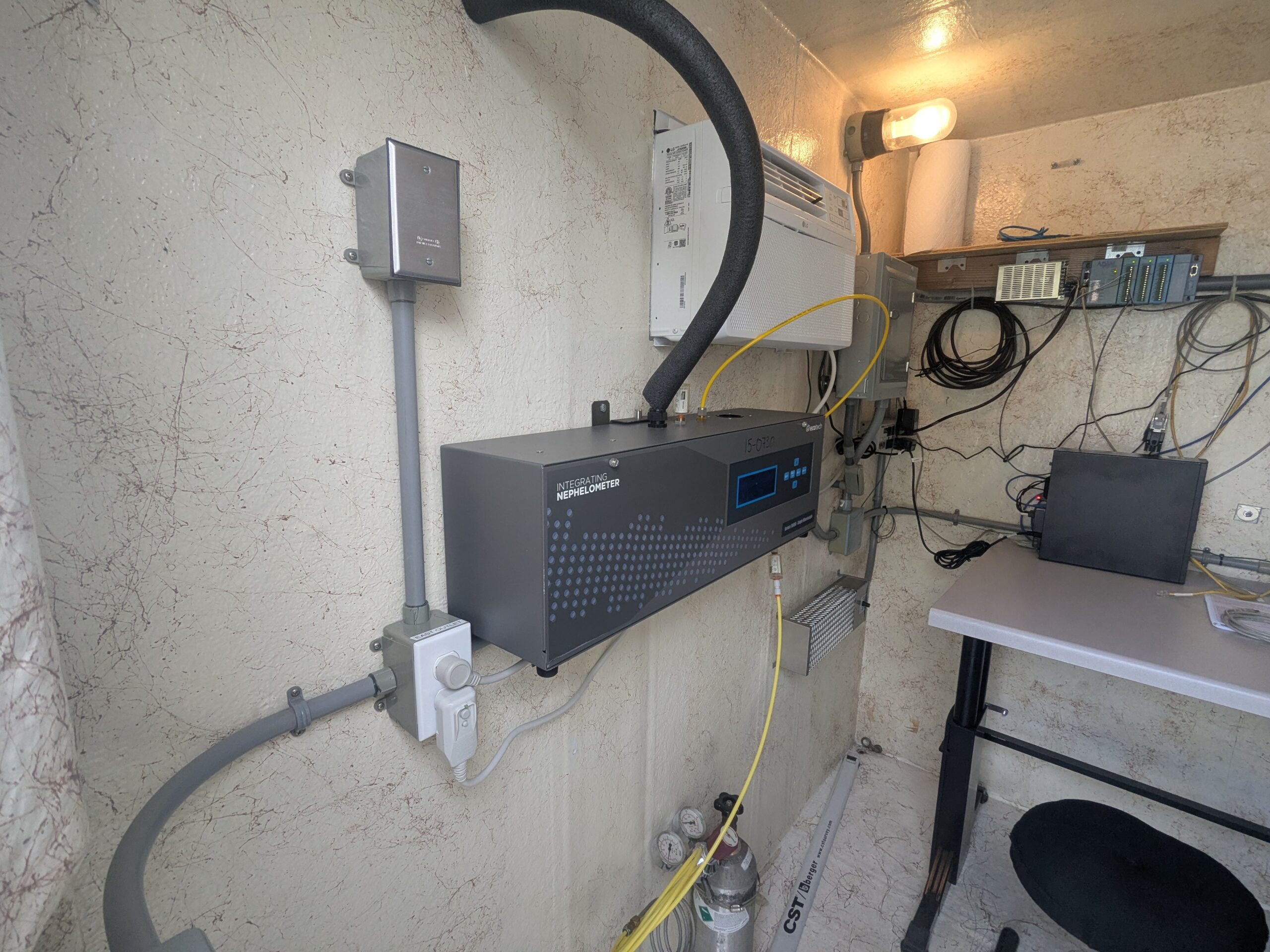
PM10 detector
A TSI Integrating Nephelometer (model visible on front panel label) is mounted on a wall inside what appears to be a small environmental monitoring shelter or trailer. The station includes associated gas cylinders, tubing, data acquisition hardware, and climate control equipment, consistent with an ambient air quality or visibility monitoring deployment. -
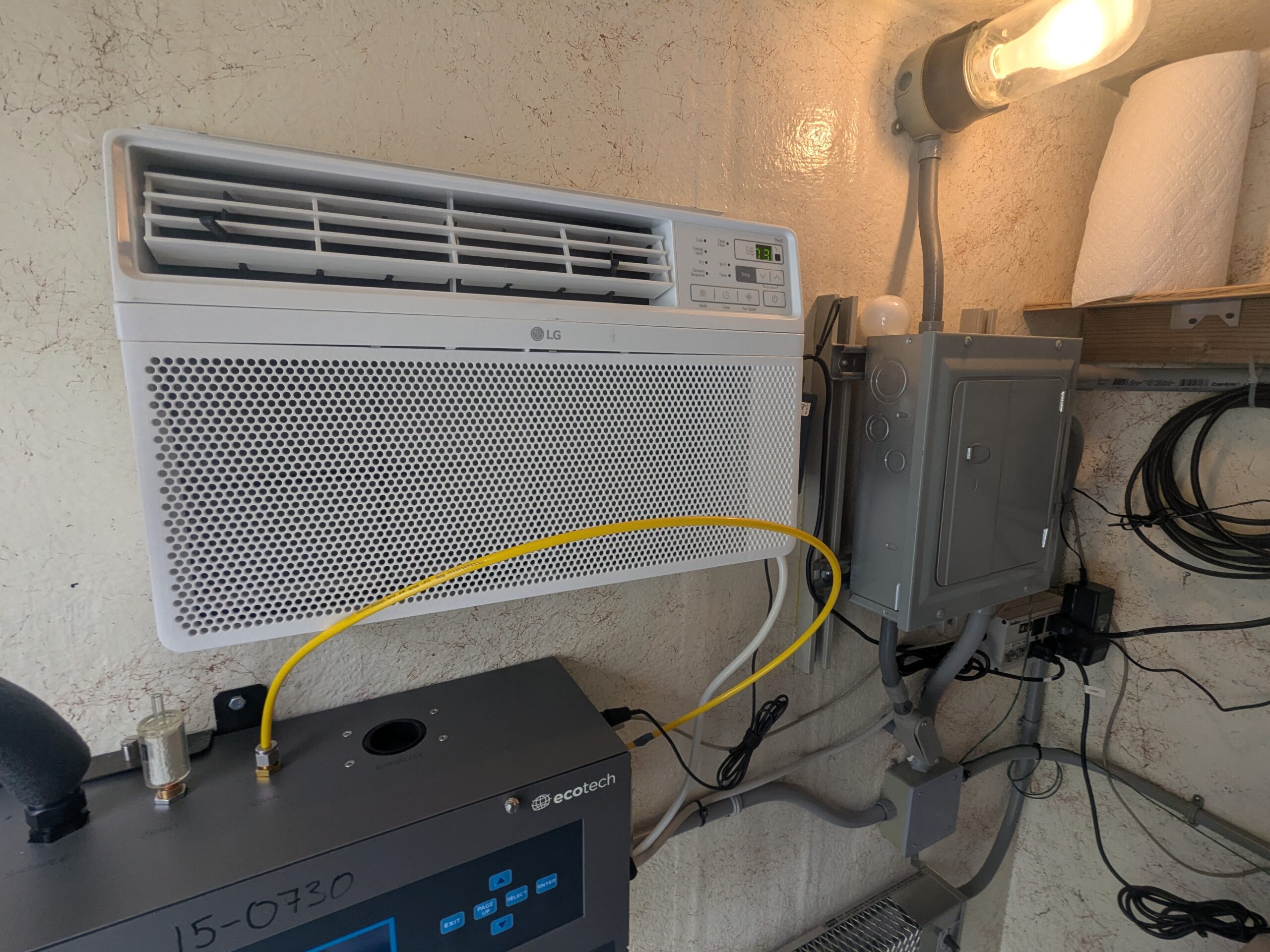
Ecotech Air Quality Monitor with LG Wall AC Unit
An Ecotech brand air quality monitoring instrument (serial number partially visible as 15-0730) is connected via yellow tubing to an LG through-the-wall air conditioning unit. The setup also includes a gray electrical enclosure with conduit and associated wiring, consistent with an environmental monitoring station installation. -
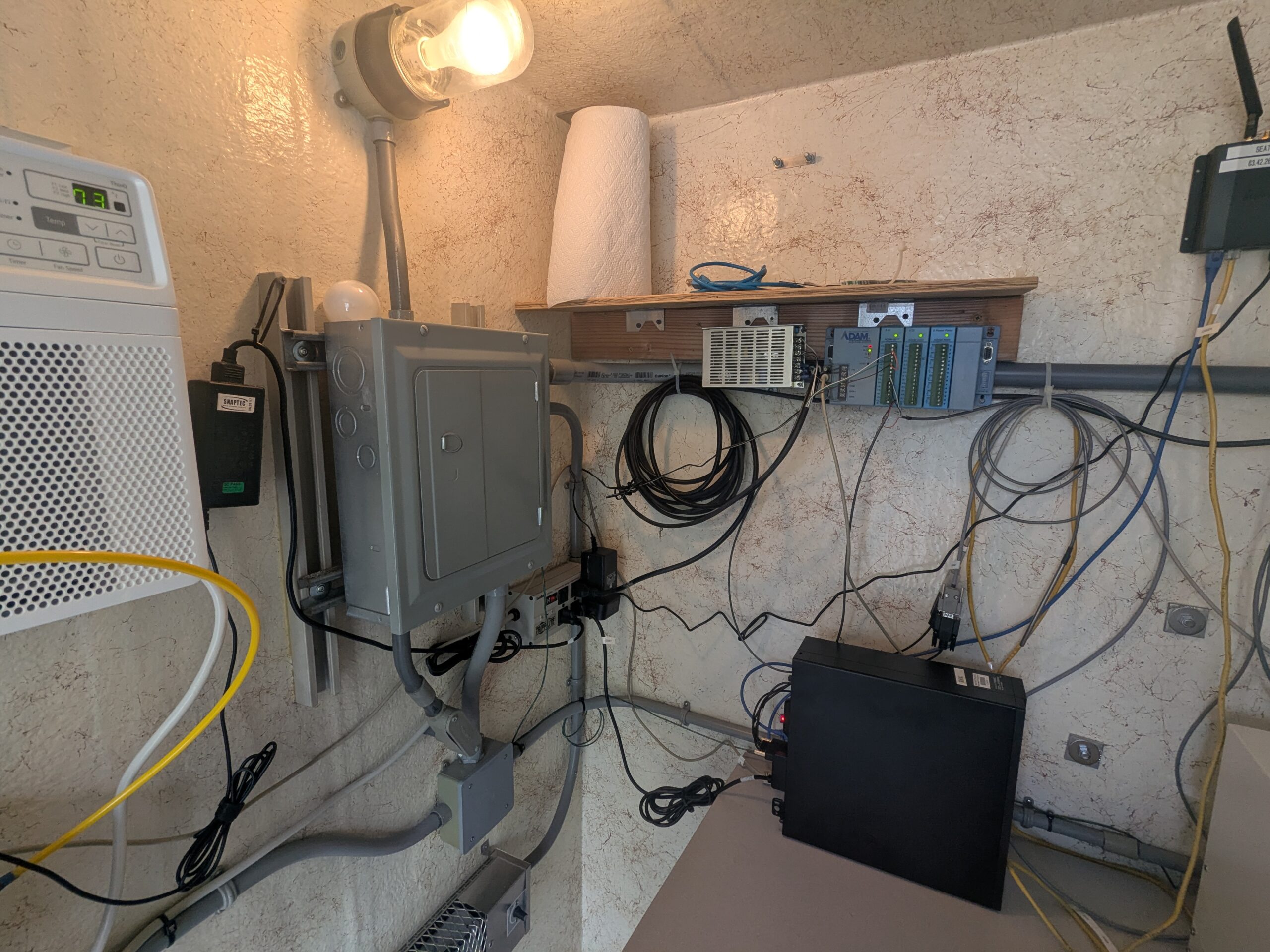
Equipment room with ADAM data acquisition modules and electrical panel
An interior equipment room showing an electrical sub-panel, Advantech ADAM-series I/O data acquisition modules mounted on a DIN rail shelf, network cabling (Ethernet and fiber), a wall-mounted thermostat reading 73°F, and a black enclosure that appears to be a UPS or power conditioner. The ADAM modules are commonly used in environmental monitoring and noise measurement systems. -
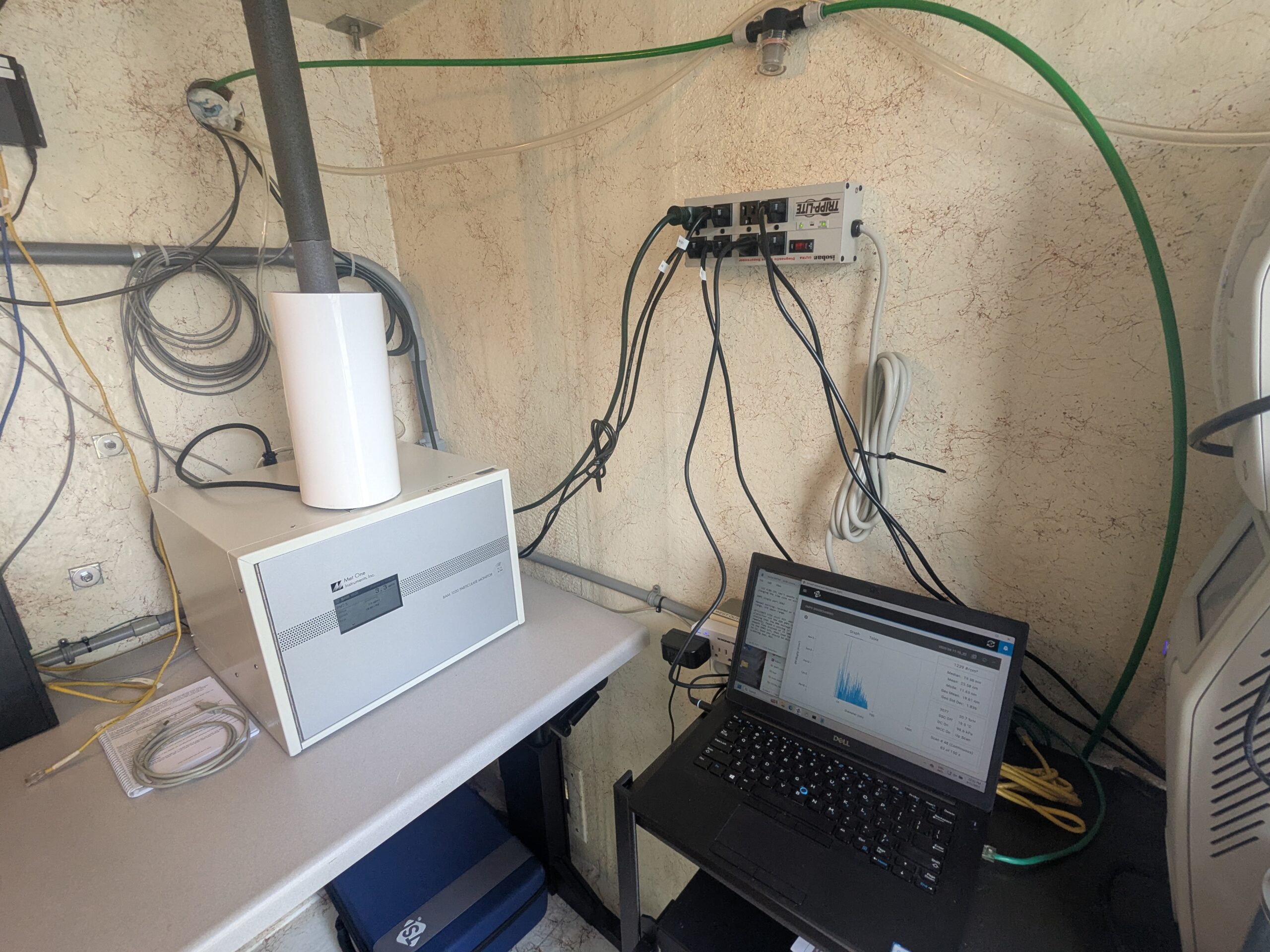
Noise monitoring equipment station with Met One instrument and Dell laptop
A compact monitoring station containing a white cylindrical inlet (likely a particle or noise sampler), a Met One Instruments analyzer unit, and a Dell laptop displaying a histogram or spectral data graph. The station is powered by a Tripp-Lite surge protector and connected via green tubing, suggesting an air quality or acoustic monitoring deployment. -
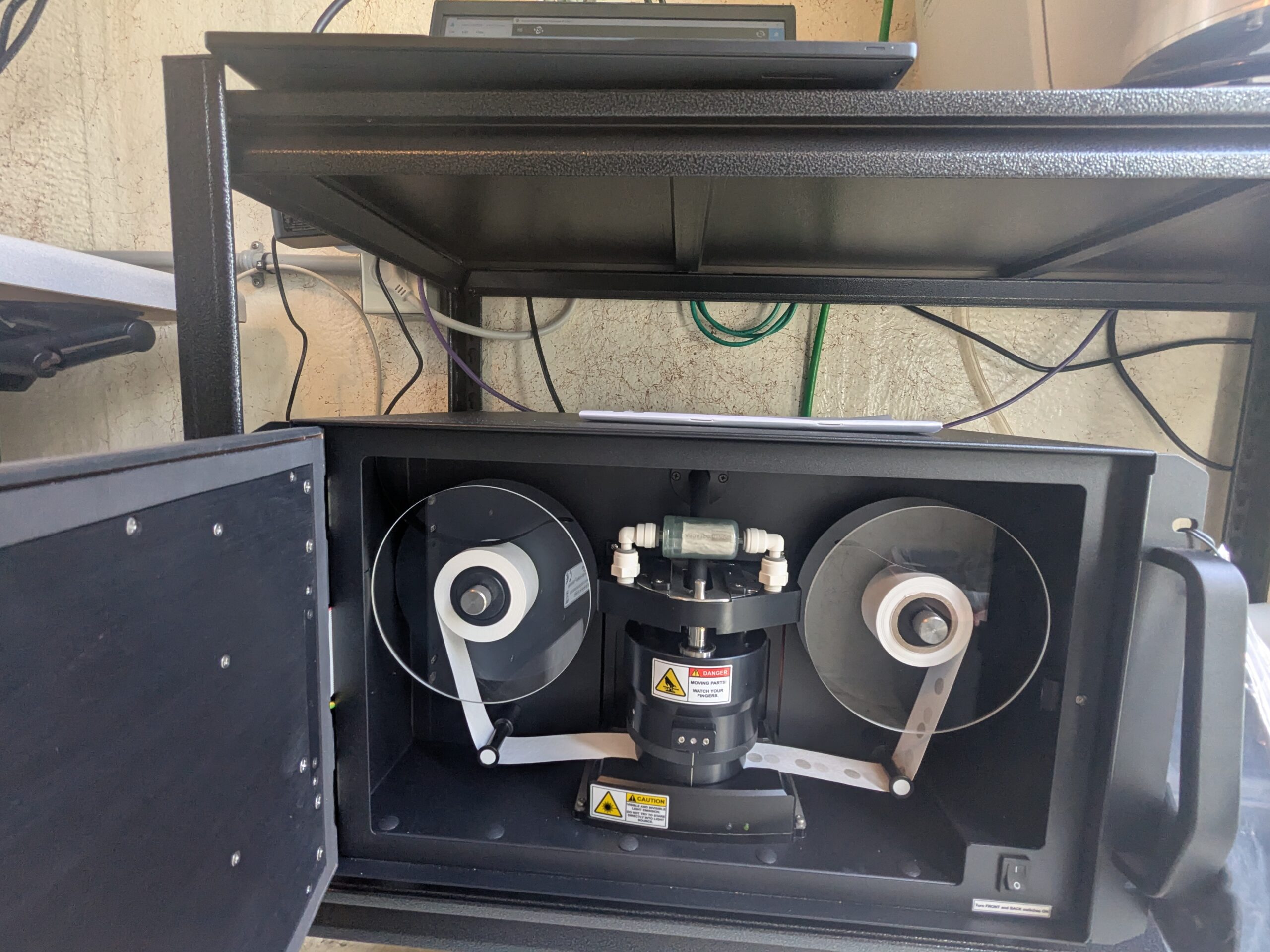
Laser-based noise monitoring or measurement instrument, interior view
The open enclosure reveals a reel-to-reel tape transport mechanism flanked by two spools of tape, a central rotating assembly bearing laser caution/danger warning labels, and pneumatic fittings. Warning labels read 'DANGER – MOVING PARTS – WATCH YOUR FINGERS' and standard laser caution markings, consistent with a precision scientific or acoustic measurement instrument.