TagAir Quality Monitors(111)
-
 2026-09-26
Des Moines Air Quality Monitoring Station (AQMS)
The Des Moines Air Quality Monitoring Station (AQMS) will provide long-term, community-centered measurements of ultrafine particles and other air pollutants south of Sea-Tac Airport. Building on UW’s Mobile ObserVations of Ultrafine Particles (MOV-UP) study, the station will help distinguish local aircraft-related pollution from broader regional sources. The station at a glance < 100 nm Ultrafine -
 2026-09-26
Ep #43 Air Quality Monitoring Update (Raw!)
A 'raw' episode to show progress on one of our main goals: establishing the first true aviation-specific air quality monitoring network in the United States. We took a big step last week with the opening of a new station in Des Moines. Sea-Tac is the only airport in America with coverage at both ends of the flight path! <strong>Learn how we got here and why this matters so much for the future of research and improving the health of everyone under the flight path.</strong> -
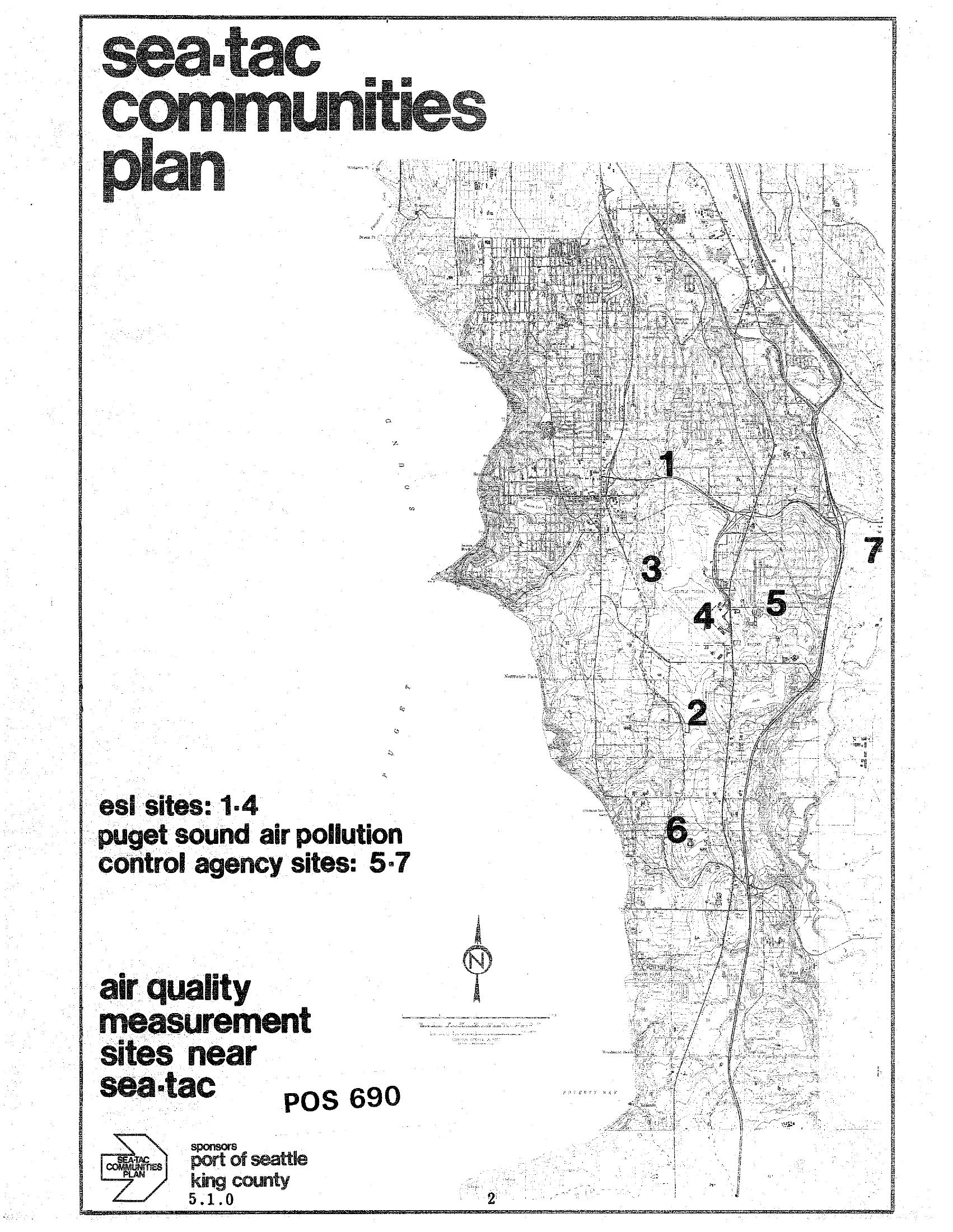
STCP Air Quality Measurement Sites Near Sea-Tac Airport
A map from the Sea-Tac Communities Plan (document reference POS 690, page 5.1.0) showing seven air quality measurement sites near Seattle-Tacoma International Airport. Sites 1–4 are ESL sites and sites 5–7 are Puget Sound Air Pollution Control Agency sites; the plan was sponsored by the Port of Seattle and King County. -
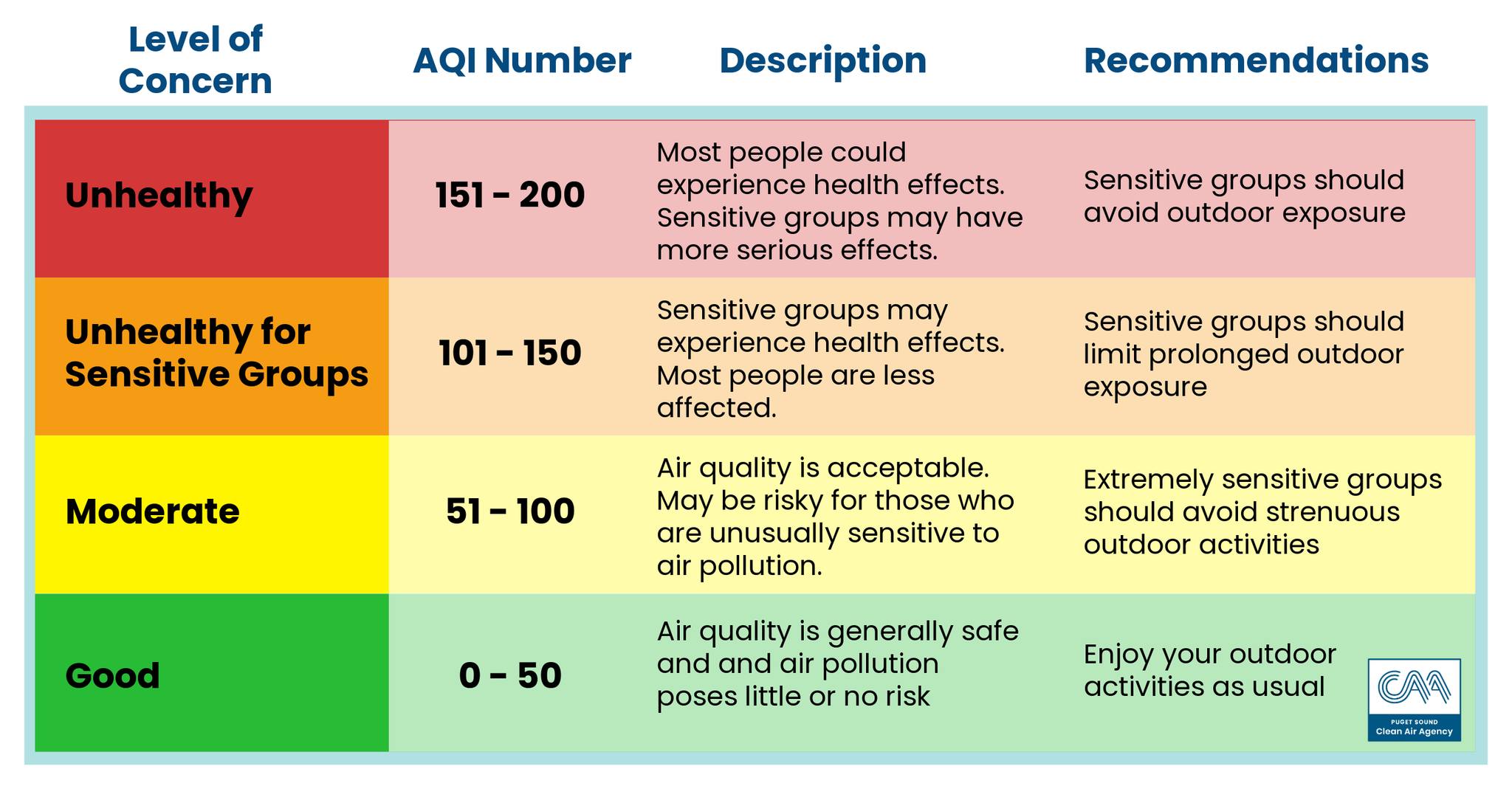
PSCAA AQI Index
An Air Quality Index (AQI) reference table published by the Puget Sound Clean Air Agency, showing four levels of concern (Good 0-50, Moderate 51-100, Unhealthy for Sensitive Groups 101-150, and Unhealthy 151-200) with corresponding descriptions and public health recommendations. The agency's logo is visible in the lower right corner. -
 2026-01-16
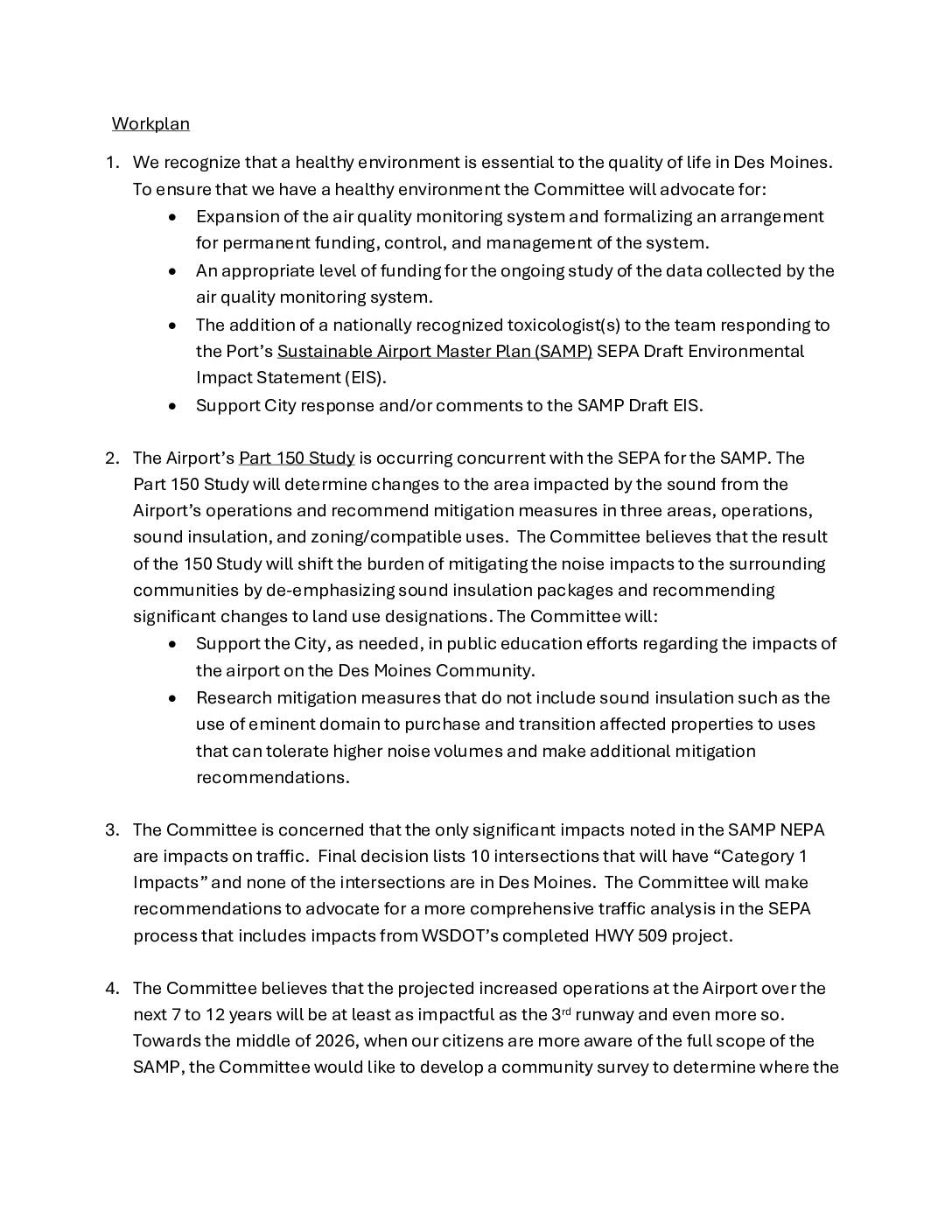
Airport Advisory Committee 2026 Workplan
The Des Moines Airport Advisory Committee's draft 2026 Workplan outlines key priorities including air quality monitoring, the SEA Airport Part 150 noise study, traffic impacts, and projected increases in airport operations. The plan addresses noise mitigation measures and public education related to Seattle-Tacoma International Airport's expansion, with 2032 DNL noise contours showing affected residential and commercial areas in Des Moines reaching up to 75 decibels. This workplan reflects the committee's efforts to protect community health and quality of life amid growing airport activity. -
 2026-01-16
Des Moines Aviation Advisory Committee 2026 Workplan
This workplan outlines a community committee's priorities for addressing the impacts of Sea-Tac Airport's expansion on Des Moines, Washington. Key goals include expanding air quality monitoring, hiring a toxicologist to evaluate the airport's environmental impact statement, researching noise mitigation alternatives beyond sound insulation, and pushing for a more thorough traffic analysis. The committee also plans to conduct a community survey in 2026 to gauge public awareness of the airport's Sustainable Airport Master Plan (SAMP) and guide future outreach efforts. -
 2025-12-01
2025 Report: Overburdened Communities Highly Impacted by Air Pollution
A report by the Washington State Department of Ecology’s Air Quality Program examining overburdened communities that are highly impacted by air pollution. The document includes publication information, contact details for regional offices, and ADA accessibility information. -
 2025-11-07
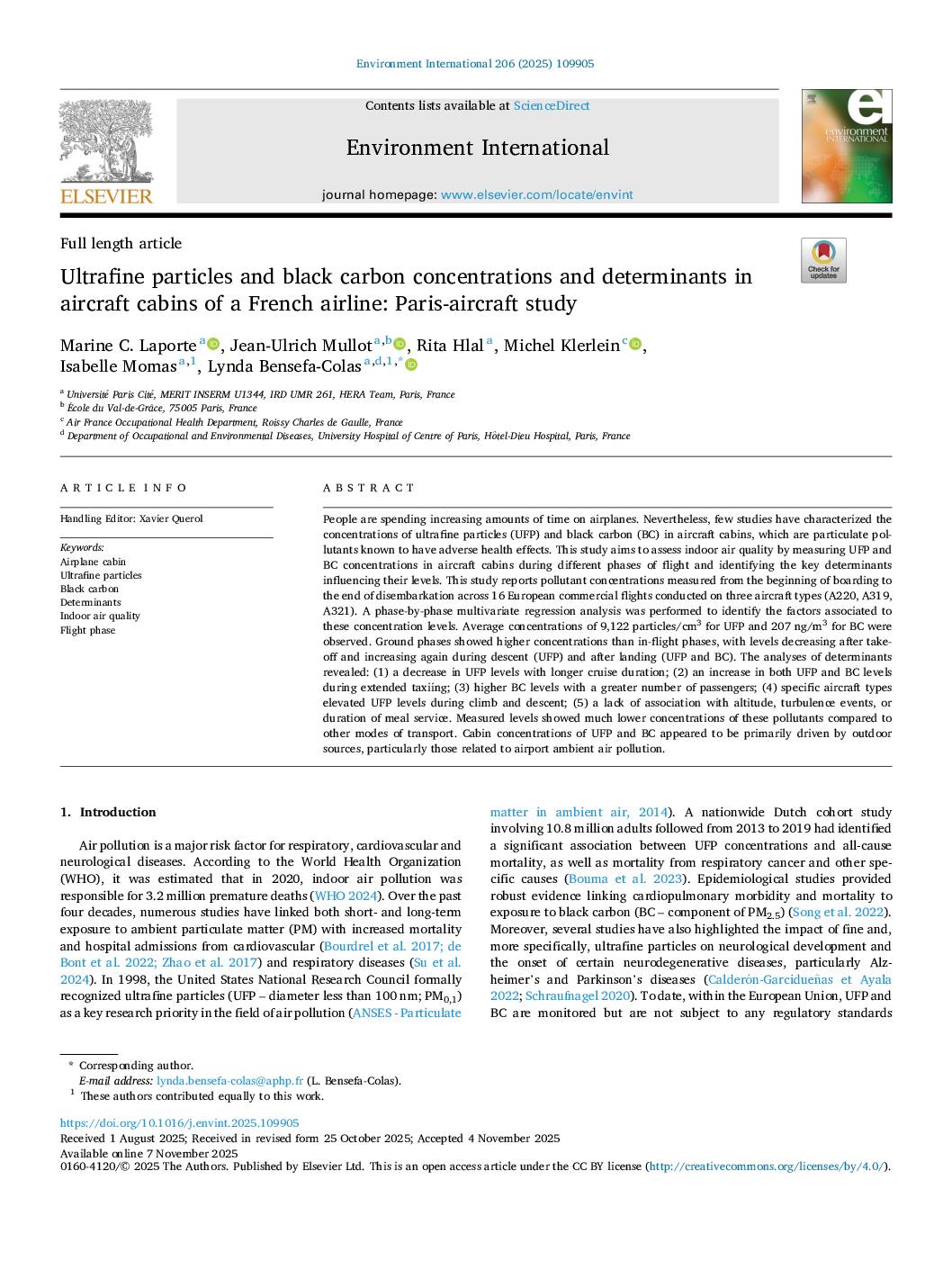
Ultrafine particles and black carbon concentrations and determinants in aircraft cabins of a French airline: Paris-aircraft study
A French study measured ultrafine particle (UFP) and black carbon (BC) air pollution inside aircraft cabins across 16 European commercial flights, finding average concentrations of 9,122 particles/cm³ for UFP and 207 ng/m³ for BC. Pollution levels were highest during ground phases such as boarding and taxiing, then dropped during flight, with outdoor airport air identified as the primary source of cabin air pollution. These findings suggest that airport ambient air quality plays a greater role in passenger exposure than in-flight sources. -
 2025-10-03
Urban Ultrafine Particles – Advisory Group Meeting
The University of Washington held an Advisory Group Meeting on October 3, 2025, focused on urban ultrafine particles (nano-particles) and their sources, including aviation-related emissions near areas like Sea-Tac Airport. The meeting aimed to foster dialogue, address knowledge gaps from the MOV-UP study, identify priority research questions, and guide scientific research on air quality monitoring. Advisors were asked to provide feedback on study design and methodology, with a time commitment including annual meetings and optional review of study outputs. -
 2025-10-03
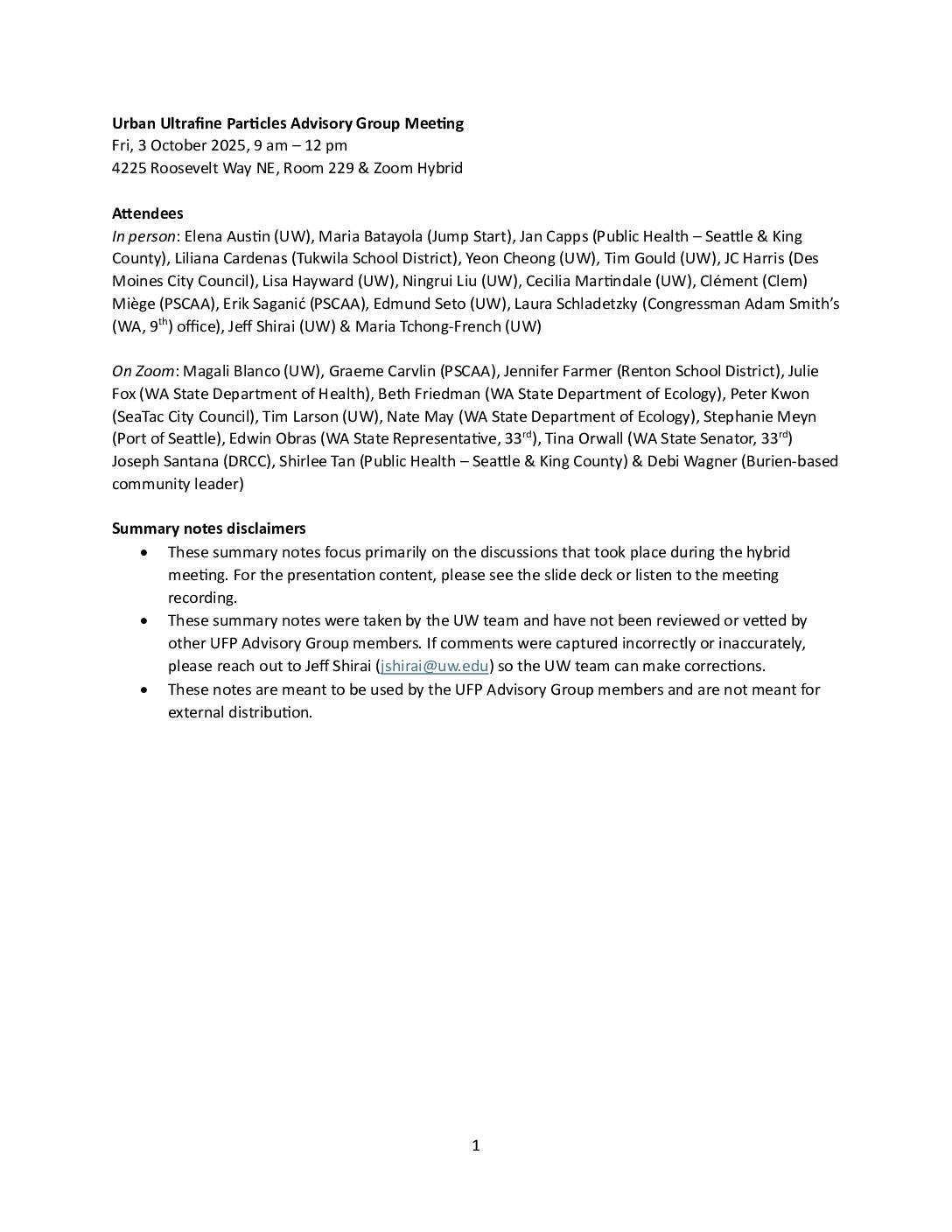
UFP-Advisory-Group-Meeting-2025.10
Meeting minutes from the UFP Advisory Group discussing research priorities for ultrafine particle health effects, mitigation strategies, and exposure reduction in aviation-impacted communities. Participants included University of Washington researchers, public health officials, school district representatives, and community leaders focusing on air quality and health impacts near Sea-Tac Airport.