TagEnvironmental Health & Safety News(4)
-
 2021-12-01
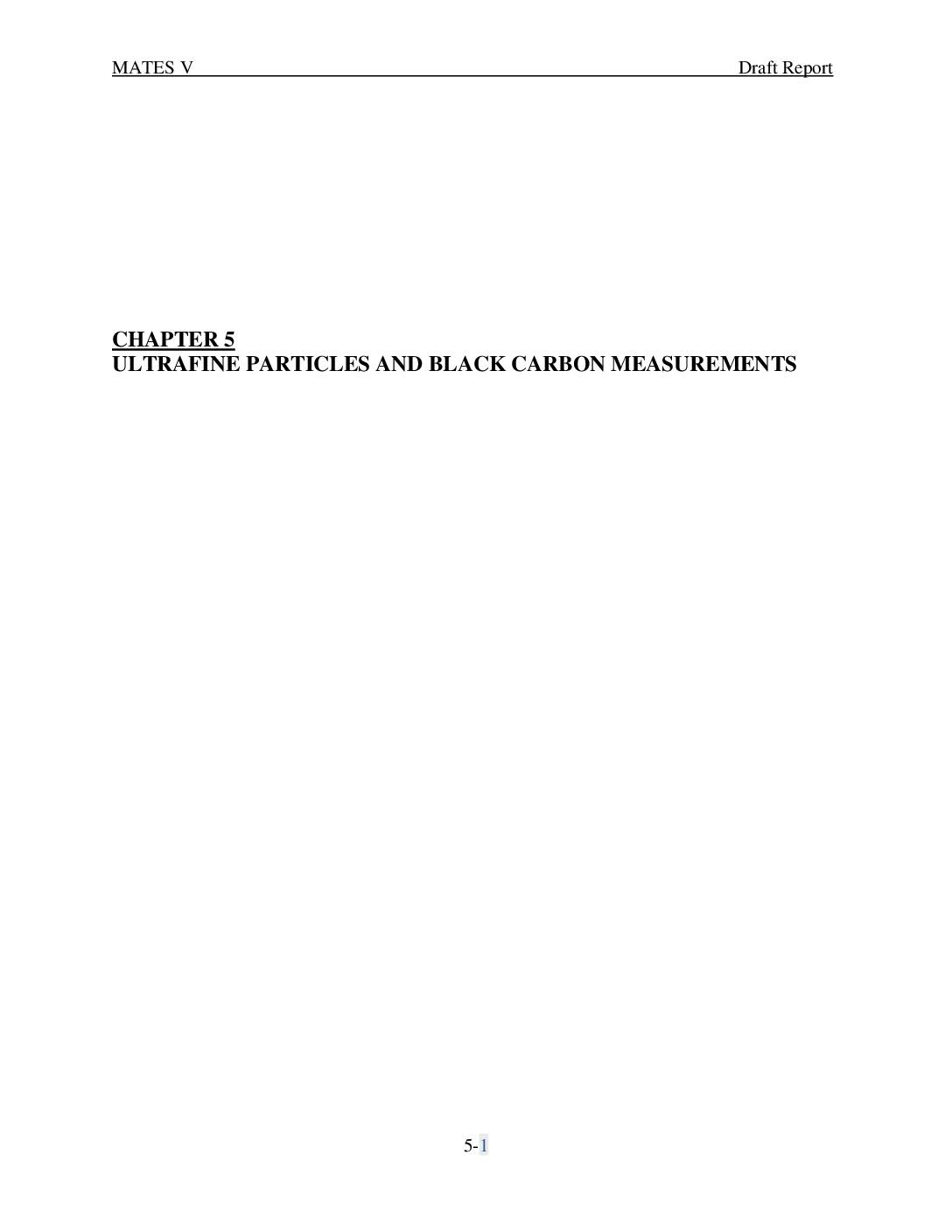
MATES V draft report, chapter 5: Ultrafine particles and black carbon measurements
This report chapter examines measurements of ultrafine particles (UFPs) — very tiny airborne particles smaller than 0.1 micrometers — and their potential health effects, including risks to neurological, respiratory, and cardiovascular health. UFPs make up roughly 90% of all airborne particles and are primarily produced by fuel combustion sources such as diesel engines, gasoline engines, and jet engines. People living near heavily trafficked roads, airports, refineries, and railyards may face elevated exposure to these particles. -
 1997-04-21
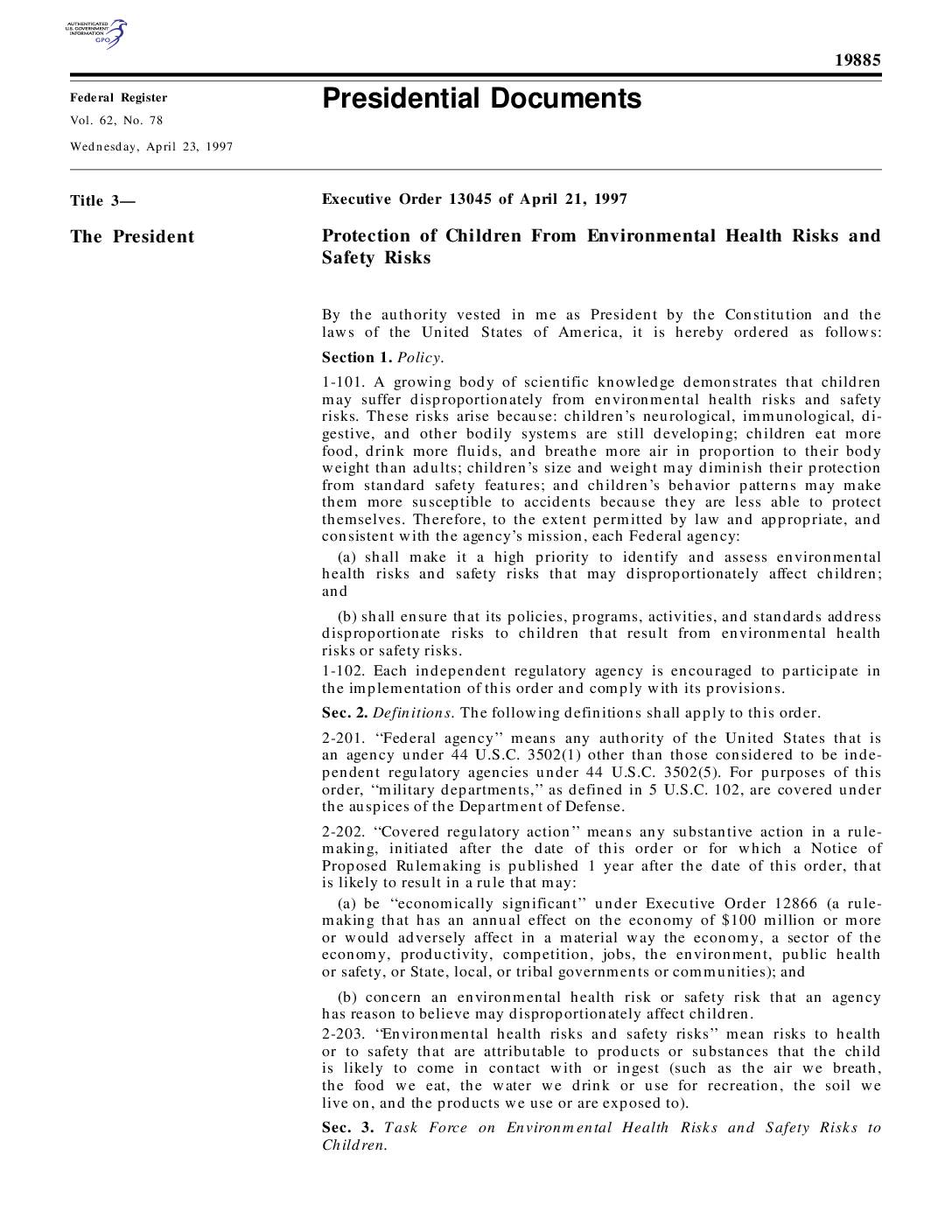
Executive order 13045 protection of children from environmental health risks and safety risks
Executive Order 13045, signed by President Clinton in April 1997, directs federal agencies to identify and address environmental health and safety risks that disproportionately affect children, recognizing that children are more vulnerable due to their developing bodies and behaviors. The order establishes a Task Force co-chaired by the Secretary of Health and Human Services and the EPA Administrator to coordinate federal research and recommend protective strategies. It also requires agencies to evaluate the effects of significant regulations on children's health and safety before those rules take effect. -
 1972-09-01
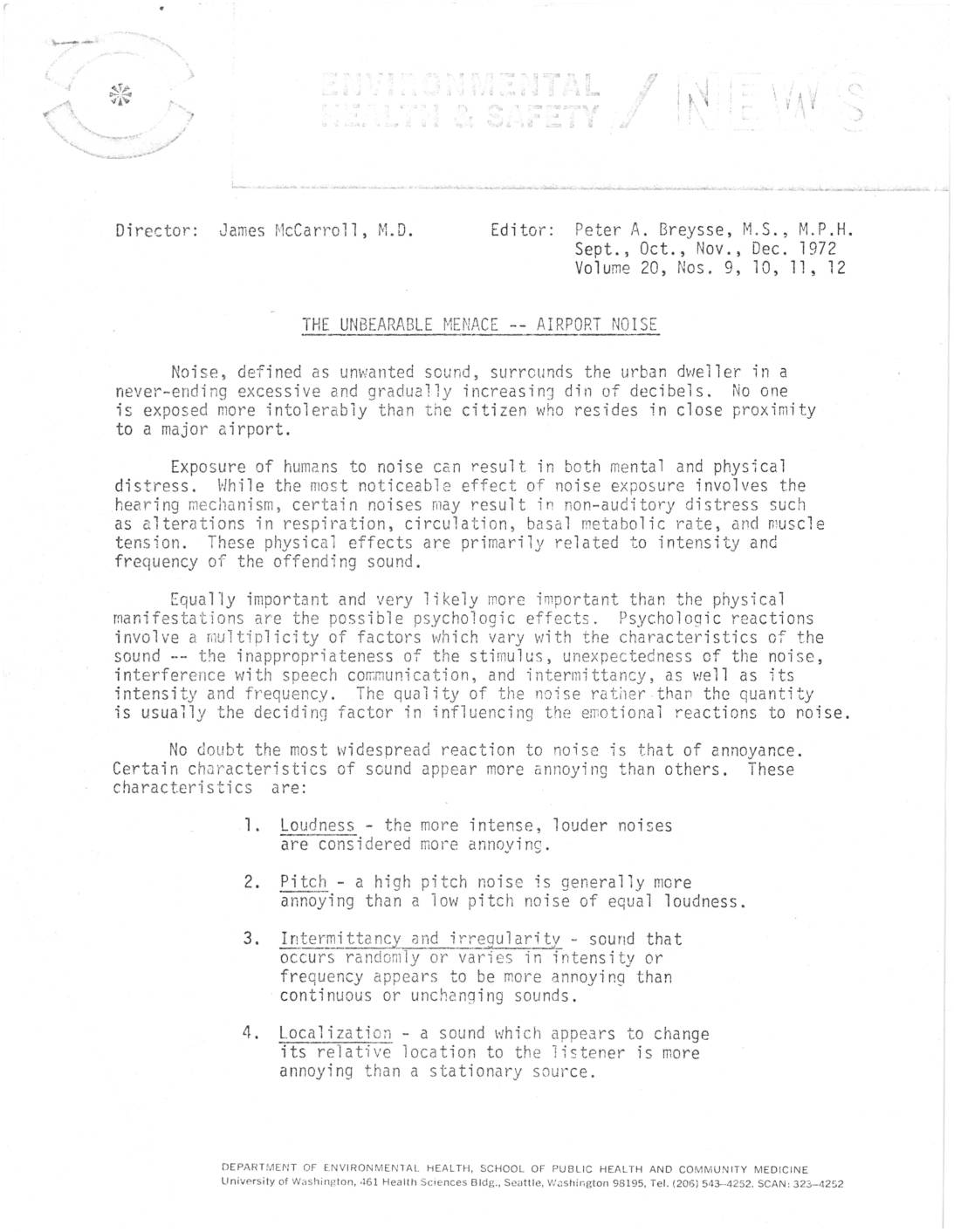
The unbearable menace — airport noise
A 1972 University of Washington environmental health report examines the serious physical and psychological effects of aircraft noise on residents living near Seattle-Tacoma Airport. On-site measurements recorded up to 95 dBA indoors, with hundreds of daily flyovers exceeding 75 dBA—levels shown by research to disrupt sleep, impair children's school performance, and pose long-term mental and physical health risks. The report also highlights how excessive ambient noise in nearby schools interferes with speech comprehension and the learning process. -
 1972-09-01
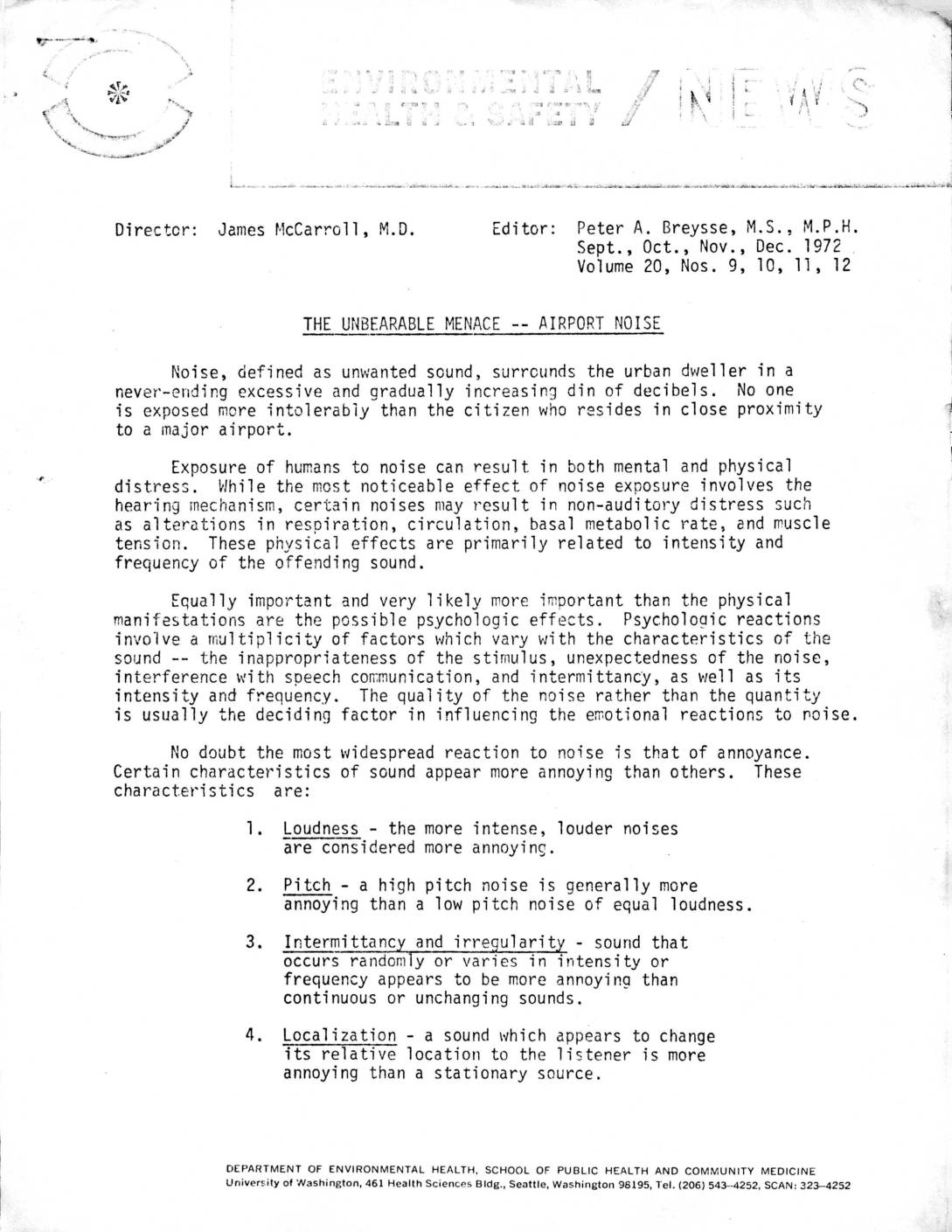
The Unbearable Menace — Airport Noise
A 1972 University of Washington environmental health report examines the serious health impacts of aircraft noise on residents living near Seattle-Tacoma Airport, including sleep disturbance, psychological effects, and interference with speech in schools. Noise measurements taken at four locations near the airport recorded up to 95 dBA, with dozens of flyovers exceeding 75 dBA even during nighttime sleeping hours, levels researchers considered potentially hazardous to mental and physical health. The report also highlights special risks for vulnerable groups such as young children, the elderly, the sick, and night-shift workers.