TagCEQ(19)
-
 2026-05-01
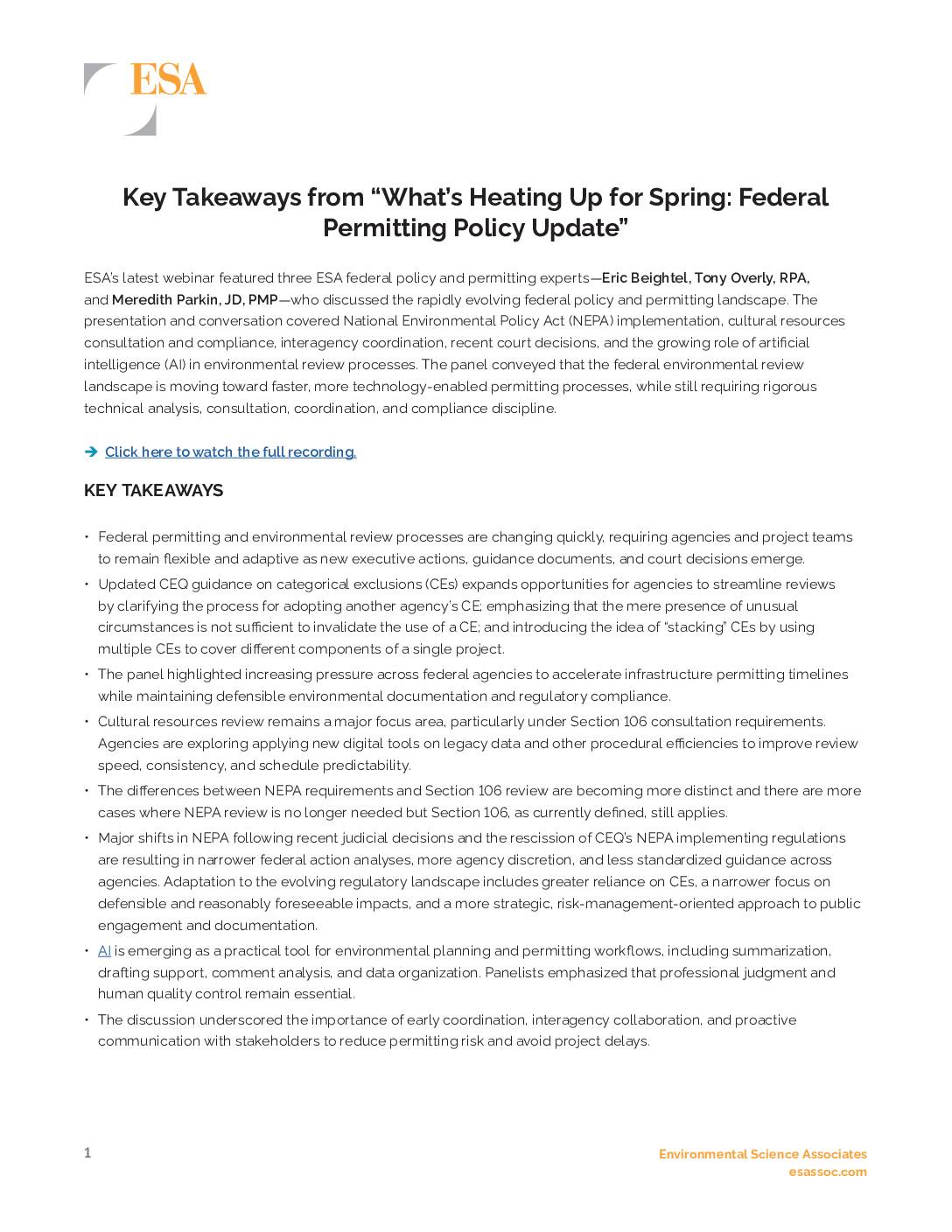
Key takeaways from what’s heating up for spring: federal permitting policy update
Environmental Science Associates hosted a webinar examining rapid changes in federal environmental permitting, covering topics such as streamlined categorical exclusions under NEPA, cultural resources consultation under Section 106, and the growing use of AI tools in environmental review workflows. Experts noted that agencies face increasing pressure to accelerate infrastructure permitting timelines while maintaining legally defensible documentation, particularly as recent court decisions and regulatory rescissions create greater agency discretion and less standardized guidance. Organizations are advised to invest in adaptable workflows and early interagency coordination to manage permitting risk in this shifting landscape. -
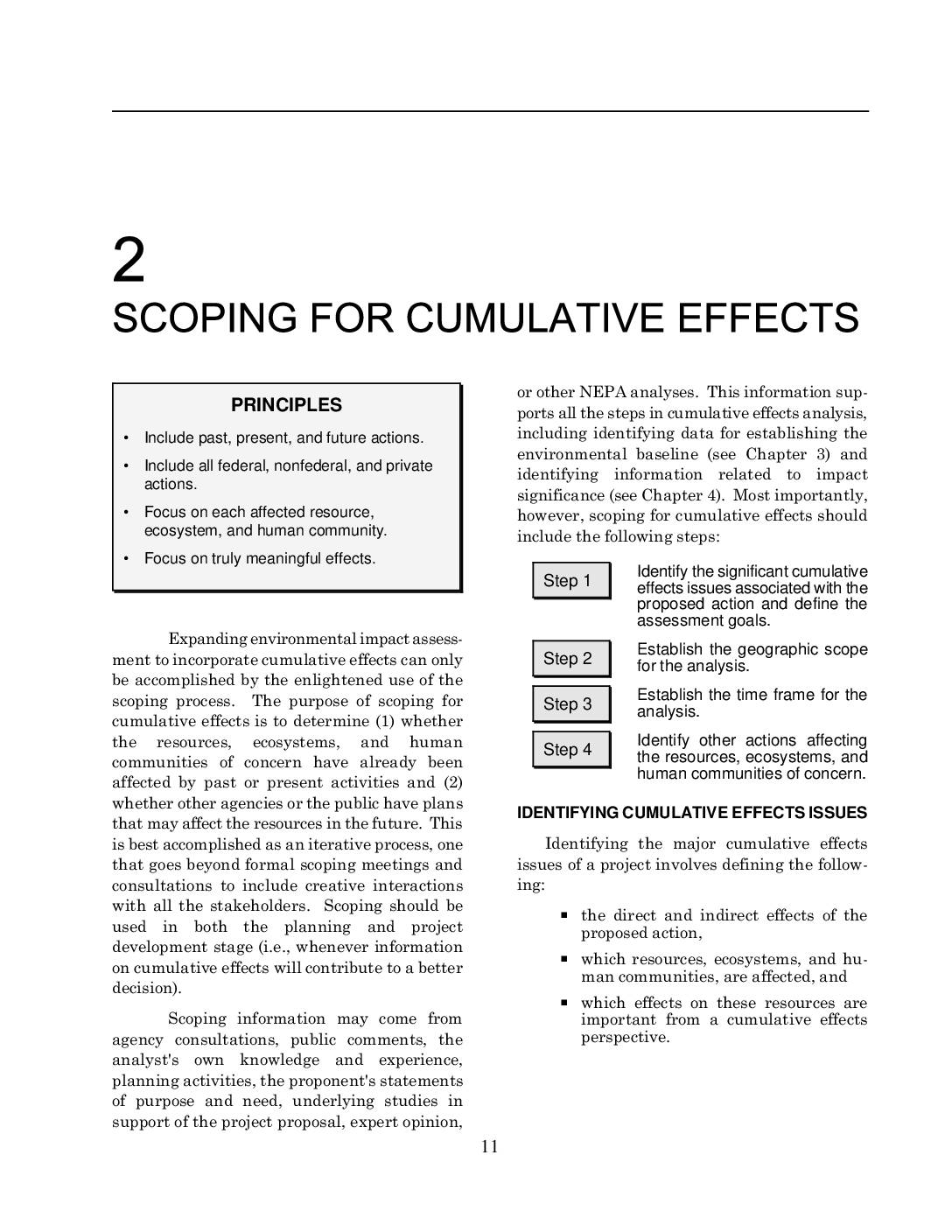
CEQ Scoping for Cumulative Effects
This document outlines principles and steps for conducting cumulative effects analysis in environmental impact assessments. It covers identifying cumulative effects issues, establishing geographic and temporal boundaries, and determining which effects are important from a cumulative perspective. https://ceq.doe.gov/docs/ceq-publications/ccenepa/sec2.pdf -
 2026-01-07
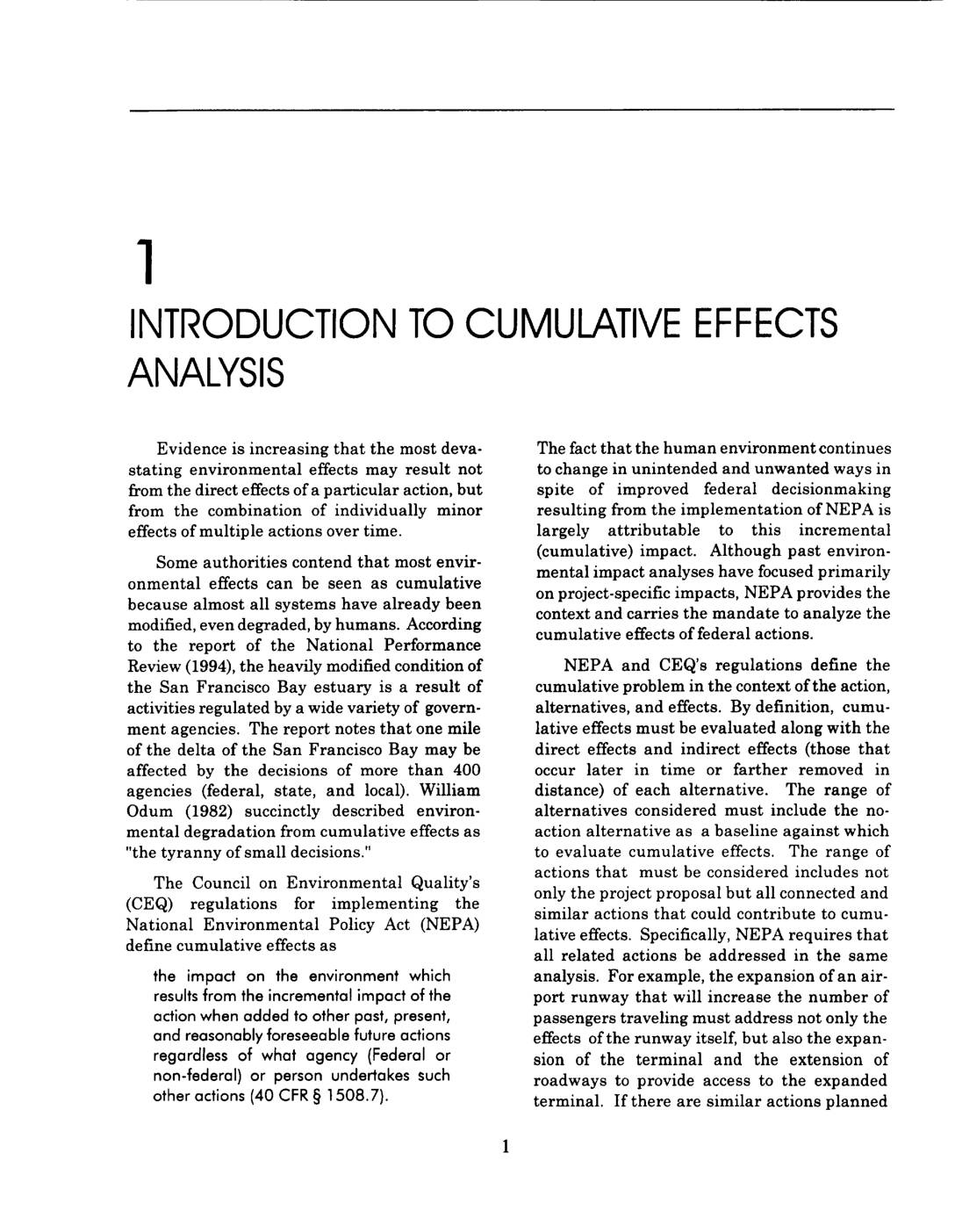
Introduction to Cumulative Effects Analysis
This document introduces the concept of cumulative environmental effects analysis under NEPA, explaining how multiple minor actions can combine to create significant environmental impacts. It defines cumulative effects as impacts resulting from incremental effects of actions combined with past, present, and future actions, and discusses the purpose and implementation of cumulative effects analysis by federal -
 2025-11-24
Respondents’ motion for vacatur
This is a legal filing in the U.S. Court of Appeals for the D.C. Circuit in which the U.S. Environmental Protection Agency asks the court to vacate its own previously issued air quality standard, arguing that EPA lacked the statutory authority to revise the standard without completing a full review process. The case centers on National Ambient Air Quality Standards (NAAQS) under the Clean Air Act, not airport noise policy. This document does not contain information relevant to Sea-Tac Airport noise policy. -
 2025-10-24
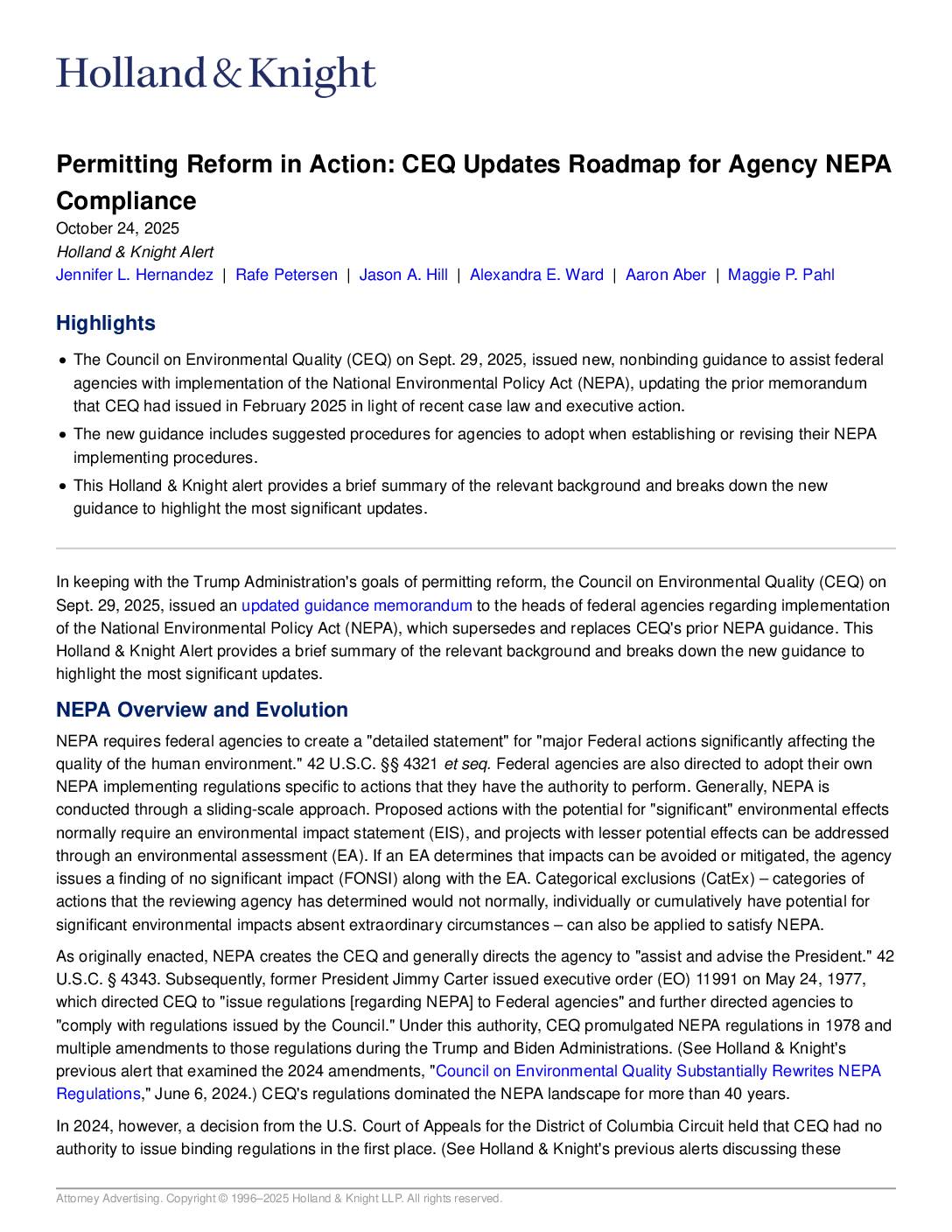
Permitting Reform in Action: CEQ Updates Roadmap for Agency NEPA Compliance
Permitting Reform in Action CEQ Updates Roadmap for Agency Highlights The Council on Environmental Quality (CEQ) on Sept. 29, 2025, issued new, nonbinding guidance to assist federal agencies with implementation of the National Environmental Policy Act (NEPA), updating the prior memorandum that CEQ had issued in February 2025 in light of recent case law and -
2025-10-24
Permitting Reform in Action: CEQ Updates Roadmap for Agency NEPA Compliance
In September 2025, the Council on Environmental Quality (CEQ) issued updated non-binding guidance to federal agencies on how to conduct environmental reviews under the National Environmental Policy Act (NEPA), replacing earlier guidance from February 2025. The update streamlines the permitting process by incorporating a recent Supreme Court ruling limiting the scope of required environmental analysis, removing climate change and environmental justice considerations, and introducing an optional fee-based program that cuts review timelines in half. Agencies are encouraged to revise their own NEPA procedures using a provided template while continuing existing review processes without delay. -
 2025-09-01
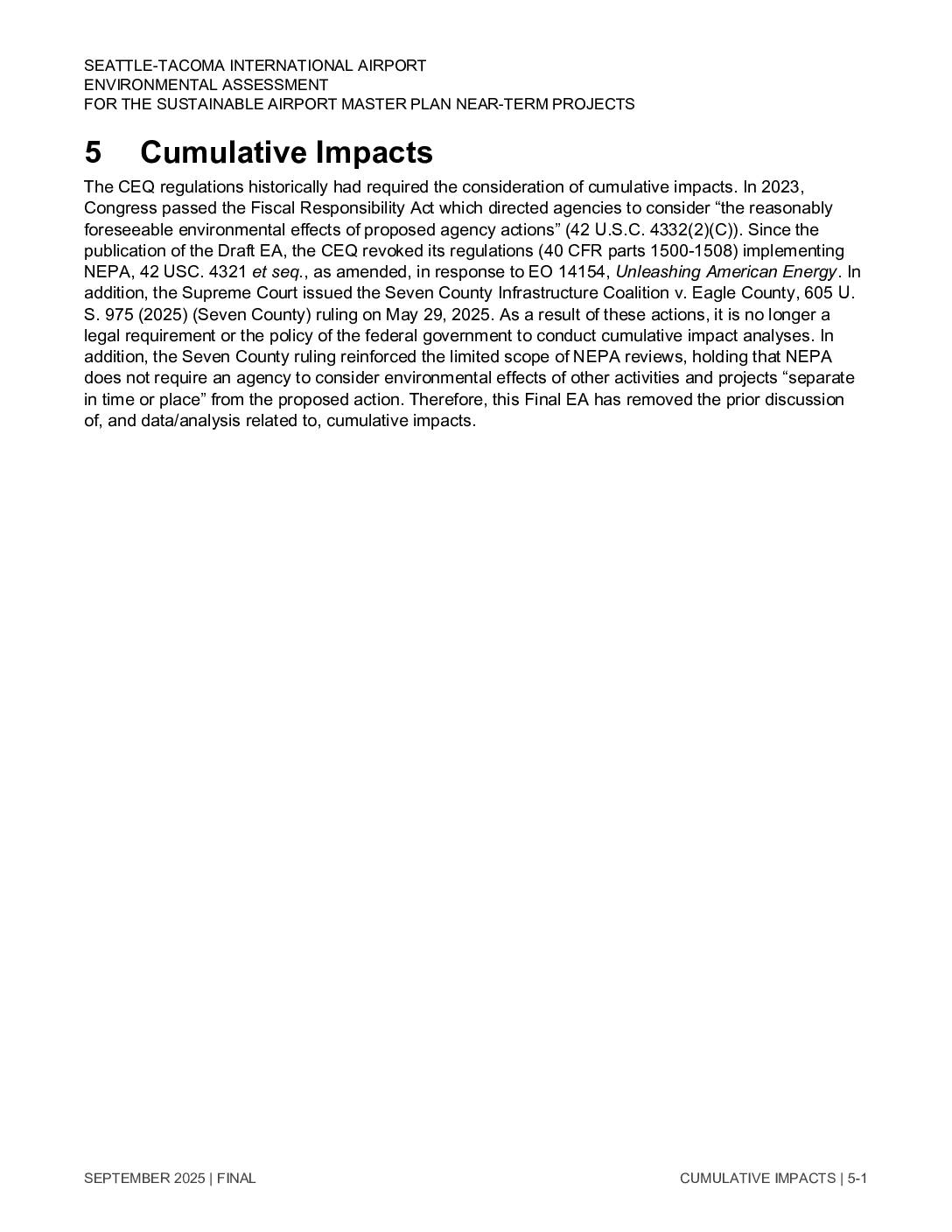
Seattle-Tacoma International Airport Environmental Assessment for the Sustainable Airport Master Plan Near-Term Projects: Chapter 5, Cumulative Impacts
The Final Environmental Assessment for Seattle-Tacoma International Airport's Sustainable Airport Master Plan near-term projects explains that cumulative impact analysis has been removed from the document. This change reflects recent legal developments, including the revocation of CEQ regulations implementing NEPA and a May 2025 Supreme Court ruling, which together mean federal agencies are no longer required to assess the combined environmental effects of separate but related projects. As a result, the section that previously contained cumulative impacts data and analysis is now absent from this final report. -
 2025-05-29
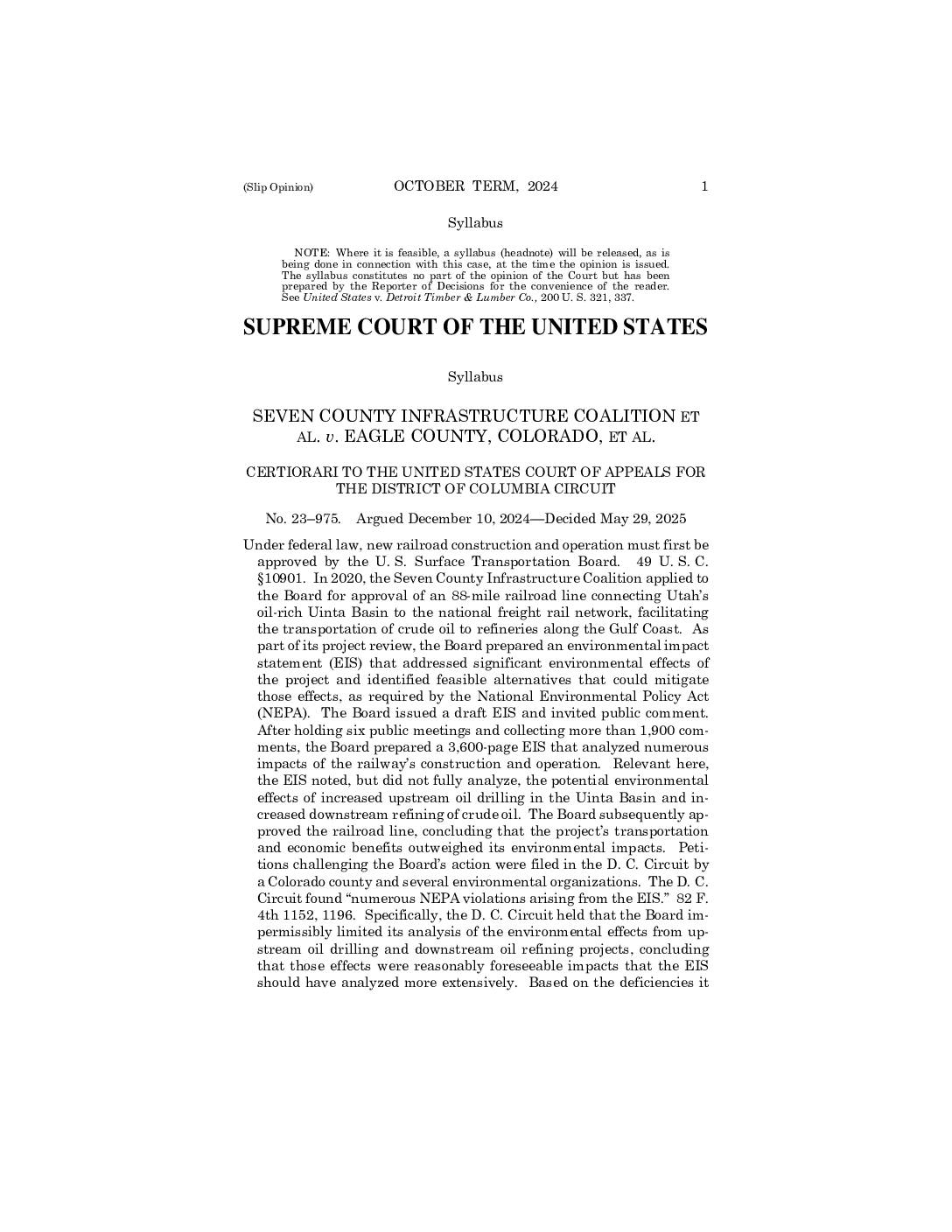
Seven County Infrastructure Coalition et al. v. Eagle County, Colorado, et al.
The U.S. Supreme Court ruled in May 2025 that federal agencies have broad discretion in determining the scope of environmental reviews required under the National Environmental Policy Act (NEPA). The case involved a proposed 88-mile railroad in Utah, where the Court held that agencies do not need to analyze the environmental effects of separate upstream or downstream projects — such as oil drilling or refining — when reviewing a specific infrastructure project. Courts must give substantial deference to agency decisions about what to include in environmental impact statements, rather than imposing their own judgment about what details are required. -
 2025-02-25
KK Law Alert: Agencies Instructed to Continue NEPA Analysis as Usual as Regulatory Landscape Shifts
On January 20, 2025, President Trump issued Executive Order 14154, Unleashing American Energy, which directed the Council on Environmental Quality (CEQ) to propose rescinding CEQ’s NEPA regulations and to instead provide guidance on implementing the National Environmental Policy Act (NEPA). Executive Order 14154 also explicitly revoked the 1977 Carter Administration’s Executive Order 11191 which directed CEQ -
2025-02-24
Trump Administration Environmental-Justice-Related Executive Orders: Potential Implications for EPA Programs
Download PDF (415KB) | PDF Version History IF12922.5 In January 2025, President Trump issued executive orders (E.O.s) that revoked prior E.O.s, including E.O.s related to environmental justice. Another Trump Administration E.O. directed federal agencies to close environmental justice offices and cease environmental-justice-related programs. These three E.O.s could affect environmental-justice-related programs and activities administered by the