TagBurien 250 Turn(20)
-
 2026-07-08
Ep #37 Dear City Managers
What if the solution to decades of airport noise and community impacts has been hiding in plain sight all along? In this open letter to city managers across airport communities, we revisit a landmark yet largely forgotten document: the Sea-Tac Communities Plan of 1976. Built on the Port of Seattle's promise — *"As we do better, you'll do better"* — this collaborative plan was supposed to be the long-term answer for neighborhoods living under the flight path. So why has it been reduced to little more than an expensive property buyout program? The answer reveals a critical gap that neither elected officials nor community advocates can fill alone. Real, lasting solutions require sustained professional commitment to airport community planning — something that should have been established 50 years ago. If you work in city management, this episode speaks directly to you and the unique role only you can play in finally delivering on that broken promise. -
2026-06-28
Ep #36 Orphans
**Discover why environmental progress stalled for airport communities while cars got cleaner** Ever wonder why your car's emissions have dramatically improved over decades, but aviation seems stuck in the past? In this eye-opening episode of The Airport Communities Podcast, we explore the fascinating tale of two environmental paths that diverged after 1970. While Washington Senator Scoop Jackson spearheaded NEPA—one of the largest expansions of environmental policy in American history—and California secured game-changing carve-outs in the Clean Air Act that led to massive air quality improvements, aviation somehow got left behind. Despite Boeing being headquartered in Washington, aviation environmental standards never caught up. UW Meteorologist Cliff Mass delivers some stark perspective: those two annual flights to Europe generate more greenhouse gases than most people produce in their entire homes over a year. Meanwhile, Boeing's monopoly status has eliminated market incentives for cleaner technology. This wasn't an oversight—it was intentional. Today, every airport community continues paying the price for decisions made decades ago that exempted aviation from automotive-level engineering standards. -
2026-05-19
Ep #25 Highly Automated (Flight Paths Part II)
**Discover why environmental progress stalled for airport communities while cars got cleaner** Ever wonder why your car's emissions have dramatically improved over decades, but aviation seems stuck in the past? In this eye-opening episode of The Airport Communities Podcast, we explore the fascinating tale of two environmental paths that diverged after 1970. While Washington Senator Scoop Jackson spearheaded NEPA—one of the largest expansions of environmental policy in American history—and California secured game-changing carve-outs in the Clean Air Act that led to massive air quality improvements, aviation somehow got left behind. Despite Boeing being headquartered in Washington, aviation environmental standards never caught up. UW Meteorologist Cliff Mass delivers some stark perspective: those two annual flights to Europe generate more greenhouse gases than most people produce in their entire homes over a year. Meanwhile, Boeing's monopoly status has eliminated market incentives for cleaner technology. This wasn't an oversight—it was intentional. Today, every airport community continues paying the price for decisions made decades ago that exempted aviation from automotive-level engineering standards. -
 2024-05-06
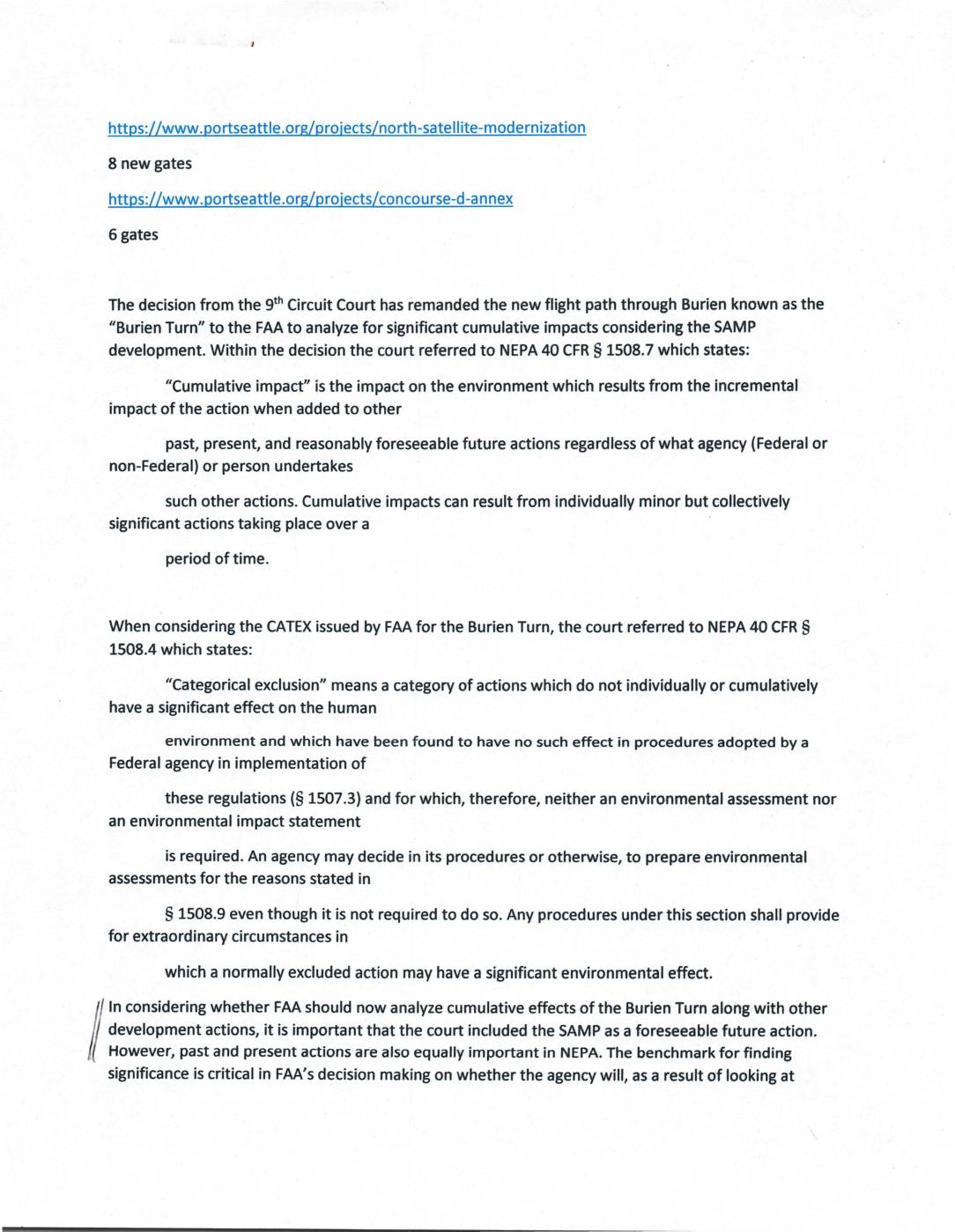
Cumulative impact analysis of the Burien Turn and Sea-Tac Airport development actions under NEPA
A legal and regulatory analysis arguing that the FAA must conduct a broader cumulative environmental impact review of Seattle-Tacoma International Airport expansion, following a 9th Circuit Court ruling that remanded the 'Burien Turn' flight path back to the FAA. The document contends that multiple airport expansion projects—including the addition of 14 new gates and the extension of Highway 509—were each approved individually under categorical exclusions (CATEXs) without properly accounting for their combined effects on noise, air quality, and environmental justice communities. The author argues that under NEPA regulations, the FAA is required to analyze these past, present, and future actions together to determine whether their collective impact is significant. -
 2020-12-15
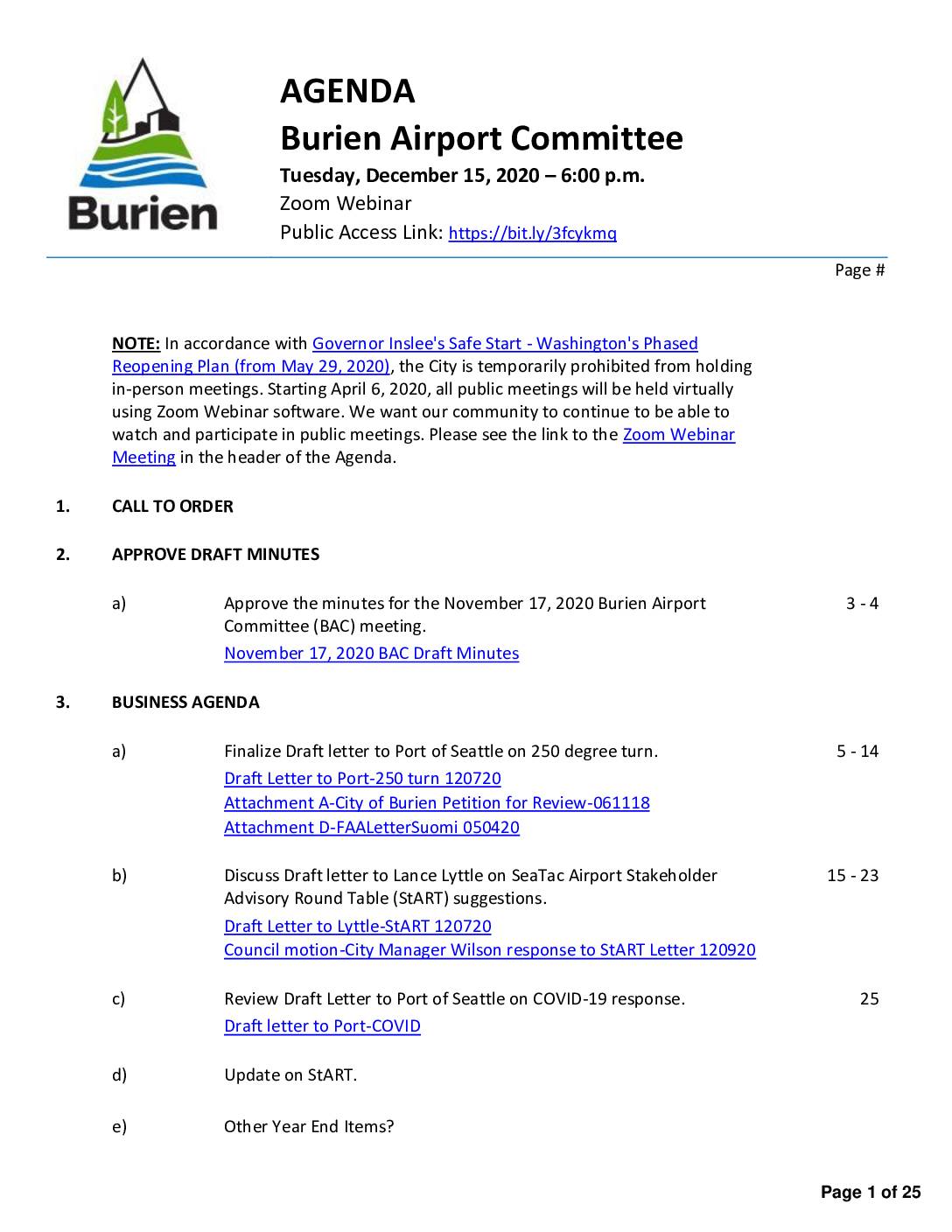
Burien Airport Committee agenda – December 15, 2020
The Burien Airport Committee held a virtual meeting on December 15, 2020, to address several issues related to Seattle-Tacoma International Airport, including finalizing a letter to the Port of Seattle regarding a controversial 250-degree flight turn, discussing improvements to the SeaTac Airport Stakeholder Advisory Round Table (StART), and reviewing a letter concerning the Port's COVID-19 response. The committee also reviewed draft minutes from its November 17, 2020 meeting, during which members discussed adding more community representatives from areas such as Beacon Hill, Shoreline, and Vashon to improve StART's reach. All meetings were conducted remotely via Zoom in compliance with Governor Inslee's COVID-19 public gathering restrictions. -
 2020-10-27
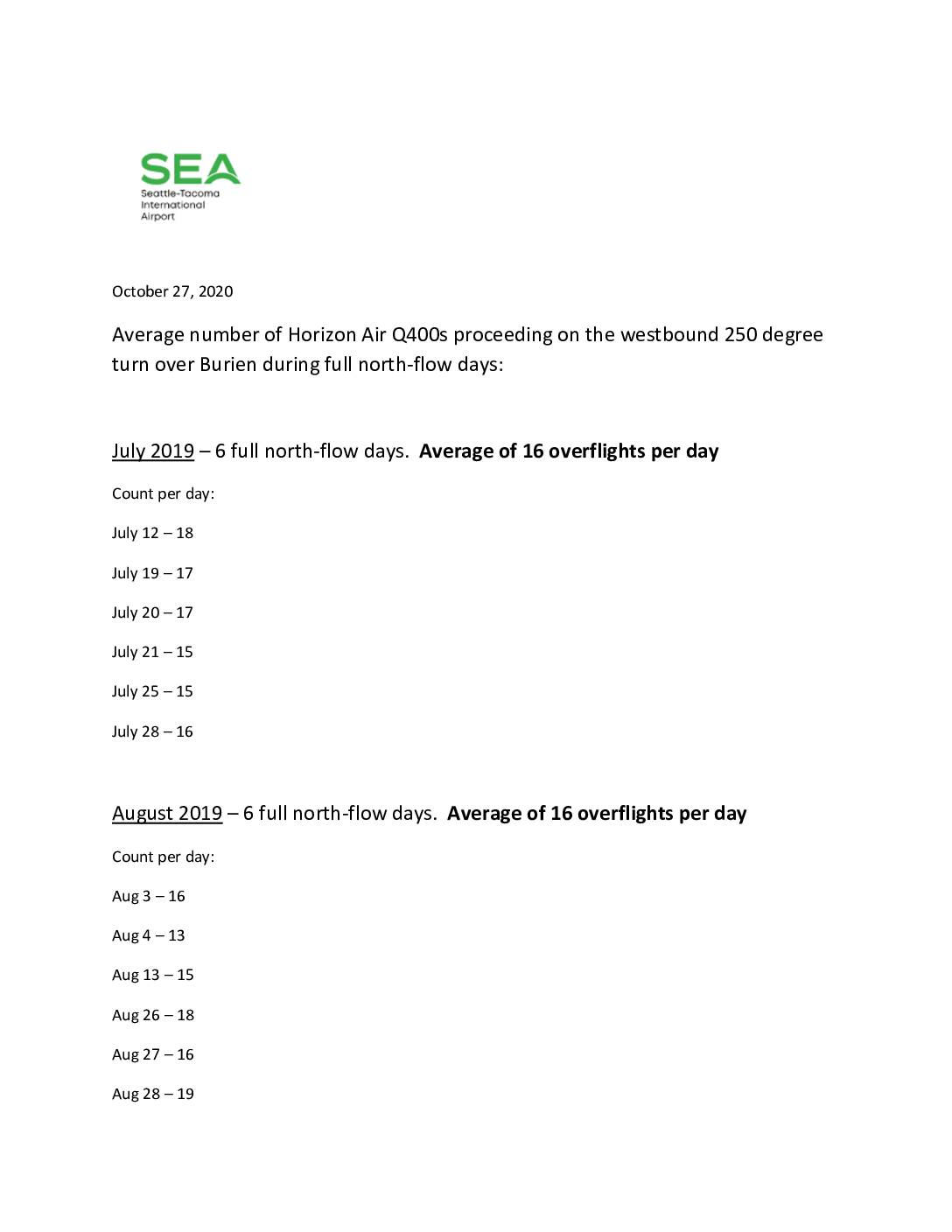
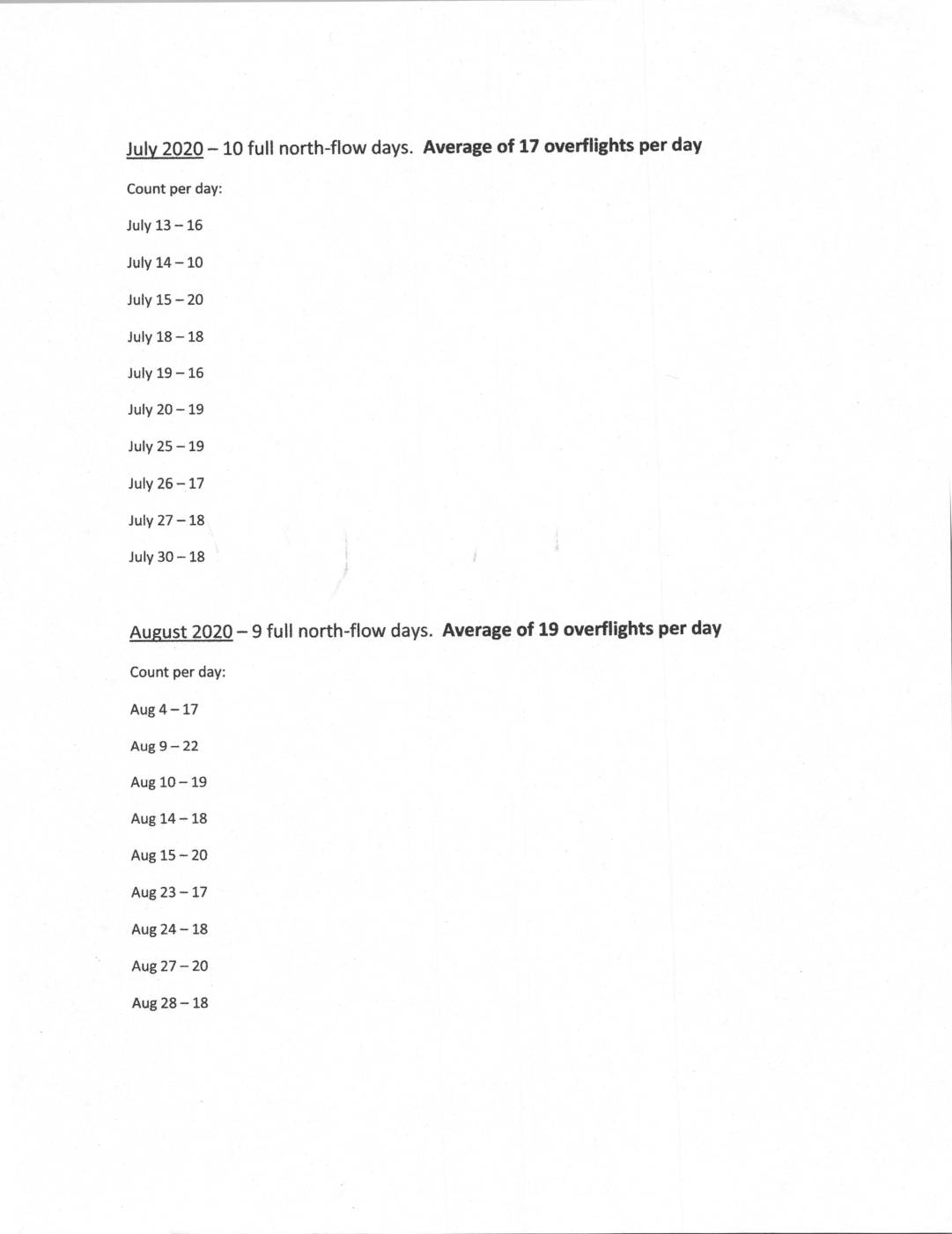
Average number of Horizon Air Q400s proceeding on the westbound 250 degree turn over Burien during full north-flow days
This October 2020 Seattle-Tacoma International Airport report tracks the average daily number of Horizon Air Q400 turboprop flights making a westbound 250-degree turn over Burien during full north-flow operating days. Data covering July and August of both 2019 and 2020 shows a modest upward trend, with monthly averages ranging from 16 flights per day in summer 2019 to 19 flights per day in August 2020. The document was likely produced in response to community noise concerns about aircraft overflights in the Burien area. -
 2020-10-27
Average number of Horizon Air Q400s proceeding on the westbound 250 degree turn over Burien during full north-flow days
This October 27, 2020 document from Seattle-Tacoma International Airport tracks the average daily number of Horizon Air Q400 turboprop aircraft making a westbound 250-degree turn over the city of Burien during full north-flow operating days. Data from July and August of both 2019 and 2020 show daily overflight counts ranging from 10 to 22 aircraft, with monthly averages rising from 16 overflights per day in summer 2019 to 17–19 overflights per day in summer 2020. The records appear intended to document trends in aircraft noise exposure for residents living under that flight path. -
 2020-04-21
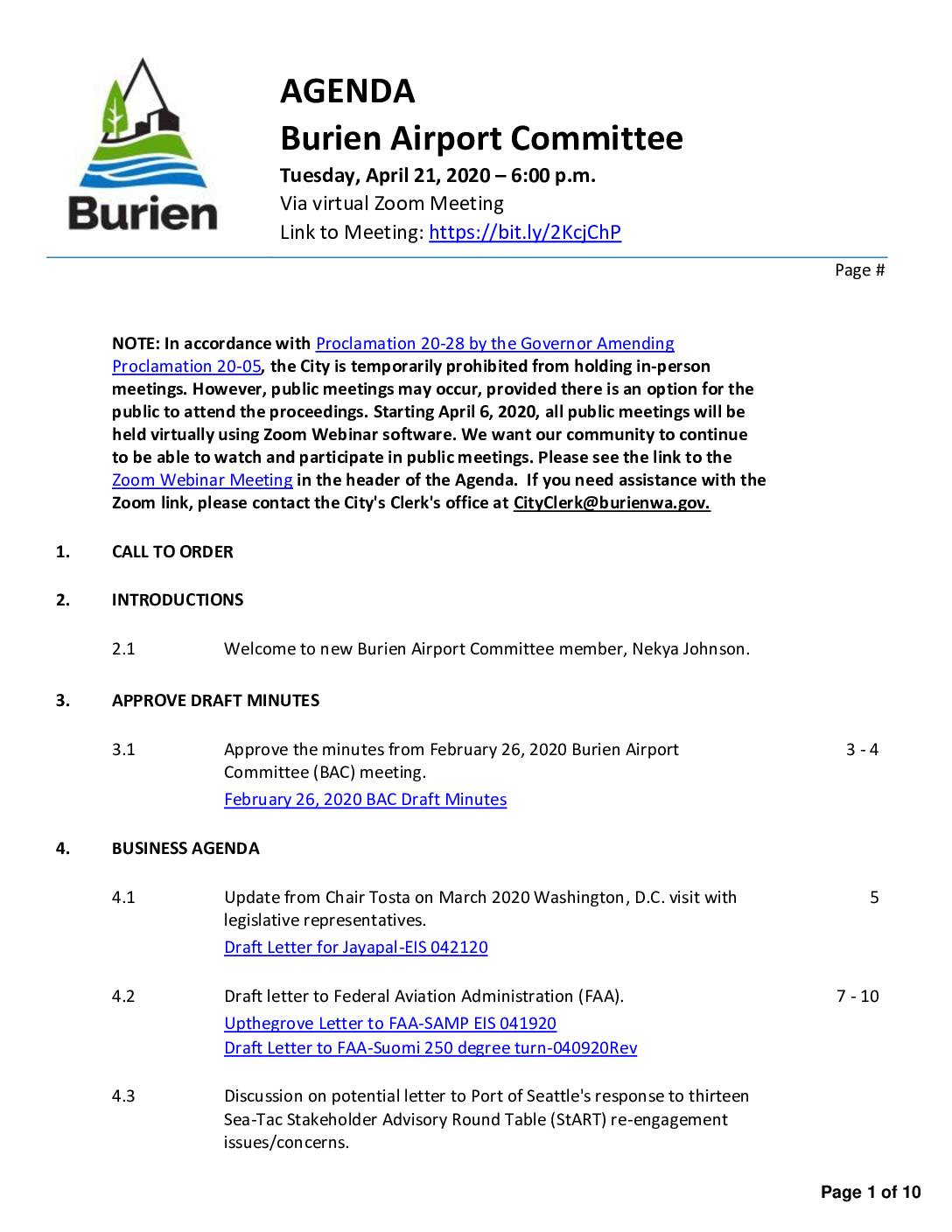
Burien Airport Committee agenda, April 21, 2020
The Burien Airport Committee held a virtual meeting on April 21, 2020, discussing key aviation issues including a draft letter to the FAA regarding the Sustainable Airport Master Plan (SAMP) Environmental Impact Statement and concerns about aircraft flight patterns over Burien. The committee also reviewed updates from a March 2020 Washington, D.C. legislative visit, discussed engagement with the Sea-Tac Stakeholder Advisory Round Table (StART), and considered inviting an FAA Community Ombudsperson to a future meeting. Draft minutes from the February 26, 2020 meeting were also presented for approval, reflecting ongoing efforts by the City of Burien to address cumulative noise and air traffic impacts from Sea-Tac Airport on surrounding communities. -
 2020-01-22
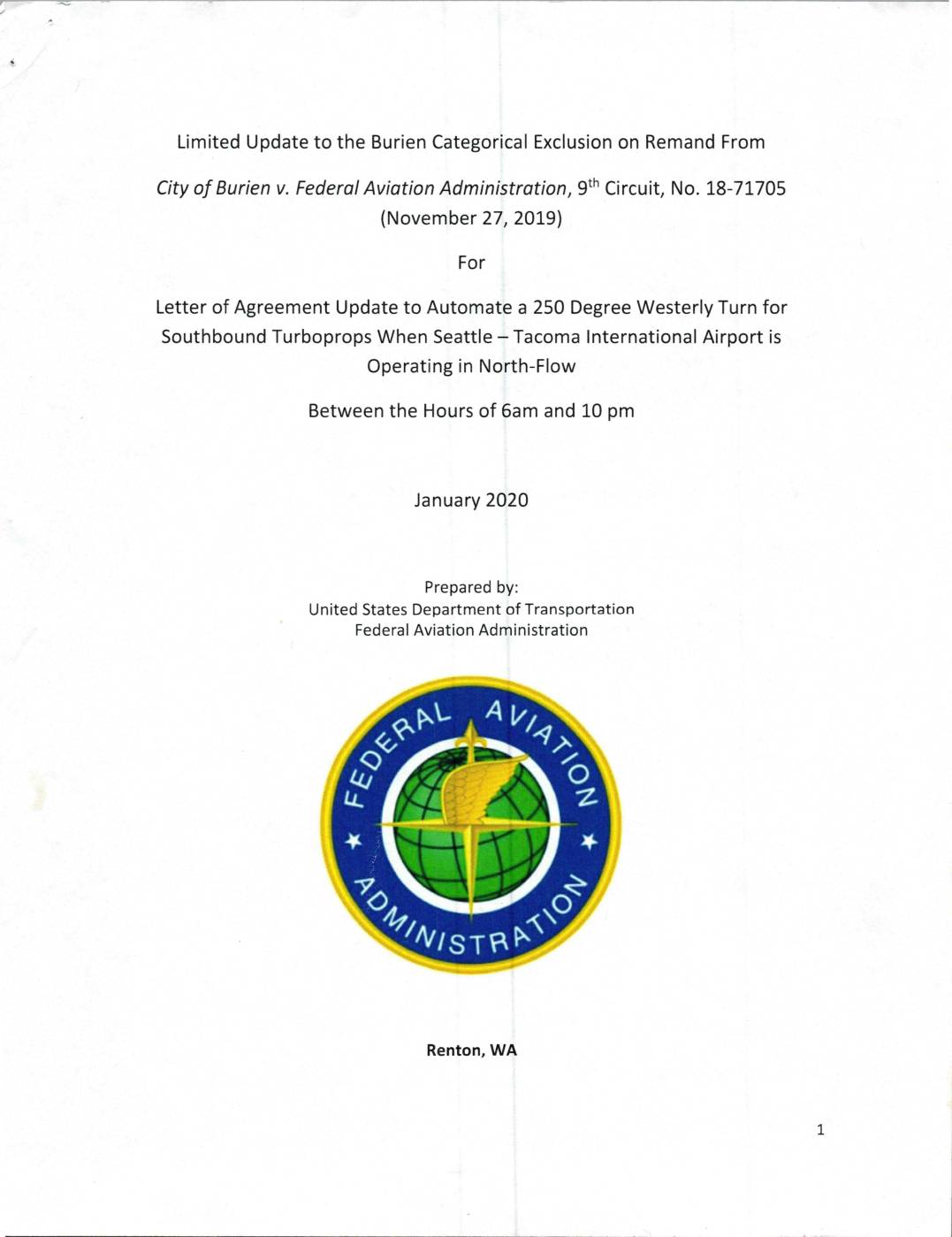
Limited Update to the Burien Categorical Exclusion on Remand: Letter of Agreement Update to Automate a 250 Degree Westerly Turn for Southbound Turboprops, Sea-Tac Airport North-Flow Operations, 6am–10pm
This January 2020 FAA document updates a noise and air traffic policy for Seattle-Tacoma International Airport (Sea-Tac), allowing the airport's control tower to automatically direct southbound turboprop aircraft to make a westerly turn shortly after takeoff during north-flow operations, between 6am and 10pm. The change, originally implemented in 2016 but suspended after a legal challenge by the City of Burien, underwent a thorough environmental and noise review before being reinstated. The FAA determined that while the procedure may slightly concentrate turboprop flight paths, the resulting noise increases remain well below federally established thresholds requiring further environmental review. -
 2020-01-22
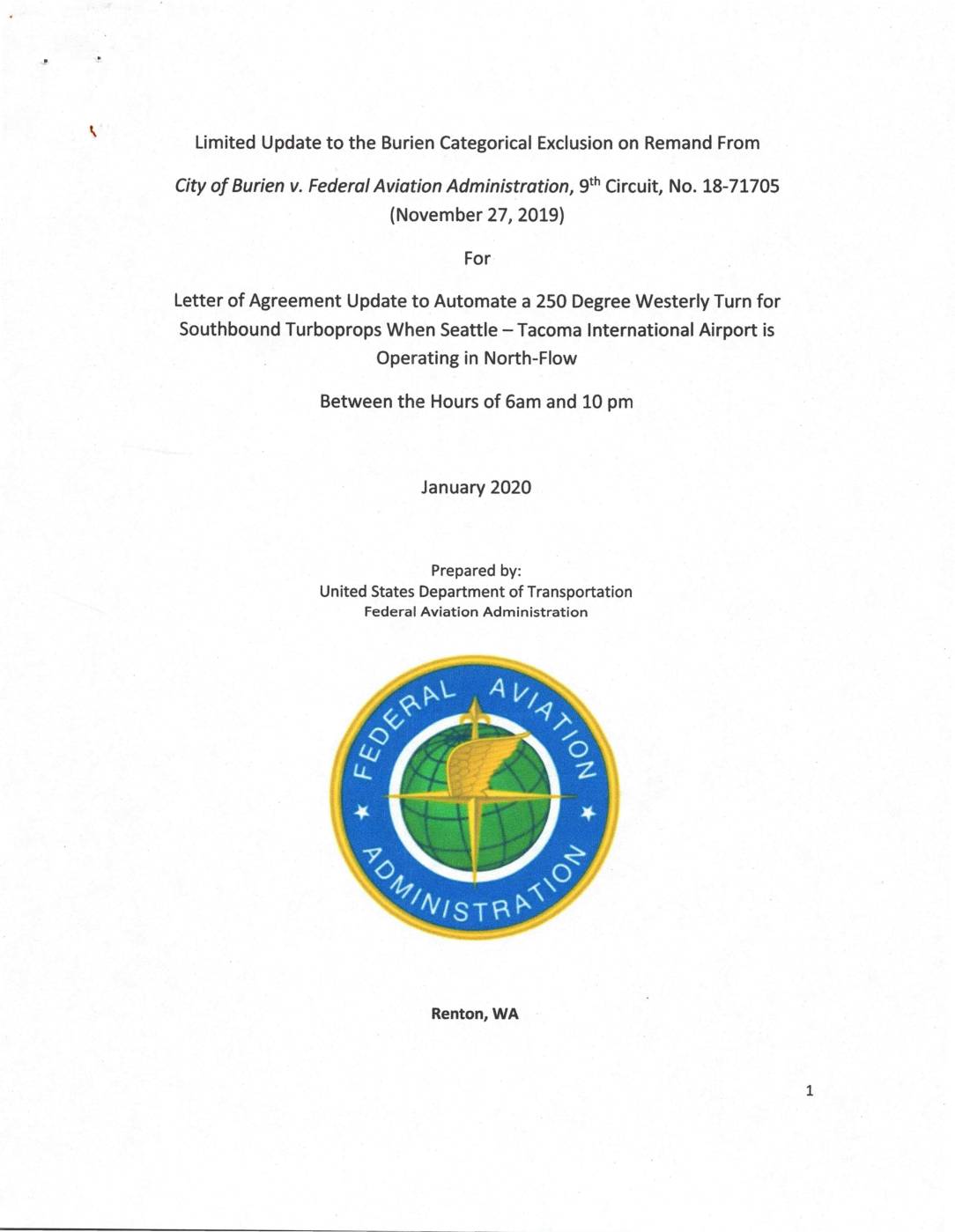
Limited update to the Burien categorical exclusion on remand from City of Burien v. Federal Aviation Administration, 9th Circuit, No. 18-71705 (November 27, 2019)
This January 2020 FAA document updates a flight procedure at Seattle-Tacoma International Airport (SEA), allowing the airport's air traffic control tower to automatically direct southbound turboprop aircraft to make a westerly turn shortly after takeoff during north-flow operations, between 6am and 10pm. The change, which applies to roughly 90% of affected turboprop departures, was previously halted after the City of Burien filed a legal challenge. A thorough environmental and noise review found only minor noise increases in some areas, well below the FAA's thresholds requiring further review.