TagGrants(42)
-
 2026-09-06
49 USC 47110j: Allowable Project Costs (Includes Smith NDAA Amendment 8801)
Full text of 49 USC §47110, governing allowable project costs under the Airport Improvement Program (AIP). Covers allowable cost standards including grant agreement compliance, incentive payments for early contractor completion (capped at 5% of initial contract or $1,000,000), noise compatibility programs, letters of intent for primary, reliever, nonhub, and small airports, nonallowable costs (public parking, -
2026-09-06
49 USC 47110j: Allowable Project Costs (Includes Smith NDAA Amendment 8801)
Full text of 49 USC §47110, governing allowable project costs under the Airport Improvement Program (AIP). Covers allowable cost standards including grant agreement compliance, incentive payments for early contractor completion (capped at 5% of initial contract or $1,000,000), noise compatibility programs, letters of intent for primary, reliever, nonhub, and small airports, nonallowable costs (public parking, -
 2026-09-06
49 U.S.C. § 47110 Allowable Project Costs
49 U.S.C. § 47110 from Title 49 Transportation, governing allowable project costs under the Airport Improvement Program (AIP). Covers standards for allowable costs including grant agreement compliance, incentive payments for early contractor completion, noise compatibility programs, letters of intent for primary, reliever, nonhub, and non-primary airports, nonallowable costs (public parking, airport buildings, decorative landscaping, sculpture), -
The Grant Explainer
The current Port of Seattle grant programs began in 2016 with a proposal by Commissioner John Creighton–responding to the uproar over the Flight Corridor Safety Program. As the name implies, the Airport Community Ecology (ACE) Fund (2016–2020) was meant as an environmental grants program. In late 2018 the Port created a separate, much broader South -
 2025-10-06
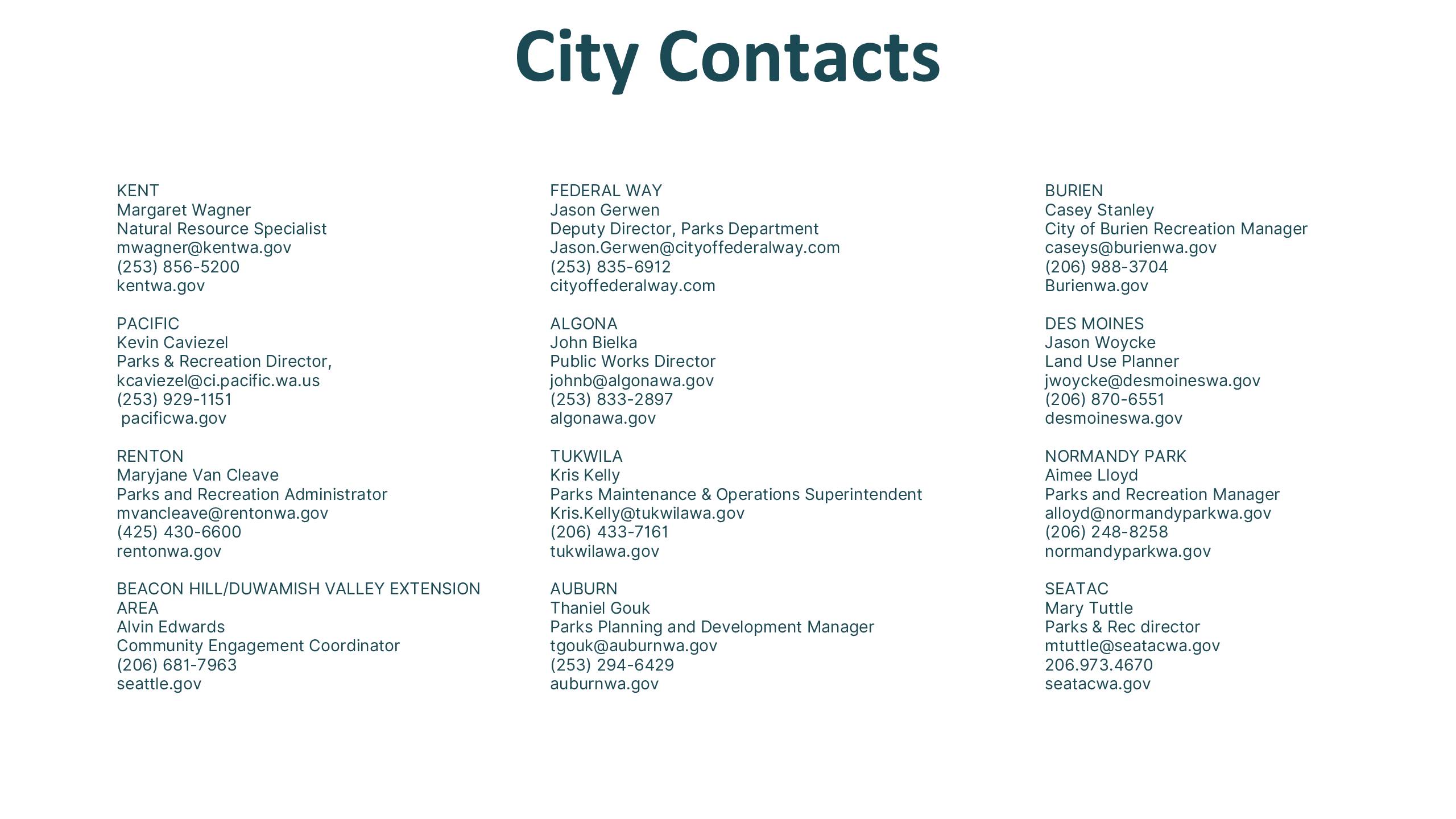
City Contacts: Parks and Recreation Staff for South King County Cities
This document lists city contacts for parks and public works representatives across municipalities in the greater Seattle/King County area, including Federal Way, Auburn, Renton, Tukwila, Kent, Burien, Des Moines, Normandy Park, SeaTac, Algona, Pacific, and the Beacon Hill/Duwamish Valley Extension Area. Each entry includes the contact person's name, title, email address, and phone number. These contacts appear to serve as points of coordination for regional planning or trail initiatives potentially related to the Sea-Tac Airport corridor area. -
 2025-09-30
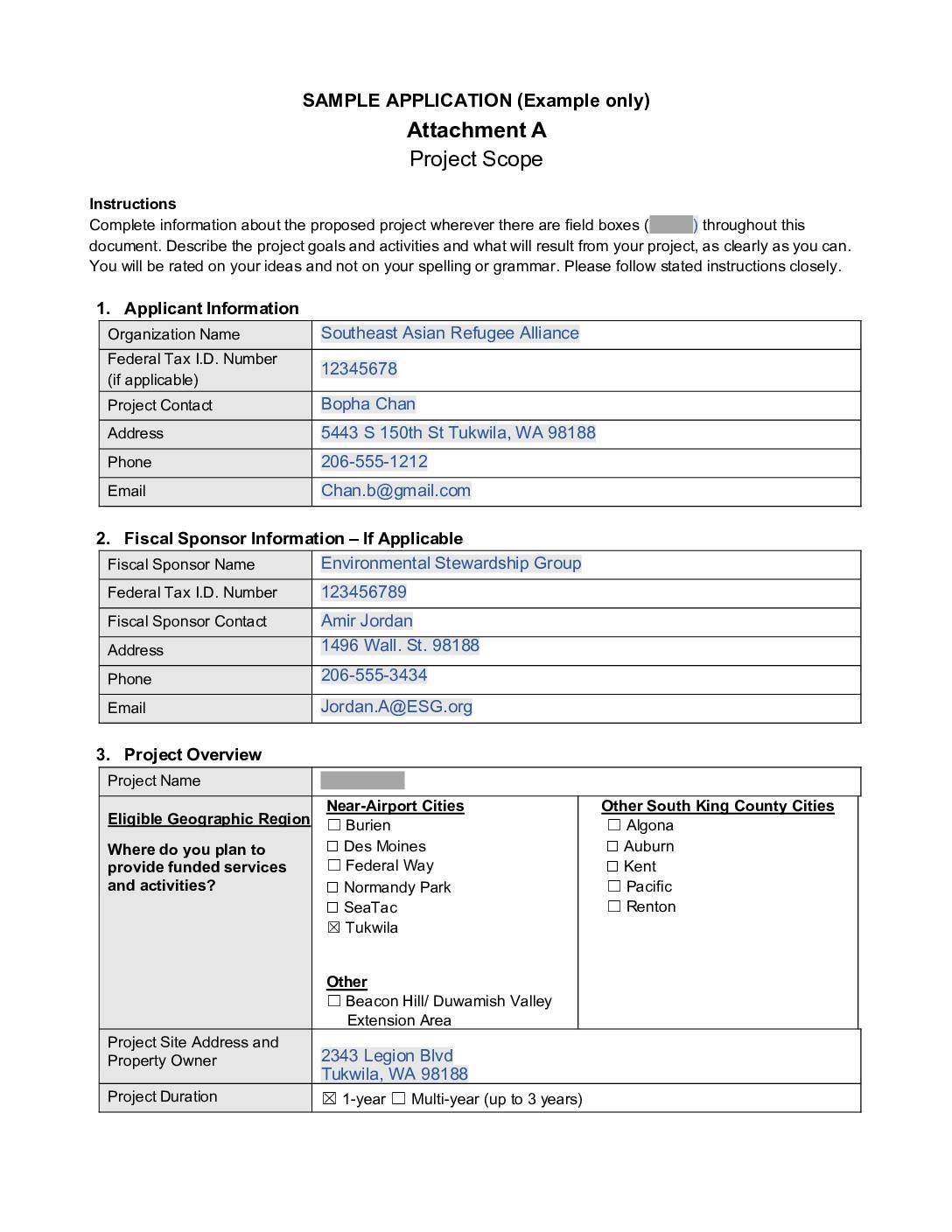
Sample Application (Example Only): Attachment A — Project Scope
The Southeast Asian Refugee Alliance, based in Tukwila, WA, submitted a sample grant application requesting $17,725 to improve Crestview Park by installing a swing set, multilingual welcome signs, and planting 15 native trees and shrubs. The one-year project, fiscally sponsored by the Environmental Stewardship Group, also includes weekly volunteer cleanup events and a community welcome celebration aimed at making the park more accessible to the local Southeast Asian refugee population. The project site at 2343 Legion Blvd falls within the Near-Airport Cities eligible geographic region, specifically serving the Tukwila community. -
 2025-07-01
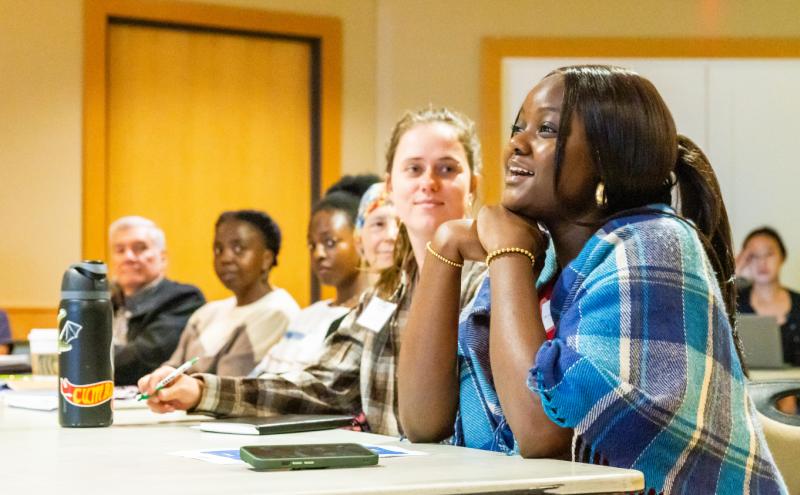
SKCF Partners Meeting — Grant Program Session
A group of students, appearing to be of diverse backgrounds, are seated at a conference table listening attentively to a presentation. One student in the foreground wears a blue plaid shirt and gold jewelry; a black water bottle with a partially visible sticker is on the table. -
 2025-06-01
The Gift of Public Funds Bogeyman
★ 32This 2025 Washington Law Review article argues that Washington State's 'gift of public funds' doctrine—which prohibits governments from giving away public assets—is widely misunderstood and far less restrictive than most officials believe. The authors, both attorneys in Washington's Solicitor General's Office, explain that modern court interpretations allow governments broad flexibility to fund programs serving legitimate public purposes, and note that no appellate court has struck down any government program under this doctrine in the past 45 years. The article urges public officials and lawyers to stop letting unfounded fears about this doctrine block innovative policy solutions to problems like homelessness, childcare, and climate change. -
 2025-05-28
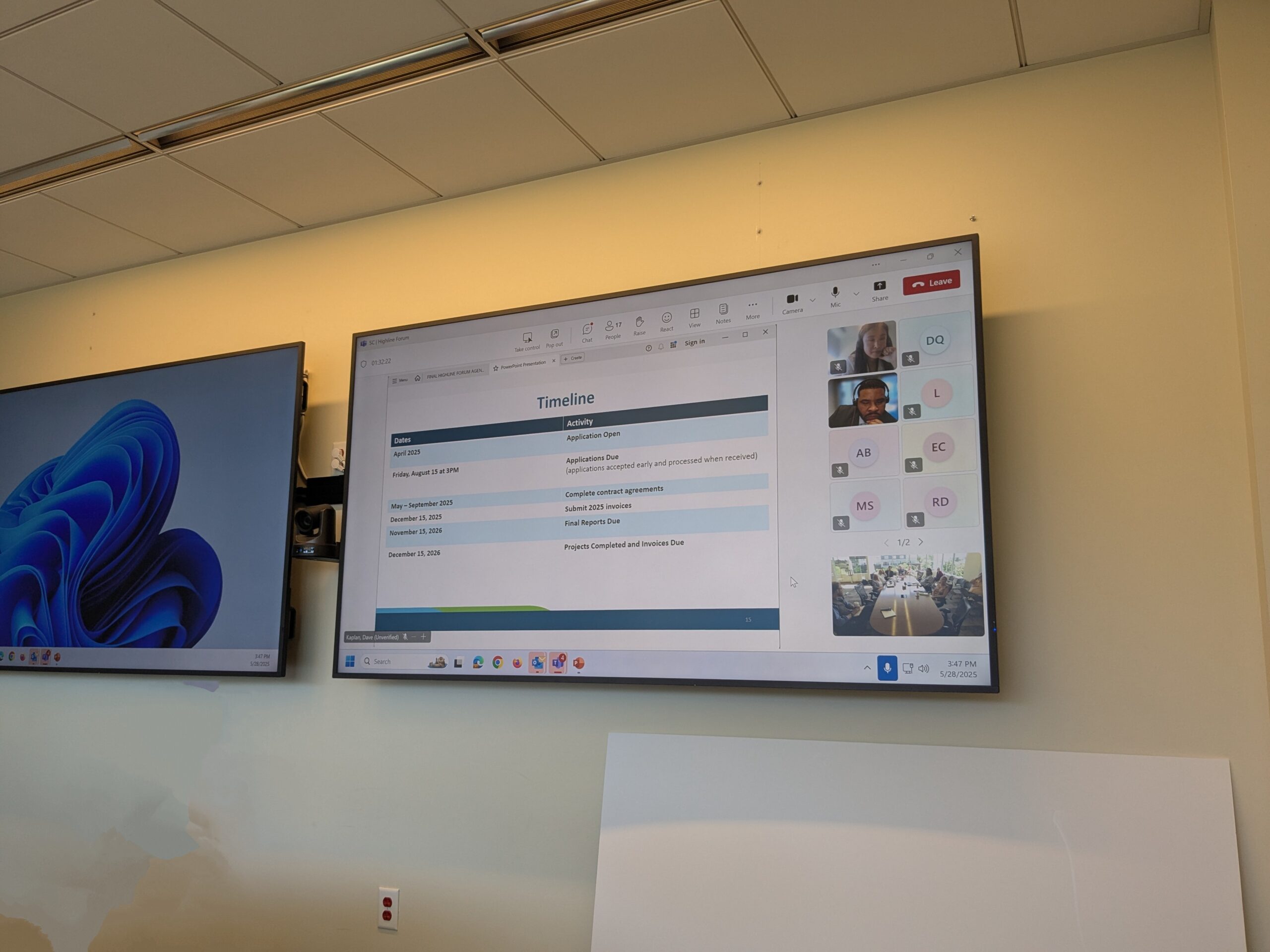
Grant Program Timeline Slide – Microsoft Teams Meeting, May 28, 2025
A Microsoft Teams meeting dated 5/28/2025 at 3:47 PM displays a PowerPoint slide titled 'Timeline' listing key dates for a grant or contract program, including an Application Open date of April 2025, Applications Due on Friday August 15 at 3PM, contract agreements due May–September 2025, invoice and report deadlines in December 2025, and project completion/invoices due December 15, 2026. Multiple remote participants are visible in the Teams sidebar. -
 2025-04-08
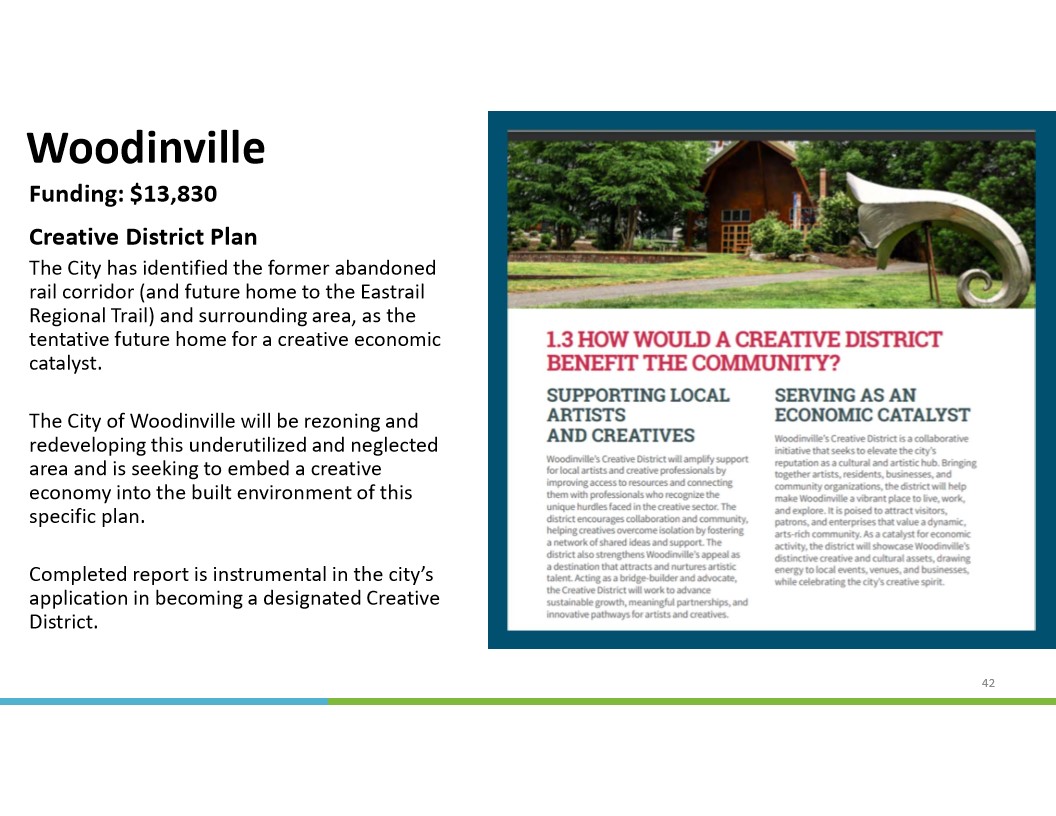
Woodinville Creative District Plan — Economic Development Partnership Program Presentation, Slide 42 (April 8, 2025)
A presentation slide describing Woodinville's Creative District Plan, funded at $13,830, which proposes rezoning and redeveloping the former abandoned rail corridor (future Eastrail Regional Trail) as a creative economic catalyst. The completed plan is intended to support the city's application to become a designated Creative District.