TagDeicing(29)
-
 2025-06-26
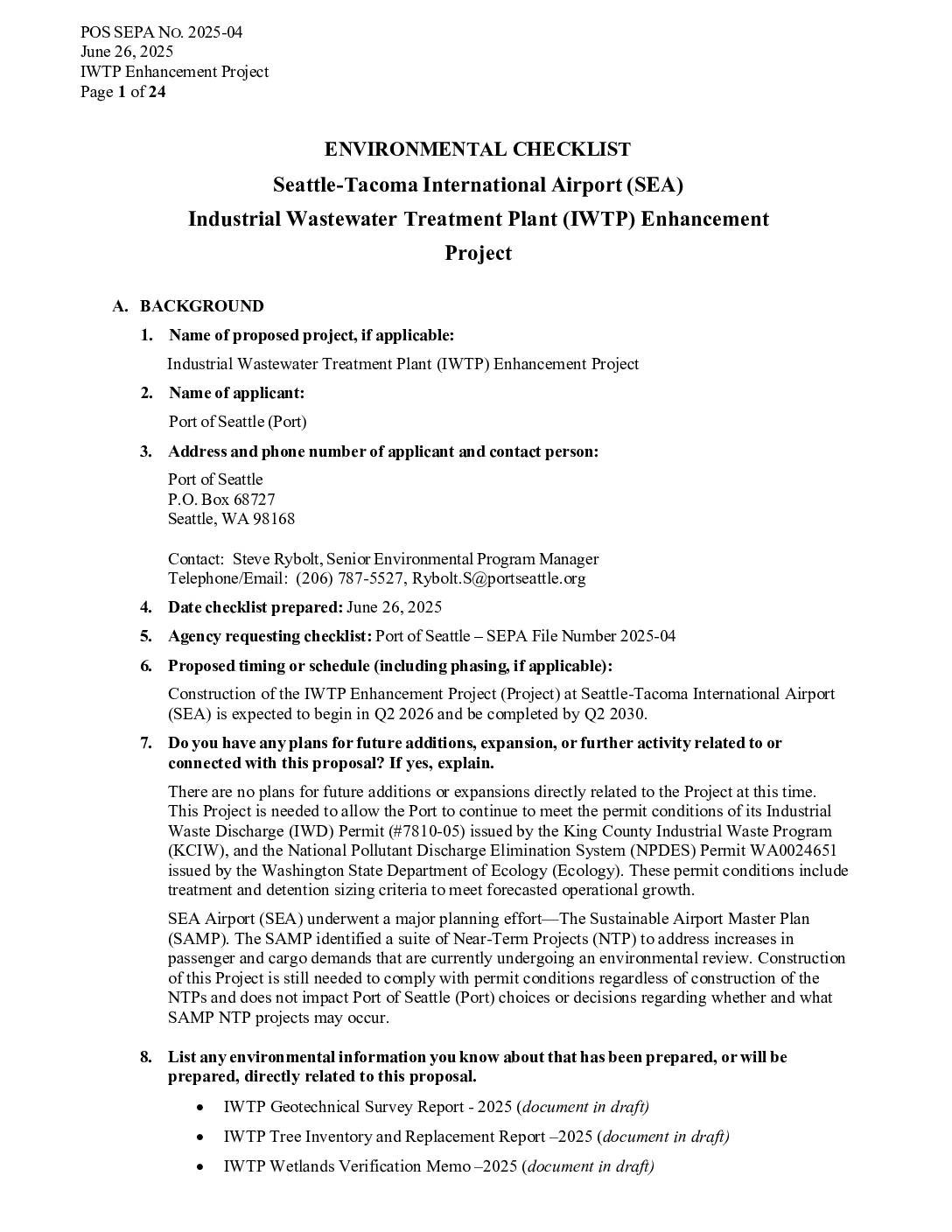
Environmental checklist: Seattle-Tacoma International Airport (SEA) Industrial Wastewater Treatment Plant (IWTP) Enhancement Project
The Port of Seattle is proposing upgrades to Seattle-Tacoma International Airport's Industrial Wastewater Treatment Plant (IWTP) to better handle wastewater from aircraft deicing operations, with construction planned from 2026 to 2030. The project involves replacing aging treatment equipment at the existing facility and building a new aerated gravel bed (AGB) treatment system on a 10.6-acre site nearby to process high levels of biochemical oxygen demand (BOD) on-site. These upgrades are required to comply with tightening discharge limits set by King County and state environmental permits. -
 2024-03-13
IWS Alternatives Analysis Technical Memorandum: Seattle-Tacoma International Airport
Gresham Smith engineers prepared this March 2024 technical memo for the Port of Seattle, analyzing cost-saving alternatives for planned upgrades to Seattle-Tacoma International Airport's Industrial Wastewater Treatment Plant (IWTP). The study evaluated options for managing airport deicer runoff while maintaining compliance with water discharge permits, using 52 years of historical weather data to simulate system performance. Note: despite its placement in an airport policy archive, this document addresses industrial wastewater and stormwater management rather than noise policy. -
2024-03-13
IWS Alternatives Analysis Technical Memorandum: Seattle-Tacoma International Airport
Gresham Smith engineers prepared this March 2024 technical memo for the Port of Seattle, analyzing cost-saving alternatives for planned upgrades to Seattle-Tacoma International Airport's Industrial Wastewater Treatment Plant (IWTP). The study evaluated options for managing airport deicer runoff while maintaining compliance with water discharge permits, using 52 years of historical weather data to simulate system performance. Note: despite its placement in an airport policy archive, this document addresses industrial wastewater and stormwater management rather than noise policy. -
 2022-09-12
Findings of fact, conclusions of law, and order: Port Of Seattle v. State of Washington, Department of Ecology
In 2003, Washington State's Department of Ecology issued a water pollution permit (NPDES No. 002465-1) for Sea-Tac International Airport, which was then challenged by multiple parties including the Port of Seattle and several community groups. The appeals, heard in July 2004, centered largely on concerns about aircraft deicing and anti-icing chemicals being discharged into Puget Sound and nearby waterways, where they can deplete dissolved oxygen levels critical to aquatic life. The Pollution Control Hearings Board reviewed the permit's terms and conditions to determine whether adequate environmental protections were in place. -
 2005-05-10
Addendum to fact sheet: Port Of Seattle Sea-Tac International Airport NPDES Permit No. WA-002465-1
The Washington State Department of Ecology issued this draft addendum to address shortcomings in the NPDES wastewater discharge permit for Seattle-Tacoma International Airport, following a ruling by the Pollution Control Hearings Board. The document outlines required changes to how the Port of Seattle manages contaminated wastewater from aircraft deicing operations, including stricter pollution limits, improved treatment standards, and enhanced water quality monitoring of nearby waterways such as Miller Creek. The revisions focus on reducing harmful biochemical oxygen demand (BOD) discharges into Puget Sound and ensuring the Port implements all available pollution control measures as quickly as possible. -
 2002-12-05
Maury Island Barging and Pier Comments Relevant to Sea-Tac Third Runway 404 Permit Application 1996-4-02325
A December 2002 letter to the U.S. Army Corps of Engineers raises environmental and public health concerns about the Sea-Tac Airport Third Runway project, arguing that construction pollution, ASARCO-contaminated fill material, and increased de-icing fluid use may be harming Puget Sound marine life, including orca populations. The author also warns of collision risks between barges transporting runway fill material and large tankers crossing the same waters. The letter calls for denial of the third runway permit, citing the absence of any cumulative air pollution or health hazard analysis and questioning the project's necessity given declining air and marine cargo traffic. -
 2002-10-22
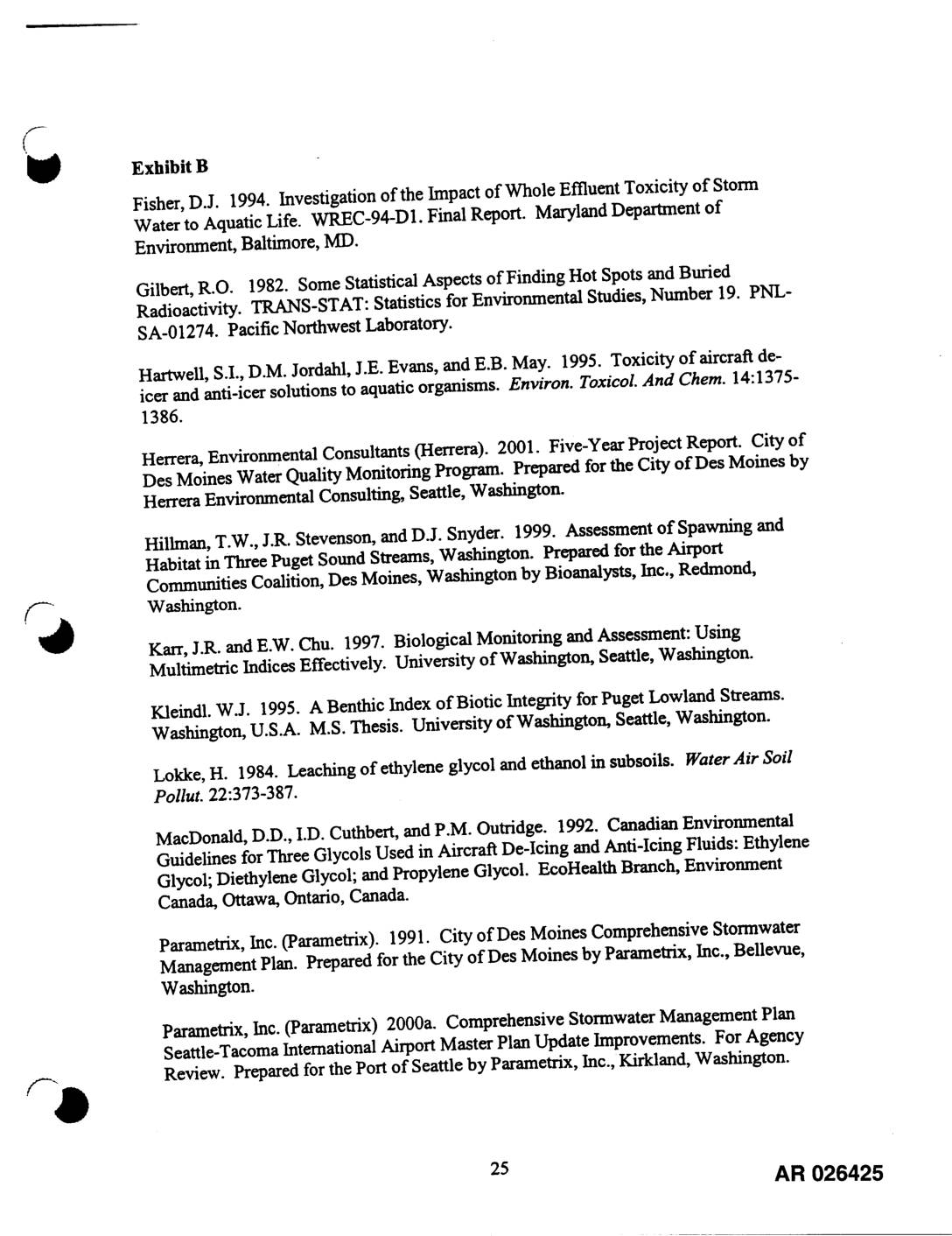
EXH 711: Bibliography — Stormwater & Aquatic Environmental References, STIA EIS
This document is a reference bibliography (Exhibit B) listing scientific and regulatory sources related to environmental monitoring at Seattle-Tacoma International Airport. It includes studies on stormwater quality, aircraft de-icing and anti-icing fluid toxicity, aquatic habitat assessment, and sediment guidelines, drawn from sources such as the Port of Seattle, Parametrix Inc., and various environmental agencies. The references support environmental compliance reporting under the airport's NPDES stormwater permit. -
 2002-10-21
EXH AR016629: Pre-Filed Direct Testimony of Keith Smith — PCHB 01-160, ACC and CASE v. Ecology and Port Of Seattle
Pre-filed direct testimony of Keith Smith submitted in Pollution Control Hearings Board (PCHB) case No. 01-160, Airport Communities Coalition (ACC) and Citizens Against Sea-Tac Expansion (CASE) v. Department of Ecology and Port Of Seattle. Testimony addresses stormwater sampling under the Port’s NPDES permit, monitoring locations, water quality criteria violations, hardness data accuracy, deicing chemicals, IWS -
 2002-02-19
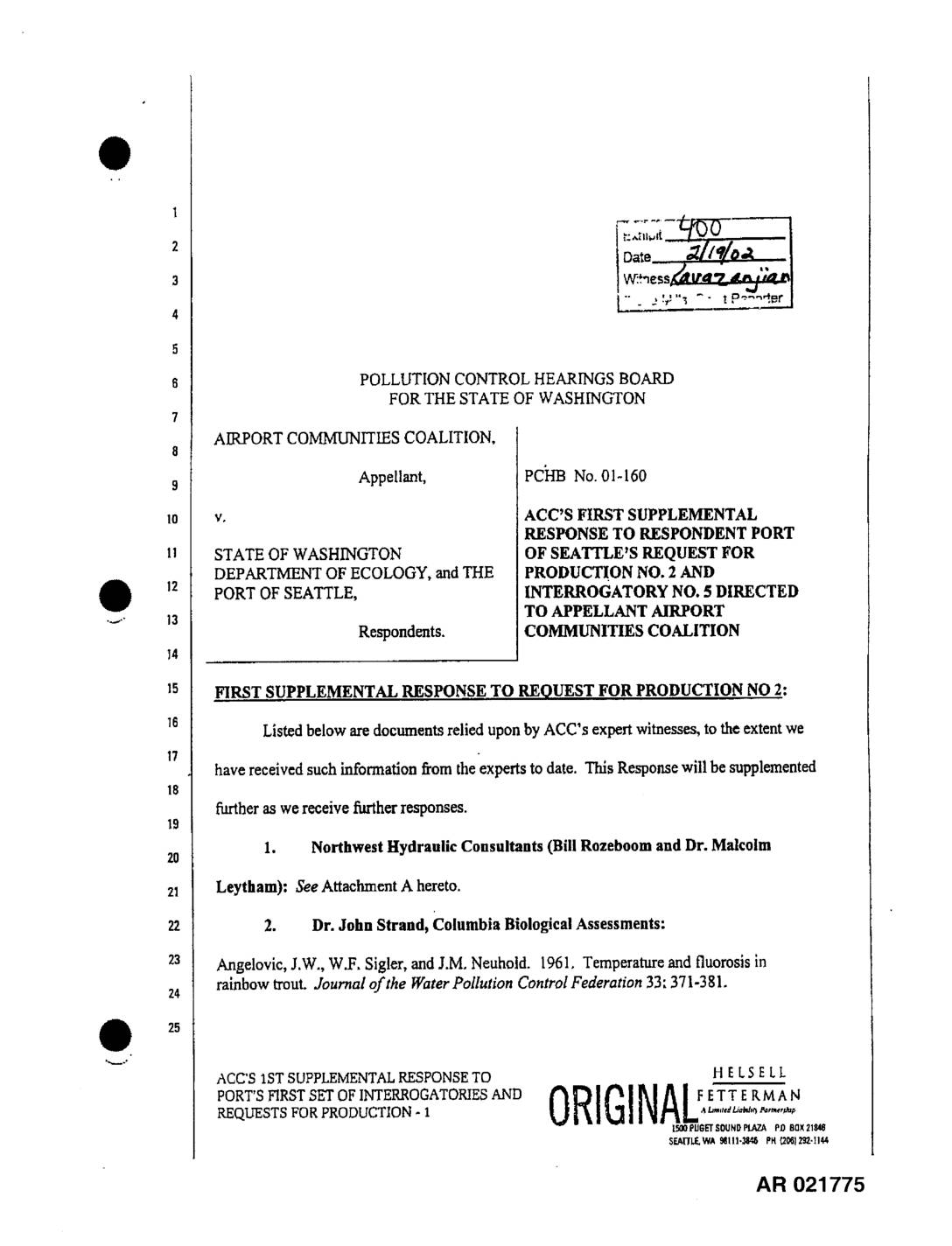
EXH AR021775: ACC First Supplemental Response to RFP No. 2 & Interrogatory No. 5 — Expert Witness Reference List
This legal document is a supplemental response filed by the Airport Communities Coalition (ACC) in a Washington State Pollution Control Hearings Board case (No. 01-160) against the State Department of Ecology and the Port of Seattle. It lists scientific references and studies relied upon by ACC's expert witnesses, covering topics such as the effects of airport deicing chemicals on water quality, dissolved oxygen levels in receiving streams, fluoride impacts on salmon, and toxicity of stormwater runoff to aquatic life near Seattle-Tacoma International Airport. -
 2001-05-03
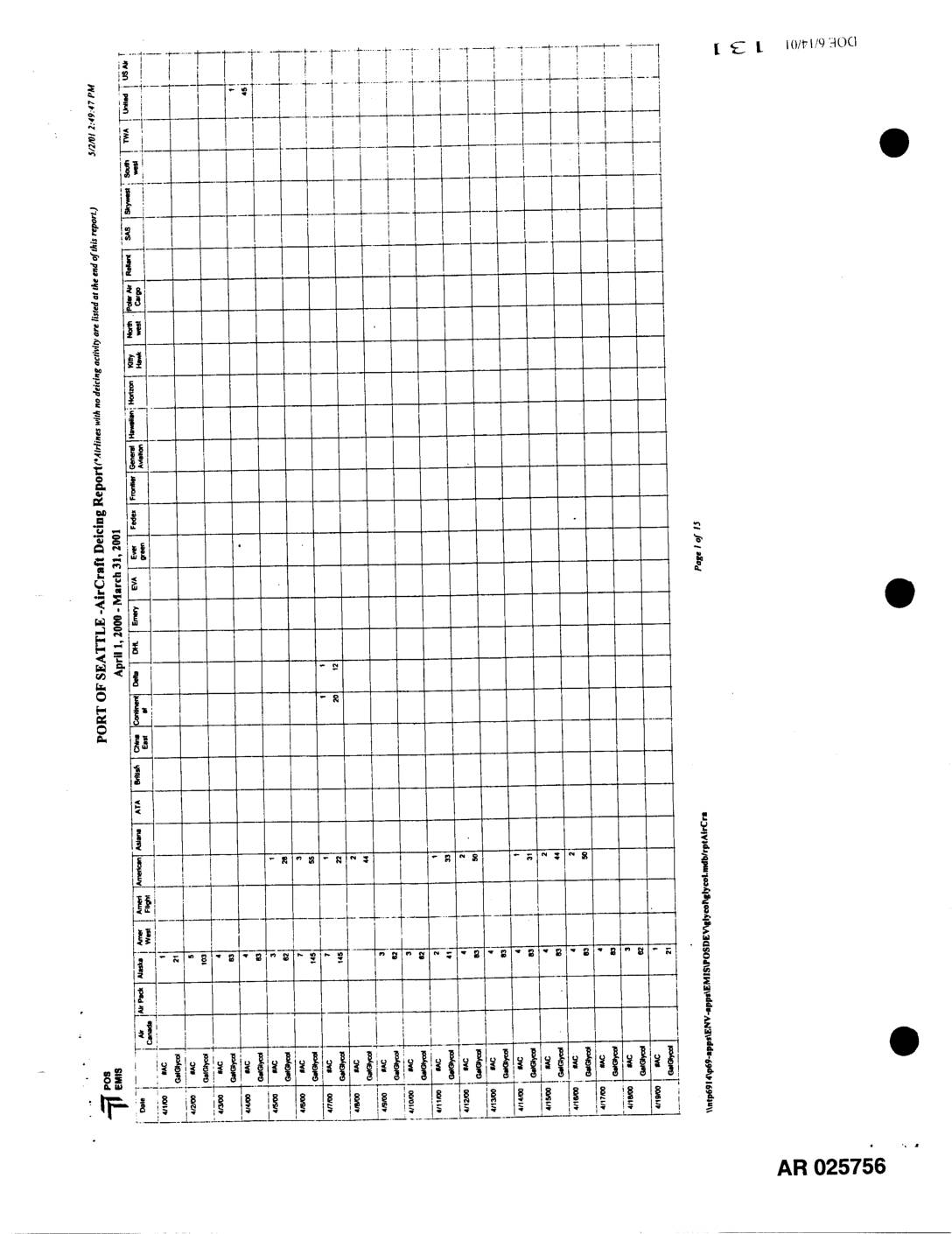
EXH AR025756: Aircraft Deicing RP Apr 1 2000–Mar 31 2001
This document is a Port of Seattle AirCraft Deicing Report covering the period April 1, 2000 through March 31, 2001, generated on May 2, 2001. It tracks deicing activity by date and airline carrier—including Alaska, American, Alaska Airlines, Delta, and others—recording the volumes of deicing fluid (BAC and GalGlycol) applied at Seattle-Tacoma International Airport. The multi-page report notes that airlines with no deicing activity are listed at the end of the report.