TagEnvironment(193)
-
-
 2026-09-18
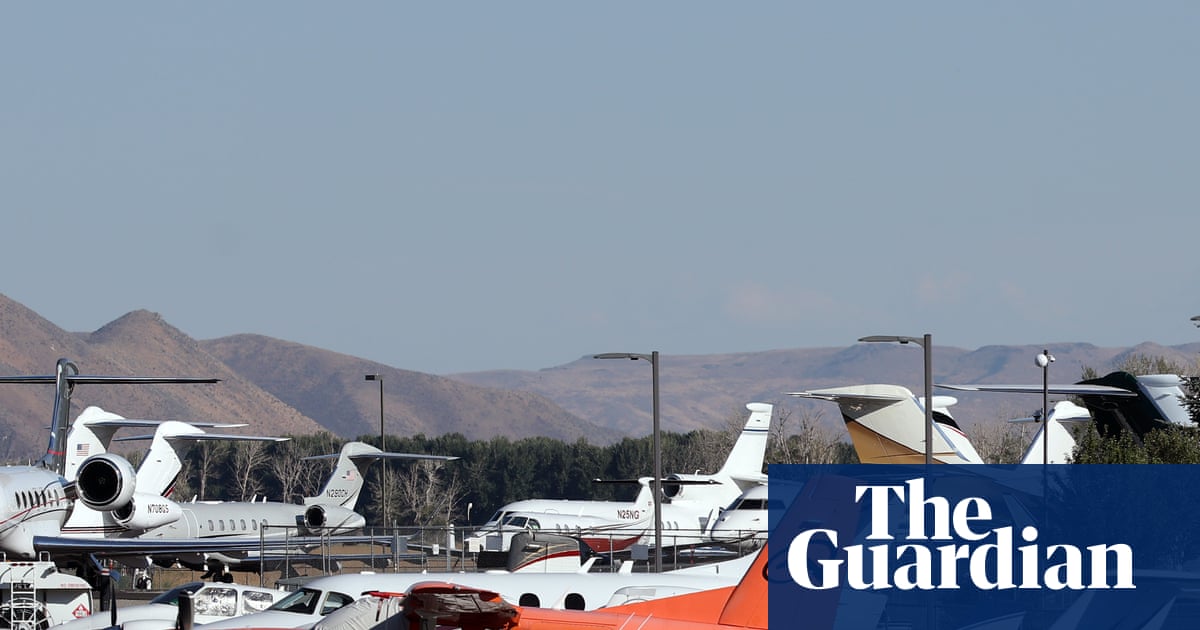
Private jets pollute up to 14 times as much as commercial planes and are undertaxed in US, report says
The boom in private aviation is also driving demand for additional infrastructure. Photograph: Kevin Dietsch/Getty Images In recent years, but they do not pay commensurate portion of fees to FAA operations A new report has put a spotlight on the rapid expansion of private jet travel in the US, revealing that owners are not paying -
 2026-08-28
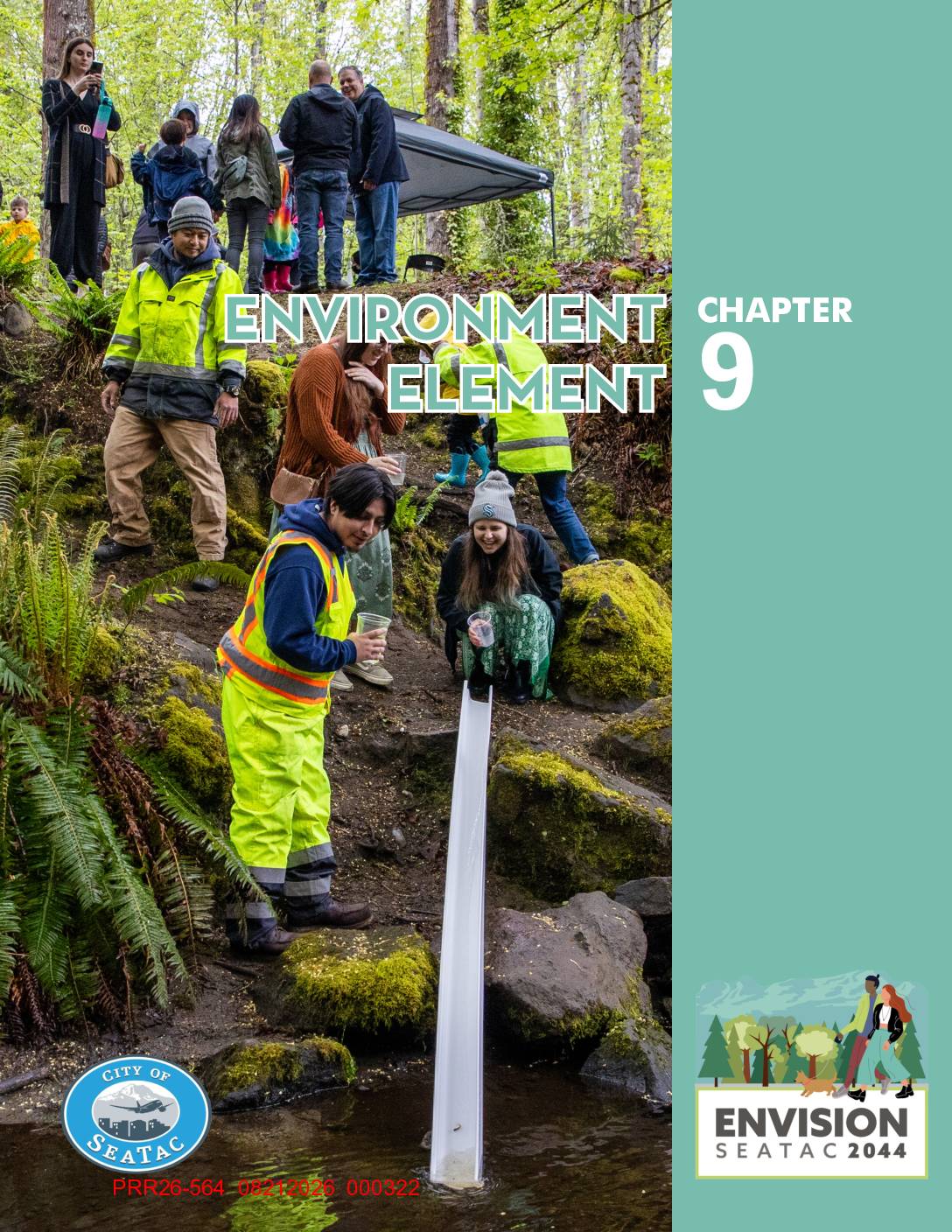
Chapter 9 Environment Element
Chapter 9 of SeaTac's Envision SeaTac 2044 Comprehensive Plan outlines the city's environmental goals and policies covering water quality, air quality, greenhouse gas reduction, wetlands, wildlife habitat, and shoreline management. The element also addresses environmentally sensitive areas such as steep slopes, floodplains, and groundwater aquifers, and includes recommended implementation strategies. Note that while this chapter covers broad environmental planning for the City of SeaTac, it does not specifically address Sea-Tac Airport noise policy. -
 2026-08-28
Chapter 9 Environment Element
Chapter 9 of SeaTac's Envision SeaTac 2044 Comprehensive Plan outlines the city's environmental goals and policies covering water quality, air quality, greenhouse gas reduction, wetlands, wildlife habitat, and shoreline management. The element also addresses environmentally sensitive areas such as steep slopes, floodplains, and groundwater aquifers, and includes recommended implementation strategies. Note that while this chapter covers broad environmental planning for the City of SeaTac, it does not specifically address Sea-Tac Airport noise policy. -
 2026-08-28
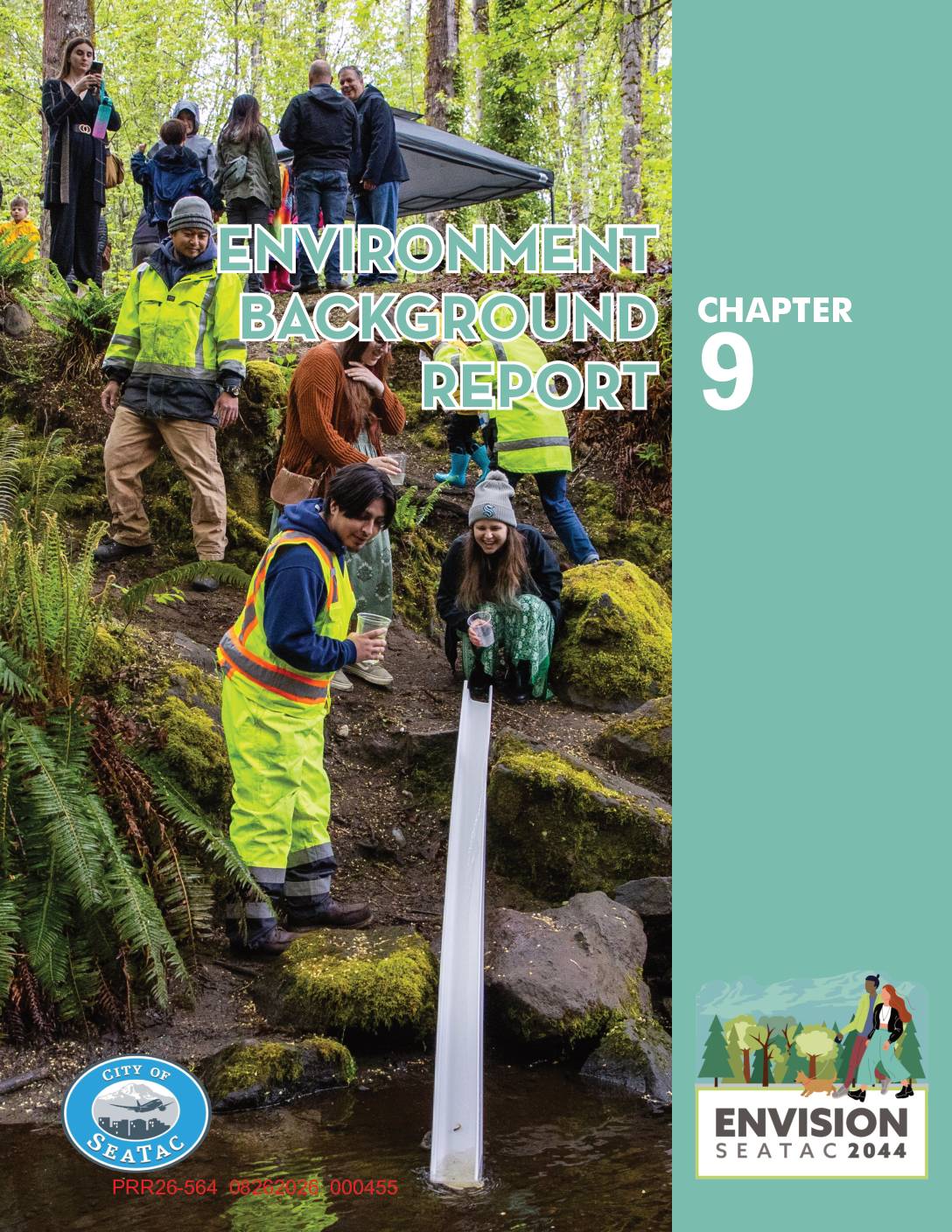
Chapter 9 Environment Background Report
This document is Chapter 9 of the City of SeaTac's Envision SeaTac 2044 Comprehensive Plan, focusing on the Environment Background Report. It outlines key reference materials used to support environmental goals and policies, including wetland surveys, flood insurance maps, and soil conservation data from agencies such as King County, the U.S. Department of the Interior, and FEMA. The report also notes that SeaTac incorporates environmental information from adjacent jurisdictions and other agencies into its local regulations as appropriate. -
 2026-08-28
Chapter 9 Environment Background Report
This document is Chapter 9 of the City of SeaTac's Envision SeaTac 2044 Comprehensive Plan, focusing on the Environment Background Report. It outlines key reference materials used to support environmental goals and policies, including wetland surveys, flood insurance maps, and soil conservation data from agencies such as King County, the U.S. Department of the Interior, and FEMA. The report also notes that SeaTac incorporates environmental information from adjacent jurisdictions and other agencies into its local regulations as appropriate. -
-
-
-