TagContrails(10)
-
 2025-06-11
Unsubstantiated ‘chemtrail’ conspiracy theories lead to legislation proposed in US statehouses
By SARA CLINE and MELISSA GOLDIN BATON ROUGE, La. (AP) — As Louisiana Rep. Kimberly Landry Coates stood before her colleagues in the state’s Legislature she warned that the bill she was presenting might “seem strange” or even crazy. Some lawmakers laughed with disbelief and others listened intently, as Coates described situations that are often noted in -
NASA and Boeing chase jet contrails with science of climate impact in doubt
By Dominic Gates Seattle Times aerospace reporter Scientific debate is getting heated over what to do about airplane contrails — the wispy lines of water vapor you often see trailing behind a jet. Those harmless-looking vapor trails sometimes spread out to form thin cirrus clouds. Environmental activists and nonprofits focused on climate change routinely assert -
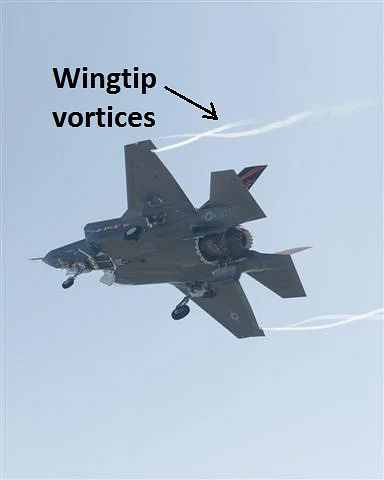
Wingtip Vortices
An F-35 Lightning II stealth multirole fighter aircraft is photographed from below during flight, with visible wingtip vortices — condensation trails formed by low-pressure airflow at the wingtips. A caption label in the image explicitly identifies the aerodynamic phenomenon as 'Wingtip vortices.' -
 2023-05-02
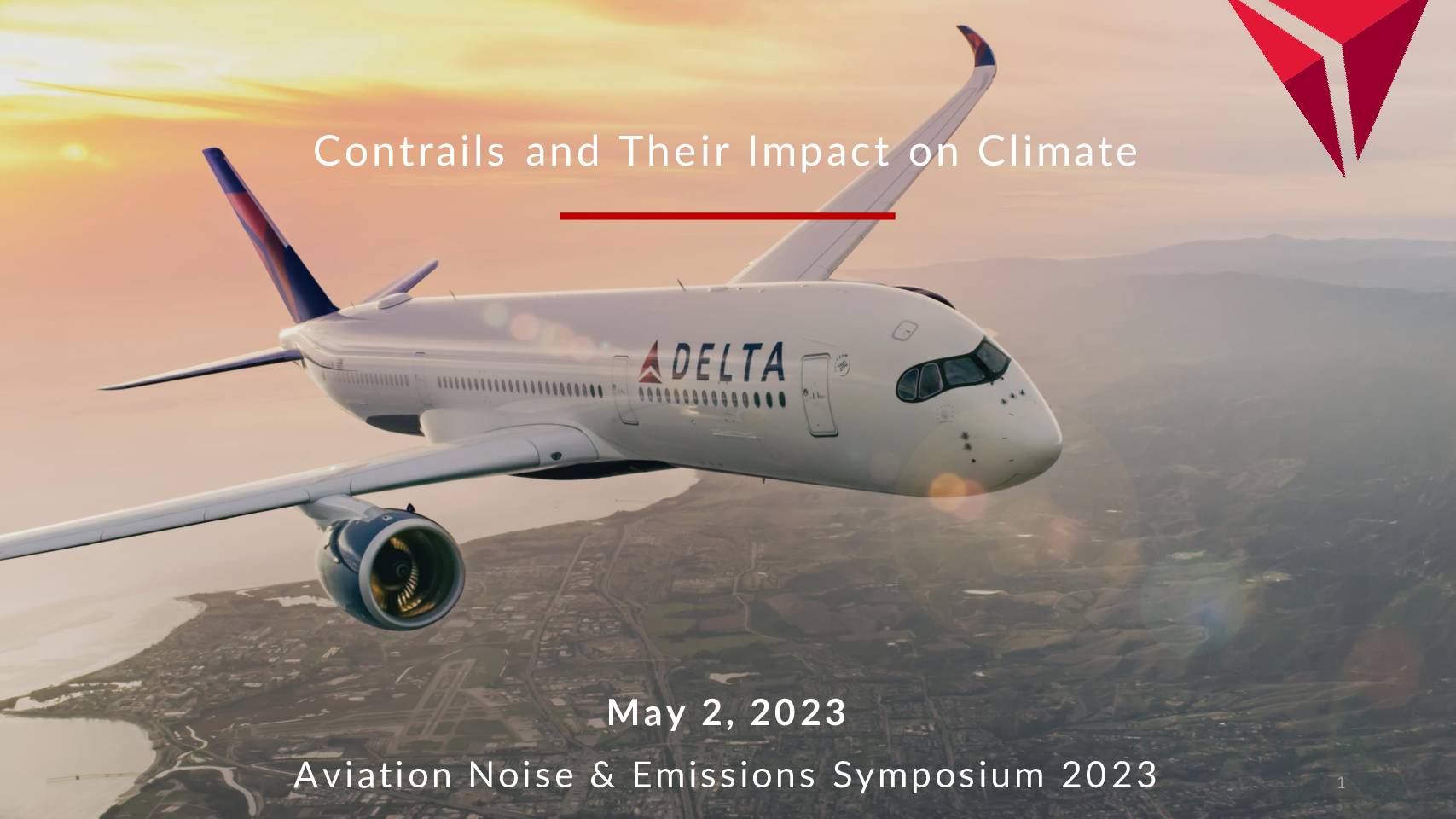
Contrails and their impact on climate
This Delta Air Lines presentation from the 2023 Aviation Noise & Emissions Symposium explains what contrails are, how they form, and why they matter for the climate. Contrails are line-shaped clouds created by aircraft engine exhaust or air pressure changes, forming through a rapid process in which exhaust particles become water droplets and then ice crystals within seconds. The presentation explores how to measure contrails' environmental impact and what solutions, including route adjustments, Delta is pursuing to reduce it. -
Heavy Aircraft Traffic Over Washington D.C. National Airspace
View of the Washington Monument and the National Mall skyline in Washington, D.C., with numerous aircraft contrails crossing the blue sky above. The dense grid of contrails suggests heavy air traffic over the capital area. -
 2022-10-01
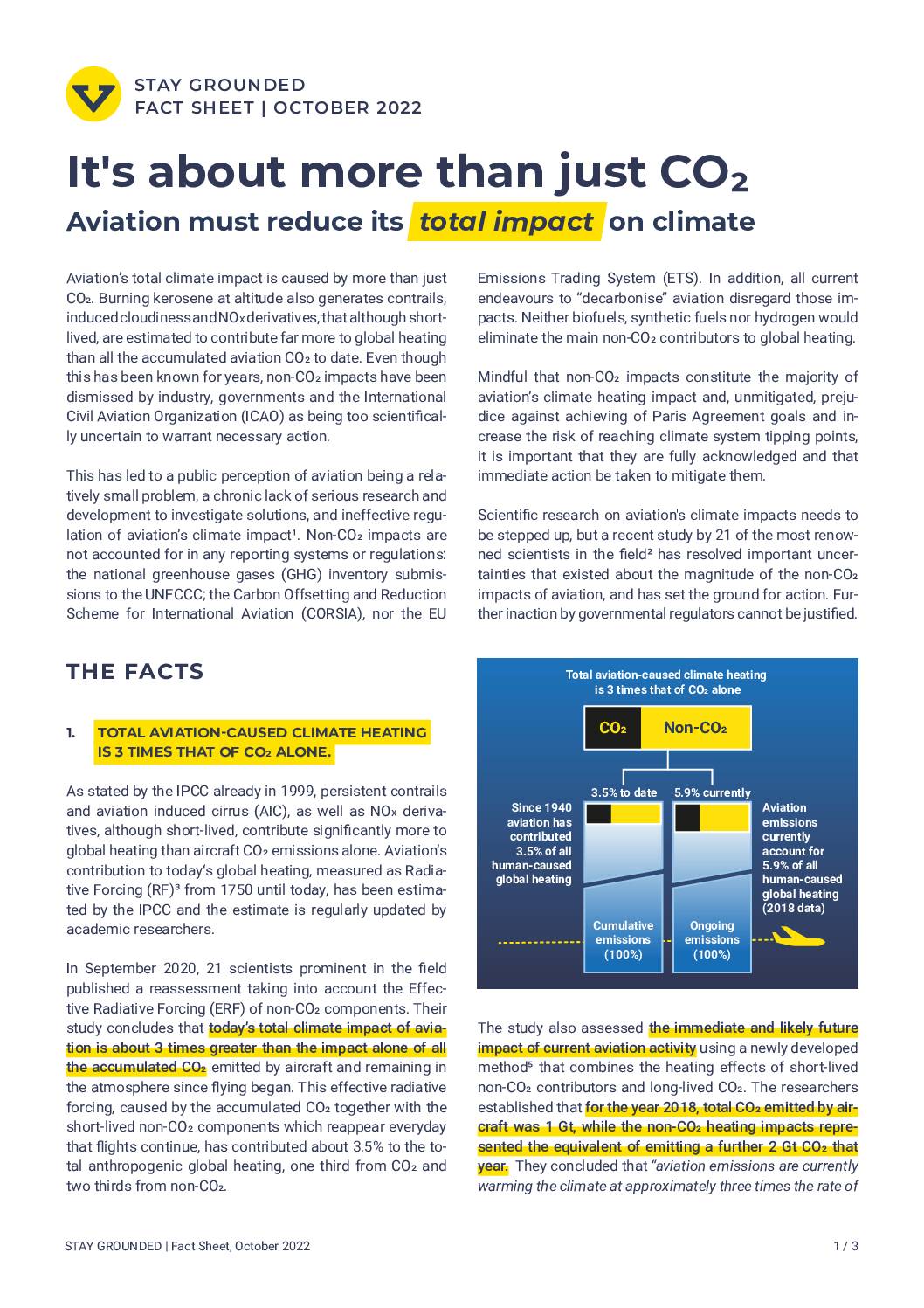
It’s About More Than Just CO₂: Aviation Must Reduce Its Total Impact on Climate
Aviation's climate impact is roughly three times greater than its CO2 emissions alone, because burning jet fuel at altitude also produces contrails, induced cloudiness, and NOx byproducts that add significant additional warming. A 2020 study by 21 leading scientists found that in 2018, aviation accounted for approximately 5.9% of all human-caused global heating when these non-CO2 effects are included. The fact sheet calls for immediate action including contrail-avoidance flight routing, cleaner fuels, stricter emissions regulations, and reduced air traffic overall. -
 2021-02-17
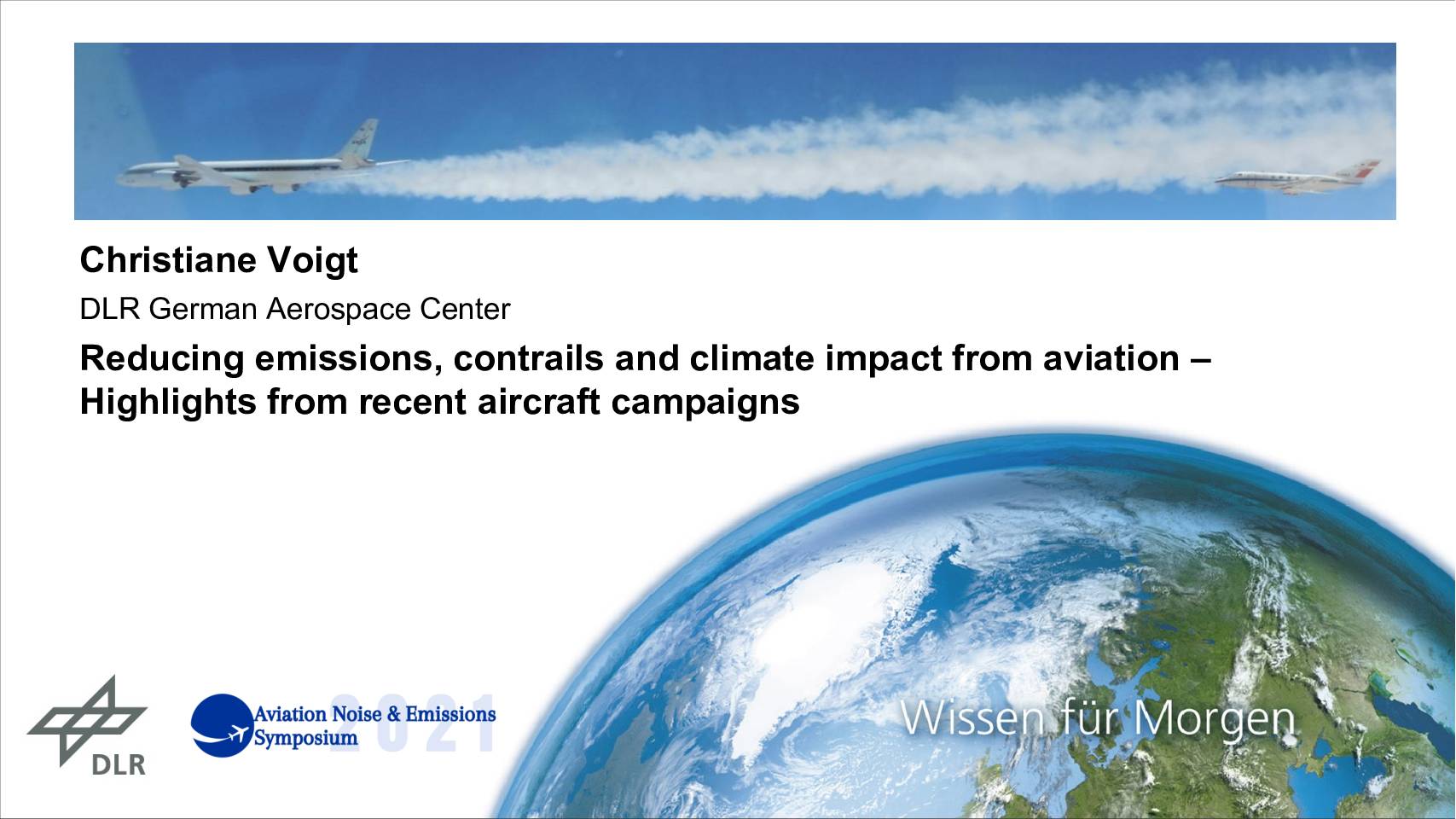
Reducing emissions, contrails and climate impact from aviation – Highlights from recent aircraft campaigns
A 2021 seminar by DLR researcher Christiane Voigt examines how aviation contributes to climate change through CO2 emissions, contrail cirrus clouds, and NOx gases, with contrail cirrus identified as the largest single warming factor at 57.4 mW m⁻². The presentation outlines strategies to reduce aviation's climate footprint, including the use of alternative fuels, lean combustion technology, and contrail avoidance routing. Findings draw on data from recent aircraft measurement campaigns and observed emission reductions during the 2020 COVID-19 lockdown. -
 2020-09-03
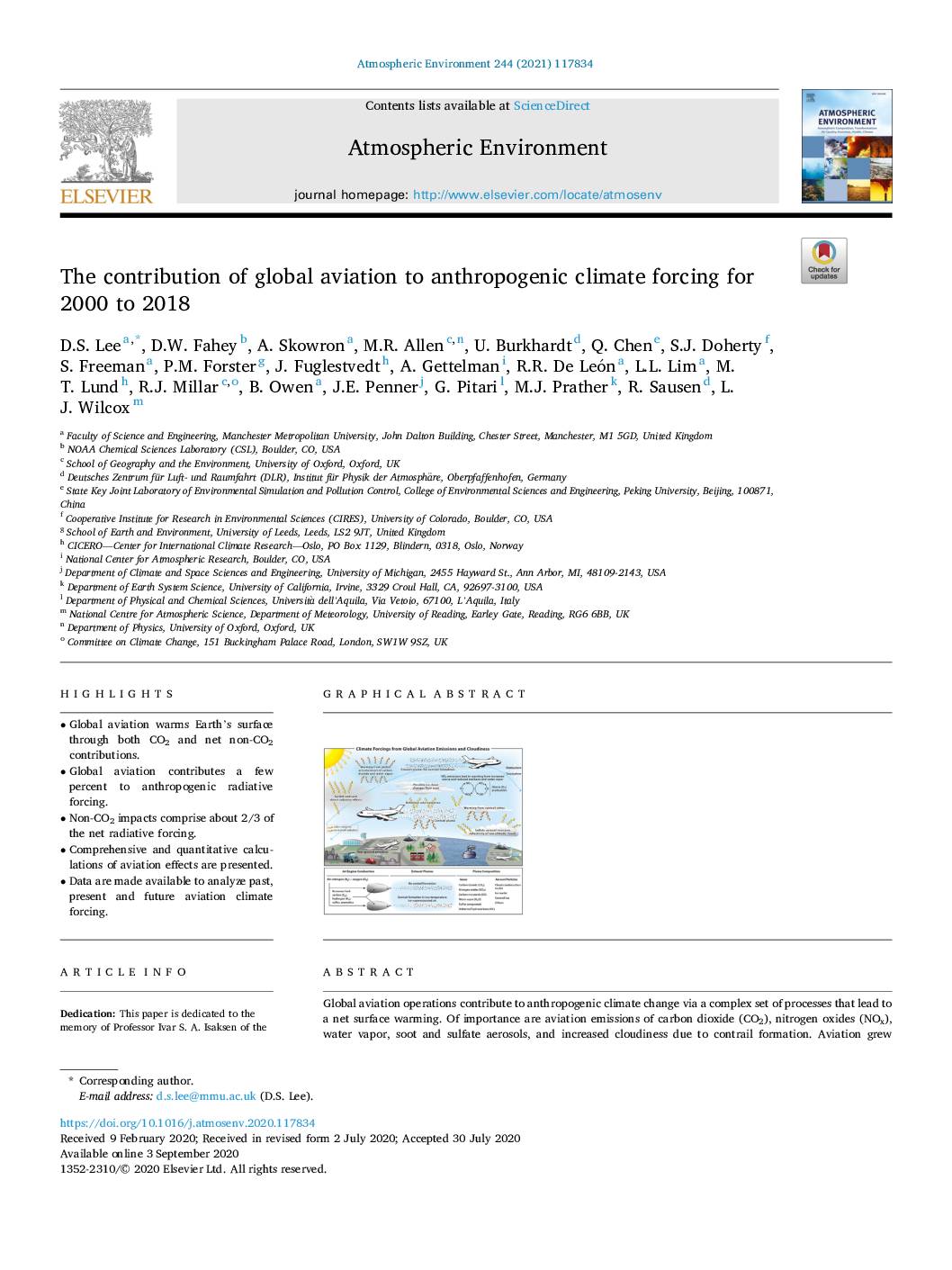
The contribution of global aviation to anthropogenic climate forcing for 2000 to 2018
A 2021 scientific study found that global aviation contributes a small but meaningful share of human-caused climate change, primarily through carbon dioxide emissions and the formation of contrail clouds at high altitude. The research, covering the years 2000 to 2018, found that non-CO2 effects such as contrails account for roughly two-thirds of aviation's total warming impact. The findings are relevant to ongoing policy discussions about reducing the climate footprint of air travel. -
 2019-06-27
Contrail cirrus radiative forcing for future air traffic
A scientific study projects that contrail cirrus (cloud formations created by aircraft exhaust) will produce three times more climate warming by 2050 compared to 2006, driven largely by a fourfold increase in air traffic volume. While reducing soot emissions from aircraft by 50% could cut this warming effect by about 15%, the researchers found that fuel and emissions improvements alone cannot offset the dramatic rise in contrails expected from increased flight activity. The study focuses on global climate impacts rather than local airport noise, and may have limited direct relevance to Sea-Tac Airport noise policy. -
 2000-09-01
Aircraft contrails factsheet
This EPA fact sheet explains that aircraft contrails are line-shaped clouds made of ice crystals formed when water vapor in jet engine exhaust mixes with cold air at high altitudes. Contrails are composed primarily of water and do not pose direct health risks, but persistent contrails can spread into cirrus cloud cover and may influence the Earth's climate by affecting atmospheric cloudiness. Scientists estimate that persistent contrails cover about 0.1 percent of the Earth's surface on average, with the highest concentrations occurring over heavily trafficked air corridors like Europe and the United States.