TagPermitting(6)
-
 2026-05-08
What’s heating up for spring – federal permitting policy update
This May 2026 ESA policy briefing provides an update on federal permitting policy, noting that all three branches of government — legislative, executive, and judicial — are actively shaping permitting decisions. A key highlight is that Trump's second term has seen a dramatically higher number of first-year executive orders than any previous administration in recent history, signaling an aggressive pace of executive action on regulatory and permitting matters. While the document focuses broadly on federal permitting trends, its content is relevant to infrastructure and environmental review processes that can affect airport-related noise and land-use decisions. -
 2025-10-24
Permitting Reform in Action: CEQ Updates Roadmap for Agency NEPA Compliance
In September 2025, the Council on Environmental Quality (CEQ) issued updated non-binding guidance to federal agencies on how to conduct environmental reviews under the National Environmental Policy Act (NEPA), replacing earlier guidance from February 2025. The update streamlines the permitting process by incorporating a recent Supreme Court ruling limiting the scope of required environmental analysis, removing climate change and environmental justice considerations, and introducing an optional fee-based program that cuts review timelines in half. Agencies are encouraged to revise their own NEPA procedures using a provided template while continuing existing review processes without delay. -
 2024-02-23
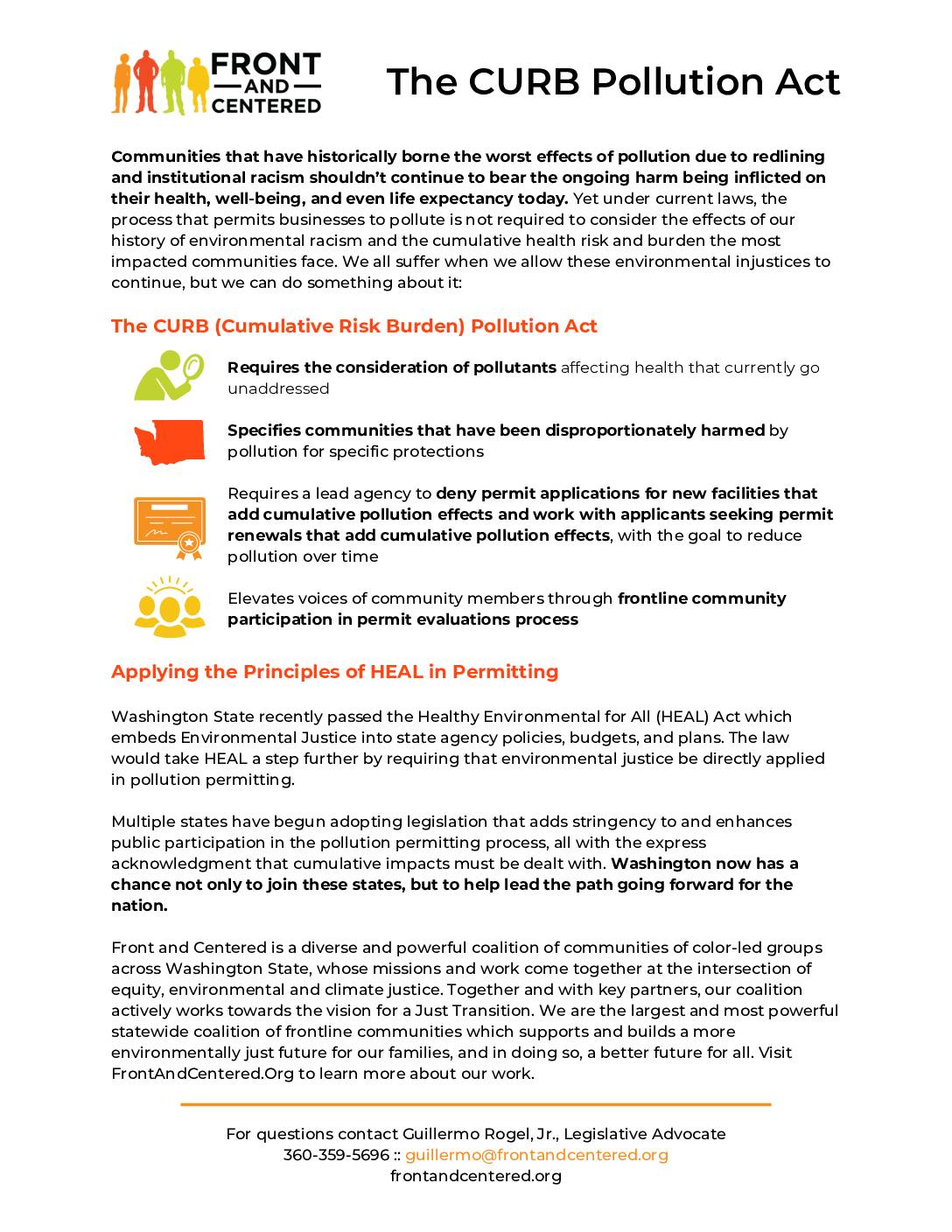
The CURB Pollution Act: Cumulative Risk Burden Pollution Act Fact Sheet
The CURB (Cumulative Risk Burden) Pollution Act is a proposed Washington State law that would require environmental justice considerations to be factored into pollution permitting decisions, with the goal of protecting communities that have historically faced disproportionate pollution burdens due to redlining and institutional racism. The act would require agencies to deny new permits that add cumulative pollution effects in overburdened communities and increase public participation in the permitting process. It builds on Washington's existing Healthy Environment for All (HEAL) Act by directly applying environmental justice principles to pollution permitting. -
 2022-03-24
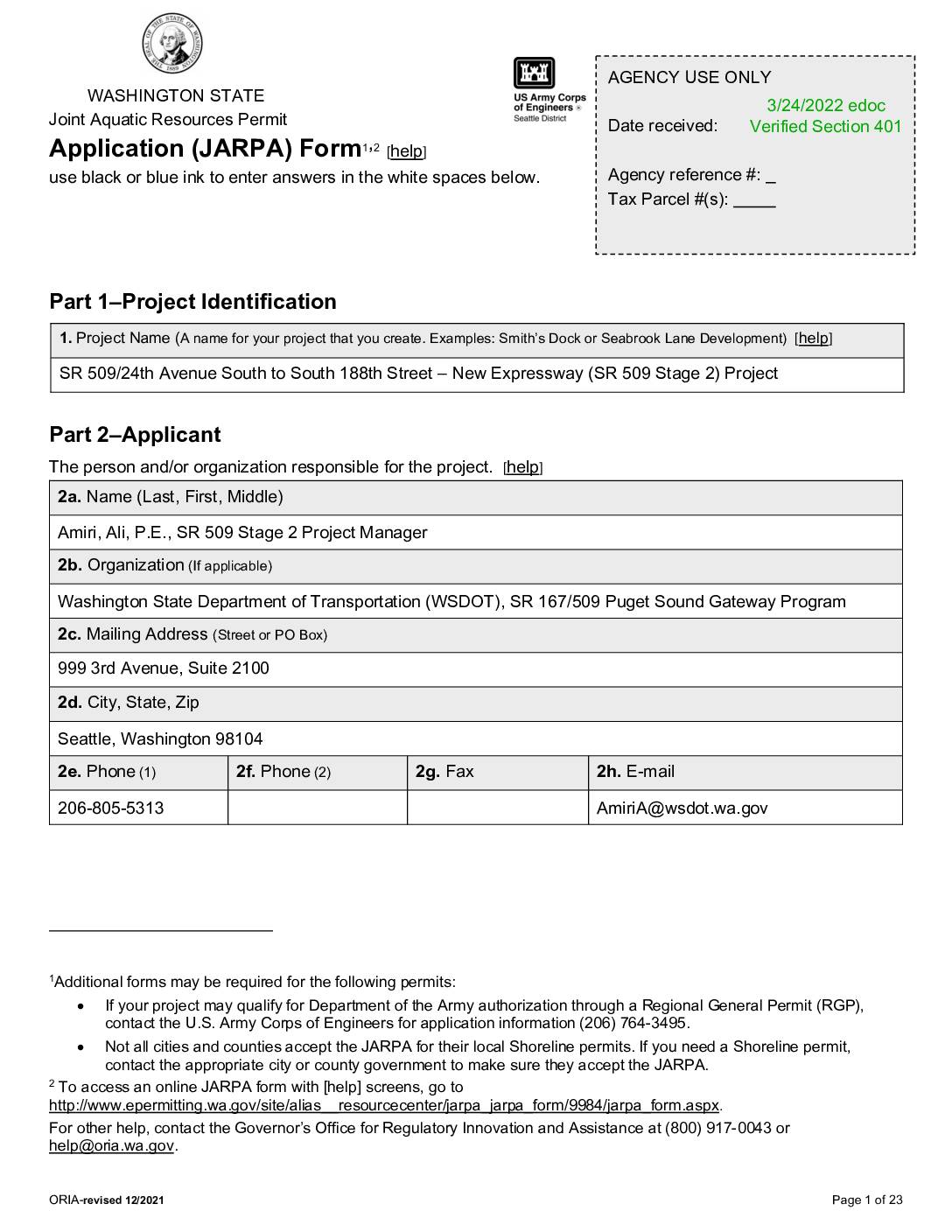
SR 509/24th Avenue South to South 188th Street – New Expressway (SR 509 Stage 2) Project JARPA
This is a Washington State Joint Aquatic Resources Permit Application (JARPA) submitted by the Washington State Department of Transportation (WSDOT) for the SR 509 Stage 2 Project, which involves constructing a new expressway between 24th Avenue South and South 188th Street in the cities of Burien, Des Moines, and SeaTac, King County. The project corridor runs through publicly owned land and spans multiple sections of townships near Sea-Tac Airport. The application was received on March 24, 2022, and covers permits related to aquatic resources affected by the highway construction. -
 2002-01-01
Third runway? Let’s be clear
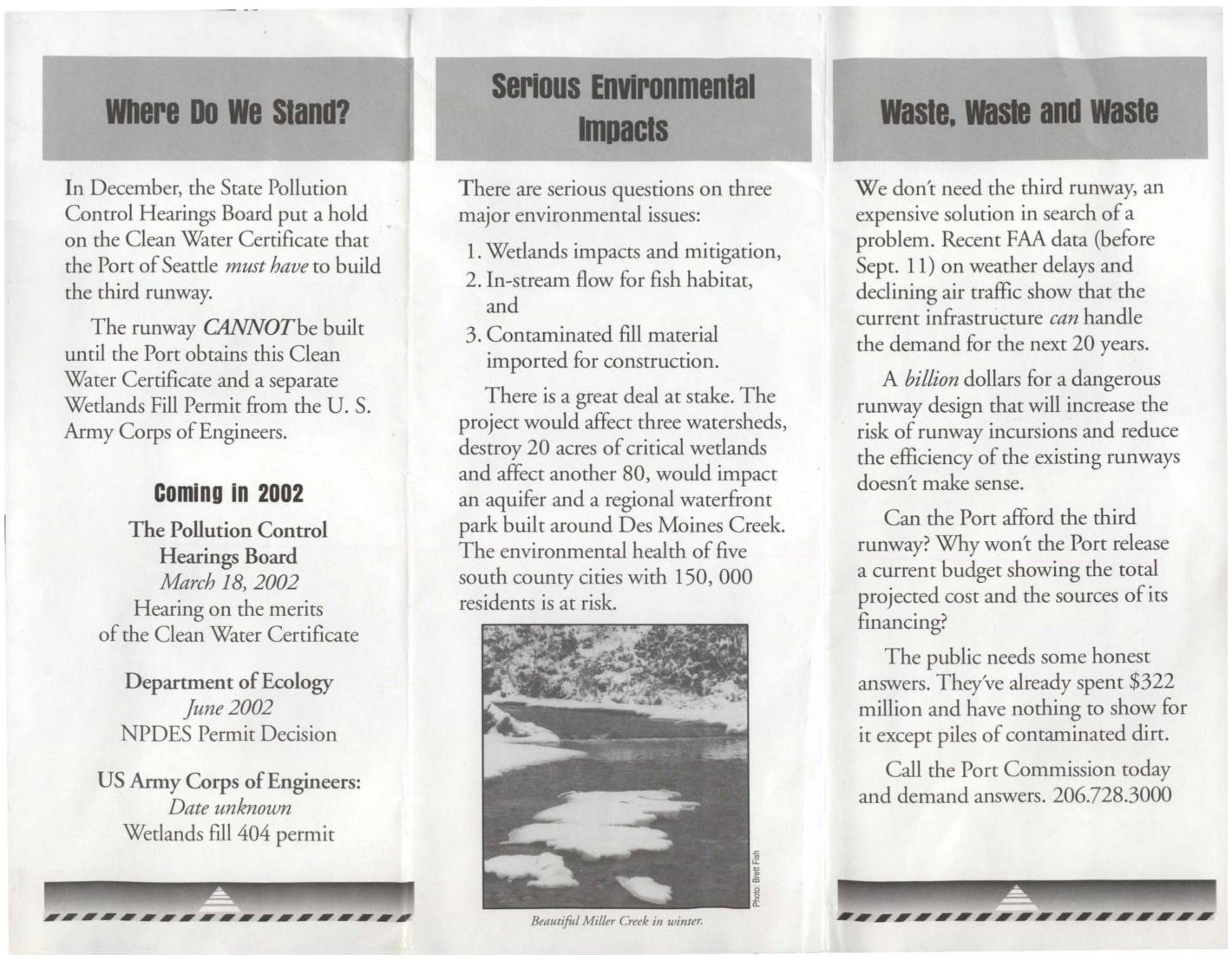
This circa-2002 community advocacy document from the Regional Commission on Airport Affairs opposes construction of a third runway at Seattle-Tacoma International Airport, arguing that the Port of Seattle lacked required environmental permits, had already spent over $300 million, and that the project posed serious risks to local wetlands, fish habitat, and watersheds affecting 150,000 south county residents. The document also highlights a controversial proposal to transport arsenic-laden fill material via a conveyor belt through Des Moines Beach Park and Des Moines Creek to the airport construction site. Residents are urged to contact Port commissioners and local city council members to halt the project. -
 1996-12-18
Section 404 Permit Application: Port Of Seattle to U.S. Army Corps of Engineers for Sea-Tac Airport Third Runway Fill Material
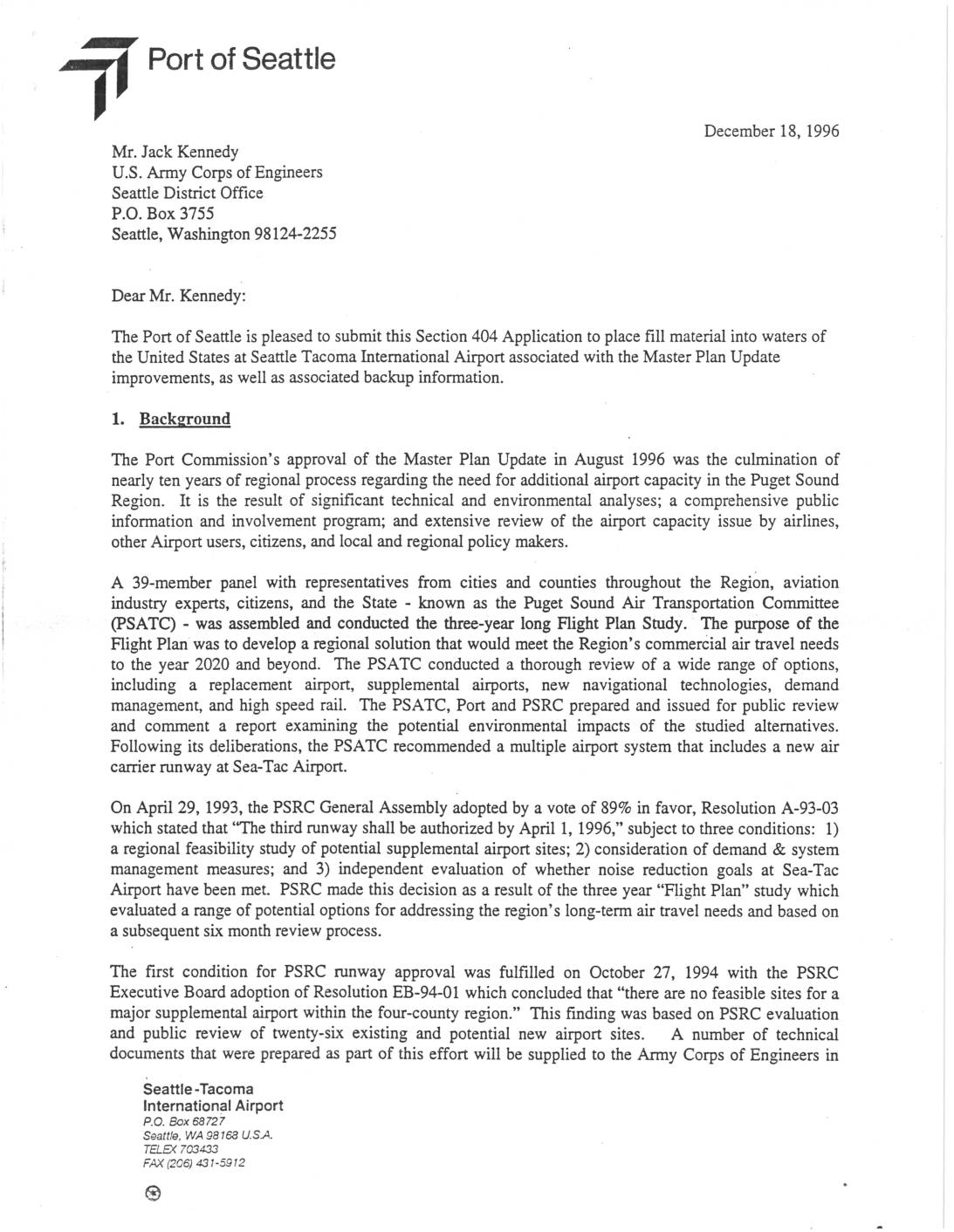
In December 1996, the Port of Seattle submitted a Section 404 permit application to the U.S. Army Corps of Engineers to place fill material in waters of the United States as part of Sea-Tac Airport's Master Plan Update, which included construction of a third parallel runway. The application explains that the new runway, located 2,500 feet west of the existing 16R/34L runway, was needed to reduce severe arrival delays during poor weather conditions, which were costing airlines approximately $42 million annually. The project was the outcome of nearly a decade of regional planning, including the PSRC's Flight Plan Study, which evaluated numerous alternatives before recommending the runway expansion as the best solution for the region's long-term air travel needs.