TagWashington Administrative Code(11)
-
 2023-06-07
Final Engineering Report: SEA IWTP Expansion
This final engineering report, prepared by Gresham Smith for the Port of Seattle, details the planned expansion of the Industrial Wastewater Treatment Plant (IWTP) at Seattle-Tacoma International Airport. Dated June 7, 2023, the report was developed in compliance with Washington Administrative Code 173-240-130 to satisfy permit requirements under Waste Discharge Permit #7810-05. It outlines technical plans for upgrading the airport's wastewater treatment infrastructure to meet current regulatory standards. -
2023-06-07
Final Engineering Report: SEA IWTP Expansion
This final engineering report, prepared by Gresham Smith for the Port of Seattle, details the planned expansion of the Industrial Wastewater Treatment Plant (IWTP) at Seattle-Tacoma International Airport. Dated June 7, 2023, the report was developed in compliance with Washington Administrative Code 173-240-130 to satisfy permit requirements under Waste Discharge Permit #7810-05. It outlines technical plans for upgrading the airport's wastewater treatment infrastructure to meet current regulatory standards. -
 2020-11-12
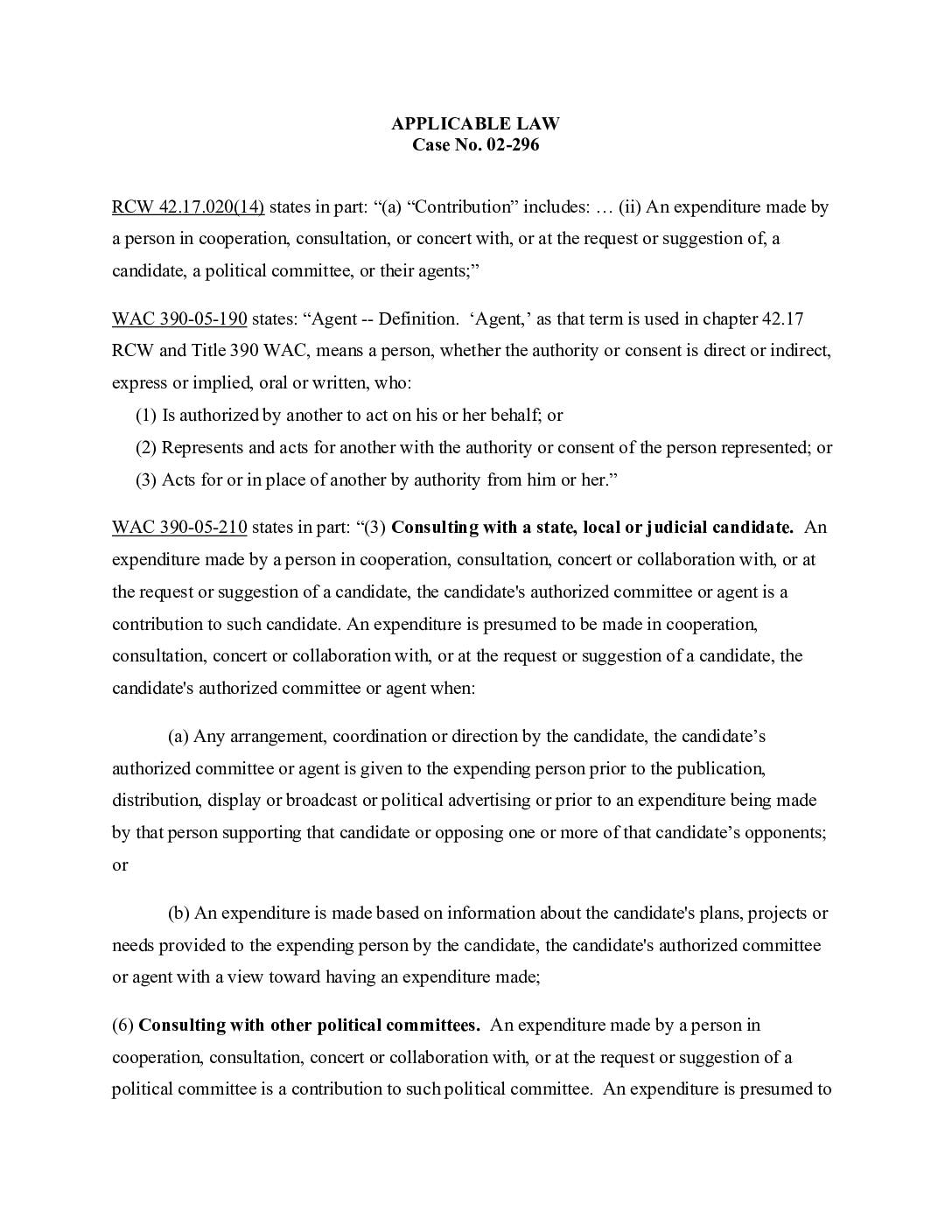
Applicable law, case no. 02-296
This document outlines Washington State campaign finance laws related to political contributions, coordination, and reporting requirements. It defines when an expenditure made by a third party counts as a campaign contribution — particularly when made in coordination with a candidate or political committee — and sets out registration and disclosure deadlines for political committees. These rules govern how campaigns and political organizations must track and report donations and spending. -
 2002-11-14
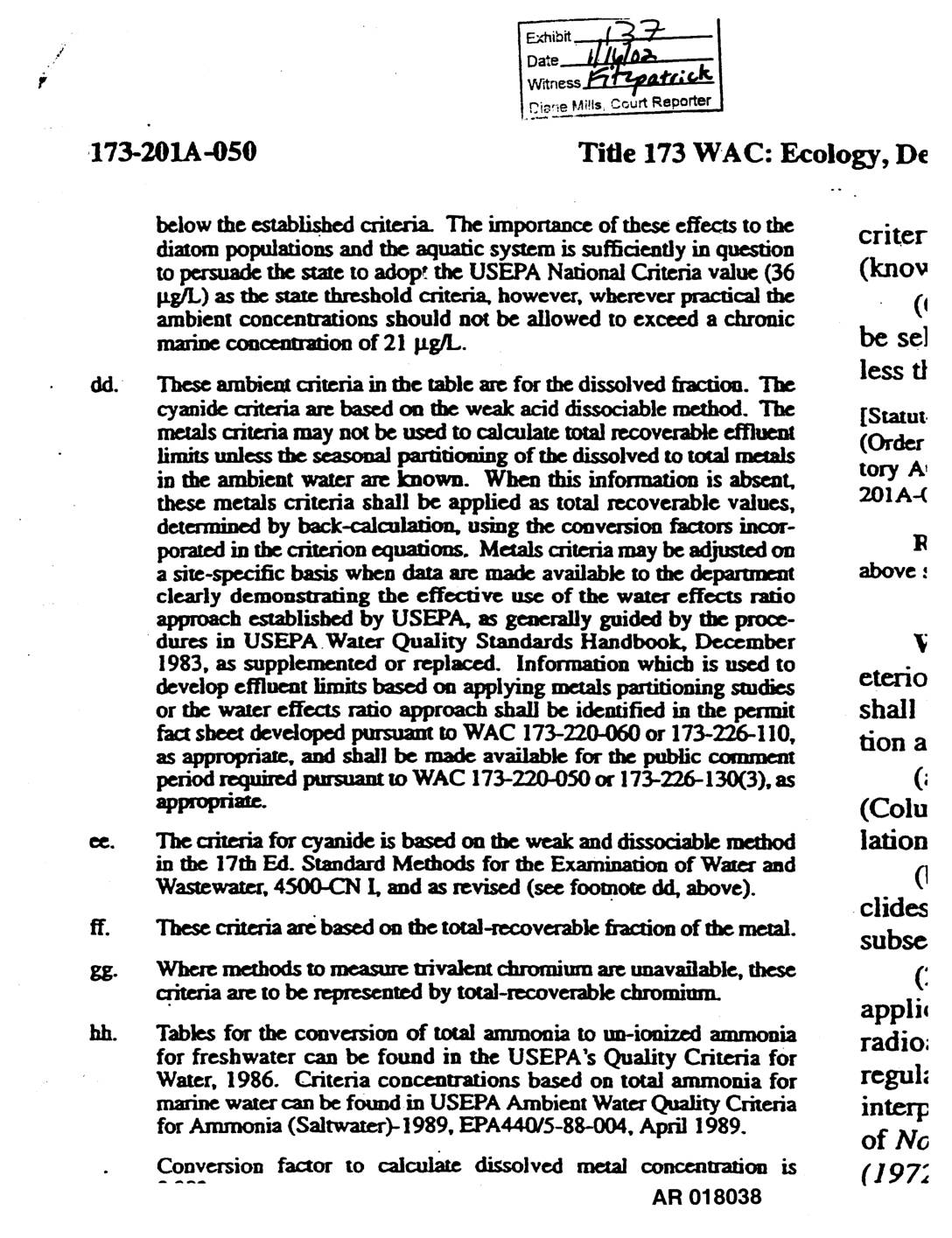
Exhibit 137: WAC 173-201A-050 Title 173 — Ecology, Department of — Ambient Water Quality Criteria Footnotes (Dissolved Metals, Cyanide, Ammonia)
Exhibit 137 (AR 018038), WAC 173-201A-050, Title 173 Washington Administrative Code, Washington State Department of Ecology ambient water quality criteria footnotes. Covers dissolved metals criteria, weak acid dissociable cyanide method (Standard Methods 4500-CN I), total recoverable effluent limits, conversion factors, water effects ratio approach (USEPA Water Quality Standards Handbook December 1983), site-specific metals adjustment, seasonal -
 2002-10-22
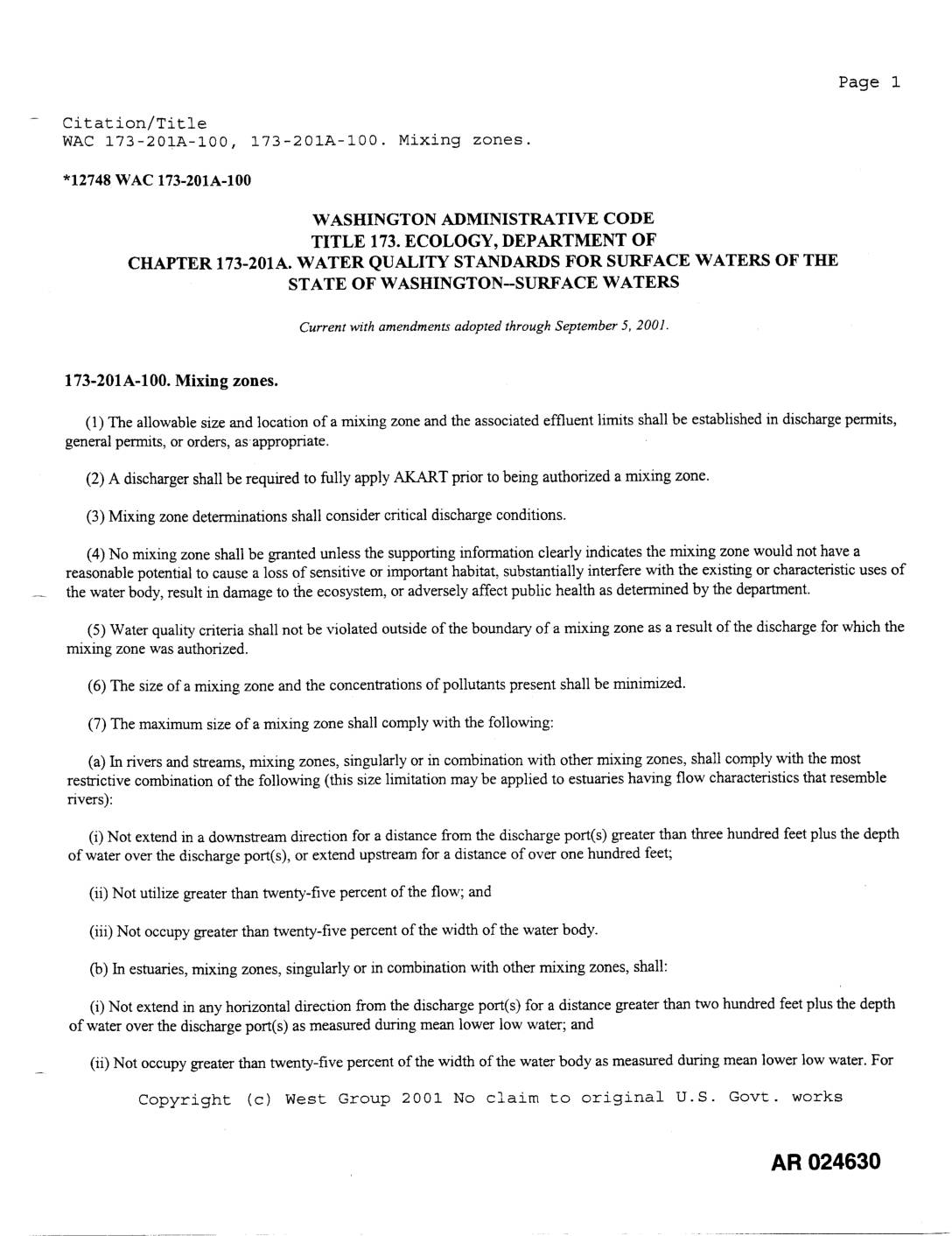
EXH AR024630: WAC 173-201A-100 Mixing Zones WA Water Quality Standards Surface Waters
This Washington State administrative regulation establishes rules for 'mixing zones,' which are designated areas in bodies of water where pollutant discharges are allowed to mix and dilute before meeting water quality standards. The rules set strict size limits for mixing zones in rivers, estuaries, lakes, and ocean waters, and require that dischargers apply all available pollution-reduction technology before a mixing zone is approved. Special provisions are also included for storm water discharges and combined sewer overflows. -
 2001-01-01
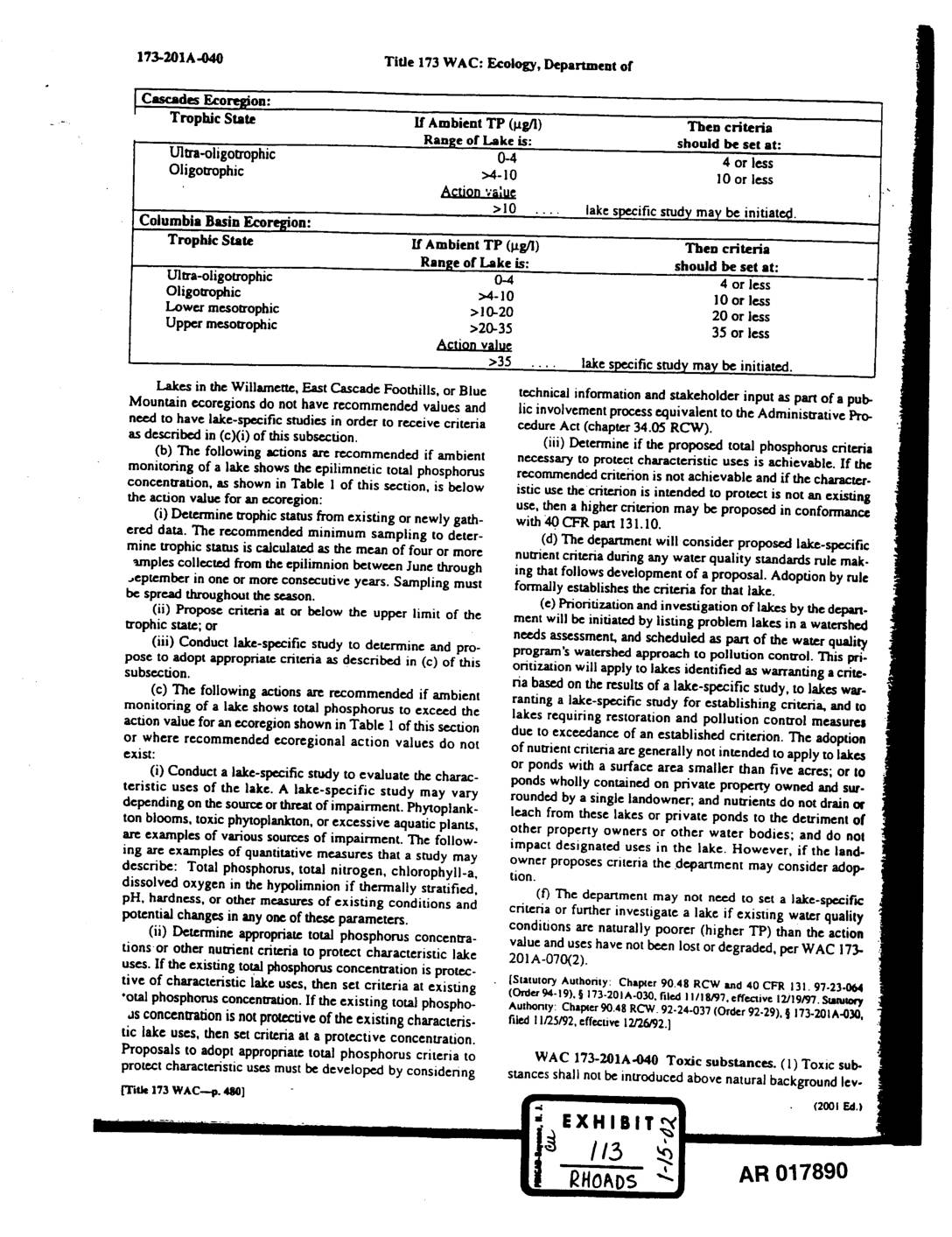
Exhibit 113: WAC 173-201A Water Quality Standards — Surface Waters, Toxic Substances and Nutrient Criteria
Washington Administrative Code (WAC) 173-201A sections 030, 040, 050, and 060 covering water quality standards for surface waters in Washington State, published by the Washington State Department of Ecology. Exhibit 113 (AR017890–AR017892) includes: lake total phosphorus (TP) nutrient criteria by ecoregion (Cascades, Columbia Basin, Willamette, East Cascade Foothills, Blue Mountain) with trophic state classifications (ultra-oligotrophic, -
 1997-11-18
EXH AR017515: Washington Administrative Code Chapter 173-201A — Water Quality Standards for Surface Waters of the State of Washington
WAC Chapter 173-201A establishes water quality standards for surface waters of the State of Washington under RCW 90.48, including definitions for AKART, background conditions, best management practices (BMP), fecal coliform, mixing zones, pH, turbidity, wetlands, nonpoint source pollution, and trophic state. Covers general water use and criteria classes (Class AA extraordinary), dissolved oxygen standards, fecal -
Washington Administrative Code WAC 173-60-050 Noise Exemptions
Exemptions. (1) The following shall be exempt from the provisions of WAC 173-60-040 between the hours of 7:00 a.m. and 10:00 p.m.: (a) Sounds originating from residential property relating to temporary projects for the maintenance or repair of homes, grounds and appurtenances. (b) Sounds created by the discharge of firearms on authorized shooting ranges. (c) -
 1992-12-26
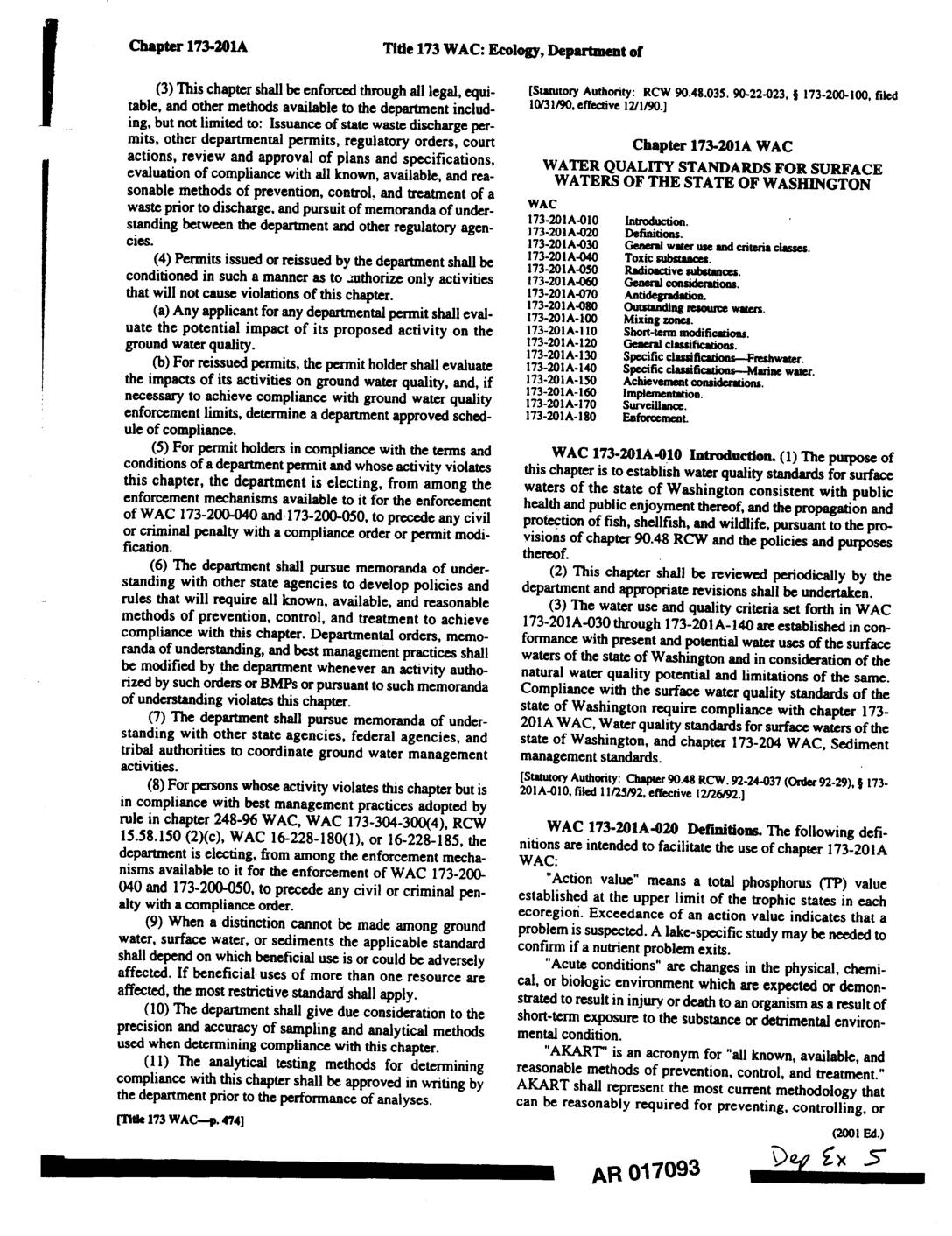
EXH AR017093: Water Quality Standards for Surface Waters of the State of Washington — WAC Chapter 173-201A
Washington Administrative Code (WAC) Chapter 173-201A, Water Quality Standards for Surface Waters of the State of Washington, issued by the Washington State Department of Ecology under RCW 90.48. Covers introduction (WAC 173-201A-010) and definitions (WAC 173-201A-020) including AKART, background conditions, best management practices, carcinogen, chronic/acute conditions, critical condition (7Q10 flow), ecoregions, fecal coliform, hardness, mixing -
 1992-01-23
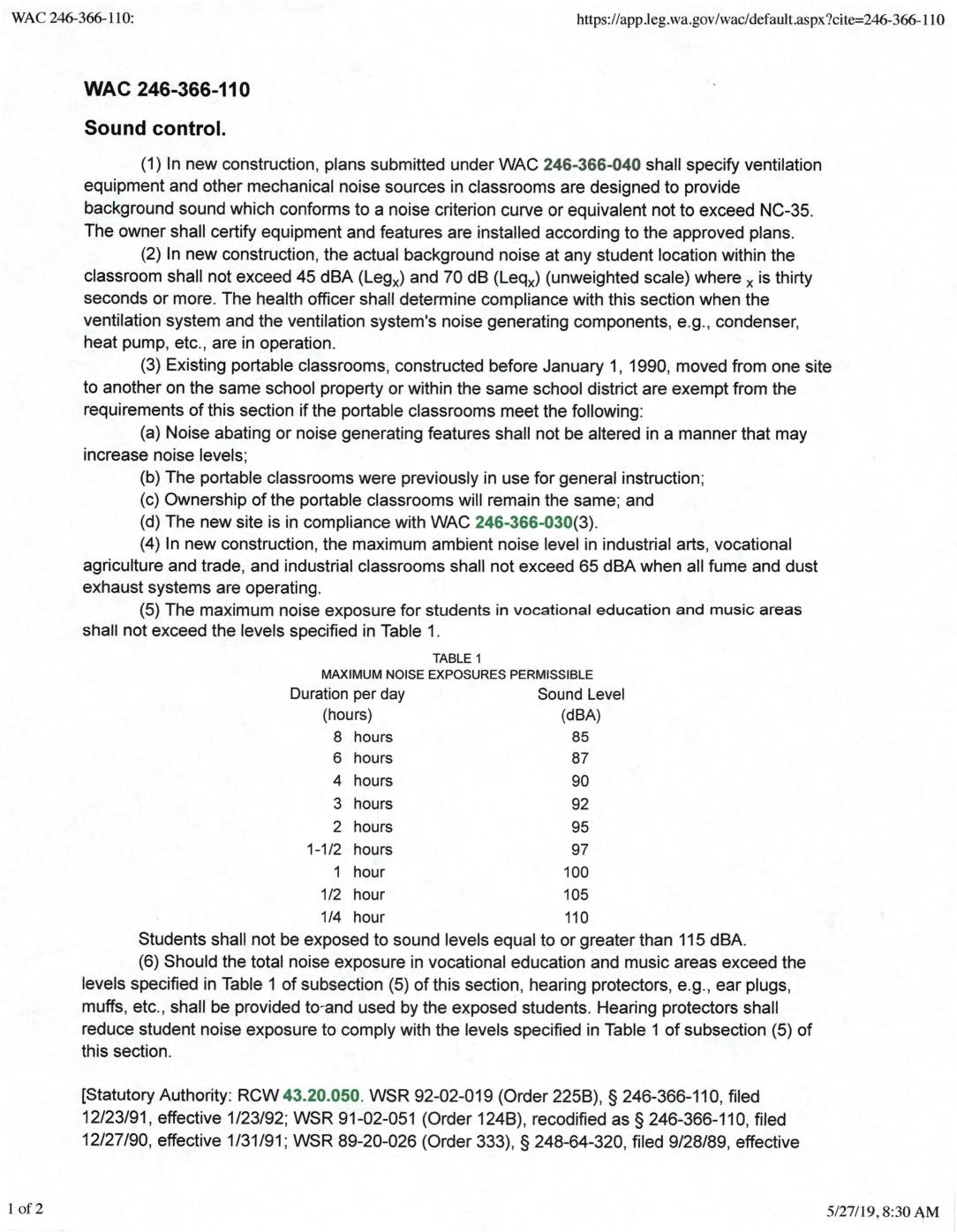
WAC 246-366-110: Sound control
WAC 246-366-110 sets sound control standards for Washington State school classrooms, requiring that background noise in new construction not exceed NC-35 on the noise criterion curve, with actual noise levels capped at 45 dBA during normal operation. Industrial and vocational classrooms have separate limits, with ambient noise not to exceed 65 dBA when exhaust systems are running. In music and vocational education areas, student noise exposure is strictly regulated by duration, and hearing protection must be provided if exposure limits are exceeded.