TagJoe Sims(7)
-
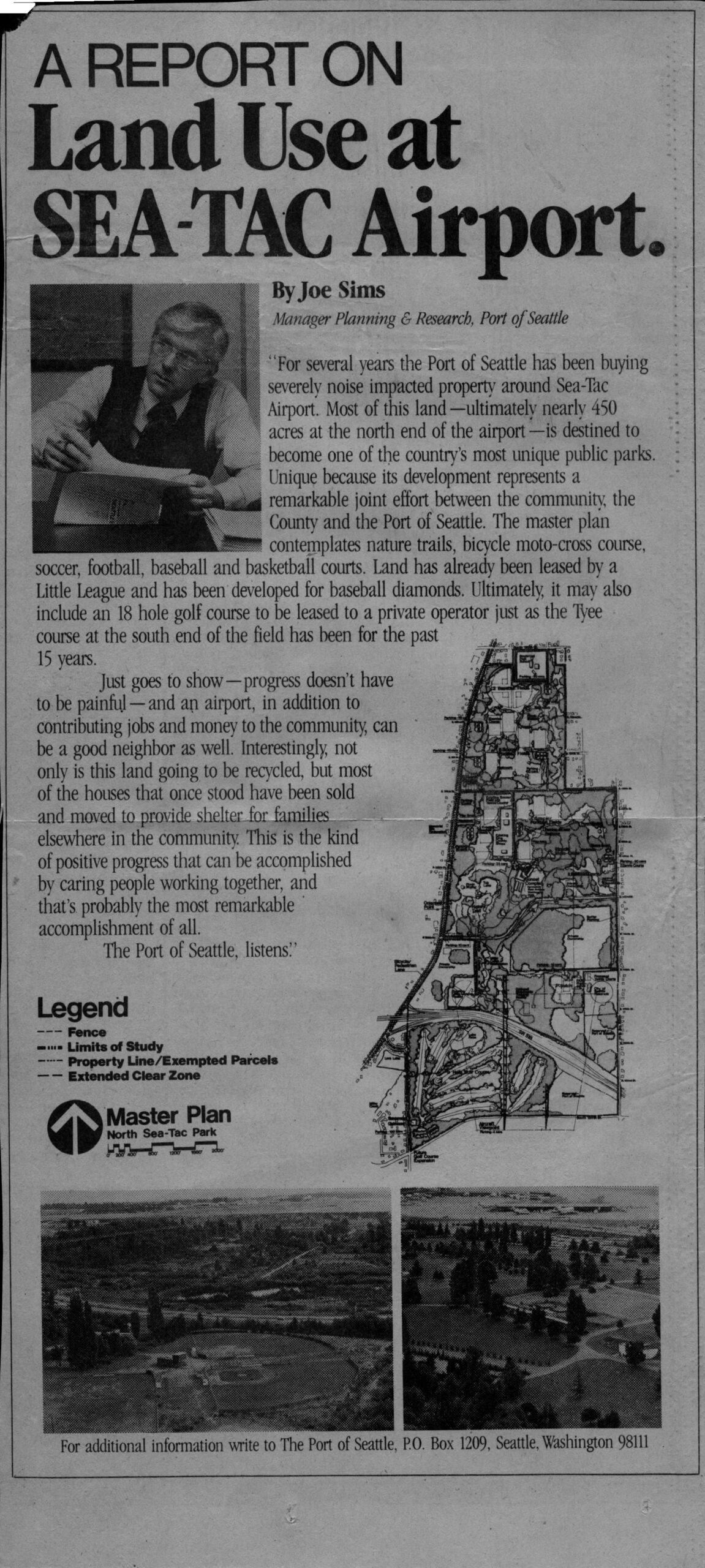
Port Of Seattle Advertisement: Joe Sims Report on Land Use and North Sea-Tac Park
An article by Joe Sims, Manager of Planning & Research for the Port of Seattle, reporting on the Port's acquisition of noise-impacted properties around Sea-Tac Airport, with plans to develop nearly 450 acres at the airport's north end into a public park (North Sea-Tac Park) featuring nature trails, sports courts, a bicycle moto-cross course, and a possible 18-hole golf course. The piece includes a master plan map of North Sea-Tac Park and aerial photographs of the site, with contact information directing readers to The Port of Seattle, P.O. Box 1209, Seattle, Washington 98111. -
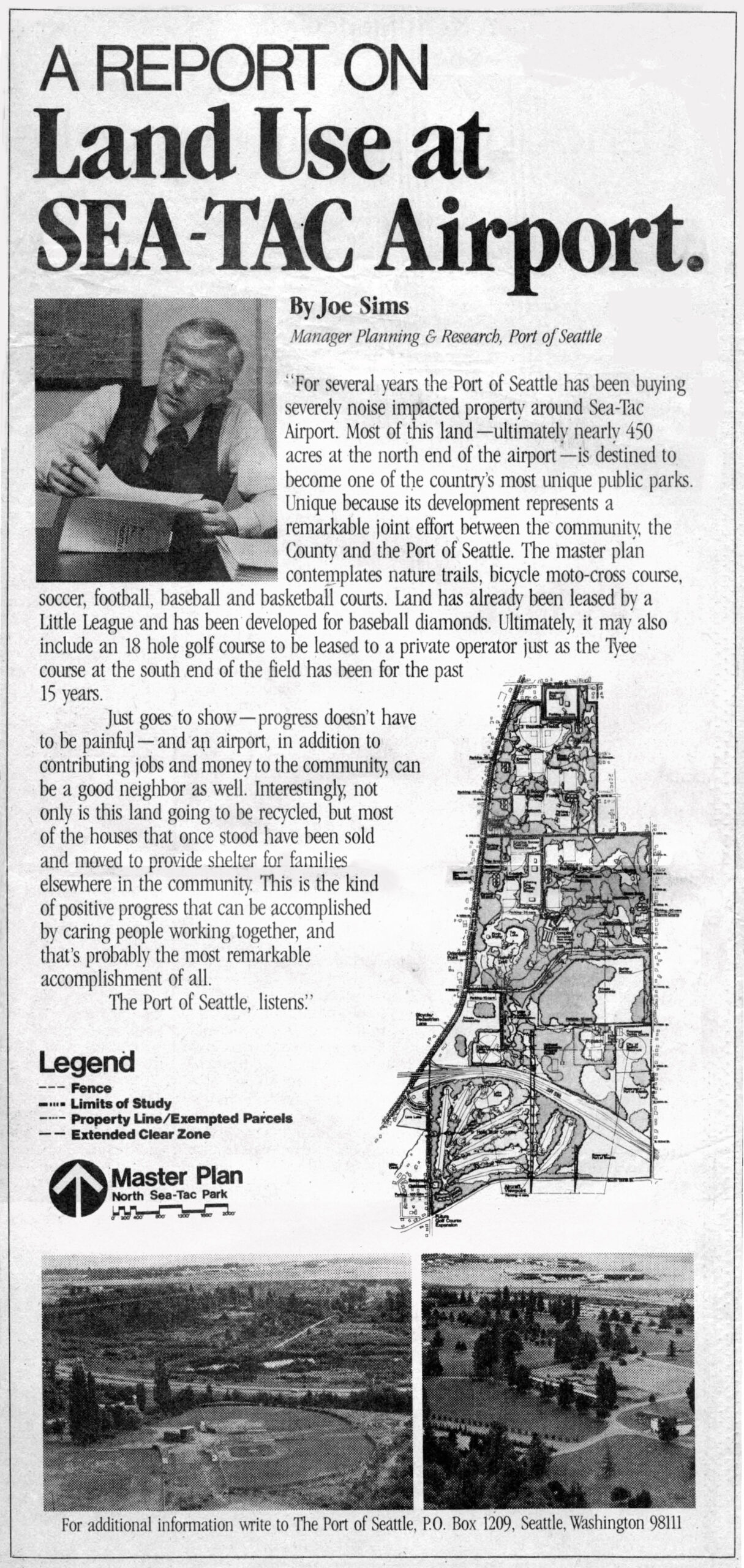
A Report On Land Use at Sea-Tac Airport by Joe Sims
A report authored by Joe Sims, Manager of Planning & Research for the Port of Seattle, describing the Port's purchase of noise-impacted properties around Sea-Tac Airport and plans to develop nearly 450 acres at the north end of the airport into North Sea-Tac Park, including nature trails, sports courts, baseball diamonds, and a possible 18-hole golf course. The article includes a master plan map of North Sea-Tac Park and two aerial photographs of the developing park grounds. -
1991-08-24
Port of Seattle advertisement in Highline Times by Joe Sims re. North SeaTac Park Master Plan
By Joe Sims Manager Planning & Research, Port of Seattle“For several years the Port of Seattle has been buying severely noise impacted property around Sea-Tac Airport. Most of this land -ultimately nearly 450 acres at the north end of the airport -is destined to become one of the country’s most unique public parks. Unique, because -
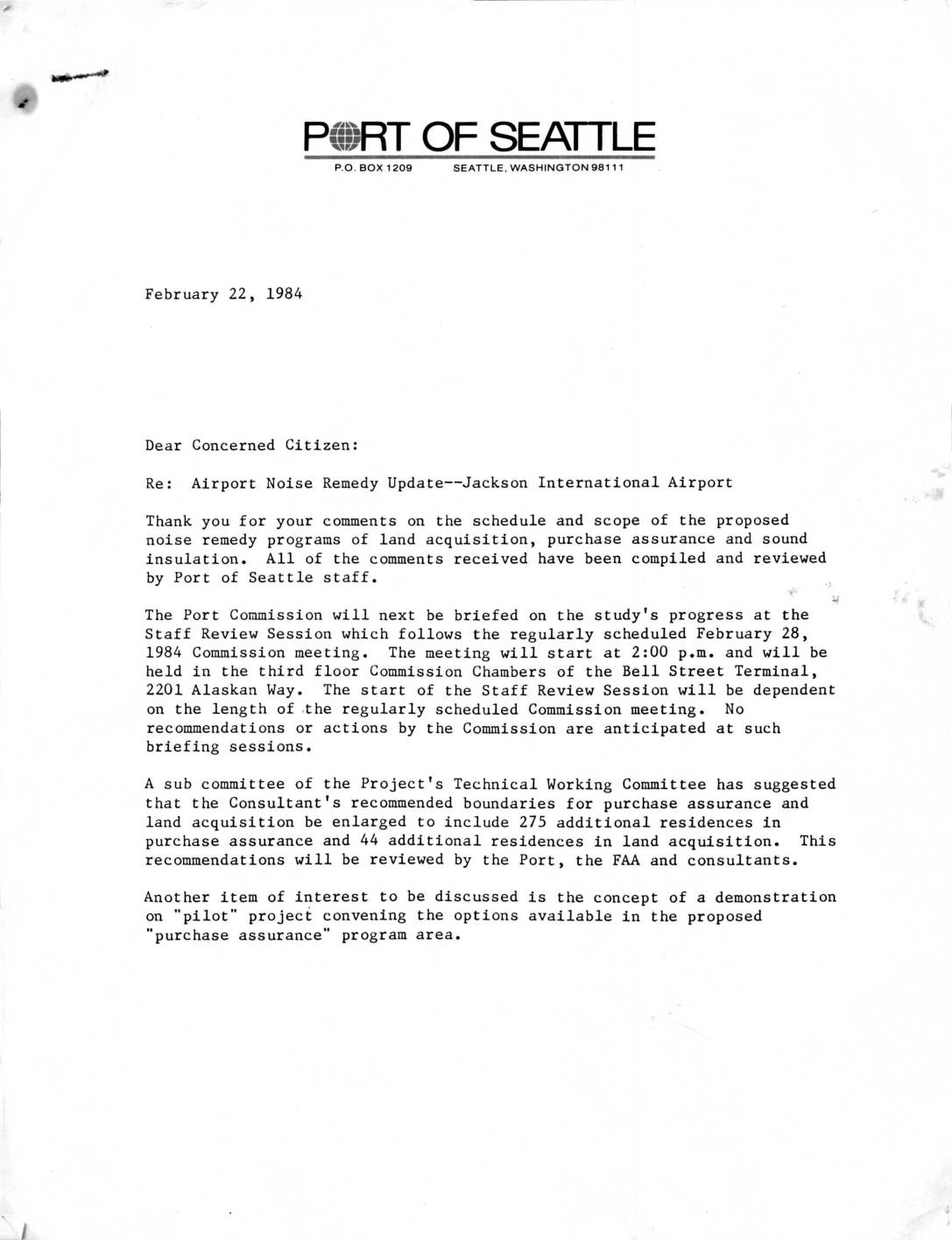 1984-02-22
Airport Noise Remedy Update–Jackson International Airport
In February 1984, the Port of Seattle sent an update to concerned citizens about proposed noise remedy programs near Jackson International Airport (Sea-Tac), including land acquisition, purchase assurance, and sound insulation initiatives. A subcommittee recommended expanding the program boundaries to cover 275 additional residences under purchase assurance and 44 more under land acquisition, with criteria addressing airport-related development buffers and neighborhood continuity. The Port Commission was scheduled to review these recommendations at a Staff Review Session on February 28, 1984. -
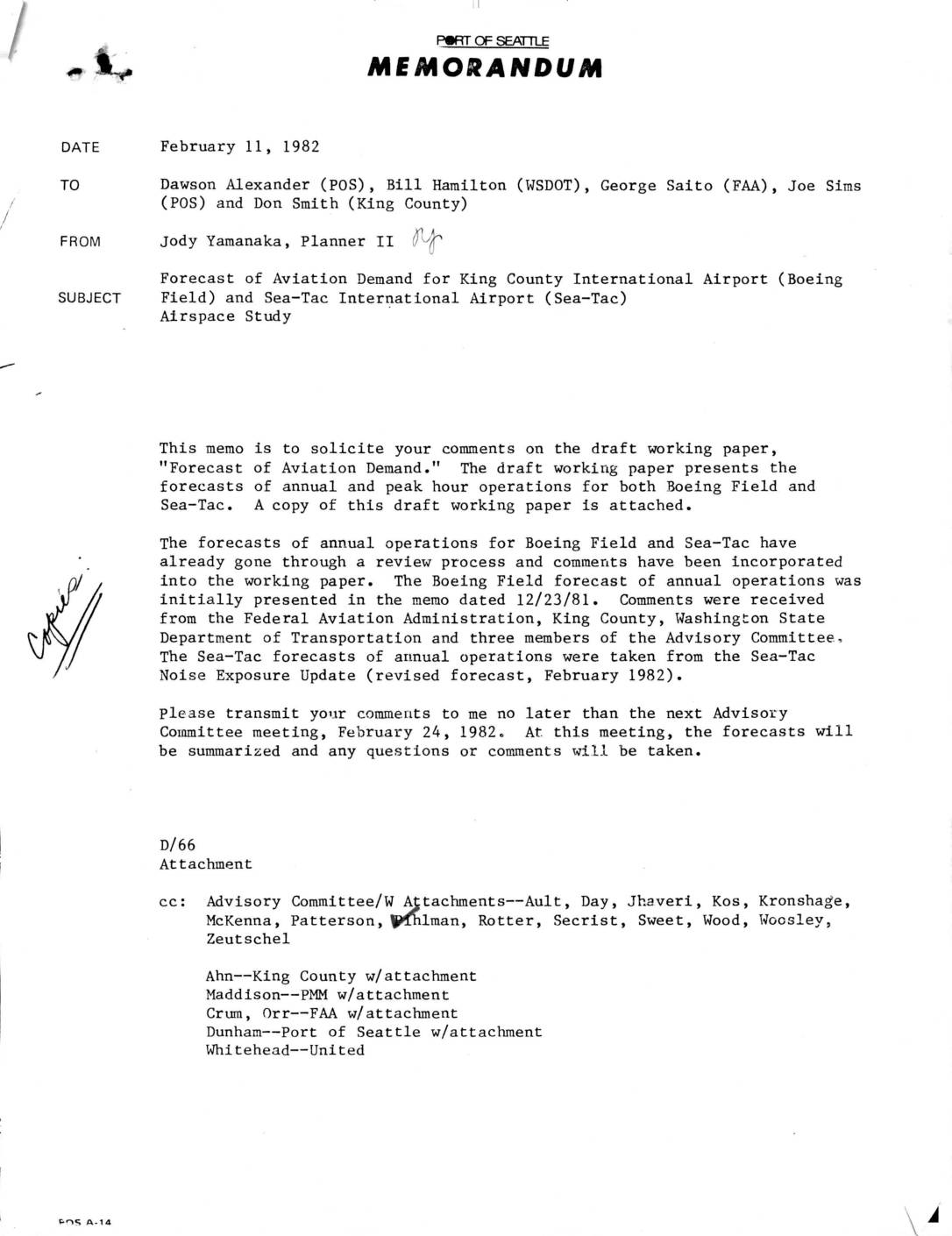 1982-02-11
Port Of Seattle Memorandum: Forecast of Aviation Demand for King County International Airport (Boeing Field) and Sea-Tac International Airport — Airspace Study
A 1982 Port of Seattle memorandum presents draft forecasts of aviation demand for Sea-Tac International Airport and Boeing Field, projecting aircraft operations through the year 2000. The forecasts cover annual take-offs and landings as well as peak-hour traffic under both visual and instrument flight conditions, with Sea-Tac's total annual operations expected to grow from roughly 214,000 in 1980 to over 261,000 by 2000. The document was circulated to FAA, King County, and Washington State DOT representatives for review as part of an airspace capacity and noise planning study. -
 1981-10-16
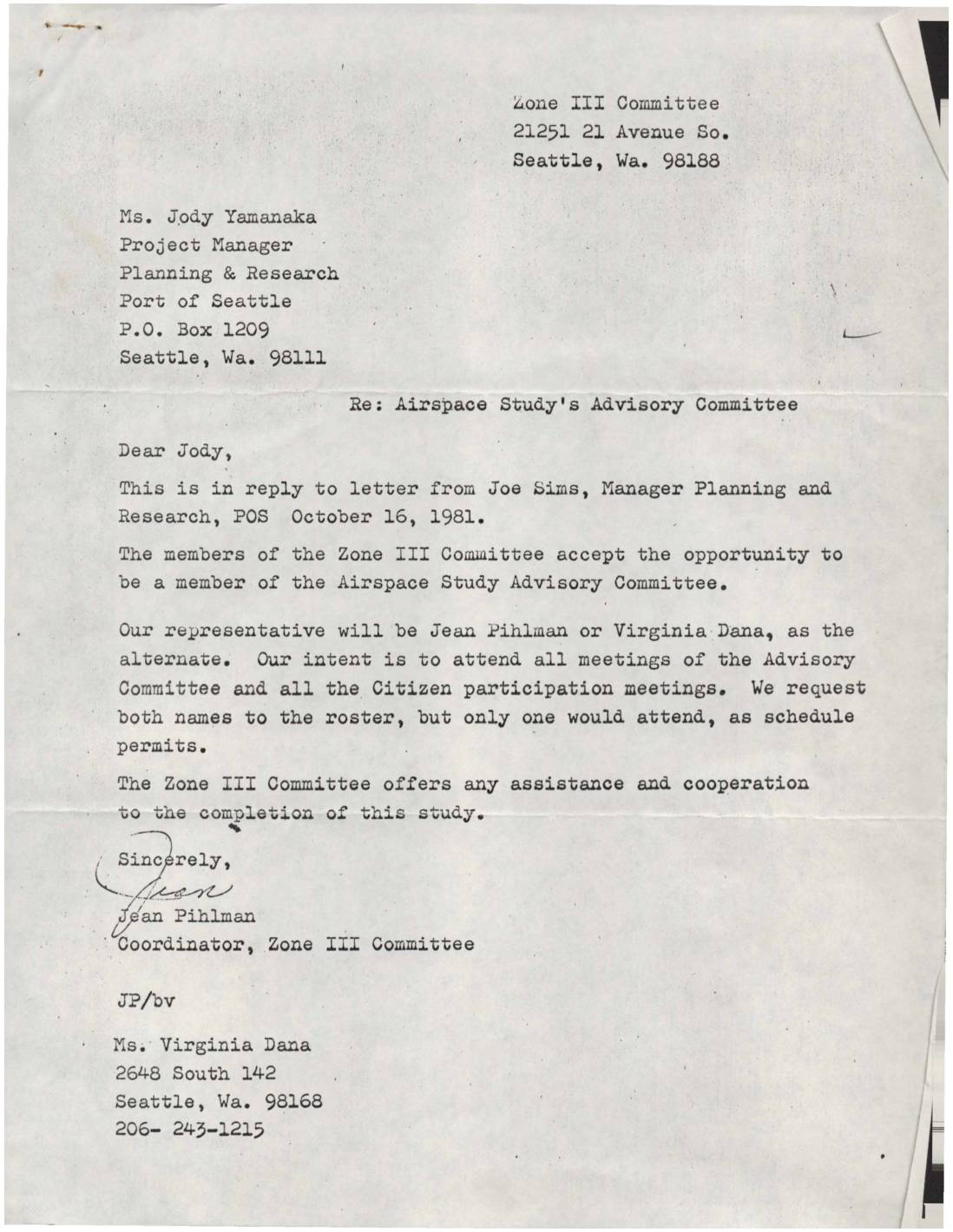
Zone III Committee Response to Airspace Study Advisory Committee Invitation
Letter from Jean Pihlman, Coordinator of Zone III Committee, accepting invitation to participate in the Port of Seattle’s Airspace Study Advisory Committee. The committee designates Jean Pihlman as representative and Virginia Dana as alternate, offering cooperation for the study completion. -
 1979-01-01
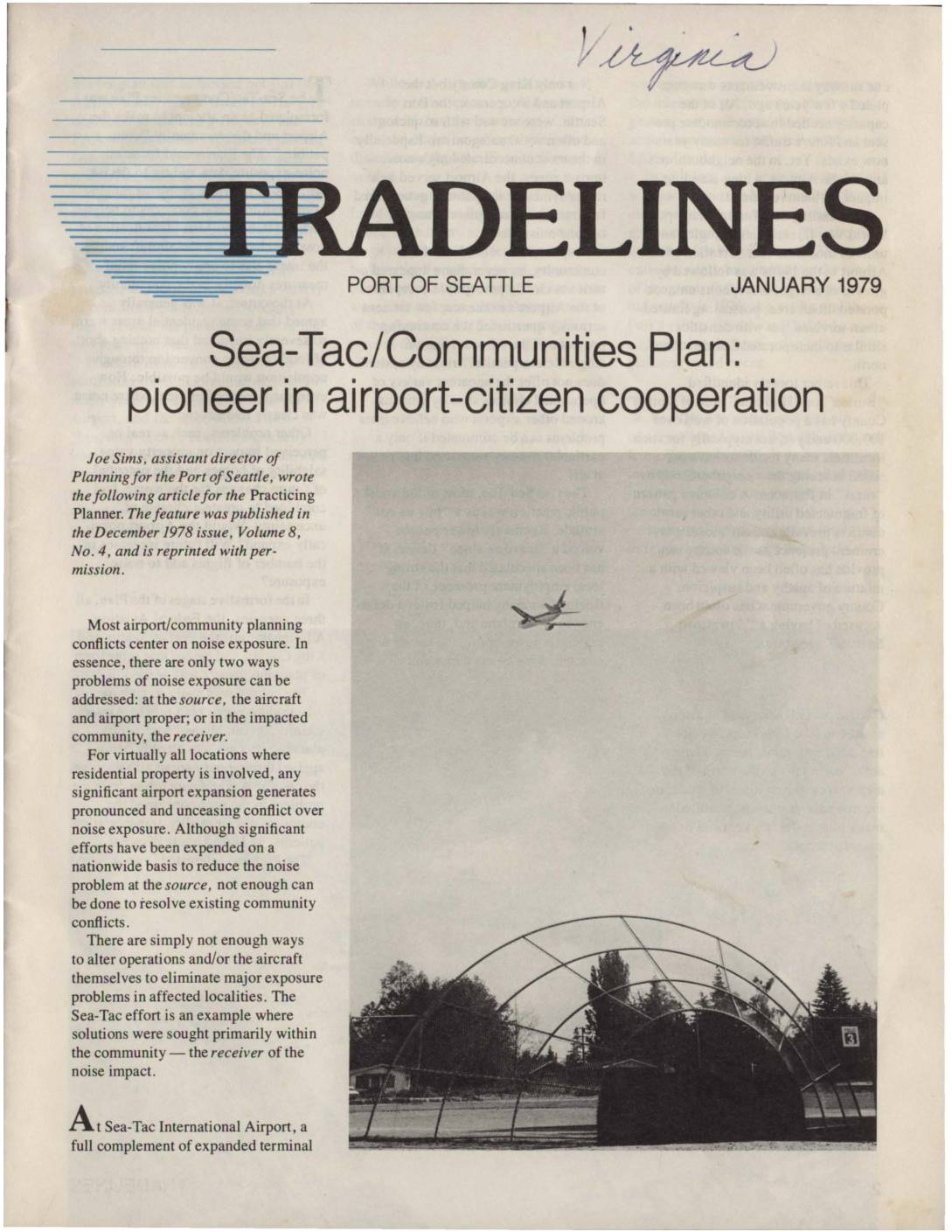
Sea-Tac/Communities Plan: Pioneer in Airport-Citizen Cooperation
This 1979 article from the Port of Seattle's Tradelines newsletter describes the Sea-Tac/Communities Plan, a pioneering cooperative effort between the Port of Seattle, King County, and the FAA to address aircraft noise impacts on neighborhoods surrounding Sea-Tac International Airport. Rather than focusing solely on reducing noise at its source, the plan targeted the affected communities directly through measures such as home acquisitions in severely impacted areas, 'purchase guarantees' for moderately impacted zones, and residential insulation cost-sharing programs. Adopted in 1976, the plan is presented as an innovative model for airport-community compatibility planning, though the article acknowledges it represents only a partial solution to the broader challenges airports and their neighboring communities face.