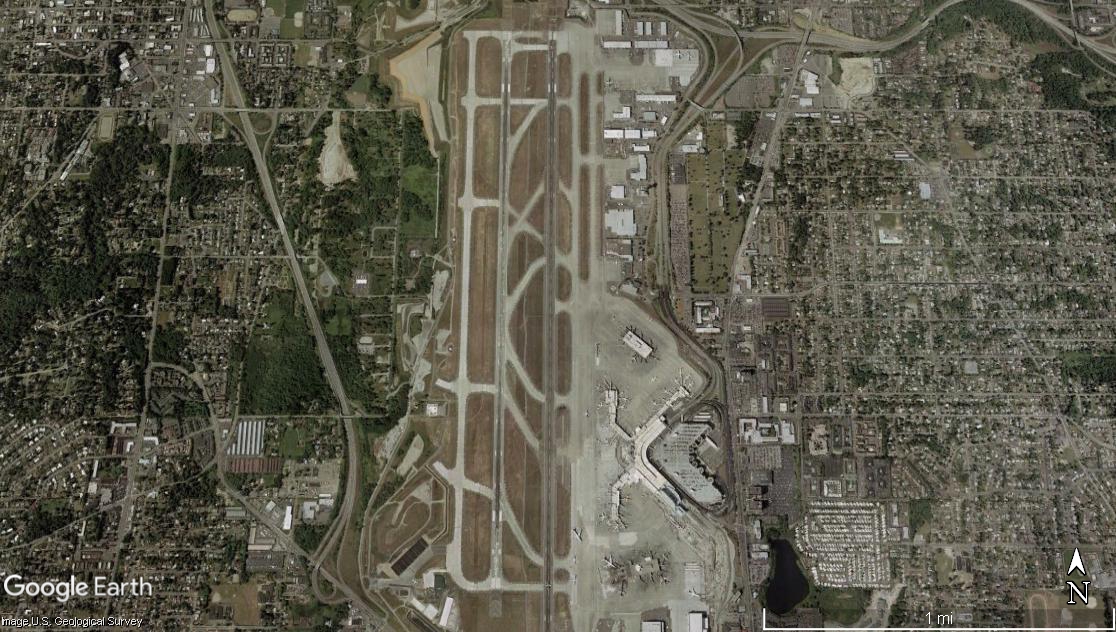
In 1996, the Puget Sound Regional Council (PSRC) gave final approval to the Port of Seattle’s proposal to build a Third Runway. The airport was originally sited on a small plateau about 430 feet above sea level, which ended immediately at the west side of what is now Taxiway Tango. The basic struggle in airport
Intro Sea-Tac is a Category IIIb certified airfield, allowing operations in all but the worst conditions, 24/7/365. There are three runways in the modern configuration beginning in 1956: Position Year Built North End/South End Length (feet) 1 East 1961 16L 34R 11,901 2 Center 1970 16C 34C 9,426 3 West 2008 16R 34L 8,500 Runways
By Steve Wilhelm – Staff Writer, Puget Sound Business Journal Dec 29, 2015 An Alaska Airlines passenger jet landed on Seattle-Tacoma International Airport’s central taxiway – not the runway – on Dec. 19, the fourth time a pilot has made the error in the history of the airport. Nobody was hurt in the 8:33 a.m.
By Steve Wilhelm – Staff Writer, Puget Sound Business Journal Dec 31, 2015 For 16 years pilots have mistaken Seattle-Tacoma International Airport’s most prominent taxiway for a runway, landing on it four times and narrowly avoiding landing on three other occasions. Most recently an Alaska Airlines (NYSE: ALK) pilot landed a Boeing 737 on the