TagBarbara Hinkle(9)
-
2000-07-24
Airport-expansion official jumps to other side
By George Erb Jul 23, 2000 Barbara Hinkle’s new job is the talk of five suburban cities in South King County. Hinkle was a senior environmental program manager at the Port of Seattle, where she spent 10 years overseeing environmental studies and permit applications for building a third runway at Seattle-Tacoma International Airport. But in early -
 1999-07-13
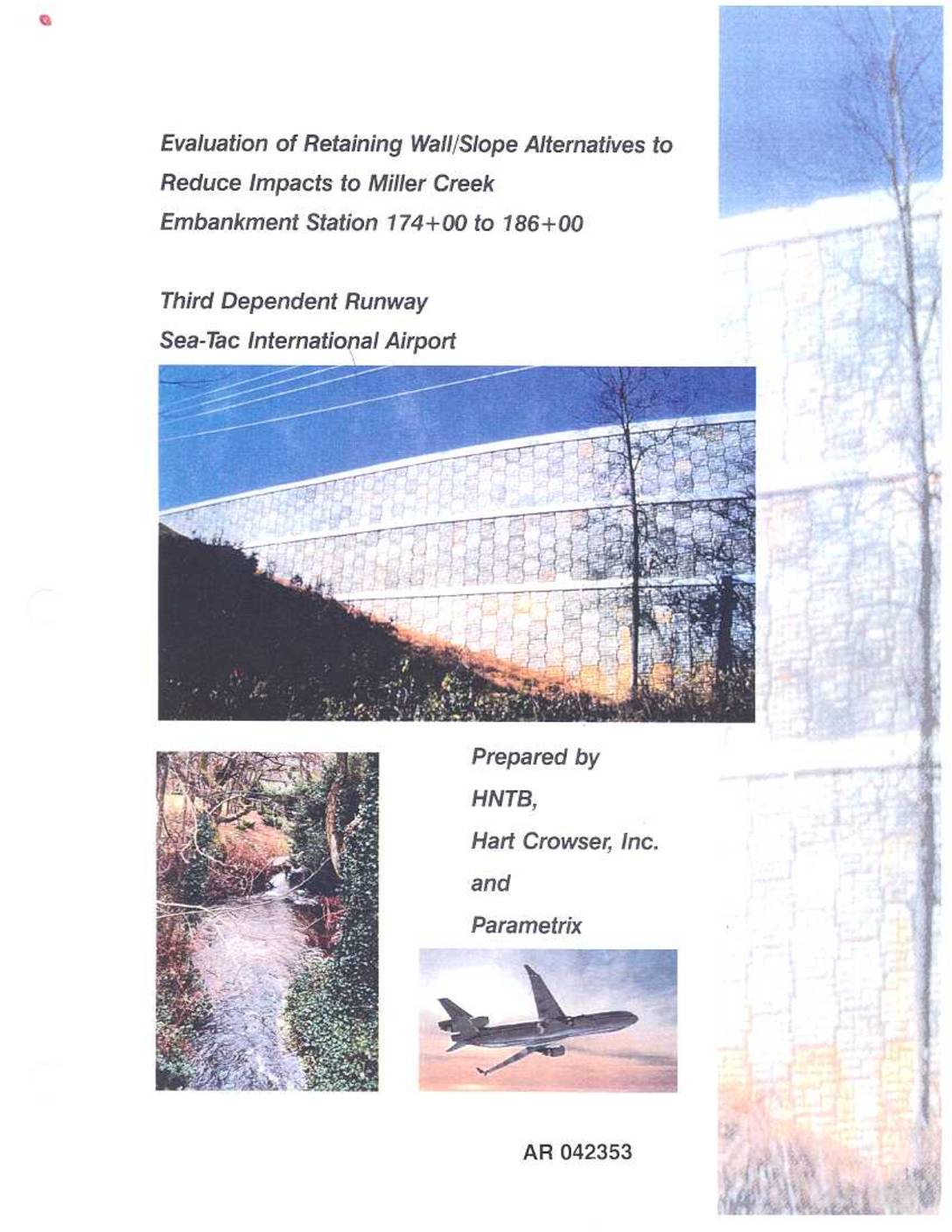
EXH AR042353: Evaluation of Retaining Wall/Slope Alternatives to Reduce Impacts to Miller Creek, Embankment Station 174+00 to 186+00, Third Runway, Sea-Tac International Airport
Report AR042353 prepared by HNTB, Hart Crowser Inc., and Parametrix for Port Of Seattle Aviation Program Management Group, evaluating retaining wall and slope alternatives to reduce impacts to Miller Creek at embankment station 174+00 to 186+00 for the Third Dependent Runway project at Sea-Tac International Airport. Transmitted July 13, 1999 by Barbara Hinkle to Tom -
 1999-07-09
EXH AR042613: Third Runway Project, Borrow Areas 1, 3, and 4 — Projected Impacts to Wetlands
Memorandum dated July 9, 1999 from Reese P. Hastings and Michael J. Bailey, P.E. (Hart Crowser, Inc.) to Barbara Hinkle, Port Of Seattle, regarding Third Runway Project Borrow Areas 1, 3, and 4 and projected impacts to wetlands. Document J-4978-02 quantifies potential wetland resource impacts from excavation of borrow areas providing 7.9 million bank cubic -
 1998-12-23
EXH AR041907: Memorandum — Summary of Hydrologic Issues, Borrow Areas 1, 3, and 4, Third Runway Project, Sea-Tac Airport
Hart Crowser memorandum (J-4978-03) dated December 23, 1998, from Michael Bailey P.E. and Michael Kenrick P.E. to Barbara Hinkle, Port Of Seattle, addressing hydrologic impacts of Borrow Areas 1, 3, and 4 for the Third Runway Project at Seattle-Tacoma International Airport. Discusses impacts on baseflow to Des Moines Creek and riparian wetlands, including runoff reduction, -
 1998-12-09
EXH AR041914: Hart Crowser Letter to Port Of Seattle — Sea-Tac Third Runway Aquifer Compaction Analysis
Hart Crowser letter (project J-4978-03) to Barbara Hinkle, Health Safety & Environmental Services, Port Of Seattle, dated December 9, 1998, addressing aquifer compaction beneath the proposed Third Runway embankment at Sea-Tac Airport in response to U.S. Army Corps of Engineers questions on hydrogeologic impacts. Analysis covers the Shallow Aquifer (contributing to Miller Creek base flow), -
 1998-03-06
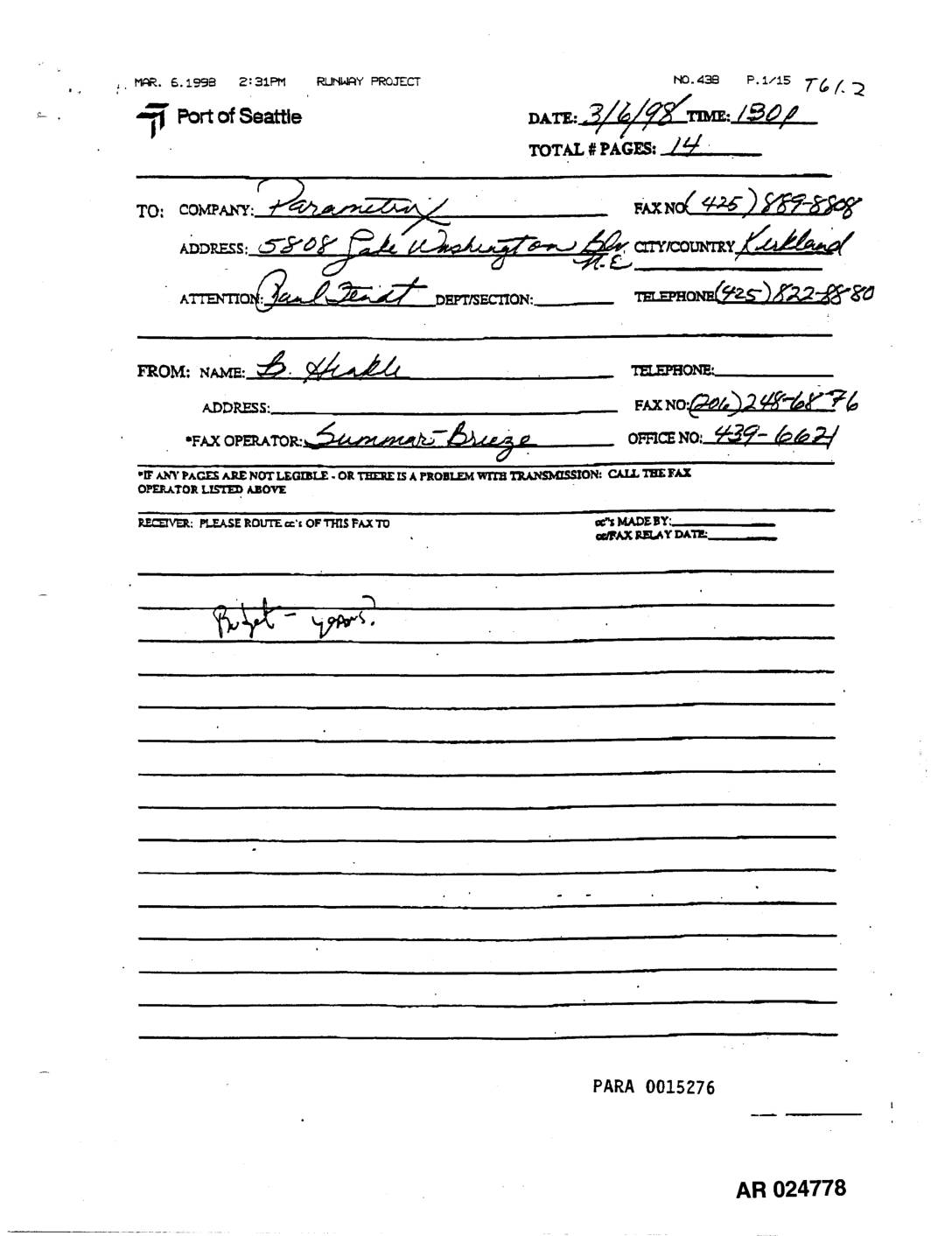
EXH AR024778: Fax Transmittal — Third Runway Water Quality Compliance Services Scope & Cost Estimate
A March 1998 fax exchange between the Port of Seattle and Herrera Environmental Consultants concerns the scope of work and cost estimates for Third Runway Water Quality Compliance Services. Carlos Herrera of Herrera Environmental sent documents to Port of Seattle contacts Barbara Hinkle and Kym Mattress, arguing that routine project water quality monitoring should be Herrera's responsibility, covering both compliance and BMP performance monitoring. Herrera noted he believed this approach would be most credible to the Washington Department of Ecology and neighboring airport communities, and requested review and discussion of the cost estimates to potentially reduce the budget. -
 1996-12-18
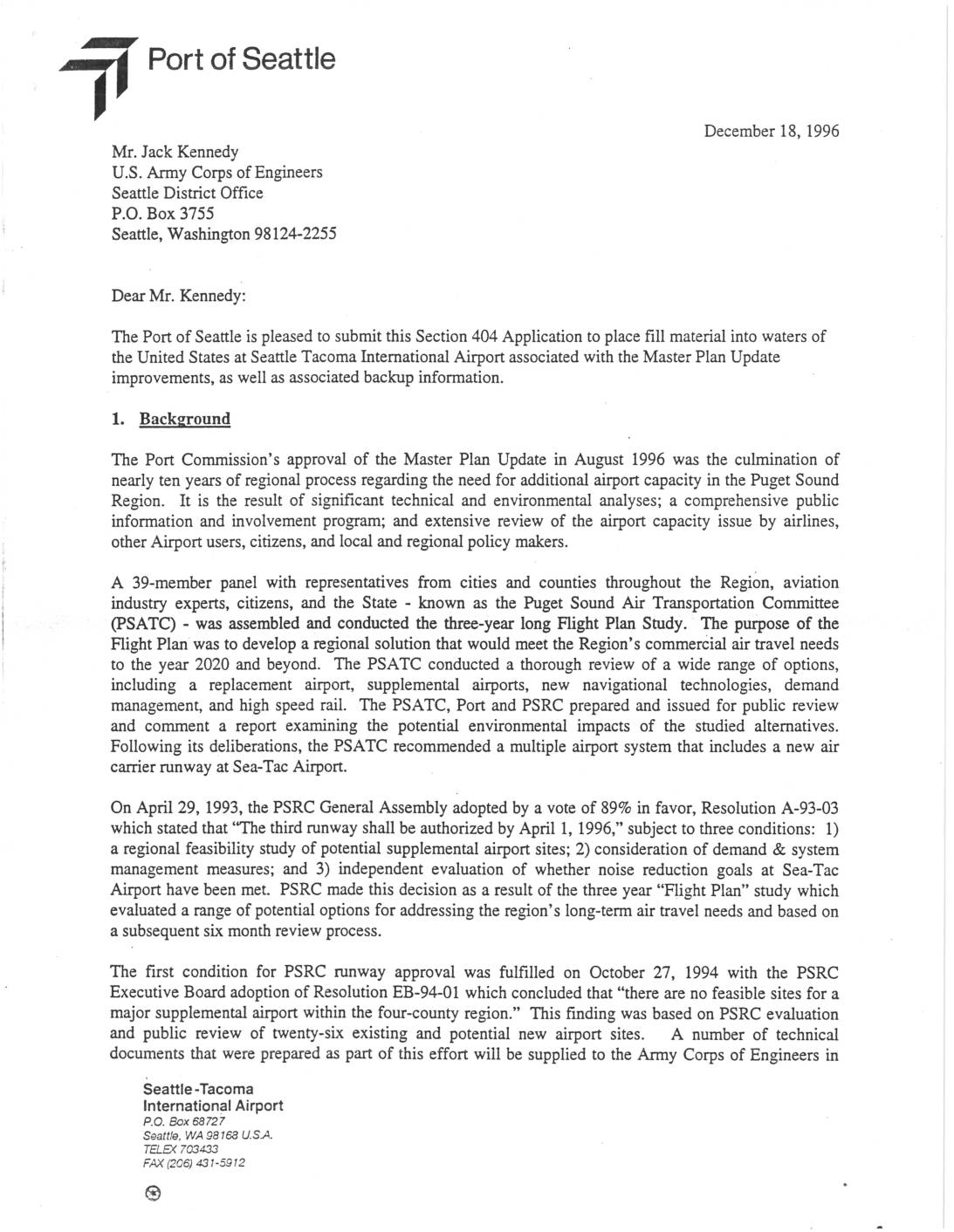
Section 404 Permit Application: Port Of Seattle to U.S. Army Corps of Engineers for Sea-Tac Airport Third Runway Fill Material
In December 1996, the Port of Seattle submitted a Section 404 permit application to the U.S. Army Corps of Engineers to place fill material in waters of the United States as part of Sea-Tac Airport's Master Plan Update, which included construction of a third parallel runway. The application explains that the new runway, located 2,500 feet west of the existing 16R/34L runway, was needed to reduce severe arrival delays during poor weather conditions, which were costing airlines approximately $42 million annually. The project was the outcome of nearly a decade of regional planning, including the PSRC's Flight Plan Study, which evaluated numerous alternatives before recommending the runway expansion as the best solution for the region's long-term air travel needs. -
 1996-12-18
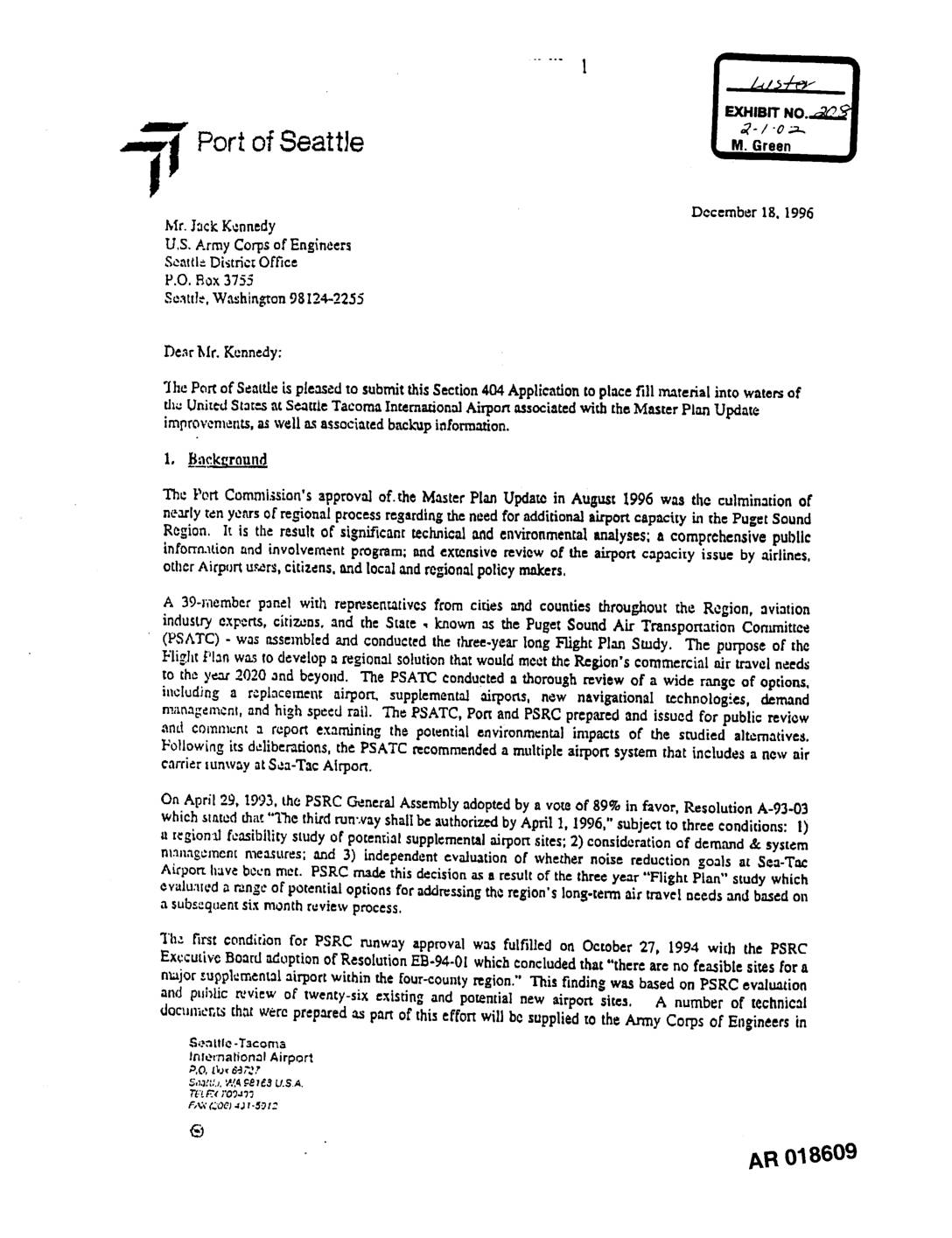
Exhibit 208: Port Of Seattle Section 404 Application Letter — Third Runway Master Plan Update Wetland Fill, Sea-Tac Airport
In December 1996, the Port of Seattle submitted a Section 404 permit application to the U.S. Army Corps of Engineers to place fill material into wetlands at Seattle-Tacoma International Airport as part of its Master Plan Update, which included construction of a third parallel runway. The proposed runway, located 2,500 feet west of the existing runways, was intended to address severe arrival delays during poor weather conditions, which reduced airport capacity from 60 to as few as 24 arrivals per hour roughly 44% of the year. The application was the result of nearly a decade of regional planning, environmental review, and public involvement, including studies confirming that no feasible supplemental airport sites existed in the four-county region. -
 1993-12-22
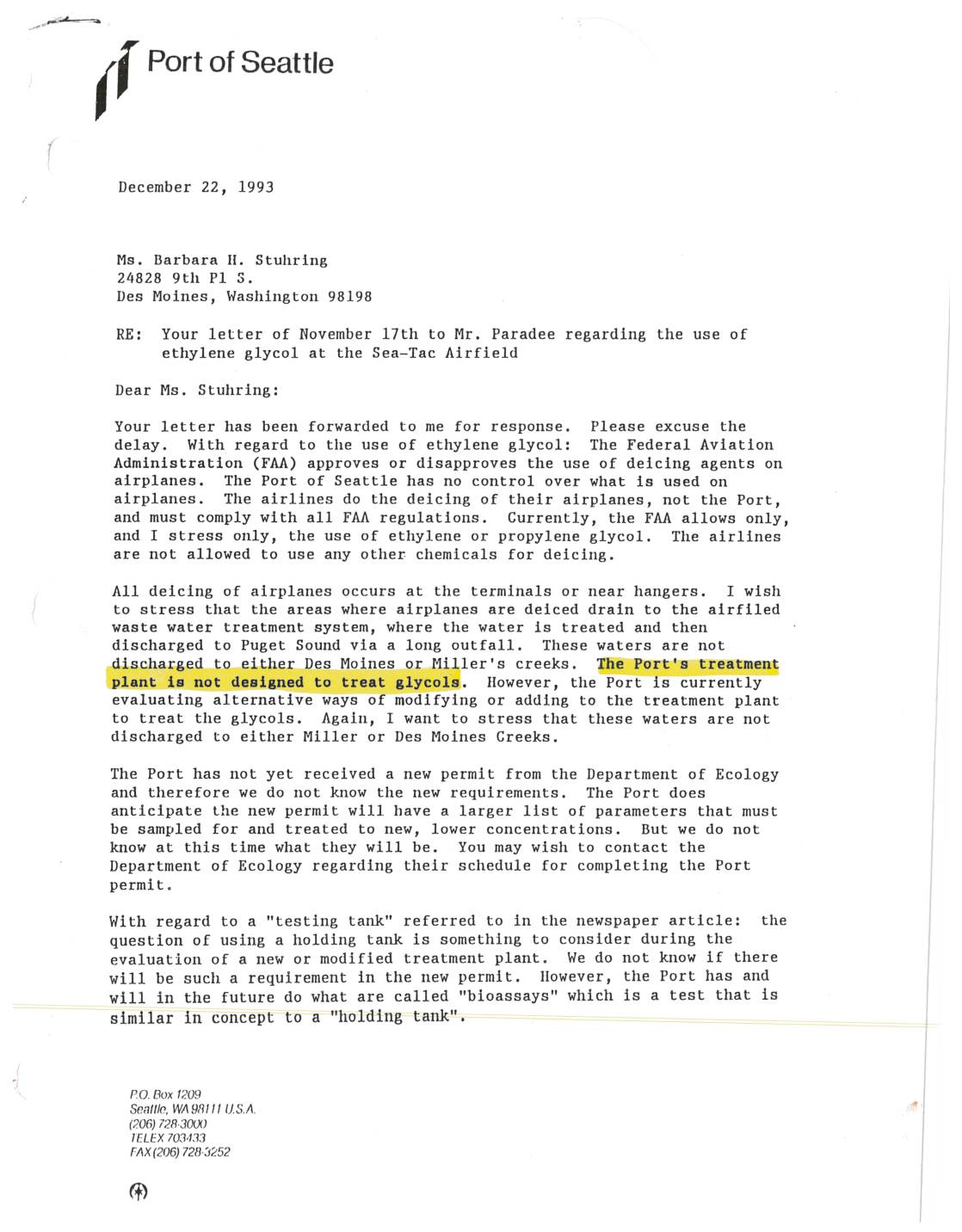
Port Of Seattle letter to Barbara H. Stuhring regarding ethylene glycol use at Sea-Tac Airfield
A 1993 Port of Seattle letter to Des Moines resident Barbara Stuhring explains that airplane deicing at Sea-Tac uses only FAA-approved ethylene or propylene glycol, and that wastewater from deicing drains to the airport's treatment system before being discharged to Puget Sound — not to Miller or Des Moines Creeks. A 1996 Final Environmental Impact Statement (EIS) later addressed public concerns about deicing fluid effects on local waterways, concluding that glycol quantities in stormwater runoff were too small and too diluted to cause lethal impacts on aquatic life in those creeks. Stuhring subsequently wrote to the Port challenging what she saw as a contradictory response in the Final EIS compared to the original 1993 letter.