Category : History(256)
-
The Sea-Tac Communities Plan
★Overview The draft Sea-Tac Communities Plan (STCP) (known as “the Redbook” was delivered to the King County Council and Port of Seattle Commissioners in January 1975 after eighteen months of work and a $641,000 grant from the FAA. The authors were the Policy Advisory Committee, a twelve member group of citizens, King County, Port staff, -
 2015-05-20
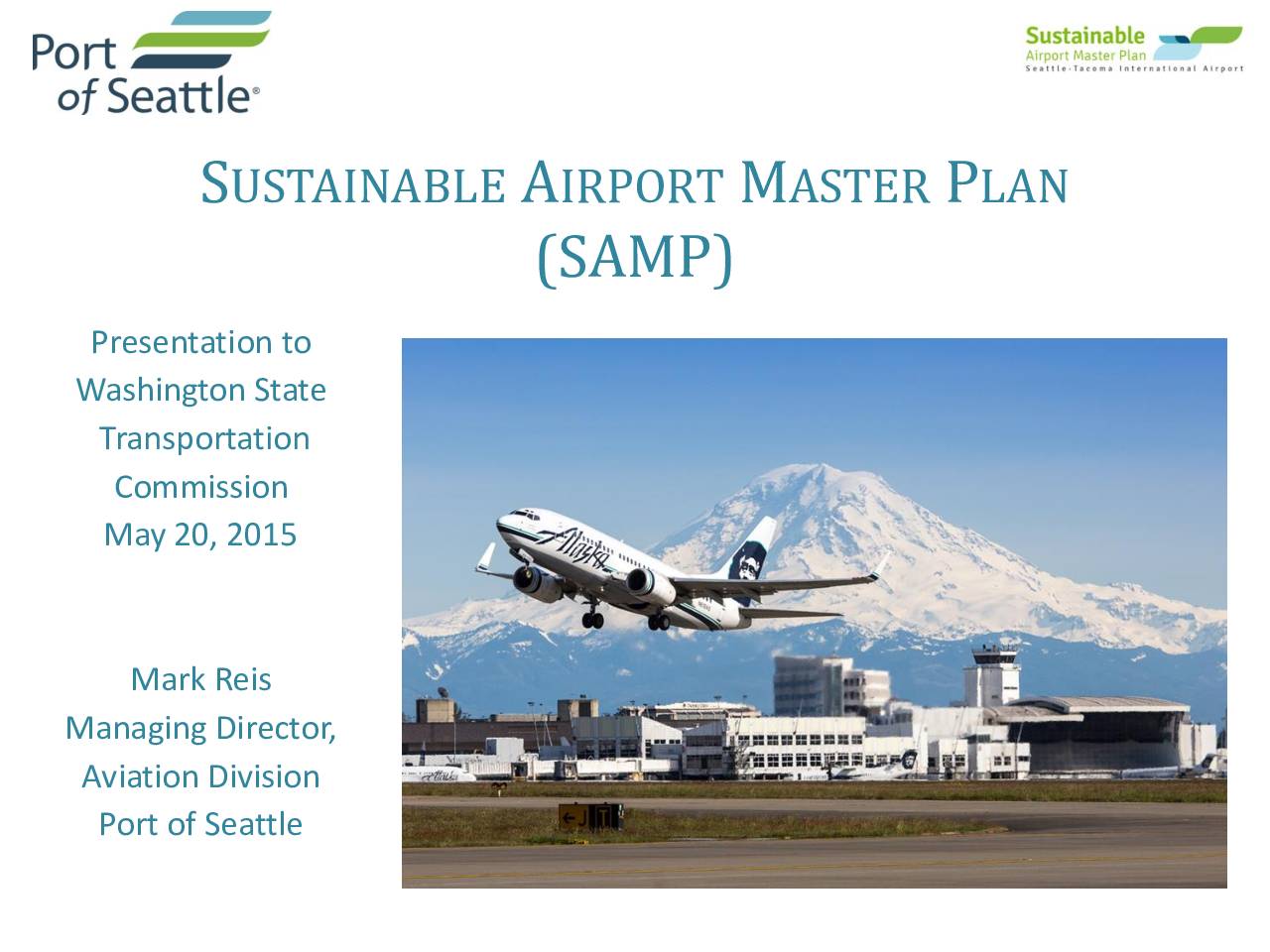
Sustainable Airport Master Plan (SAMP): Presentation to Washington State Transportation Commission
★A May 2015 presentation to the Washington State Transportation Commission outlines Sea-Tac Airport's Sustainable Airport Master Plan (SAMP), highlighting the airport's rapid growth—37.5 million passengers in 2014, making it the fastest-growing large hub airport in the U.S. The plan addresses future expansion projects including the NorthStar Alaska Hub and a new International Arrivals Facility. It also details the airport's environmental stewardship efforts, such as reducing air emissions through electric ground equipment, renewable natural gas buses, LED lighting upgrades, and earning North America's first airport Carbon Accreditation Certification. -
 2002-01-01
SR 509: Corridor Completion/I-5/South Access Road revised draft environmental impact statement and draft Section 4(f) evaluation
★ 32This January 2002 Revised Draft Environmental Impact Statement evaluates proposed improvements to SR 509 and I-5 in southwest King County, Washington, including a freeway extension to enhance southern access to Seattle-Tacoma International Airport. The study, prepared jointly by the Federal Highway Administration, WSDOT, Port of Seattle, King County, and the Cities of SeaTac and Des Moines, examines three build alternatives and a no-action alternative, differing in their proximity to Des Moines Creek Park and the airport runway protection zone. The proposed SR 509 extension corridor would be a minimum of 200 feet wide to accommodate general purpose and high-occupancy vehicle lanes in each direction. -
 1996-03-27
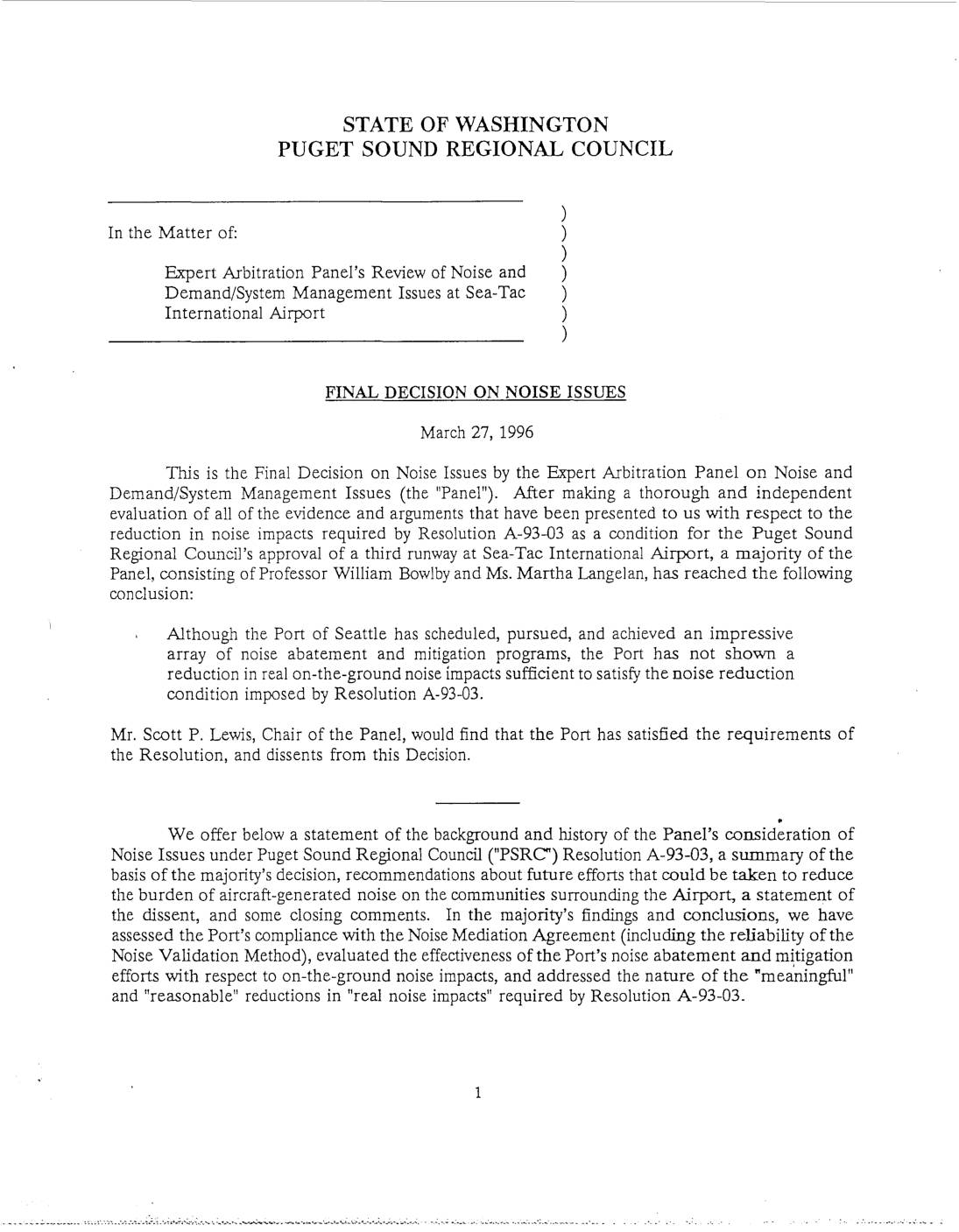
Final Decision on Noise Issues – Expert Arbitration Panel’s Review of Sea-Tac International Airport
★In March 1996, an Expert Arbitration Panel reviewed whether the Port of Seattle had met noise reduction requirements set by the Puget Sound Regional Council as a condition for approving a third runway at Sea-Tac International Airport. A majority of the Panel concluded that, despite the Port's extensive noise abatement programs, it had not demonstrated a sufficient reduction in real, on-the-ground noise impacts to satisfy Resolution A-93-03. This decision left the noise condition as the sole remaining hurdle for authorizing the third runway's construction. -
 1990-11-05
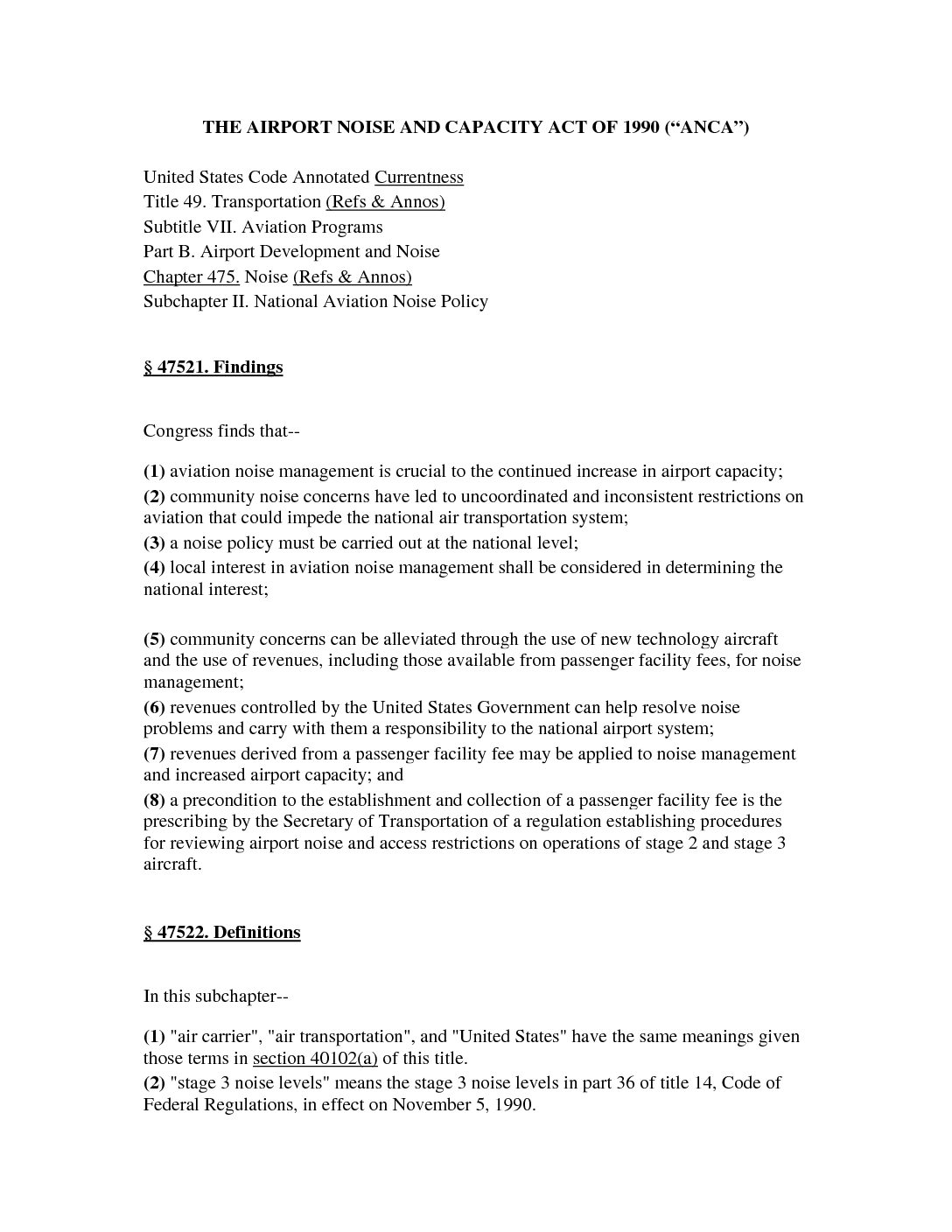
The Airport Noise and Capacity Act of 1990 (“ANCA”)
★ 32The Airport Noise and Capacity Act of 1990 (ANCA) established a national framework for managing aviation noise, requiring the Secretary of Transportation to create a uniform noise policy that phases out louder Stage 2 aircraft and regulates restrictions on quieter Stage 3 aircraft. The law ensures that any local airport noise restrictions—such as limits on flight hours or aircraft operations—go through a formal federal review process to prevent inconsistent, patchwork rules that could disrupt the national air transportation system. Passenger facility fees collected at airports may be used to fund noise reduction efforts and increase airport capacity. -
 1983-11-29
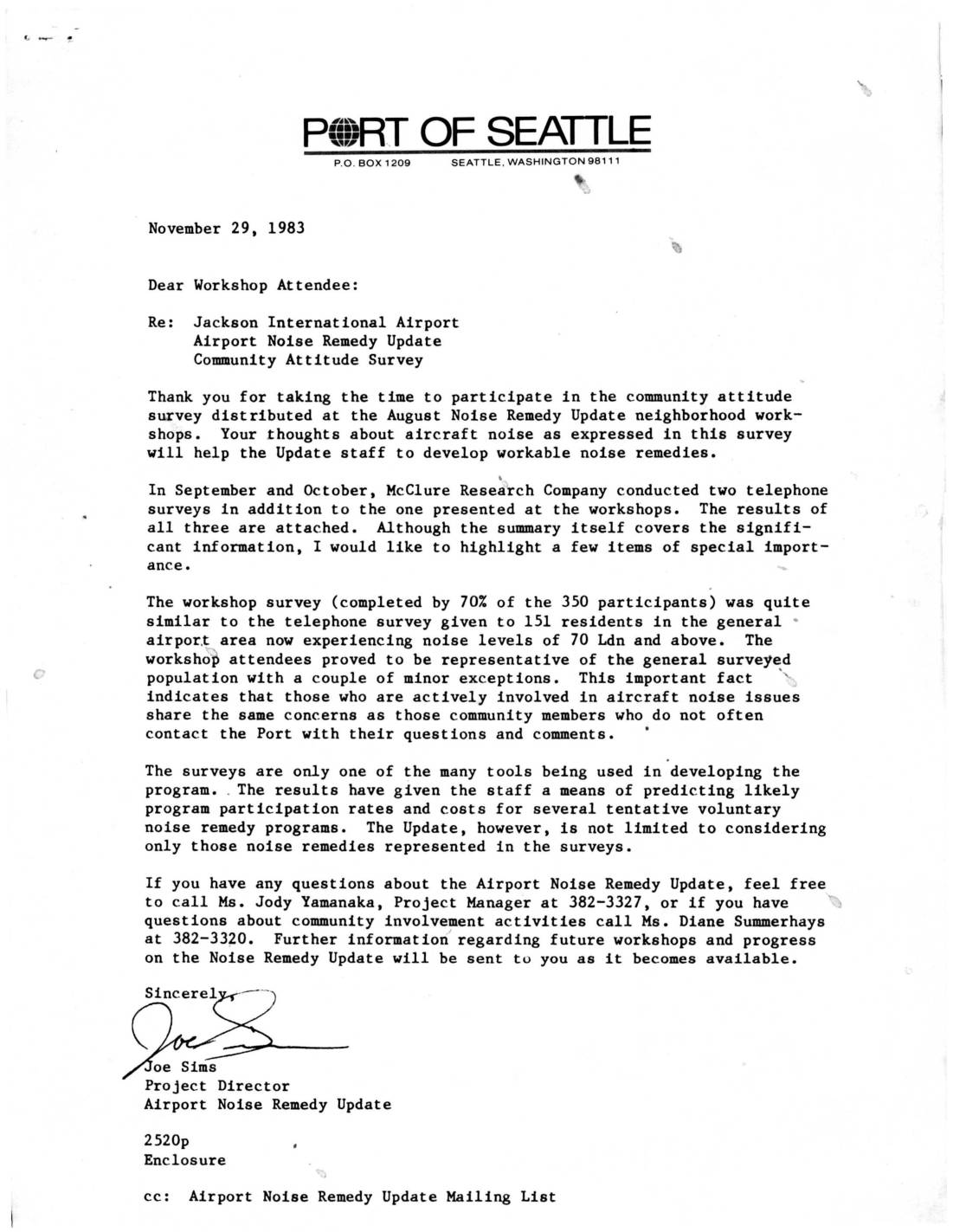
Jackson International Airport Noise Remedy Update Community Attitude Survey
★In November 1983, the Port of Seattle sent this letter and attached survey summary to attendees of neighborhood workshops held near Jackson International Airport (Sea-Tac), informing them of community attitude surveys conducted by McClure Research Company on aircraft noise concerns. The surveys gathered resident opinions on potential noise remedy programs—including purchase guarantees, noise insulation cost-sharing, and avigation easements—to help planners assess program feasibility and likely participation rates. Results showed that workshop attendees' concerns closely mirrored those of the broader affected community living in areas with noise levels of 70 Ldn and above. -
 1982-06-01
Sea-Tac International Airport noise exposure update
★ 32This June 1982 report, produced by the Port of Seattle, provides an update on noise exposure levels at Seattle-Tacoma (Sea-Tac) International Airport. It documents the extent of aircraft noise affecting surrounding communities, serving as an official record to inform airport noise management and land-use planning policies. The report was part of ongoing efforts by the Port of Seattle to monitor and address the impact of airport operations on nearby residents. -
 1981-12-10
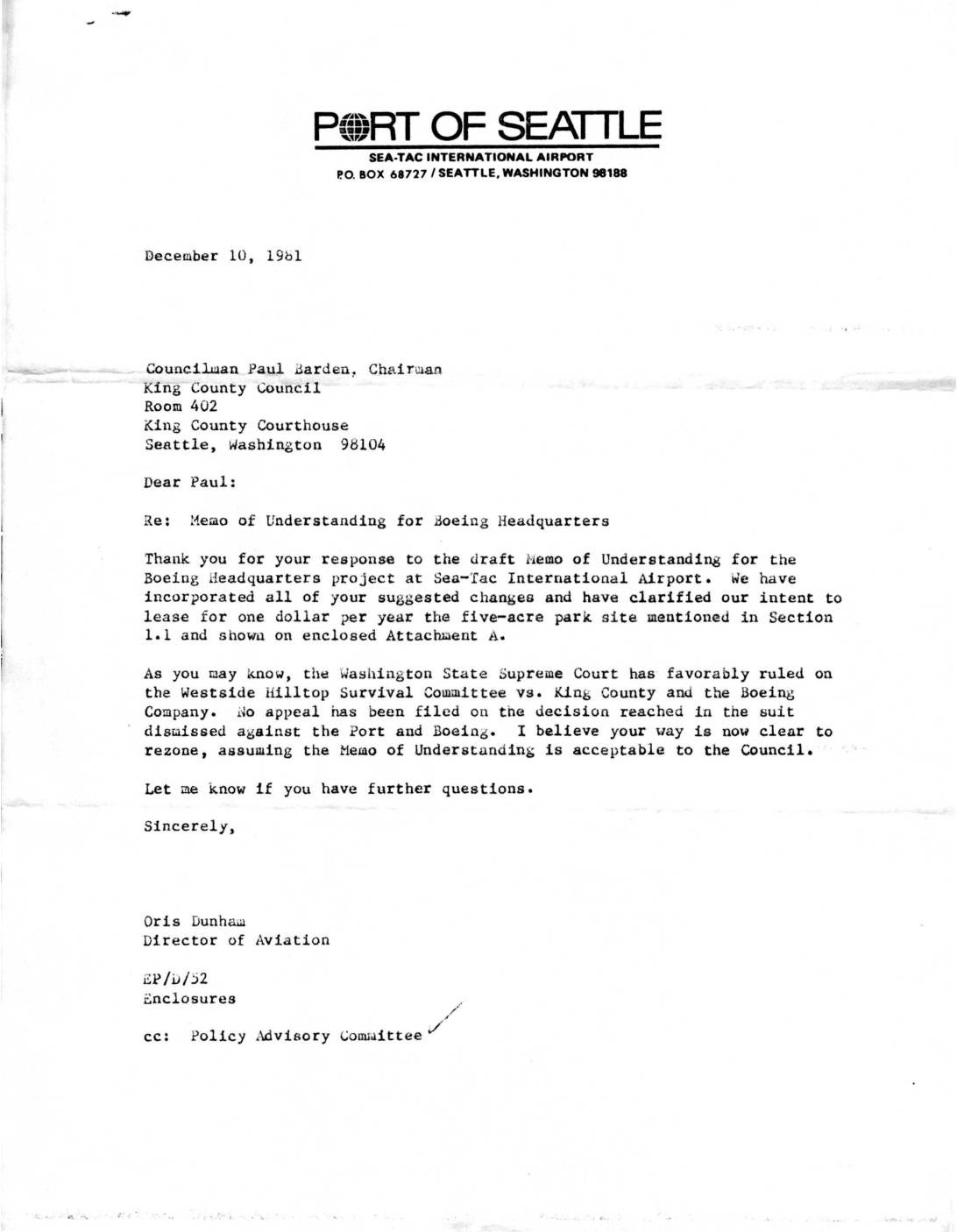
Boeing Headquarters Memo of Understanding – Port of Seattle Letter
★ 32Letter from Port of Seattle Director of Aviation Oris Dunham to King County Council Chairman Paul Barden regarding a Memo of Understanding for Boeing Headquarters project at Sea-Tac International Airport. Includes discussion of rezoning approval following favorable Washington State Supreme Court ruling. -
 1981-10-28
Airspace Study: Sea-Tac International Airport and King County International Airport
★ 32This 1981 airspace study, prepared by Peat, Marwick, Mitchell & Co., examines how the shared use of airspace between Seattle-Tacoma International Airport (Sea-Tac) and King County International Airport (Boeing Field) affects the capacity of both airports. The two-phase study analyzes projected congestion and delays through the year 2000 and evaluates operational and policy alternatives to reduce airspace conflicts. A public information program was also included to keep the community informed of the study's findings and implications. -
 1981-05-13
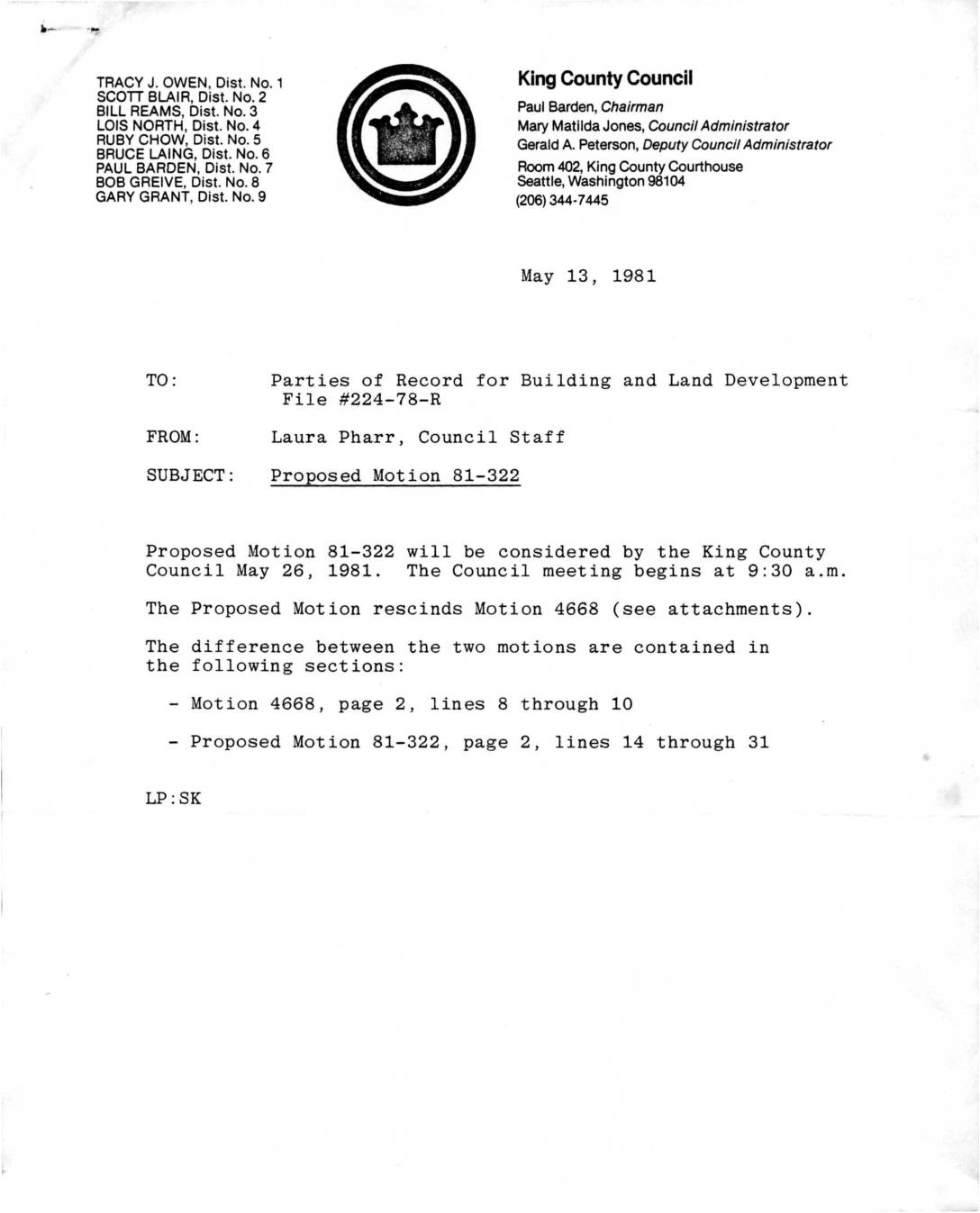
King County Council Notice: Proposed Motion 81-322 Rescinding Motion 4668, Building and Land Development File 224-78-R (Port Of Seattle Reclassification)
★ 32In December 1979, the King County Council passed Motion 4668 approving a rezone request by the Port of Seattle (Building and Land Development File No. 224-78-R), subject to conditions including the Port providing 5 acres for a neighborhood park and agreeing not to develop a 55-acre Westside Greenbelt buffer area for ten years. In May 1981, the Council proposed Motion 81-322 to rescind and replace Motion 4668, with key differences in the conditions outlined on page 2 of each motion. The matter, which had been appealed by both the applicant and neighboring property owners, required a separate public hearing in affected communities as part of the site plan approval process.