TagFly Quiet(21)
-
 2026-04-21
DCA Fly Quiet Program: Ronald Reagan Washington National Airport
This document outlines the Fly Quiet Program at Ronald Reagan Washington National Airport (DCA) in Washington, D.C., describing the airport's efforts to reduce aircraft noise impacts on surrounding communities. Key measures include FAA-approved flight procedures, a nighttime noise rule with financial penalties for violations between 10 p.m. and 7 a.m., limits on engine run-ups, and requests to airlines to use quieter aircraft. The program also operates a public noise complaint system, flight-tracking tools, and a noise monitoring network to keep residents informed and engaged. -
 2026-01-22
DCA CWG Fly Quiet Subcommittee Response to MWAA’s October 23rd “Fly Quiet” Document
This January 2026 presentation from the DCA Community Working Group (CWG) responds to the Metropolitan Washington Airports Authority's (MWAA) October 2025 'Fly Quiet' document, arguing that MWAA's response focuses on past accomplishments rather than actionable steps to reduce aircraft noise. The CWG contends that MWAA should hire an outside consultant (at roughly $100,000 per year) to analyze airline-specific data such as nighttime flights, fleet mix, and go-arounds, which could lead to concrete noise-reduction recommendations. The document highlights a fundamental disagreement between MWAA, which views its current efforts as sufficient, and the CWG, which believes a dedicated, data-driven Fly Quiet program is both affordable and necessary. -
 2025-04-23
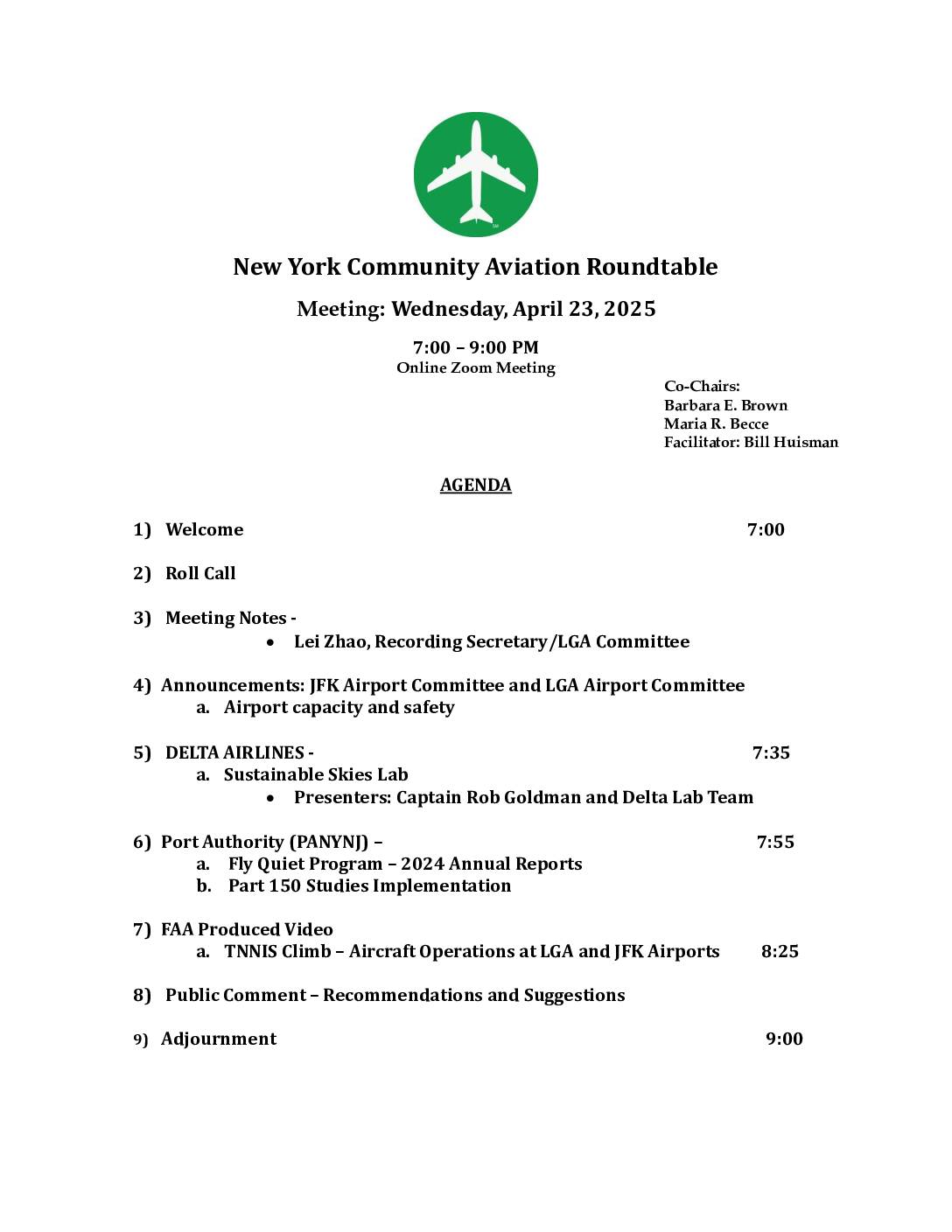
NYCAR Aviation Roundtable Meeting Agenda – April 23, 2025 Fly Quiet
Meeting agenda for the New York Community Aviation Roundtable featuring presentations from Delta Airlines on their Sustainable Skies Lab, Port Authority on Fly Quiet Programs and Part 150 Studies, and an FAA video on aircraft operations at LGA and JFK airports. -
 2024-05-13
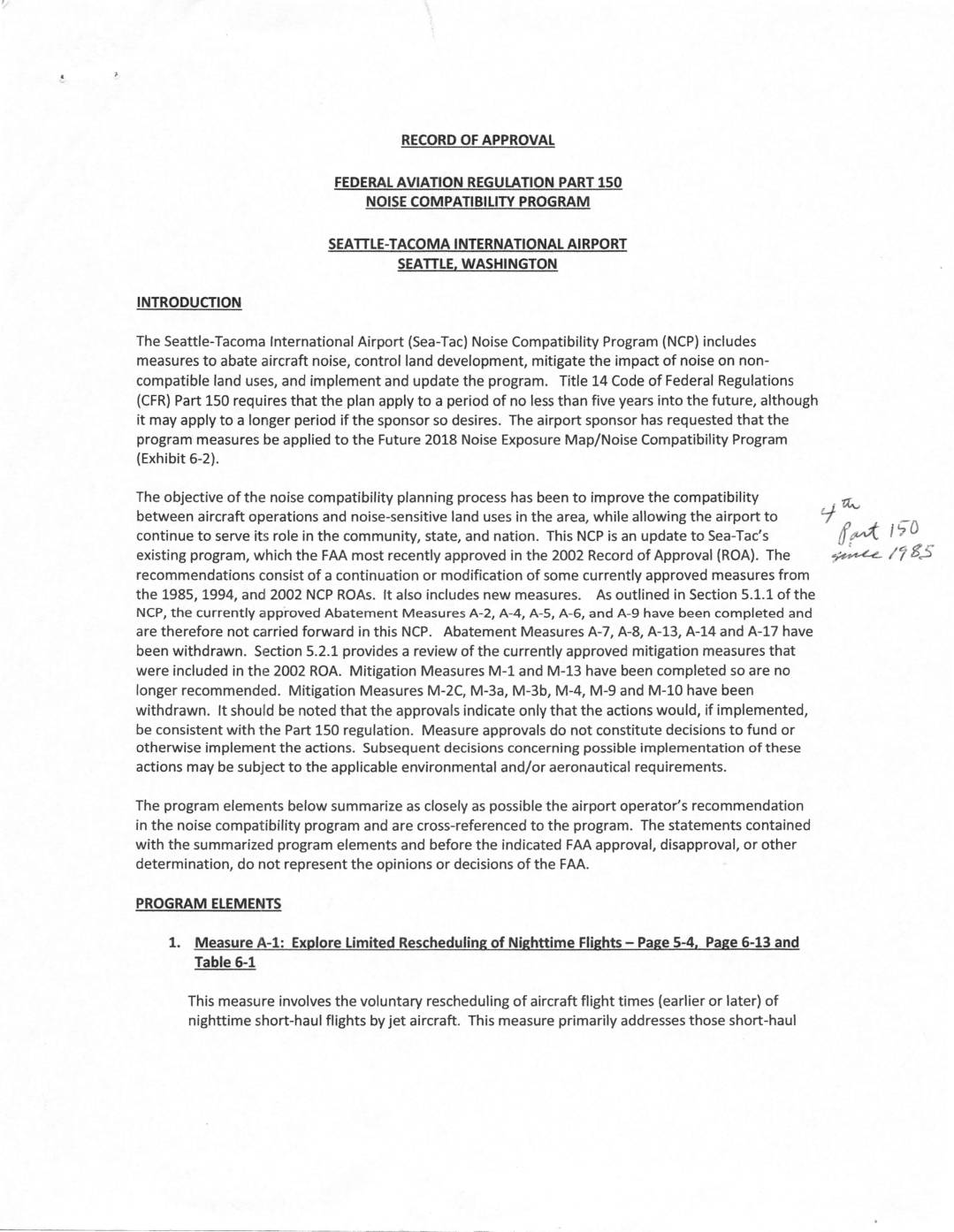
Record of approval: Federal Aviation Regulation Part 150 noise compatibility program, Seattle-Tacoma International Airport, Seattle, Washington
This document is the FAA's Record of Approval for Seattle-Tacoma International Airport's Noise Compatibility Program, which outlines measures to reduce aircraft noise and manage land use around the airport. It covers both new and updated measures, including voluntary rescheduling of nighttime flights, preferential runway use during nighttime hours, and a Fly Quiet Program to encourage airlines to follow noise abatement procedures. The FAA approved most measures as continuations of previously approved programs dating back to 1985, while disapproving the engine maintenance run-up regulations. -
 2024-01-01
LaGuardia Airport Fly Quiet Program Annual Report 2024
The Port Authority of New York and New Jersey's 2024 Fly Quiet Program Annual Report for LaGuardia Airport outlines a voluntary initiative encouraging airlines to reduce noise by flying quieter aircraft and following noise abatement procedures. Airlines are scored on a 100-point scale, with half the points based on fleet noise quality—using FAA aircraft noise stage ratings from Stage 3 (loudest) to Stage 5 Plus (quietest)—and half based on community engagement and pilot training efforts. The program was developed through collaboration with airlines, the FAA, and the public to address the unique challenges of the busy New York/New Jersey airspace. -
 2024-01-01
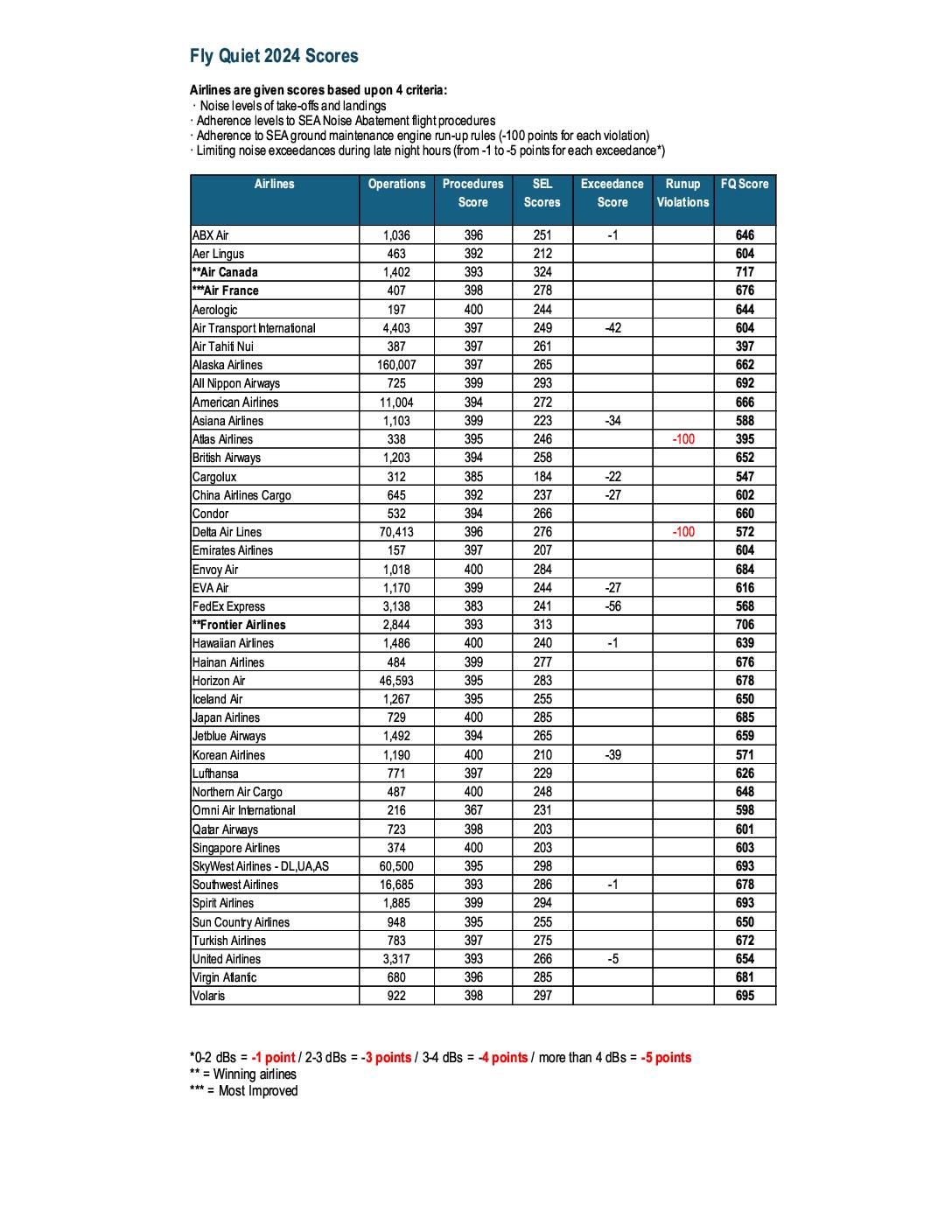
Fly Quiet 2024 Scores
Port Of Seattle Fly Quiet 2024 annual scores for airlines operating at Sea-Tac Airport, scored on four criteria: noise levels of take-offs and landings, adherence to SEA Noise Abatement flight procedures, adherence to SEA ground maintenance engine run-up rules (-100 points per violation), and limiting late-night noise exceedances (-1 to -5 points per exceedance). Table -
2024-01-01
Fly Quiet 2024 Scores
The Fly Quiet 2024 Scores report ranks airlines operating at Seattle-Tacoma International Airport based on four criteria: noise levels during take-offs and landings, adherence to SEA Noise Abatement flight procedures, compliance with ground maintenance engine run-up rules, and limiting late-night noise exceedances. Airlines receive a composite FQ Score, with top performers including Air Canada (717) and Frontier Airlines (706), while carriers with runup violations or poor noise adherence, such as Delta Air Lines (572) and Atlas Airlines (395), scored significantly lower. The report identifies Air Canada as a winning airline and Air France as the most improved, serving as a public accountability tool for noise management at Sea-Tac Airport. -
Why Seattle Asked EVA Air To Change From A Boeing 777 To A 787 For Night Flights
The Port of Seattle sat down with Simple Flying to discuss how airlines are incentivized to reduce noise impacts. The Port of Seattle collaborated with EVA Air to change their late-night flight to a quieter Boeing 787-10 instead of a Boeing 777 or Boeing 747-400. The Fly Quiet Awards incentivize airlines to use quieter aircraft -
 2023-06-07
Airport noise programs overview
This presentation by Stan Shepherd, Senior Manager of Airport Noise Programs at Seattle-Tacoma International Airport, provides an overview of SEA's key noise management initiatives. The programs covered include Noise Abatement (such as flight procedure monitoring and the Fly Quiet program), the StART stakeholder roundtable, noise monitoring, noise mitigation, and community outreach. Together, these efforts reflect the airport's commitment to reducing the impact of aircraft noise on surrounding communities. -
2022-09-08
Fly Quiet Awards 2022
Credit: Port of Seattle For the past several years, Airport Director Lance Lyttle has been promoting a Fly Quiet Awards program at the StART meetings. This is a voluntary program to track airlines by noise. Who are the main violators. Who is improving. Who is not. Flying Quiet First Quarter 2022 Scoring List From the