TagGround Operations(14)
-
 2026-05-03
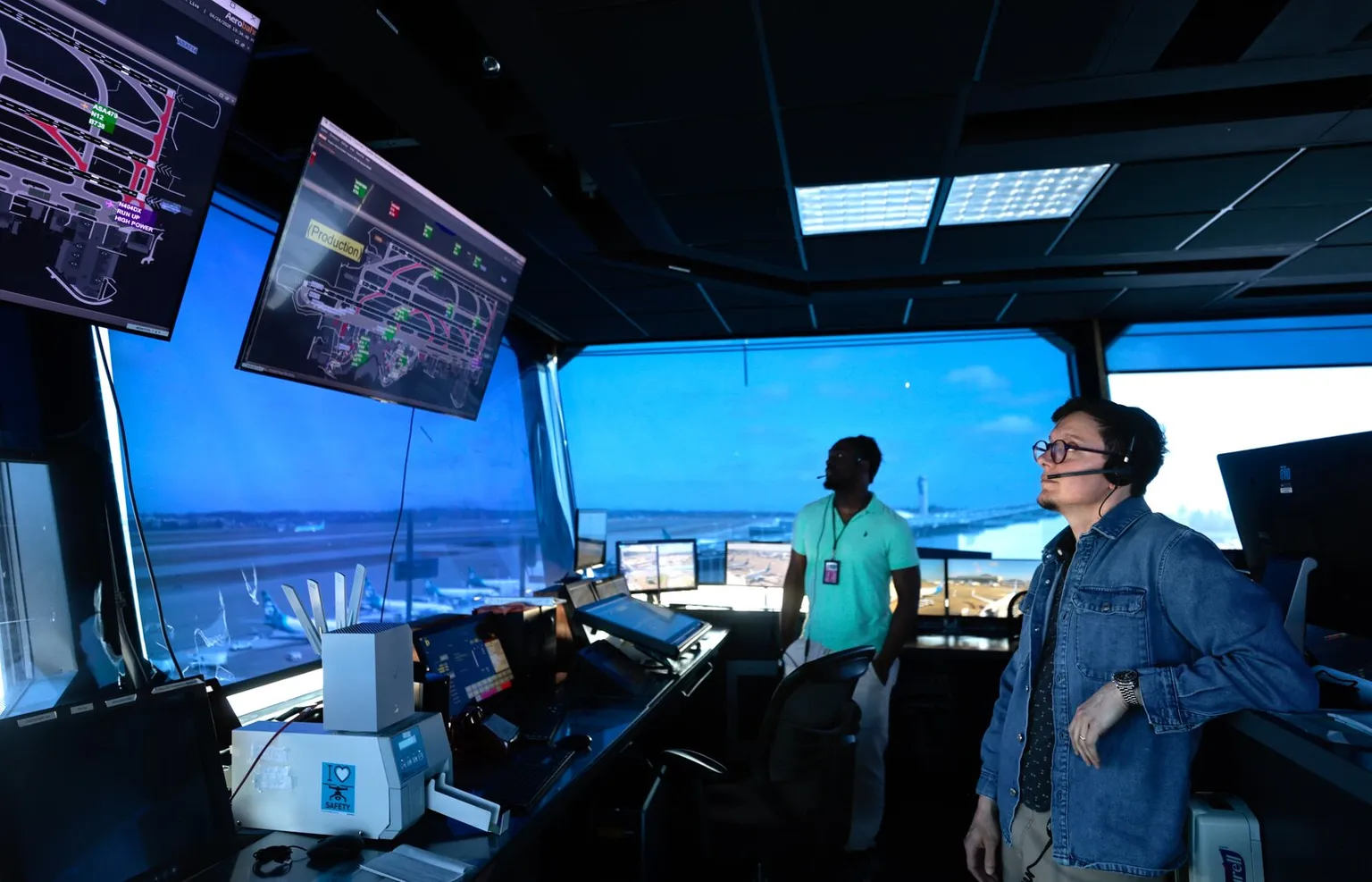
At Sea-Tac vehicle safety gets fresh look after Laguardia crash
Ramp controllers Jamaal Surrell, center, and Daniel Pakulin monitor the movements of planes and vehicles from Seattle-Tacoma International Airport’s ramp control tower last month. Sea-Tac plans to add transponders and antennas that sync with the FAA’s system, giving air traffic controllers more visibility into vehicle movements. (Karen Ducey/ Seattle Times)Less By Lauren Rosenblatt Seattle Times -
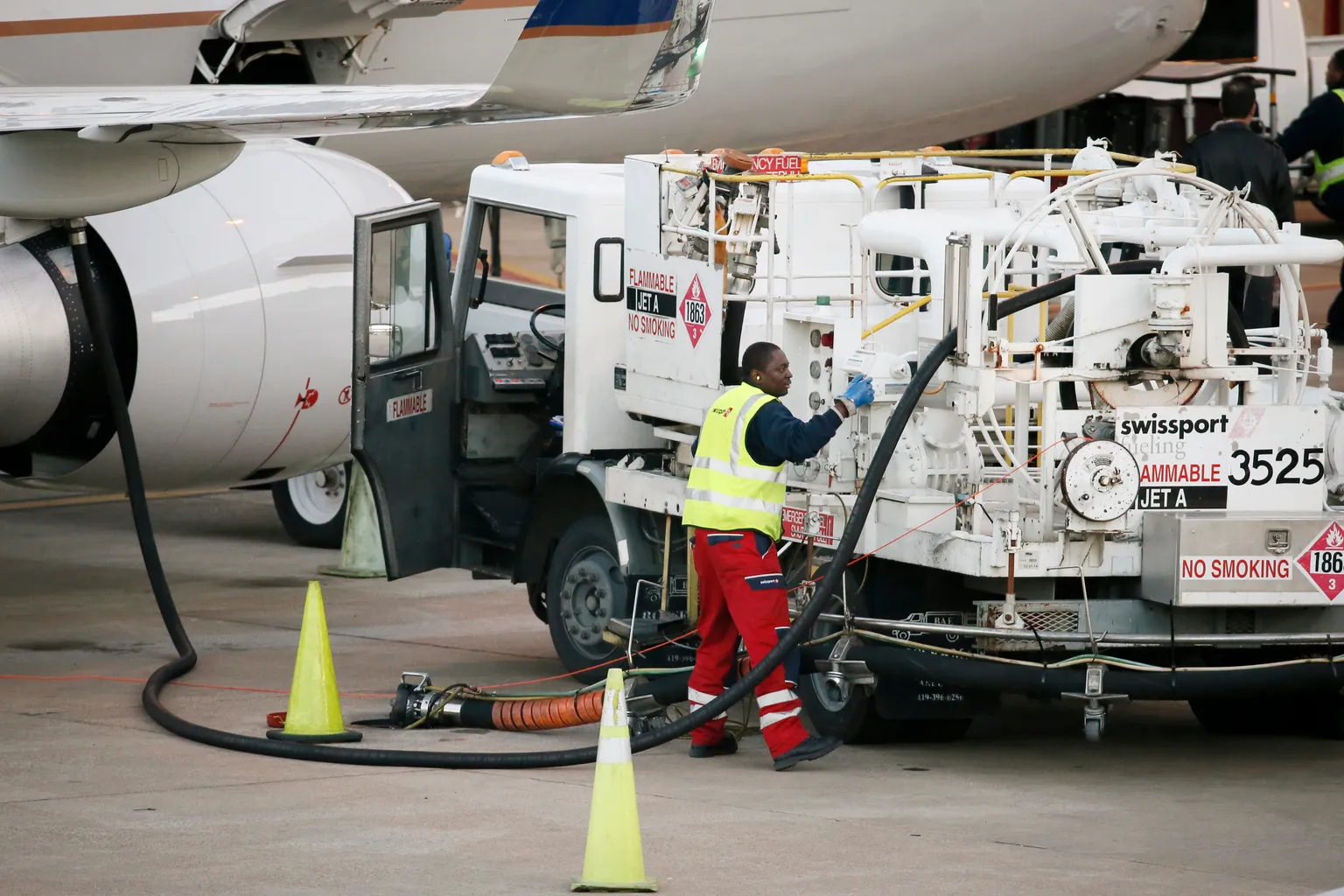
Swissport Fueling Technician Operating Jet A Fuel Truck
A Swissport fueling technician in a yellow high-visibility vest and red trousers operates a Jet A fuel truck (unit 3525) alongside a commercial aircraft. The truck bears FLAMMABLE / JET A / NO SMOKING placards and UN hazmat placard 1863, standard markings for aviation turbine fuel. -
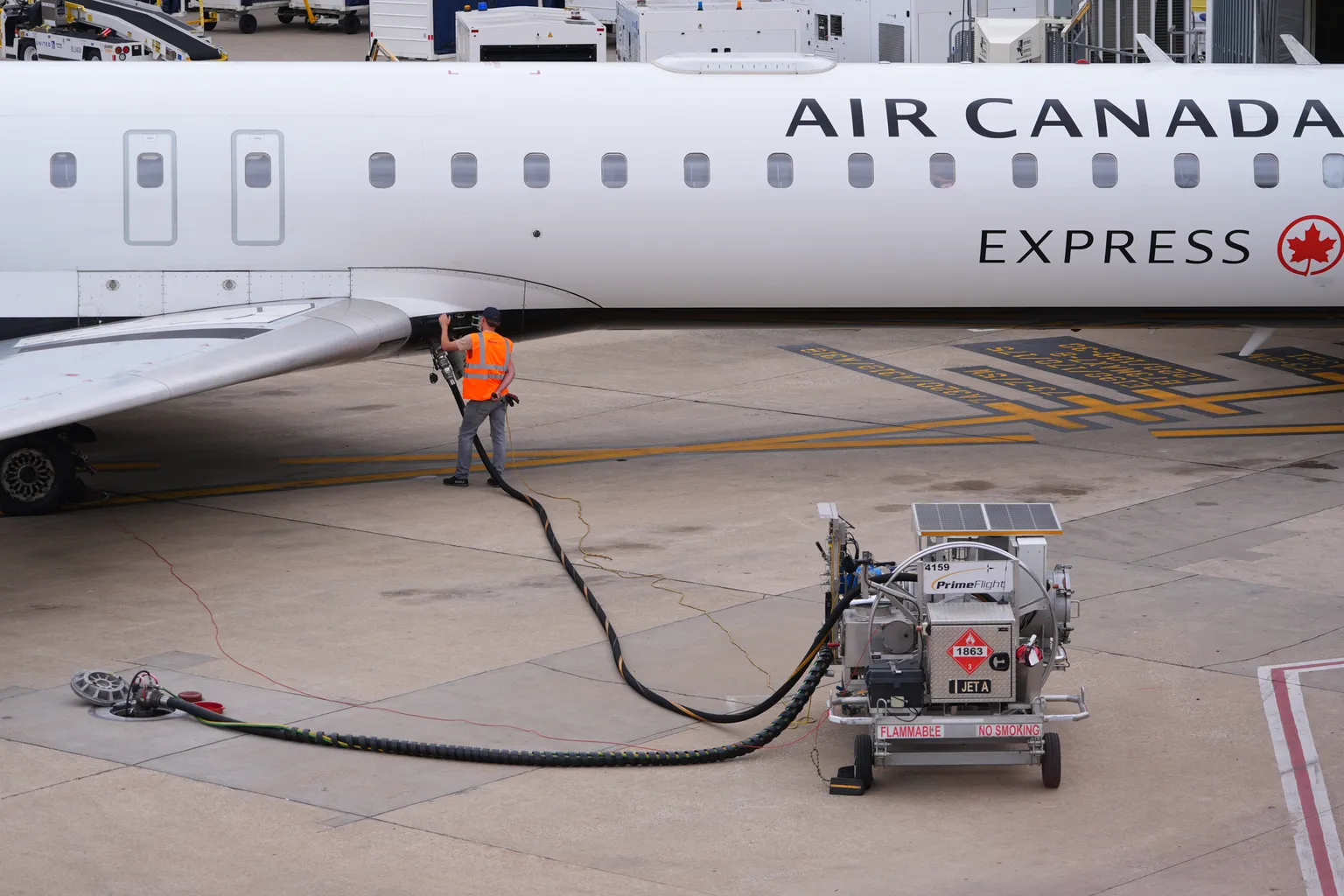
PrimeFlight Aviation Services Fuel Cart Refueling Air Canada Express Regional Jet with Jet-A Fuel
A ground crew member in an orange high-visibility vest refuels an Air Canada Express regional jet using a PrimeFlight Aviation Services fuel cart (unit #4159) carrying Jet-A fuel (UN hazmat placard 1863). The cart is labeled 'FLAMMABLE' and 'NO SMOKING,' and a hose runs from the cart to the underwing fuel port of the aircraft. -
 2023-04-06
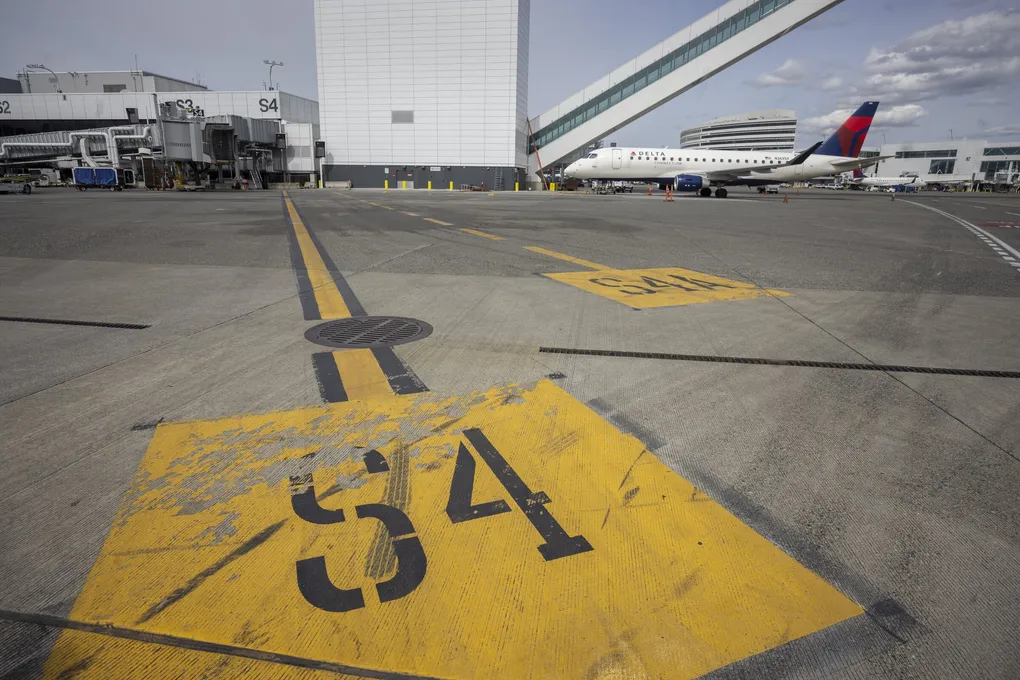
Airport Tarmac with S4 Gate Marking
A Delta Air Lines regional jet (Embraer E175) is parked on the apron near the S-concourse gates at Seattle-Tacoma International Airport. The foreground shows taxiway/gate pavement markings for position S34, with S4 and S2 gate signage visible on the terminal building. -
 2023-03-28
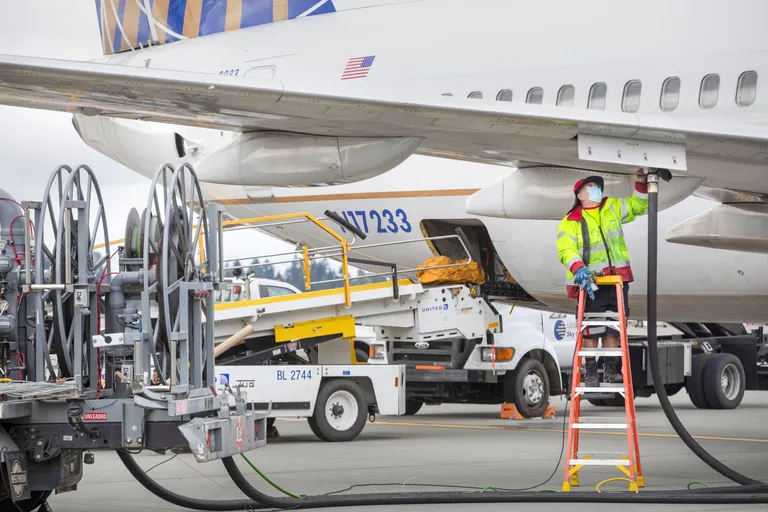
Airport Ground Crew Aircraft Fueling Operation
A ground crew worker in a high-visibility yellow jacket and face mask stands on an orange ladder to service a United Airlines Boeing 737 (tail number N7233) on the tarmac. A United Airlines ground support vehicle (BL 2744) is visible in the background alongside fueling hoses and equipment. -
 2023-03-15
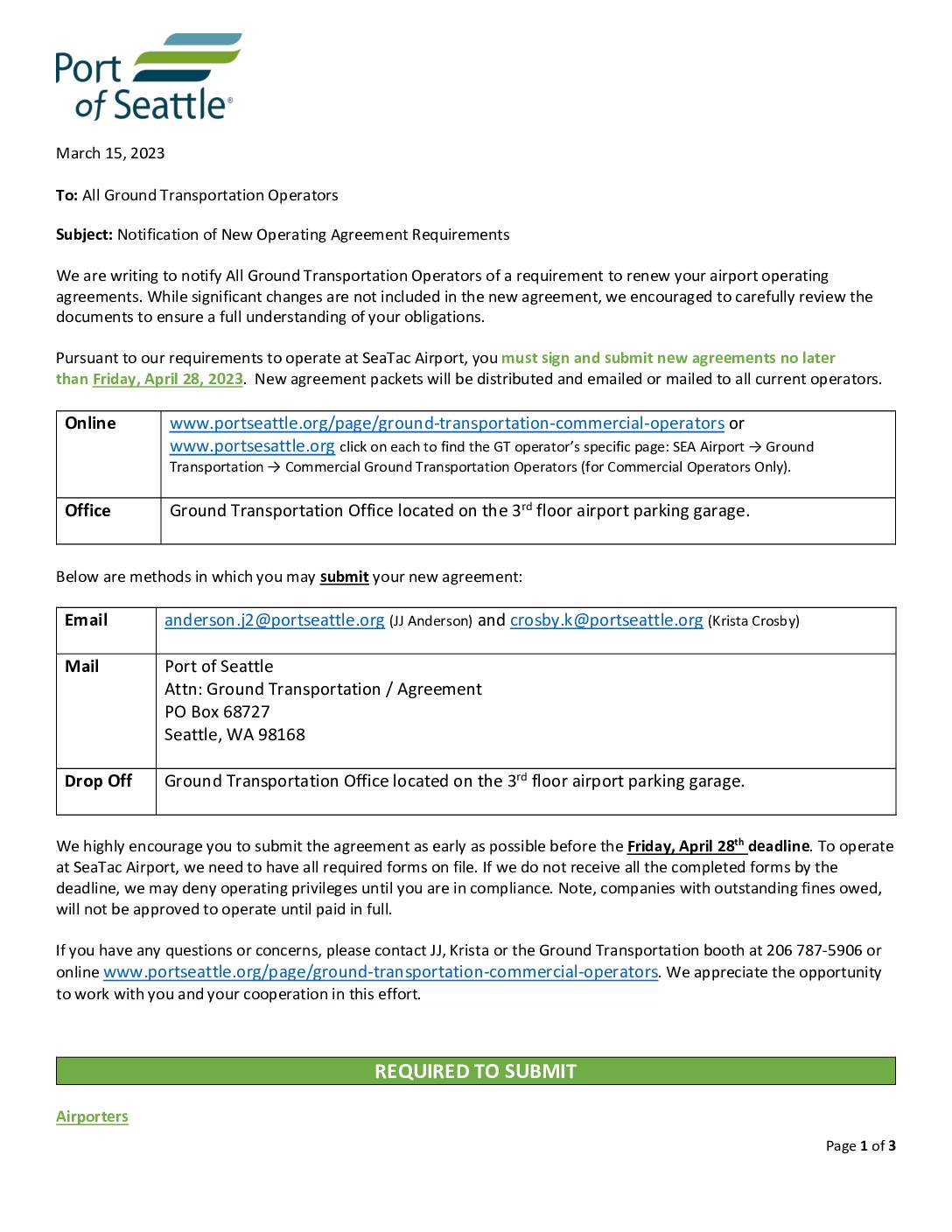
Notification of new operating agreement requirements
The Port of Seattle issued a March 2023 notice requiring all ground transportation operators at Seattle-Tacoma International Airport to sign and submit renewed operating agreements by April 28, 2023. Operators can submit agreements by email, mail, or in person at the Ground Transportation Office on the third floor of the airport parking garage. Required documents vary by operator type—such as airporters, charter buses, crew vans, and limousines—but generally include a signed agreement, proof of insurance, vehicle registrations, and a company information form. -
 2021-10-18
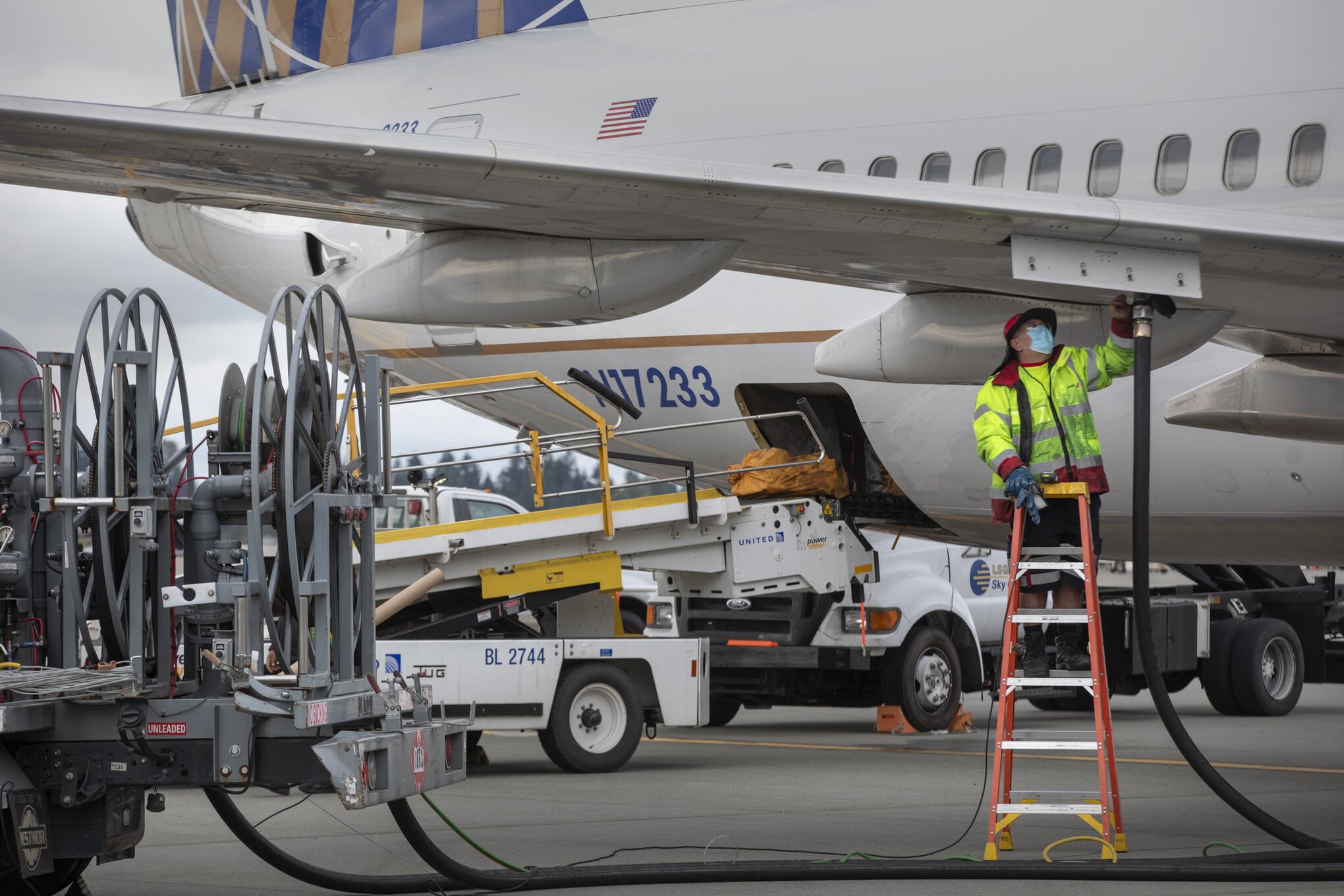
United Airlines Aircraft Fueling at Sea-Tac Airport
A ground crew member in a high-visibility jacket and face mask stands on a red ladder to connect a fuel hose to United Airlines aircraft registration N17233 on the tarmac. Support vehicles including a TUG BL 2744 baggage tractor and what appears to be a Lge Sky fuel truck are visible in the background. -
 2021-01-14
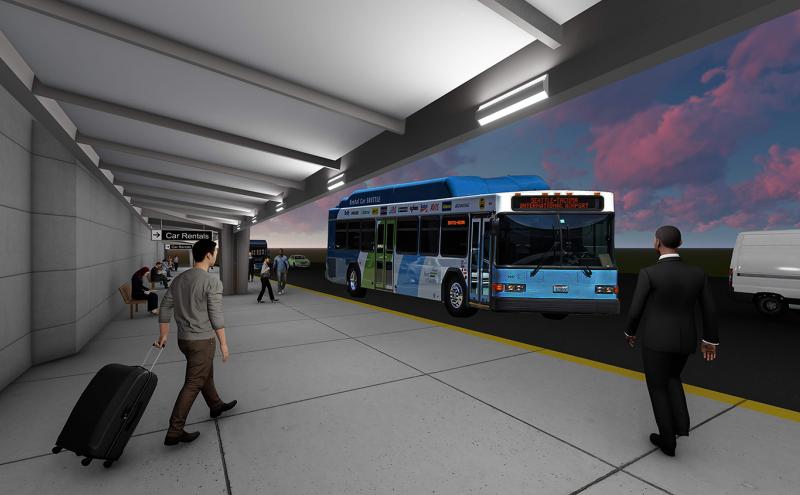
Sea-Tac Airport Arrivals Bus Canopy Expansion Rendering (January 2021)
A rendered illustration of the Seattle-Tacoma International Airport ground transportation area, showing a blue transit bus with a destination sign reading 'Seattle-Tacoma International Airport' and a 'Car Rentals' directional sign. The scene depicts passengers with luggage at a covered bus platform, consistent with a planning or noise-policy document related to Sea-Tac Airport facilities. -
 2019-11-20
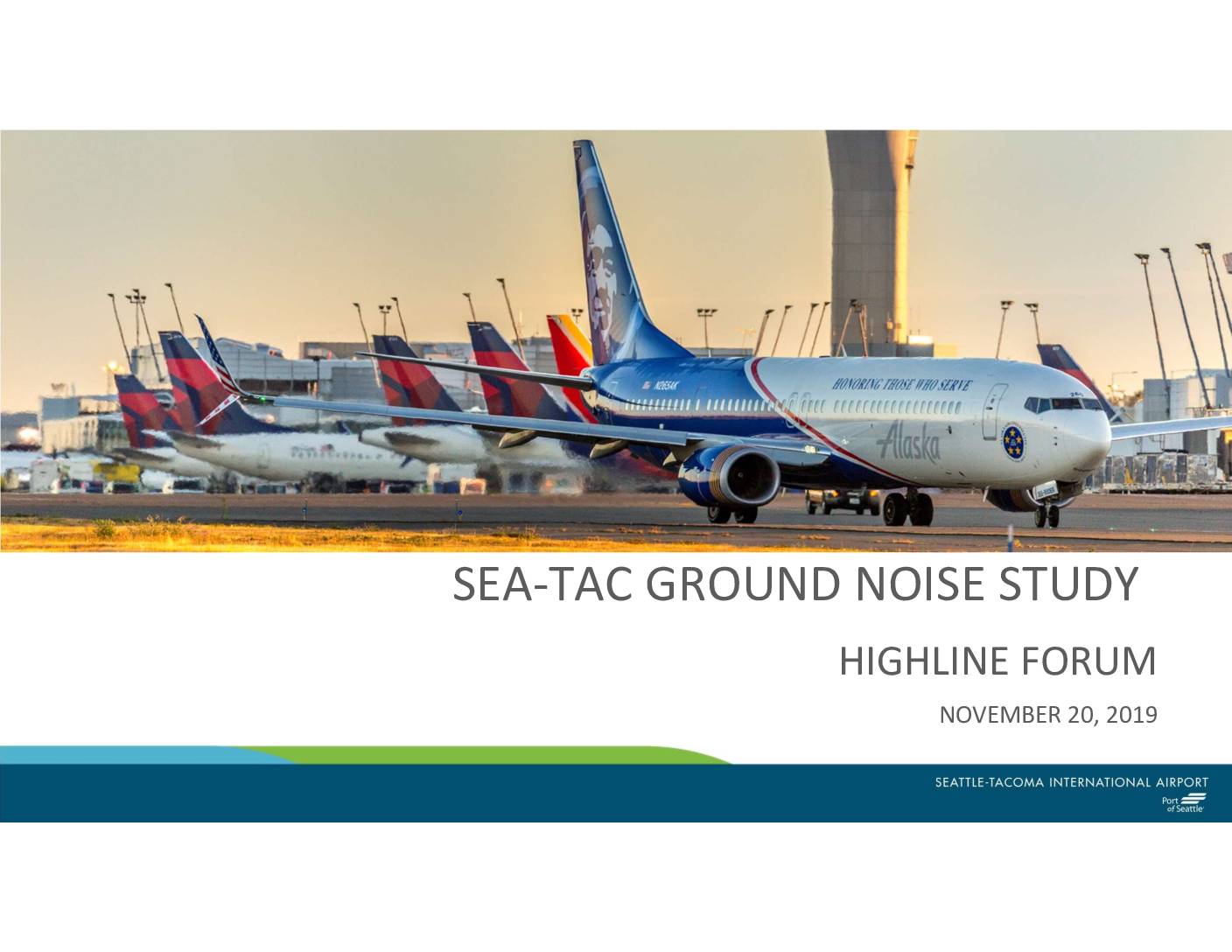
Sea-Tac ground noise study: Highline Forum
This document presents findings from a Sea-Tac Airport Ground Noise Study, shared at the Highline Forum on November 20, 2019. It explains how aircraft ground noise travels and changes with distance, noting that sound levels drop by 6 dB every time the distance doubles and are further reduced by atmospheric absorption and soft ground surfaces. The study also covers how temperature gradients affect noise, with sound bending upward in normal conditions and downward during temperature inversions, potentially increasing noise impacts on nearby communities. -
 2019-10-25
Request for input on the StART airfield noise analysis scope
These emails, dated October–November 2019, relate to a study of ground-level noise at Seattle-Tacoma International Airport initiated by the StART Aviation Noise Working Group. Noise consultant Brad Nicholas of HMMH sought input from surrounding cities, including Burien (which had suspended its StART membership), on which noise sources to analyze and where to place monitoring equipment. Community advocate Sharyn Parker responded with detailed recommendations, arguing the consultant should first correlate existing noise complaints and monitor records with engine run-up events before soliciting public input, and identifying engine run-ups and reverse thrust as the two primary sources of airfield ground noise.