TagRegulations(12)
-
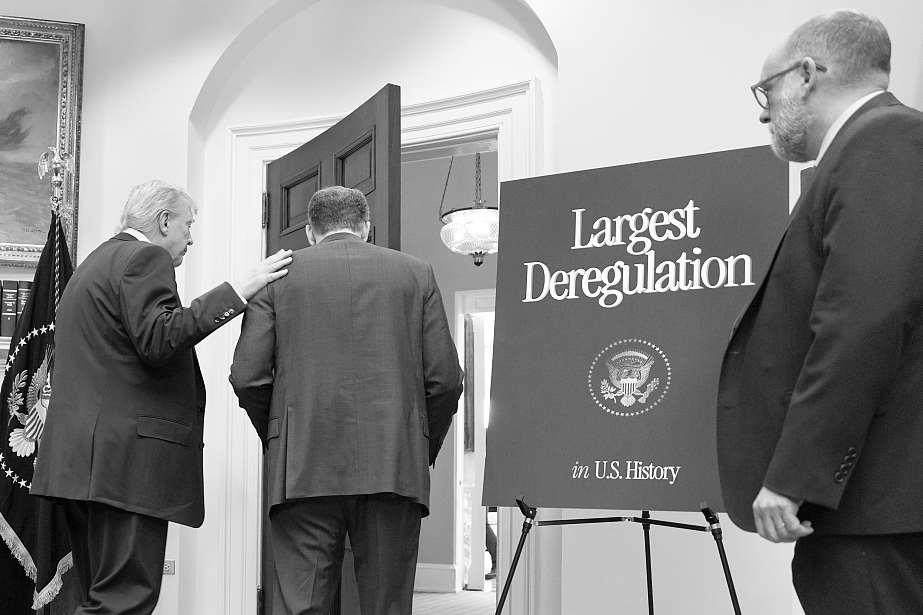
Trump EPA deregulation announcement, White House
A black-and-white photograph taken inside what appears to be the White House, showing three men in suits near a doorway. A sign on an easel prominently reads 'Largest Deregulation in U.S. History' and displays the Presidential Seal. -
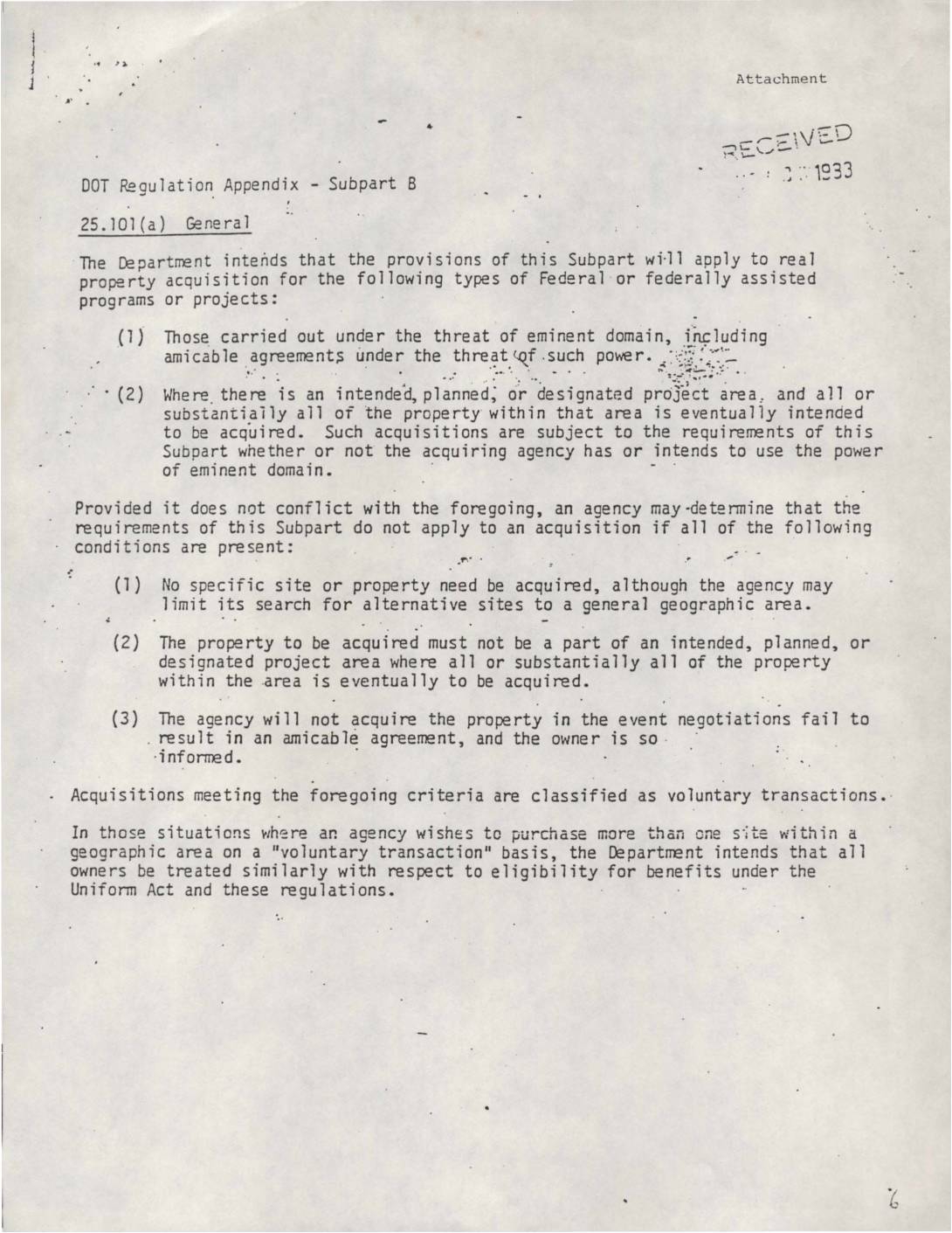 2026-01-06
DOT Regulation Appendix – Subpart B, Section 25.101(a): General Provisions on Real Property Acquisition
This DOT regulation (Subpart B, Section 25.101a) outlines when federal property acquisition rules apply, covering situations involving eminent domain threats and large-scale planned project areas. It also defines the conditions under which an acquisition can be classified as a 'voluntary transaction,' exempt from those requirements — including that the agency must inform the owner it will not forcibly acquire the property if negotiations fail. When multiple properties are purchased voluntarily within the same area, all owners must be treated equally regarding eligibility for benefits under the Uniform Act. -
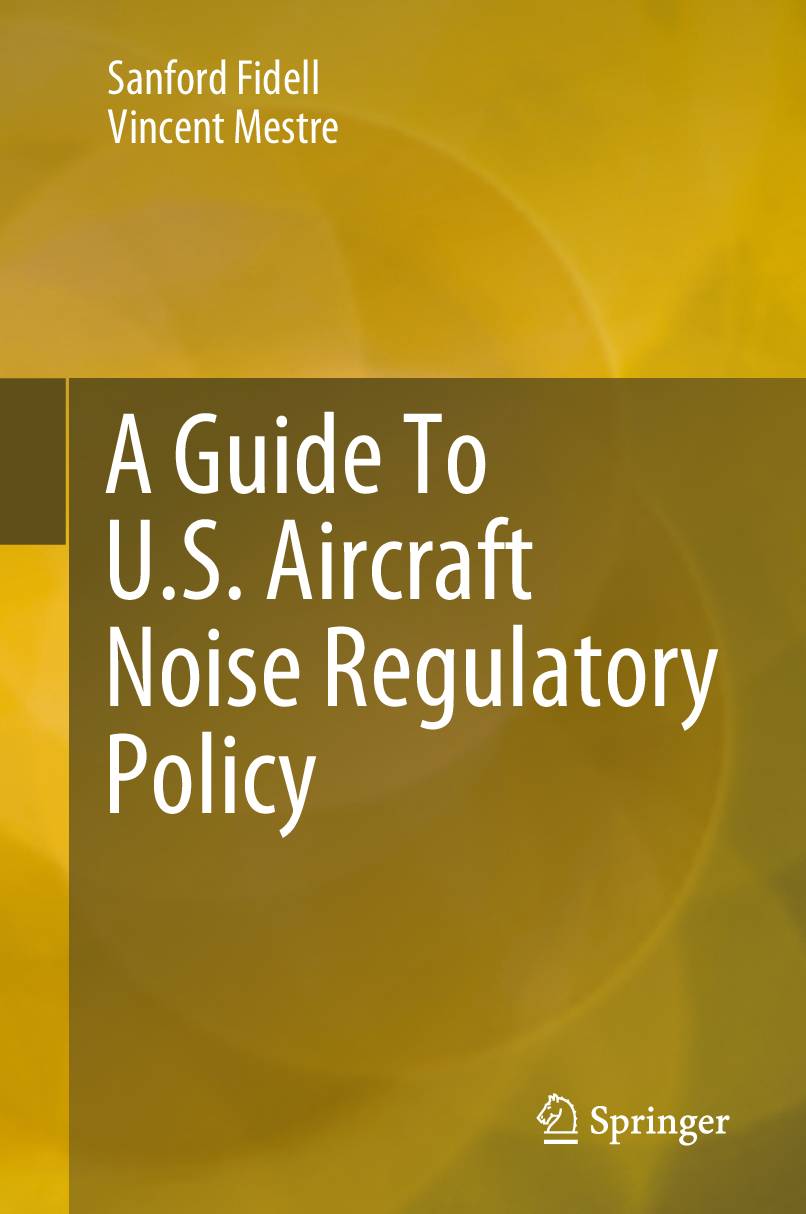 2025-12-21
A guide to U.S. aircraft noise regulatory policy
This book by Sanford Fidell and Vincent Mestre provides a comprehensive guide to U.S. aircraft noise regulatory policy, covering the rules, standards, and government frameworks that govern how aircraft noise is measured, evaluated, and controlled. It is a key reference for understanding how federal agencies approach noise management around airports such as Sea-Tac, including the metrics and legal structures used to assess community noise impacts. -
 2024-07-12
Noise standards: Aircraft type and airworthiness certification (14 CFR Part 36)
★Title 14 CFR Part 36 sets the federal noise standards that aircraft must meet to receive type and airworthiness certificates from the FAA. It covers a wide range of aircraft, including large commercial jet airplanes, propeller-driven small and commuter planes, helicopters, and tiltrotors, establishing specific noise measurement, evaluation, and limit requirements for each category. These rules are relevant to airports like Sea-Tac because they define the baseline noise performance standards that aircraft operating in the area must satisfy. -
California becomes the first state to adopt emission rules for trains
April 27, 2023 SACRAMENTO, Calif. — California approved Thursday a first-in-the-nation, ambitious rule limiting rail pollution to aggressively cut greenhouse gas emissions in the state’s latest move to establish itself as a global leader in the fight against climate change. The rule will ban locomotive engines more than 23 years old by 2030 and increase -
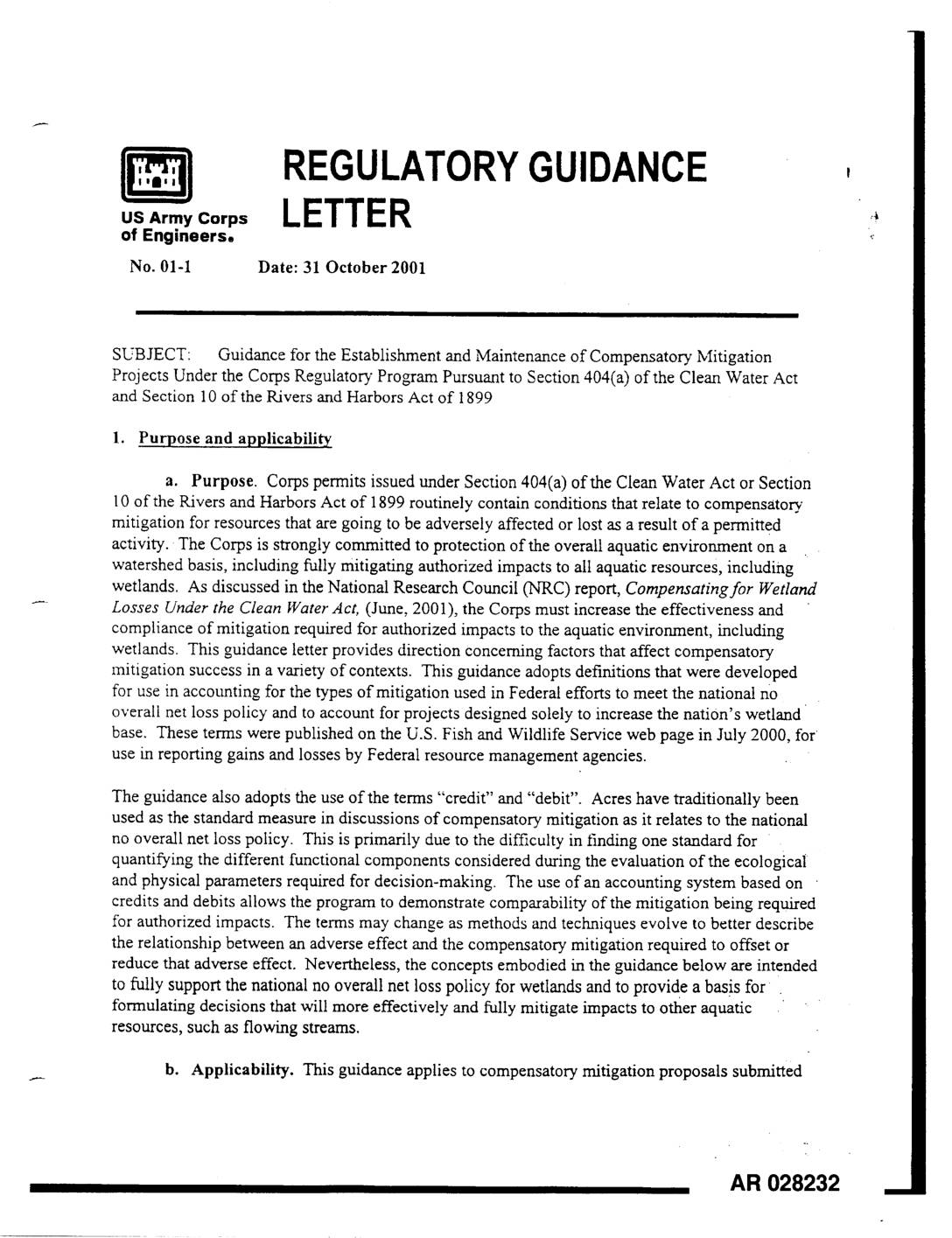 2001-10-31
EXH AR028232: Regulatory Guidance Letter No. 01-1 — Compensatory Mitigation Projects Under the Corps Regulatory Program
US Army Corps of Engineers Regulatory Guidance Letter No. 01-1, dated 31 October 2001, providing guidance for the establishment and maintenance of compensatory mitigation projects under Section 404(a) of the Clean Water Act and Section 10 of the Rivers and Harbors Act of 1899. Covers debit/credit assessment methodology, role of preservation, inclusion of upland areas, -
 1998-04-01
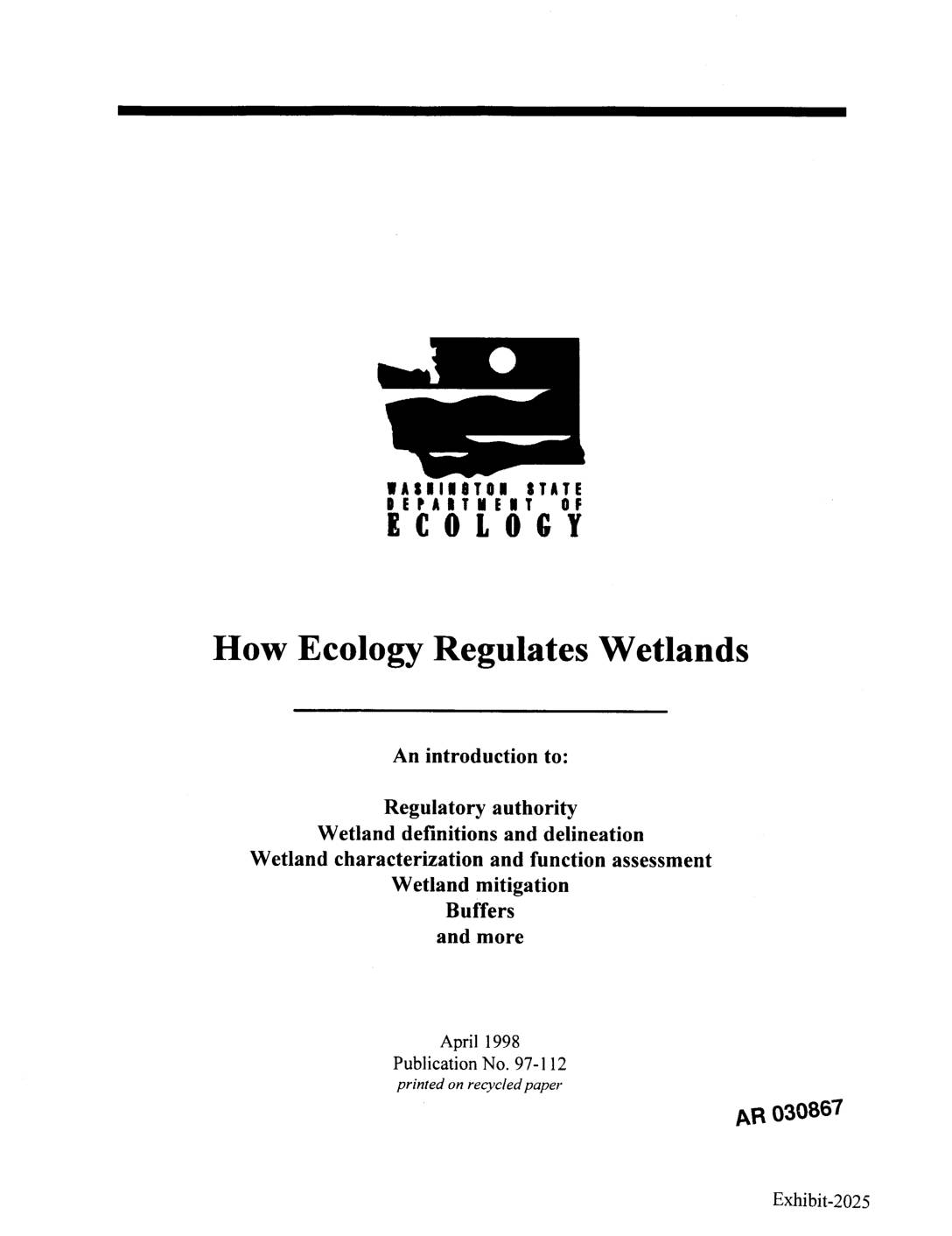
EXH AR030867: How Ecology Regulates Wetlands
Washington State Department of Ecology publication (No. 97-112, April 1998), authored by Andy McMillan of the Shorelands & Environmental Assistance Program. Introduces regulatory authority over wetlands, wetland definitions and delineation, wetland characterization and function assessment, wetland mitigation, and buffers. Covers Washington State wetland regulation under state law, published by Ecology’s Shorelands & Environmental Assistance Program, -
 1992-01-23
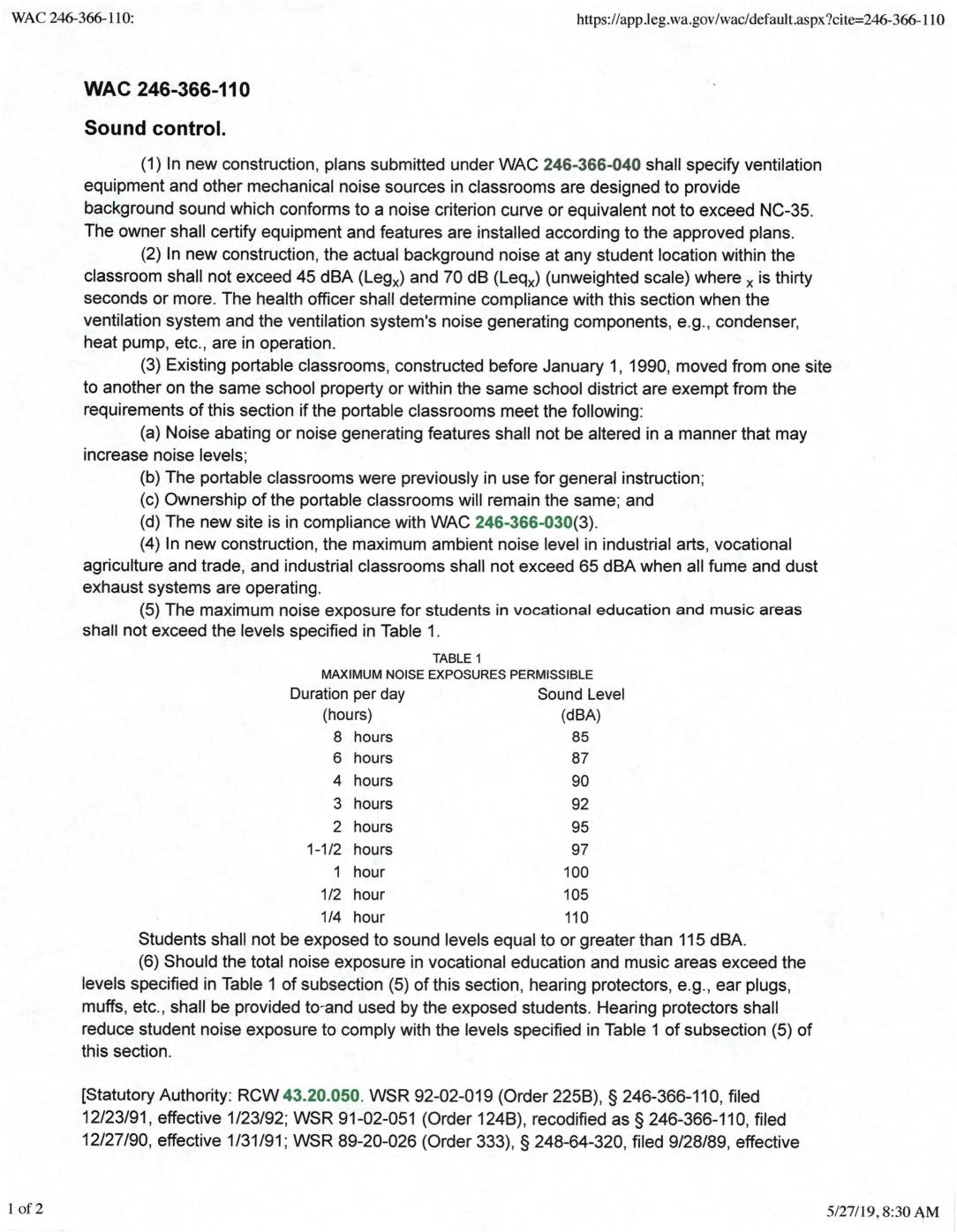
WAC 246-366-110: Sound control
WAC 246-366-110 sets sound control standards for Washington State school classrooms, requiring that background noise in new construction not exceed NC-35 on the noise criterion curve, with actual noise levels capped at 45 dBA during normal operation. Industrial and vocational classrooms have separate limits, with ambient noise not to exceed 65 dBA when exhaust systems are running. In music and vocational education areas, student noise exposure is strictly regulated by duration, and hearing protection must be provided if exposure limits are exceeded. -
 1987-04-14
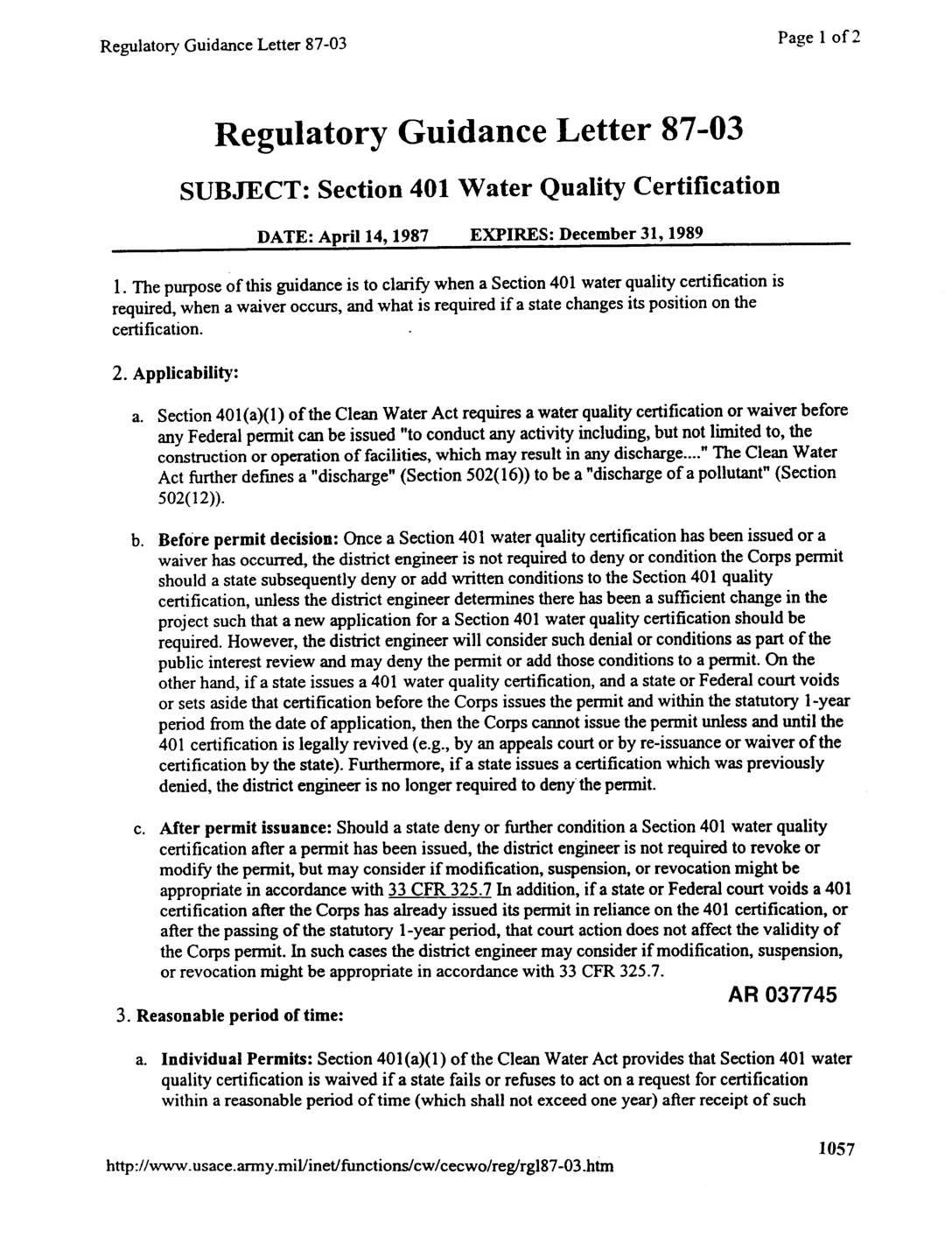
EXH AR037745: Regulatory Guidance Letter 87-03 — Section 401 Water Quality Certification
Army Corps of Engineers Regulatory Guidance Letter 87-03, dated April 14, 1987, clarifying requirements for Section 401 water quality certification under the Clean Water Act. Covers when certification or waiver is required before Federal permit issuance, the effect of state denial or court voidance before and after permit issuance, and the ‘reasonable period of time’