TagHistoric Preservation(14)
-
 2025-07-02
Draft Cultural Resources Assessment for the Port Of Seattle Industrial Wastewater Treatment Plant Project, King County, Washington
This July 2025 draft cultural resources assessment, prepared by Stell for WSP USA and the Port of Seattle, evaluates potential cultural and archaeological impacts associated with a proposed Industrial Wastewater Treatment Plant project in King County, Washington. The 10.6-acre study area is located near Des Moines and covers sections in Townships 22N and 23N. The assessment found no archaeological sites, isolates, or traditional cultural properties within the project area. -
2025-07-02
Draft Cultural Resources Assessment for the Port Of Seattle Industrial Wastewater Treatment Plant Project, King County, Washington
This July 2025 draft cultural resources assessment, prepared by Stell for WSP USA and the Port of Seattle, evaluates potential cultural and archaeological impacts associated with a proposed Industrial Wastewater Treatment Plant project in King County, Washington. The 10.6-acre study area is located near Des Moines and covers sections in Townships 22N and 23N. The assessment found no archaeological sites, isolates, or traditional cultural properties within the project area. -
 2023-12-22
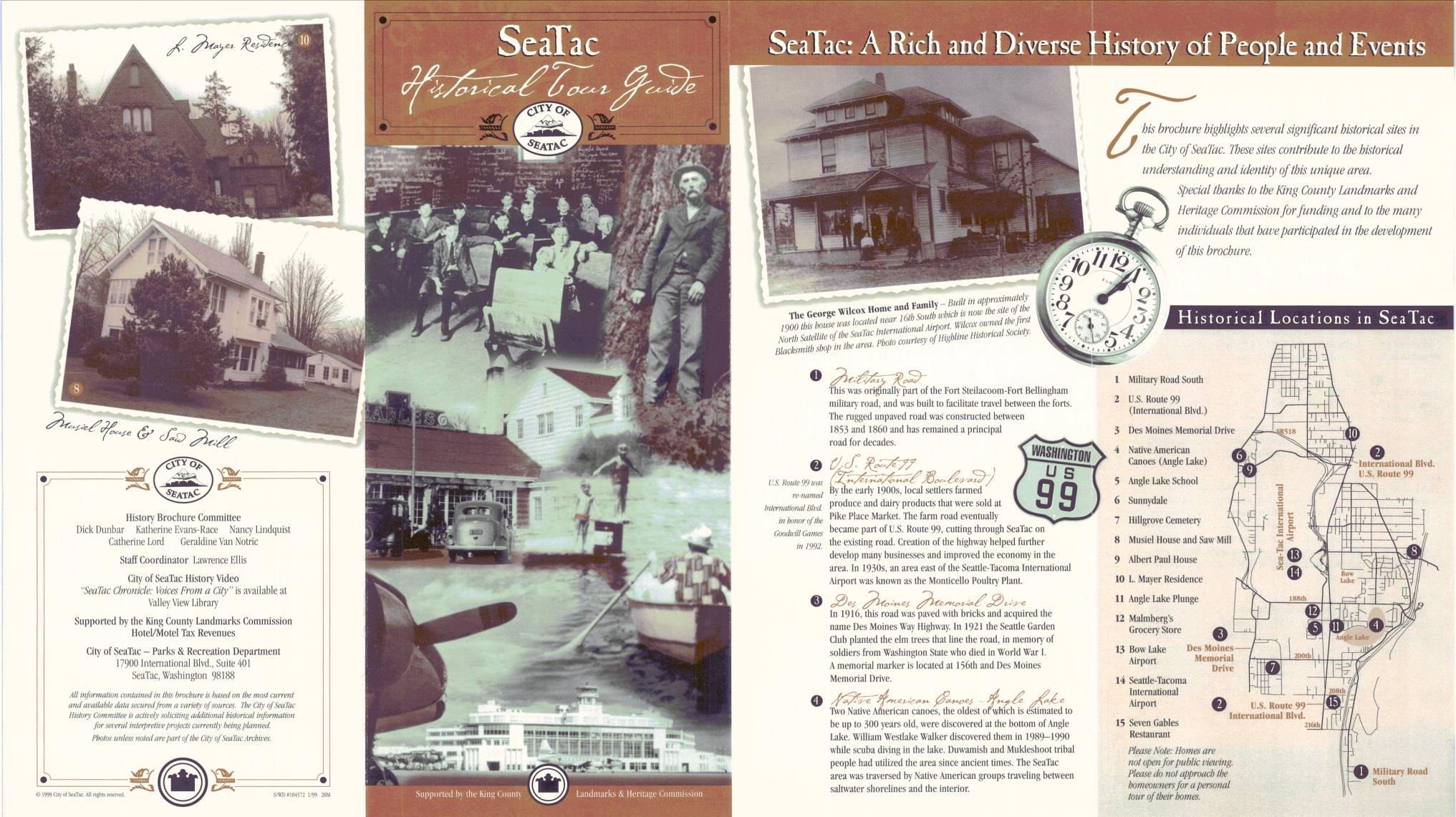
SeaTac historical tour guide
This SeaTac Historical Tour Guide brochure outlines 15 significant historical sites in the City of SeaTac, Washington, tracing the area's development from its origins as a Fort Steilacoom-Fort Bellingham military road corridor through early pioneer settlement, agricultural growth, and Japanese-American communities. It documents the transformation of the region into a major aviation hub, including the evolution of Bow Lake Airport into Seattle-Tacoma International Airport, which opened officially in 1947 after the Port of Seattle Commission voted to develop it into a major commercial airport serving the Puget Sound area. -
 2023-08-28
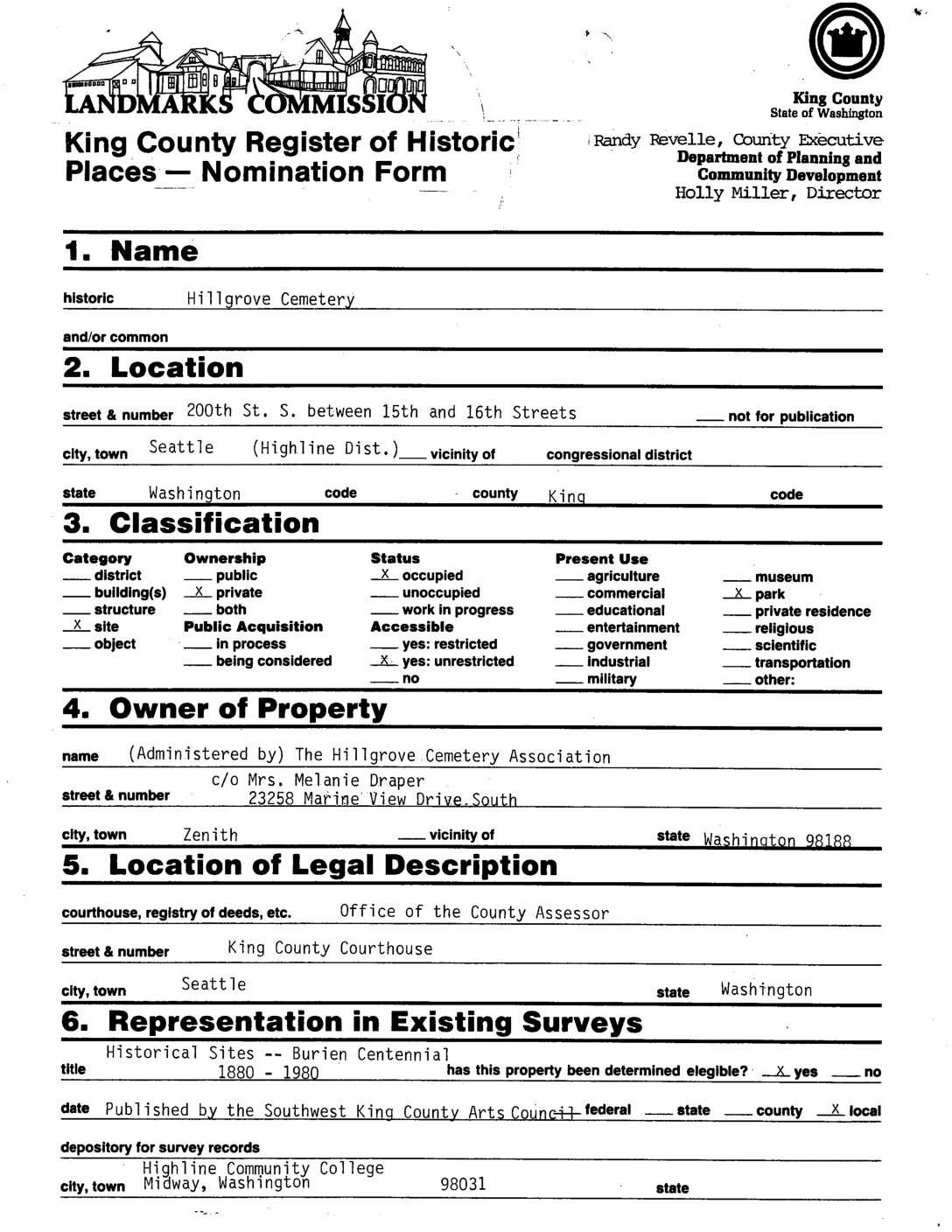
King County Register of Historic Places Nomination Form: Hillgrove Cemetery
Hillgrove Cemetery, located on 200th Street South in the Highline District of Seattle, is a historic private burial site consisting of 57 individually owned plots that serves as a significant link to the ethnic and pioneer heritage of the Highline/Des Moines area of south King County. The cemetery is surrounded on three sides by Port of Seattle land — the agency that operates Sea-Tac Airport — which erected the chain-link fence enclosing the property. Nominated to the King County Register of Historic Places, the site commemorates early settlers whose activities shaped the region's economic and civic development, including road-building, milling, transportation, and farming that contributed to what became Seattle's Pike Place Market. -
 2023-08-28
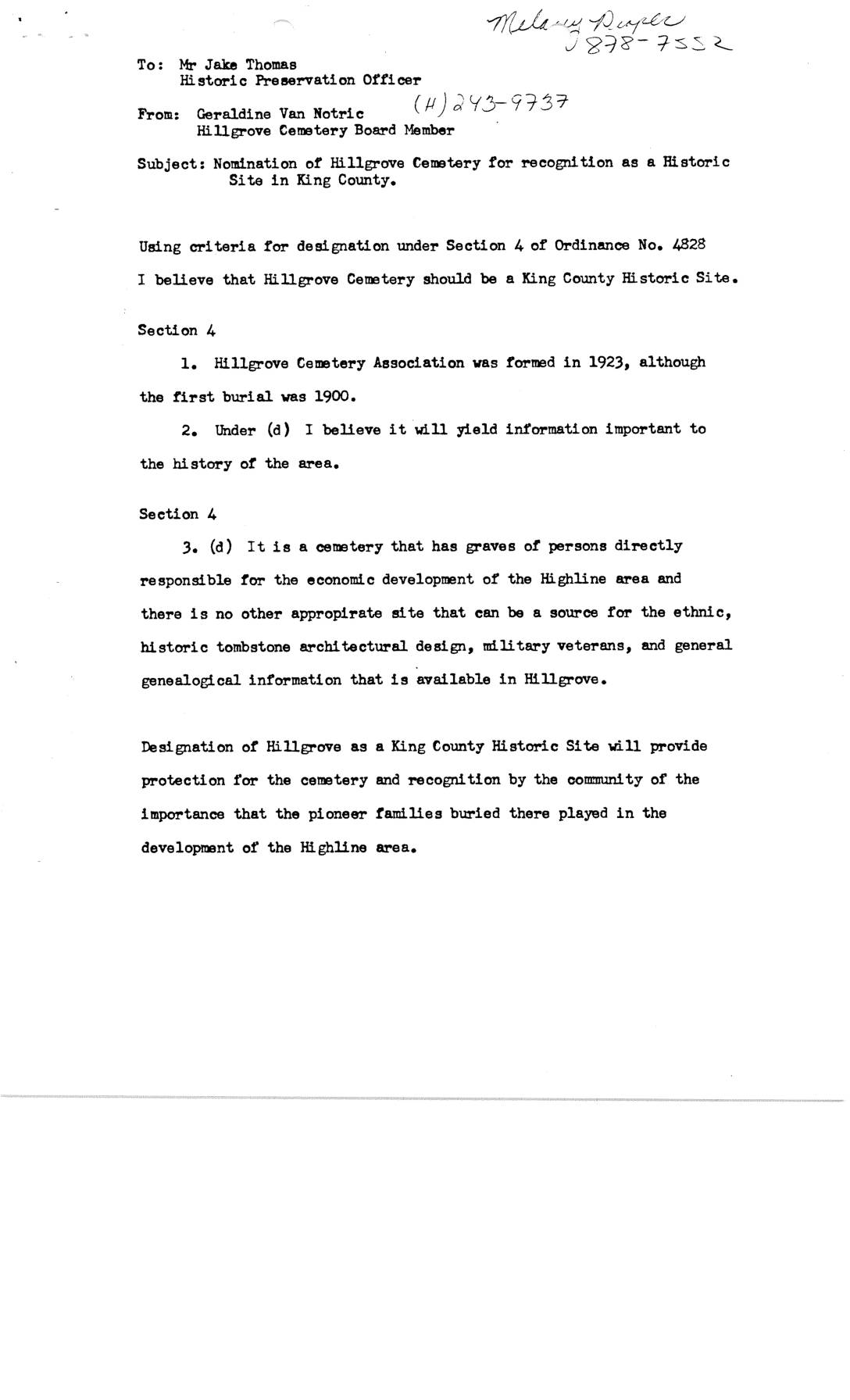
Nomination of Hillgrove Cemetery as a King County Historic Site
A nomination letter from Geraldine Van Notric, a Hillgrove Cemetery Board Member, requests that Hillgrove Cemetery — located near Sea-Tac International Airport at 200th Street and 16th Ave. So. — be designated a King County Historic Site under Ordinance No. 4828. The cemetery, established with its first burial in 1900 and formally organized as an association in 1923, contains graves of pioneers who shaped the Highline area's economic development, as well as military veterans from the Civil War and World War I. The nomination emphasizes that the designation would provide community recognition and protection for the site, not serve as a request for county repair funds. -
 2023-08-28
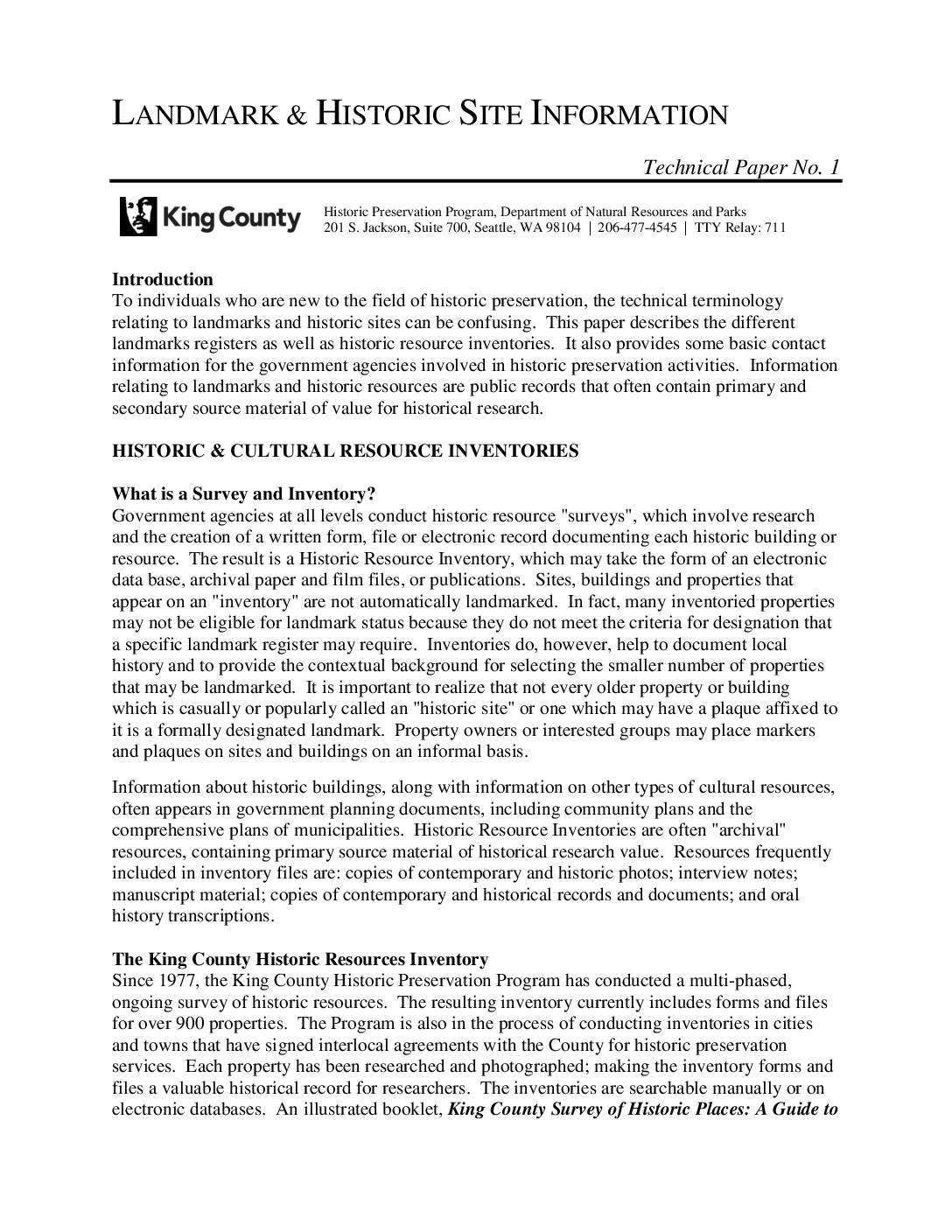
Landmark & Historic Site Information
This King County technical paper explains the difference between historic resource inventories and formally designated landmarks, clarifying that not every old building with a plaque is an officially recognized landmark. It describes the various levels of government — federal, state, county, and municipal — that maintain separate landmark registers, each with their own designation criteria, age requirements, and property-owner protections. The document also outlines several major inventory programs, including the King County Historic Resources Inventory and the Washington State Archaeological Site Inventory, which serve as research tools for identifying properties that may qualify for landmark status. -
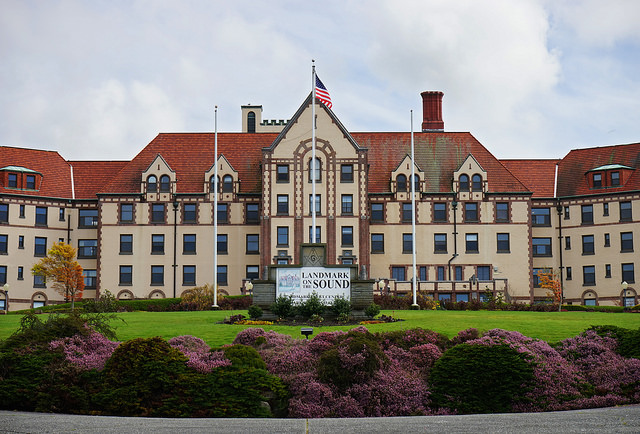
Masonic Home of Des Moines, Washington (Now Landmark on the Sound)
The image shows the Landmark on the Sound facility, a large historic building with red tile roofs, an American flag, and a clearly visible sign reading 'Landmark on Sound.' This property is located near Renton, Washington, in the Sea-Tac Airport noise impact area and has been associated with discussions about airport noise mitigation and land use planning. -
 2021-07-28
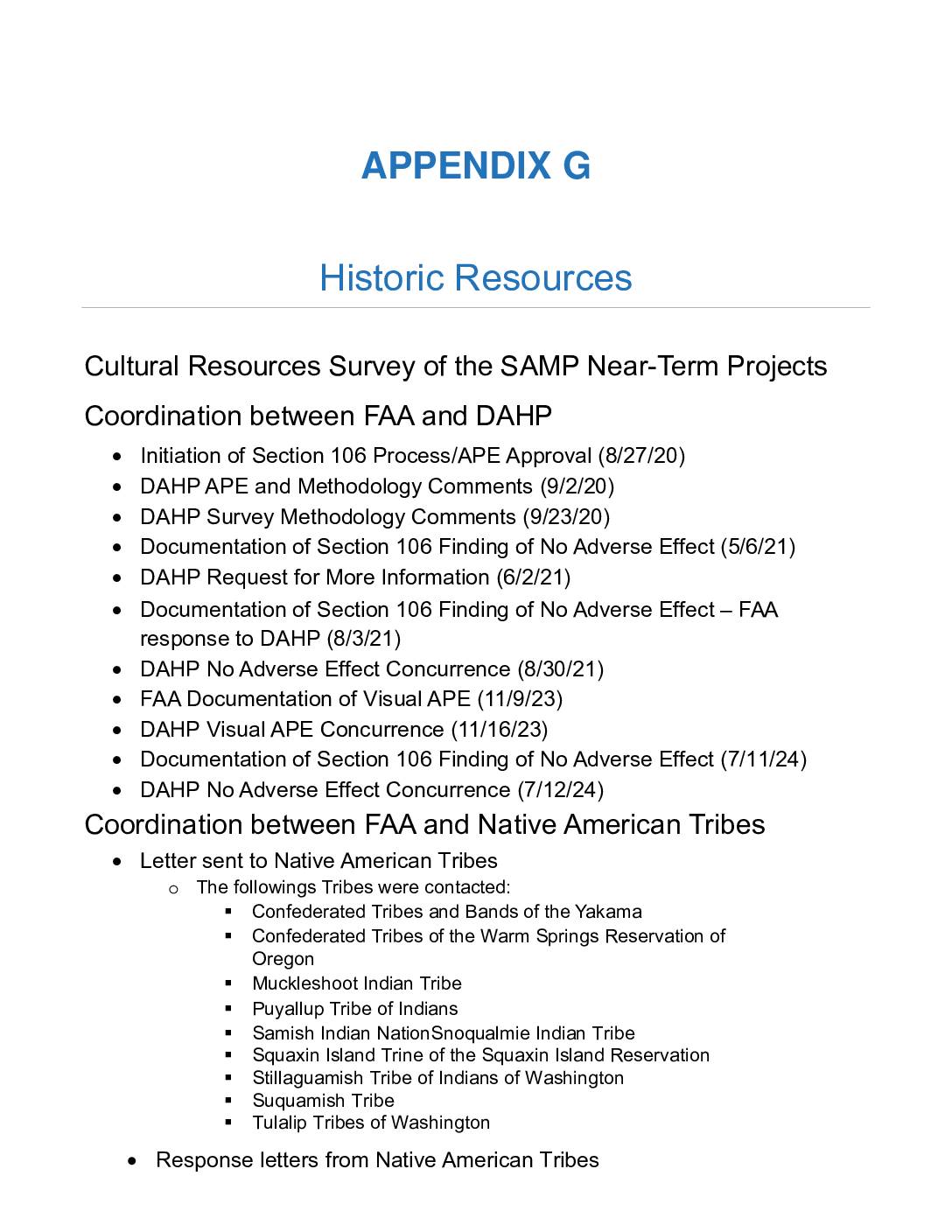
Appendix G: Historic Resources Cultural Resources Survey
This document is Appendix G of the Seattle-Tacoma International Airport Sustainable Airport Master Plan (SAMP), covering a cultural resources survey of near-term airport projects in King County. It outlines coordination between the FAA and the Washington State Department of Archaeology and Historic Preservation (DAHP), which ultimately concurred with findings of No Adverse Effect on historic resources. The appendix also documents outreach to ten Native American tribes as part of the federally required Section 106 review process. -
 2021-07-28
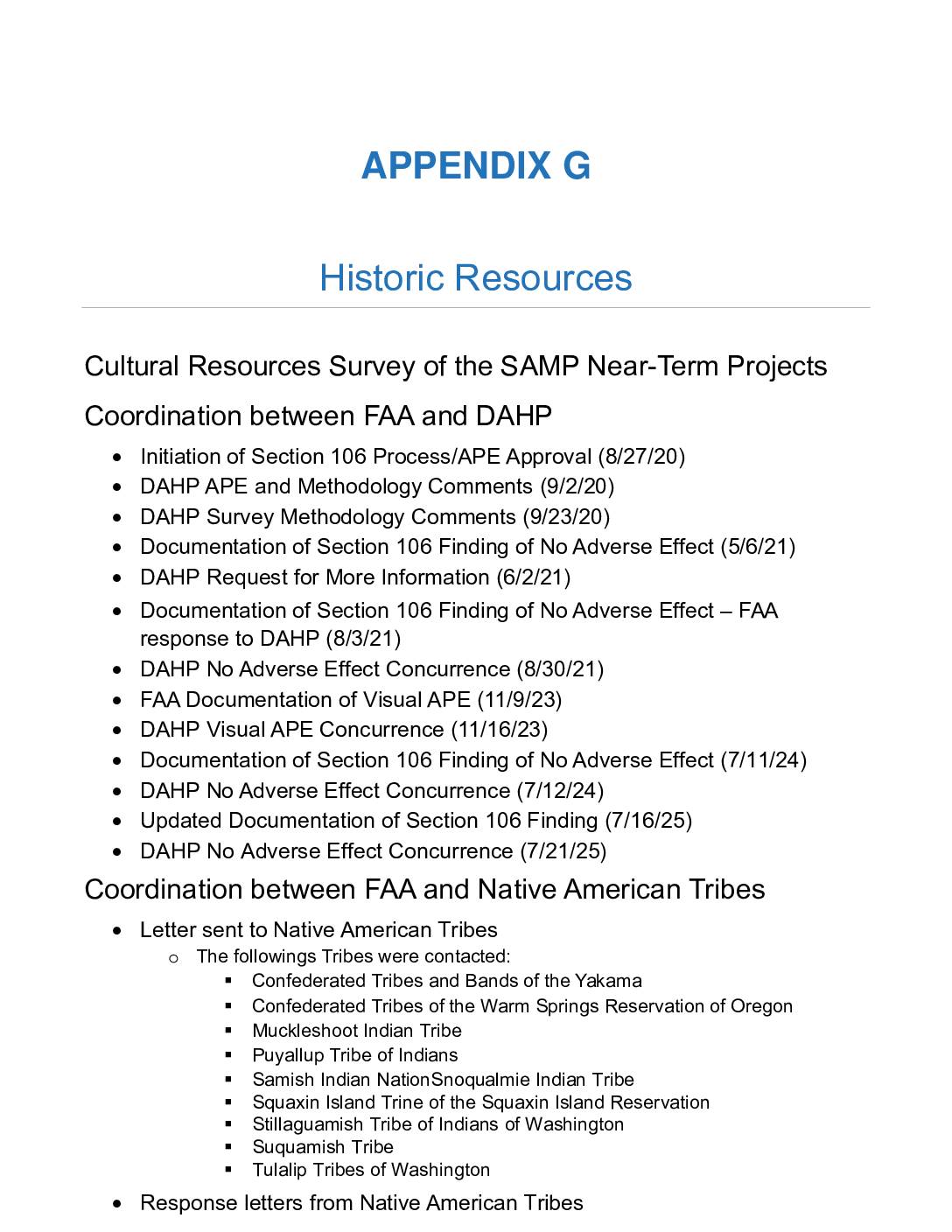
Cultural Resources Survey of the Seattle-Tacoma International Airport Sustainable Airport Master Plan Near-Term Projects, King County
This appendix documents the historic and cultural resources review conducted for near-term construction projects at Seattle-Tacoma International Airport, as part of the Sustainable Airport Master Plan (SAMP). It includes a timeline of coordination between the FAA and Washington's Department of Archaeology and Historic Preservation (DAHP), which ultimately concurred that the projects would have no adverse effect on historic properties. The appendix also records outreach to ten Native American tribes in the region, including the Muckleshoot, Puyallup, Tulalip, and Suquamish, as required under the federal Section 106 review process. -
 2017-06-02
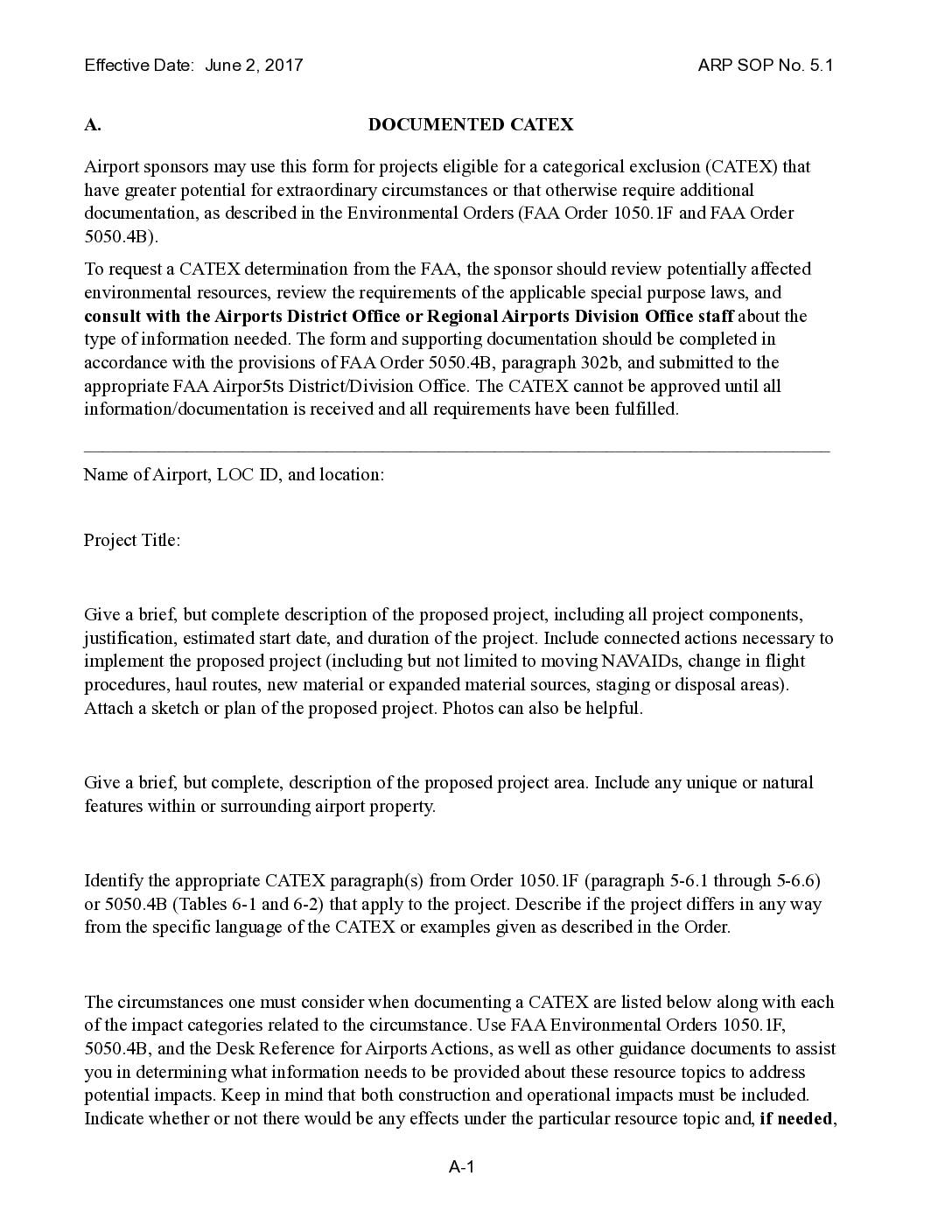
ARP SOP No. 5.1: Documented Categorical Exclusion (CATEX) Form
This FAA form (ARP SOP No. 5.1, effective June 2, 2017) guides airport sponsors through the process of requesting a Categorical Exclusion (CATEX) determination for projects that may have extraordinary environmental circumstances. It requires sponsors to document potential impacts across key resource areas, including historic and cultural resources under the National Historic Preservation Act and protected lands under Department of Transportation Act Sections 4(f) and 6(f). Sponsors must consult with their FAA Airports District or Regional Division Office and submit all required documentation before a CATEX can be approved.