TagSCAP(5)
-
King County aims to slash carbon emissions in half by 2030, including aviation
A plane takes off on Monday, December 11, 2017, at Seattle-Tacoma International Airport. Credit: KUOW Photo/Megan Farmer By John Ryan The King County Council unanimously approved a new climate strategy Tuesday, aimed at cutting the county’s climate-harming pollution in half in less than a decade. In addition to halving the climate impact of Washington’s most -
 2021-05-01
King County 2020 Strategic Climate Action Plan
King County's 2020 Strategic Climate Action Plan (SCAP), published in May 2021, outlines the county's strategies for reducing greenhouse gas emissions, supporting frontline communities, and preparing for climate change impacts. The plan covers areas including transportation, building energy, green infrastructure, food systems, housing, and environmental justice, with a strong emphasis on equity and community engagement. Note: this document addresses countywide climate policy and does not contain specific content related to Sea-Tac Airport noise policy. -
 2021-05-01
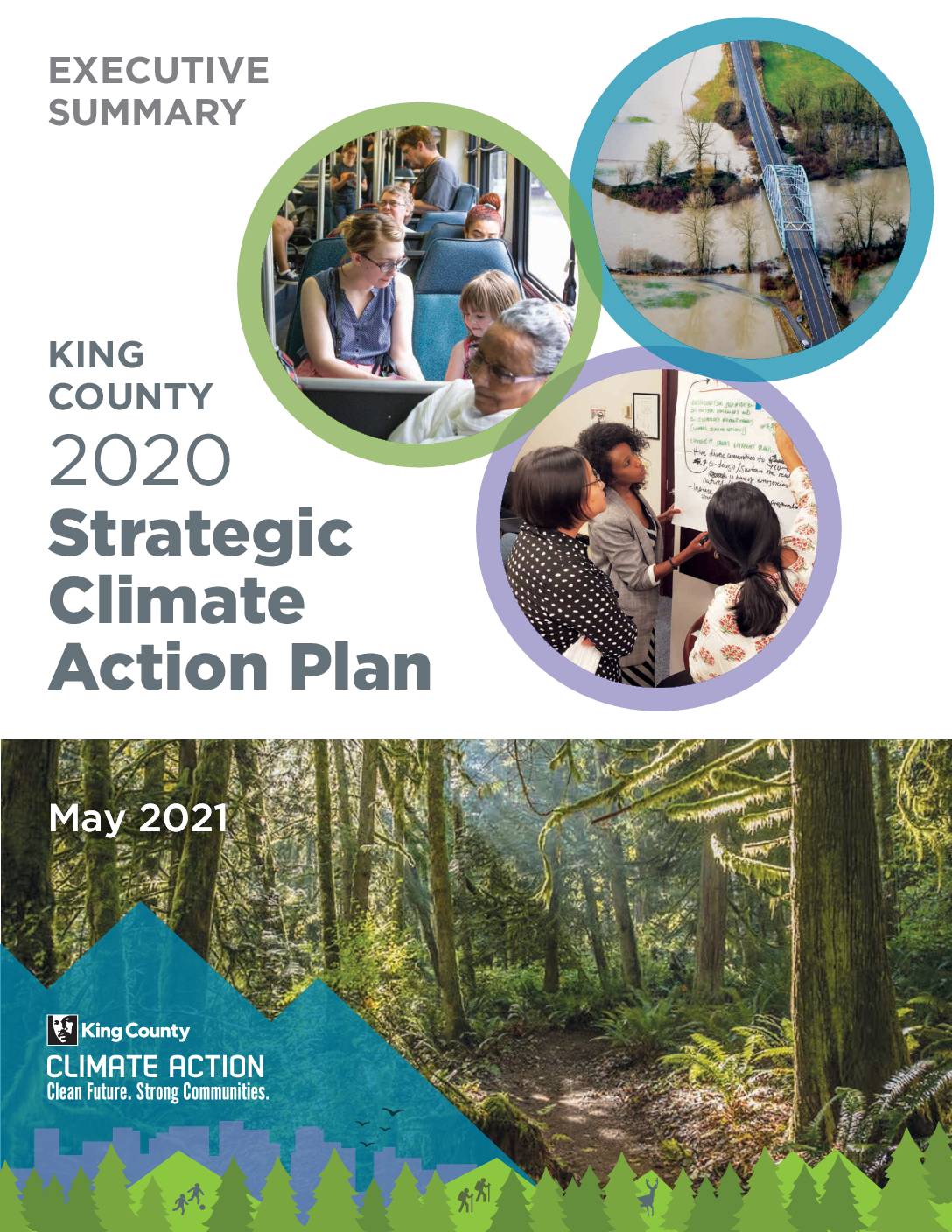
King County 2020 Strategic Climate Action Plan: Executive Summary
King County's 2020 Strategic Climate Action Plan (SCAP) is a five-year blueprint outlining the county's priorities for reducing greenhouse gas emissions and preparing for climate change impacts, with a strong emphasis on racial equity and frontline communities. The plan builds on accomplishments since the 2015 SCAP, including an 11 percent reduction in per-person emissions, expanded transit ridership, and increased green building certifications. It is updated every five years and guides collaboration across county departments, cities, community partners, and residents. -
 2021-04-19
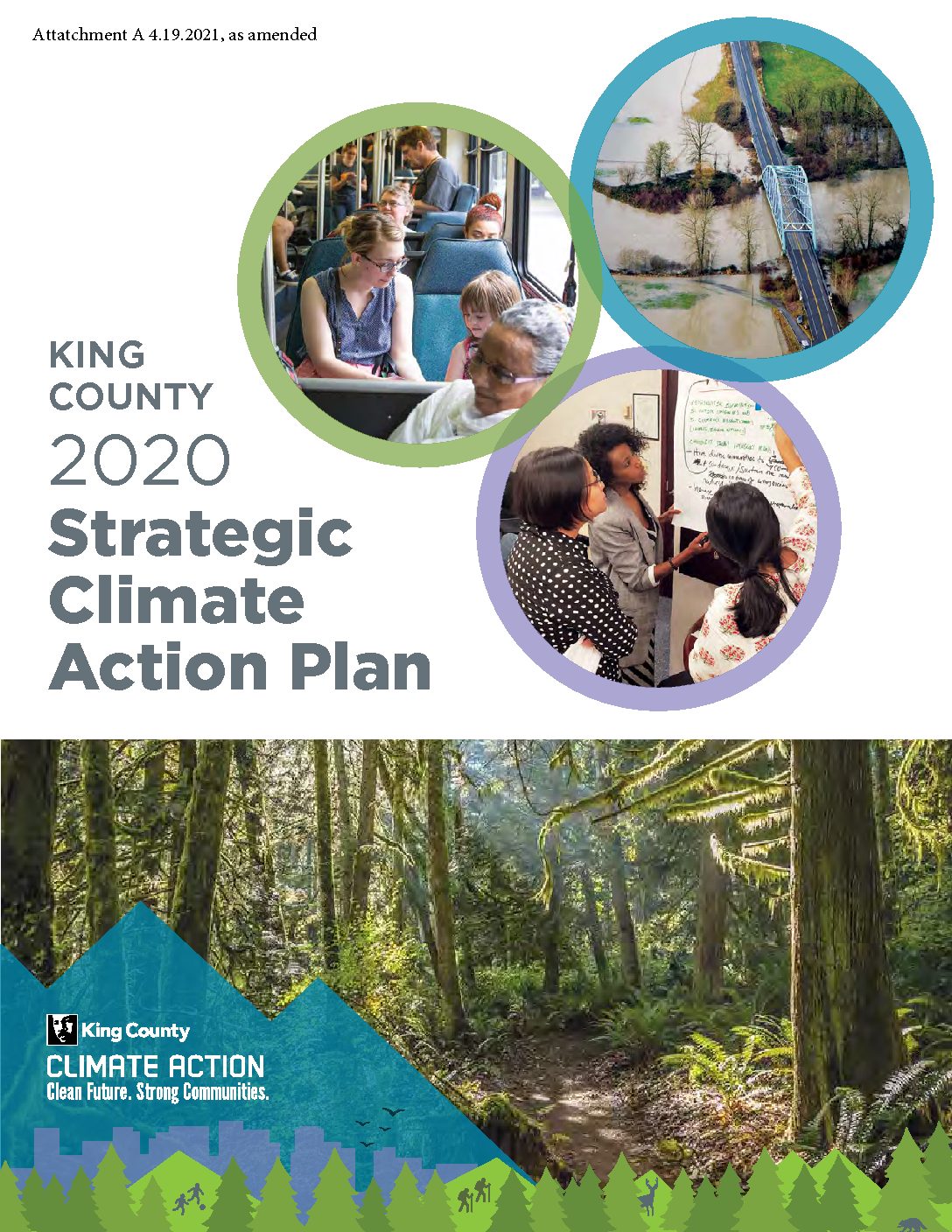
King County 2020 Strategic Climate Action Plan
King County's 2020 Strategic Climate Action Plan outlines the county's comprehensive approach to addressing climate change through three main areas: reducing greenhouse gas emissions, supporting sustainable and resilient frontline communities, and preparing for climate change impacts. The plan emphasizes equity and community engagement, particularly for historically underserved populations, and was developed with input from a Climate Equity Community Task Force representing diverse community organizations. It builds on progress made since the county's 2015 climate plan and sets targets and policies across transportation, energy, buildings, food systems, and land use. -
 2020-01-01
King County Joint Aircraft Emissions Technical & Community Task Force Report
A King County task force report examines aircraft emissions from airports including Seattle-Tacoma International Airport (SEA) and King County International Airport (KCIA), finding that aviation accounts for 15 percent of King County's total emissions and disproportionately harms nearby frontline communities. The report identifies key challenges to reducing aviation pollution at the local level, including limited regulatory authority and immature clean-energy technologies. Near-term recommendations focus on improving air quality around airports and phasing out leaded aviation fuel, while acknowledging that significant emissions reductions are unlikely in the short to medium term.