TagTitle 14(5)
-
 2025-07-02
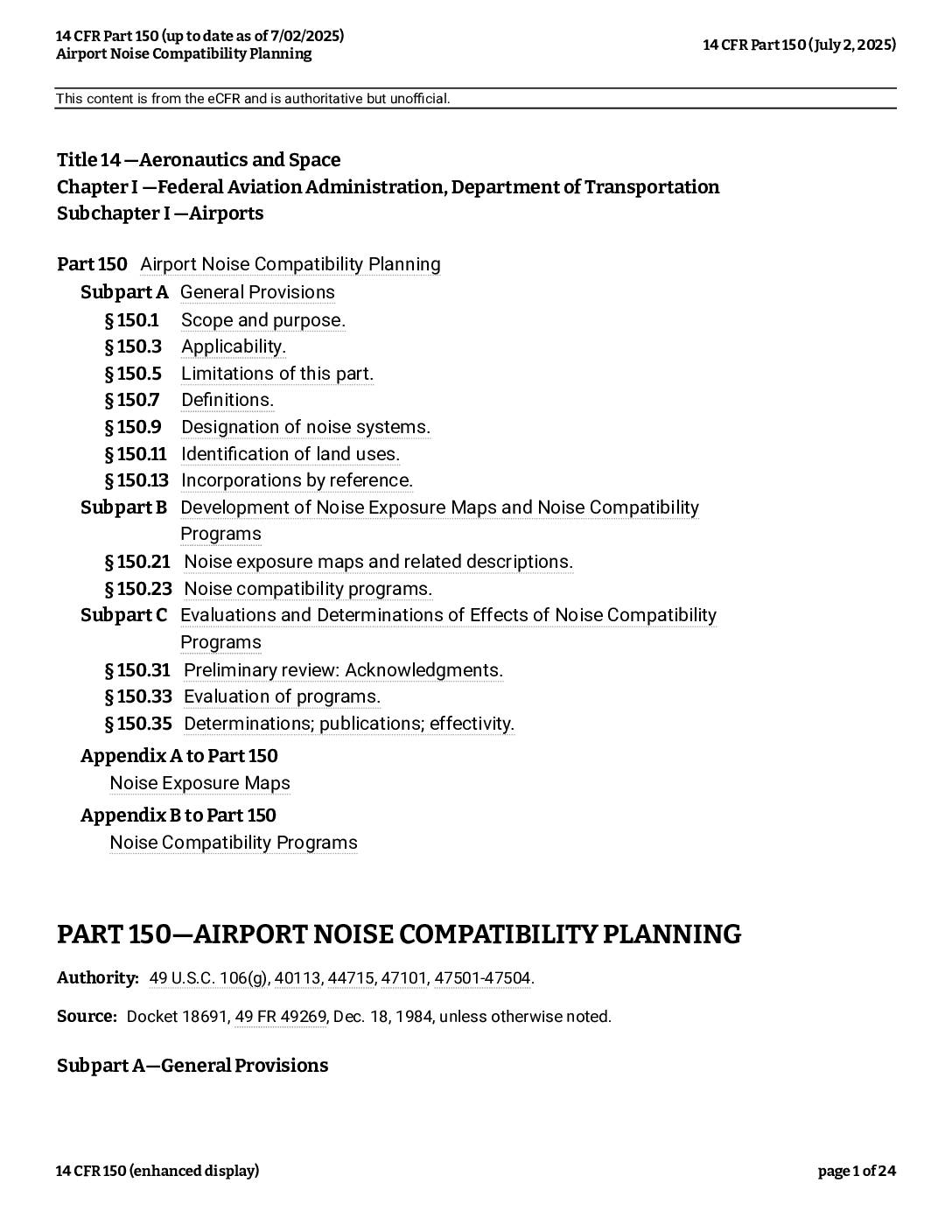
14 CFR part 150 — Airport noise compatibility planning
14 CFR Part 150 sets out the federal rules for airport noise compatibility planning, establishing how airports must measure noise, map affected areas, and develop programs to reduce conflicts between aircraft noise and nearby land uses. It defines key terms such as day-night average sound level (DNL), compatible and noncompatible land use, and noise exposure maps, and it outlines the process by which the FAA reviews and approves or disapproves airport noise compatibility programs. Importantly, FAA approval of such a program does not itself commit federal funding or authorize specific actions without further environmental review. -
 2024-07-12
Noise standards: Aircraft type and airworthiness certification (14 CFR Part 36)
★Title 14 CFR Part 36 sets the federal noise standards that aircraft must meet to receive type and airworthiness certificates from the FAA. It covers a wide range of aircraft, including large commercial jet airplanes, propeller-driven small and commuter planes, helicopters, and tiltrotors, establishing specific noise measurement, evaluation, and limit requirements for each category. These rules are relevant to airports like Sea-Tac because they define the baseline noise performance standards that aircraft operating in the area must satisfy. -
 2024-07-12
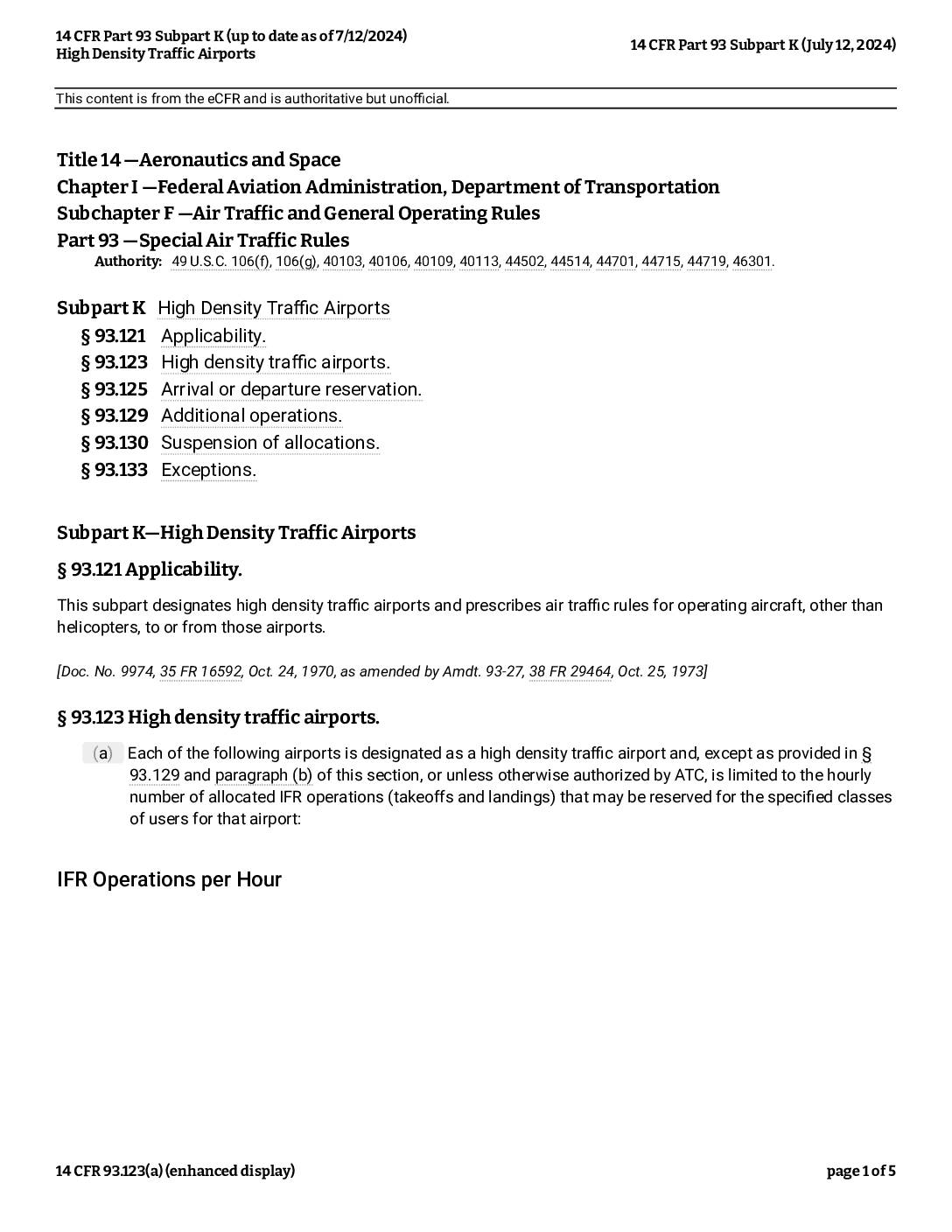
14 CFR part 93 subpart K — High density traffic airports
This federal regulation identifies certain U.S. airports as 'high density traffic airports' and sets hourly limits on the number of IFR (instrument flight rules) takeoffs and landings allowed there. The designated airports include LaGuardia, Newark, O'Hare, Ronald Reagan National, and John F. Kennedy, with specific caps assigned to air carriers, commuter airlines, and other users. Note that this regulation does not apply to Sea-Tac Airport and pertains to air traffic slot management rather than noise policy. -
CFR Title 14 Part 161 NOTICE AND APPROVAL OF AIRPORT NOISE AND ACCESS RESTRICTIONS
★Title 14: Aeronautics and Space PART 161—NOTICE AND APPROVAL OF AIRPORT NOISE AND ACCESS RESTRICTIONS Contents Subpart A—General Provisions §161.1 Purpose. §161.3 Applicability. §161.5 Definitions. §161.7 Limitations. §161.9 Designation of noise description methods. §161.11 Identification of land uses in airport noise study area. Subpart B—Agreements §161.101 Scope. §161.103 Notice of the proposed restriction. §161.105 Requirements for new entrants. §161.107 Implementation of the restriction. §161.109 Notice of -
 2007-08-09
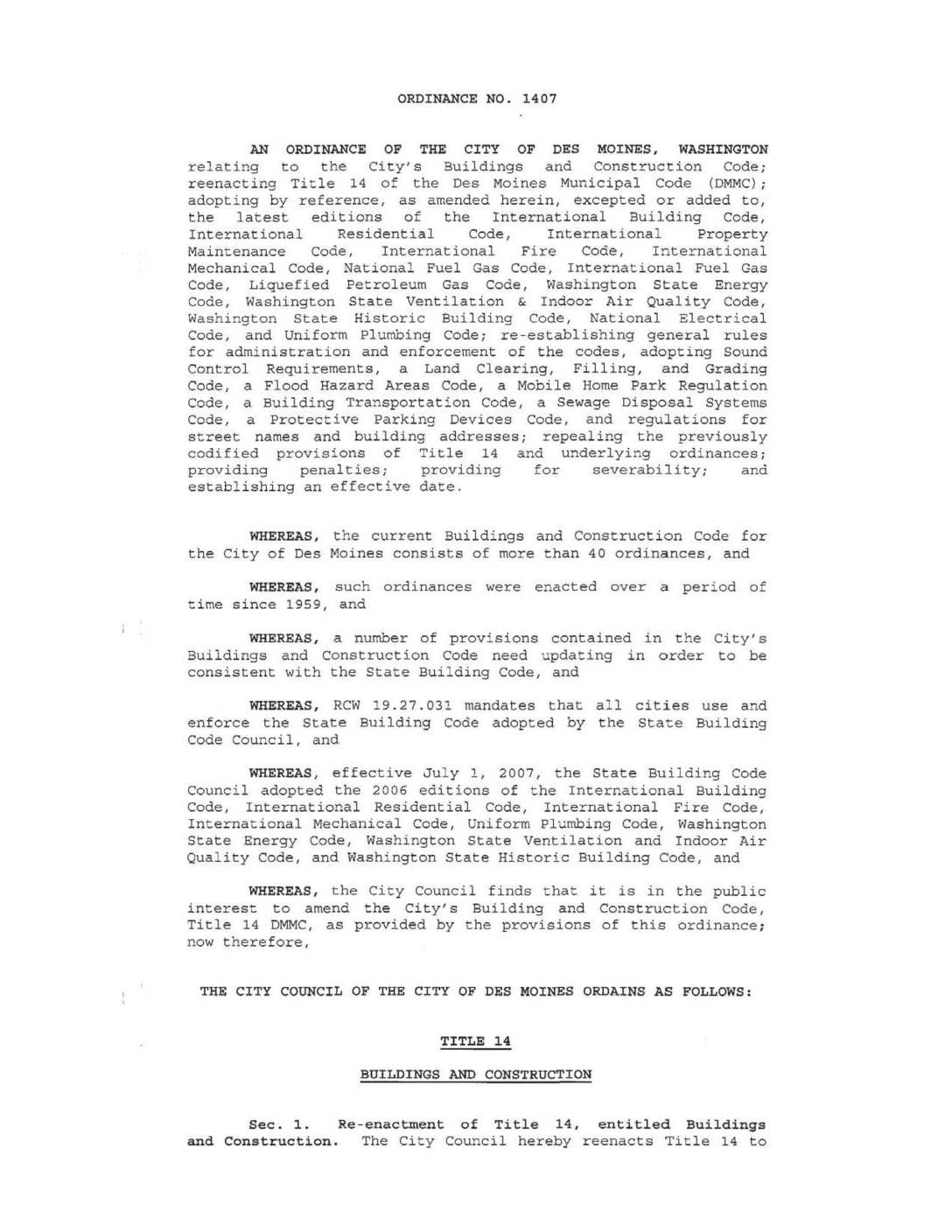
Ordinance No. 1407: Buildings and construction code
Ordinance No. 1407 is a City of Des Moines, Washington municipal ordinance that updates and consolidates the city's Buildings and Construction Code (Title 14) by adopting the latest editions of major building, fire, mechanical, electrical, and plumbing codes, including Sound Control Requirements relevant to the Sea-Tac Airport noise environment. The ordinance repeals more than 40 previously enacted building-related ordinances dating back to 1959 and brings the city into compliance with state-mandated building standards under RCW 19.27.031. It establishes updated rules for administration, enforcement, and a range of construction-related regulations applicable within the City of Des Moines.