TagMap(375)
-
 2032-01-01
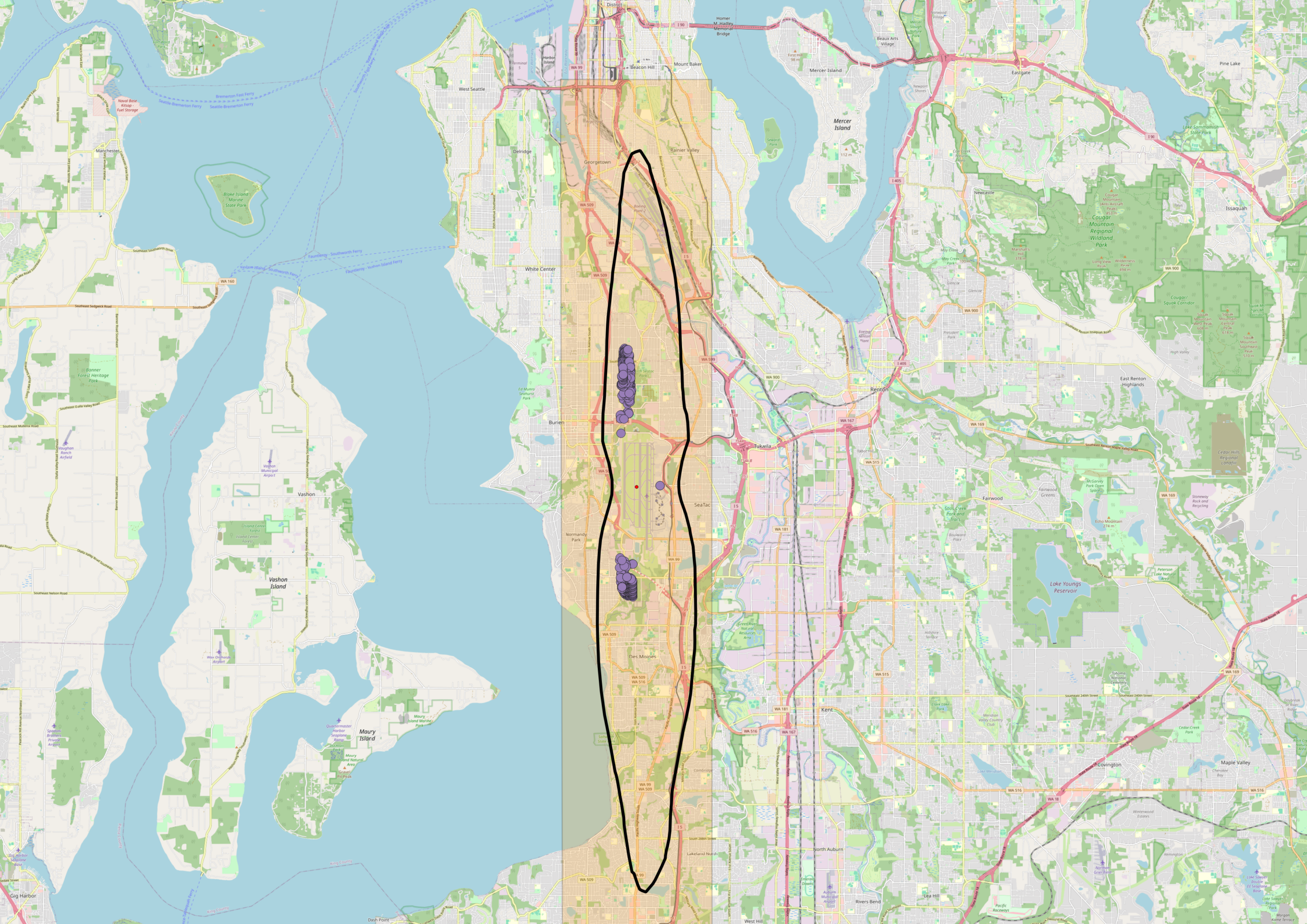
DNL 65 Noise Contour Map — Sea-Tac Airport Area with Noise Complaint Markers
An OpenStreetMap-based map centered on the Seattle–Tacoma (Sea-Tac) Airport area showing a highlighted corridor (shaded in orange/yellow) and a black oval outline delineating what appears to be a flight path or noise impact study zone. Clustered purple markers, likely representing noise complaint locations or monitoring stations, are visible near Burien and a southern cluster near Des Moines/Federal Way, with Sea-Tac Airport identifiable near the center of the map. -

Puget Sound Gateway Program Phase 1 SR-509 Completion Project Environmental Re-Evaluation Map
Map from the Puget Sound Gateway Program Phase 1 SR-509 Completion Project Environmental Re-Evaluation (page 343 cropped). Shows 2003 FEIS Alternative C2 and Phase 1 Improvements along I-5 corridor between S 272nd St and S 188th St in King County, Washington, covering Federal Way, Des Moines, SeaTac, Burien, Kent, and Tukwila. Documents interchange configurations (Full -
 2026-08-28
Chapter 4 Neighborhoods Element
Chapter 4 of the City of SeaTac's Envision SeaTac 2044 Comprehensive Plan outlines the Neighborhoods Element, which establishes goals and policies for neighborhood planning frameworks, including Neighborhood Villages, Corner Store/Mixed Use areas, and residential zones. The element addresses community design, placemaking, and 'complete neighborhood' strategies to guide how SeaTac's residential areas grow and develop through 2044. Note that this document focuses on neighborhood land use planning and is not directly related to Sea-Tac Airport noise policy. -
 2026-08-28
Chapter 4 Neighborhoods Element
Chapter 4 of the City of SeaTac's Envision SeaTac 2044 Comprehensive Plan outlines the Neighborhoods Element, which establishes goals and policies for neighborhood planning frameworks, including Neighborhood Villages, Corner Store/Mixed Use areas, and residential zones. The element addresses community design, placemaking, and 'complete neighborhood' strategies to guide how SeaTac's residential areas grow and develop through 2044. Note that this document focuses on neighborhood land use planning and is not directly related to Sea-Tac Airport noise policy. -
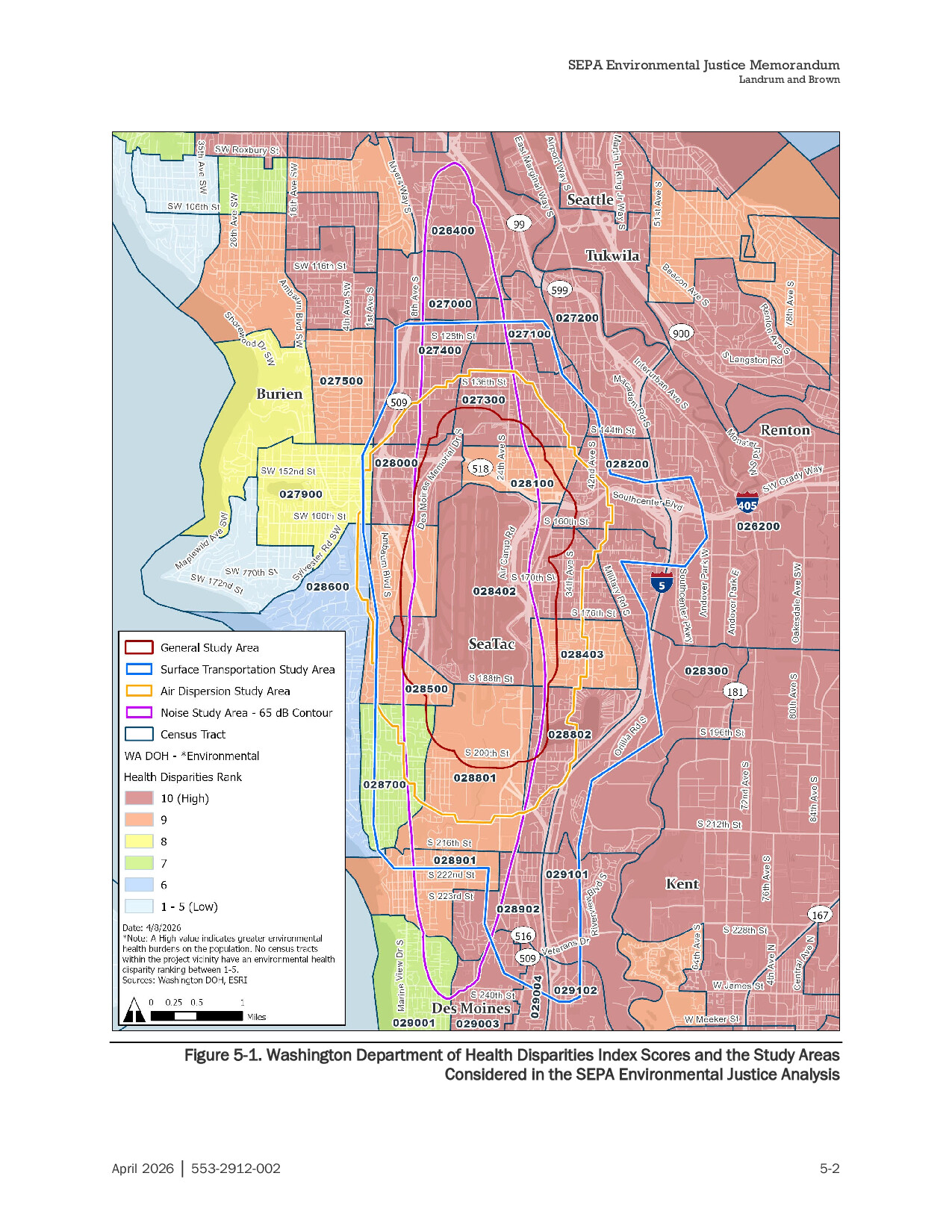
Appendix K SEPA Environmental Justice Disparities Map page 124
Figure 5-1 from a SEPA Environmental Justice Memorandum prepared by Landrum and Brown (document no. 553-2912-002, dated April 2026) maps Washington Department of Health Environmental Health Disparities Index scores across census tracts in the Sea-Tac Airport vicinity, including Seattle, Tukwila, Burien, SeaTac, Renton, Kent, and Des Moines. The map delineates four overlapping study areas—General Study Area, Surface Transportation Study Area, Air Dispersion Study Area, and Noise Study Area (65 dB contour)—over a background showing health disparity rankings ranging from 1–5 (Low) to 10 (High), with most tracts in the project vicinity ranked 9–10. -
 2026-07-14
Sea-Tac Communities Plan: Map Supplement to Sixth Month Report — Community Trends and Characteristics, Land Use, Ground Transportation and Traffic, Aesthetic and Visual Characteristics, Natural Determinants
This document is a map supplement to the sixth-month element report for the Sea-Tac Communities Plan, a planning study sponsored by the Port of Seattle and King County and partially funded by a federal FAA grant. It covers five key topics—community trends and characteristics, land use, ground transportation and traffic, aesthetic and visual characteristics, and natural determinants—for the communities surrounding Seattle-Tacoma International Airport. The supplement includes 1970 census tract maps of the Sea-Tac area and an errata note correcting a data classification error for Census Tract 272 related to public assistance recipients. -
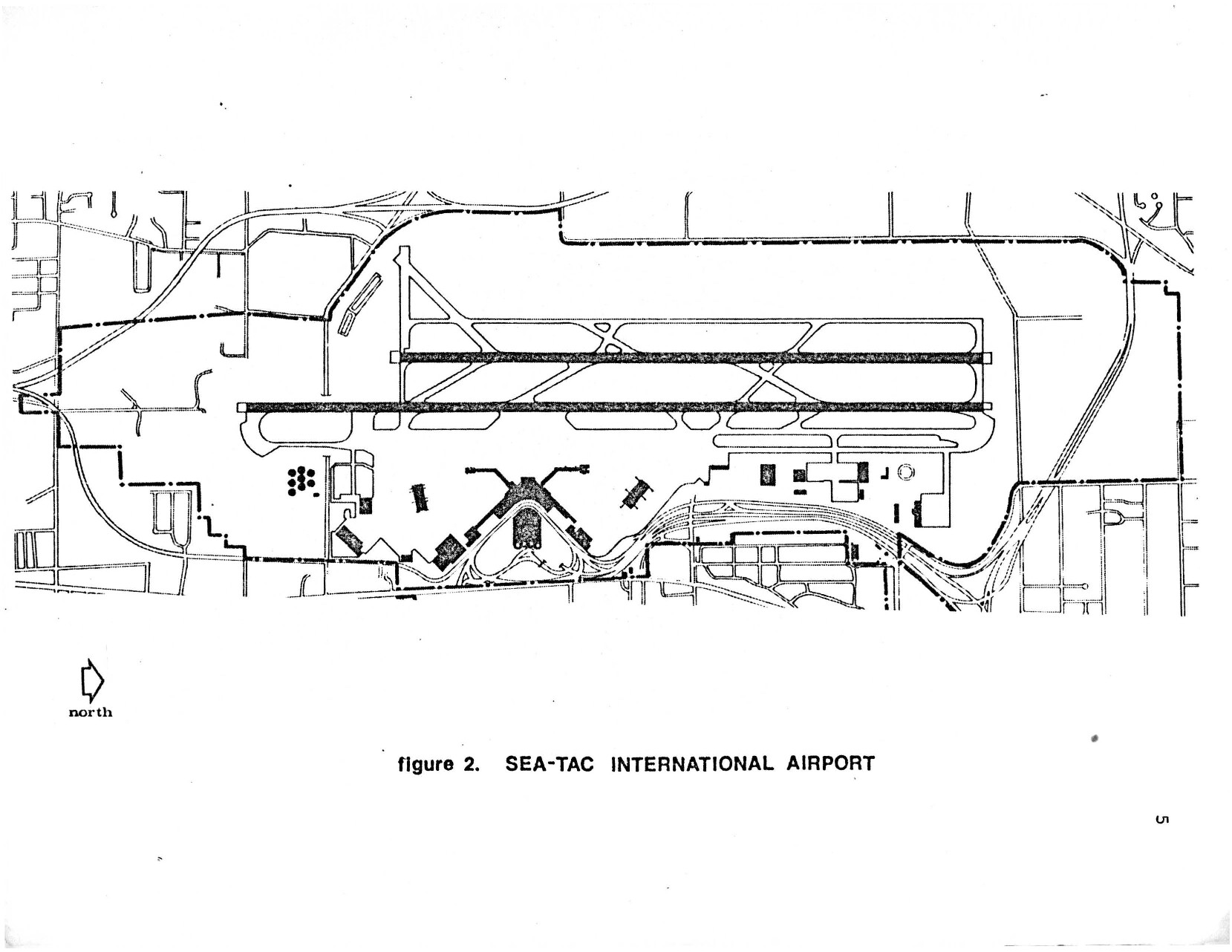
Second Runway Aerial Line Drawing – Planning for the airport and its environs: The Sea-Tac success story page 9
A black-and-white site plan map labeled 'Figure 2. SEA-TAC INTERNATIONAL AIRPORT,' showing the airport's runway configuration, taxiways, terminal area, and surrounding road network. A north arrow is included in the lower left corner, orienting the map with runways running roughly east-west. -
 2026-07-10
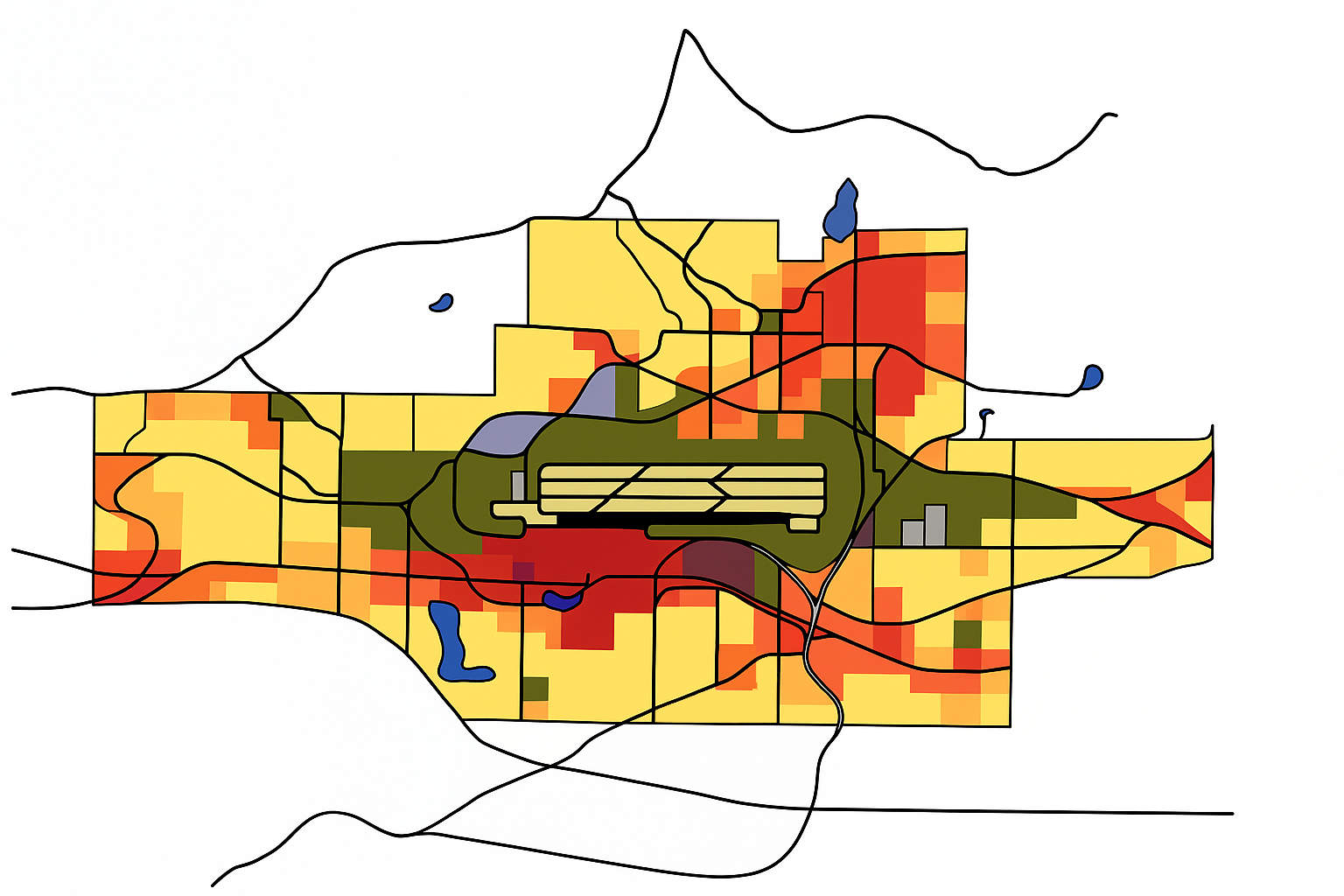
Sea-Tac Communities Plan – Planning Maps
The Sea-Tac Communities Plan really was a plan. Because Sea-Tac Airport was sited in a growing area, the Second Runway expansion presented huge challenges. Sea-Tac became the ‘alpha-tester’ for many FAA initiatives. The question they were trying to answer was: how can any major airport function in harmony with its surroundings? One idea, which the -
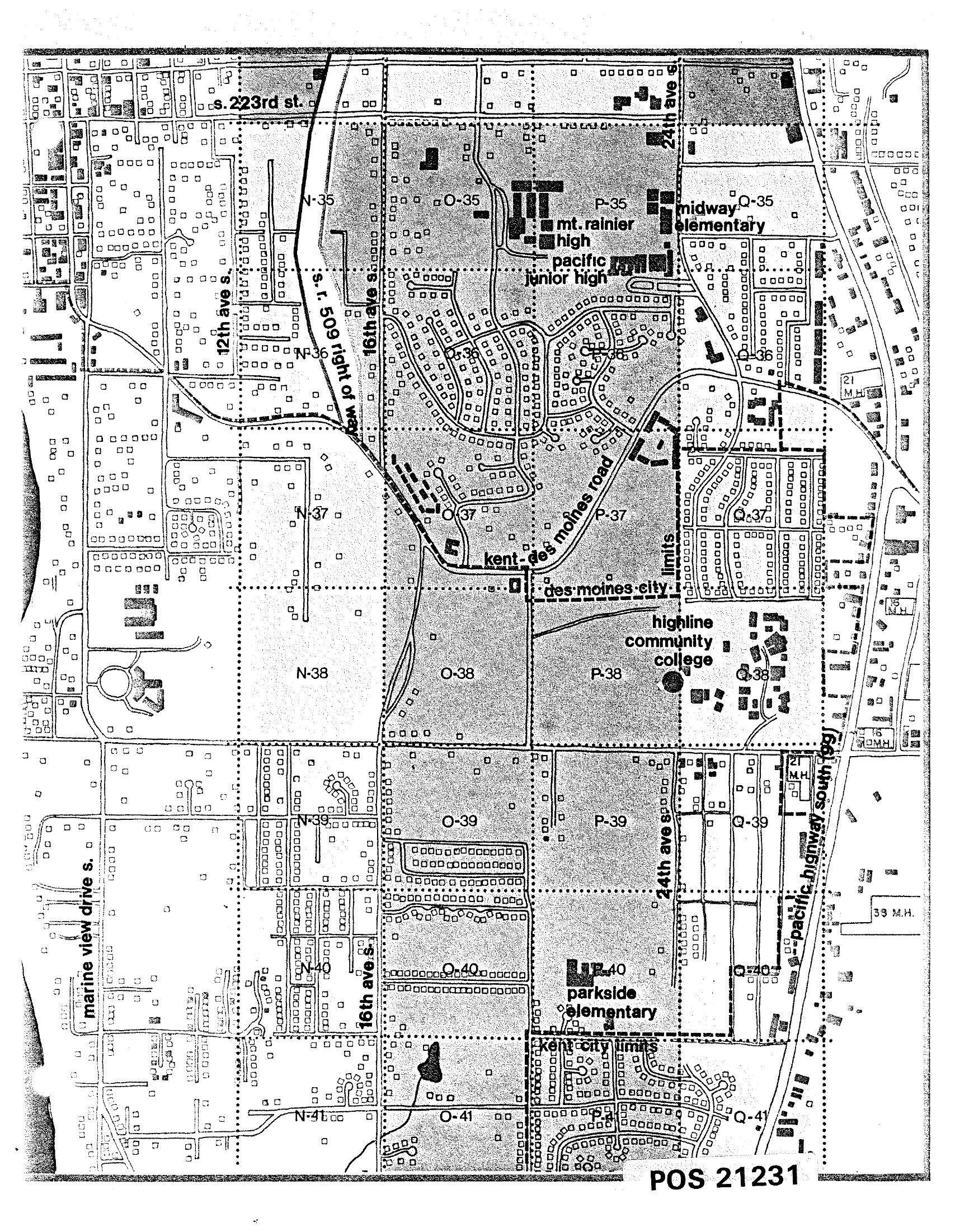
STCP Zoning and Land Use Map — Des Moines and Kent Area
A black-and-white planning grid map (document reference POS 21231) showing residential and institutional land use in the Des Moines/Kent area south of Seattle, including landmarks such as Mt. Rainier High School, Pacific Junior High, Midway Elementary, Parkside Elementary, and Highline Community College. Major roads visible include S. 223rd St., 16th Ave. S., 24th Ave. S., Kent-Des Moines Road, and Pacific Highway South, with Des Moines city limits and Kent city limits marked. -
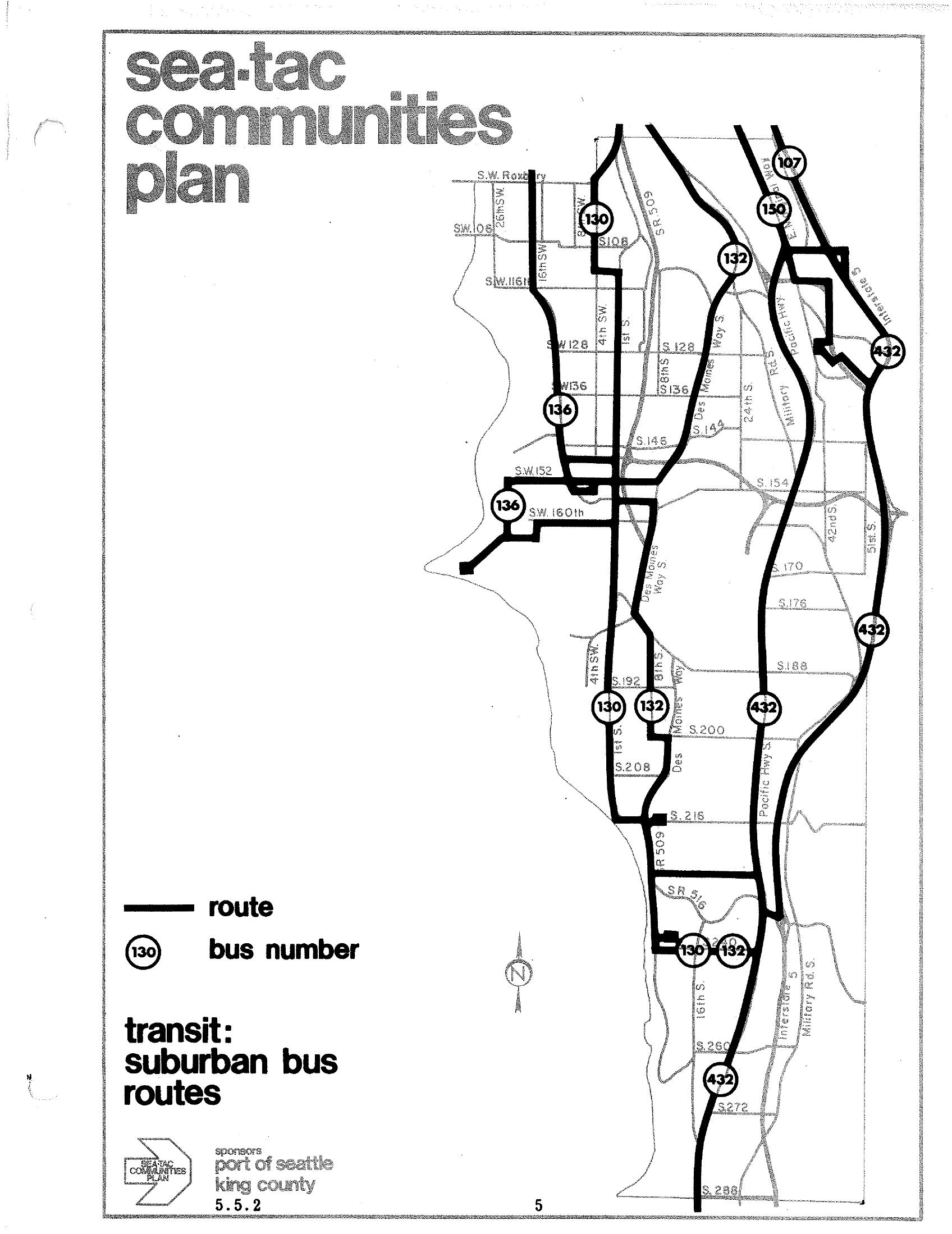
STCP Suburban Bus Routes Transit Map — Routes 107, 130, 132, 136, and 432
A transit map from the Sea-Tac Communities Plan (document section 5.5.2) showing suburban bus routes 107, 130, 132, 136, 432, and others in the Sea-Tac area. The plan was sponsored by the Port of Seattle and King County.