TagWater Quality(475)
-
 2026-08-28
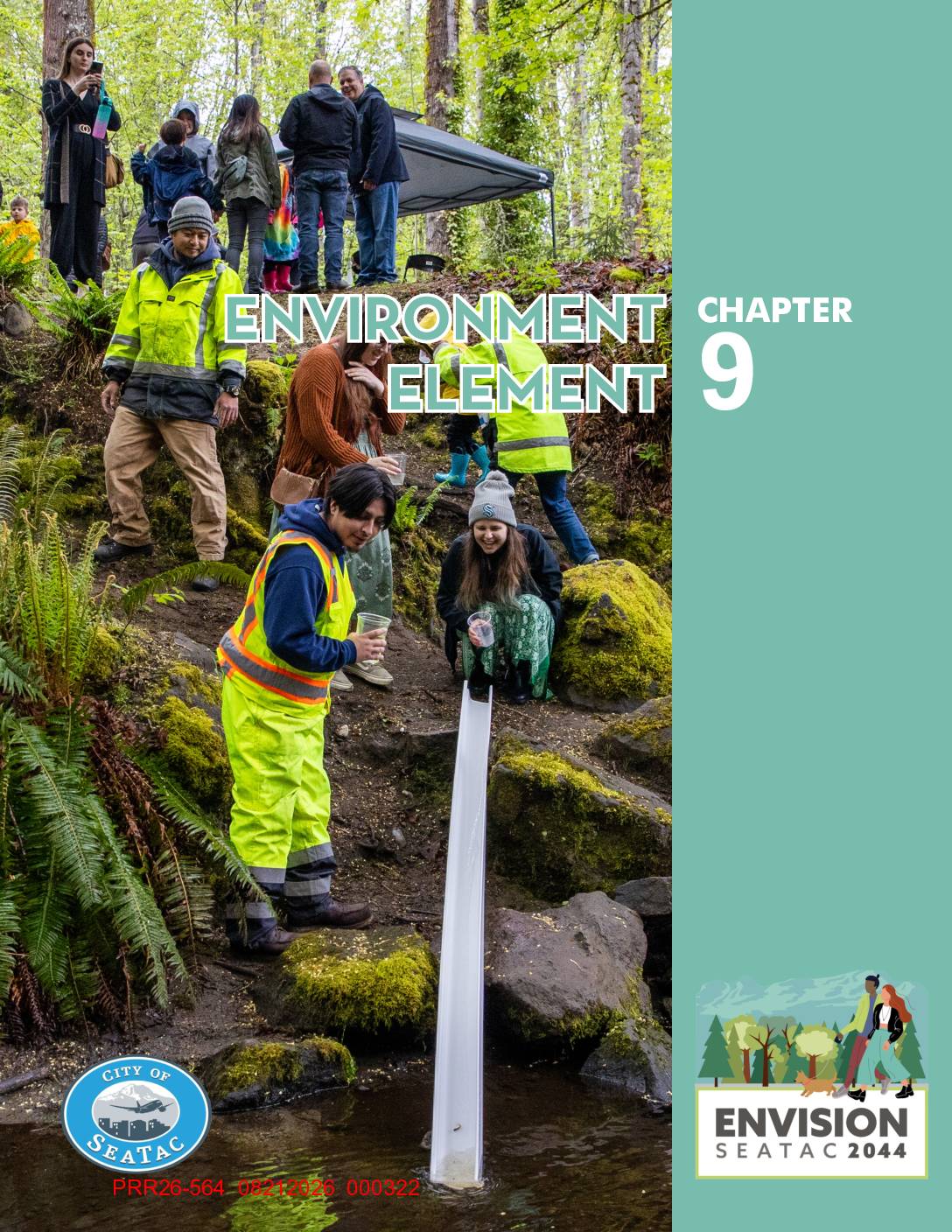
Chapter 9 Environment Element
Chapter 9 of SeaTac's Envision SeaTac 2044 Comprehensive Plan outlines the city's environmental goals and policies covering water quality, air quality, greenhouse gas reduction, wetlands, wildlife habitat, and shoreline management. The element also addresses environmentally sensitive areas such as steep slopes, floodplains, and groundwater aquifers, and includes recommended implementation strategies. Note that while this chapter covers broad environmental planning for the City of SeaTac, it does not specifically address Sea-Tac Airport noise policy. -
 2026-08-28
Chapter 9 Environment Element
Chapter 9 of SeaTac's Envision SeaTac 2044 Comprehensive Plan outlines the city's environmental goals and policies covering water quality, air quality, greenhouse gas reduction, wetlands, wildlife habitat, and shoreline management. The element also addresses environmentally sensitive areas such as steep slopes, floodplains, and groundwater aquifers, and includes recommended implementation strategies. Note that while this chapter covers broad environmental planning for the City of SeaTac, it does not specifically address Sea-Tac Airport noise policy. -
 2026-08-28
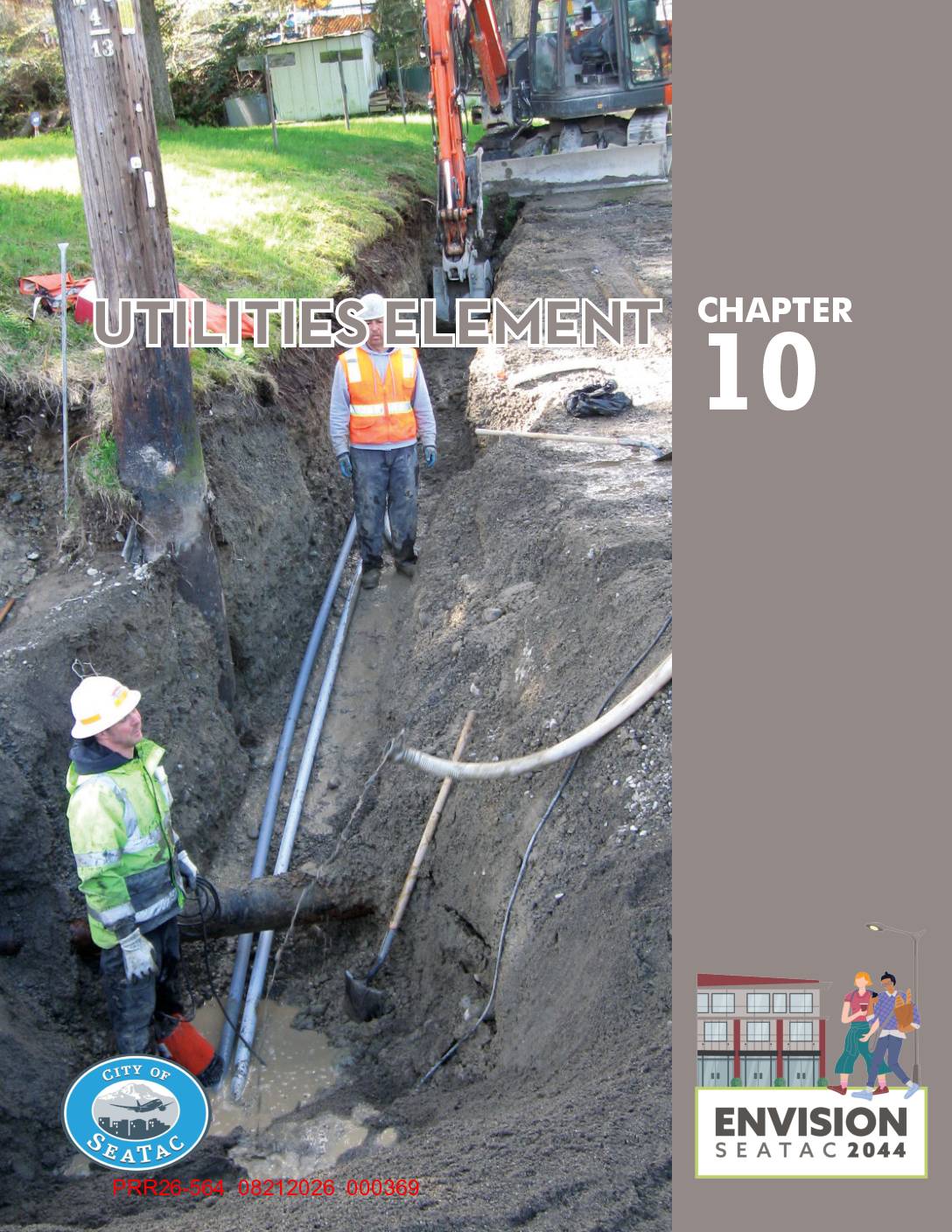
Chapter 10 Utilities Element
This document is Chapter 10 of the City of SeaTac's Comprehensive Plan (Envision SeaTac 2044), covering the Utilities Element. It outlines the city's vision and policies for ensuring reliable, equitable, and resilient utility services—including water, sewer, electricity, natural gas, telecommunications, and stormwater—to support future growth through 2044. The chapter details goals for coordinating with utility providers such as Puget Sound Energy, Seattle City Light, and various water and sewer districts that serve the SeaTac community. -
 2026-08-28
Chapter 10 Utilities Element
This document is Chapter 10 of the City of SeaTac's Comprehensive Plan (Envision SeaTac 2044), covering the Utilities Element. It outlines the city's vision and policies for ensuring reliable, equitable, and resilient utility services—including water, sewer, electricity, natural gas, telecommunications, and stormwater—to support future growth through 2044. The chapter details goals for coordinating with utility providers such as Puget Sound Energy, Seattle City Light, and various water and sewer districts that serve the SeaTac community. -
2026-08-21
D.C. Circuit Upholds EPA Designation of PFOA and PFOS as CERCLA Hazardous Substances | Insights | Holland & Knight
Unanimous Decision Upholds EPA Action Creating Superfund Liability for 2 Best-Known PFAS Holland & Knight Alert Matthew Z. Leopold | Dianne R. Phillips | Andy Emerson | Clarissa Howley Mills | Jeff Porter | Rafe Petersen | Evan Neustater Highlights A three-judge panel of the U.S. Court of Appeals for the District of Columbia Circuit -
 2026-07-30
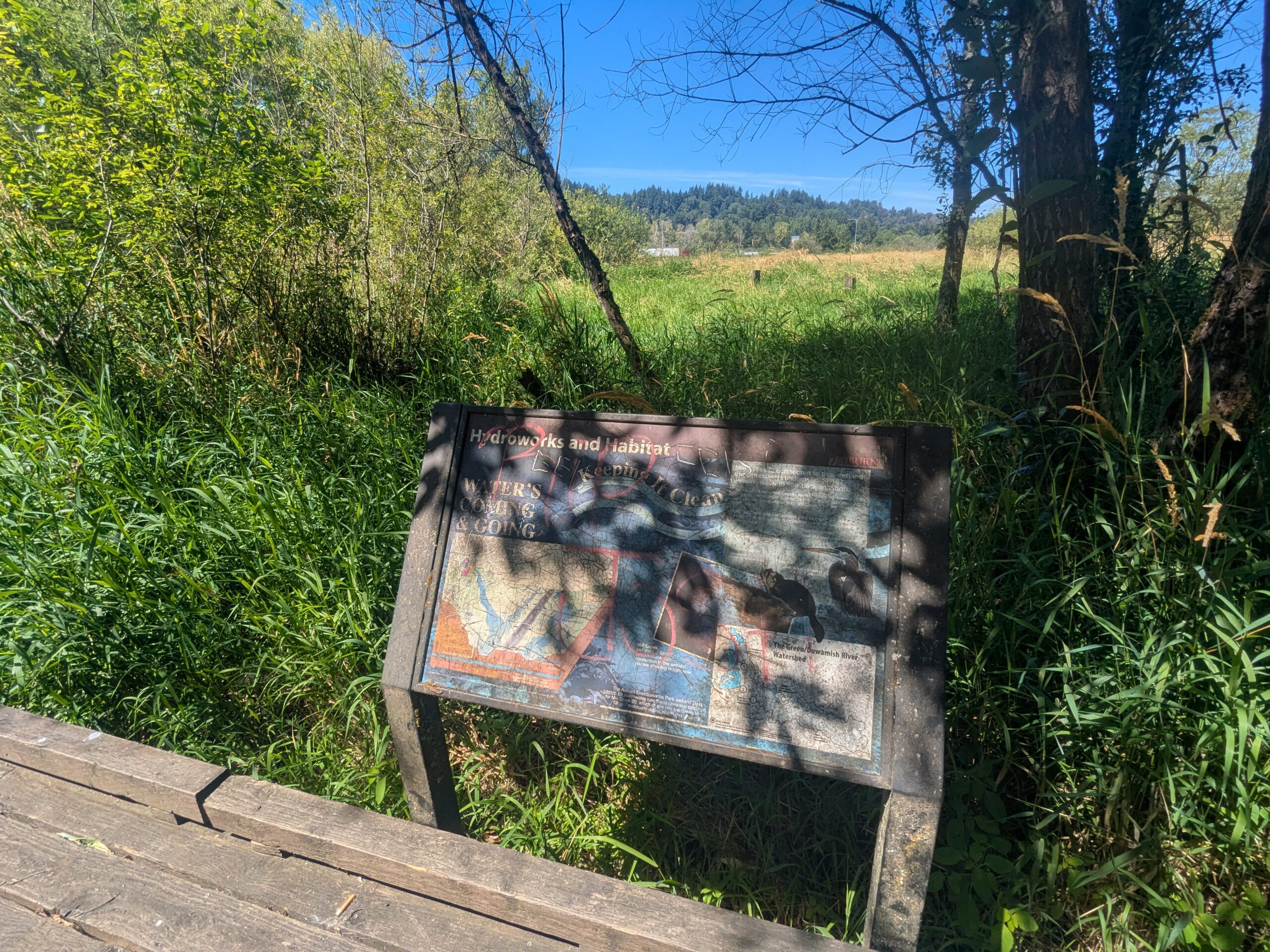
Hydroworks and Habitat Interpretive Sign — Green/Duwamish River Watershed
An outdoor interpretive sign titled 'Hydroworks and Habitat: Keeping It Clean' with a section labeled 'Water's Coming & Going,' featuring a map of the Green/Duwamish River Watershed. The weathered sign is located along a trail near a wetland or riparian area associated with the Green/Duwamish River system. -
 2026-07-15
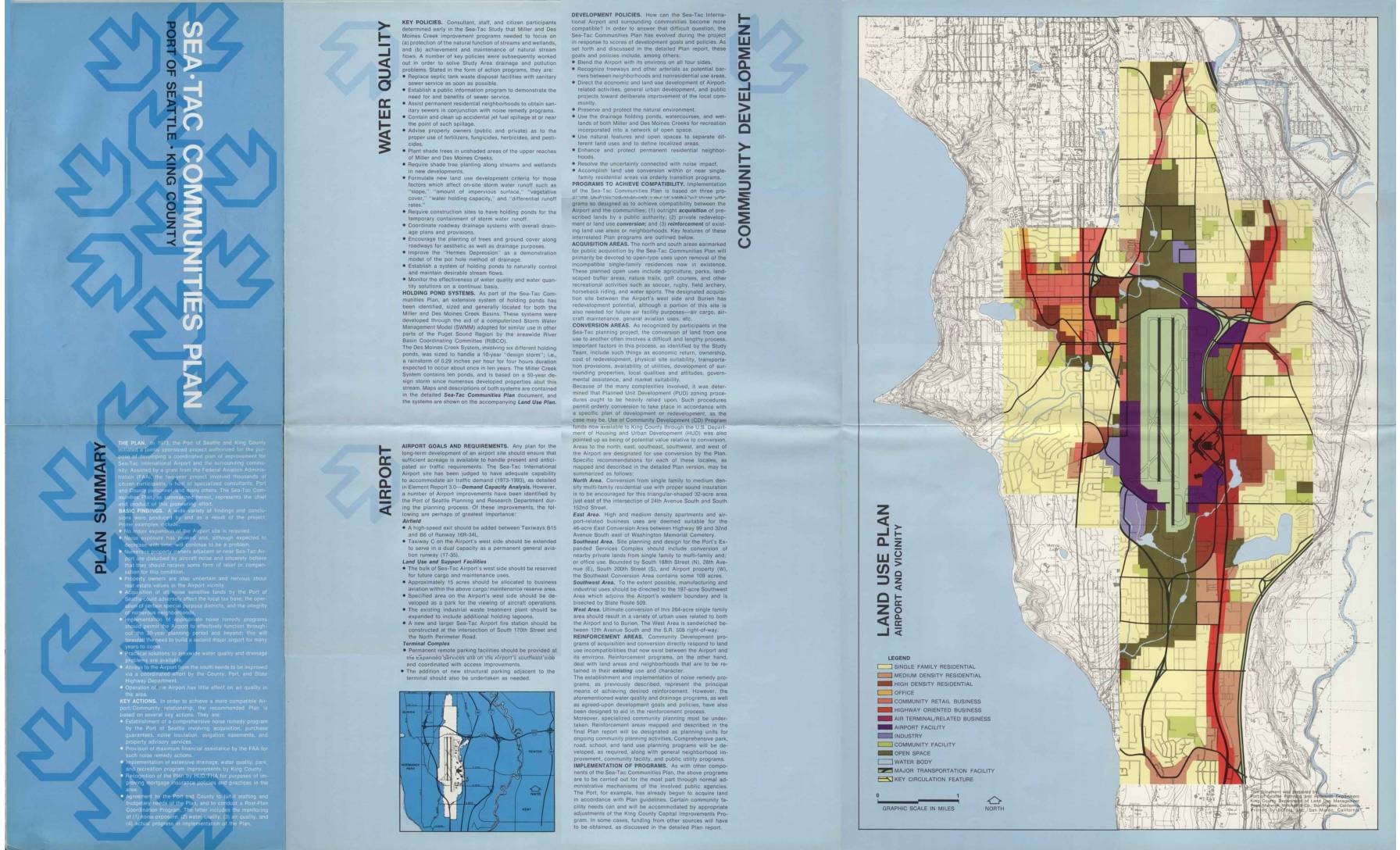
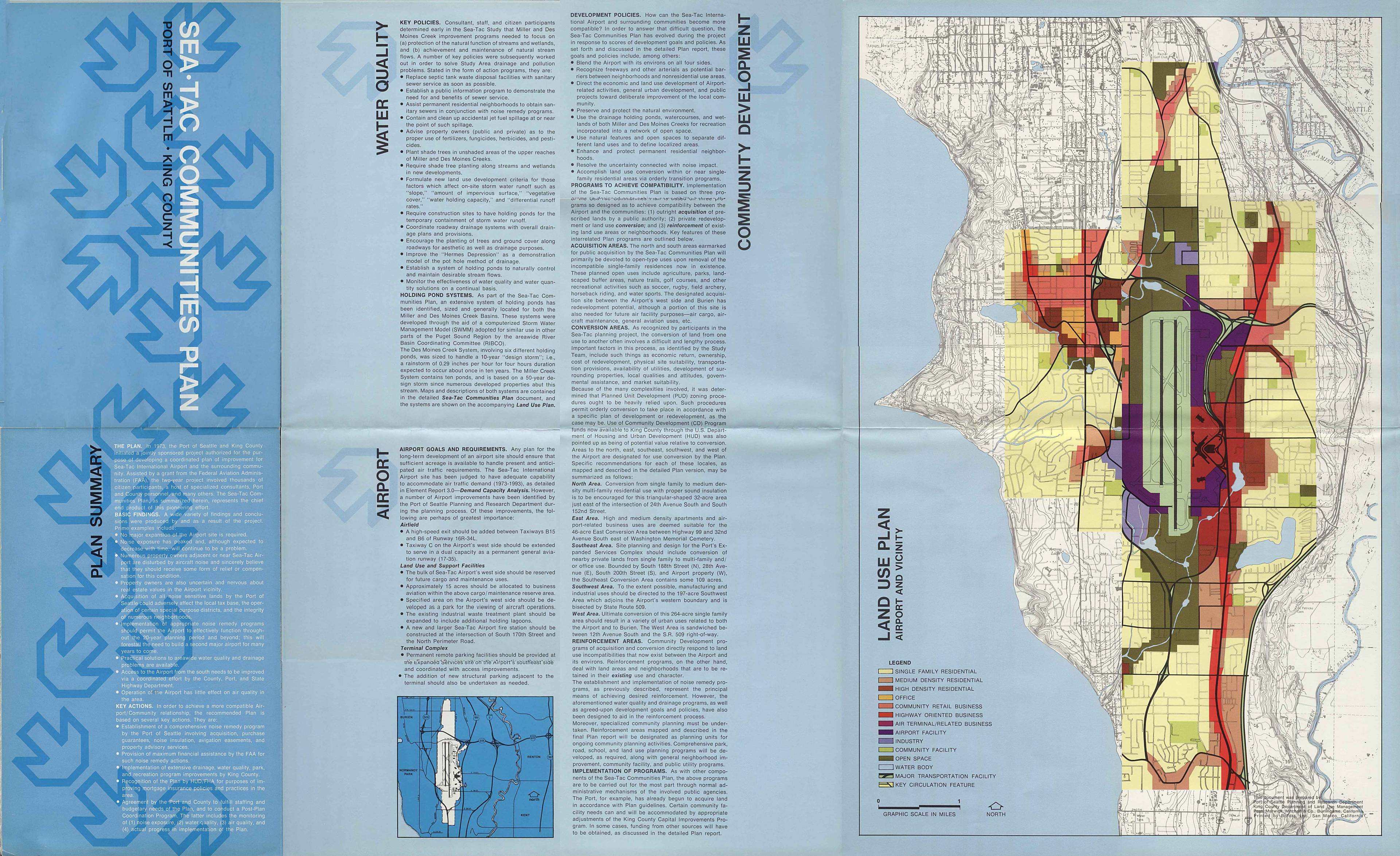
Sea-Tac Communities Plan: Plan Summary Brochure
The Sea-Tac Communities Plan, jointly developed by the Port of Seattle and King County beginning in 1973, outlines strategies to improve compatibility between Sea-Tac International Airport and surrounding neighborhoods, with a focus on aircraft noise remedies, water quality improvements, and land use conversion. The plan identifies specific areas for outright property acquisition, purchase guarantees, and noise insulation programs affecting thousands of homes north and south of the airport. It also establishes policies for drainage management, community development, and long-term airport facility improvements to accommodate projected air traffic growth through 1993. -
 2026-07-15
Sea-Tac Communities Plan: Water quality, airport, and community development
The Sea-Tac Communities Plan outlines strategies to improve compatibility between Seattle-Tacoma International Airport and surrounding neighborhoods, focusing on water quality, drainage, and land use. Key programs include public acquisition of noise-impacted residential areas for open space and recreation, conversion of single-family zones to higher-density or commercial uses, and reinforcement of existing neighborhoods through noise remedy and infrastructure improvements. The plan also addresses environmental concerns such as stream protection, holding pond systems for stormwater management, and pollution control near Miller and Des Moines Creeks. -
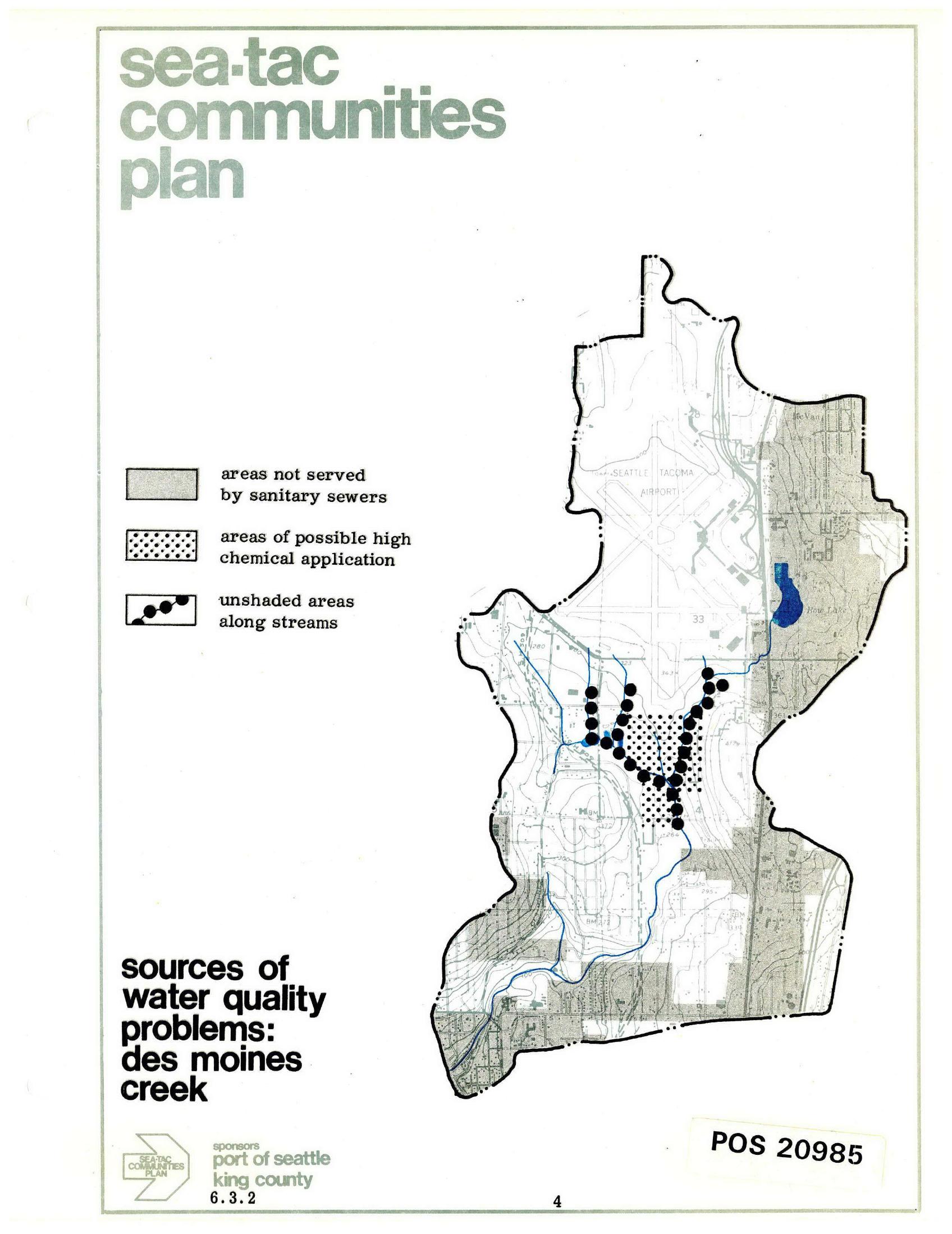
Sea-Tac Communities Plan — Sources of Water Quality Problems in Des Moines Creek
A planning map from the Sea-Tac Communities Plan (document number POS 20985, section 6.3.2), sponsored by the Port of Seattle and King County, identifying sources of water quality problems in Des Moines Creek. The map legend distinguishes areas not served by sanitary sewers, areas of possible high chemical application, and unshaded areas along streams, with the Seattle-Tacoma Airport prominently shown. -
 2025-06-26
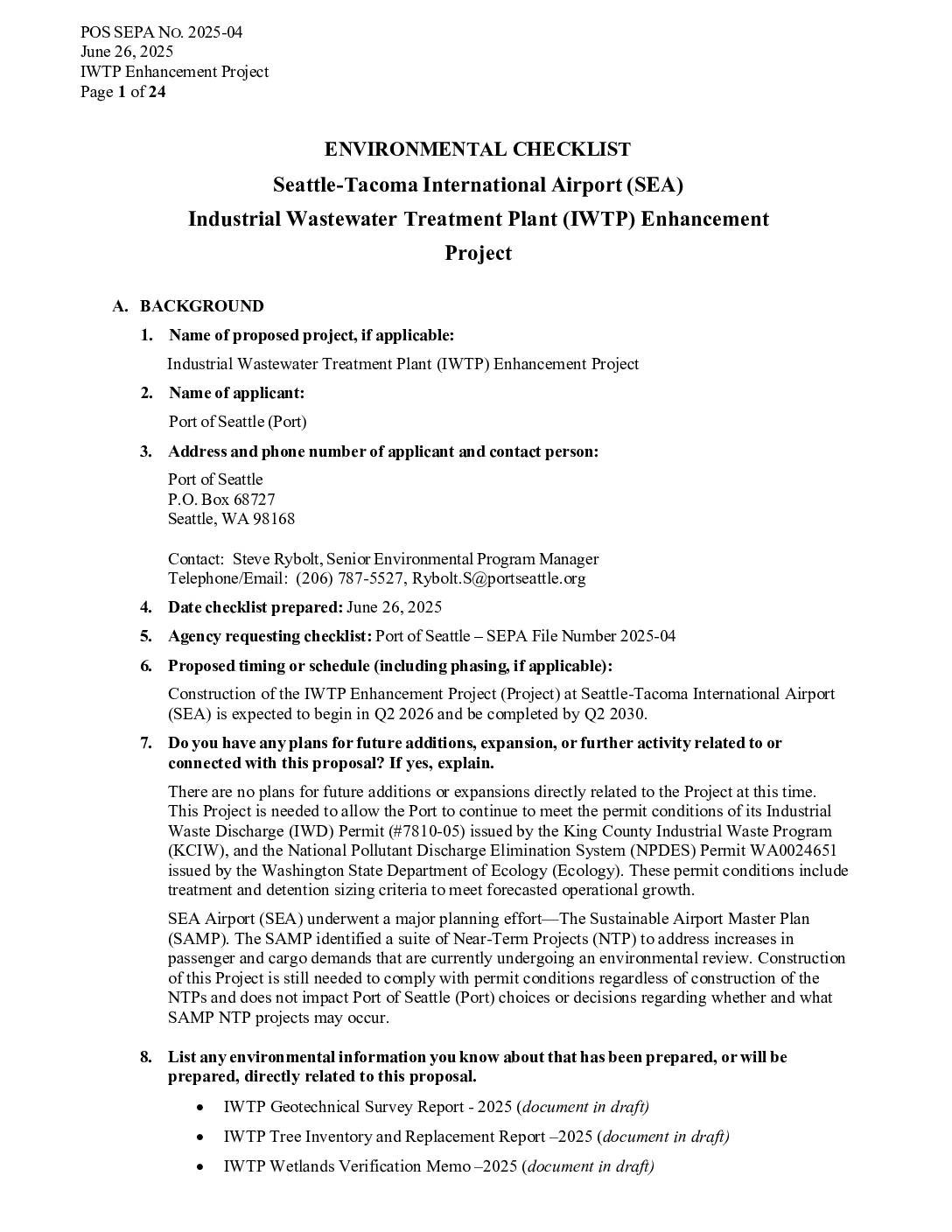
Environmental checklist: Seattle-Tacoma International Airport (SEA) Industrial Wastewater Treatment Plant (IWTP) Enhancement Project
The Port of Seattle is proposing upgrades to Seattle-Tacoma International Airport's Industrial Wastewater Treatment Plant (IWTP) to better handle wastewater from aircraft deicing operations, with construction planned from 2026 to 2030. The project involves replacing aging treatment equipment at the existing facility and building a new aerated gravel bed (AGB) treatment system on a 10.6-acre site nearby to process high levels of biochemical oxygen demand (BOD) on-site. These upgrades are required to comply with tightening discharge limits set by King County and state environmental permits.