TagAIP(61)
-
 2026-09-23
Part 150 Noise and Land Use Compatibility Study Update
Port of Seattle presentation to the Highline Forum on September 23, 2026, providing an update on the Part 150 Noise and Land Use Compatibility Study for Sea-Tac Airport. Covers Part 150 study basics under CFR 14 Part 150, FAA Airport Improvement Program (AIP) grant funding requirements for sound insulation and noise abatement projects, the 65 -
 2026-09-06
49 USC 47110j: Allowable Project Costs (Includes Smith NDAA Amendment 8801)
Full text of 49 USC §47110, governing allowable project costs under the Airport Improvement Program (AIP). Covers allowable cost standards including grant agreement compliance, incentive payments for early contractor completion (capped at 5% of initial contract or $1,000,000), noise compatibility programs, letters of intent for primary, reliever, nonhub, and small airports, nonallowable costs (public parking, -
2026-09-06
49 USC 47110j: Allowable Project Costs (Includes Smith NDAA Amendment 8801)
Full text of 49 USC §47110, governing allowable project costs under the Airport Improvement Program (AIP). Covers allowable cost standards including grant agreement compliance, incentive payments for early contractor completion (capped at 5% of initial contract or $1,000,000), noise compatibility programs, letters of intent for primary, reliever, nonhub, and small airports, nonallowable costs (public parking, -
 2026-09-06
49 U.S.C. § 47110 Allowable Project Costs
49 U.S.C. § 47110 from Title 49 Transportation, governing allowable project costs under the Airport Improvement Program (AIP). Covers standards for allowable costs including grant agreement compliance, incentive payments for early contractor completion, noise compatibility programs, letters of intent for primary, reliever, nonhub, and non-primary airports, nonallowable costs (public parking, airport buildings, decorative landscaping, sculpture), -
 2026-01-30
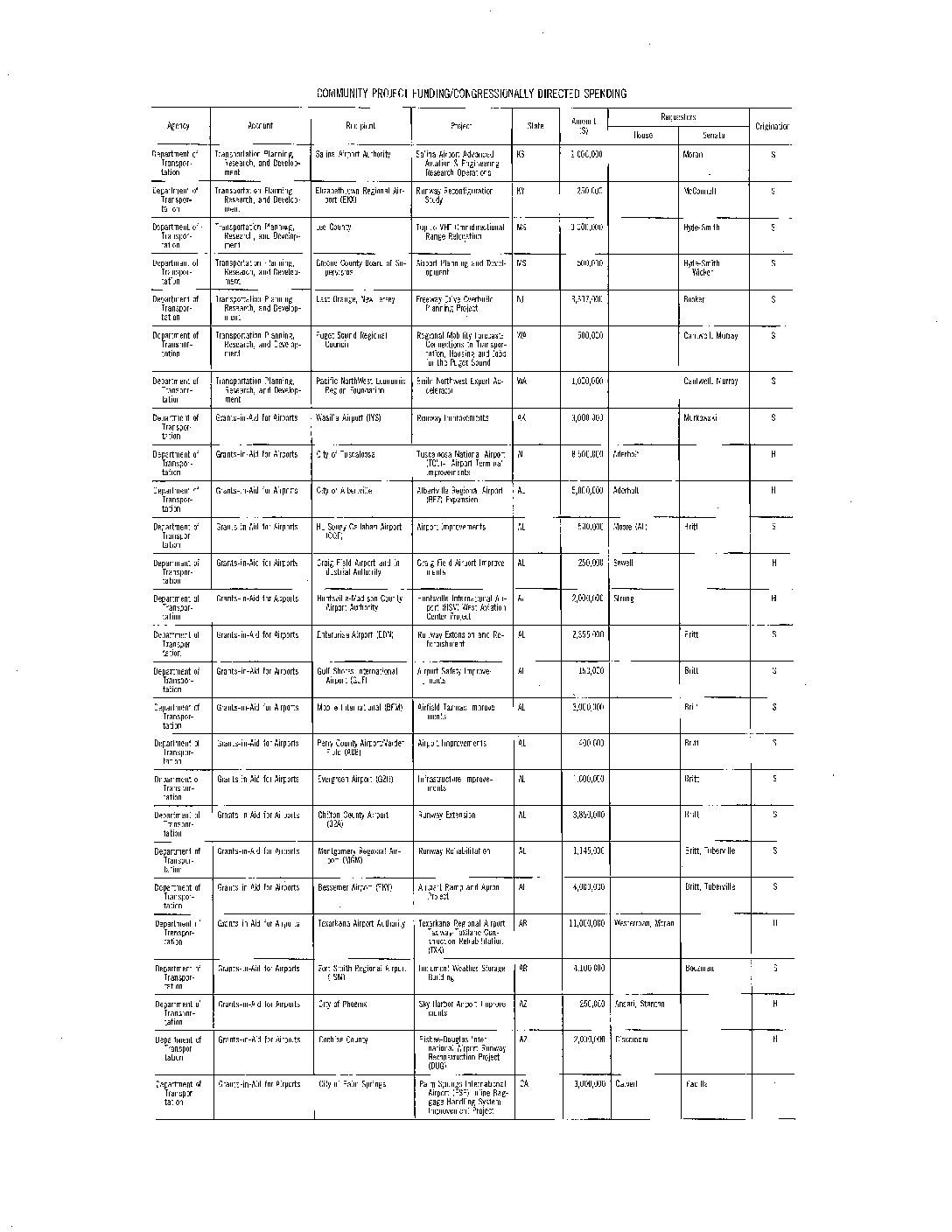
Community Project Funding/Congressionally Directed Spending
This document is a federal Community Project Funding/Congressionally Directed Spending table listing airport infrastructure grants across numerous U.S. states, covering projects such as runway extensions, terminal upgrades, taxiway reconstruction, and safety improvements. The funding spans dozens of airports and ranges from $150,000 to $12 million per project, requested by various House and Senate members. This document does not contain information specifically related to Sea-Tac Airport noise policy. -
 2026-01-06
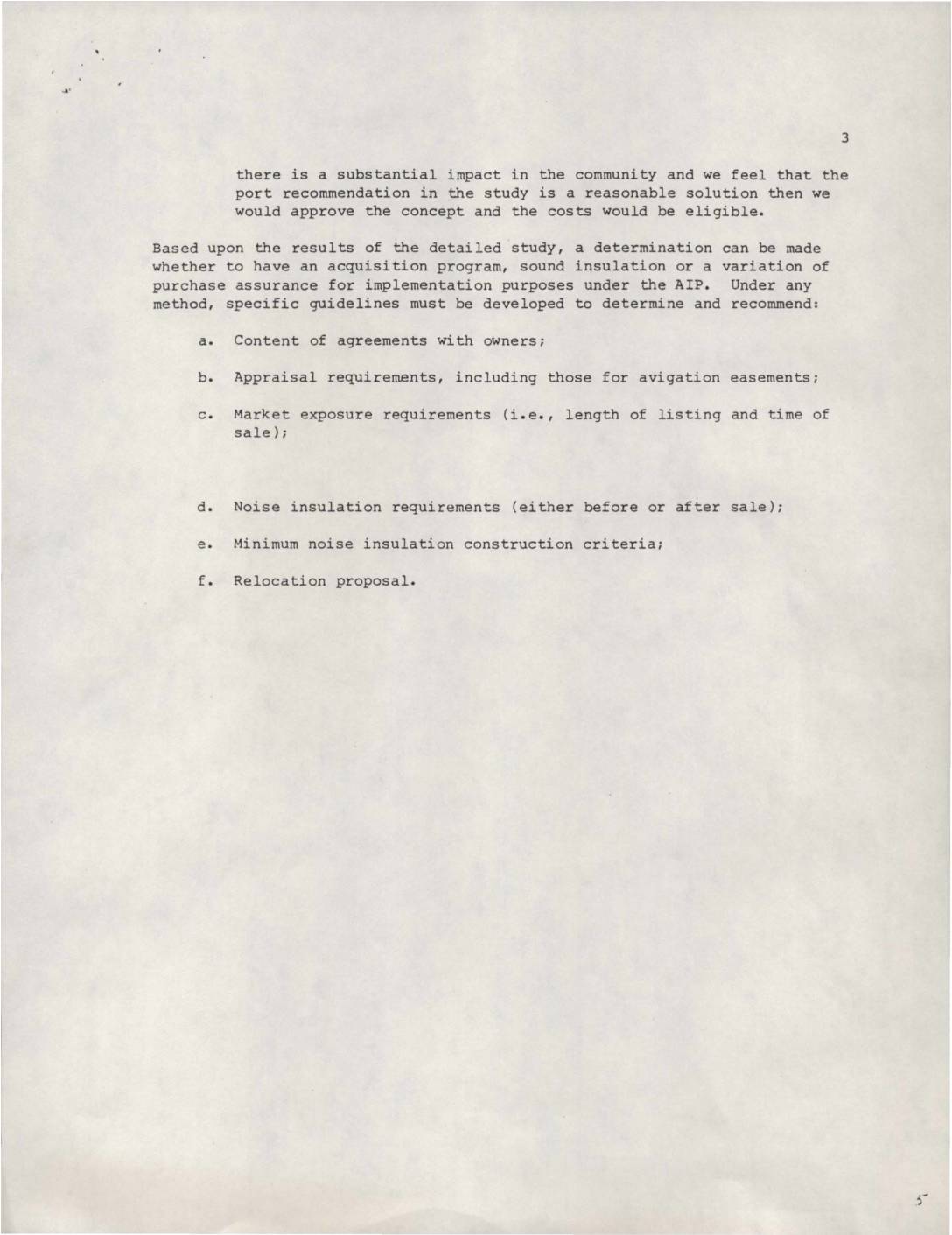
Airport noise mitigation program implementation guidelines
This document outlines how airport noise impact programs can be approved and funded under the Airport Improvement Program (AIP). Once a detailed study confirms substantial community noise impact and a reasonable solution is proposed, costs become eligible for approval. Specific guidelines must then be developed covering property acquisition or sound insulation options, including owner agreements, appraisals, market exposure, noise insulation standards, and relocation proposals. -
 2025-10-28
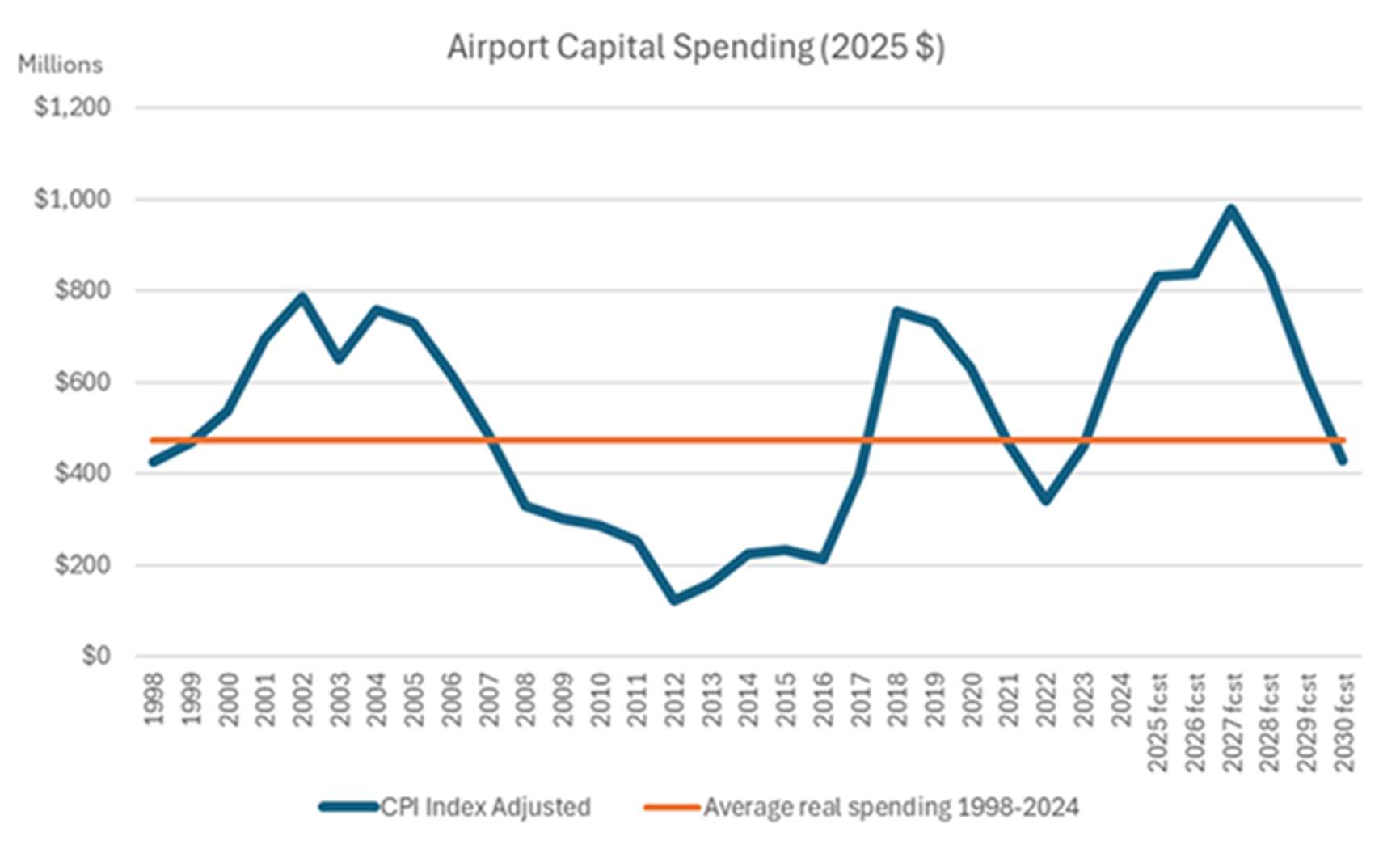
Airport Capital Spending (2025 $)
A line graph showing CPI-adjusted airport capital spending in millions of 2025 dollars from 1998 through 2030 (with years 2025–2030 as forecasts), alongside a flat orange reference line representing average real spending from 1998–2024 at approximately $470 million. Spending peaked around 2002–2005 near $800 million, dropped to a low near $125 million in 2012, recovered to approximately $750 million by 2018–2019, and is forecast to peak near $975 million around 2027 before declining. -
 2025-10-01
AAA Basics of Grant Assurances
This presentation from the 41st Annual AAAE Airport Law Workshop covers the basics of Grant Assurances — the federal obligations airports must fulfill in exchange for receiving federal funding under the Airport Improvement Program (AIP). Grant Assurances are prescribed by federal statute (49 U.S.C. 47106 & 47107) and are incorporated into grant agreements, which include both general and special conditions. While not laws themselves, these assurances are binding contractual commitments that airport sponsors accept when they receive AIP funding. -
 2025-06-09
Three votes. Three dollars.
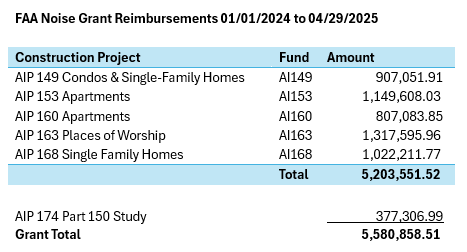
Funding Port Package updates made simple There’s always been confusion about Port Packages (sound insulation): Who pays for it? Who can pay for it? Who is eligible? Who should be eligible? There are a bunch of rules governing all of the above. They may seem complicated. Because they are. But the actual solutions are simple. -
2025-05-13
Opposition to proposed revisions in FAA grant program, removing Environmental Justice, Climate, and Leaded fuel requirements
Re https://www.regulations.gov/docket/FAA-2025-0605 Our comment to https://www.regulations.gov/docket/FAA-2025-0605 on the negative impacts new FAA regulations will have on Sea-Tac and KCIA airport communities. Although the new regulations are confined to the AIP grant program, because they are being implemented via Executive Order, it is likely that similar features will be tacked onto all FAA programs concerning leaded