TagAirport Noise Law(31)
-
 2025-12-21
A guide to U.S. aircraft noise regulatory policy
This book by Sanford Fidell and Vincent Mestre provides a comprehensive guide to U.S. aircraft noise regulatory policy, covering the rules, standards, and government frameworks that govern how aircraft noise is measured, evaluated, and controlled. It is a key reference for understanding how federal agencies approach noise management around airports such as Sea-Tac, including the metrics and legal structures used to assess community noise impacts. -
 2025-12-21
Airport Noise: A Guide to the FAA Regulations Under the Airport Noise and Capacity Act
This guide, produced by law firm Cutler & Stanfield in conjunction with acoustical consultants Harris Miller Miller & Hanson Inc., explains FAA regulations governing airport noise under the Airport Noise and Capacity Act. It is intended to help airport proprietors, community organizations, and local governments understand the federal rules that control aircraft noise levels and airport operational capacity. The guide draws on the firms' extensive experience advising clients on noise policy and drafting noise rules at major airports across the United States. -
D.C. Circuit Court of Appeals Cracks Down on FAA Compliance with NEPA
A legal article categorized under 'Aviation & Airport' reports that the D.C. Circuit Court of Appeals cracked down on FAA compliance with NEPA (National Environmental Policy Act). The publication appears to be from a legal news outlet with a red 'IL' or 'JL' logo. -
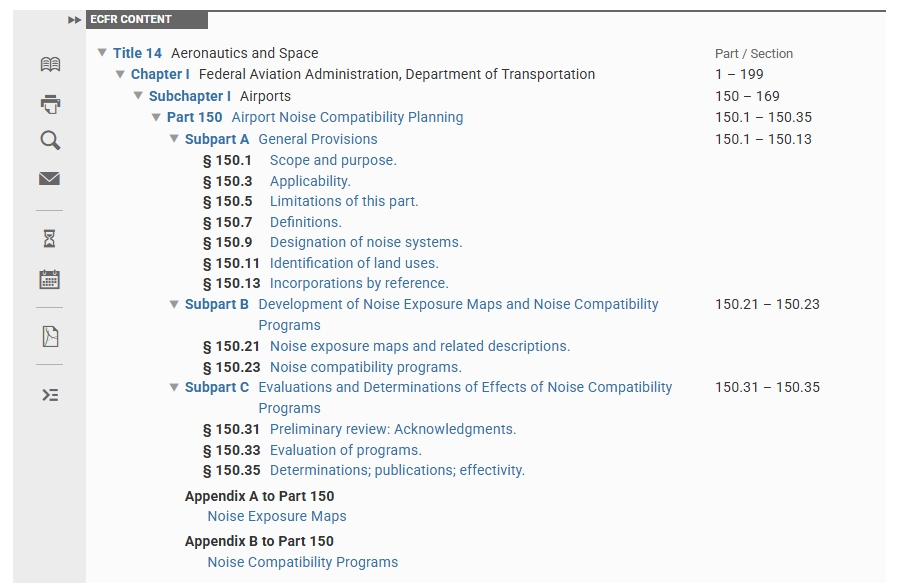
FAA Part 150 Airport Noise Compatibility Planning — eCFR Title 14 Overview
Screenshot of the Electronic Code of Federal Regulations (eCFR) showing Title 14 (Aeronautics and Space), Chapter I (Federal Aviation Administration), Subchapter I (Airports), Part 150 (Airport Noise Compatibility Planning), sections 150.1–150.35, including Subparts A, B, and C, plus Appendices A and B covering Noise Exposure Maps and Noise Compatibility Programs. -
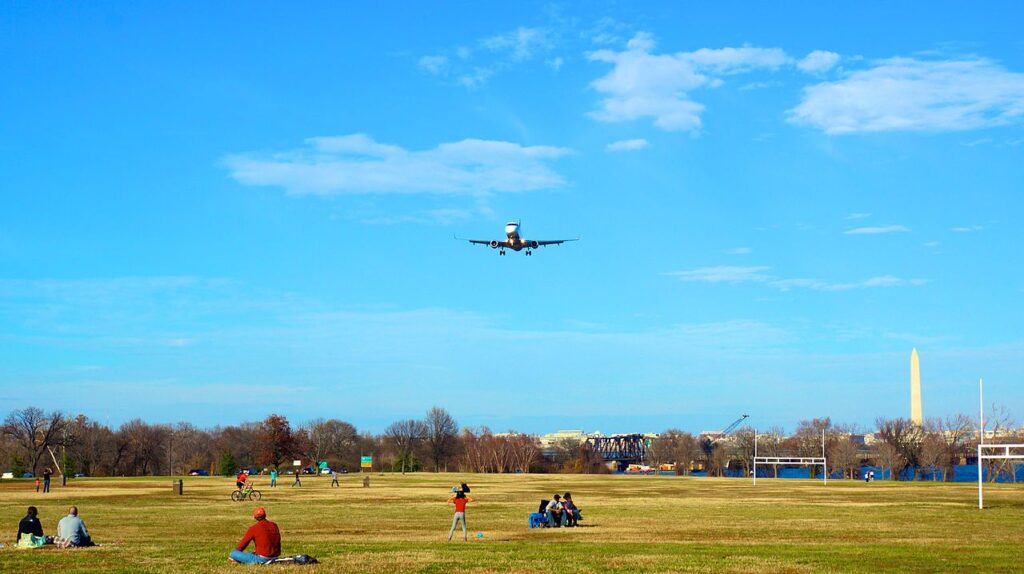
Aircraft landing over Gravelly Point Park in Arlington, VA
A commercial jet on final approach to Ronald Reagan Washington National Airport flies low over a public park where visitors relax on the grass. The Washington Monument is visible on the right side of the frame, confirming the location as the Washington D.C. area. -
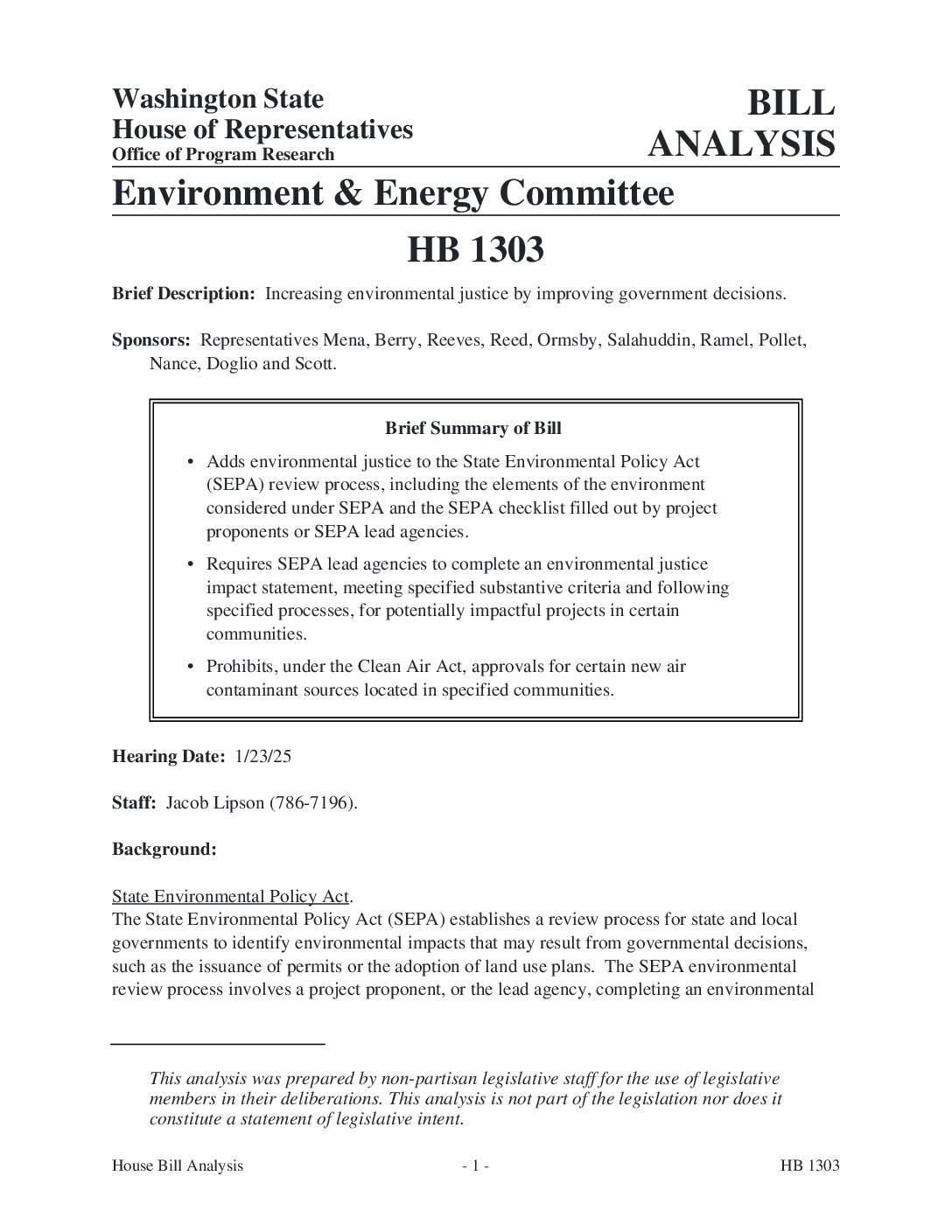 2025-01-23
HB 1303 Bill Analysis – Increasing environmental justice by improving government decisions
Washington State House Bill 1303 proposes strengthening environmental justice by adding new requirements to the State Environmental Policy Act (SEPA) review process, requiring environmental justice impact statements for projects in vulnerable or overburdened communities. The bill also prohibits state and local air authorities from issuing certain construction approvals for new air pollution sources in those same communities. Note: This bill focuses on statewide environmental permitting and community health protections, and does not directly address Sea-Tac Airport noise policy. -
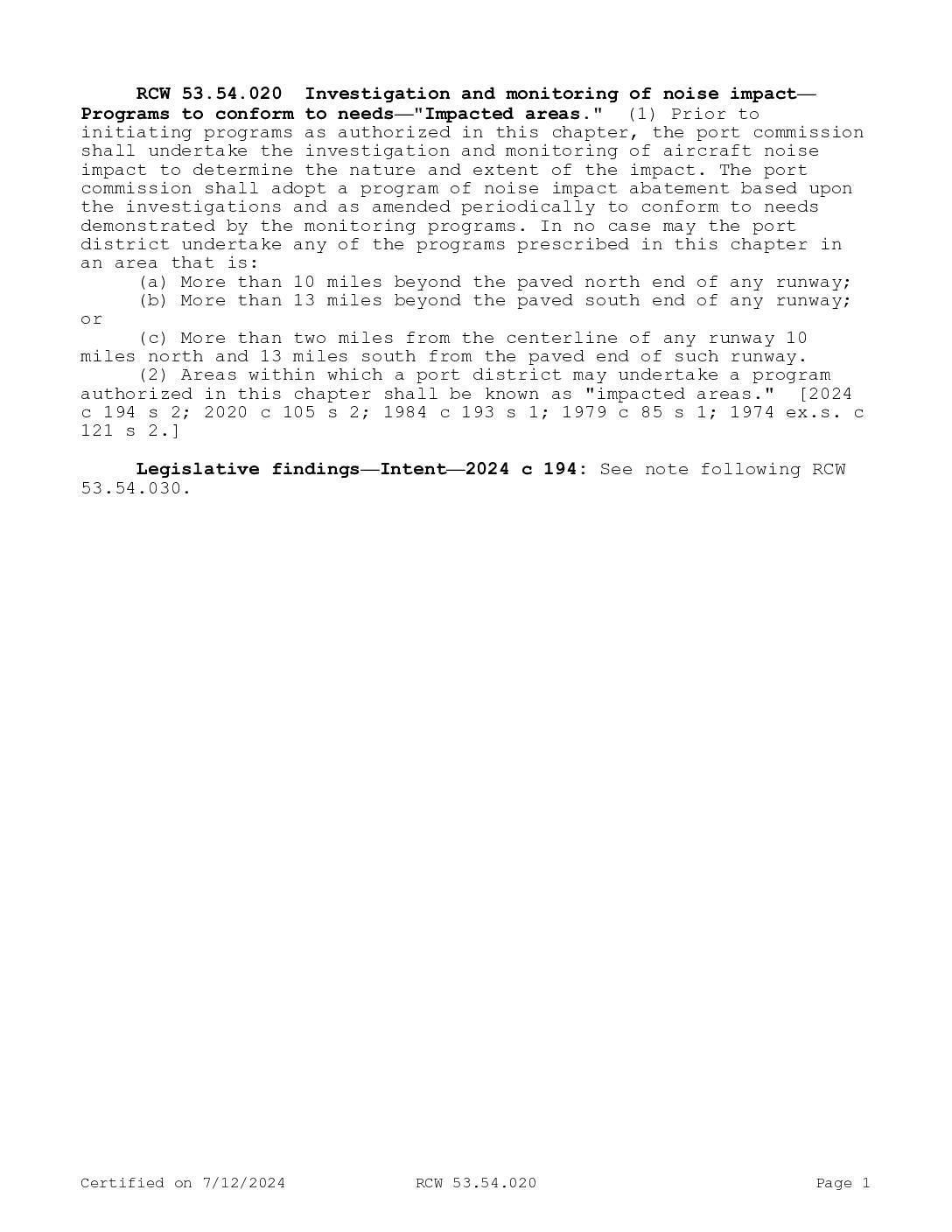 2024-07-12
RCW 53.54.020 Investigation and monitoring of noise impact—Programs to conform to needs—”Impacted areas.”
Washington state law defining requirements for port commissions to investigate and monitor aircraft noise impact before initiating abatement programs. Establishes geographic boundaries for “impacted areas” where port districts may undertake noise programs, with specific distance limitations from runway ends and centerlines. -
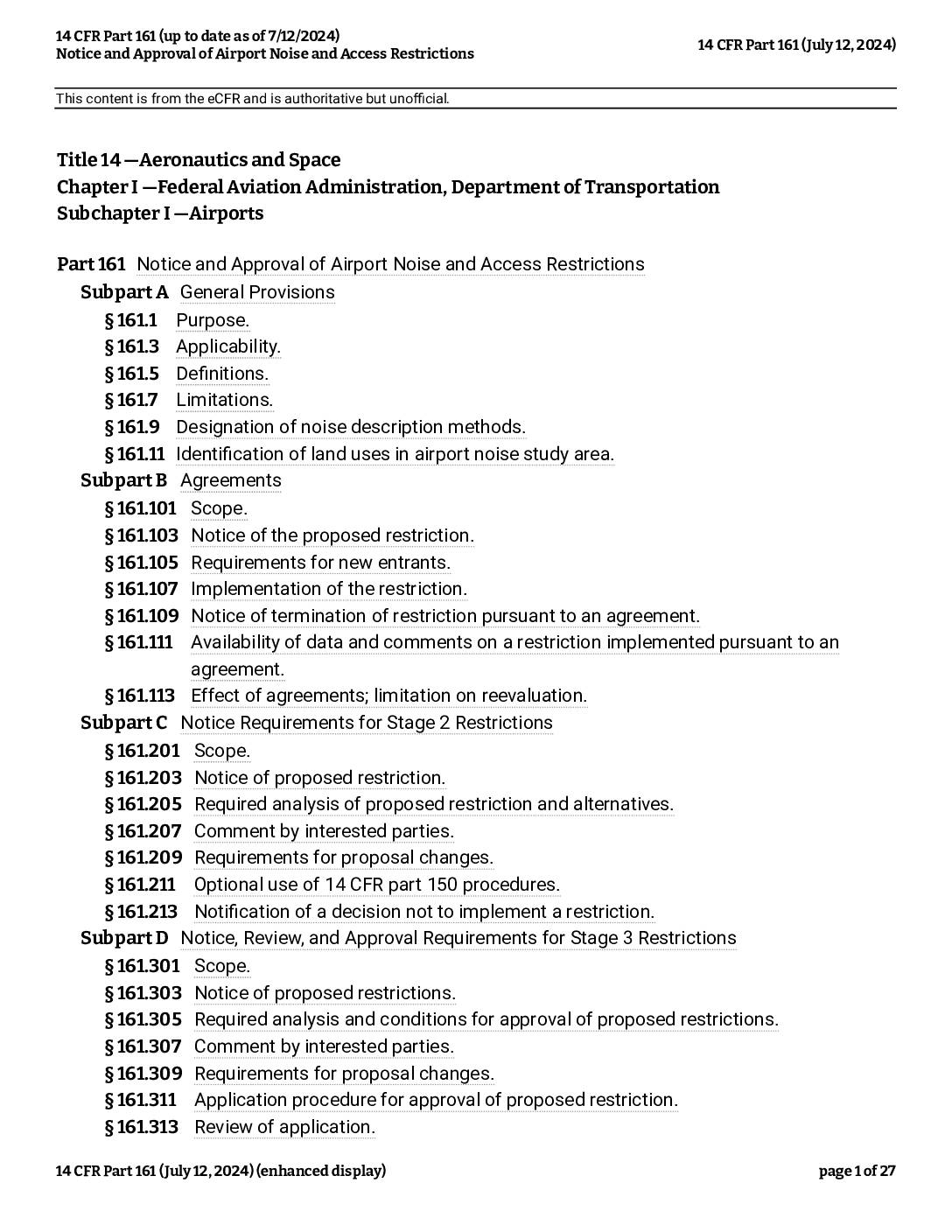 2024-07-12
14 CFR Part 161 — Notice and approval of airport noise and access restrictions
14 CFR Part 161 sets out the federal rules governing how airports like Sea-Tac must notify the public and obtain FAA approval before imposing noise and access restrictions on aircraft operations. It covers different requirements depending on whether restrictions apply to older Stage 2 aircraft or newer Stage 3 aircraft, including mandatory analysis, public comment periods, and formal FAA review. Airports that fail to follow these procedures risk losing federal grant funds and passenger facility charges. -
 2023-03-20
FAA approval of john f. kennedy international airport (jfk) noise compatibility program
The Federal Aviation Administration announces its approval of the noise compatibility program for John F. Kennedy International Airport (JFK), effective March 14, 2023. The program contains 22 recommended measures including noise abatement, land use, and program management measures to reduce aviation noise impacts. -
 2022-04-24
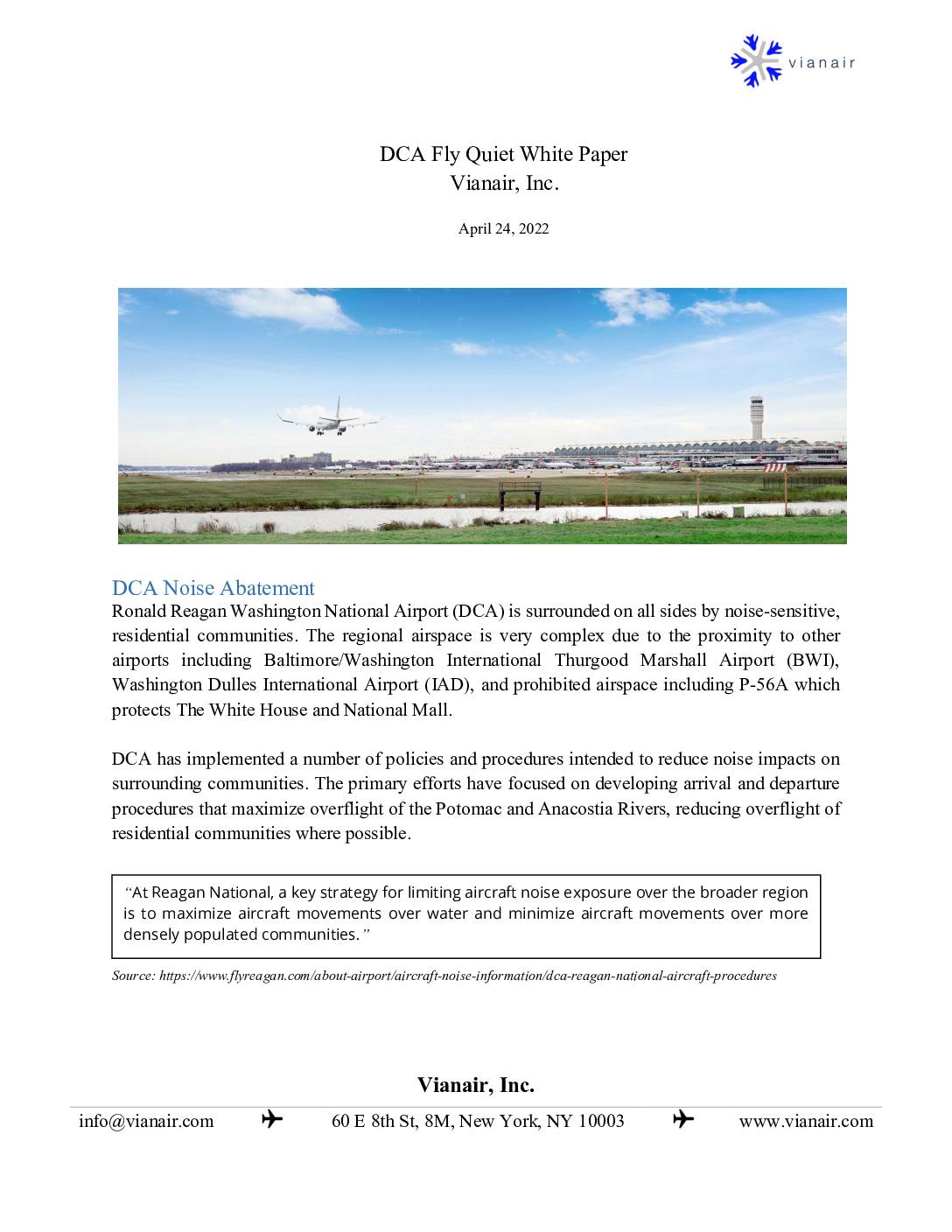
DCA Fly Quiet White Paper
A white paper by Vianair, Inc. examining noise abatement procedures at Ronald Reagan Washington National Airport (DCA) and proposing the development of a comprehensive Fly Quiet program to reduce aircraft noise impacts on surrounding residential communities.