TagRCW(53)
-
 2026-08-28
Sea-Tac 2024 Comprehensive Plan Land Capacity Analysis Methodology and Results Report (Appendices A–C)
This document is part of SeaTac's 2044 Comprehensive Plan update and covers the methodology and results of a land capacity analysis for housing and jobs, conducted by Leland Consulting Group. It includes appendices addressing housing needs by income level, a Housing Action Plan, and a Displacement Risk Assessment, all aimed at meeting Washington State Growth Management Act requirements. Note that despite its association with the SeaTac area, this document focuses on city housing and land use planning rather than Sea-Tac Airport noise policy. -
 2026-08-28
Sea-Tac 2024 Comprehensive Plan Land Capacity Analysis Methodology and Results Report (Appendices A–C)
This document is part of SeaTac's 2044 Comprehensive Plan update and covers the methodology and results of a land capacity analysis for housing and jobs, conducted by Leland Consulting Group. It includes appendices addressing housing needs by income level, a Housing Action Plan, and a Displacement Risk Assessment, all aimed at meeting Washington State Growth Management Act requirements. Note that despite its association with the SeaTac area, this document focuses on city housing and land use planning rather than Sea-Tac Airport noise policy. -
 2026-08-28
Chapter 1 Introduction, City Vision, and Planning Framework Background Report
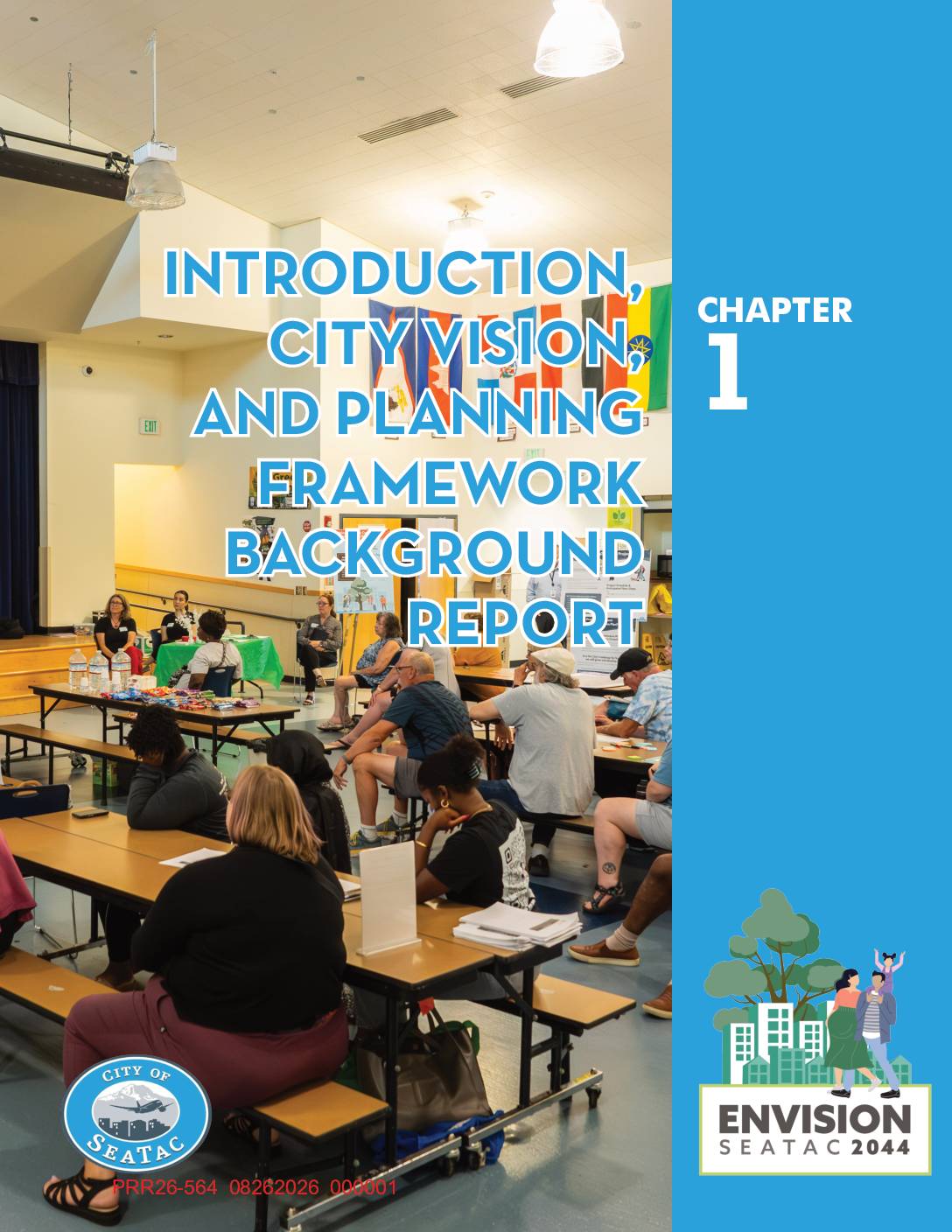
This document is Chapter 1 of the City of SeaTac's Comprehensive Plan (Envision SeaTac 2044), providing an introduction to the city's planning framework, urban growth area designations, and community profile. It outlines how the plan was developed in accordance with Washington State's Growth Management Act, the Puget Sound Regional Council's Vision 2050 strategy, and King County Countywide Planning Policies. Note that this chapter focuses on land use planning and demographic data rather than airport noise policy specifically. -
 2026-08-28
Introduction, City Vision, and Planning Framework Background Report
This document is Chapter 1 of the City of SeaTac's Comprehensive Plan (Envision SeaTac 2044), providing an introduction to the city's planning framework, urban growth area designations, and community profile. It outlines how the plan was developed in accordance with Washington State's Growth Management Act, the Puget Sound Regional Council's Vision 2050 strategy, and King County Countywide Planning Policies. Note that this chapter focuses on land use planning and demographic data rather than airport noise policy specifically. -
 2026-04-24
WSDOT Letter to FAA: Tax Collections, Offsets, and State Efforts to Resolve Airport Revenue Compliance Issue
In an April 2026 letter to the FAA, the Washington State Department of Transportation provided detailed tax collection data and proposed spending offsets in response to federal questions about how Washington taxes aviation fuel. The letter covers Aircraft Fuel Tax revenues dating to 1983, local sales and use taxes on aircraft fuel tracked since 2023, and hazardous substance taxes, while explaining which taxes are grandfathered under federal rules. The state also outlined its methodology for calculating aviation-related budget offsets and committed to providing further updates within 60 days. -
2026-04-24
WSDOT Letter to FAA: Tax Collections, Offsets, and State Efforts to Resolve Airport Revenue Compliance Issue
In an April 2026 letter to the FAA, the Washington State Department of Transportation provided detailed tax collection data and proposed spending offsets in response to federal questions about how Washington taxes aviation fuel. The letter covers Aircraft Fuel Tax revenues dating to 1983, local sales and use taxes on aircraft fuel tracked since 2023, and hazardous substance taxes, while explaining which taxes are grandfathered under federal rules. The state also outlined its methodology for calculating aviation-related budget offsets and committed to providing further updates within 60 days. -
 2025-01-01
Senate Bill 5652: Reducing Environmental and Health Disparities in Large Port Districts
Washington Senate Bill 5652 requires large port districts, such as the Port of Seattle, to develop and adopt environmental justice implementation plans and community engagement plans by January 1, 2026. These plans must outline how the port will reduce environmental and health disparities in overburdened communities, particularly those affected by aircraft noise, and ensure meaningful participation from vulnerable populations in port decision-making. The bill also mandates compliance with federal civil rights laws and requires the use of screening tools to assess the health and demographic impacts of major port actions valued at $8 million or more. -
 2024-07-15
Constitution of the State of Washington
This document is the Constitution of the State of Washington, originally framed in 1889 and presented here in its currently amended form. It outlines the foundational legal framework for the state, covering individual rights, legislative powers, and executive responsibilities across multiple articles. Note that this document does not contain specific content related to Sea-Tac Airport noise policy. -
 2024-07-12
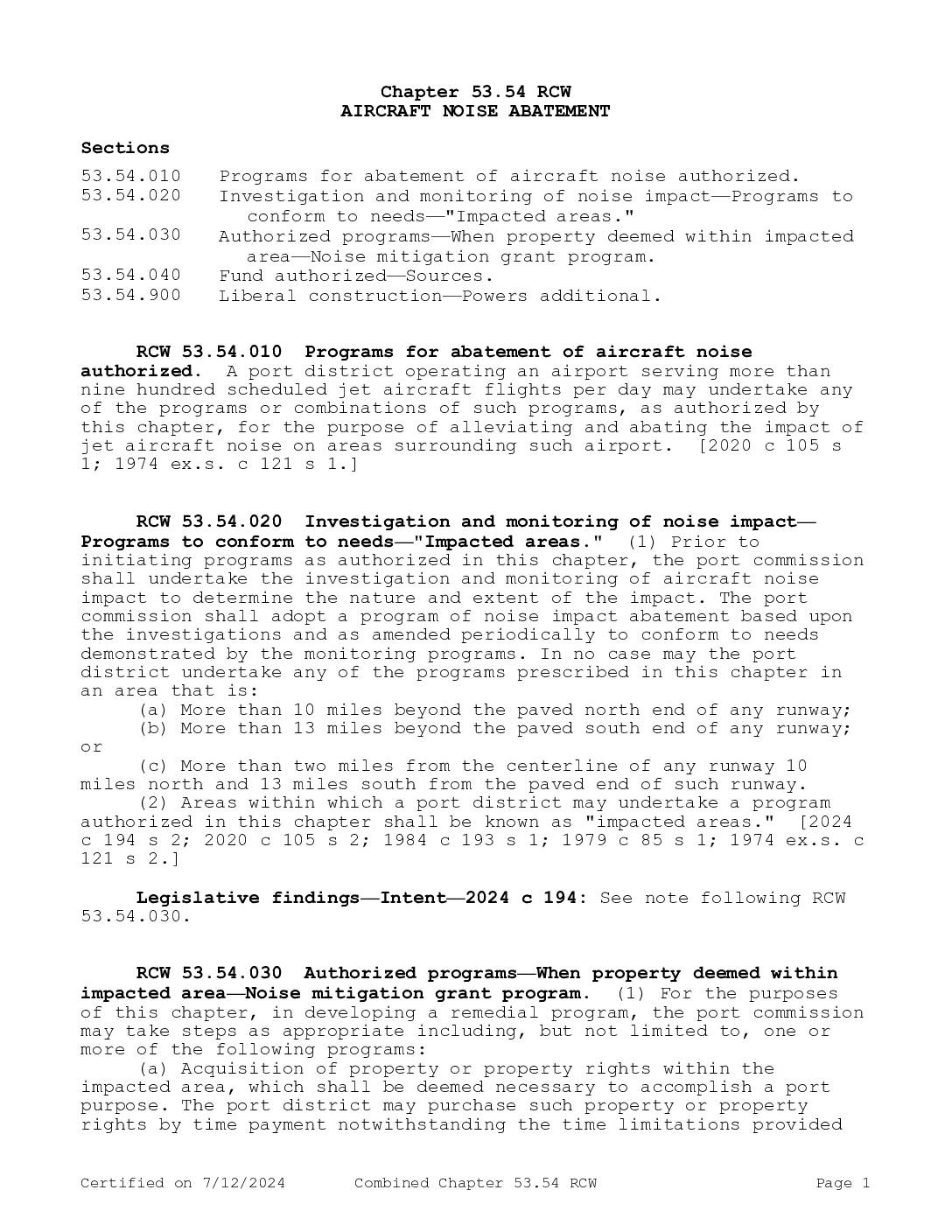
Chapter 53.54 RCW: Aircraft noise abatement
Chapter 53.54 RCW authorizes Washington port districts operating large airports (such as Sea-Tac) to carry out programs that reduce the impact of jet aircraft noise on surrounding neighborhoods, including purchasing properties, providing soundproofing, and offering transaction assistance to affected homeowners. The law defines 'impacted areas' with specific distance limits from runways and allows properties within those boundaries to receive noise mitigation benefits. Recent 2024 updates expand the program to allow inspection, repair, or replacement of previously installed noise mitigation equipment that is no longer working as intended or has caused structural damage. -
 2024-05-13
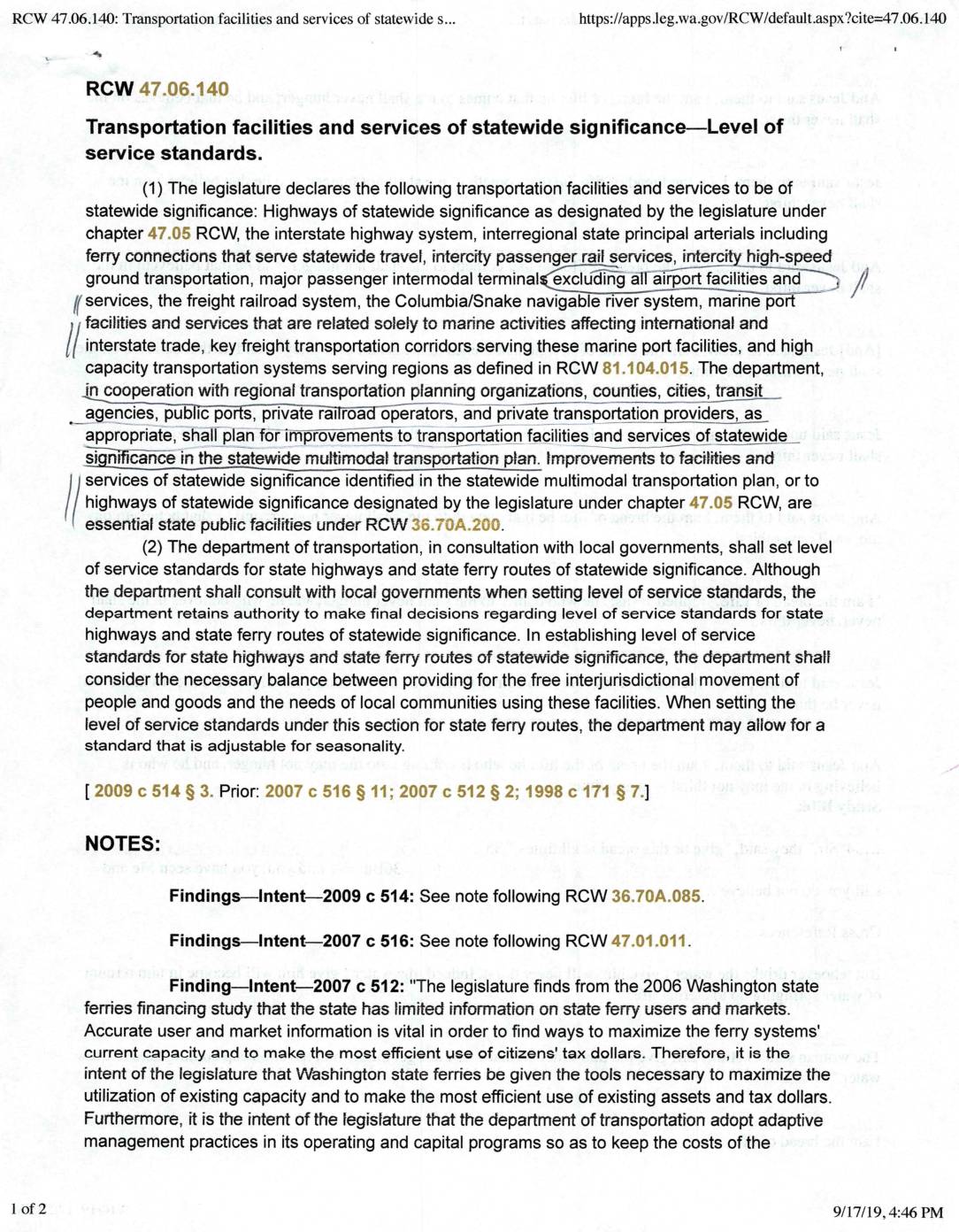
RCW 47.06.140: Transportation facilities and services of statewide significance—Level of service standards
RCW 47.06.140 defines transportation facilities and services of statewide significance in Washington State, including highways, the interstate system, ferry routes, freight railroads, and high-capacity transit systems, while explicitly excluding airport facilities and services from this designation. The law requires the Washington State Department of Transportation to set level of service standards for state highways and ferry routes, in consultation with local governments, while retaining final decision-making authority. Improvements to these statewide facilities are classified as essential state public facilities under RCW 36.70A.200.