TagCurfew(9)
-
 2023-07-23
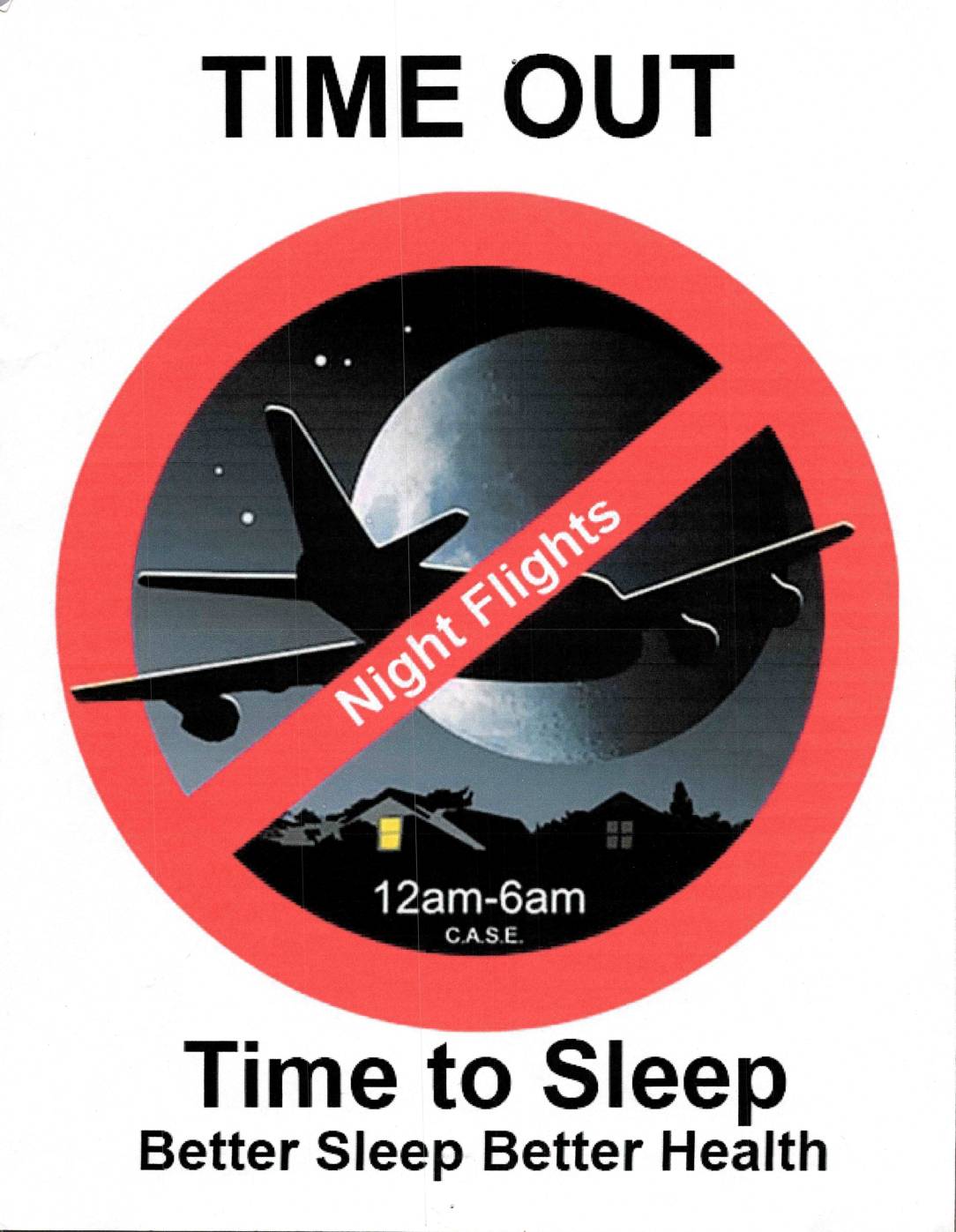
Time Out: Time to Sleep — CASE Night Flights Flyer
This C.A.S.E. (Communities Against Sea-Tac Expansion) campaign poster calls for a ban on night flights over residential neighborhoods between 12am and 6am. Under the slogan 'Time Out,' it argues that eliminating overnight aircraft noise is essential for community health, emphasizing that better sleep leads to better health. The image uses a standard prohibition symbol over a nighttime airplane silhouette to visually reinforce the demand for a quiet curfew period. -
Why Can’t We Have A Curfew?
Blame it on ANCA , the Airport Noise And Capacity Act Of 1990. Airport law–specifically the history of how communities lost their rights–is long. You can read a short history at our Airport Law Cheat Sheet. But one question people have is WHY CAN’T WE SLEEP AT NIGHT? So here is a summary of. The -
DNL65 For Dummies
There is a geographic area around every large airport where, according to a formula developed by the Federal Aviation Administration (FAA), the ‘noise’ level is equal to or greater than 65 decibels DNL (Day Night Level). That area is depicted on a noise exposure map (NEM) and referred to as the Noise Boundary or just -
 2018-11-13
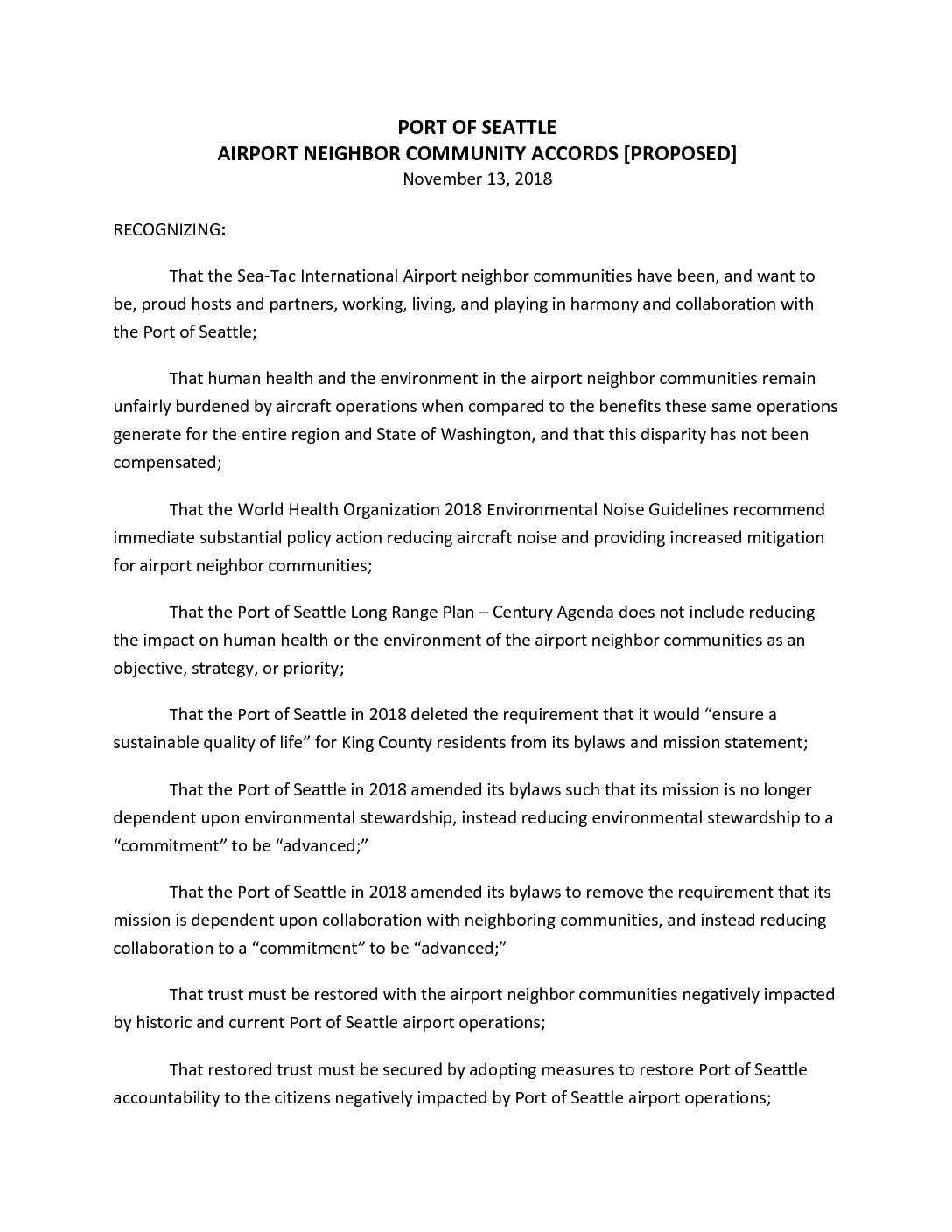
Port Of Seattle airport neighbor community accords [proposed]
The Port of Seattle Airport Neighbor Community Accords (proposed November 2018) is a citizen-drafted proposal calling on the Port of Seattle to prioritize the health and well-being of communities surrounding Sea-Tac International Airport. It argues that these neighborhoods bear an unfair burden from aircraft noise and environmental impacts without adequate compensation, and that the Port's 2018 bylaw changes weakened its commitments to quality of life, environmental stewardship, and community collaboration. The document outlines six specific accords, including demands for independent audits of mitigation spending, a nighttime curfew, prioritization of tax levy funds for community mitigation, and reduced use of the 3rd runway until mitigation goals are met. -
 2018-08-16
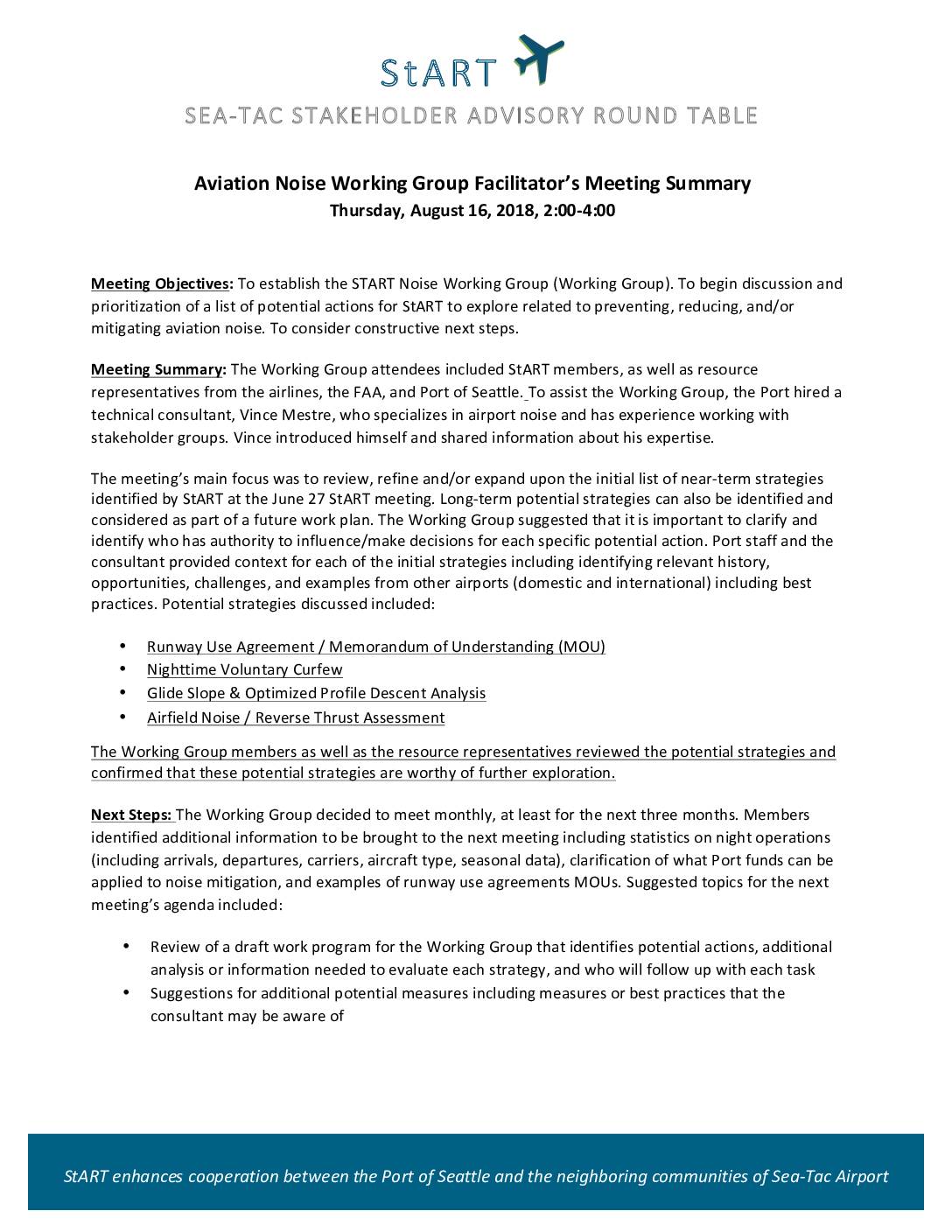
Aviation Noise Working Group facilitator’s meeting summary
The StART Aviation Noise Working Group held its first meeting on August 16, 2018, bringing together community stakeholders, airlines, the FAA, and Port of Seattle representatives to discuss strategies for reducing aircraft noise around Sea-Tac Airport. The group reviewed four potential near-term approaches—including a Runway Use Agreement, a Nighttime Voluntary Curfew, Glide Slope and Optimized Profile Descent Analysis, and an Airfield Noise/Reverse Thrust Assessment—all of which were deemed worthy of further exploration. The group agreed to meet monthly and outlined next steps, including gathering night-operations data and drafting a formal work program to guide future action. -
 2018-04-09
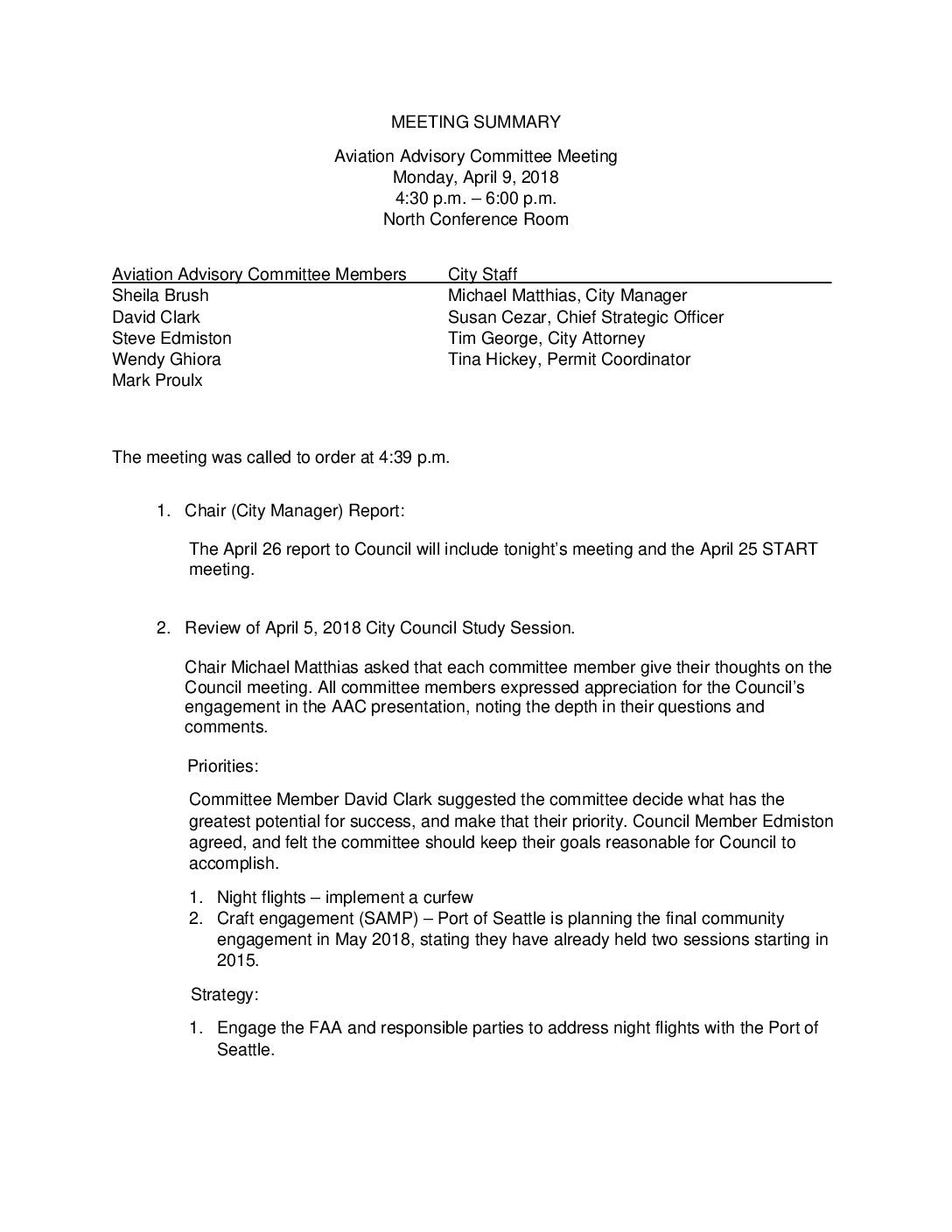
Aviation Advisory Committee Meeting Summary, April 9, 2018
The Aviation Advisory Committee met on April 9, 2018 to discuss strategies for addressing aircraft noise, focusing on two main priorities: implementing a nighttime flight curfew and improving community engagement around the Port of Seattle's airport expansion planning (SAMP). Committee members expressed concern that previous Port of Seattle community forums had failed to meaningfully include the most affected neighborhoods, and agreed to draft a letter to the Port demanding more open dialogue. The committee also planned to present a report to the City Council on April 26, 2018. -
 2009-10-30
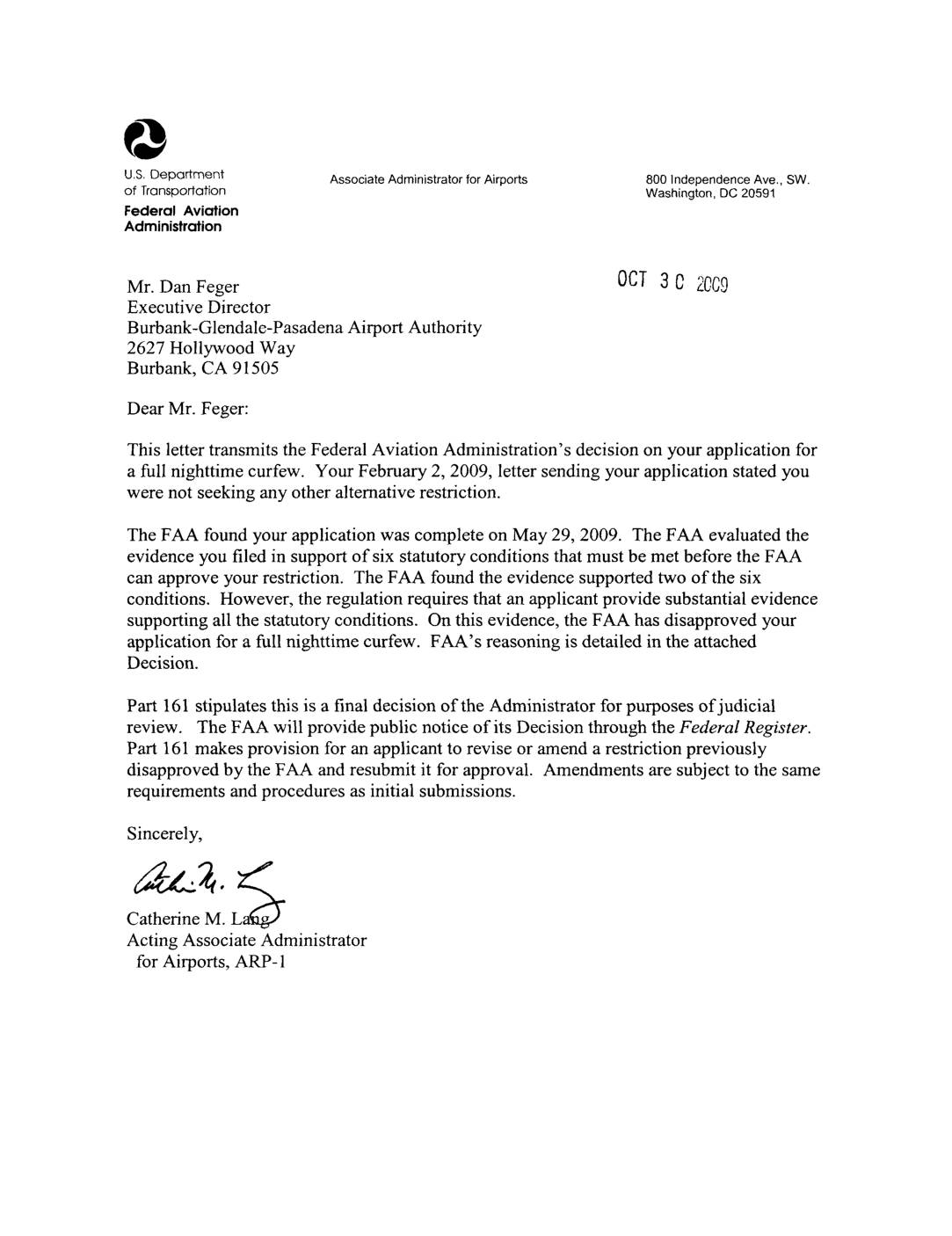
FAA Decision Letter: Disapproval of Burbank-Glendale-Pasadena Airport Authority Application for Full Nighttime Curfew at Bob Hope Airport
The FAA denied the Burbank-Glendale-Pasadena Airport Authority's 2009 application to impose a full nighttime flight curfew (10:00 p.m. to 6:59 a.m.) at Bob Hope Airport in Burbank, California. Under the Airport Noise and Capacity Act of 1990, all six statutory conditions must be supported by substantial evidence for such a restriction to be approved, but the Authority's application only satisfied two of the six required conditions. The Authority was informed it could revise and resubmit its application, subject to the same review requirements. -
City of Burbank v. Lockheed Air Terminal, Inc. :: 411 U.S. 624 (1973)
U.S. Supreme Court City of Burbank v. Lockheed Air Terminal, Inc., 411 U.S. 624 (1973)City of Burbank v. Lockheed Air Terminal, Inc. No. 71-1637 Argued February 20, 1973 Decided May 14, 1973 411 U.S. 624 Syllabus Appellees sought an injunction against enforcement of a Burbank city ordinance placing an 11 p.m. to 7 a.m. curfew -
City of Burbank v. Lockheed Air Terminal
★ 32In one of the most maddening examples of airport law, the United States argued for reversal (ie. allowing for local airport control) of curfews. The FAA, which had previously supported the ban, adopted a neutral position when the The Department of Transportation, filed a Friend of the Court brief arguing for reversal. Summary Holding that