TagNoise Pollution(31)
-
 2026-09-18
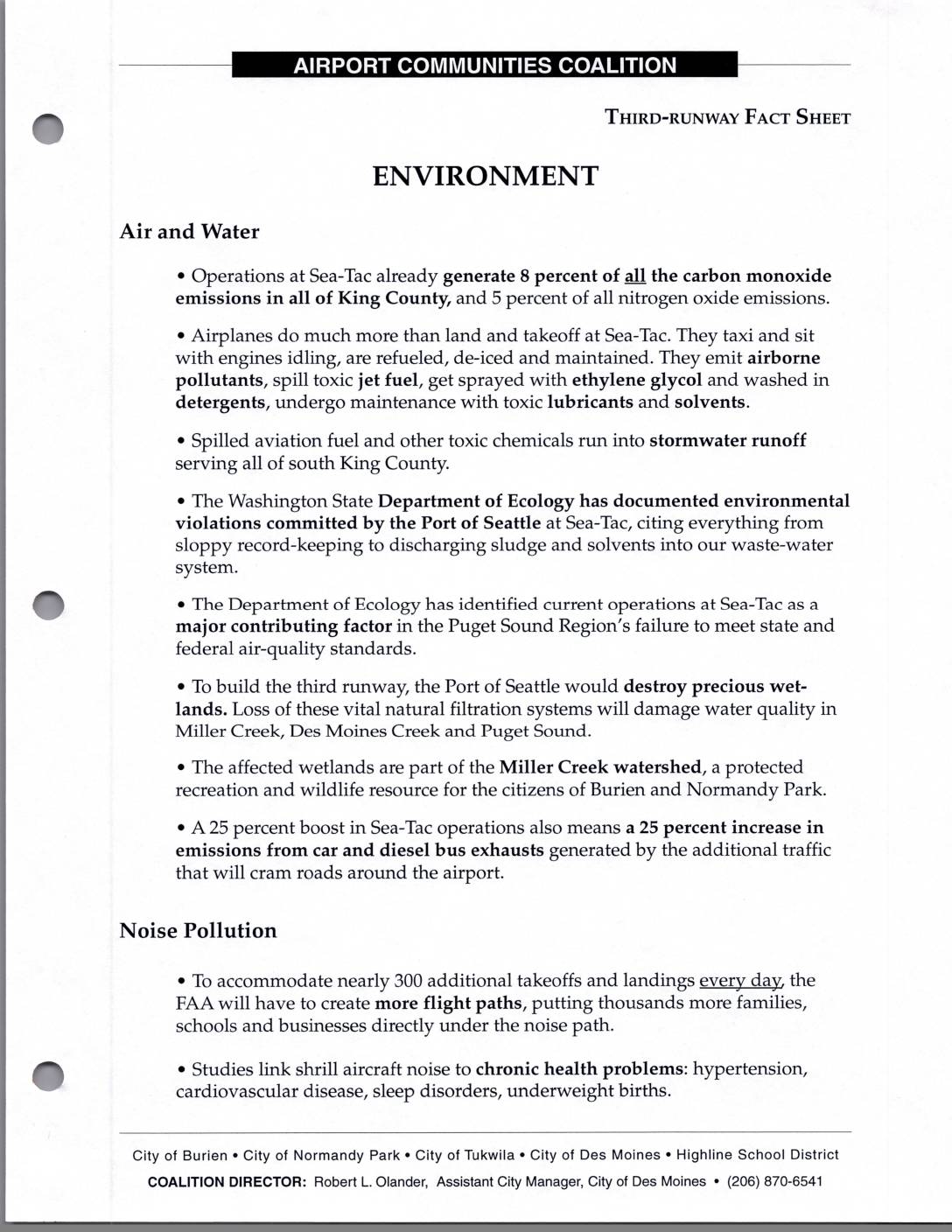
ACC Third-Runway Fact Sheet: Environment, Costs, Schools, and Construction
Airport Communities Coalition (ACC) fact sheet opposing the Sea-Tac Airport third runway, covering environmental, cost, school, and construction impacts. Environmental section documents Sea-Tac generating 8% of King County carbon monoxide and 5% of nitrogen oxide emissions, Washington State Department of Ecology violations by Port Of Seattle including sludge and solvent discharge, destruction of Miller Creek -
2026-09-18
ACC Third-Runway Fact Sheet: Environment, Costs, Schools, and Construction
Airport Communities Coalition (ACC) fact sheet opposing the Sea-Tac Airport third runway, covering environmental, cost, school, and construction impacts. Environmental section documents Sea-Tac generating 8% of King County carbon monoxide and 5% of nitrogen oxide emissions, Washington State Department of Ecology violations by Port Of Seattle including sludge and solvent discharge, destruction of Miller Creek -
 2026-07-21
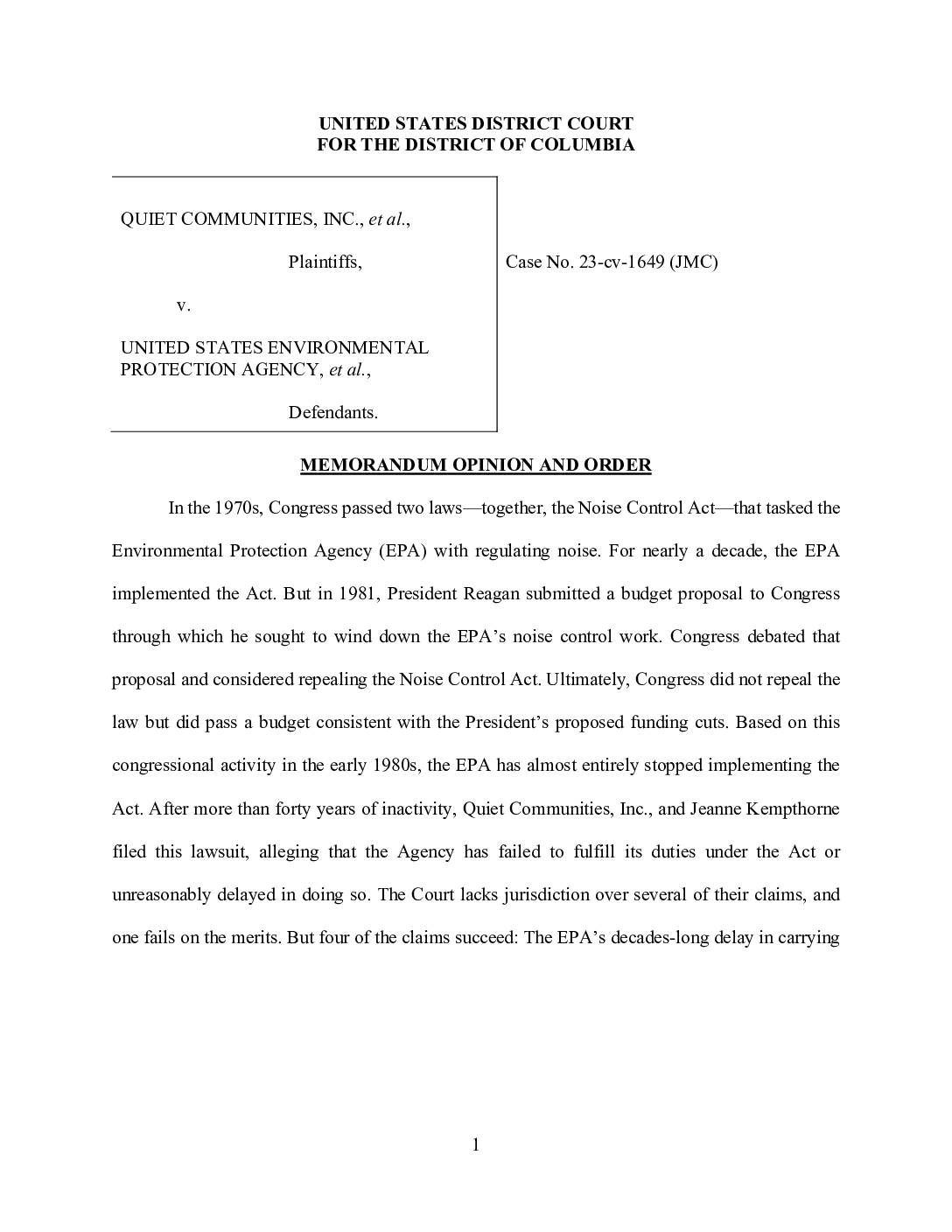
Quiet Communities, Inc. et al. v. United States Environmental Protection Agency et al., Case No. 23-cv-1649 (JMC) — Memorandum opinion and order
A federal court ruled in 2023 that the EPA had unreasonably delayed for over 40 years in carrying out its legal duties under the Noise Control Act of 1972, which requires the agency to regulate environmental noise, publish noise-related reports, and help state and local governments develop noise control programs. Although President Reagan defunded the EPA's noise office in 1982, Congress never actually repealed the Noise Control Act, meaning the EPA's obligations under the law remained in force. The court granted partial summary judgment in favor of the plaintiffs, finding the EPA's inaction on four key counts unlawful. -
 2026-07-16
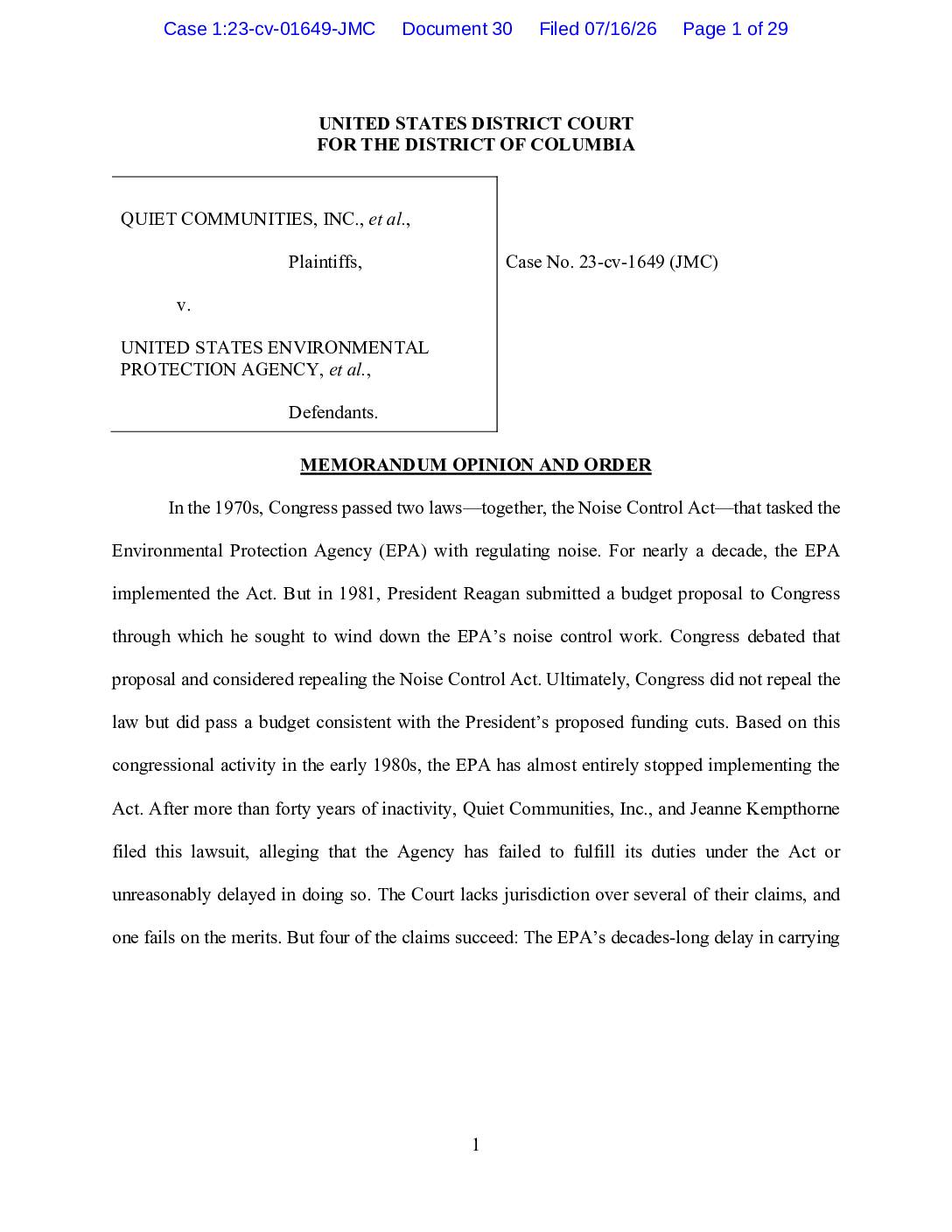
Quiet Communities, Inc. v. EPA: Memorandum Opinion and Order (Case No. 23-cv-1649)
A federal court ruled in July 2026 that the EPA has unlawfully delayed carrying out its duties under the Noise Control Act of 1972, a law that has remained on the books even though the agency effectively shut down its noise control program in 1982 after Congress approved President Reagan's budget cuts. The lawsuit, brought by Quiet Communities, Inc. and Jeanne Kempthorne, argued that over forty years of EPA inaction on noise regulation violated the agency's legal obligations. The court granted partial summary judgment for the plaintiffs on four counts, finding the decades-long delay unreasonable, while dismissing other claims for lack of jurisdiction or failure on the merits. -
 2025-12-09
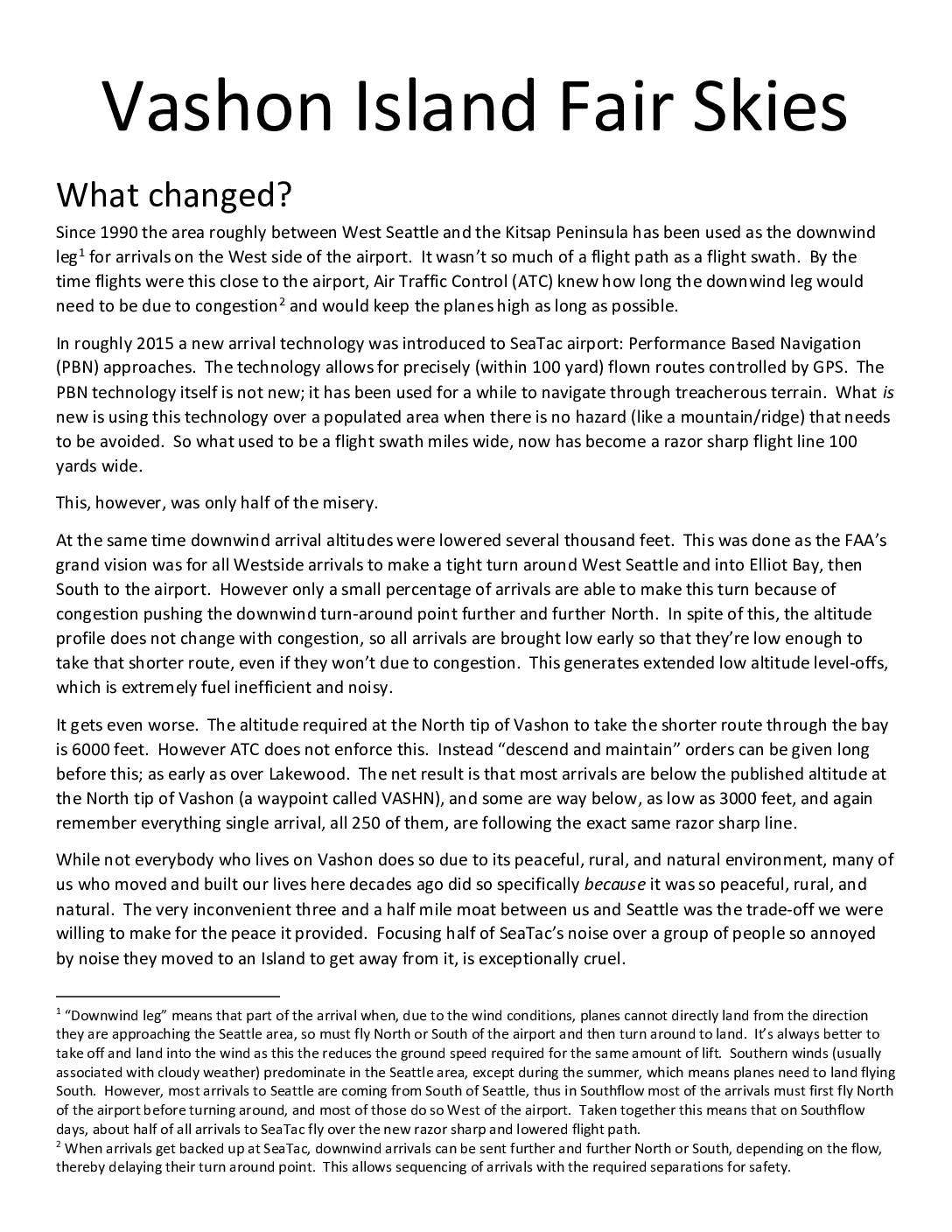
Vashon Island Fair Skies – What changed?
A document explaining changes to aircraft arrival patterns at SeaTac airport around 2015, including the introduction of Performance Based Navigation (PBN) technology and lowered flight altitudes. The changes concentrated flight paths over Vashon Island in a narrow corridor, causing increased noise pollution for residents who chose to live there for its peaceful environment. -
 2024-05-13
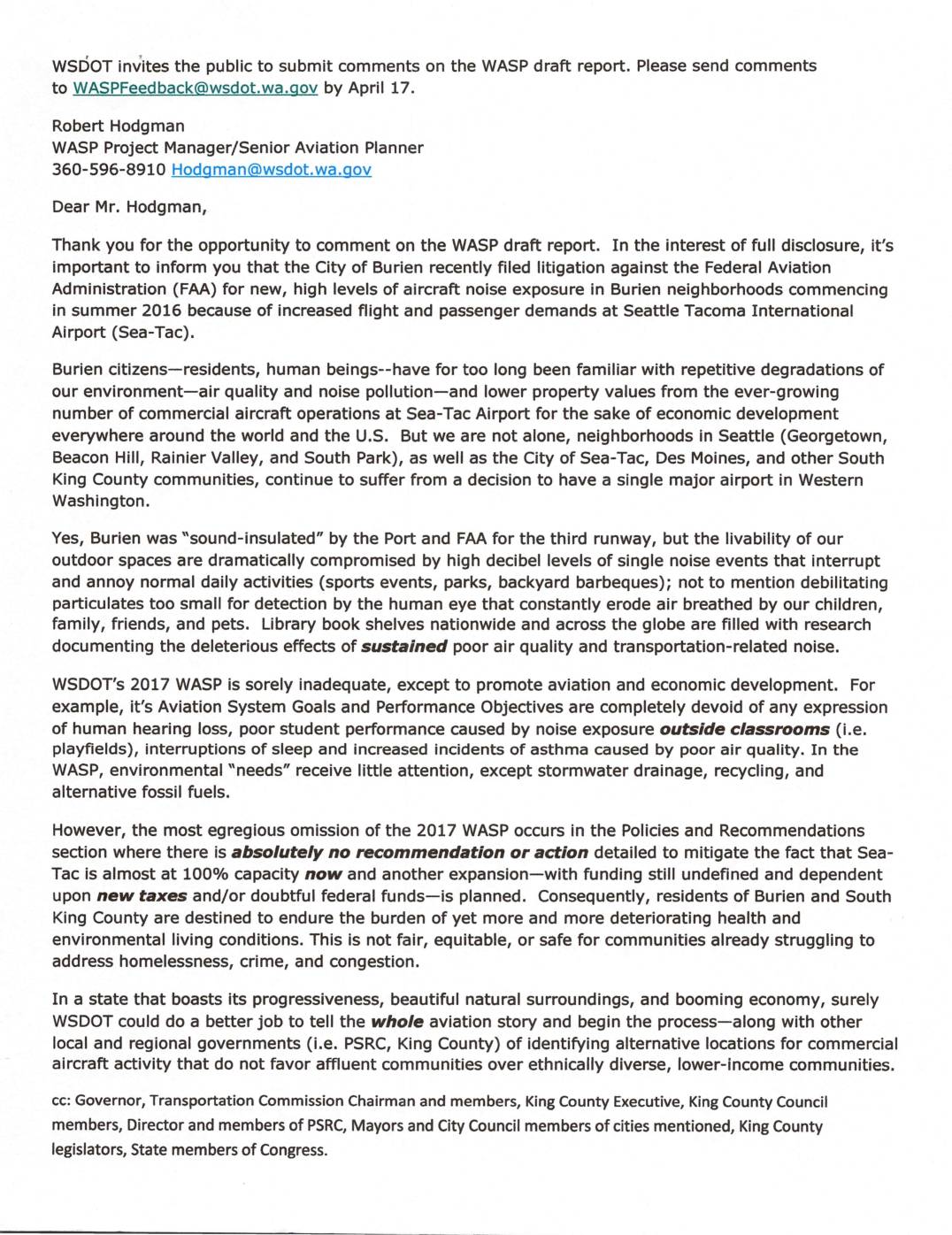
Comment letter on the Washington Aviation System Plan (WASP) draft report
A letter from the City of Burien to WSDOT criticizes the 2017 Washington Aviation System Plan (WASP) for failing to address the health and environmental impacts of growing aircraft noise and air pollution on communities near Seattle-Tacoma International Airport. The letter argues that the plan focuses too narrowly on aviation and economic development while ignoring issues such as hearing loss, poor student performance, sleep disruption, and asthma affecting lower-income and ethnically diverse neighborhoods. The author calls on WSDOT and regional governments to explore alternative airport locations to relieve the disproportionate burden placed on South King County communities. -
 2024-05-09
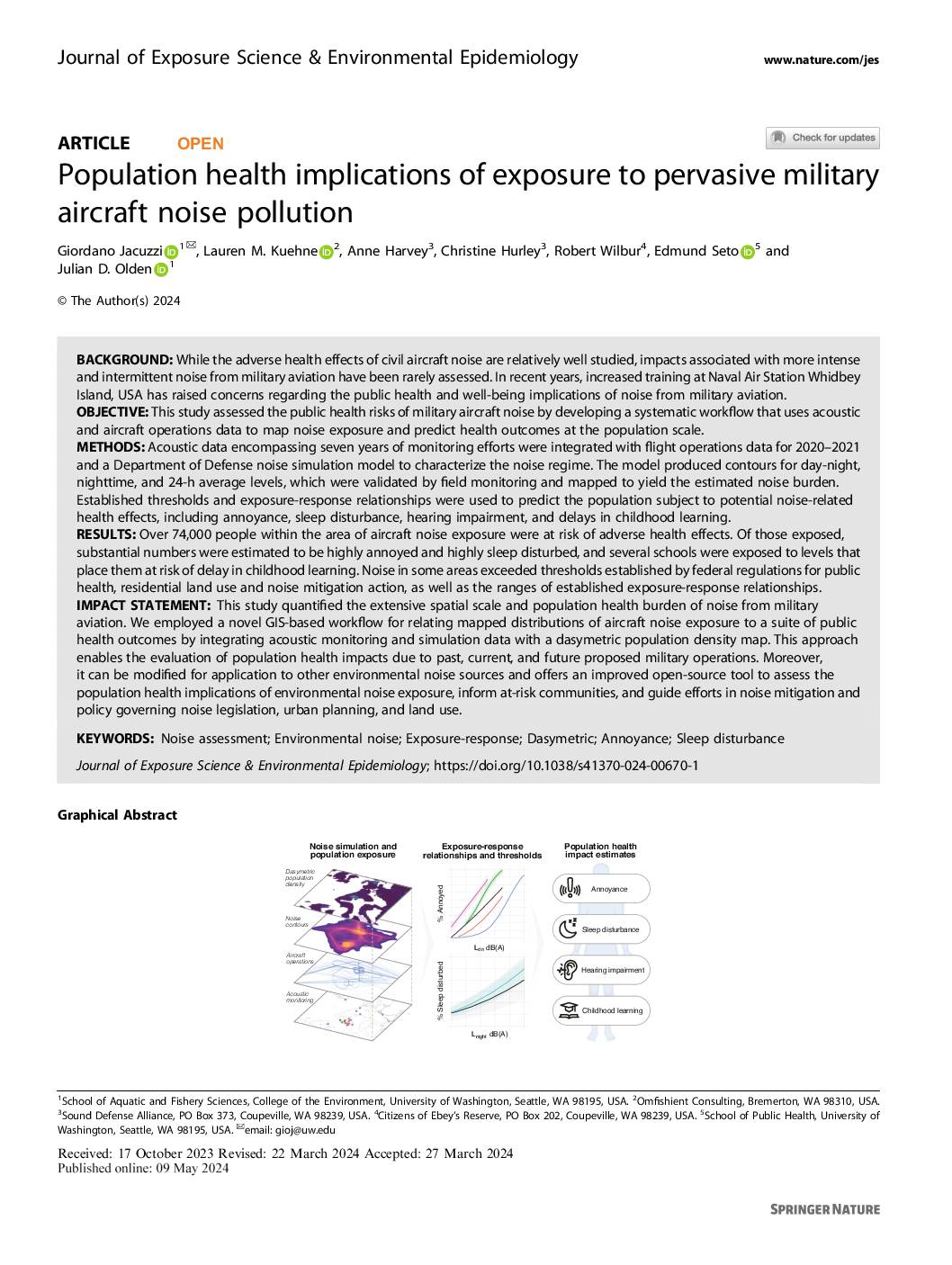
Population health implications of exposure to pervasive military aircraft noise pollution
A 2024 study published in the Journal of Exposure Science & Environmental Epidemiology assessed the public health impacts of military aircraft noise from Naval Air Station Whidbey Island in Washington State, finding that over 74,000 residents were at risk of adverse health effects including annoyance, sleep disturbance, hearing impairment, and delays in childhood learning. Researchers integrated seven years of acoustic monitoring data with flight operations records and noise simulation models to map noise exposure across six counties in northwestern Washington. The study's findings and open-source workflow offer a reproducible tool for evaluating population health risks from aviation noise, with broader applications for informing noise policy, land use planning, and mitigation efforts. -
 2024-05-06
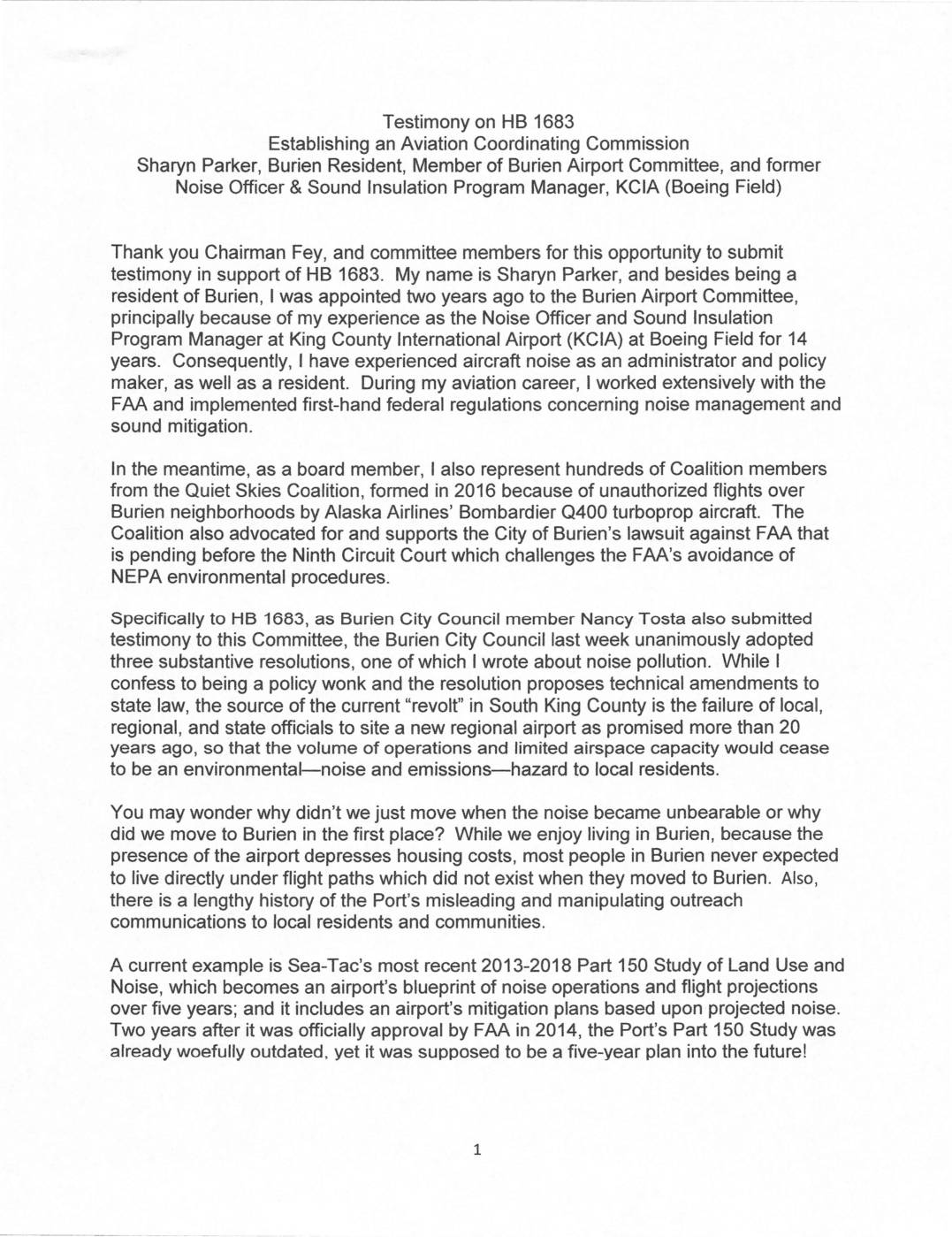
Testimony on HB 1683: Establishing an Aviation Coordinating Commission
Burien resident and former Boeing Field Noise Officer Sharyn Parker testified in support of HB 1683, arguing that the Port of Seattle deliberately understated Sea-Tac Airport's growth projections to avoid alarming nearby communities, while simultaneously planning a multi-billion dollar expansion — leaving residents exposed to increasing noise and emissions without adequate mitigation. She points to the Port's 2013-2018 Part 150 Noise Study becoming outdated just two years after approval, and a four-year delay in implementing approved sound insulation measures, as evidence of mismanagement and misleading communications. Parker and coalition members are calling for nighttime cargo flights to be offloaded to a new regional airport, contending that Sea-Tac has exhausted both its physical footprint and airspace capacity. -
 2024-04-10
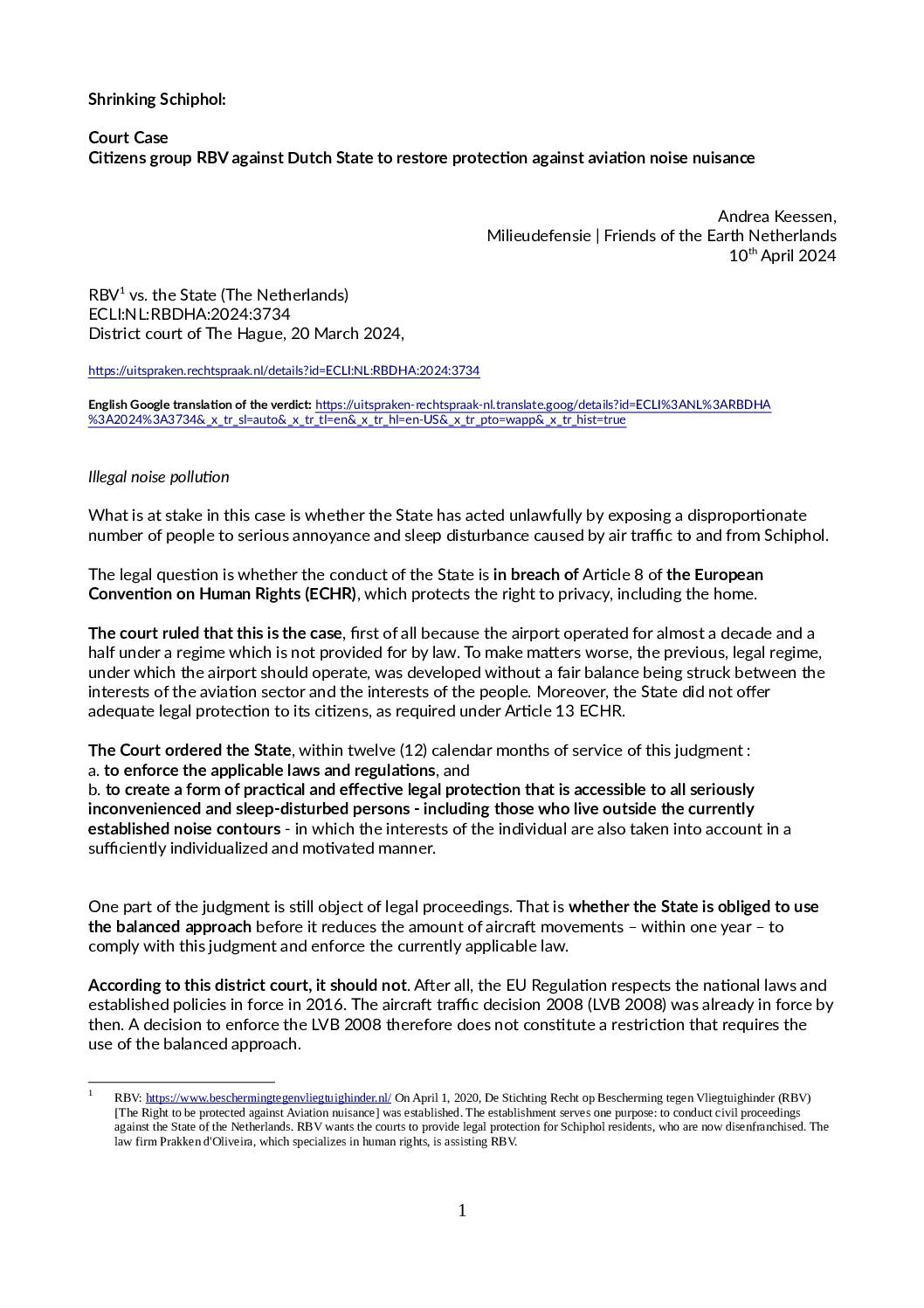
RBV vs. the State (Netherlands): Court Case Summary — Citizens Group Against Dutch State to Restore Protection Against Aviation Noise Nuisance at Schiphol Airport
A Dutch citizens' group won a landmark court ruling in March 2024, with The Hague's district court finding that the Netherlands violated residents' human rights under Article 8 of the European Convention on Human Rights by exposing a disproportionate number of people to serious noise and sleep disturbance from Schiphol Airport. The court ordered the Dutch government to enforce existing aviation noise regulations and reduce aircraft movements within 12 months, while also requiring the creation of more effective, individualized legal protections for affected residents — including those living outside established noise contours. The case may serve as a precedent for other major airports worldwide, as the ruling criticized decades of government prioritization of aviation industry economic interests over residents' health and well-being. -
 2024-02-01
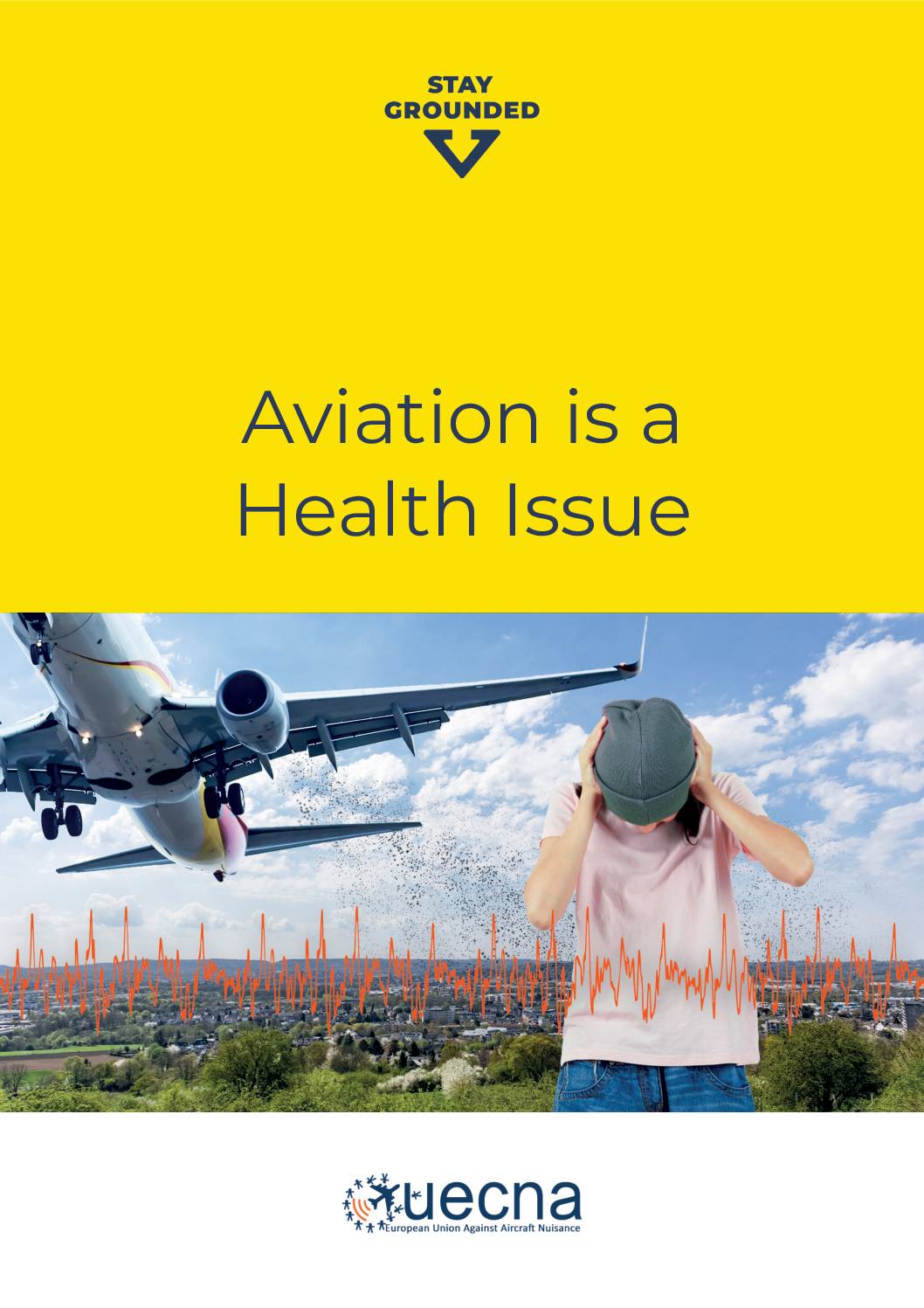
Aviation is a Health Issue
A February 2024 fact sheet from the Stay Grounded network warns that aviation poses serious health risks not just for the climate, but for people living near airports, under flight paths, and for cabin crew. Aircraft noise is linked to cardiovascular disease, cognitive impairment in children, sleep disturbance, and premature death, while burning jet fuel releases ultrafine particles that penetrate the lungs and bloodstream. The report calls for stricter noise regulations, limits on flight growth, and a halt to airport expansion as the most effective ways to protect public health.