Category : Legislation(149)
-
ARTICLE XXIII – Amendments to the Washington State Constitution
ARTICLE XXIII – AMENDMENTS Washington State Constitution 2024 SECTION 1 HOW MADE. Any amendment or amendments to this Constitution may be proposed in either branch of the legislature; and if the same shall be agreed to by two-thirds of the members elected to each of the two houses, such proposed amendment or amendments shall be -
 2024-07-12
Noise standards: Aircraft type and airworthiness certification (14 CFR Part 36)
★Title 14 CFR Part 36 sets the federal noise standards that aircraft must meet to receive type and airworthiness certificates from the FAA. It covers a wide range of aircraft, including large commercial jet airplanes, propeller-driven small and commuter planes, helicopters, and tiltrotors, establishing specific noise measurement, evaluation, and limit requirements for each category. These rules are relevant to airports like Sea-Tac because they define the baseline noise performance standards that aircraft operating in the area must satisfy. -
 2024-05-18
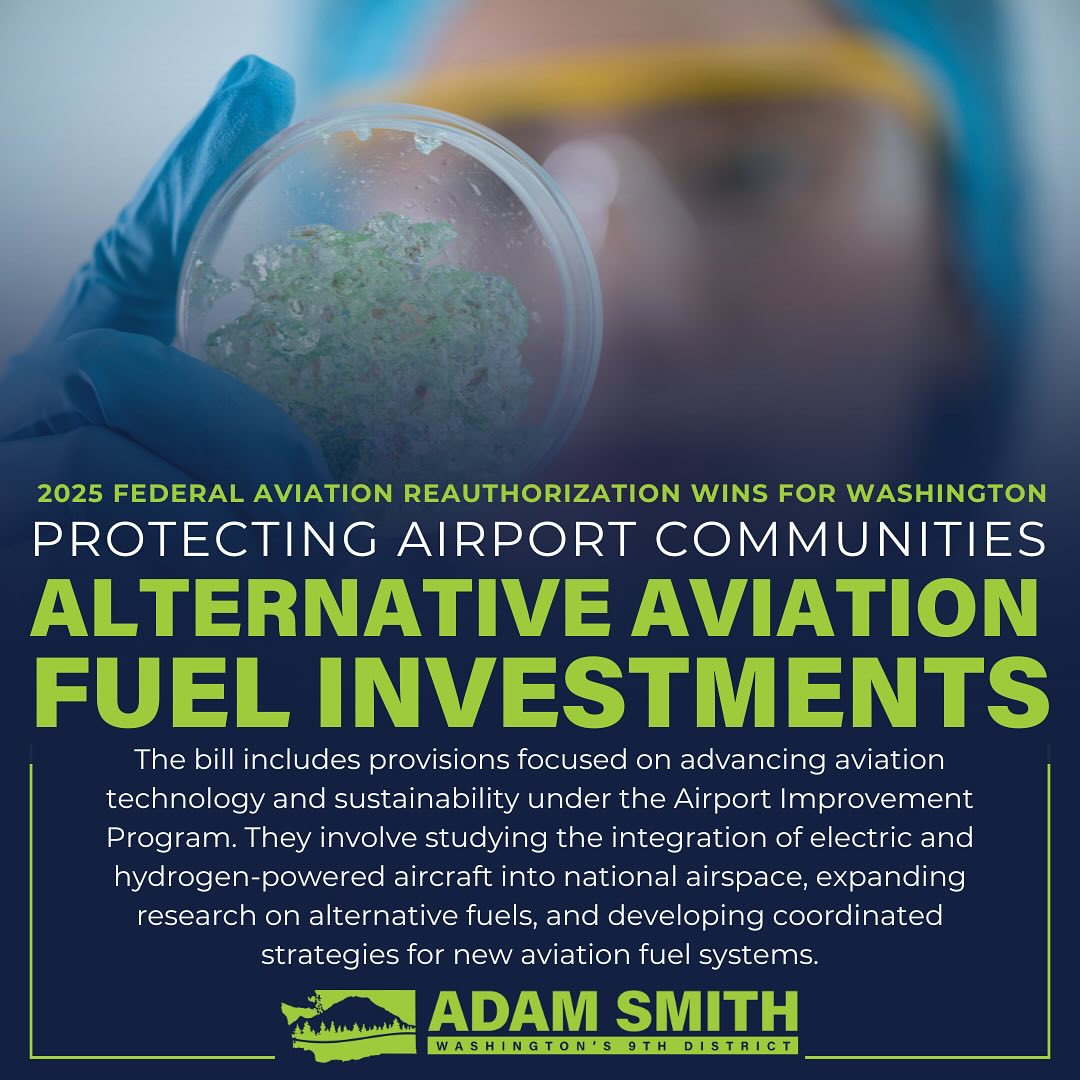
2025 Federal Aviation Reauthorization Wins for Washington – Alternative Aviation Fuel Investments
Promotional graphic from U.S. Representative Adam Smith (Washington's 9th District) highlighting provisions in the 2025 Federal Aviation Reauthorization bill focused on alternative aviation fuel investments, including study of electric and hydrogen-powered aircraft integration, expanded alternative fuel research, and coordinated strategies for new aviation fuel systems under the Airport Improvement Program. -
 2024-05-18
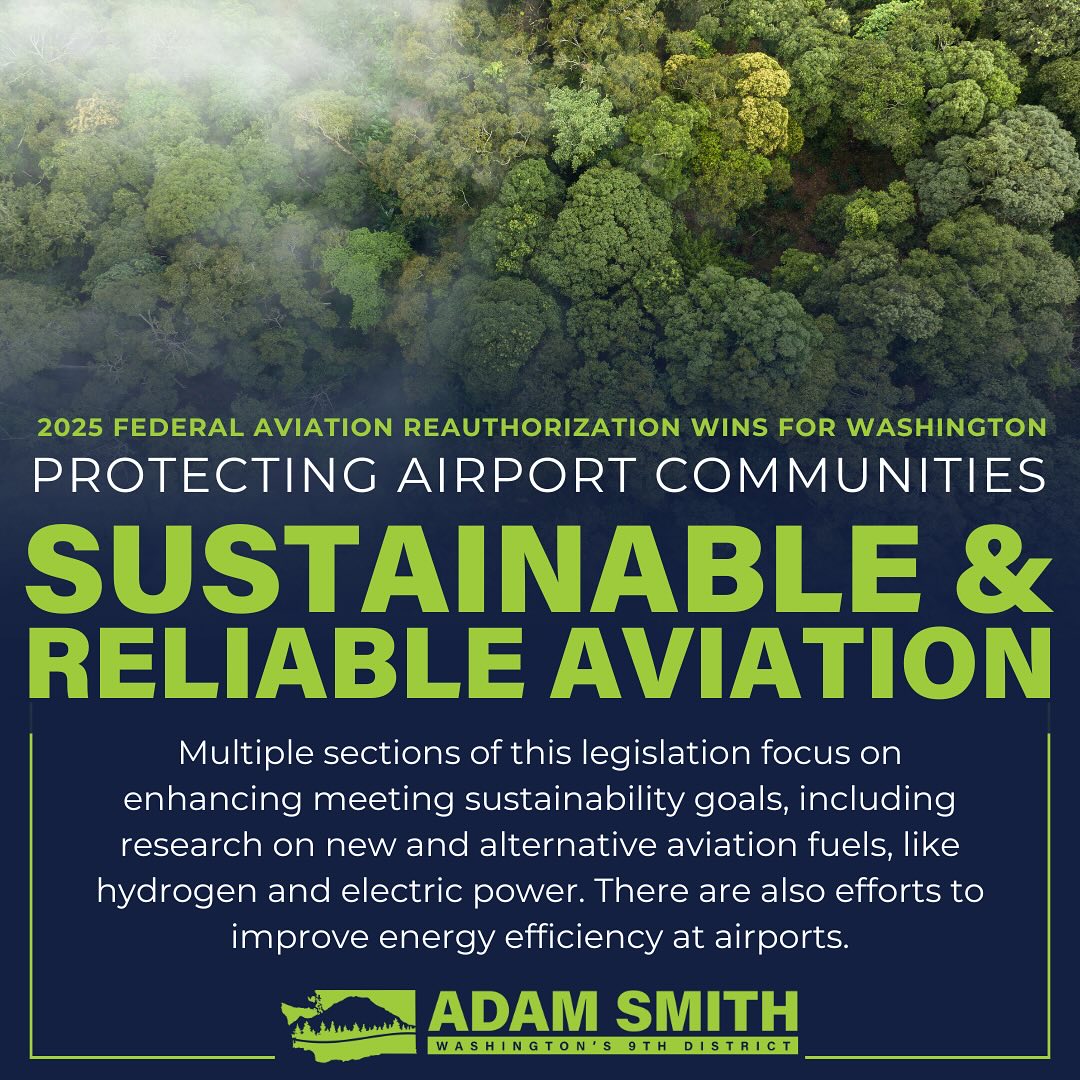
2025 Federal Aviation Reauthorization Wins for Washington – Protecting Airport Communities
Promotional graphic from U.S. Representative Adam Smith (Washington's 9th District) highlighting 2025 Federal Aviation Reauthorization provisions focused on sustainability, including research into alternative aviation fuels (hydrogen and electric power) and improved energy efficiency at airports. The graphic is branded with Smith's official congressional logo and framed under the theme 'Protecting Airport Communities.' -
 2024-05-16
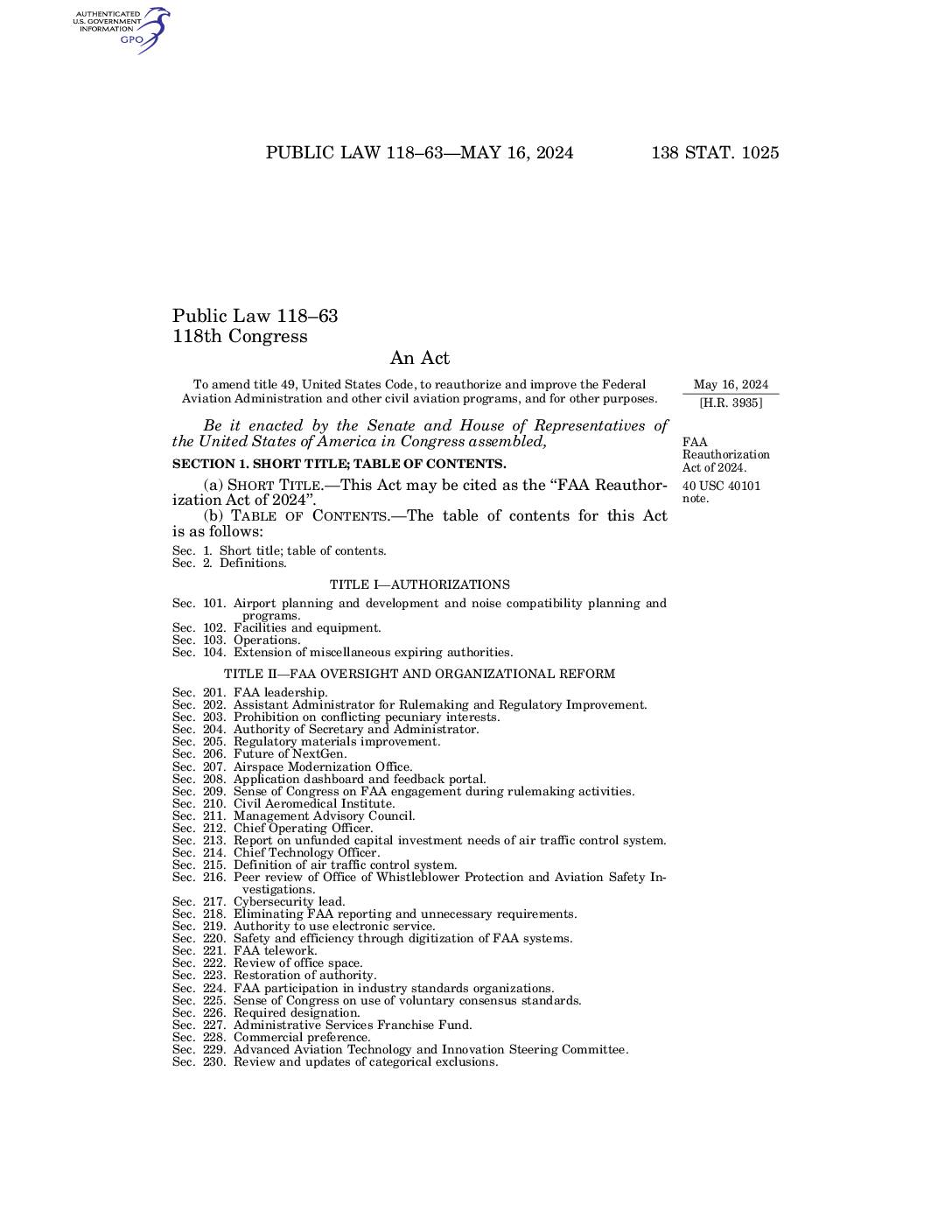
FAA Reauthorization Act of 2024
★ 32The FAA Reauthorization Act of 2024 (Public Law 118-63) is a comprehensive federal law signed on May 16, 2024, that reauthorizes and updates the Federal Aviation Administration and civil aviation programs across the United States. The Act covers a wide range of topics including aviation safety improvements, aerospace workforce development, cybersecurity, and organizational reforms within the FAA. While the law addresses airport planning and noise compatibility programs, it does not focus specifically on noise policy at individual airports such as Sea-Tac. -
2024-05-16
FAA Reauthorization Act of 2024
★The FAA Reauthorization Act of 2024 (Public Law 118-63) is a comprehensive federal law signed on May 16, 2024, that reauthorizes and updates the Federal Aviation Administration and civil aviation programs across the United States. The Act covers a wide range of topics including aviation safety improvements, aerospace workforce development, cybersecurity, and organizational reforms within the FAA. While the law addresses airport planning and noise compatibility programs, it does not focus specifically on noise policy at individual airports such as Sea-Tac. -
 2024-03-19
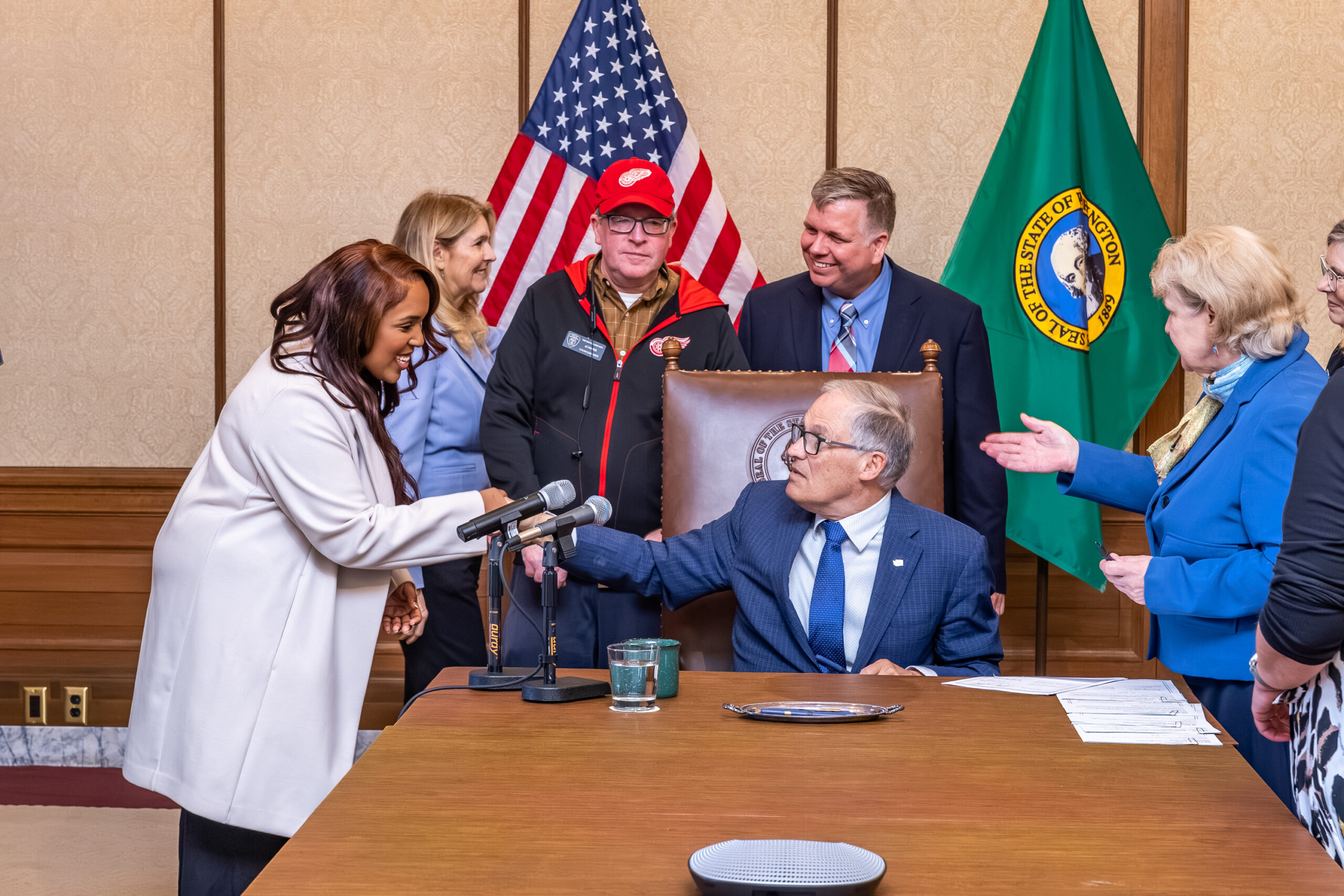
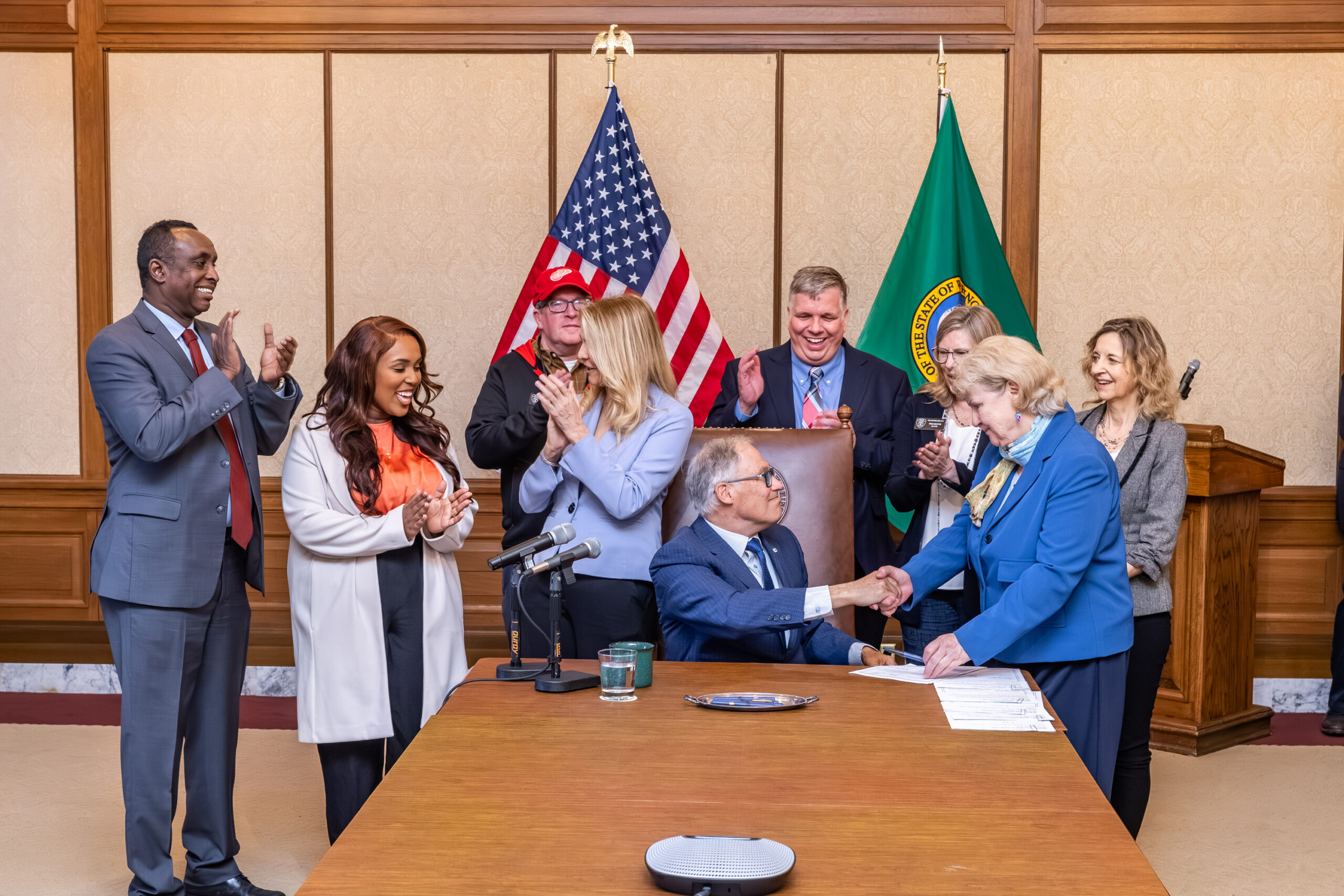
Governor signing legislation with officials present
A seated official in a navy suit signs or exchanges documents at a formal table in what appears to be the Washington State Governor's office, indicated by the visible Washington State seal on the chair and the State of Washington flag in the background alongside a U.S. flag. Several attendees, including a woman in a white blazer and a man wearing a Detroit Red Wings cap, look on during the ceremony. -
 2024-03-19
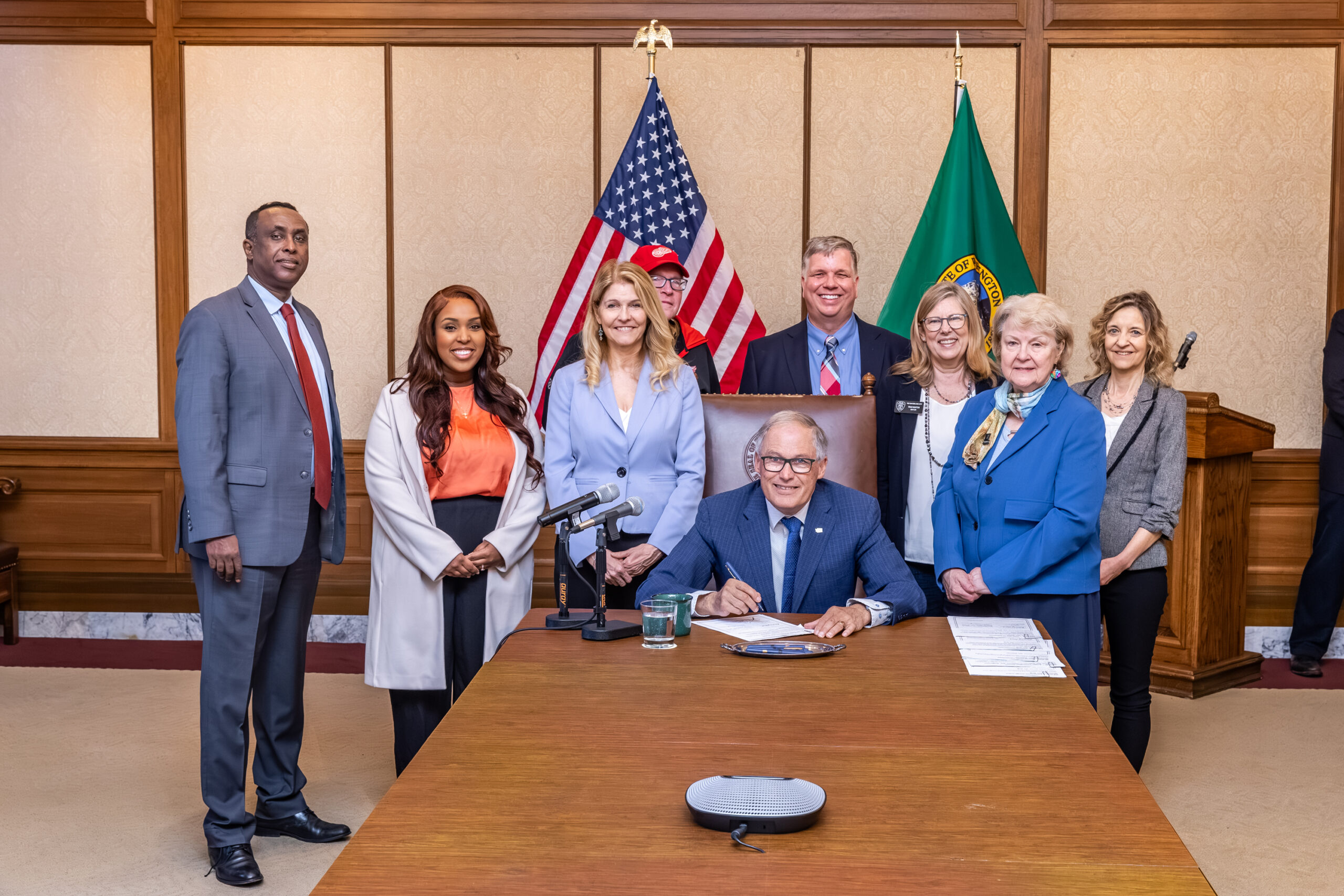
Bill Signing Ceremony
A seated official signs legislation at a desk while shaking hands with a woman in a blue blazer, surrounded by applauding attendees. The Washington State flag and U.S. flag are visible in the background, indicating this is an official state government ceremony. -
 2024-03-19
Port Package Update bill signed into law!
SB5955 now the second program of its kind in nation! Olympia WA: Today, Governor Jay Inslee signed into law SB5955, the Port Package Update bill, making Sea-Tac Airport now (after San Francisco International) the second airport in America with a sound insulation update program–and the only airport with a State mandate to help fund and -
 2024-03-07
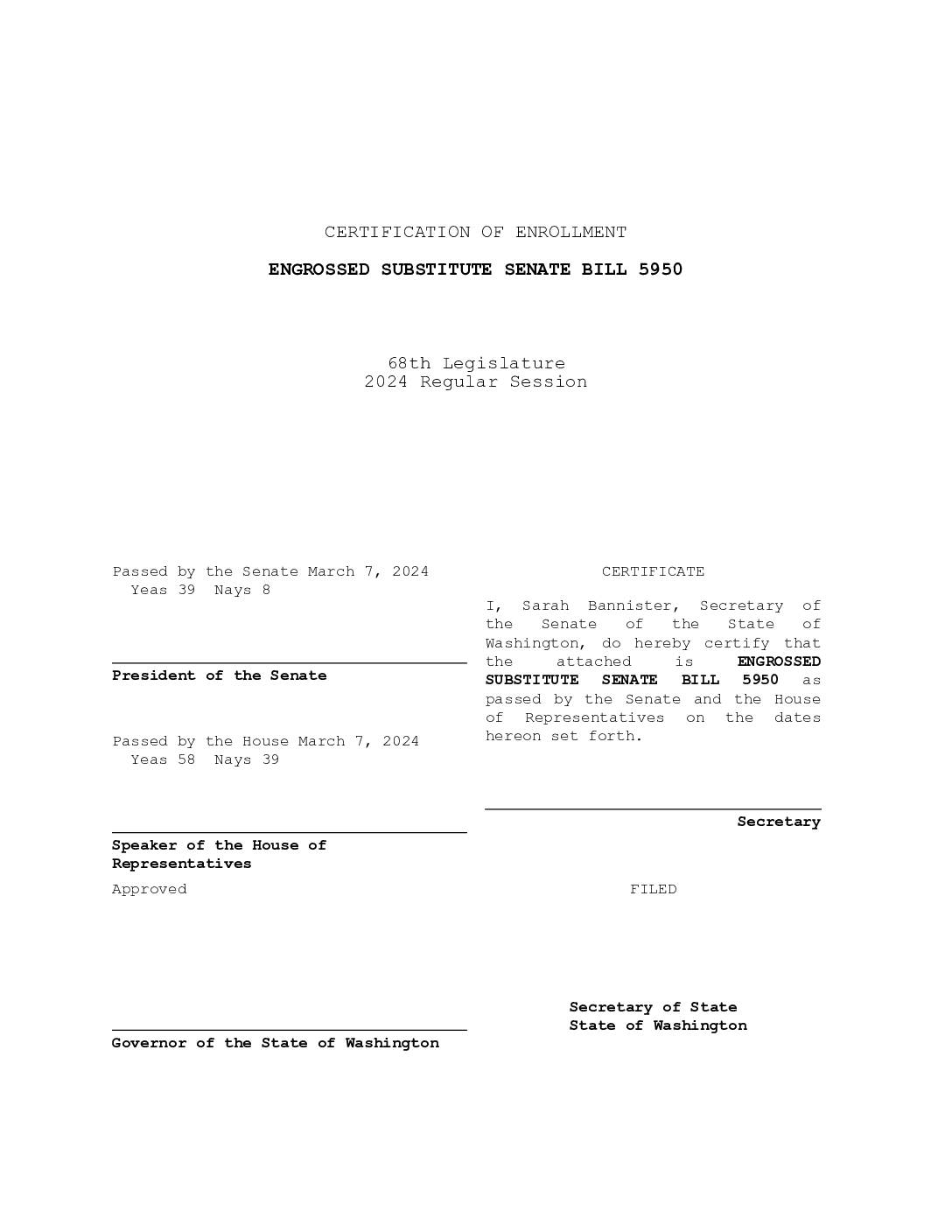
Engrossed Substitute Senate Bill 5950: Washington State Fiscal Matters Appropriations Act, 2024
Engrossed Substitute Senate Bill 5950 (ESSB 5950), 68th Legislature, 2024 Regular Session, State of Washington. Passed Senate and House March 7, 2024 (Senate 39-8, House 58-39). Sponsored by Senate Ways & Means, originally by Senators Robinson, Nobles, and Trudeau, by request of Office of Financial Management. Amends RCW 43.101.220, 43.101.230, 70A.65.300, and reenacts/amends RCW 43.101.200