Category : Legislation(149)
-
 2026-09-15
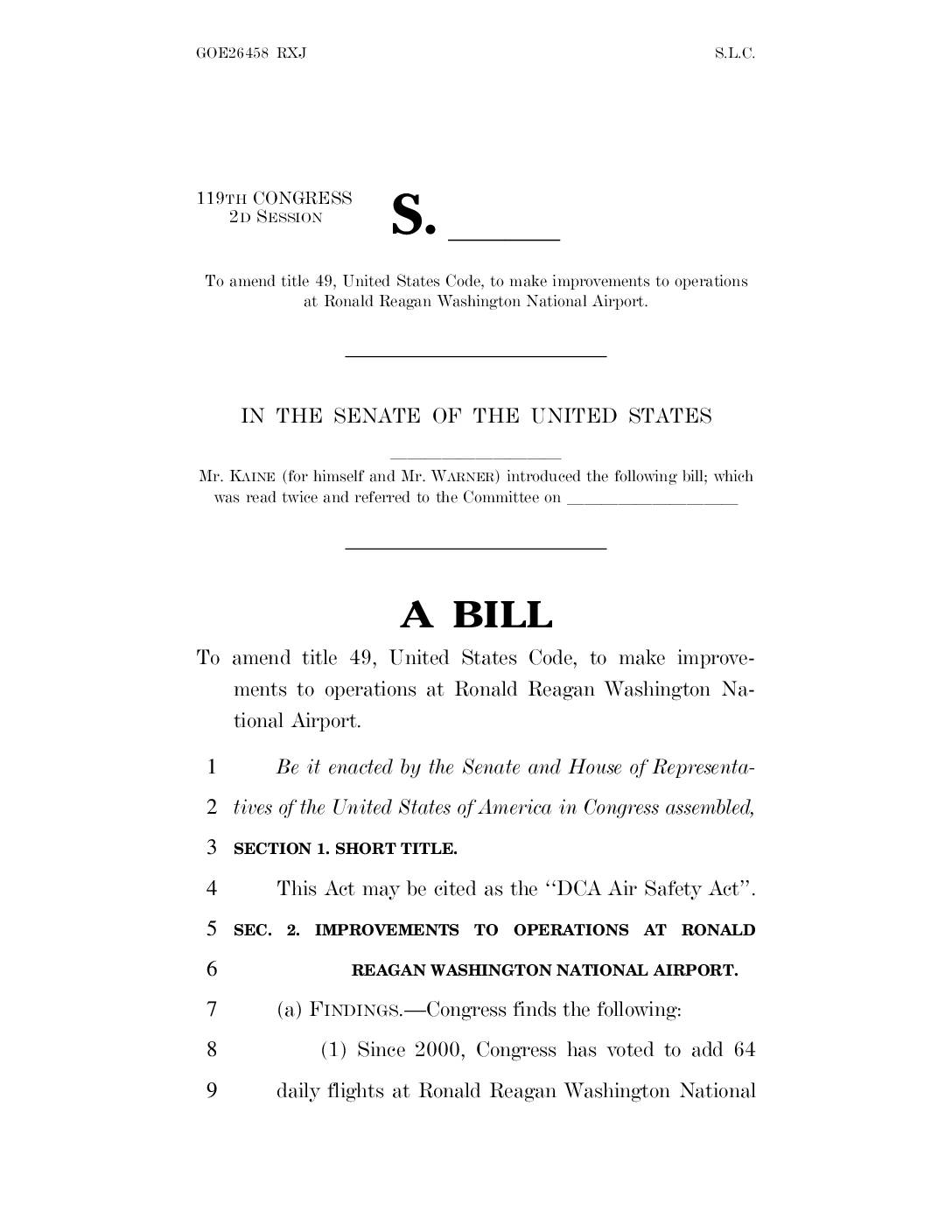
DCA Air Safety Act (Senators Kane and Warner)
Senate bill introduced by Senators Kaine and Warner in the 119th Congress, 2nd Session, to amend title 49, United States Code, improving operations at Ronald Reagan Washington National Airport (DCA). The bill cites the January 29, 2025 midair collision between American Airlines Flight 5342 and a U.S. Army H-60 Black Hawk helicopter, noting one air -
 2026-01-20
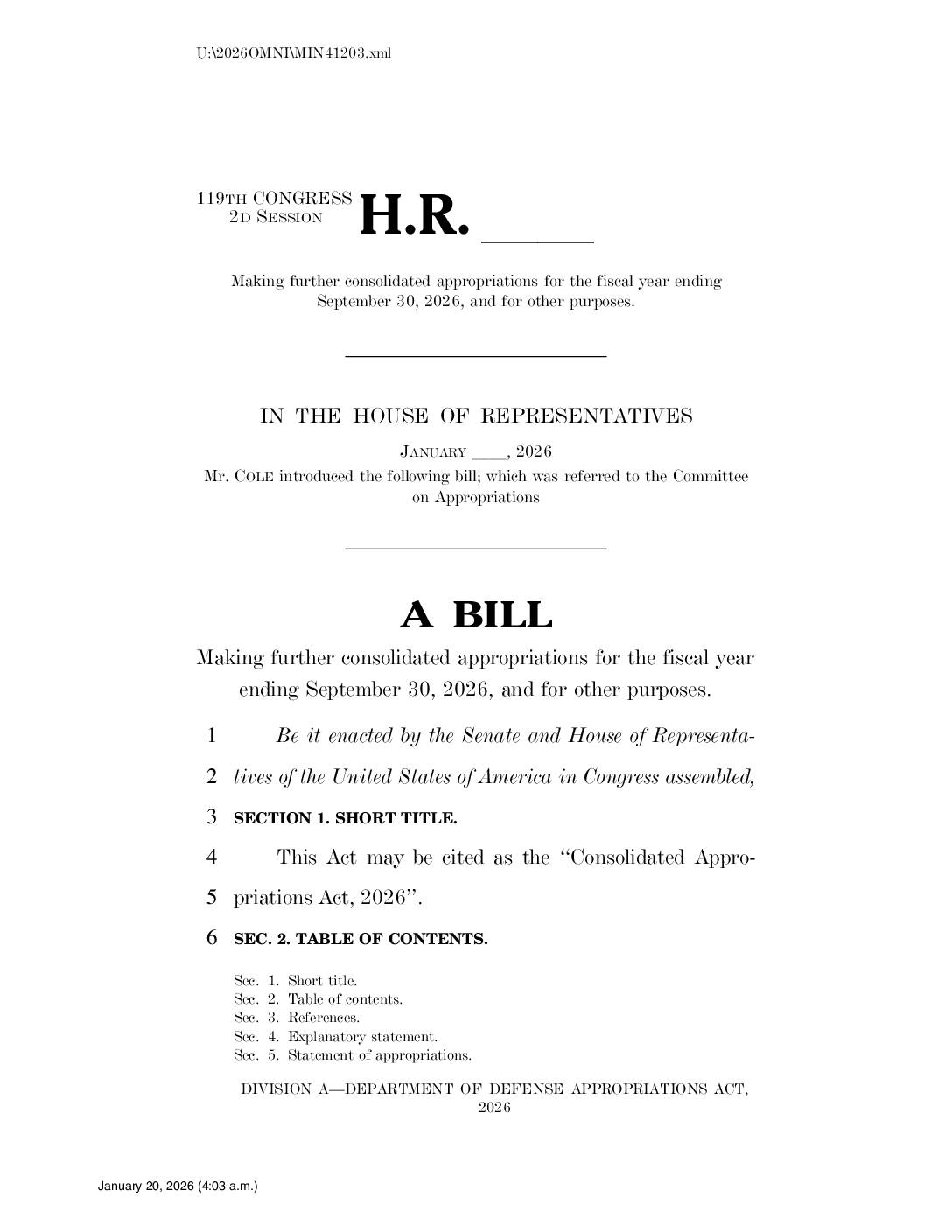
Consolidated Appropriations Act, 2026
The Consolidated Appropriations Act, 2026 is a federal spending bill introduced in the U.S. House of Representatives in January 2026 that funds government operations through September 30, 2026. It covers multiple areas including defense, labor, health, education, homeland security, and transportation. This document does not contain content specifically related to Sea-Tac Airport noise policy. -
 2025-12-12
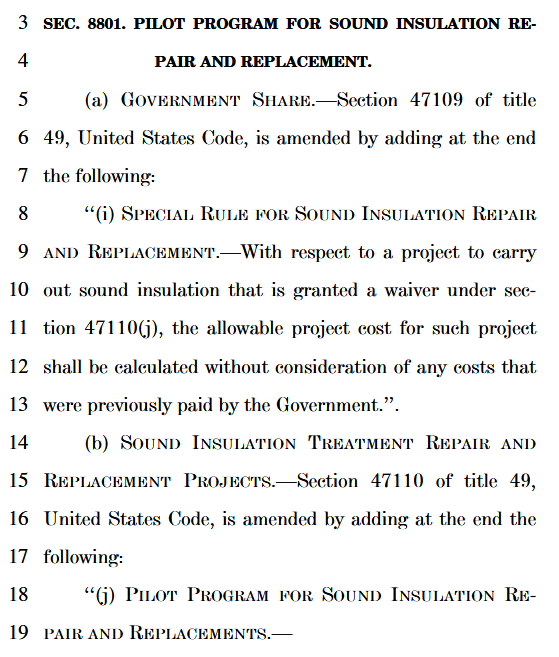
NDAA Section 8801 Pilot Program for Sound Insulation Repair and Replacement
Legislative text from SEC. 8801 establishing a Pilot Program for Sound Insulation Repair and Replacement, amending Title 49 of the United States Code (Sections 47109 and 47110). The provision adds a special rule excluding previously government-paid costs from allowable project cost calculations for sound insulation projects granted waivers under Section 47110(j). -
 2025-10-24
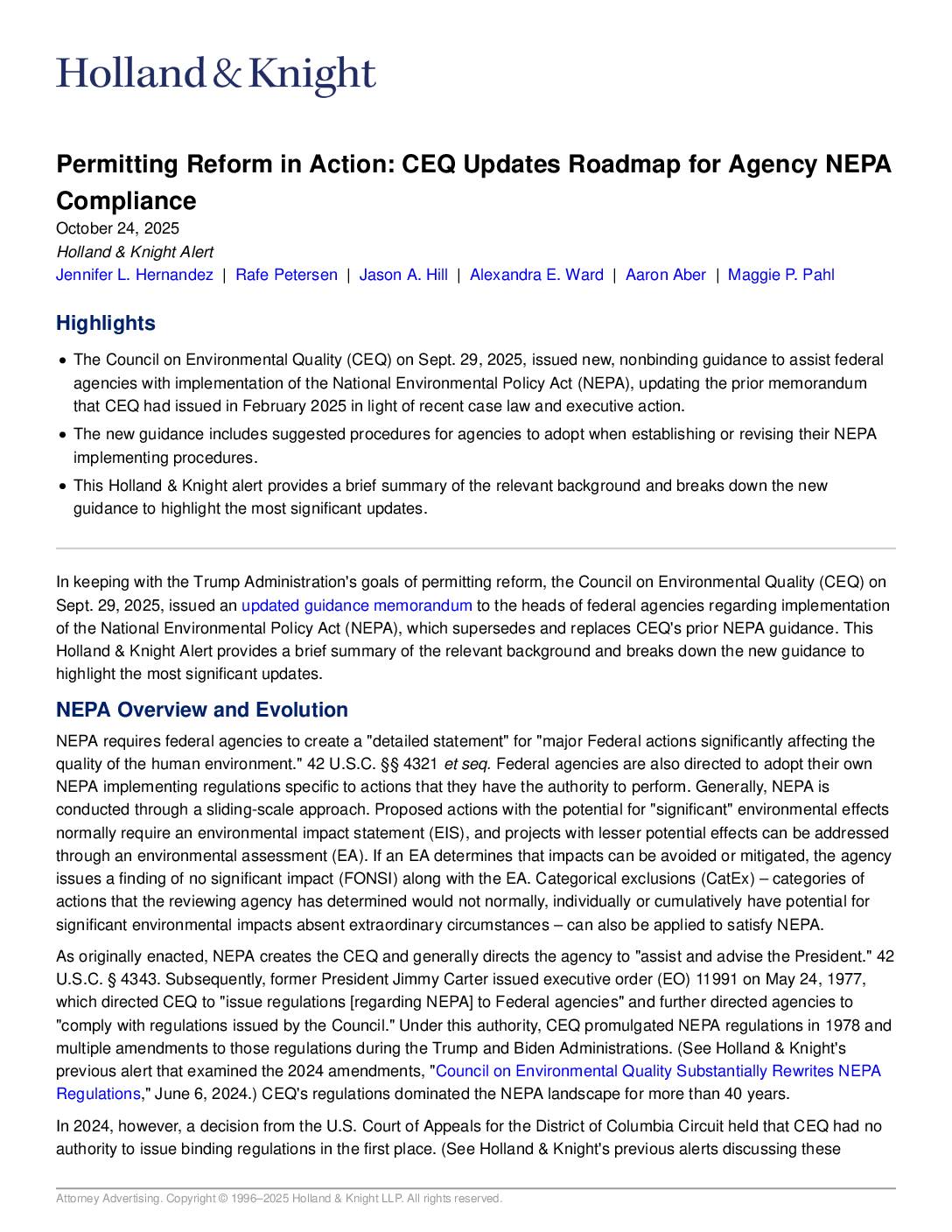
Permitting Reform in Action: CEQ Updates Roadmap for Agency NEPA Compliance
Holland & Knight alert by Jennifer L. Hernandez, Rafe Petersen, Jason A. Hill, Alexandra E. Ward, Aaron Aber, and Maggie P. Pahl analyzing the Council on Environmental Quality (CEQ) September 29, 2025 updated nonbinding NEPA guidance memorandum (90 FR 47734) that supersedes the February 2025 guidance. Covers incorporation of Seven County Infrastructure Coalition v. Eagle -
 2025-09-08
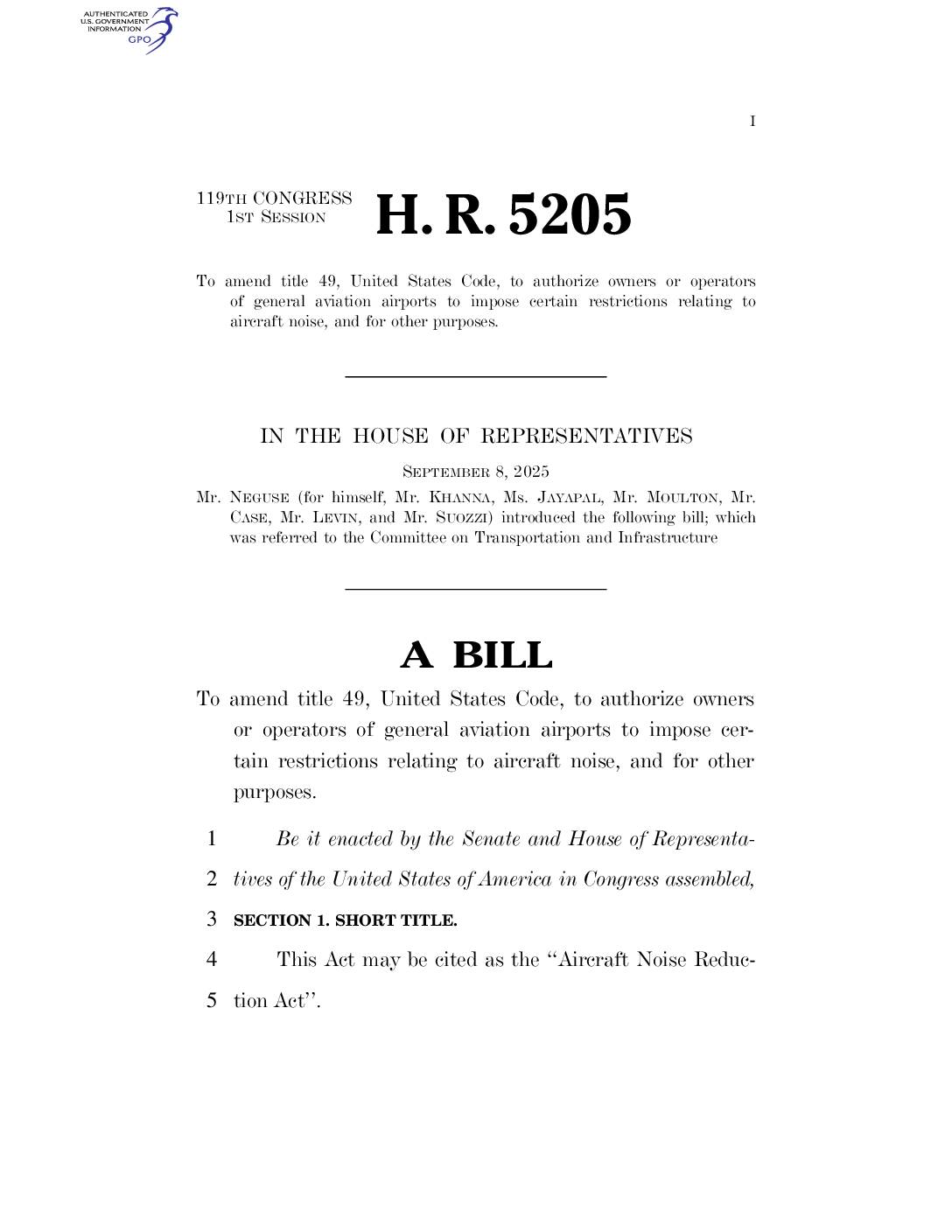
Aircraft Noise Reduction Act (H.R. 5205)
H.R. 5205, the Aircraft Noise Reduction Act, is a bill introduced in September 2025 that would allow owners and operators of general aviation airports to work with the FAA to adjust air traffic and training flight patterns in order to reduce aircraft noise in surrounding communities. The bill protects airports from losing federal funding simply for pursuing these noise-reduction measures and requires community input to be considered in the process. It also directs the Secretary of Transportation to update federal regulations to make noise abatement measures more accessible to general aviation airports. -
 2025-05-20
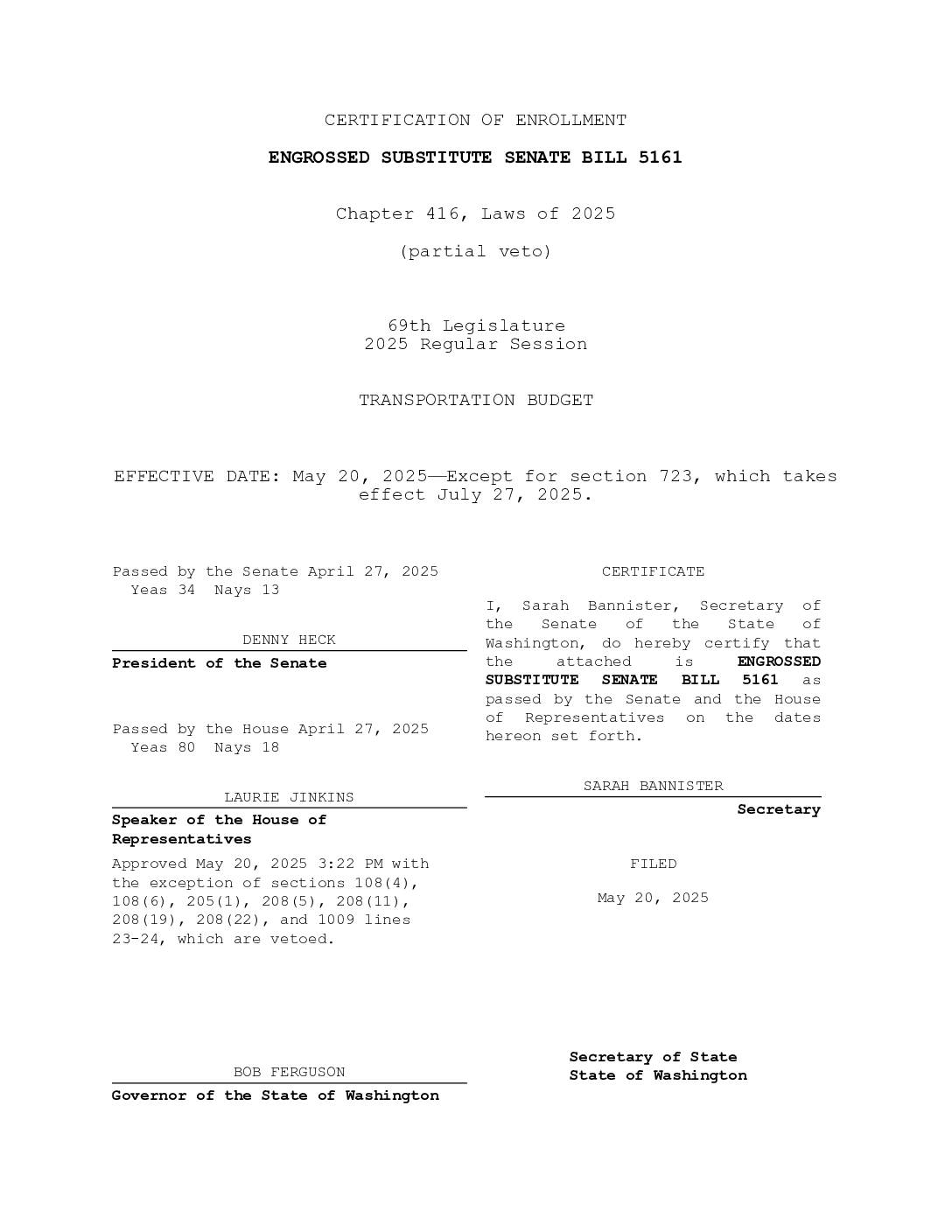
Transportation Budget – Engrossed Substitute Senate Bill 5161
Washington State's 2025-2027 Transportation Budget (Engrossed Substitute Senate Bill 5161) was signed into law on May 20, 2025, authorizing appropriations from various state accounts for transportation-related expenses, capital projects, and employee compensation through June 30, 2027. The bill was passed by the Senate and House on April 27, 2025, with Governor Bob Ferguson approving the measure while vetoing several specific sections. Note: This document covers broad statewide transportation fiscal matters and does not contain provisions specifically addressing Sea-Tac Airport noise policy. -
 2025-03-10
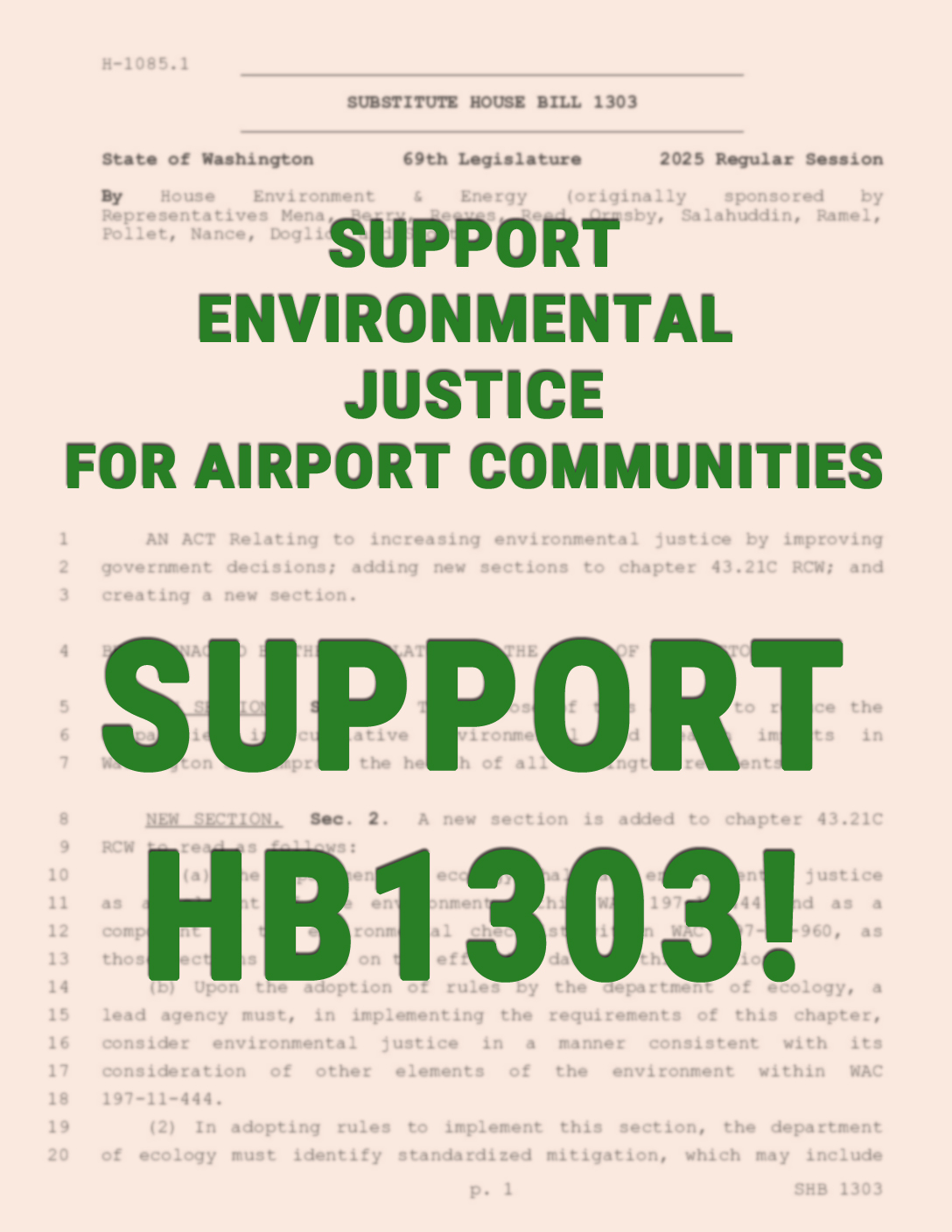
Call To Action: HB1303
Act by Wednesday, March 12. Takes less than a minute! Take One Minute To Message Your State Representatives! One of our top policy priorities this legislative session is HB 1303 – also known as the CURB Act – a bill that will improve the State environmental permitting process for projects like the Sustainable Airport Master -
 2025-02-28
Call To Action: Save State Funding for Port Package Updates!
The Governor’s proposed budget cuts the $1 million in funding that was secured last year through SB 5955 for the Port Equity Fund. This fund is critical for fixing failed port packages, which were meant to insulate homes from airport noise but have deteriorated over time. Without this funding, many homeowners will be left without -
2025-02-23
SB5380 Senate Environment Committee Hearing
Companion to HB1303 to add cumulative Impacts to overburdened communities b Transcript Track Bill Progress SB5380 and companion House bill HB1303 are collectively known as the CURB act. The sponsors call it the follow up to the 2021 HEAL Act. The concept is to add an Environmental Justice layer to large project permitting (such as the -
2025-02-21
HR1484/2025
Air Traffic Noise and Pollution Expert Consensus Act of 2025 H. R. 1484 To direct the Administrator of the Federal Aviation Administration to enter into appropriate arrangements with the National Academies of Sciences, Engineering, and Medicine to provide for a report on the health impacts of air traffic noise and pollution, and for other purposes.