Category : Key Documents(99)
The (99) files, images and basic information we refer to constantly from the Document Library and Resources pages.
-
2009-10-01
Aircraft impacts on local and regional air quality in the United States
★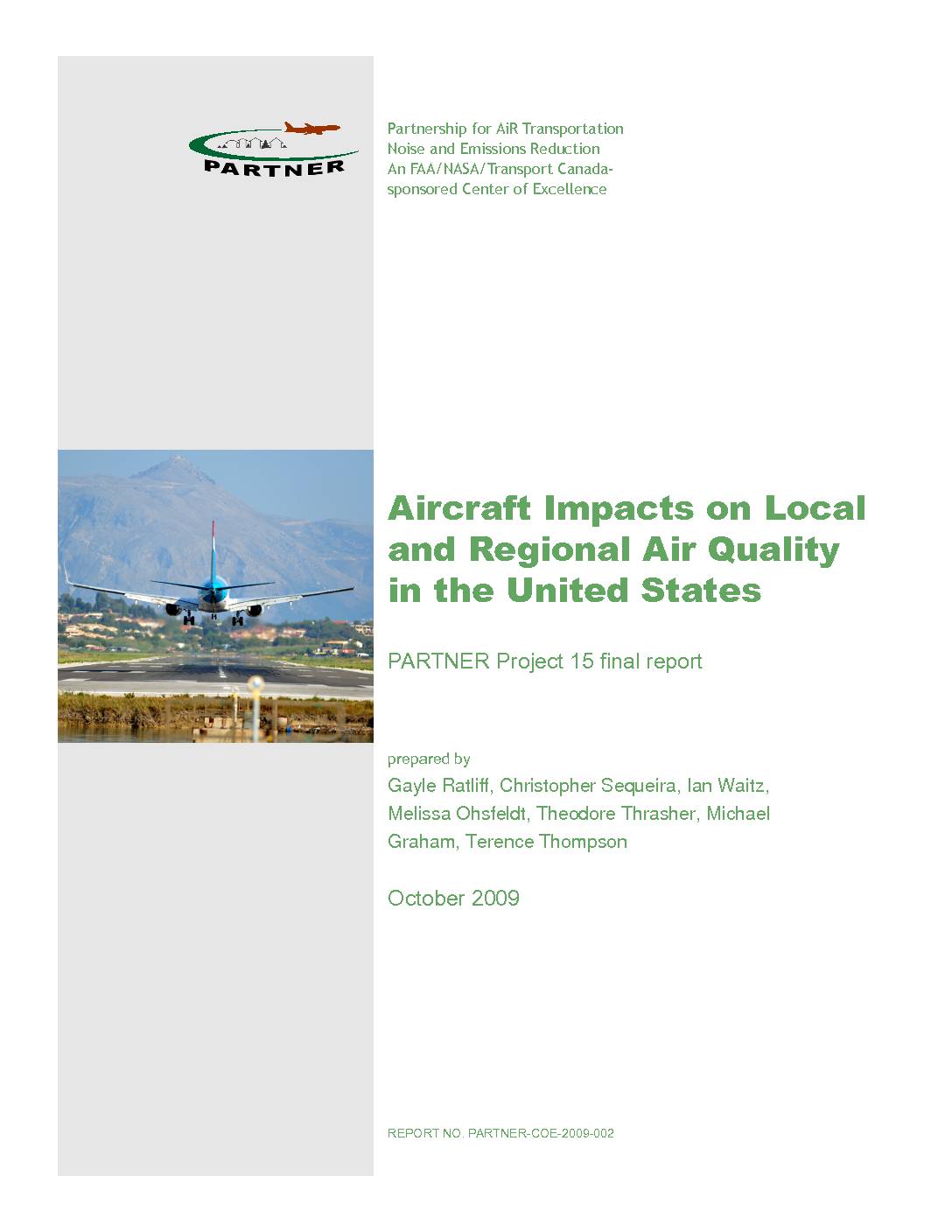 This 2009 research report examines how aircraft emissions affect local and regional air quality across the United States, including public health impacts near major airports. It analyzes baseline emissions inventories, the relationship between airport delays and increased fuel burn and pollution, and evaluates strategies such as continuous descent arrivals and schedule de-peaking to reduce emissions. The findings are intended to inform aviation environmental policy and air traffic efficiency improvements.
 -
2006-04-28
National Environmental Policy Act (NEPA) implementing instructions for airport actions
★ FAA Order 5050.4B, effective April 28, 2006, provides the Federal Aviation Administration's Office of Airports with instructions for evaluating the environmental impacts of major federal actions at public-use airports, in compliance with the National Environmental Policy Act (NEPA). It updates and replaces the previous Order 5050.4A ('Airports Environmental Handbook'), which had been in use for over 20 years. The order covers processes for analyzing environmental effects, including noise impacts, associated with airport development actions such as runway extensions and other airport improvements.
 -
2002-06-03
Legal Analysis of King County’s Role in Des Moines Beach Park Conveyor Belt Proposal
★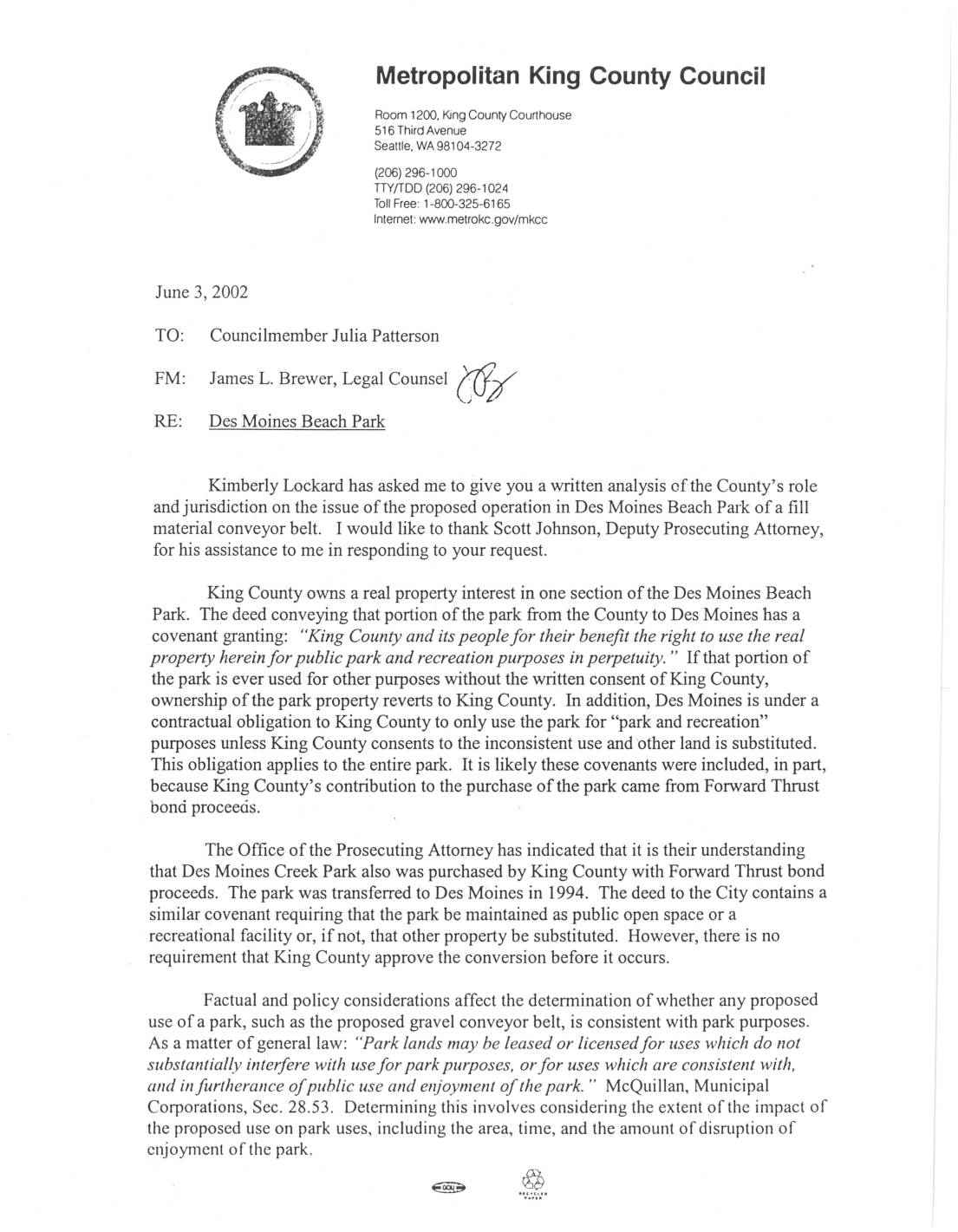 Legal counsel James L. Brewer analyzes King County’s jurisdictional authority regarding a proposed fill material conveyor belt operation at Des Moines Beach Park. The memo examines property interests, covenants requiring park use only, and concludes the proposed 30-month project would be inconsistent with park purposes due to significant disruption.
 -
2002-05-01
Financial Analysis For Redevelopment of Northeast Burien Special Plan Area
★ A financial analysis report prepared by Economic Consulting Services for the City of Burien regarding the redevelopment of the Northeast Burien Special Plan Area. The report was completed in May 2002 and includes economic analysis and consulting services for the redevelopment project.
 -
2002-01-01
Final Staff Evaluation for SEPA Environmental Checklist – Des Moines Creek Basin Restoration Projects
★ The City of SeaTac conducted an environmental review of the Des Moines Creek Basin Restoration Projects, a multi-agency effort involving the cities of SeaTac and Des Moines, the Port of Seattle, and King County. The project aims to improve water quality, reduce flooding, and restore fish habitat along Des Moines Creek by building a new detention facility, installing a high-flow bypass pipe, and maintaining low-flow water levels during dry summer months. The city's staff determined that the project does not require a full Environmental Impact Statement, as it is not expected to have a significant adverse impact on the environment.
 -
2000-05-30
Passenger facility charges; final rule
★ In May 2000, the FAA issued a final rule updating the Passenger Facility Charge (PFC) program, allowing airports to increase per-passenger fees from a maximum of $3 to up to $4.50, as authorized by the Wendell H. Ford Aviation Investment and Reform Act for the 21st Century (AIR 21). The updated rules set eligibility requirements for projects funded at the higher fee levels, including a requirement that projects at medium and large hub airports make a significant contribution to goals such as reducing aviation noise impacts on nearby communities. Airports seeking the higher PFC levels must also demonstrate that proposed projects cannot be adequately funded through the existing Airport Improvement Program.
 -
FAA Technical Library
★Welcome to the FAA Technical Library, located at the William J. Hughes Technical Center in southern New Jersey. The Library provides technical reference, research and document delivery services to FAA engineers, researchers, and the international aviation research community. RSS feeds provide notifications to recently published reports. -
1996-03-27
Final Decision on Noise Issues – Expert Arbitration Panel’s Review of Noise and Demand/System Management Issues at Sea-Tac International Airport
★ In March 1996, an Expert Arbitration Panel reviewed whether the Port of Seattle had met noise reduction requirements set by the Puget Sound Regional Council as a condition for approving a third runway at Sea-Tac International Airport. A majority of the Panel concluded that, despite the Port's extensive noise abatement programs, it had not demonstrated a sufficient reduction in real, on-the-ground noise impacts to satisfy Resolution A-93-03. This decision left the noise condition as the sole remaining hurdle for authorizing the third runway's construction.
 -
1996-03-27
Final Decision on Noise Issues – Expert Arbitration Panel’s Review of Sea-Tac International Airport
★
In March 1996, an Expert Arbitration Panel reviewed whether the Port of Seattle had met noise reduction requirements set by the Puget Sound Regional Council as a condition for approving a third runway at Sea-Tac International Airport. A majority of the Panel concluded that, despite the Port's extensive noise abatement programs, it had not demonstrated a sufficient reduction in real, on-the-ground noise impacts to satisfy Resolution A-93-03. This decision left the noise condition as the sole remaining hurdle for authorizing the third runway's construction. -
1992-06-26
North SeaTac Park master plan draft
★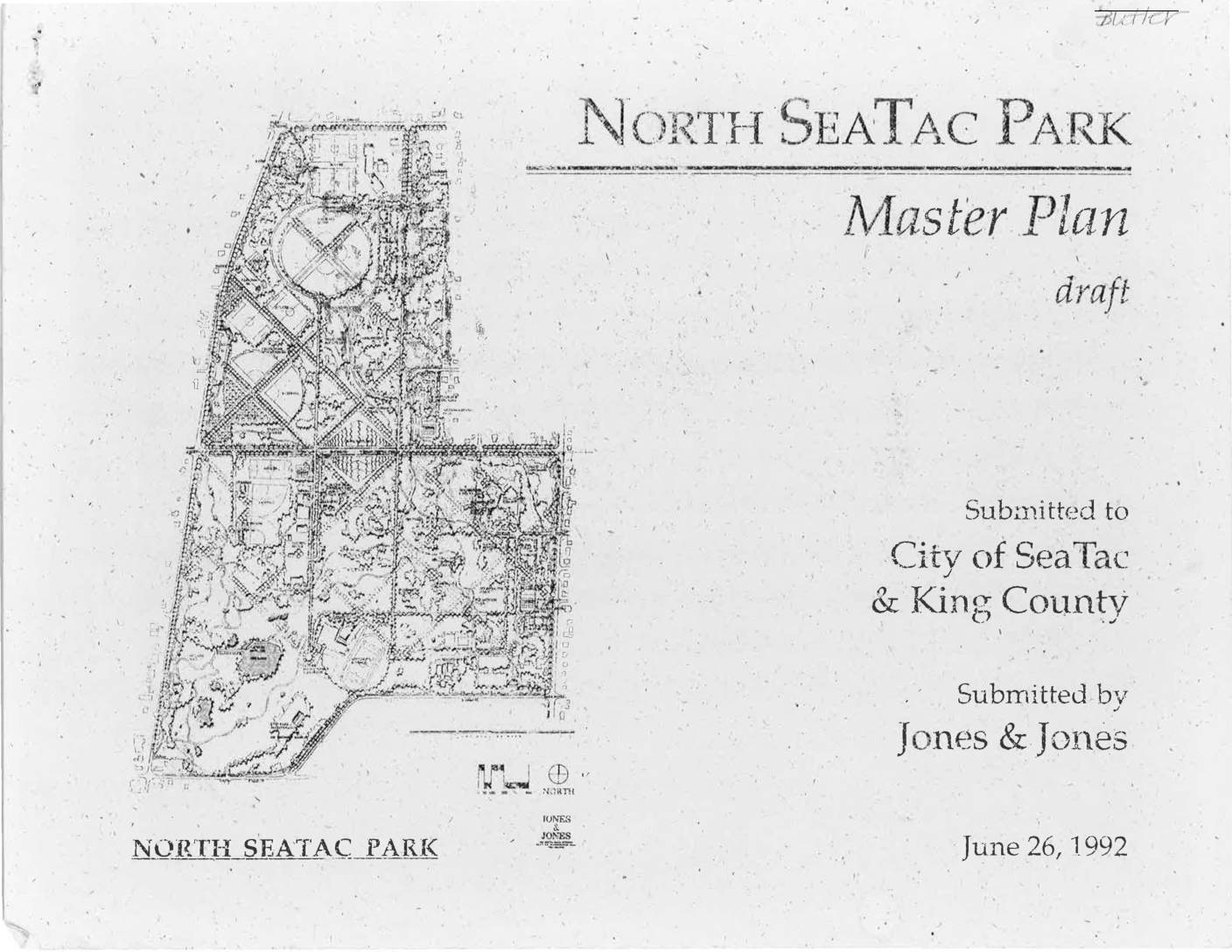 This 1992 draft Master Plan for North SeaTac Park was submitted by landscape architecture firm Jones & Jones to the City of SeaTac and King County. The plan outlines proposed development and improvements for North SeaTac Park, a public green space in the community surrounding Seattle-Tacoma International Airport. The document reflects a collaborative effort involving city staff, elected officials, a citizen advisory committee, and King County parks representatives.