Category : Key Documents(99)
The (99) files, images and basic information we refer to constantly from the Document Library and Resources pages.
-
2025-09-24
Final Environmental Assessment for the Sustainable Airport Master Plan Near-Term Projects: Seattle-Tacoma International Airport
★ 33 The Federal Aviation Administration (FAA) released a Final Environmental Assessment (EA) in September 2025 for near-term construction and development projects at Seattle-Tacoma International Airport, prepared on behalf of the Port of Seattle. The Final EA was updated from an earlier Draft EA to reflect public and agency comments, correct errors, and remove sections on climate change, environmental justice, and cumulative impacts following changes to federal executive orders, regulations, and a 2025 Supreme Court ruling. These regulatory shifts meant the FAA was no longer required to analyze how the proposed projects might affect vulnerable communities or contribute to broader environmental trends.
 -
1982-07-27
Detailed Analysis of Airspace Interactions – Chapter 6
★ 33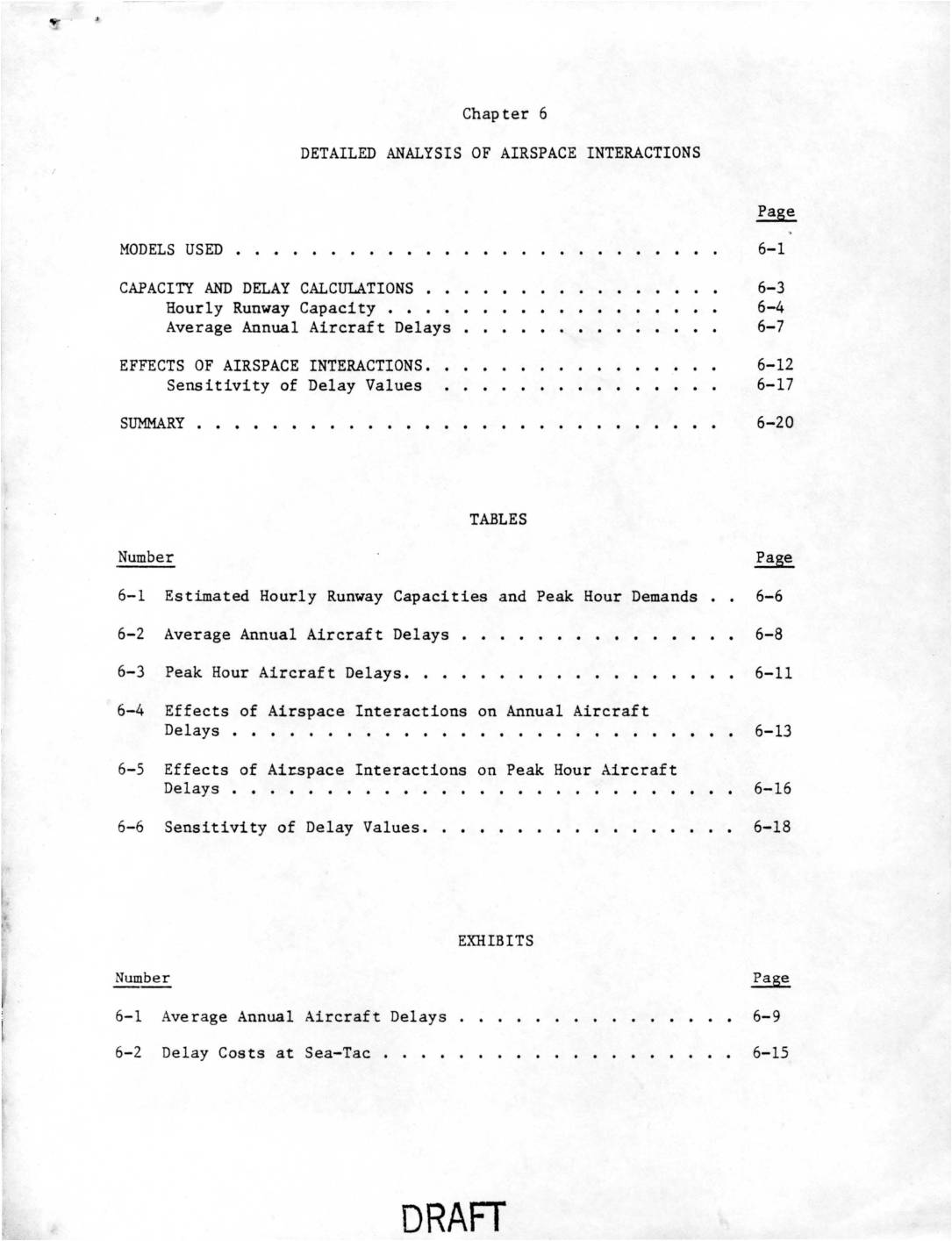 Technical analysis of airspace interactions between Sea-Tac Airport and Boeing Field, examining runway capacity models, aircraft delay calculations, and the effects of airspace interactions on airport operations. The document presents detailed capacity and delay calculations using computerized models.
 -
2020-12-01
2018 Community greenhouse gas emissions inventory
★ 34 Seattle's 2018 Community Greenhouse Gas Emissions Inventory, prepared by the Seattle Office of Sustainability & Environment, tracks and analyzes the city's greenhouse gas emissions across sectors including transportation, buildings, industry, and waste. The report compares 2018 emissions data against previous years, examines per capita trends, and outlines Seattle's climate reduction goals and strategies. Note: This document focuses on citywide carbon emissions and climate policy, and does not address Sea-Tac Airport noise issues.
 -
2025-11-18
Port of Seattle Regular Commission Meeting November 18, 2025
★ Port of Seattle Commission meeting agenda for November 18, 2025, 2026 final budget and port operations including baggage control services, lease amendments, elevator modernization, and salary resolutions. Airport Dining and Retail, Police Department annual report 2025
 -
2025-11-11
2026 – 2030 Environmental Remediation Liability Program for Cleanup and Investigation of Historical Contamination
★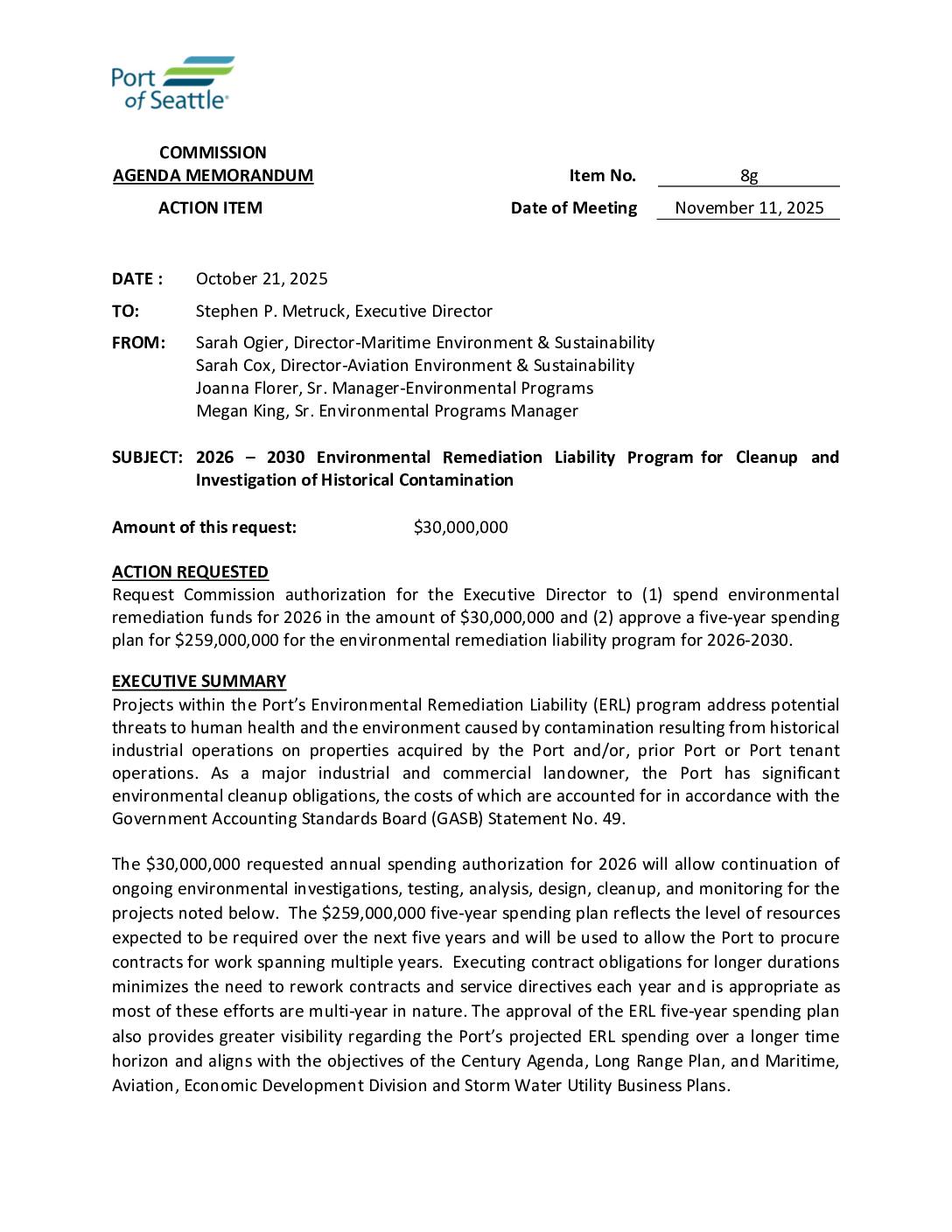 Port of Seattle Commission agenda memorandum requesting $30 million for 2026 environmental remediation and approval of a $259 million five-year spending plan for cleanup of historical contamination at maritime and aviation properties. The program addresses contamination from past industrial operations including Lower Duwamish Waterway Superfund Site and various terminal locations.
 -
2025-10-28
Sea-Tac Airport Airport Snow Storage Expansion Diagram
★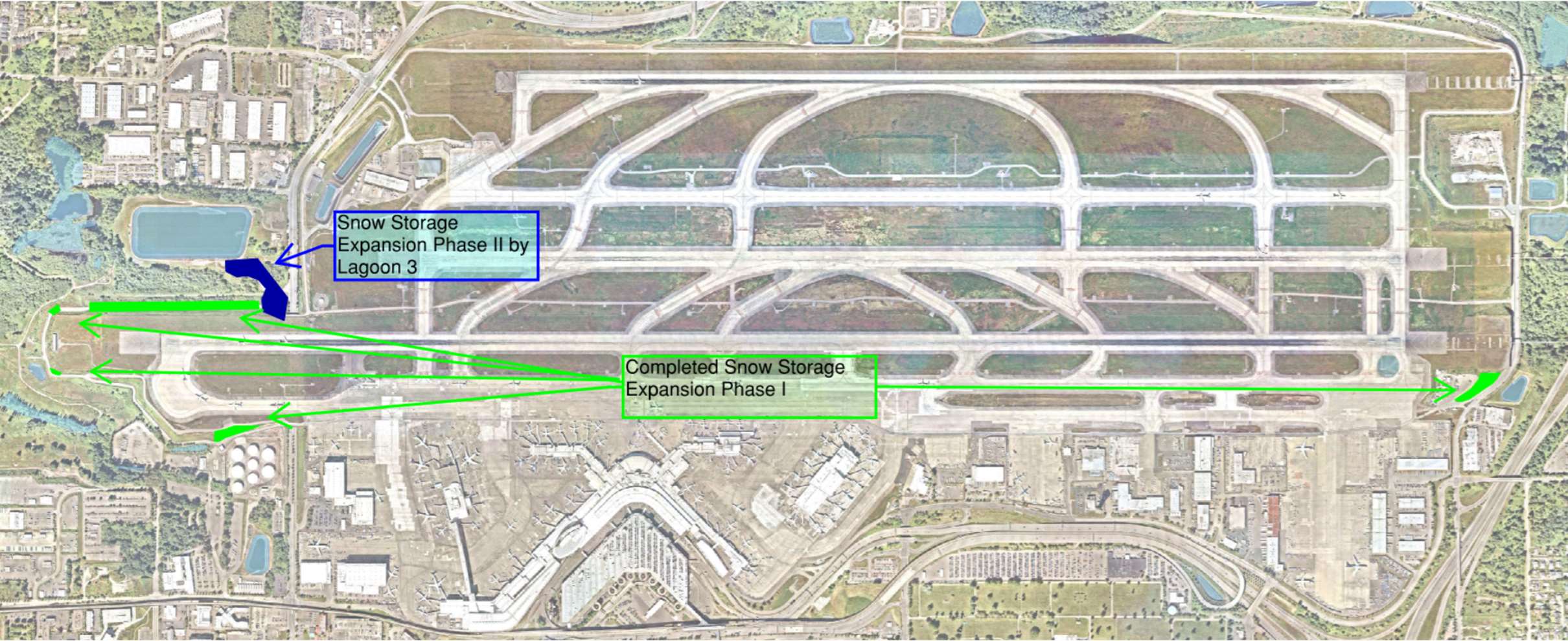 Aerial satellite map of showing two annotated snow storage areas: 'Completed Snow Storage Expansion Phase I' along the south airfield and 'Snow Storage Expansion Phase II by Lagoon 3' on the west side, with green arrows indicating access routes between locations.
 -
2025-10-22
Programmatic Environmental Checklist – Seattle-Tacoma International Airport Flight Corridor Management Program
★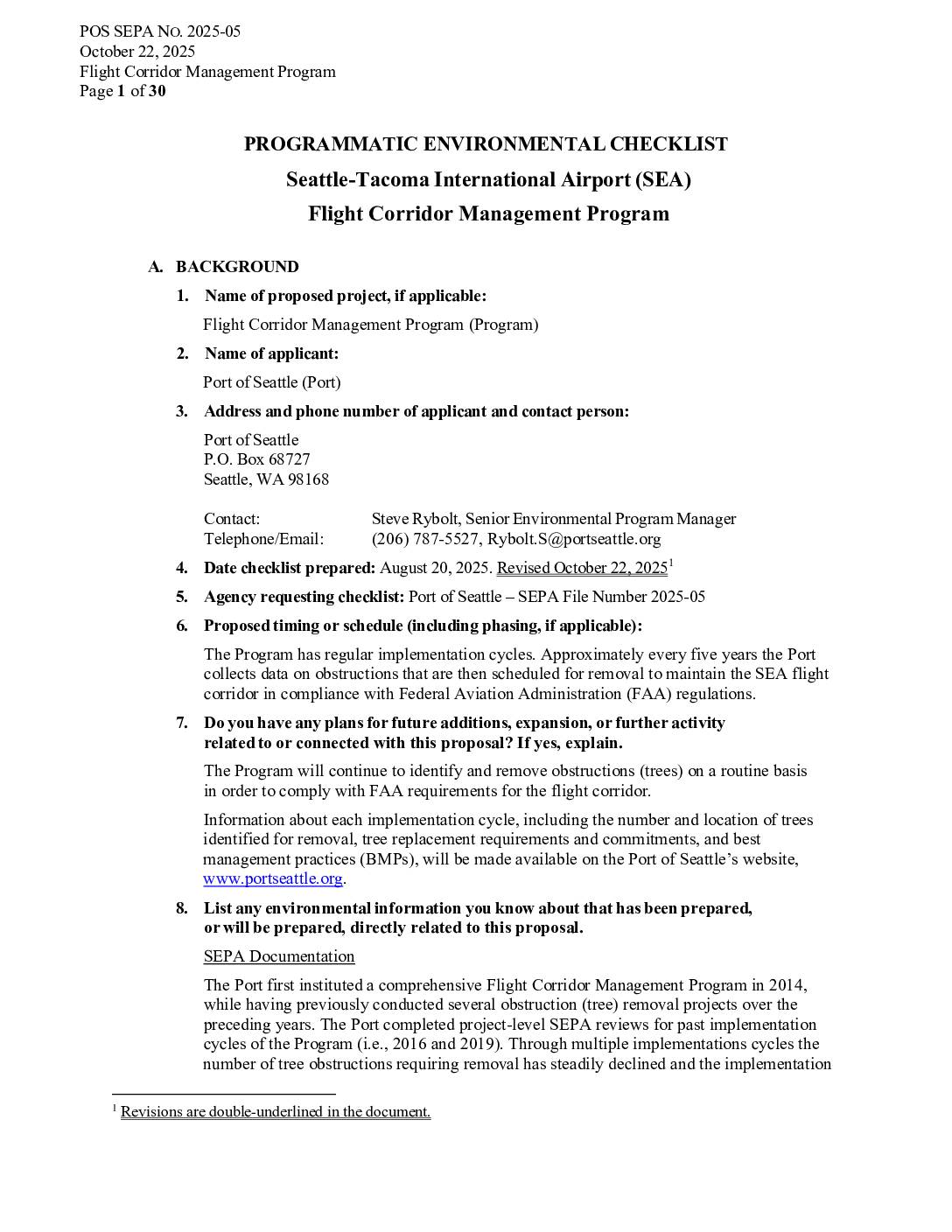 Environmental checklist for SEA’s Flight Corridor Management Program, which identifies and removes tree obstructions from airport flight corridors every five years to comply with FAA regulations. The document outlines the program’s background, implementation cycles, and environmental review process.
 -
2025-10-22
Programmatic Environmental Checklist – Seattle-Tacoma International Airport (SEA) Flight Corridor Management Program
★
Environmental checklist for the Port of Seattle’s Flight Corridor Management Program at SEA, which involves regular identification and removal of tree obstructions to maintain compliance with FAA flight corridor regulations. The program operates on approximately five-year implementation cycles. -
2025-09-24
Final Environmental Assessment for the Sustainable Airport Master Plan Near-Term Projects: Seattle-Tacoma International Airport
★
Final Environmental Assessment (EA) prepared by Landrum & Brown for the Port of Seattle and FAA (lead federal agency under NEPA) for the Sustainable Airport Master Plan (SAMP) Near-Term Projects at Seattle-Tacoma International Airport, signed by FAA Responsible Official Kandice N. Krull on September 24, 2025. The Errata section documents removal of climate change analysis -
2025-09-12
Legal Services Agreement Regarding Issues Regarding Port of Seattle’s Sustainable Airport Master Plan (SAMP)
★ In September 2025, the City of SeaTac, Washington engaged the law firm Leech Tishman Nelson Hardiman to provide legal counsel regarding the Port of Seattle's Sustainable Airport Master Plan (SAMP), specifically in response to an anticipated Federal Aviation Administration (FAA) Finding of No Significant Impact (FONSI) and Record of Decision (ROD). The firm's work includes preparing legal analysis, submitting comments, and filing a Petition for Review in either the Ninth Circuit or D.C. Circuit Court of Appeals challenging the FAA's environmental findings once published in late 2025. The engagement is capped at $300,000 with an initial $10,000 retainer, and billing rates range from $300–$400 per hour for associates to $540 per hour for lead attorney Steven M. Taber.