Category : Key Documents(99)
The (99) files, images and basic information we refer to constantly from the Document Library and Resources pages.
-
2012-04-01
Grant assurances: Airport sponsors
★ 32 This FAA document outlines the grant assurances that airport sponsors must agree to when accepting federal funding for airport development, planning, or noise compatibility programs. Sponsors are required to comply with a wide range of federal laws, regulations, and executive orders — including civil rights, environmental, and labor standards — for the duration of the project's useful life, generally up to 20 years. Key provisions include unlimited-duration obligations related to exclusive rights, airport revenue, and real property acquired with federal funds.
 -
2002-01-01
SR 509: Corridor Completion/I-5/South Access Road revised draft environmental impact statement and draft Section 4(f) evaluation
★ 32 This January 2002 Revised Draft Environmental Impact Statement evaluates proposed improvements to SR 509 and I-5 in southwest King County, Washington, including a freeway extension to enhance southern access to Seattle-Tacoma International Airport. The study, prepared jointly by the Federal Highway Administration, WSDOT, Port of Seattle, King County, and the Cities of SeaTac and Des Moines, examines three build alternatives and a no-action alternative, differing in their proximity to Des Moines Creek Park and the airport runway protection zone. The proposed SR 509 extension corridor would be a minimum of 200 feet wide to accommodate general purpose and high-occupancy vehicle lanes in each direction.
 -
1997-09-04
City of SeaTac 1997 Interlocal Agreement ILA with Port Of Seattle
★ 32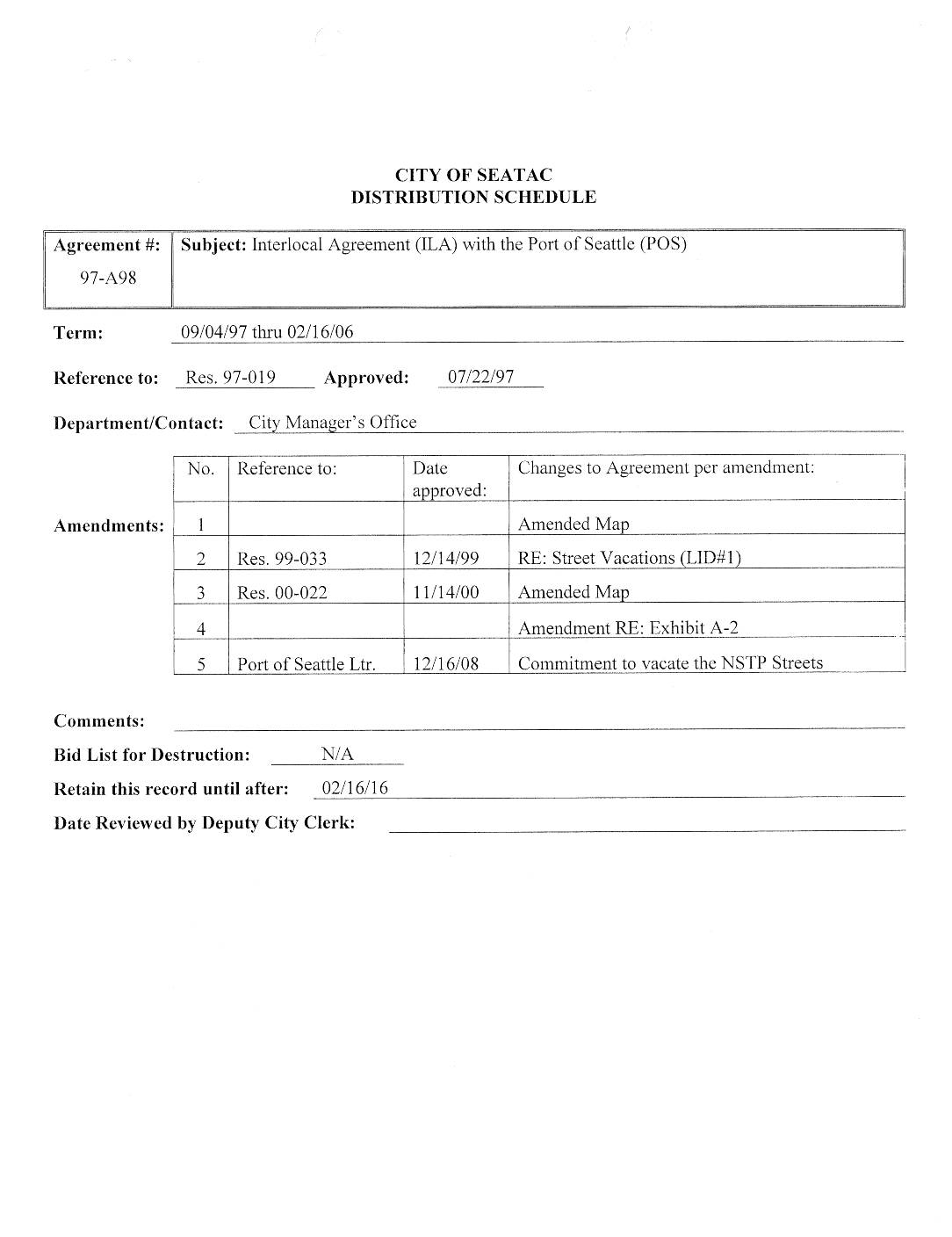 The original Interlocal Agreement (ILA) between the Port of Seattle and the City of SeaTac.
 -
1997-06-02
Homeowner handbook
★ 32 The Port of Seattle's Homeowner Handbook is a guide for residents participating in the Sea-Tac Airport Noise Remedy Program, which provides sound insulation improvements to affected homes. It walks homeowners through a 14-step process covering everything from attending an initial briefing and scheduling an inventory audit, to overseeing contractor bidding, managing construction, and signing off on completed work. The handbook was prepared by the Port of Seattle Noise Remedy Staff and last revised in June 1997.
 -
1997-05-07
Final supplemental environmental impact statement: Proposed master plan update, Seattle-Tacoma International Airport
★ 32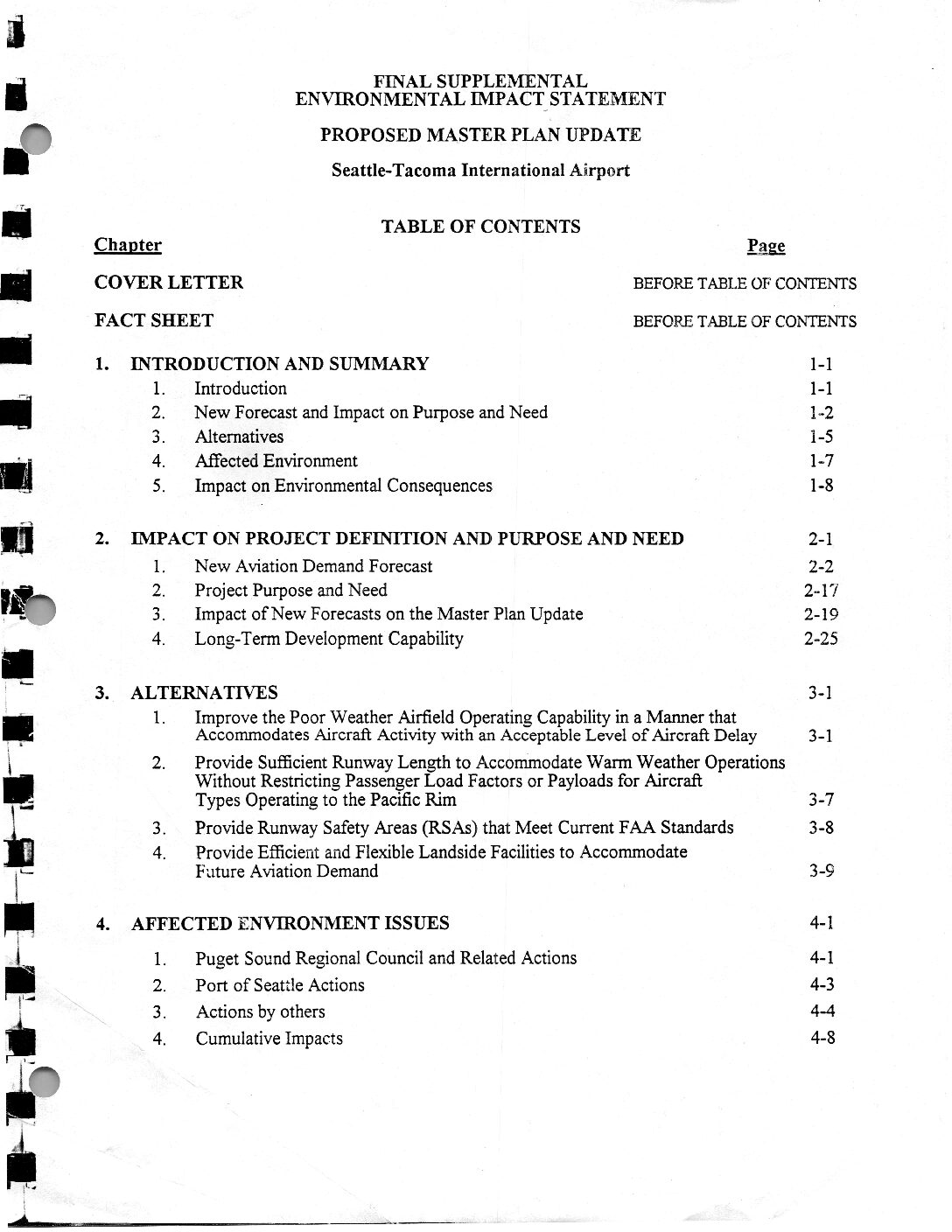 This Final Supplemental Environmental Impact Statement (FSEIS) evaluates proposed updates to the Master Plan for Seattle-Tacoma International Airport, examining the effects of revised aviation demand forecasts on runway capacity, safety improvements, and landside facilities. It analyzes a range of alternatives to address poor-weather airfield performance, runway length needs for Pacific Rim flights, and runway safety area compliance with FAA standards. The document also assesses environmental consequences including noise impacts on surrounding communities, air quality, wetlands, and construction effects.
 -
1997-02-01
Sea-Tac International Airport impact mitigation study: Initial assessment and recommendations
★ 32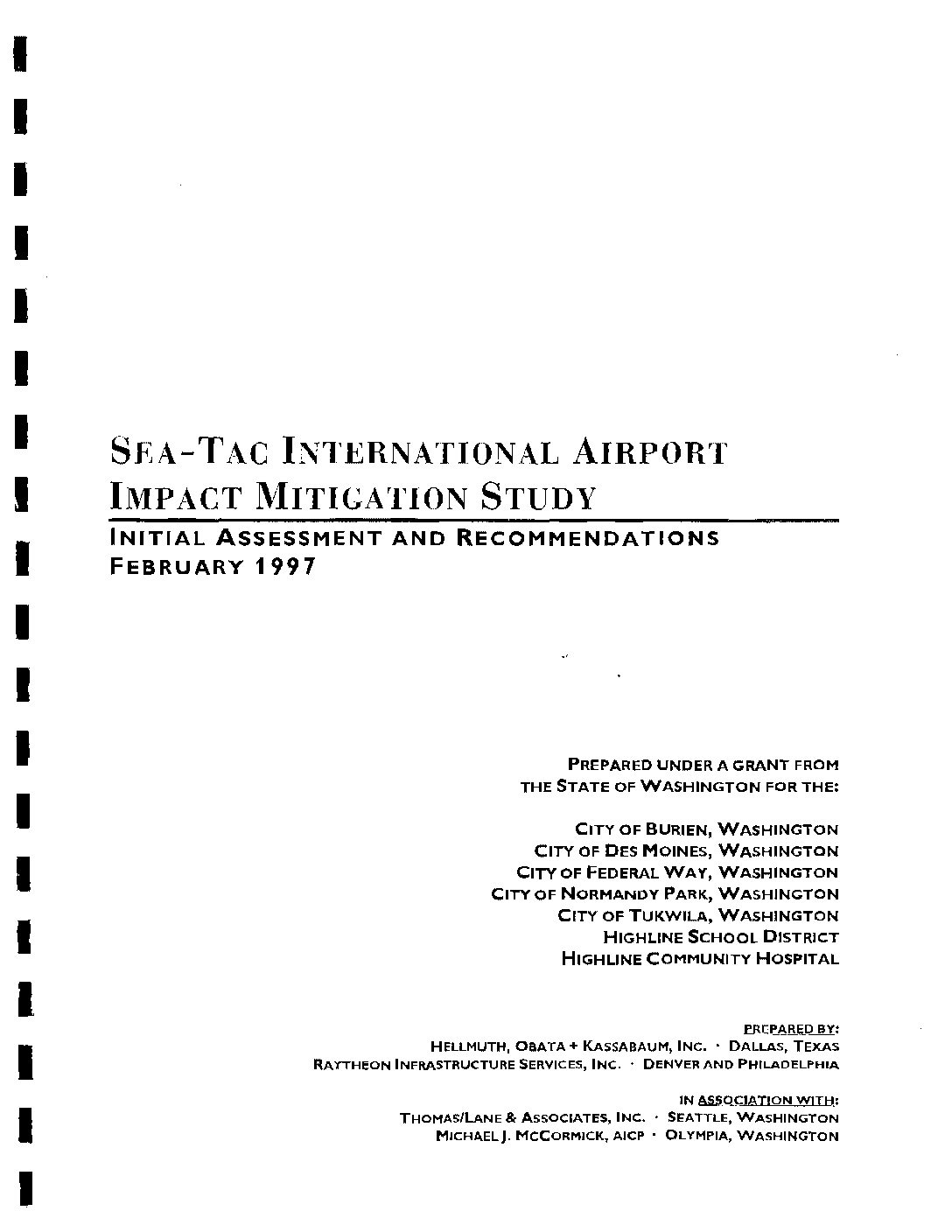 The HOK Study. 1997 initial assessment and recommendations report for the Sea-Tac International Airport Impact Mitigation Study, prepared by Hellmuth, Obata + Kassabaum and Raytheon Infrastructure Services. The study was funded by a State of Washington grant on behalf of the cities of Burien, Des Moines, Federal Way, Normandy Park, and Tukwila, as well as
 -
1996-01-01
Resolution No. 3212, as amended
★ 32 Resolution No. 3212, adopted by the Port of Seattle in 1996, approved the construction of a new third runway at Seattle-Tacoma International Airport (Sea-Tac) to address growing air traffic demand and reduce delays caused by poor weather conditions. The resolution followed years of regional studies, environmental impact reviews, and public involvement, including findings that no feasible alternative airport sites existed in the four-county area. It also committed the Port to fulfilling additional noise reduction measures as required by Puget Sound Regional Council Resolution A-96-02.
 -
1994-10-27
Resolution No. EB-94-01: A resolution of the Executive Board of the Puget Sound Regional Council, Seattle, Washington
★ 32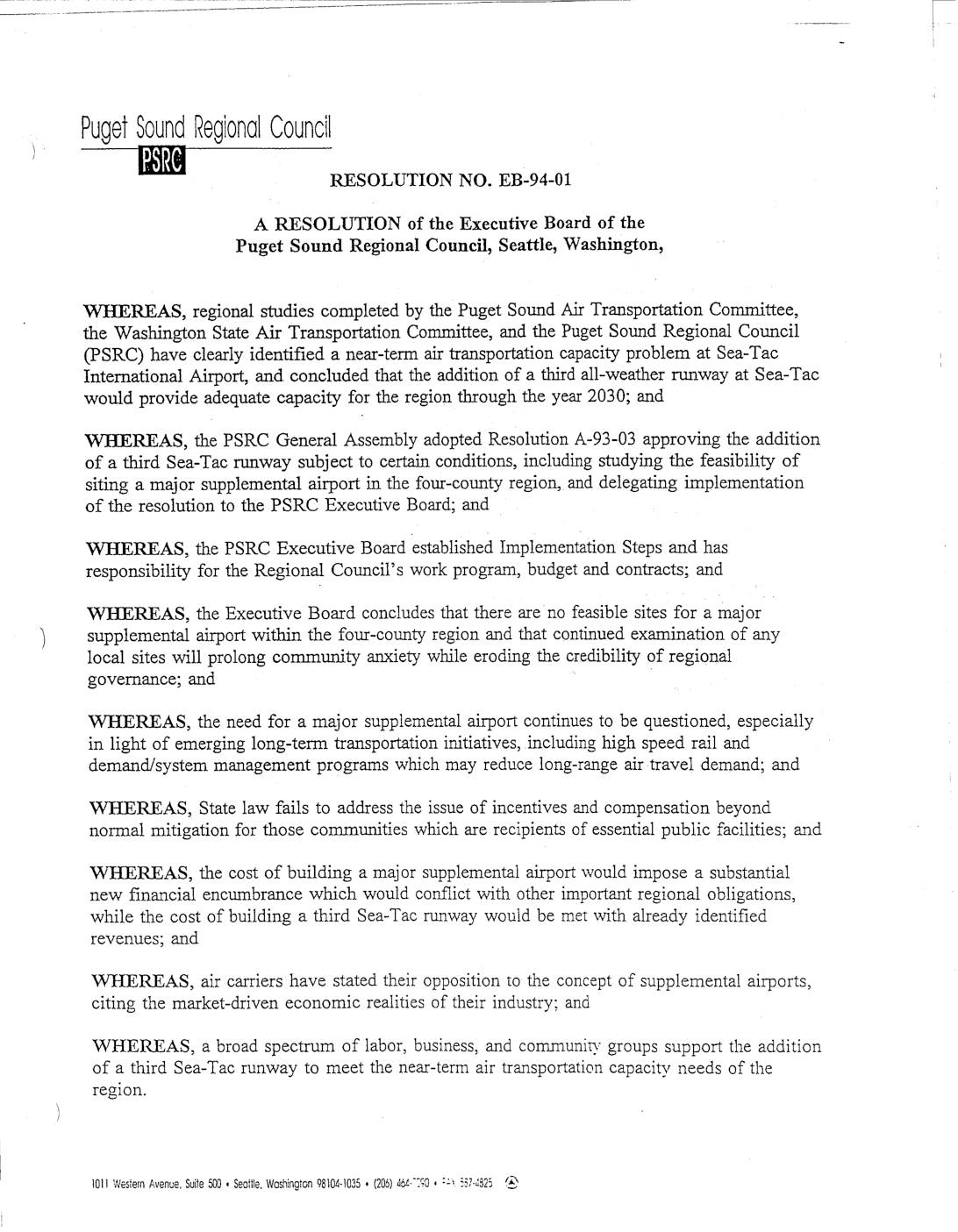 In October 1994, the Puget Sound Regional Council's Executive Board formally approved moving forward with a third runway at Seattle-Tacoma International Airport, concluding that no feasible sites existed for a supplemental airport in the four-county region. The resolution affirmed that the third runway would meet regional air capacity needs through 2030, provided it satisfied noise and demand management conditions and passed environmental review. The Board also recommended that the State develop legislation to compensate communities impacted by essential public facilities and explore long-term transportation alternatives, including high-speed rail.
 -
1990-11-05
The Airport Noise and Capacity Act of 1990 (“ANCA”)
★ 32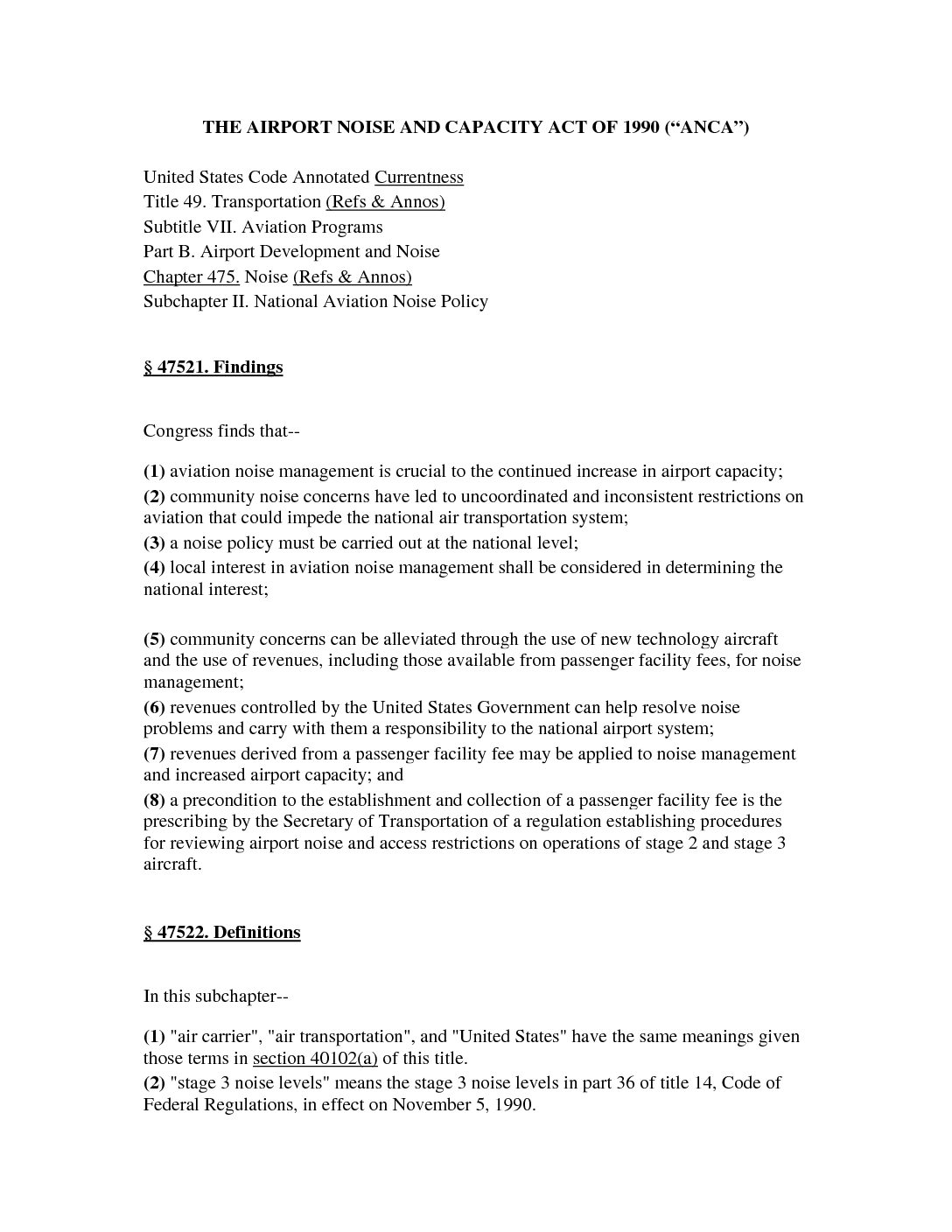 The Airport Noise and Capacity Act of 1990 (ANCA) established a national framework for managing aviation noise, requiring the Secretary of Transportation to create a uniform noise policy that phases out louder Stage 2 aircraft and regulates restrictions on quieter Stage 3 aircraft. The law ensures that any local airport noise restrictions—such as limits on flight hours or aircraft operations—go through a formal federal review process to prevent inconsistent, patchwork rules that could disrupt the national air transportation system. Passenger facility fees collected at airports may be used to fund noise reduction efforts and increase airport capacity.
 -
1985-01-25
Resolution No. 2943 – Updated Noise Remedy Program
★ 32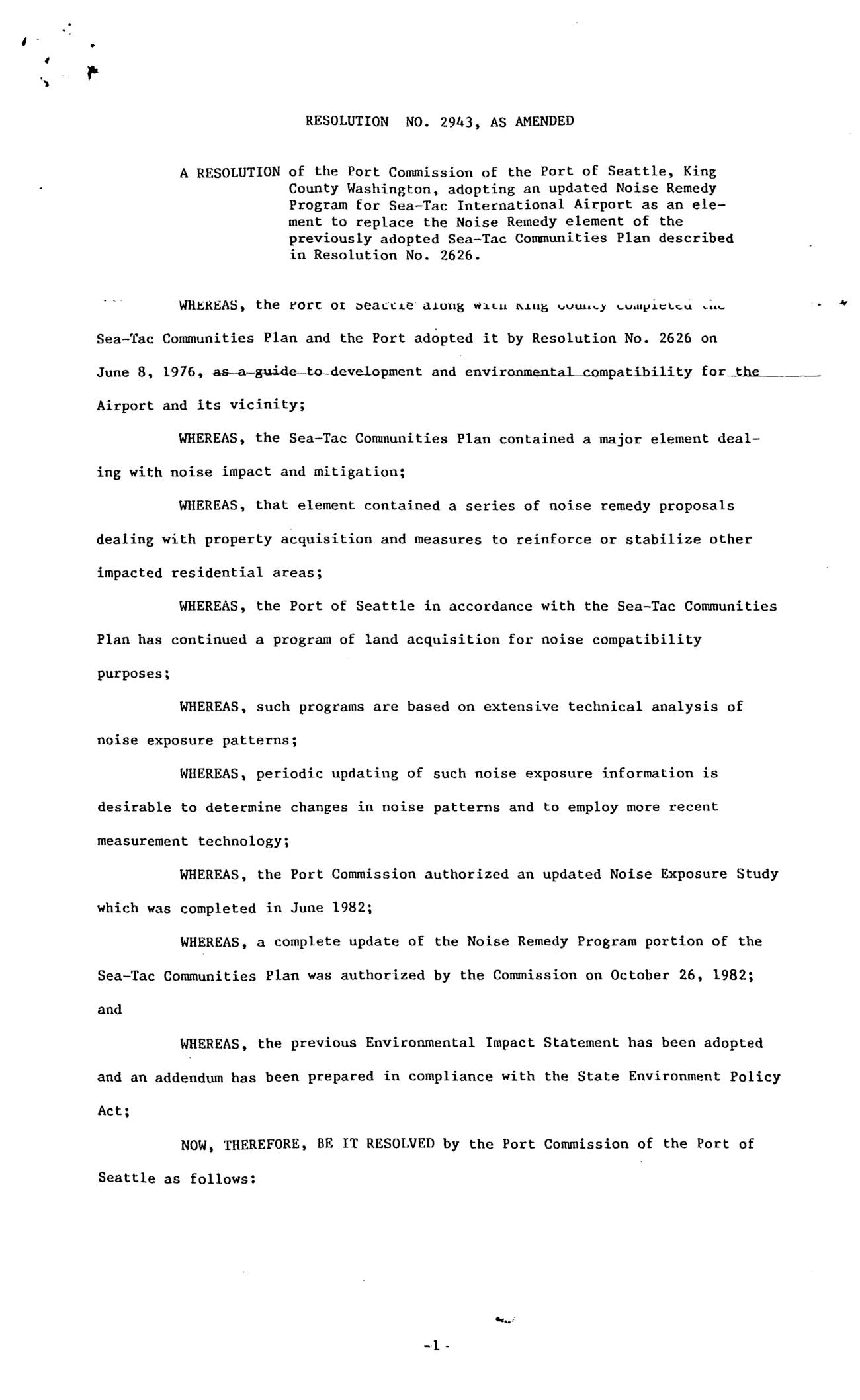 Resolution No. 2943 was adopted by the Port Commission of the Port of Seattle to update the Noise Remedy Program for Sea-Tac International Airport, replacing the earlier noise remedy element from the 1976 Sea-Tac Communities Plan. The resolution authorizes property acquisition in high-noise areas, implementation of nine noise abatement measures, and a Demonstration Project (budgeted at up to $1 million) to test alternatives to acquisition such as noise insulation and transaction assistance for affected homeowners. Priority for remedies is given based on noise intensity, length of residency, and financial hardship, with annual progress reports required to guide ongoing program evaluation.