Category : History(256)
-
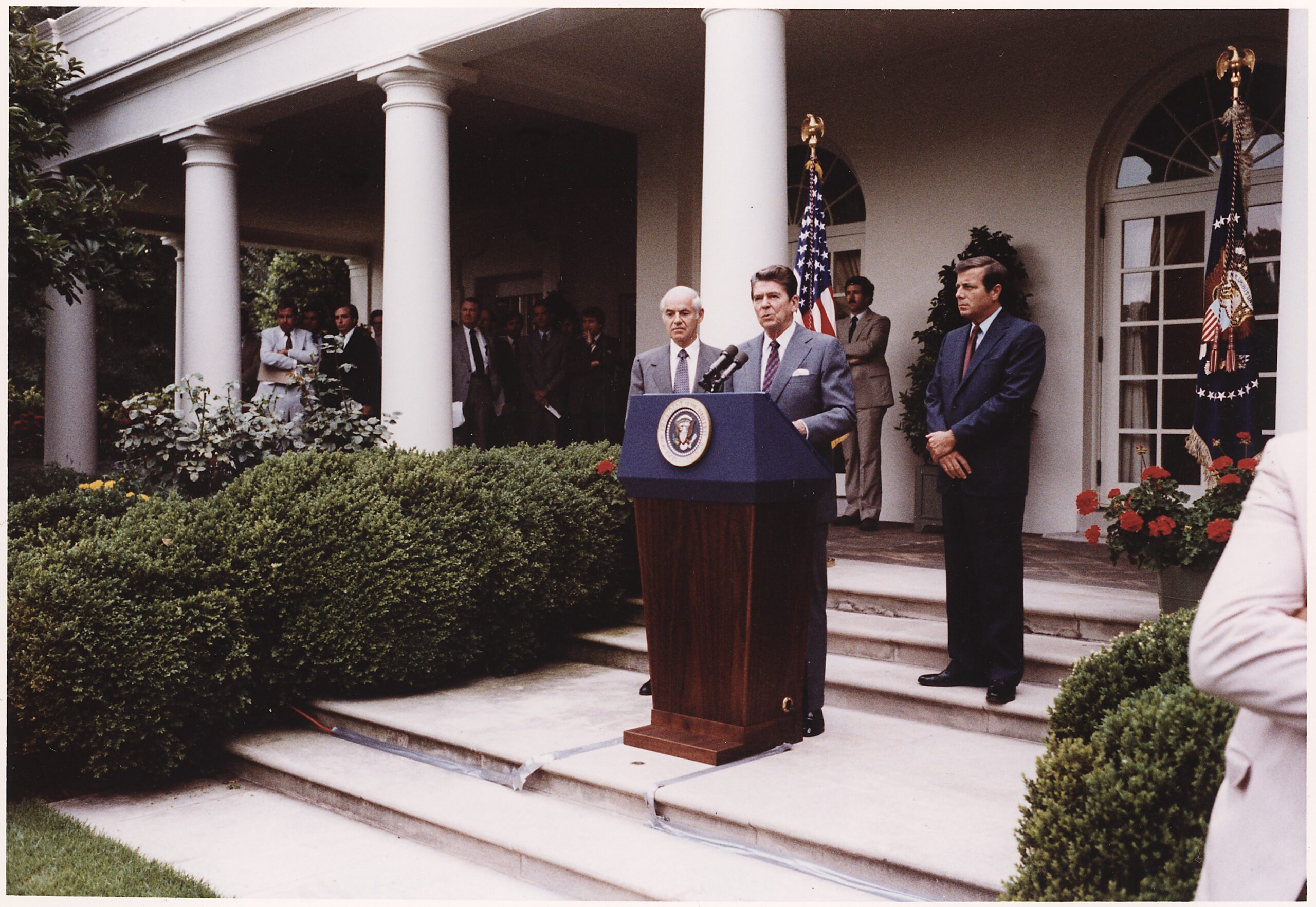 1981-08-03
Ronald Reagan Press Conference PATCO 1981 at White House
Three men stand at a presidential podium bearing the Presidential Seal in what appears to be the White House Rose Garden. The setting includes American flags, white columns, and a gathered audience of officials and press in the background, consistent with an official White House announcement or press conference. -
 1981-06-12
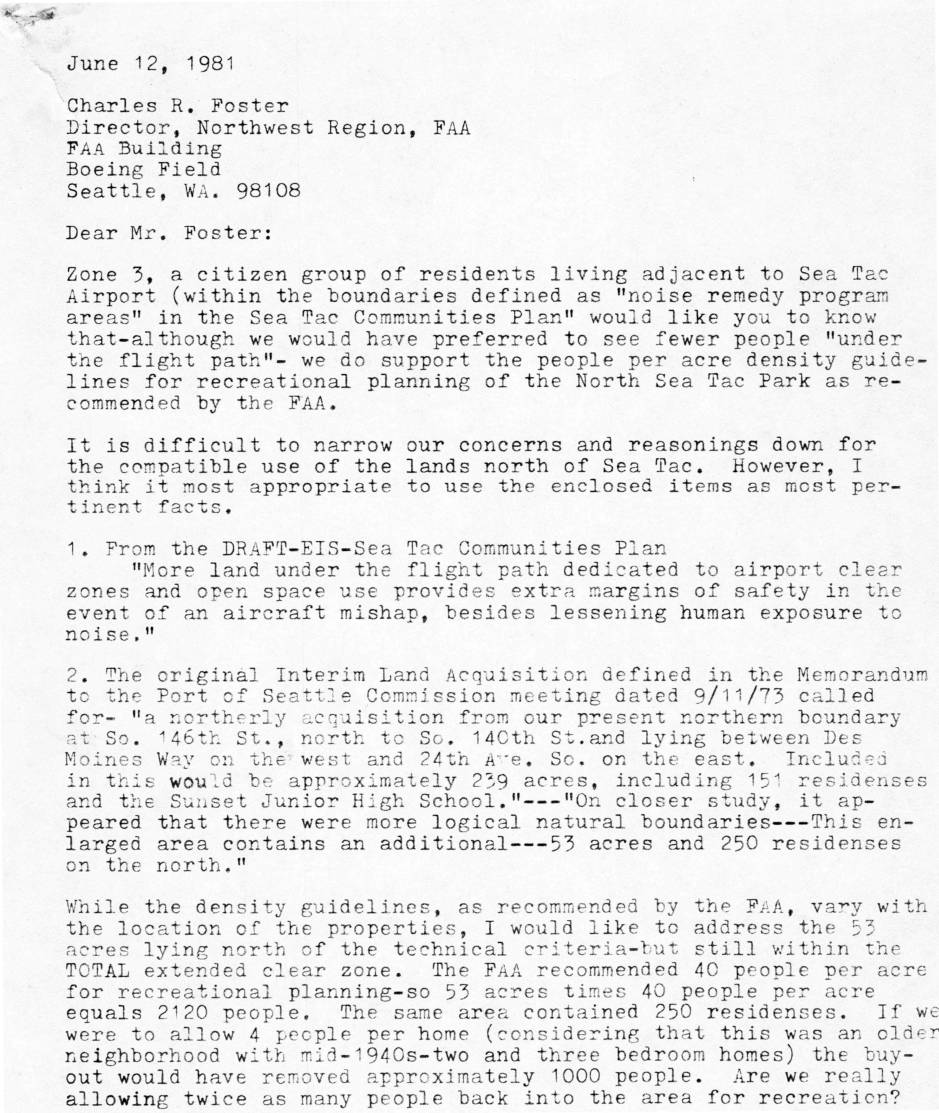
Letter from Zone 3 residents to FAA Director Charles Foster regarding Noise Density Guidelines
In a June 1981 letter to the FAA's Northwest Regional Director, Zone 3 citizen group representative Virginia E. Dana expresses qualified support for the FAA's recommended people-per-acre density guidelines for recreational use of North Sea-Tac Park, while raising concerns about safety and population exposure under flight paths. The letter highlights that the proposed recreational density of 40 people per acre across 53 acres could allow up to 2,120 people in an area from which only roughly 1,000 residents were displaced through the airport's land buyout program. Dana urges continued attention to airport safety criteria and environmental protection for communities living adjacent to Sea-Tac Airport. -
 1981-01-14
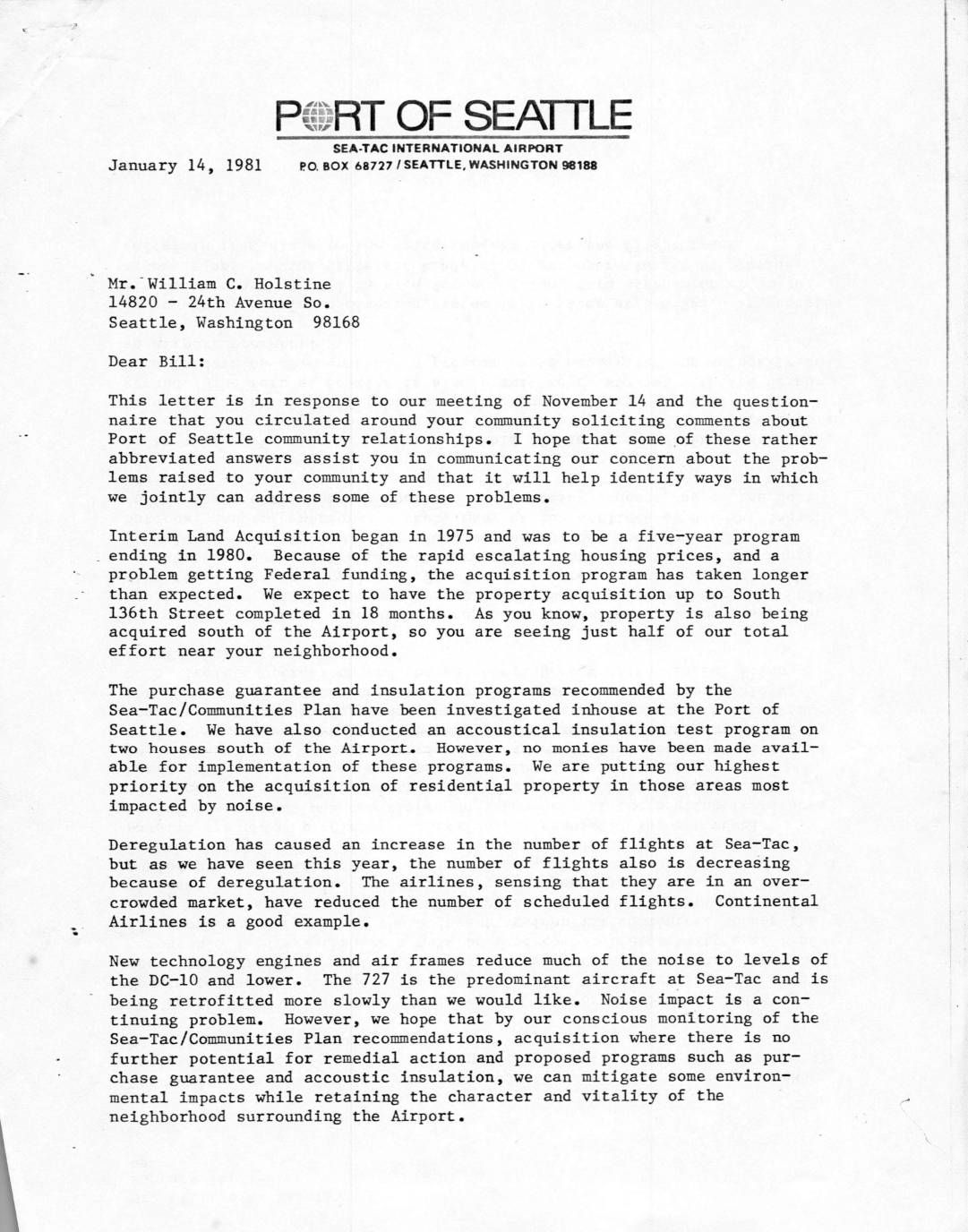
Port of Seattle Response to Community Concerns about Sea-Tac Airport
Letter from Sea-Tac Airport Manager Oris W. Dunham Jr. to William C. Holstine addressing community concerns about airport operations, including land acquisition programs, noise mitigation, flight operations, and the North Sea-Tac Park development. The letter responds to a November 14 meeting and community questionnaire about Port of Seattle relationships with surrounding neighborhoods. -
 1980-11-04
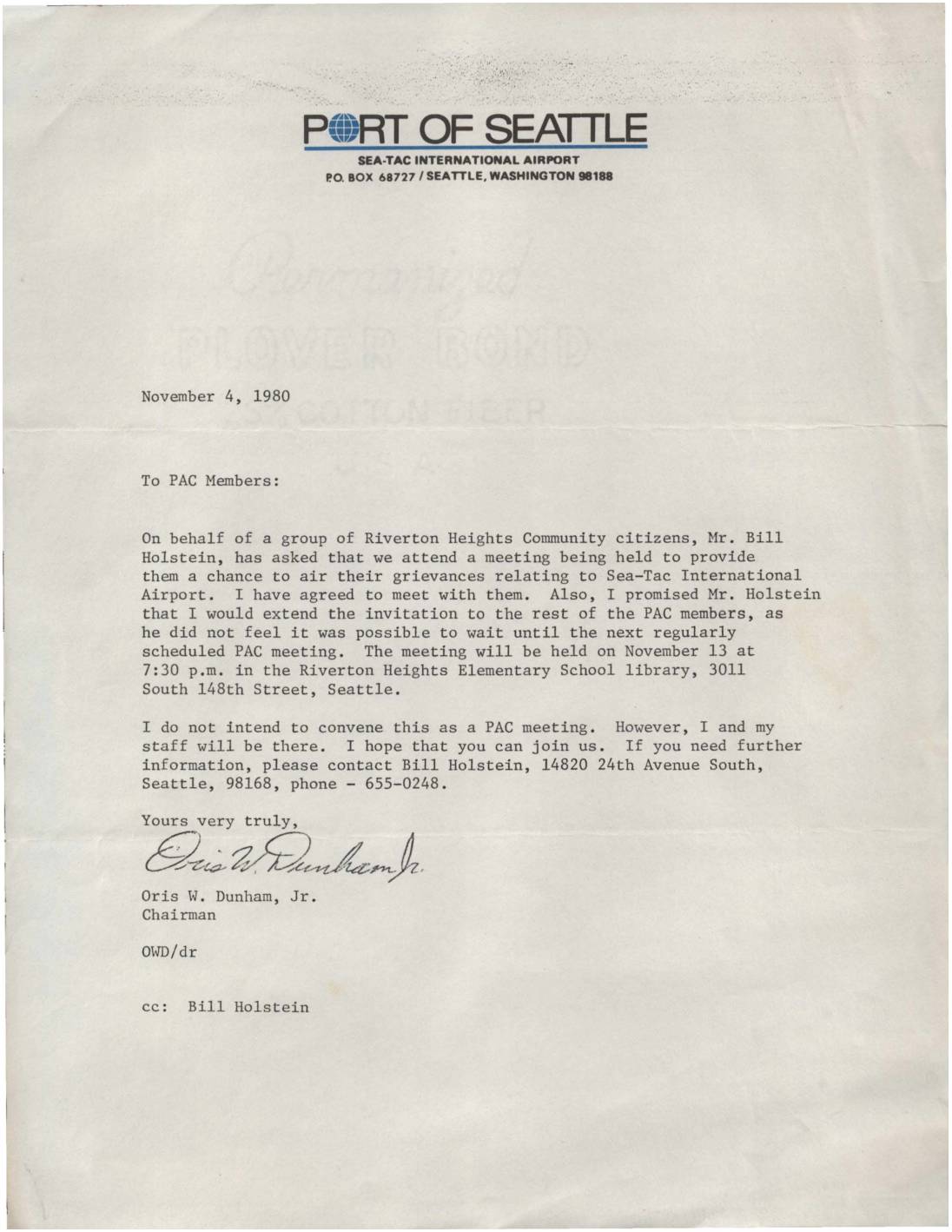
Letter to PAC Members Regarding Riverton Heights Community Meeting
Letter from Oris Dunham Jr., Chairman, to PAC members inviting them to a community meeting with Riverton Heights residents to address their grievances related to Sea-Tac International Airport. The meeting was scheduled for November 13, 1980 at Riverton Heights Elementary School. -
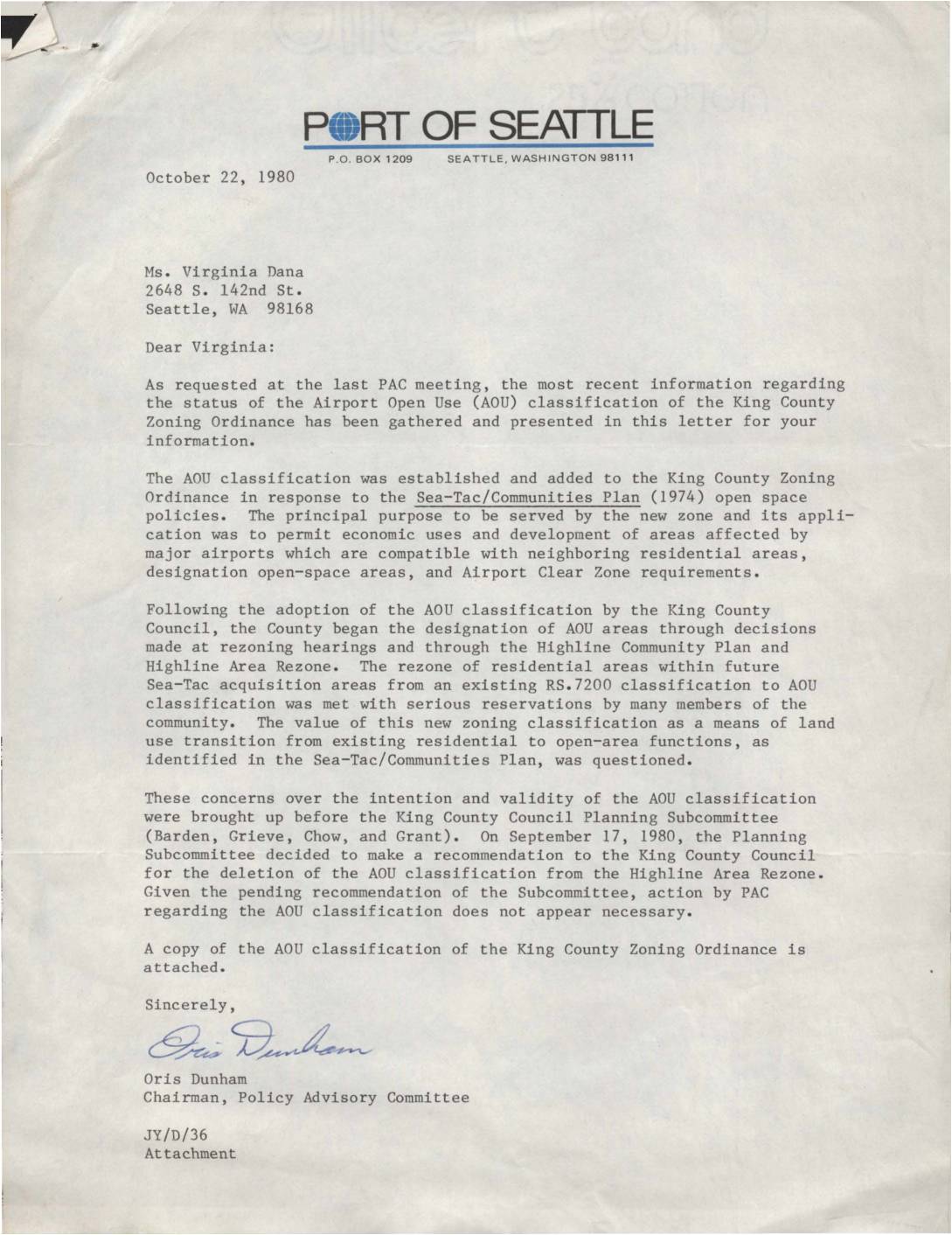 1980-10-22
Letter from Oris Dunham Airport Open Use (AOU) Classification Status Update
Letter from Port of Seattle Policy Advisory Committee Chairman Oris Dunham to Virginia Dana providing status update on the Airport Open Use (AOU) classification in King County Zoning Ordinance. The letter explains the AOU classification’s purpose for economic development near airports and community concerns that led to a recommendation for deletion from the Highline Area -
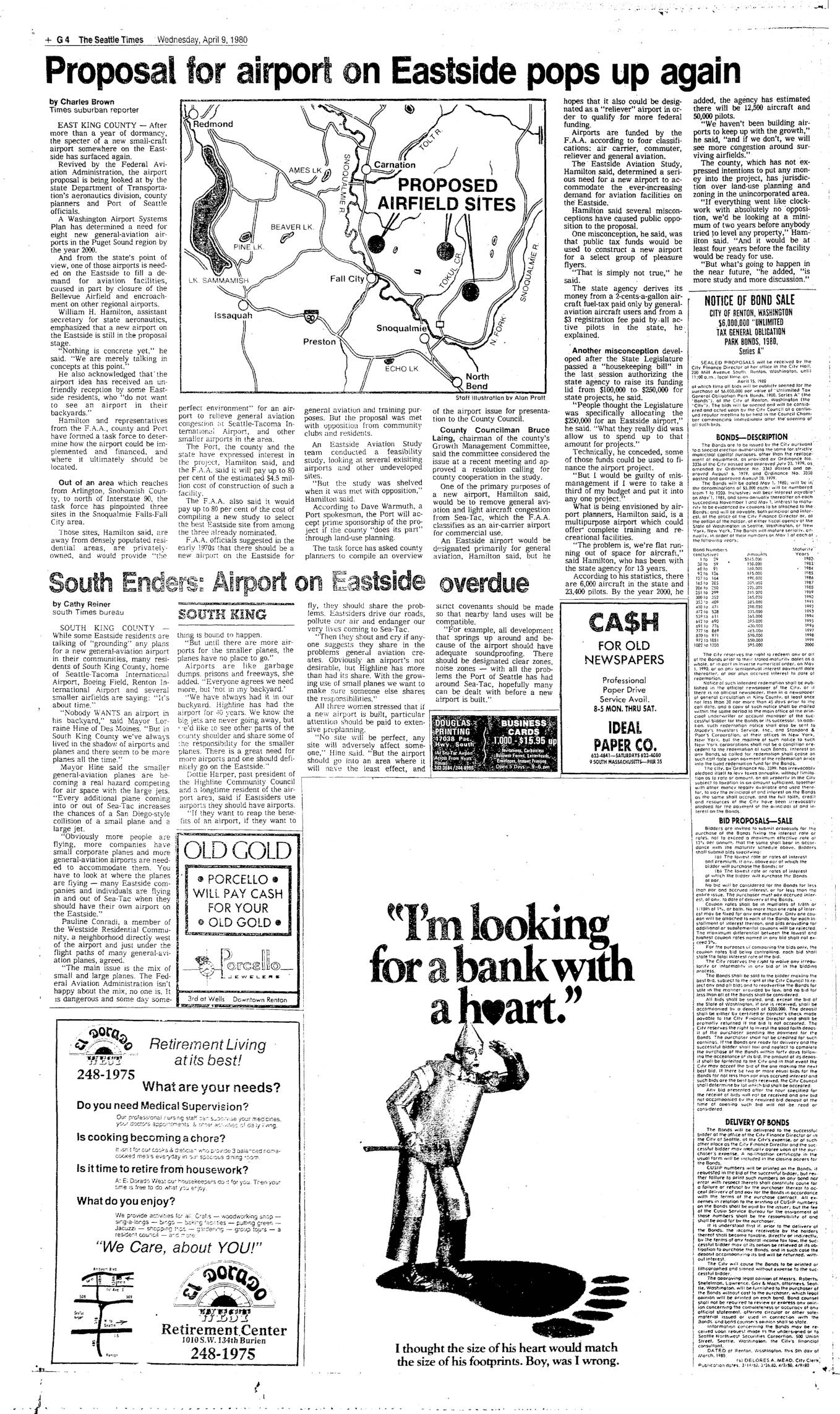 1980-04-09
Proposal for airport on Eastside pops up again
A 1980 Seattle Times article reports that federal and state officials revived a proposal to build a new small-craft general-aviation airport on the Eastside of King County, with three potential sites identified near Snoqualmie Falls and Fall City. The FAA offered to fund up to 80% of the estimated $4.5 million construction cost, citing growing congestion at Sea-Tac Airport caused by the mixing of small private planes with large commercial jets. South King County residents, long burdened by airport noise and safety concerns, largely welcomed the idea, arguing that Eastside communities benefiting from aviation should share the responsibility for housing general-aviation facilities. -
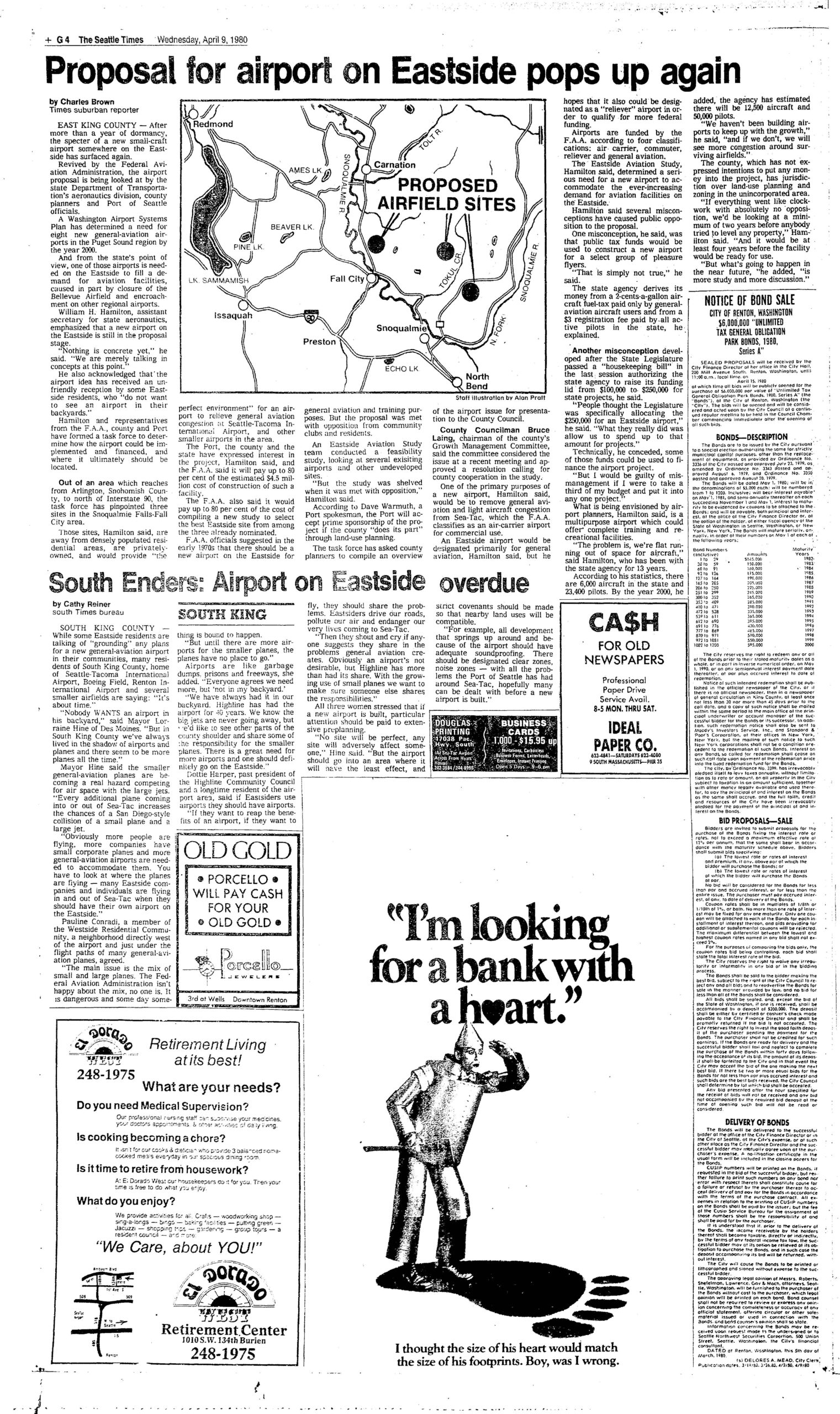
Seattle Times 1980-04-09 pg 107 Eastside Airport Proposal in Carnation (Lorraine Hine Des Moines Mayor)
A full newspaper page from The Seattle Times dated Wednesday, April 9, 1980 (page G4) featuring two articles — 'Proposal for airport on Eastside pops up again' by Charles Brown and 'South Enders: Airport on Eastside overdue' by Cathy Reiner — covering proposals for a new general-aviation airport in East King County, with a map illustrating three proposed airfield sites in the Snoqualmie Valley area near Fall City, Carnation, and North Bend. -
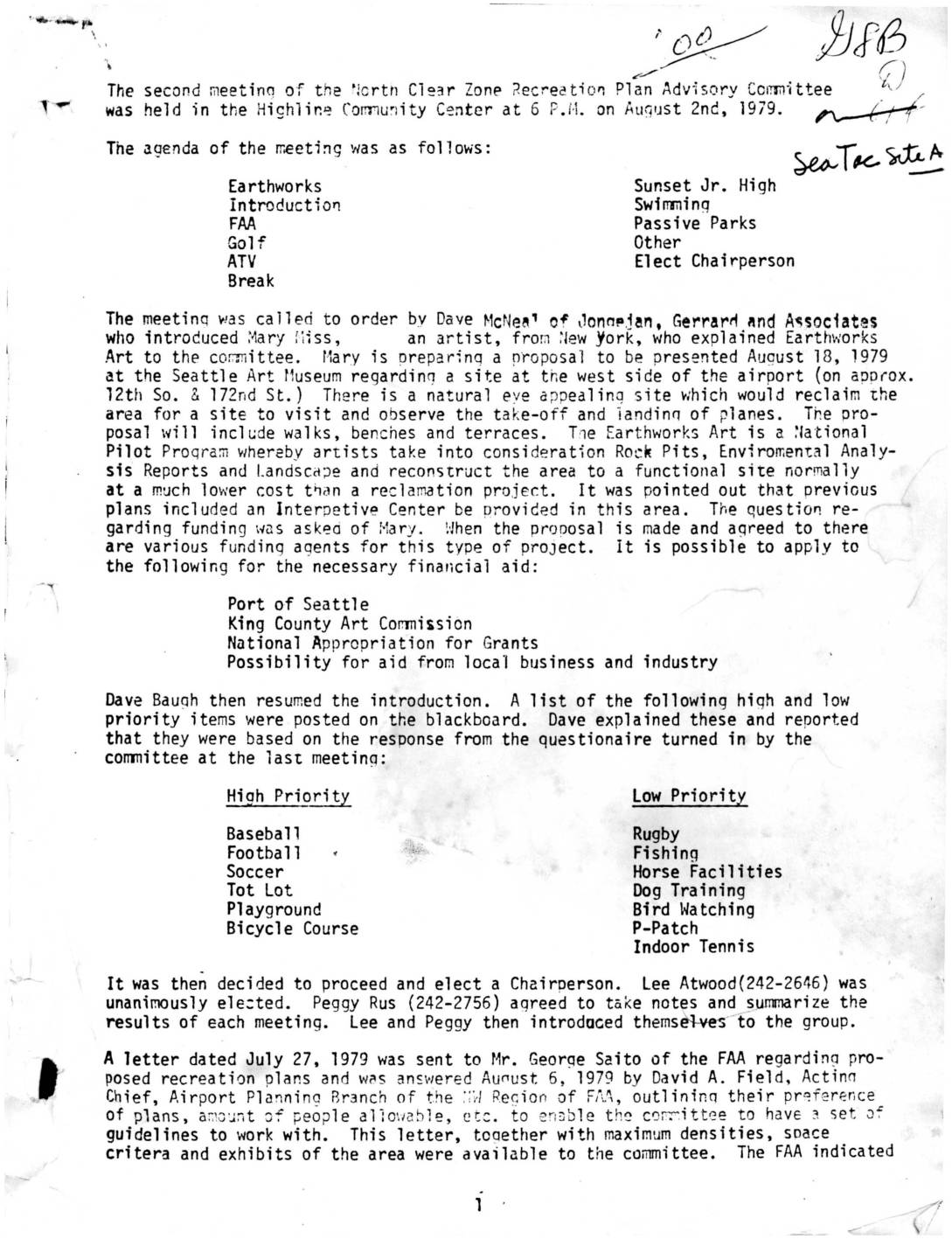 1979-08-02
Minutes: North Clear Zone Recreation Plan Advisory Committee, Second Meeting – August 2, 1979
Minutes from the August 2, 1979 second meeting of the North Clear Zone Recreation Plan Advisory Committee, held at the Highline Community Center, covering proposed recreational uses for land near Sea-Tac Airport's north clear zone. Topics discussed included an Earthworks Art installation, FAA density guidelines (1.5 people per acre), a possible 9-hole golf course, ATV facilities, use of Sunset Jr. High School, and passive park development around Tub Lake and Lake Reba. Lee Atwood was elected Chairperson, and the committee agreed to reconvene with the consulting firm to develop workable recreation plan recommendations within FAA constraints. -
 1979-07-27
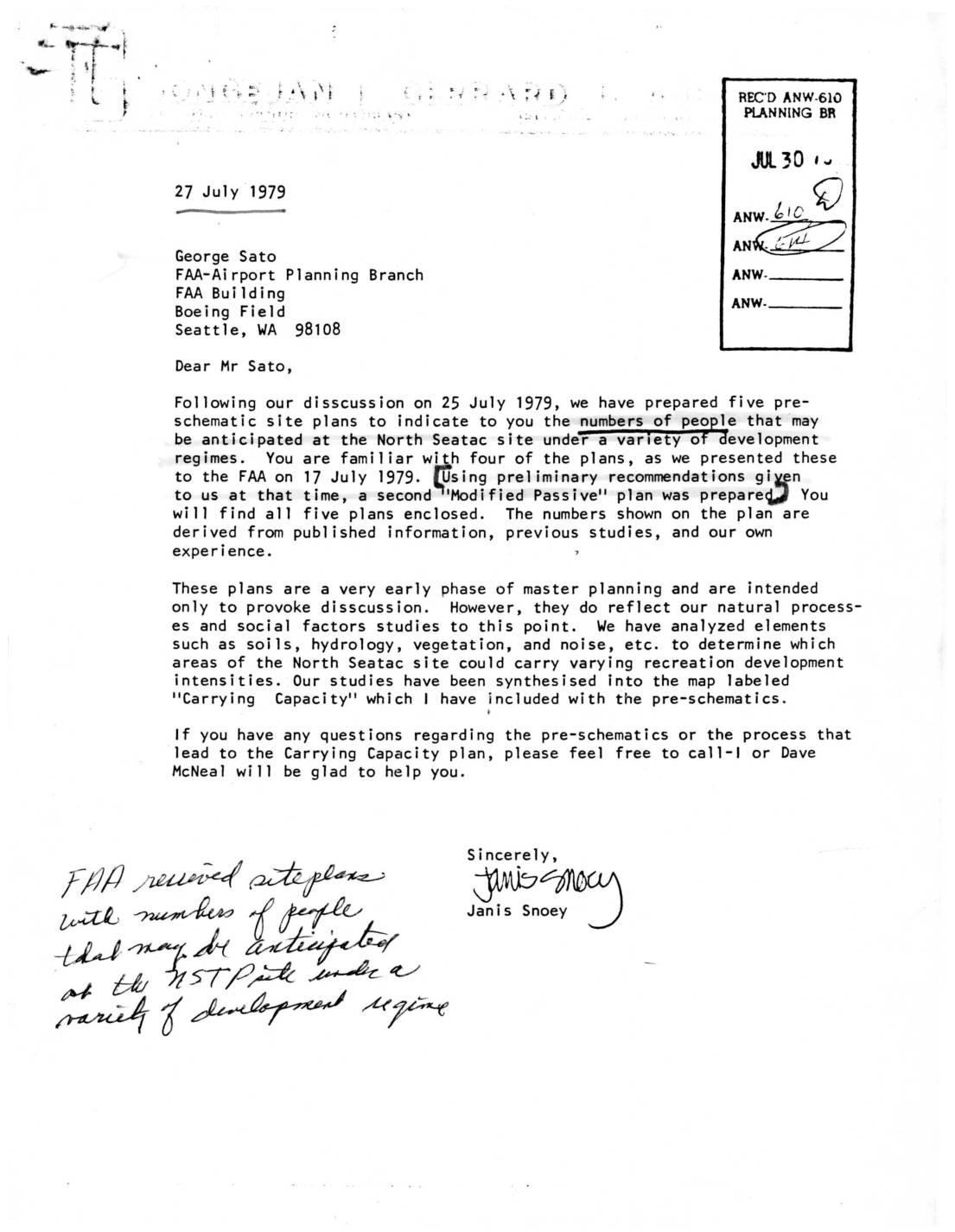
Letter to FAA North Sea-Tac site development plans and carrying capacity analysis
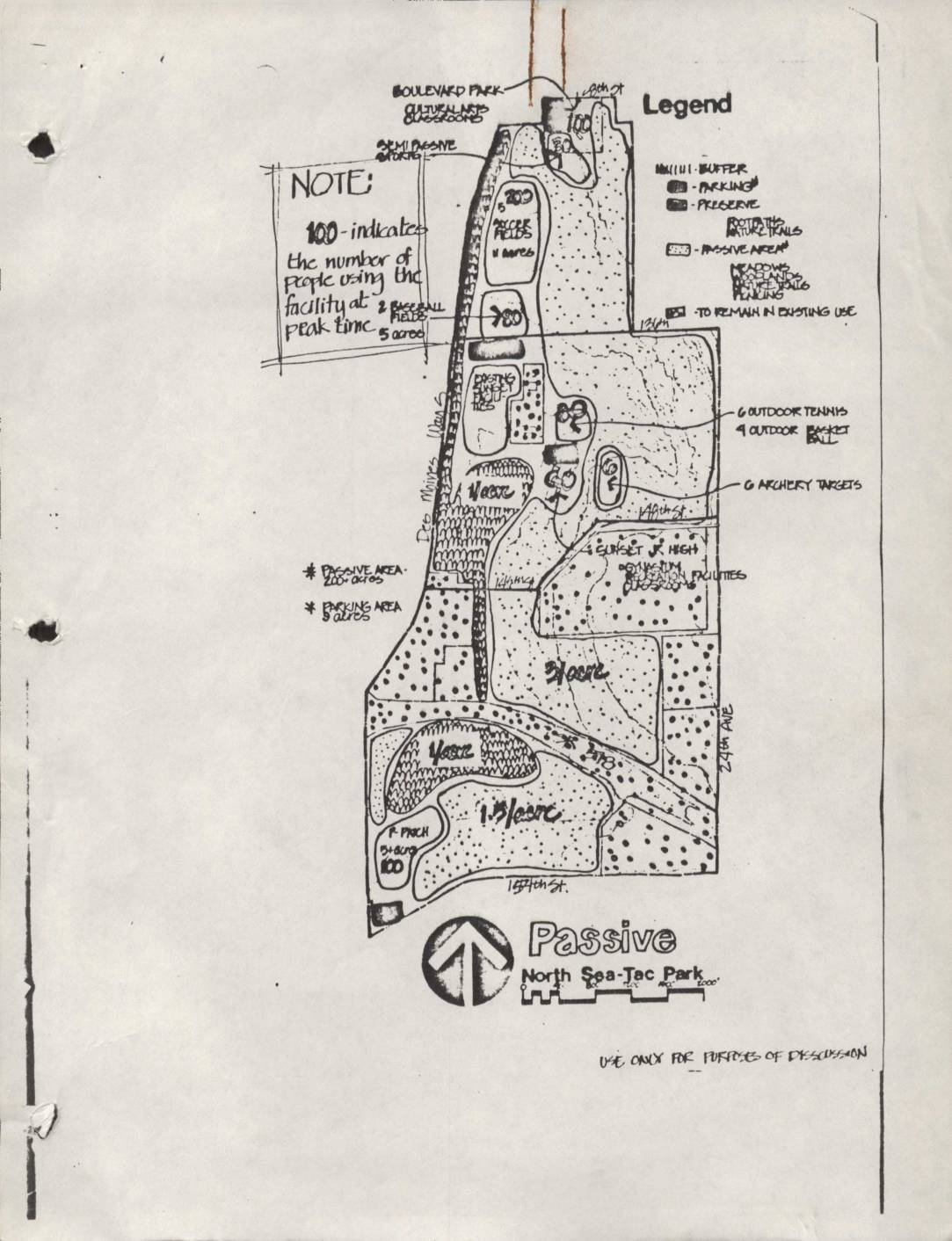
A July 1979 letter from planner Janis Snoey to FAA Airport Planning Branch representative George Sato transmits five pre-schematic site plans for the North Sea-Tac Park, showing projected peak-time visitor numbers under various development scenarios. The plans, prepared following an FAA meeting on July 17, 1979, are accompanied by a 'Carrying Capacity' map that classifies park areas by development suitability—from very high intensity (sports fields, motorcycle trails) to low intensity (foot paths only)—based on analysis of soils, hydrology, vegetation, and noise. The documents were intended solely to provoke discussion during the early master planning phase for the North Sea-Tac site. -
 1979-07-22
North Sea-Tac Park planning maps: Passive, Modified Passive, and Modified Passive 2 concepts
These three hand-drawn planning maps present alternative development scenarios for North Sea-Tac Park, labeled 'Passive,' 'Modified Passive,' and 'Modified Passive 2.' Each concept proposes different mixes of recreational facilities—such as soccer fields, baseball fields, tennis courts, a golf course, and archery targets—alongside preserved natural areas, nature trails, and passive open space. The maps were intended solely for discussion purposes and show peak-time visitor capacity estimates for each proposed facility zone.