Category : Correspondence(303)
-
 2020-03-19
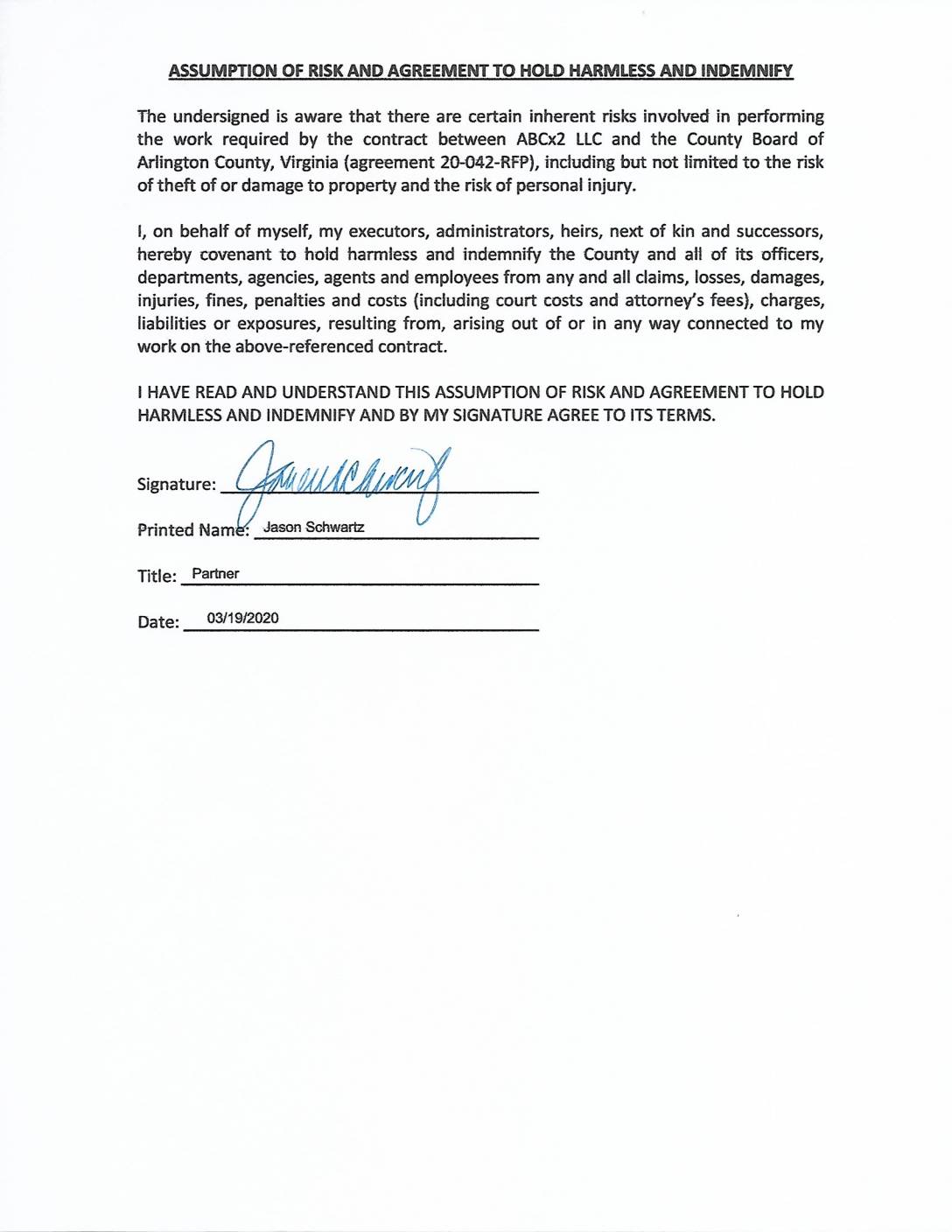
Assumption of Risk and Agreement to Hold Harmless and Indemnify: Jason Schwartz, ABCx2 LLC / Arlington County, Virginia
Hold harmless and indemnification agreement signed by Jason Schwartz, Partner at ABCx2 LLC, dated 03/19/2020, in connection with contract 20-042-RFP between ABCx2 LLC and the County Board of Arlington County, Virginia. Schwartz assumes all inherent risks of the contracted work — including theft, property damage, and personal injury — and covenants to indemnify Arlington County -
 2020-03-19
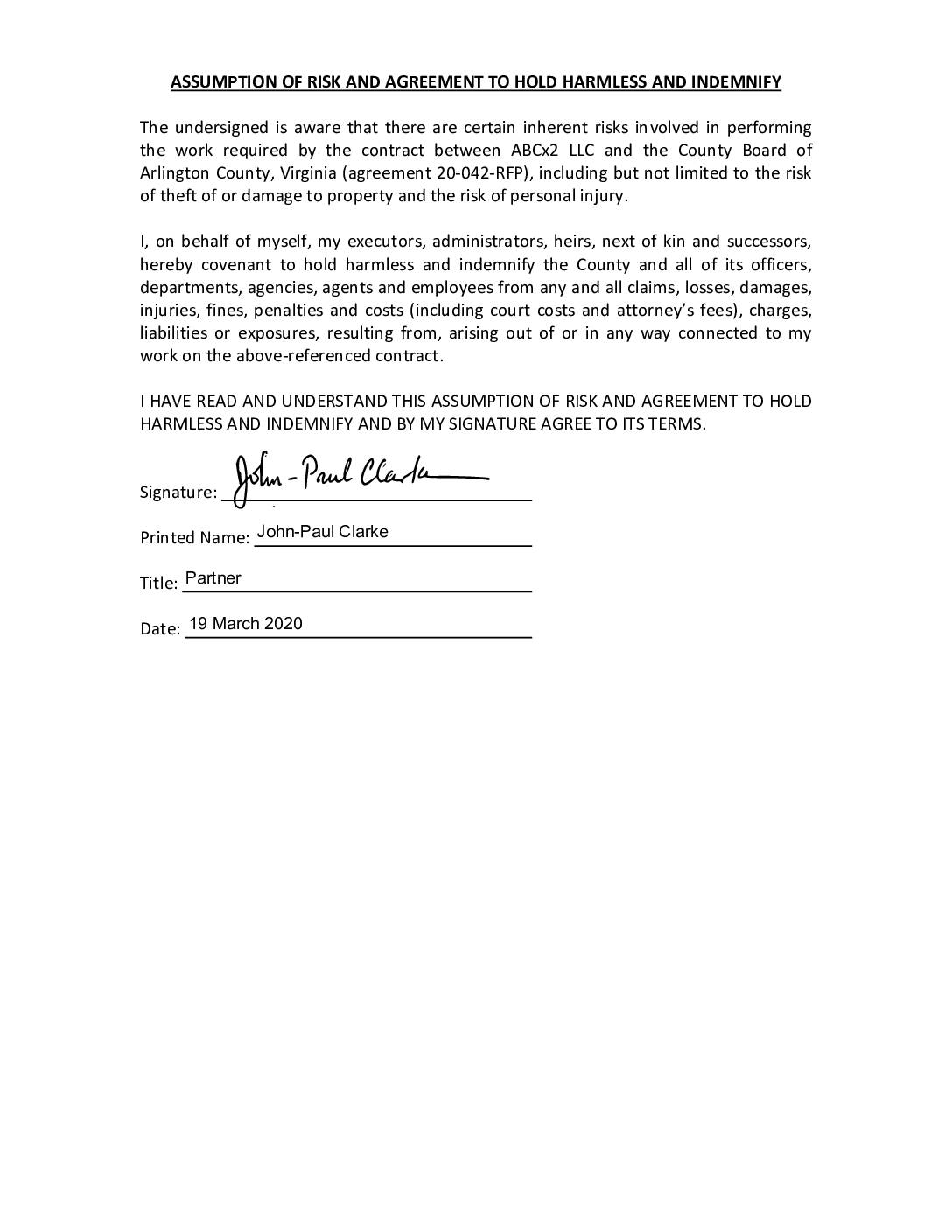
Assumption of Risk and Agreement to Hold Harmless and Indemnify — John-Paul Clarke (ABCx2 LLC, Individual)
This document is a signed Assumption of Risk and Hold Harmless Agreement between John-Paul Clarke, a Partner at ABCx2 LLC, and Arlington County, Virginia, dated March 19, 2020. It acknowledges inherent risks associated with contract work under agreement 20-042-RFP, including property damage and personal injury, and commits ABCx2 LLC to indemnify the County from any related claims, losses, or legal costs. Note: This document pertains to Arlington County, Virginia, and does not appear to be directly related to Sea-Tac Airport noise policy. -
2020-03-19
Assumption of Risk and Agreement to Hold Harmless and Indemnify — John-Paul Clarke (ABCx2 LLC, Individual)
Individual assumption of risk and hold harmless/indemnification agreement signed by John-Paul Clarke, Partner, on behalf of ABCx2 LLC, dated 19 March 2020. Covers work performed under contract agreement 20-042-RFP between ABCx2 LLC and the County Board of Arlington County, Virginia. Signatory covenants to hold harmless and indemnify Arlington County, its officers, departments, agencies, agents, and -
 2020-03-19
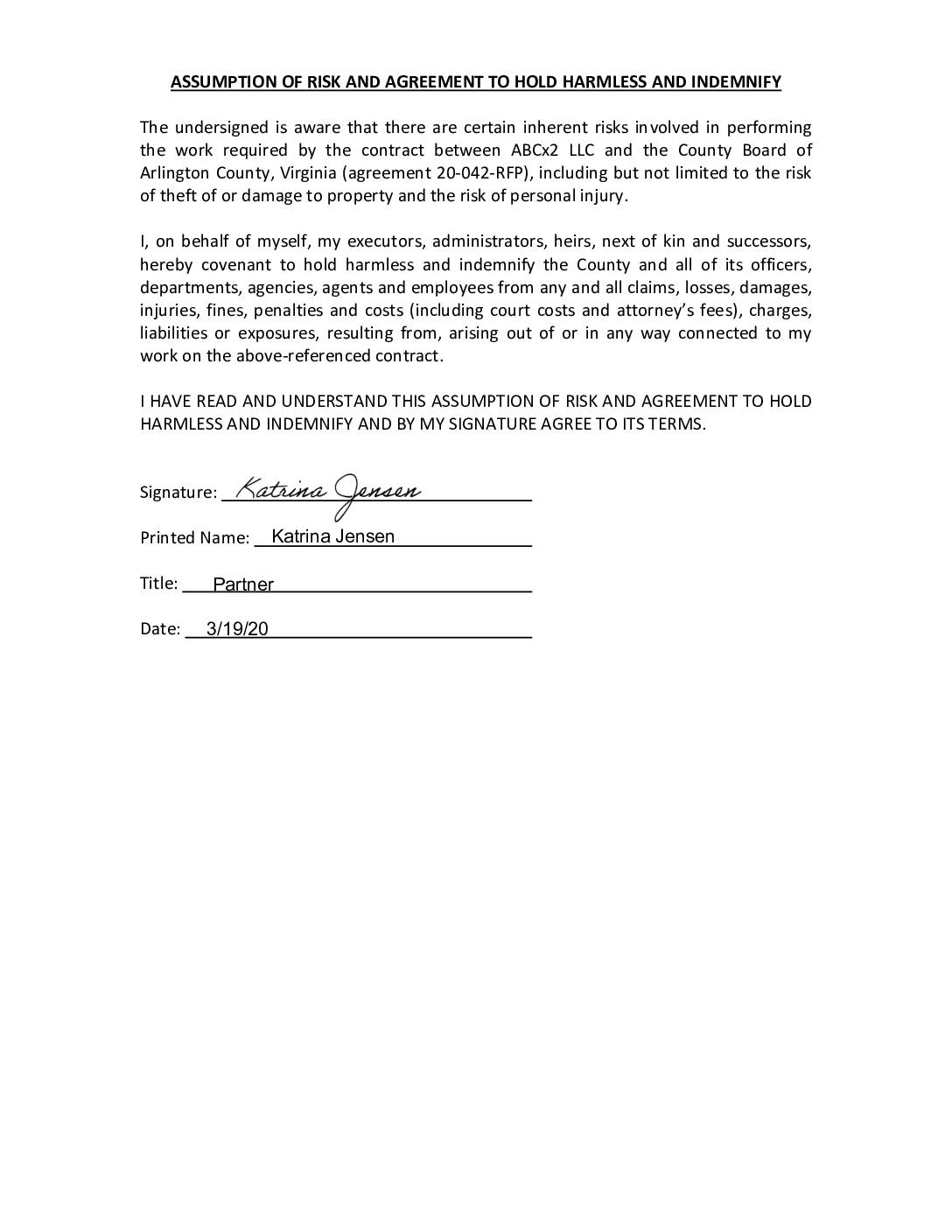
Assumption of Risk and Agreement to Hold Harmless and Indemnify — Katrina Jensen, ABCx2 LLC (Arlington County Agreement 20-042-RFP)
This document is a signed assumption of risk and hold harmless agreement between ABCx2 LLC and Arlington County, Virginia (agreement 20-042-RFP), dated March 19, 2020. In it, Katrina Jensen, signing as a Partner, acknowledges inherent risks associated with contract work — including property damage and personal injury — and agrees to indemnify Arlington County and its employees from any related claims or losses. Note: This document pertains to Arlington County, Virginia, and does not appear to be directly related to Sea-Tac Airport noise policy. -
 2020-03-19
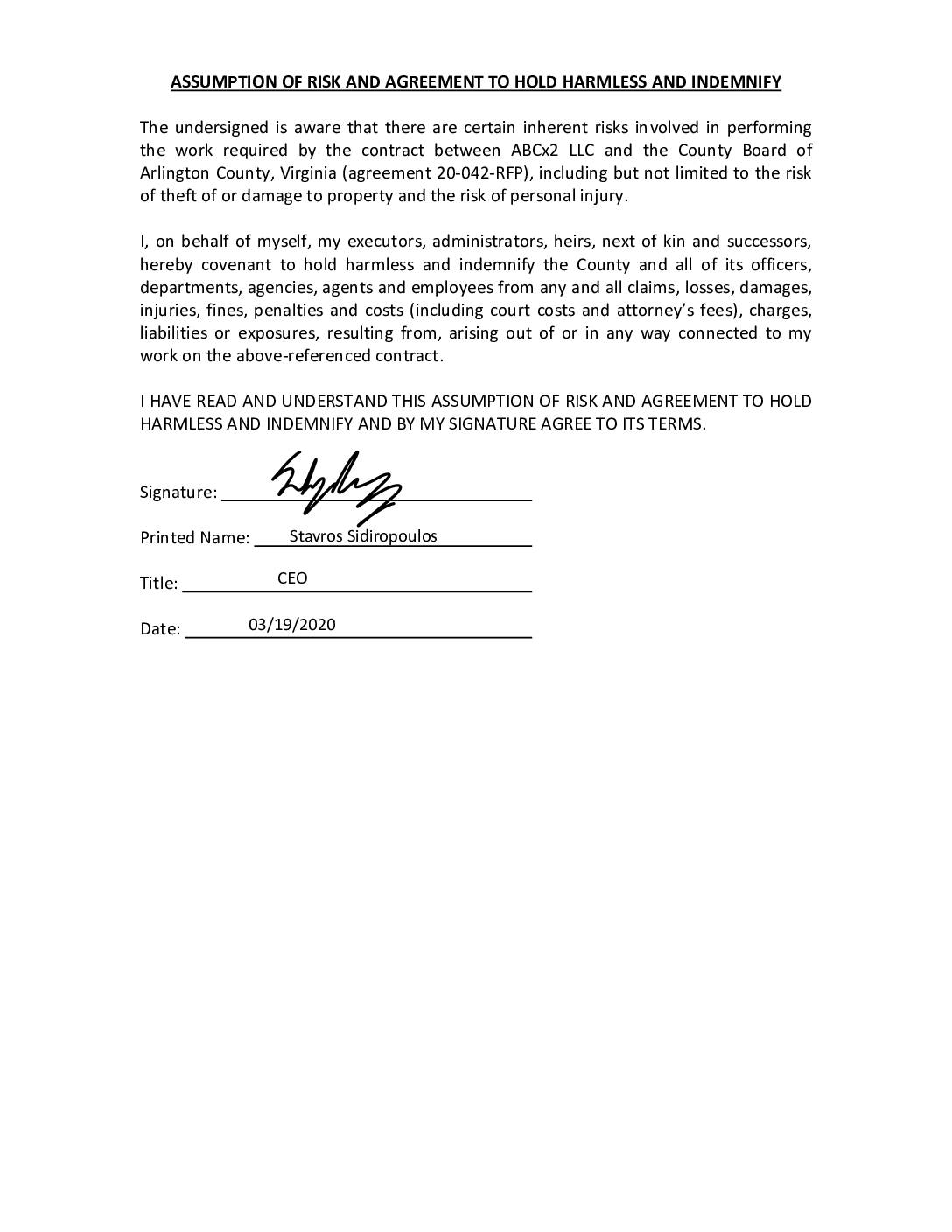
Assumption of Risk and Agreement to Hold Harmless and Indemnify: Stavros Sidiropoulos (CEO, ABCx2 LLC) for Arlington County Contract 20-042-RFP
This document is an Assumption of Risk and Hold Harmless Agreement signed by Stavros Sidiropoulos, CEO of ABCx2 LLC, on March 19, 2020, in connection with contract 20-042-RFP with Arlington County, Virginia. The signer acknowledges inherent risks — including property damage and personal injury — associated with performing contracted work, and agrees to indemnify Arlington County and its employees from any related claims, losses, or legal costs. Note: This document pertains to an Arlington County, Virginia contract and does not appear to be related to Sea-Tac Airport noise policy. -
2020-03-19
Assumption of Risk and Agreement to Hold Harmless and Indemnify — Katrina Jensen, ABCx2 LLC (Arlington County Agreement 20-042-RFP)
Hold harmless and indemnification agreement signed by Katrina Jensen, Partner at ABCx2 LLC, dated 3/19/20, in connection with Arlington County, Virginia contract agreement 20-042-RFP. Jensen assumes all inherent risks of performing contract work, including theft, property damage, and personal injury, and covenants to indemnify the County Board of Arlington County and all its officers, departments, -
2020-03-19
Assumption of Risk and Agreement to Hold Harmless and Indemnify: Stavros Sidiropoulos (CEO, ABCx2 LLC) for Arlington County Contract 20-042-RFP
Assumption of risk and hold harmless/indemnity agreement signed by Stavros Sidiropoulos, CEO of ABCx2 LLC (Vianair), on 03/19/2020, for contract 20-042-RFP between ABCx2 LLC and the County Board of Arlington County, Virginia. The signatory covenants to indemnify Arlington County and its officers, departments, agencies, agents, and employees from all claims, losses, damages, injuries, fines, penalties, -
 2020-03-19
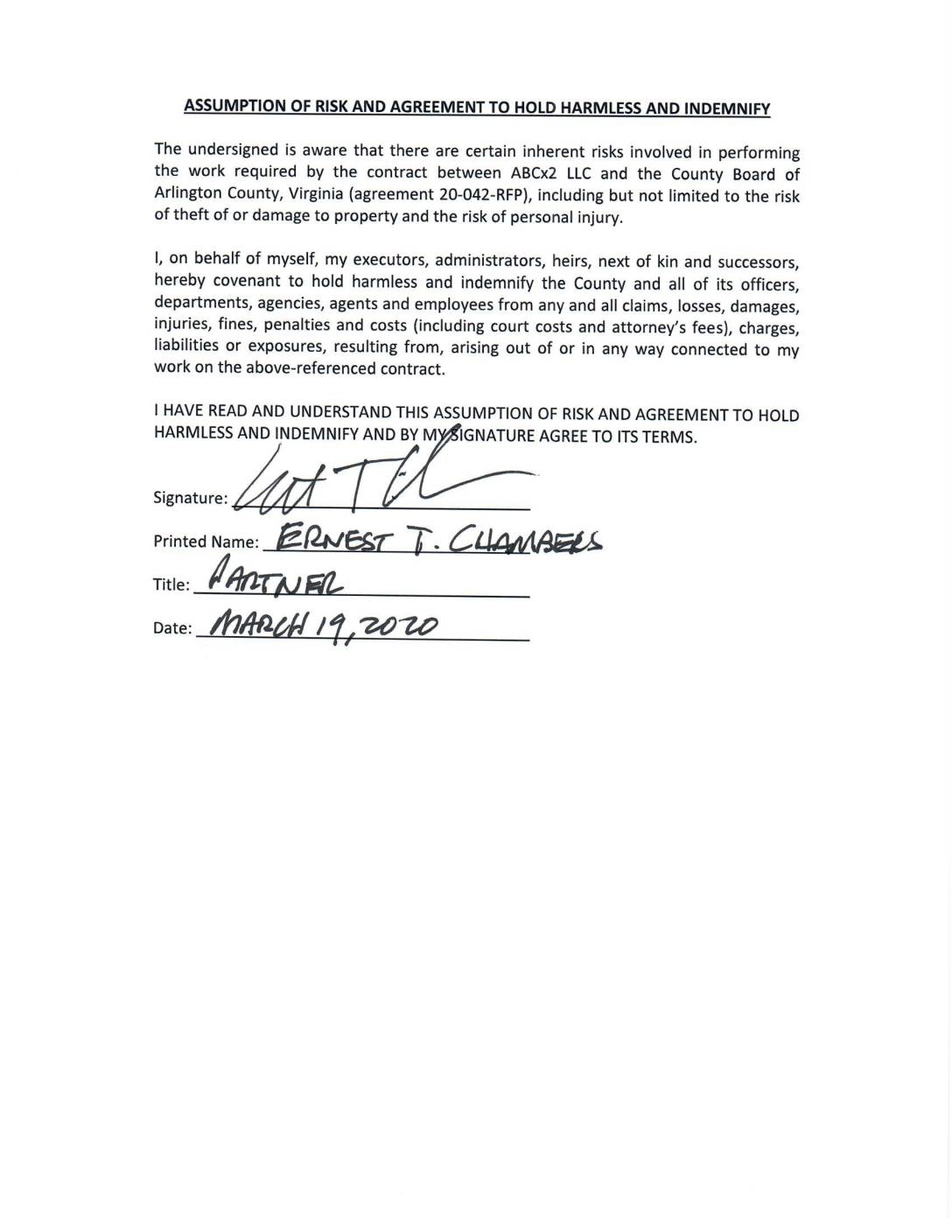
Assumption of Risk and Agreement to Hold Harmless and Indemnify — Ernest T. Chambers, ABCx2 LLC
This document is an Assumption of Risk and Hold Harmless Agreement signed by Ernest T. Chambers, a Partner at ABCx2 LLC, on March 19, 2020. In it, the signer acknowledges inherent risks—such as property damage or personal injury—associated with work performed under contract 20-042-RFP with Arlington County, Virginia, and agrees to indemnify the County from any related claims, losses, or costs. Note: This document pertains to an Arlington County, Virginia contract and does not appear to be directly related to Sea-Tac Airport noise policy. -
 2020-03-19
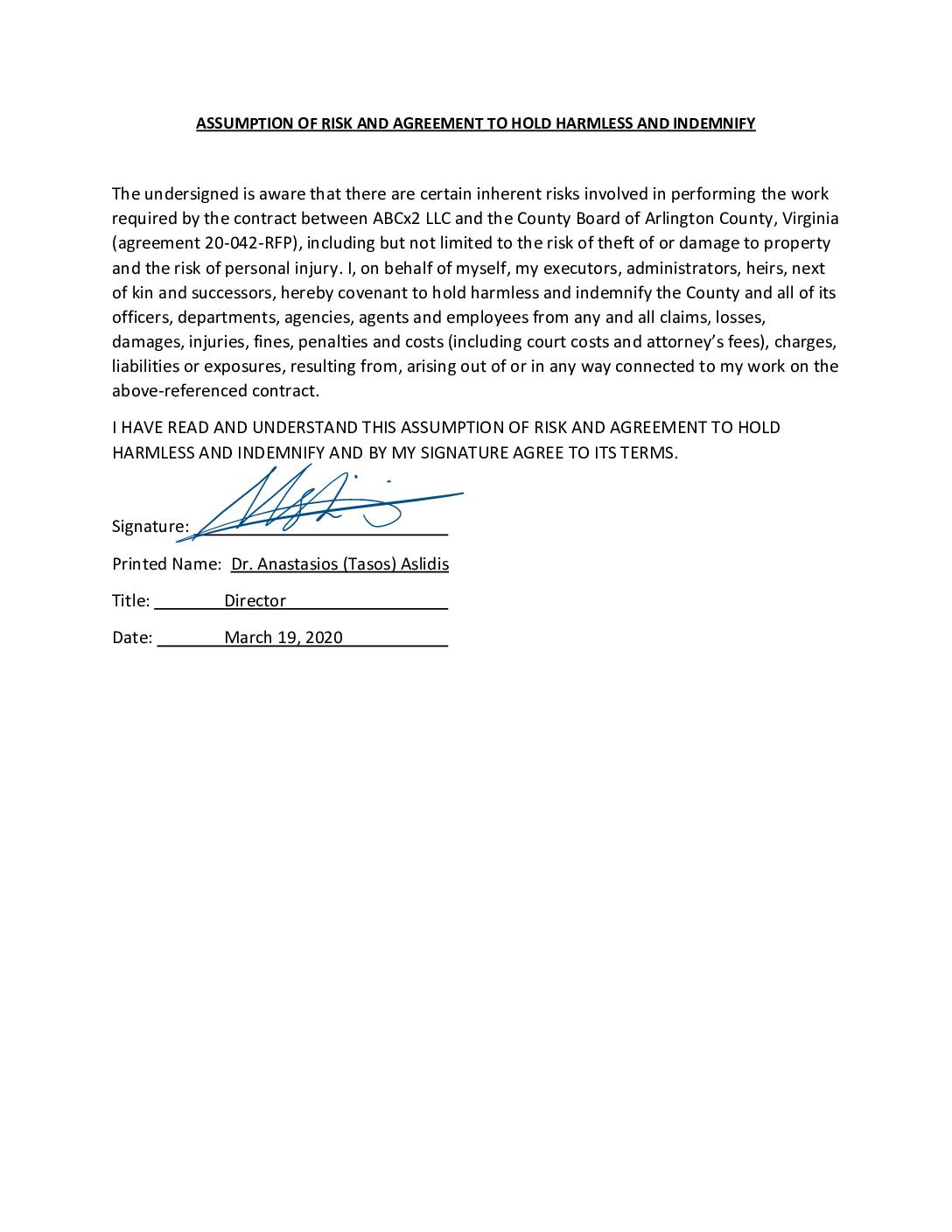
Assumption of Risk and Agreement to Hold Harmless and Indemnify: Dr. Anastasios (Tasos) Aslidis / ABCx2 LLC / Arlington County
This document is a signed agreement in which Dr. Anastasios (Tasos) Aslidis, acting as Director on behalf of ABCx2 LLC, acknowledges and accepts the inherent risks associated with performing work under contract 20-042-RFP with Arlington County, Virginia. By signing on March 19, 2020, he agreed to hold harmless and indemnify Arlington County, its officers, and employees from any claims, damages, injuries, or costs arising from that work. Note: This document pertains to an Arlington County, Virginia contract and does not appear to be directly related to Sea-Tac Airport noise policy. -
2020-03-19
Assumption of Risk and Agreement to Hold Harmless and Indemnify — Ernest T. Chambers, ABCx2 LLC
Hold harmless and indemnification agreement signed by Ernest T. Chambers, Partner of ABCx2 LLC, dated March 19, 2020, in connection with contract agreement 20-042-RFP between ABCx2 LLC and the County Board of Arlington County, Virginia. Chambers assumes all risk of theft, property damage, and personal injury arising from work performed under the contract, and indemnifies