Tagpollution(77)
-
2018-10-27 12:00
Guardian: Air pollution is the ‘new tobacco’, warns WHO head
Exclusive: Simple act of breathing is killing 7 million people a year and harming billions more, but ‘a smog of complacency pervades the planet’, says Dr Tedros Adhanom -
 2018-02-07 11:17
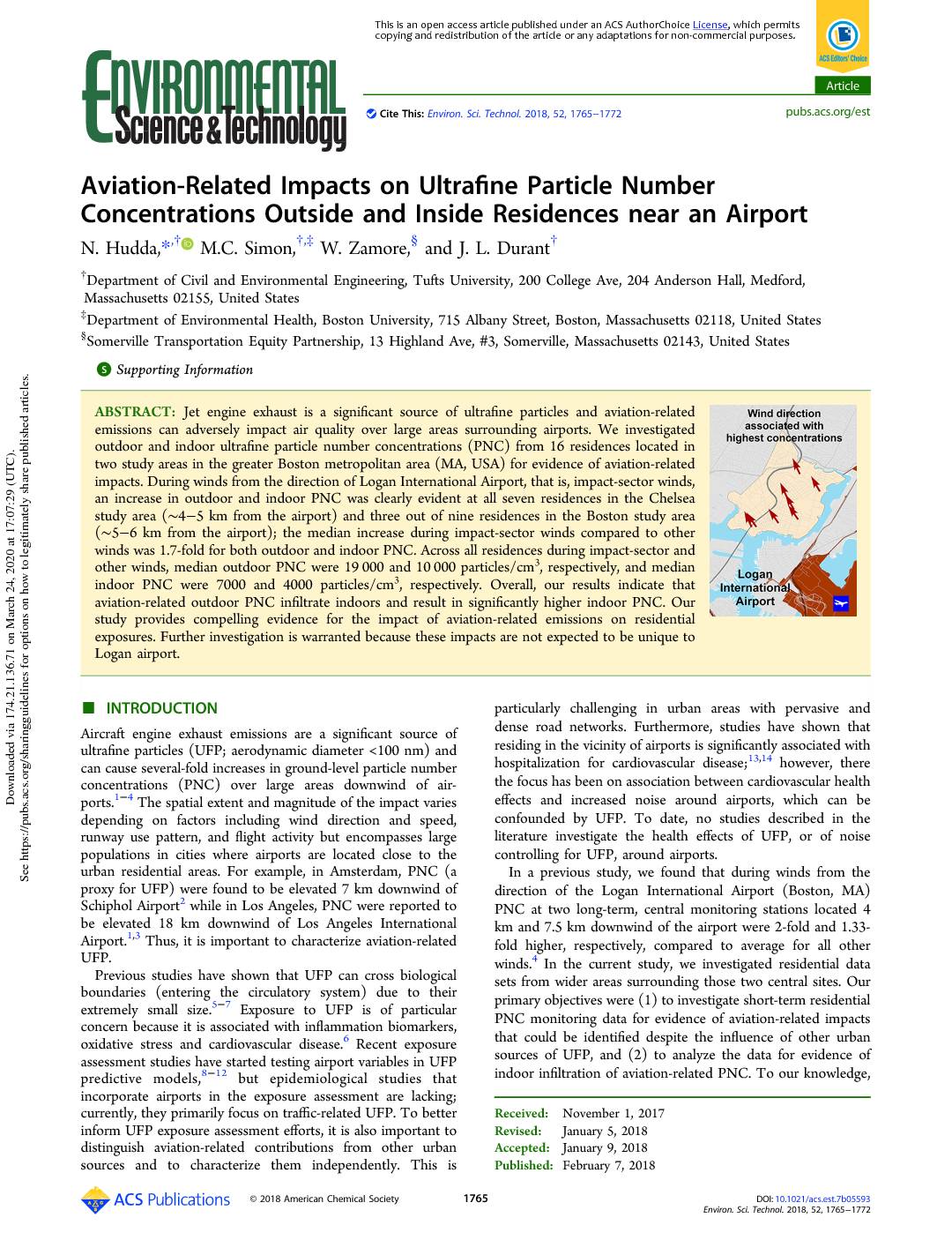
Aviation-Related Impacts on Ultrafine Particle Number Concentrations Outside and Inside Residences near an Airport
Concentrations Outside and Inside Residences near an Airport N. Hudda,*,† M.C. Simon,†,‡ W. Zamore,§ and J. L. Durant† †Department of Civil and Environmental Engineering, Tufts University, 200 College Ave, 204 Anderson Hall, Medford, Massachusetts 02155, United States ‡Department of Environmental Health, Boston University, 715 Albany Street, Boston, Massachusetts 02118, United States §Somerville Transportation Equity Partnership, 13 Highland Ave, #3, Somerville, Massachusetts 02143, United States *S Supporting Information ABSTRACT: Jet engine exhaust is a significant source of ultrafine particles and aviation-related emissions can adversely impact air quality over large areas surrounding airports. We investigated outdoor and indoor ultrafine particle number concentrations (PNC) from 16 residences located in two study areas in the greater Boston metropolitan area (MA, USA) for evidence of aviation-related impacts. During winds from the direction of Logan International Airport, that is, impact-sector winds, an increase in outdoor and indoor PNC was clearly evident at all seven residences in the Chelsea study area (∼4−5 km from the airport) and three out of nine residences in the Boston study area (∼5−6 km from the airport); the median increase during impact-sector winds compared to other winds was 1.7-fold for both outdoor and indoor PNC. Across all residences during impact-sector and other winds, median outdoor PNC were 19 000 and 10 000 particles/cm3, respectively, and median indoor PNC were 7000 and 4000 particles/cm3, respectively. Overall, our results indicate that aviation-related outdoor PNC infiltrate indoors and result in significantly higher indoor PNC. Our study provides compelling evidence for the impact of aviation-related emissions… -
 2017-01-01 00:00
Modeling variability in air pollution-related health damages from individual airport emissions – Stefani L. Penn
Modeling variability in air pollution-related health damages from individual airport emissions Stefani L. Penna,⁎, Scott T. Booneb, Brian C. Harveyc, Wendy Heiger-Bernaysa, Yorghos Tripodisd, Sarav Arunachalamb, Jonathan I. Levya a Boston University School of Public Health, Department of Environmental Health, 715 Albany St 4W Boston, MA 02118, United States b University of North Carolina at Chapel Hill, UNC Institute for the Environment, 100 Europa Dr., Chapel Hill, NC 27517, United States c Boston University College of Engineering, Department of Biomedical Engineering, 44 Cummington Mall, Boston, MA 02215, United States d Boston University School of Public Health, Department of Biostatistics, 801 Massachusetts Ave., Boston, MA 02118, United States A R T I C L E I N F O Keywords: Aviation emissions CMAQ modeling Regression modeling Air pollution A B S T R A C T In this study, we modeled concentrations of fine particulate matter (PM2.5) and ozone (O3) attributable to precursor emissions from individual airports in the United States, developing airport-specific health damage functions (deaths per 1000 t of precursor emissions) and physically-interpretable regression models to explain variability in these functions. We applied the Community Multiscale Air Quality model using the Decoupled Direct Method to isolate PM2.5- or O3-related contributions from precursor pollutants emitted by 66 individual airports. We linked airport- and pollutant-specific concentrations with population data and literature-based concentration-response functions to create health damage functions. Deaths per 1000 t of primary PM2.5 emissions ranged from 3 to 160 across airports, with variability explained by population patterns within 500… -
2016-01-29 00:00
KUOW: These Are Washington’s Top 10 Climate Polluters 01/29/16
he Tesoro refinery in Anacortes, one of Washington’s top 10 sources of greenhouse gases. Credit: Flickr Photo/Scott Butner (CC BY NC ND 2.0) These Are Washington’s Top 10 Climate Polluters By John Ryan Jan 29, 2016 at 9:30 am The biggest climate polluters in Washington have been identified, according to numbers out this week: the -
 2015-06-01 12:39
PSCAA 2015 Greenhouse Gas Emissions Inventory
-
 2014-10-13 00:00
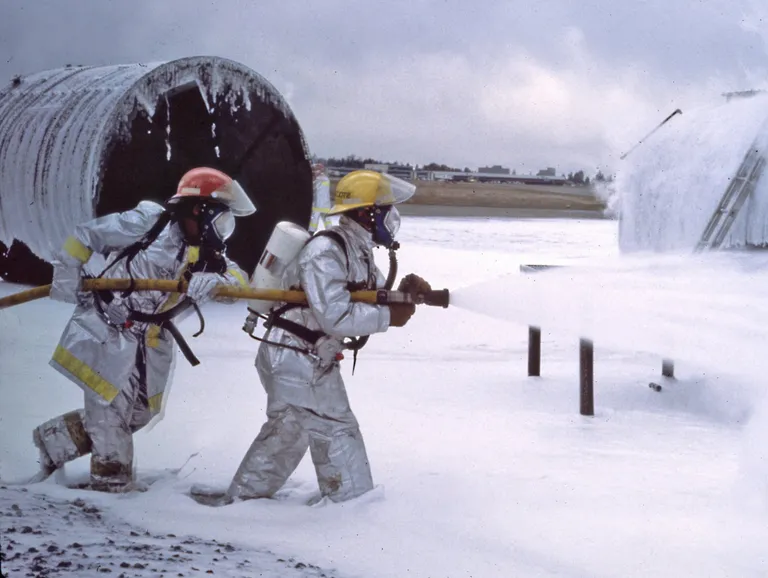
PFAS Training Exercise, October 13, 2014
-
 2011-12-29 20:10
Obama’s Climate Betrayal
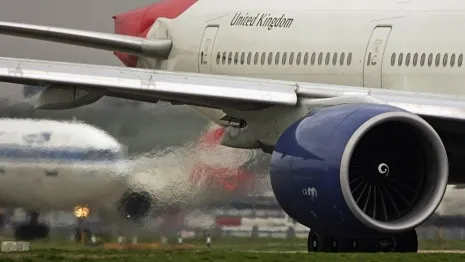
Elizabeth Kolbert Some international disputes are significant for symbolic reasons, others for substantive ones. The current conflict between the United States and the European Union over airline-emissions limits is both. Unfortunately this means that the U.S. is doubly on the wrong side. The Obama Administration ought to be applauding the Europeans. Instead it’s threatening a -
 2011-12-08 12:48
King County Greenhouse Gas Inventory 2008 Appendix B