Tagpollution(89)
-
2007-04-02
Massachusetts v EPA, 549 U.S. 497 (2007)
Annotation Primary HoldingThe Clean Air Act allows the Environmental Protection Agency to regulate greenhouses gases because they qualify as air pollutants. Also, standing requires showing a concrete harm that can be traced to the defendant and remedied by the courts. Read More Syllabus SYLLABUS OCTOBER TERM, 2006 MASSACHUSETTS V. EPA SUPREME COURT OF THE -
 2006-11-06
Spatial and temporal patterns of airborne toxic species in Seattle, WA neighborhoods
A 2001 EPA air quality study measured toxic airborne pollutants across six Seattle-area neighborhoods, including a site near Seattle-Tacoma International Airport that was notably impacted by emissions from nearby freeways and congested streets. Researchers collected air samples over the course of a year to track levels of harmful compounds including volatile organic chemicals (VOCs), carbonyls, and metals. The findings were intended to help assess community health risks and guide the development of a long-term national air toxics monitoring network. -
 2003-10-01
Final report: Puget Sound air toxics evaluation
This 2003 report by the Puget Sound Clean Air Agency evaluates air toxic chemicals in the Puget Sound region, assessing potential cancer and non-cancer health risks based on air monitoring data and EPA modeling. It identifies priority chemicals of concern, estimates human exposure levels, and draws conclusions about the health impacts of pollutants such as diesel exhaust and woodsmoke on local residents. -
 2002-10-22
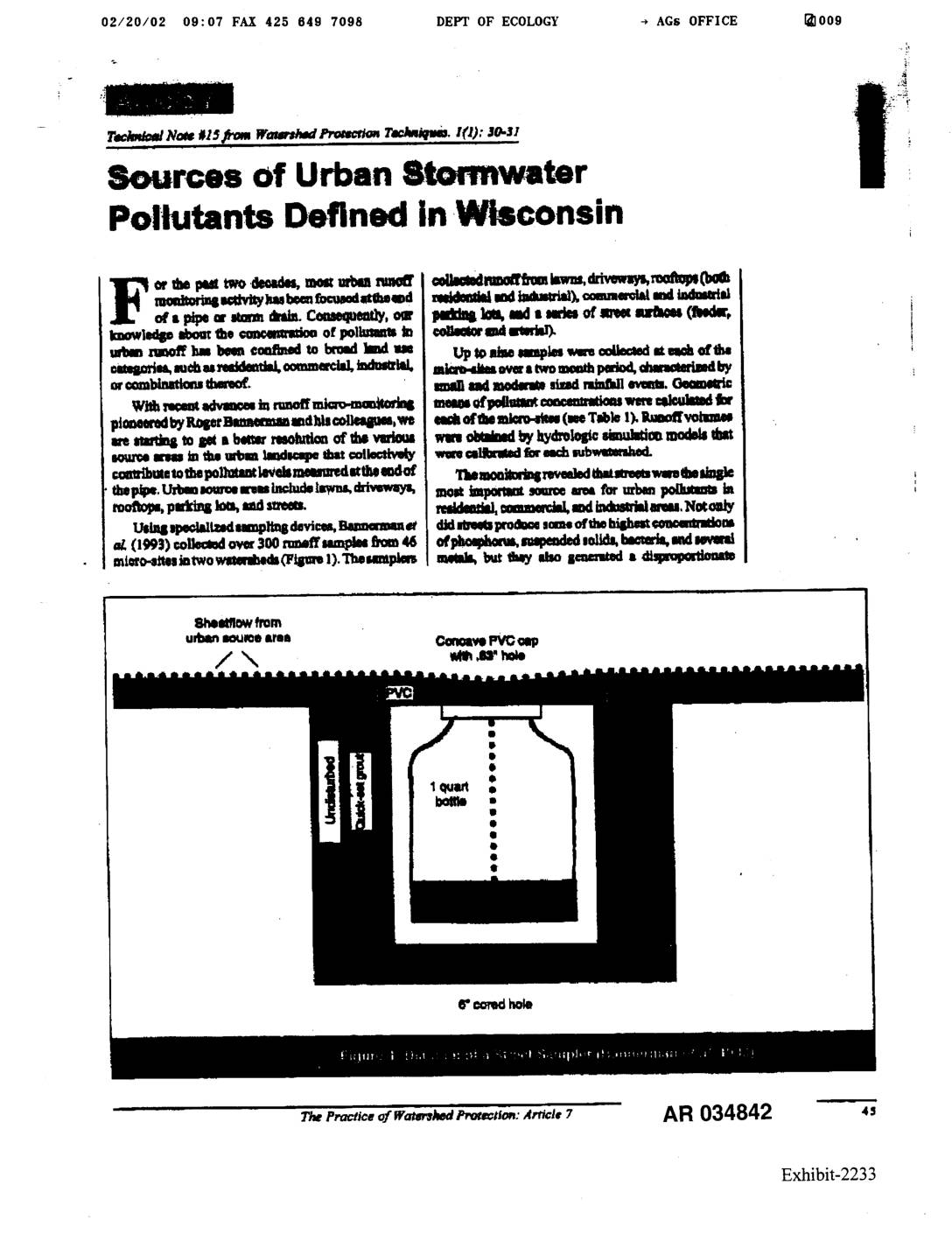
Exhibit 2233: Sources of Urban Stormwater Pollutants Defined in Wisconsin
Technical Note #15 from Watershed Protection Techniques, I(1):30-31, covering sources of urban stormwater pollutants as defined in Wisconsin. Based on Bannerman, R., D. Owens, R. Dodds, and N. Hornewer (1993) study published in Water Science & Technology (28):3-5, pp. 241-259. Over 300 runoff samples collected from 46 micro-sites in two watersheds. Documents pollutant concentrations of -
 2002-10-22
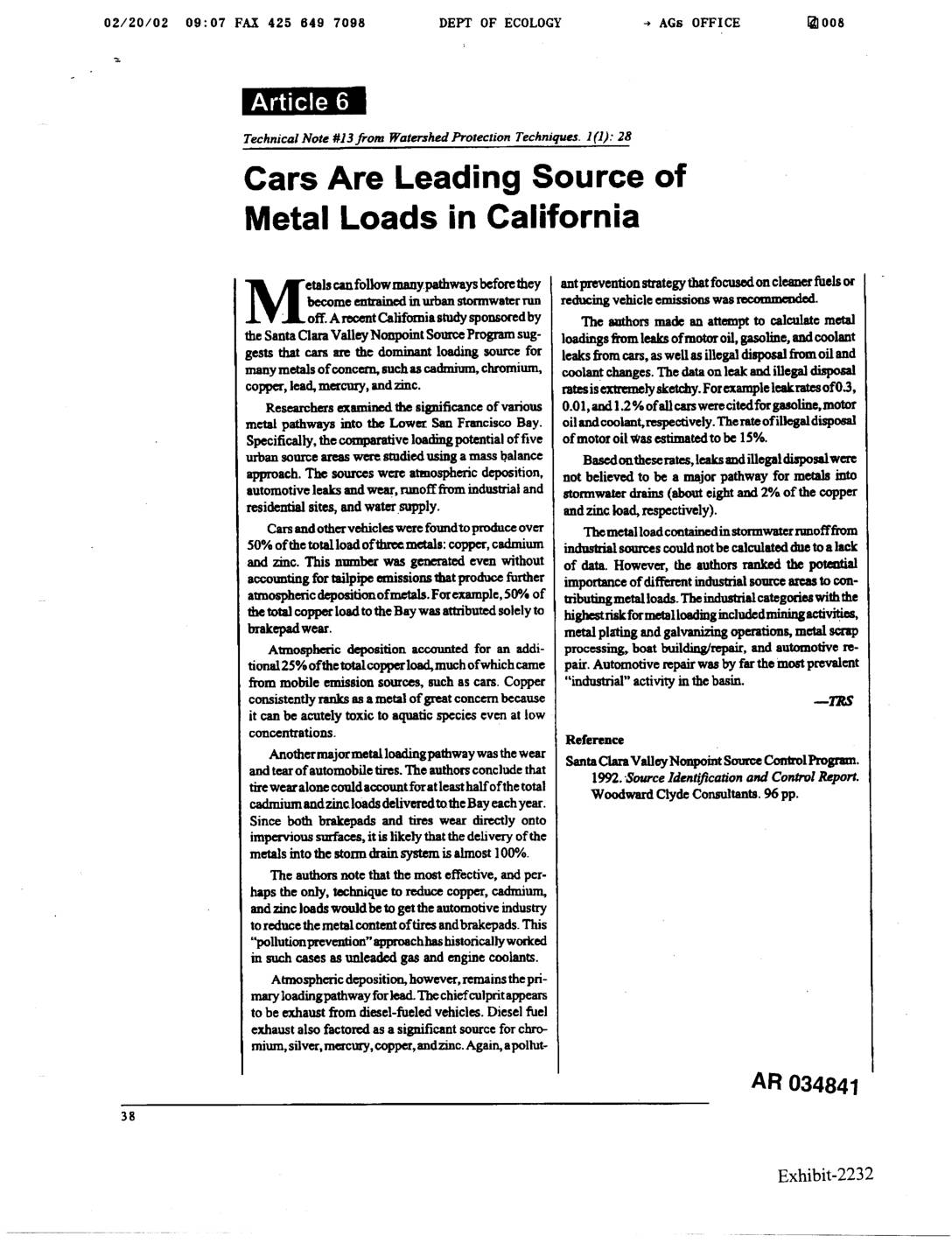
EXH AR034841: Cars Are Leading Source of Metal Loads in California
Technical Note #13 from Watershed Protection Techniques 1(1):28, summarizing a Santa Clara Valley Nonpoint Source Program study on metal pathways into the Lower San Francisco Bay. Cars and vehicles found to produce over 50% of total loads of copper, cadmium, and zinc; brake pad wear alone accounts for 50% of total copper load; tire wear -
 2002-10-21
EXH 323 (AR020491): Petroleum Hydrocarbon Fraction Compositions — Standard Fuel Modeling & Site Data
This document presents chemical composition data for various petroleum fuel types, including fresh gasoline, weathered gasoline, fresh diesel, weathered diesel, and heavy fuel oil. It breaks down the percentage and concentration (mg/kg) of aliphatic and aromatic hydrocarbon fractions across different carbon chain length ranges. The data appears to support environmental modeling and site assessment work, likely related to fuel spill or contamination analysis. -
 2002-08-30
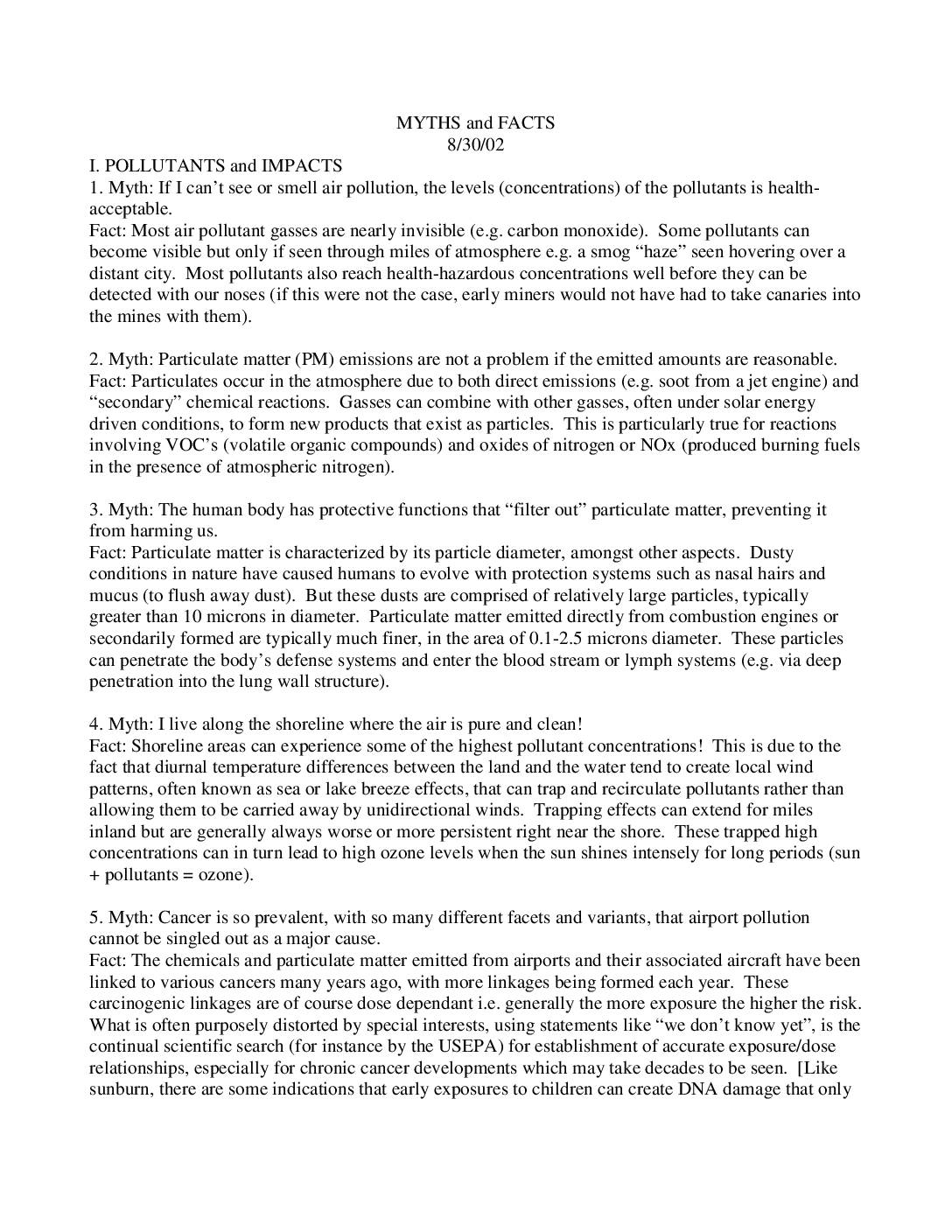
Myths and Facts: Airport Pollutants, Aircraft Emissions, and Pollution Simulators
This document debunks common myths about airport air pollution, noise, and emissions regulation, explaining that invisible pollutants can still reach dangerous levels, that fine particles from jet engines bypass the body's natural defenses, and that shoreline communities like those near Sea-Tac may face higher pollution concentrations due to wind patterns. It also reveals that neither the EPA nor FAA effectively regulates aircraft emissions or noise in ways that truly protect nearby residents, as regulatory authority rests with bodies like ICAO that are dominated by airline and airport interests. Additionally, the document highlights that official pollution modeling tools may significantly underestimate actual pollution levels, and that so-called 'noise abatement' programs often fail to reduce noise at all. -
 2002-06-10
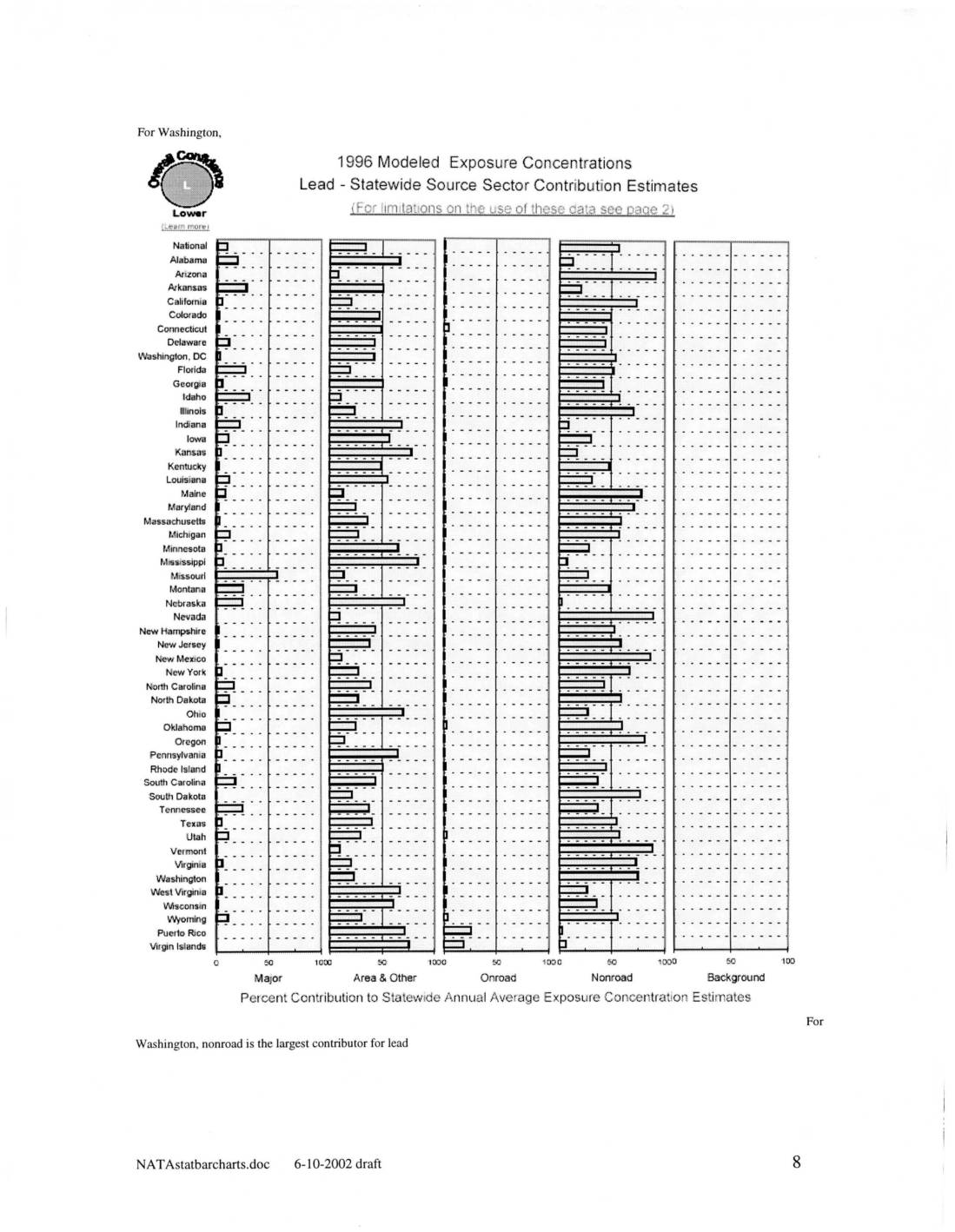
1996 modeled exposure concentrations: Lead, manganese, and arsenic statewide concentration distribution estimates
This 2002 draft document presents 1996 modeled air exposure concentration estimates for toxic pollutants including lead, manganese, and arsenic across all U.S. states. It compares statewide source contributions from major industrial areas, onroad vehicles, nonroad sources, and background levels. Supplementary 2001 monitoring data from Sea-Tac Airport and nearby Seattle sites shows measured concentrations of these pollutants, with some local readings—such as a single manganese measurement exceeding 36 ng/m³ and an arsenic reading surpassing 12 ng/m³—notably higher than regional averages. -
 2002-03-18
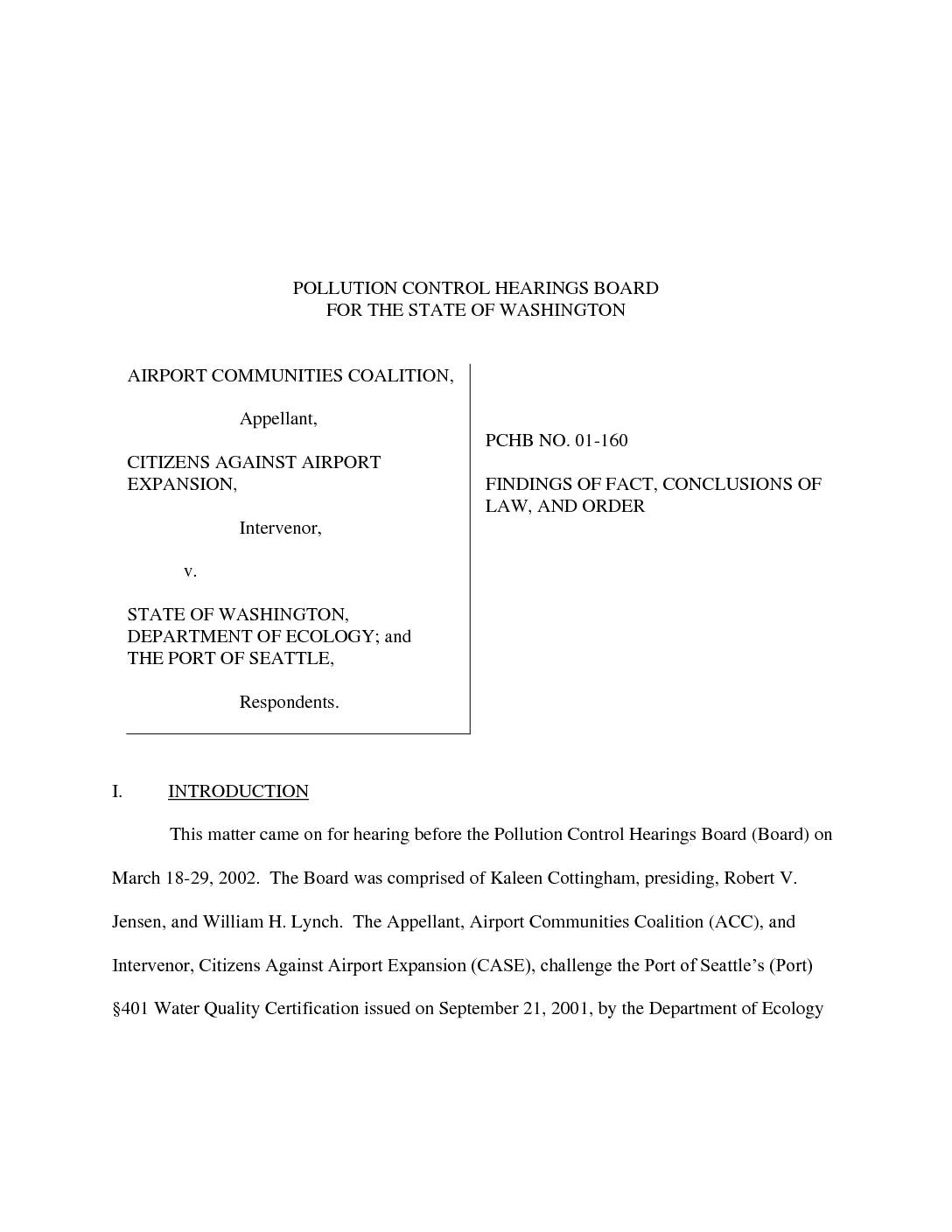
PCHB No. 01-160: Findings of Fact, Conclusions of Law, and Order — ACC and CASE v. Ecology and Port Of Seattle
This document records a 2002 Washington State Pollution Control Hearings Board case in which community groups challenged the water quality certification issued for the construction of a third runway at Seattle-Tacoma International Airport. The Airport Communities Coalition and Citizens Against Airport Expansion argued that the Department of Ecology's approval did not provide adequate assurance that the project would comply with Clean Water Act Section 401 and state water quality laws, particularly regarding stormwater management. The Board examined 20 disputed issues covering topics such as stormwater impacts, detention system safety, and the scope of the certification. -
 1999-12-13
1998/1999 SeaTac oxides of nitrogen and particulate monitoring study
This 1998/1999 study by the Washington State Department of Ecology monitored levels of oxides of nitrogen and particulate matter in the SeaTac area, likely in relation to emissions from Seattle-Tacoma International Airport and surrounding traffic. Prepared by Jim Frost and Doug Knowlton of Ecology's Air Program, the report assessed local air quality conditions during that period. It serves as a technical reference for understanding pollution levels near the airport in the late 1990s.