2025-12-01
The Puget Sound Region Final Comprehensive Climate Action Plan, published December 1, 2025 by the Puget Sound Clean Air Agency, outlines greenhouse gas reduction strategies for King, Kitsap, Pierce, and Snohomish Counties in the Seattle-Tacoma-Bellevue metropolitan area. The plan covers six sectors—Built Environment, Transportation, Municipal Solid Waste and Wastewater, Natural and Working Lands, Refrigerants, and Consumption—with goals, emission projections, and workforce planning analysis. Note that this document focuses on regional climate and air quality policy rather than Sea-Tac Airport noise regulations specifically.
2025-12-01
A comprehensive climate action plan for the Seattle-Tacoma-Bellevue Metropolitan Statistical Area covering King, Kitsap, Pierce, and Snohomish Counties. The plan provides greenhouse gas emission reduction strategies across six sectors: built environment, transportation, waste, natural lands, refrigerants, and consumption.
Google Maps satellite imagery showing the area east of Des Moines Memorial Dr S near S 138th–S 142nd Streets, featuring Tub Lake, Pat Ryan Field, North SeaTac Mountain Bike Trails, and a red location pin near 18th Ave S. Adjacent landmarks include Park N Jet Lot 2 SeaTac Airport Parking and Suddath Relocation Systems of Seattle.
2023-02-10
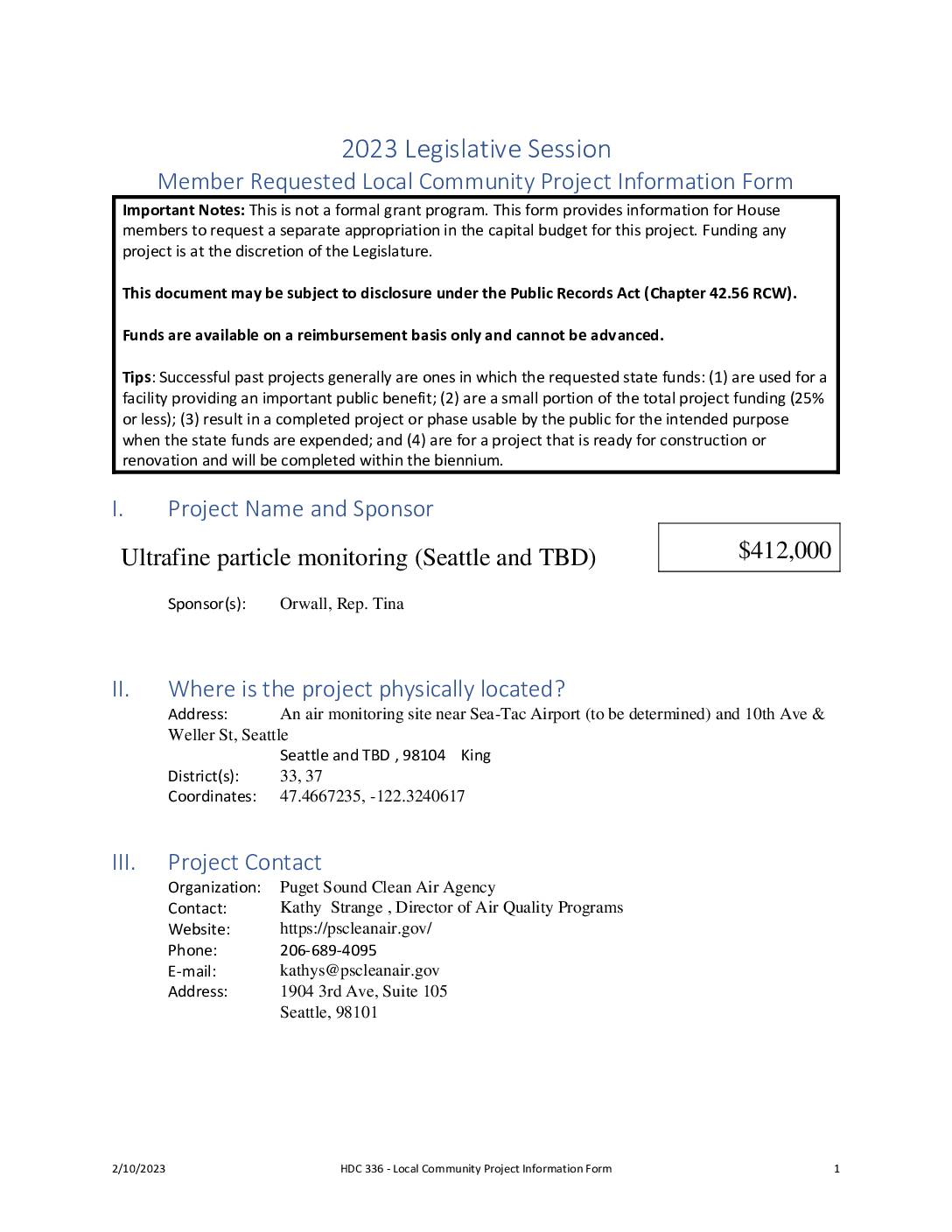
A 2023 Washington State legislative funding request of $412,000 seeks to establish two ultrafine particle air quality monitors near Sea-Tac Airport and the I-5/I-90 interchange in Seattle, operated by the Puget Sound Clean Air Agency. The project aims to measure tiny airborne particles — particularly those produced by aircraft and vehicle traffic — that are not currently tracked routinely in Washington State. The University of Washington would analyze the collected data to identify pollution sources and establish health-impact baselines, with monitoring expected to begin in spring 2024.
2022-08-13
There is this form of air pollution, which you probably have not heard of, called ultrafine particulates (UFPs). Though they are invisible, they seem to have some particularly nasty effects on human health. UFPs have not been well-studied, they are unregulated, and yet they are prevalent in commercial jet engine emissions. But this is not
2022-06-08
The Puget Sound Clean Air Agency's 'State of the Airshed' report reviews progress on the agency's 2014 Strategic Plan, which aimed to protect public health, improve neighborhood air quality, and reduce the region's contribution to climate change across King, Kitsap, Pierce, and Snohomish counties. The report examines how the agency met or fell short of its goals amid regional growth and challenges such as wildfire smoke and the COVID-19 pandemic. Note: This document focuses on air quality and does not contain information related to Sea-Tac Airport noise policy.
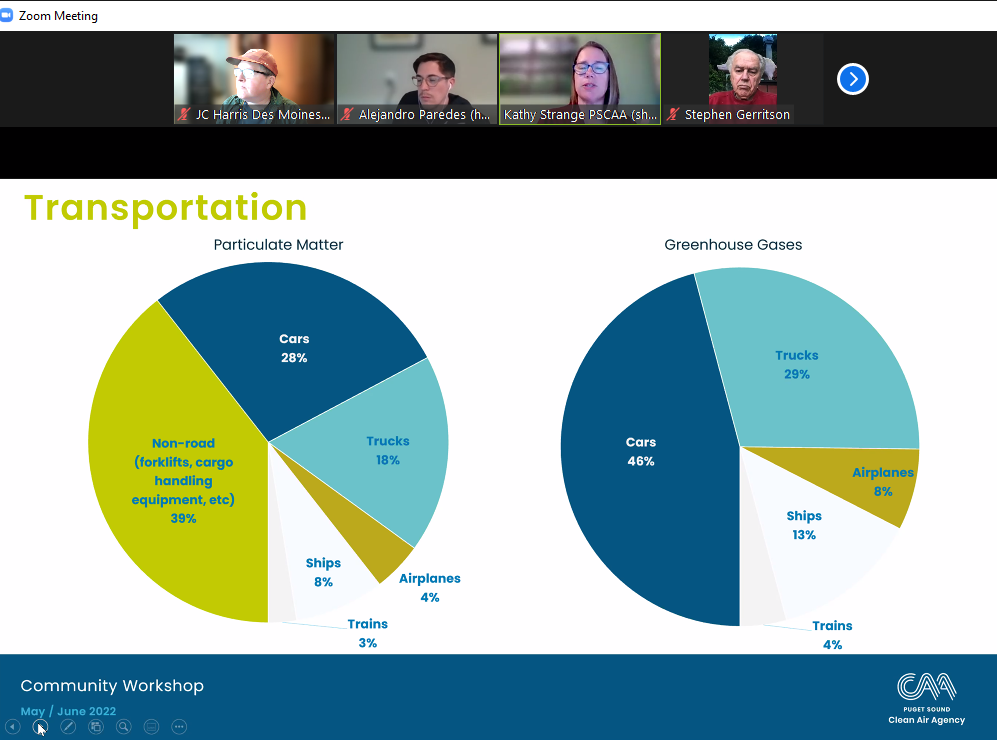
A Zoom meeting screenshot shows a Puget Sound Clean Air Agency (PSCAA) Community Workshop presentation from May/June 2022 on transportation emissions. The slide displays two pie charts comparing sources of Particulate Matter and Greenhouse Gases from transportation, with participants including Kathy Strange (PSCAA), JC Harris (Des Moines), Alejandro Paredes, and Stephen Gerritson visible in the video tiles.
This post describes a proposal we have put forward to Washington State legislators Senator Karen Keiser (33rd) and Representative Jesse Johnson (30th). In one sentence, we want an annual report of all key aviation-related emissions for every neighborhood affected by the operations from Sea-Tac Airport. We refer to this proposal as Sea-Tac Airport Annual Air
Hi Rep. Orwall, Thank you for your time on the phone today. BACKGROUND As I said, I have a lot of experience as a consultant with the environmental monitoring and mitigation process of conventional businesses (ie. where NEPA is governed by EPA.) It has always been annoying to me that the airport (being governed by
Our Advisory Council provides guidance and input on agency programs and regulations. The Advisory Council is made up of representatives of large and small businesses, suburban cities, area sources, education, transportation, health, tribal nations, fire chiefs, environmental justice, local ports, the environmental community, and the Public-at-Large. Meetings Agendas & Minutes Advisory Council Members Advisory council
 2025-12-01
 2025-12-01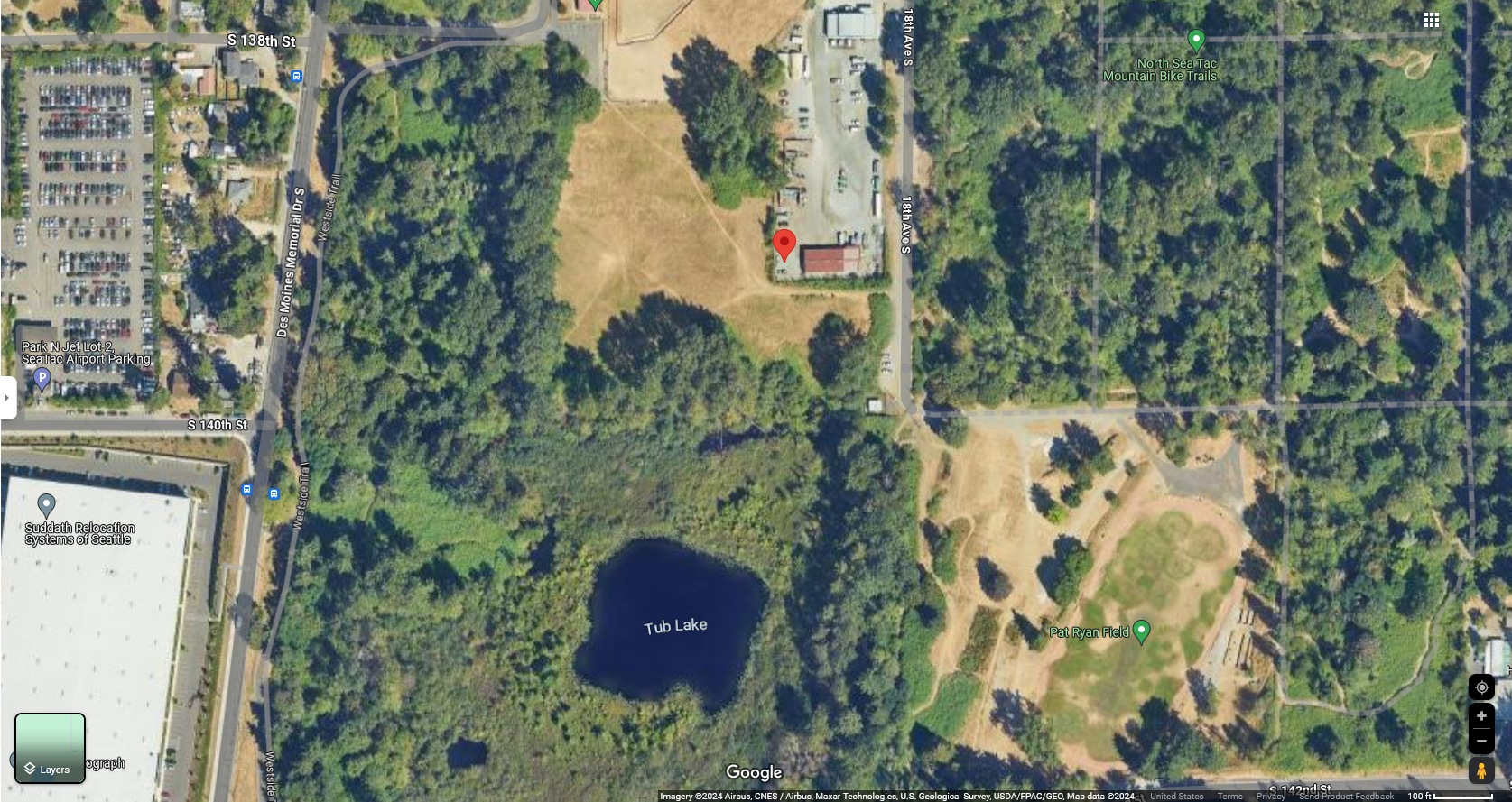
 2023-02-10
 2022-06-08